Tuesday, September 01, 2026


COMMENT: What Brazil's election reveals about the limits of US power

COMMENT: What Brazil's election reveals about the limits of US power
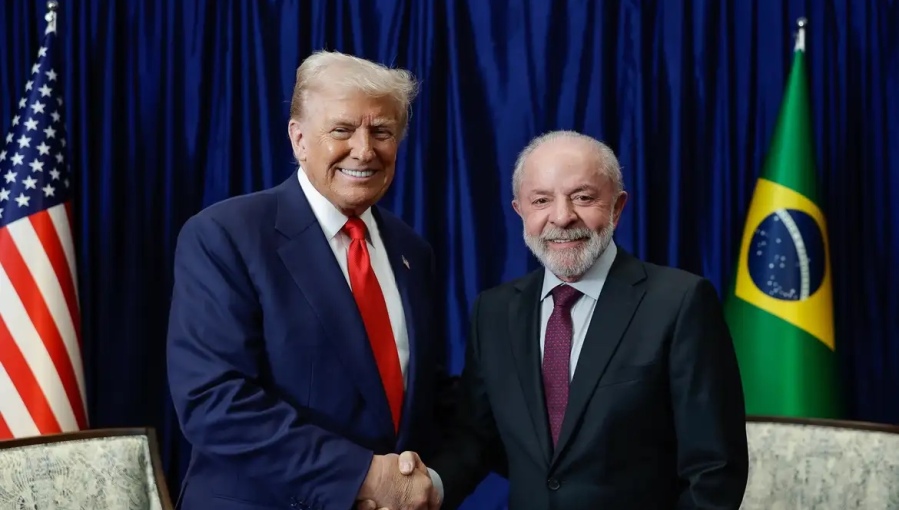
Despite mounting tensions, President Lula has not given up on diplomacy just yet, having held a phone conversation with Trump on August 21. / agencia brasilFacebook
By Ricardo Martins in Utrecht September 1, 2026

Brazil's presidential election on October 4 is becoming harder to distinguish from the broader US geopolitical struggle to keep Latin America within its zone of influence. The current points of contention involve tariffs and trade, digital payment systems, judiciary and critical minerals, all as Washington ramps up its criticism of Brasília. But beneath these issues lies a more fundamental question: is the United States aiming merely to protect its economic interests in Brazil, or is it pushing to reestablish a privileged area of influence in Latin America?

That distinction matters for investors and companies too, since the fallout will not stay confined to politics. The conflict is already reshaping risk across trade and supply chains - and increasingly mining, technology, payments and defence.

From bilateral dispute to hemispheric strategy

Since taking office in January 2025, the Trump administration has made it clear that the Western Hemisphere is, once more, of strategic importance for the US. After the US intervention in Venezuela in January 2026, President Donald Trump clearly stated that "American dominance in the Western Hemisphere will never be questioned again". This administration's policy has since been referred to as the "Donroe Doctrine", a twist on the Monroe Doctrine from 1823, which warned then-colonial Europe to stay out of “America’s backyard.” It is now intended at restricting the influence of adversarial foreign powers in the region, especially China, Russia and Iran.

Brazil holds a rather pivotal position in this strategy. As the largest economy in Latin America, home to half of South America’s population and economy, it is a major producer of food, energy and minerals, one of the founding members of BRICS and an important economic partner of China, which is the top destination of Brazilian exports and the main foreign investor in Brazil. According to data from the Brazilian Ministry of Development, Industry and Commerce (MDIC), in the first seven months of 2026, China made up 31.6% of Brazil's exports as against 9.6% from the United States; Brazilian exports to China increased by almost 20% compared to the previous year while those to the United States decreased by 12.2%.

To Washington, however, Brazil is not merely another trading partner; it is a nation whose strategic independence may allow China and other non-US-aligned powers to gain a greater foothold in the hemisphere.

And the political aspect resulting from this calculation can no longer be ignored. Brazilian President Luiz Inácio Lula da Silva has repeatedly warned that the United States might attempt to interfere in the upcoming election; Washington has not denied this claim. The dispute has been further inflamed by Brazil's decision to refuse visas to two officials from the US State Department who were planning to visit the country during the campaign.

According to Reuters, the officials, Riley M. Barnes and Samuel Samson, intended to talk about electoral integrity and other matters, as well as arrange a meeting with right-wing presidential candidate Flávio Bolsonaro, who is a close ally of Trump and the son of convicted former president Jair Bolsonaro. The Brazilian authorities’ reaction stemmed from their assessment that the trip could possibly damage confidence in Brazil's electronic voting system, potentially undermining the democratic electoral process. In turn, the US State Department retaliated by cancelling the multiple-entry visa of Brazil’s ambassador to Washington.

The situation is especially delicate since Flávio Bolsonaro has long sought to involve Washington in his international campaign. When he met Trump at the White House in May, the topics covered included rare earths, tariffs and organised crime. In July, he asked the Trump administration to postpone the proposed tariffs until after the Brazilian election, worried that the levies could help Lula’s bid for a fourth term in office by emboldening his own sovereignty push. Brazilian analysts widely believe that Bolsonaro, if elected, would give a free pass to rare earths to please Trump and gain the full support of his administration.

In a way, this shows that Washington is not directly meddling in Brazil's election. Yet the buildup of US pressure measures – mostly lobbied for by Bolsonaro’s clan – including sanctions to a Supreme Court Justice and the public prosecutor who condemned Bolsonaro for attempting a coup d’état following his 2022 election defeat, has caused Brazilian sovereignty to become a hot topic in the electoral debate.

Flávio Bolsonaro's camp favours an open-door approach to US investment in Brazil's strategic resources, with no demands for local processing, technology transfer or other reciprocal benefits. Lula's government, by contrast, wants to add value to raw materials and secure reciprocal benefits while privileging Chinese interests. This dichotomy is what gives the election its geopolitical stakes.

Tariffs become an instrument of statecraft

The level of economic pressure building on the simmering diplomatic row, meanwhile, is considerable. On June 1, the US Trade Representative (USTR) determined under Section 301 that certain Brazilian acts, policies and practices relating to digital trade and electronic payments, preferential tariffs, anti-corruption enforcement, intellectual property protection, ethanol market access and illegal deforestation were “unreasonable” and actionable under Section 301(b).

On July 15, the USTR introduced an extra 25 % tariff on certain Brazilian products and a further tariff of 12.5% has raised the possible duties on some items to as high as 37.5%.

The United States views the punitive levies as a reaction to unfair practices on the part of Brazil, although it has had a positive trade balance with Brazil every single year on record. But Brasília believes there is a more political dimension to the matter, since Trump's proposed tariff measures in 2025 directly linked the economic sanctions to the perceived way, which Trump dubbed a “witch hunt,” Brazil treated former president Jair Bolsonaro and his supporters for the organisation and attempt of a coup d’état.

The business effects are at once evident. Although the United States is still an important market for Brazil, China has become since 2009 by far Brazil’s largest destination for exports. This situation gives Brazil more scope to reorient its trade, but at the same time Trump’s tariffs impose substantial costs on 6,000 American companies that are in an integrated supply chain with Brazil, ranging from raw material, meat, food and agriculture produces to technology, such as avionics.

There is therefore a clear contradiction in the dispute, since using tariffs to bend Brasília to Washington’s will might just encourage the very diversification the US wishes to prevent.

Brazil has launched procedures at the WTO and swiftly activated the Brazilian Economic Reciprocity Law, but Lula has not given up on diplomacy just yet, having held a phone conversation with Trump on August 21. The Brazilian Foreign Affairs Ministry described the call as cordial, pointing out that Trump suggested the technical teams should resume negotiations. However, Brasília does not realistically expect the tariff dispute to vanish before the election.

Pix: when digital infrastructure becomes geopolitics

Another key aspect of the disagreement is Pix, Brazil's homegrown instant payment system.

Brazil’s Central Bank introduced Pix in 2020, a digital tool that has now grown to become a pivotal element of the country's financial system by enabling instant transfers 24 hours a day at zero cost to consumers and with minimal fees for the merchants. Pix accounts for about 40% of payment transactions in terms of volume, chiefly at the detriment of US-based Visa and Mastercard.

It is no surprise, then, that the United States incorporated Brazil's digital payment practices into its Section 301 investigation, on the grounds that government support grants Pix an unfair competitive edge. Brazilian analysts whom I interviewed see the conflict as an instance of economic statecraft: economic infrastructure being treated as part of national security and geopolitical competition.

The matter around Pix is aggravated by other forms and financial experiments being floated under the BRICS framework. Rodrigo Fagundes Cezar, a professor at Fundação Getúlio Vargas, emphasises that despite recurring talks of “dedollarisation,” alternative payment systems are not likely to replace the dollar in the short or medium term. Their importance, he argues, lies rather in the political aspect, since they provide countries with an extra tool to counter their dependence on financial infrastructures controlled by the US. 

The Lula government sees Pix and other potential future BRICS payment arrangements as part of a wider global move towards sovereign digital infrastructure. Needless to say, this is causing further friction with Washington.

Rare earths: the strategic prize

Critical minerals give an even clearer illustration of the escalating geopolitical battle.

Brazil has the world's second-largest estimated reserves of rare earth elements, after China. Their significance goes well beyond mining, since rare earth elements are essential for the high-performance magnets used in electric vehicles, wind turbines, advanced electronics and especially defence systems, which appear to be Trump’s main preoccupation.

As the US scrambles to reduce its reliance on China, Brazil becomes a strategically attractive option – needless to say, on Washington’s terms.

The United States' involvement in mining already stretches far beyond diplomatic talks. USA Rare Earth is acquiring the Brazilian producer Serra Verde, the mine known as Pela Ema in Goiás being the only one in the country that is currently operating. The American government has pledged $750mn for the transaction and the related supply agreements and the total capitalisation thus amounts to about $1.55bn, as recently reported by open sources.

The agreement is economically attractive for Brazil since it provides capital and can speed up production. However it also poses a much more difficult strategic question: who is going to capture the more valuable stages of the rare-earth supply chain? 

In this regard, Lula’s proposed National Policy for Critical and Strategic Minerals is of political importance. The legislation, which has been approved by the Chamber of Deputies and is currently before the Senate, sets out a policy framework for critical minerals and creates a special committee tasked with overseeing the industry. The discussion focuses on domestic processing, technological development and national control rather than just exporting raw materials.

This creates a basic conflict between two approaches: Washington is acting quickly to ensure access to non-Chinese supplies while Brasília aims to use its mineral resources to achieve industrialisation rather than continuing to act as a mere supplier of raw materials.

That difference will be important to those companies which are pondering whether to invest just in extraction or in refining, processing, technology transfer and downstream manufacturing.

Brazil looks for strategic alternatives

Brasília is well aware of great power politics, and its response has not been to break ties with Washington, as shown by Lula’s last outreach to Trump; it has been to diversify.

That approach was on full display in August when Nikolai Patrushev, a senior adviser to Russian President Vladimir Putin and head of Russia's Maritime Collegium, travelled to Brazil. During his trip, he reportedly dealt with issues relating to maritime security, naval cooperation, shipbuilding, ports, logistics, fishing and scientific research as well as defence. Russian officials talked about working together in the field of shipbuilding, including the construction of grain carriers, fishing vessels, ship repairs and the localisation of civilian vessel production.

Patrushev also went to Brazilian naval facilities and visited the NAM Atlântico, and it is reported that the talks touched upon Brazilian coastal maritime monitoring and nuclear technology.

Yet it is important to underline that Brazil, unlike Cuba or until recently Venezuela, has no intention to become a military ally of Russia. By reaching out to different partners, including Moscow, for defence cooperation, Brasília is simply showing that its technological possibilities are not limited to the United States.

On August 24, Lula and Turkish President Recep Tayyip Erdoğan talked about bilateral and global issues, with Erdoğan particularly stressing the need for greater cooperation in the areas of investment, trade and the defence industry.

For Brazil, Turkey and Russia just perpetuate China's leading economic role in different ways; the aim is not necessarily to align with any one country but to keep room for manoeuvre.

What businesses should watch

The main lesson for investors watching the upcoming election is that geopolitical risk in Brazil is becoming more multidimensional.

At the outset, supply chains should be evaluated not just on the basis of their tariff exposure but also in relation to political exposure; companies that place great reliance on the US market or on infrastructure under US control might experience higher levels of uncertainty should the bilateral confrontation continue.

Second, critical minerals are turning into strategic assets; the Serra Verde transaction shows that mining projects can soon become issues of national security and that future investments are likely to come under greater examination regarding ownership, processing, technology transfer and export destinations.

Third, digital infrastructure must be considered as part of geopolitical infrastructure. The case of Pix shows how a payment system, designed mainly for improving domestic efficiency, can suddenly find itself embroiled in an international trade dispute.

Fourthly, multipolar diversification has become a strategic policy of Brazil. Brazil's partnerships with China, Russia and Turkey - and possibly also with the EU, India, Mercosur and other economies from the Global South  - are not necessarily in place of its relationship with the United States; rather, they are means of reducing dependence on any one external power.

Investors certainly ought to keep an eye on the political aftermath of the October election, whose domestic dynamics I will cover in my next article. But two competing geopolitical approaches are already crystal clear: Flavio Bolsonaro privileging closer ties with Washington and looser control on US interests in Brazilian resources, and Lula seeking closer ties with Beijing and the Global South within a national development project framework.

Brazil's institutional tradition has seen it pursue a path of strategic autonomy, maintaining a wide-ranging number of partnerships, including with the US. However, the Trump administration’s newfound pressure to align the whole Latin America to its hegemonic strategy changes the rule of the game. As a rightward shift sweeps the region, now governed mostly by conservative leaders, Secretary of State Marco Rubio has made the White House's priorities clear, warning of consequences over Bolsonaro's conviction and taking a notably hard line with Lula's government.

Brazil will serve as the ultimate barometer of whether the Western Hemisphere completely reverts to a hierarchical pattern of US influence. Washington regards Brazil as strategically important because of its size, its natural resources, its outsized regional political influence, its role in BRICS and its growing connections with China. In turn, Brazil views these same features as justifications for doubling down on strategic autonomy.

Ricardo Martins is based in Utrecht, the Netherlands, and has a PhD in Sociology specialising in European politics, geopolitics and international relations.


 

UN racial discrimination committee presents legal case for broad slavery reparations

Members of the University of Ghana School of Performing Arts reenact the slave trade at Christiansborg Castle in Accra, 19 June, 2026
Copyright AP Photo

By Gavin Blackburn
Published on

The document, which was approved last week but only published on Monday, is expected to provide a powerful new tool supporting reparations claims.

Countries are legally obliged to provide broad reparations for harms resulting from both direct and indirect involvement in the transatlantic African slave trade, a United Nations committee said on Monday.

Issuing a fresh interpretation of an important international rights treaty, the UN watchdog said the accord obliges countries to work to redress the harms caused by slavery and the continuing consequences.

"States parties must implement comprehensive reparatory measures for people of African descent, covering all aspects of remedies," the UN Committee on the Elimination of Racial Discrimination (CERD) said in its findings, presented in a document entitled General Recommendation-40.

It stressed that reparatory justice combined "a wide range of measures conceived as monetary, non-monetary and structural."

The document, which was approved last week but only published on Monday, is expected to provide a powerful new tool supporting reparations claims.

This is "a watershed moment," committee member Pela Boker-Wilson told the AFP news agency.

The CERD panel is composed of 18 independent rights experts.

Tasked with monitoring implementation of the 1969 International Convention on the Elimination of All Forms of Racial Discrimination, it provided a new interpretation of the treaty's obligations.

Paradigm shift

The convention counts 182 countries as parties, including the United States, United Kingdom, France, Portugal and other nations that were heavily involved in the transatlantic slave trade, which from the 16th to 19th century saw millions of African men, women and children shipped to the Americas to work in brutal and often deadly conditions.

In many of those same countries, black people continue to face discrimination and poverty today.

"Confronting historical injustice can not be separated from the fight against present-day racial discrimination," Boker-Wilson said.

The Liberian human rights lawyer maintained that the committee's finding brought about "a paradigm shift" in the framing of reparatory justice from a simple historical responsibility to a present-day legal obligation.

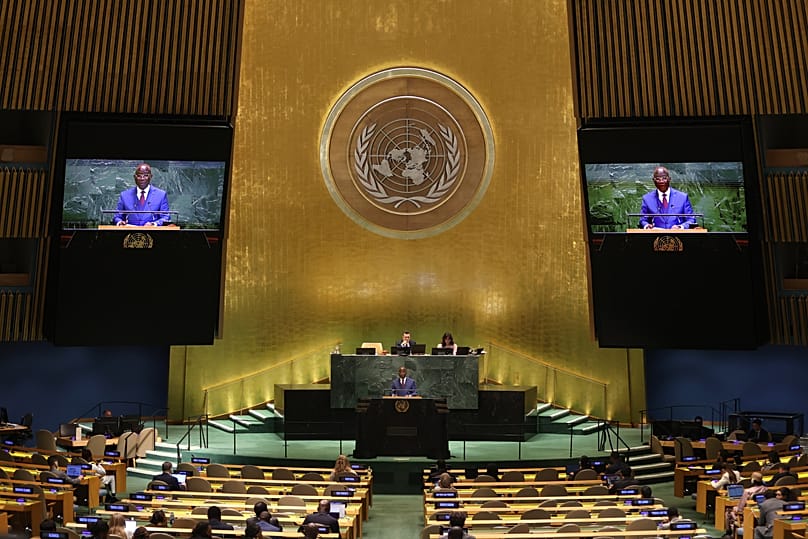
A view of the United Nations General Assembly in New York, 26 September, 2025 AP Photo

It clarifies that countries are required to take "active measures that are geared towards restoring the dignity, the justice and equality that people of African descent deserve."

While the CERD's findings are not legally-binding, Boker-Wilson stressed that they carry "significant authoritative weight" and could be used by officials to inform judicial review, by courts as an interpretative tool, as well as to support litigation.

The fresh analysis comes after the UN General Assembly in March adopted a landmark resolution recognising the transatlantic slave trade as "the gravest crime against humanity," despite opposition from the United States and some European countries.

Boker-Wilson said the United States and other countries should "welcome" the new findings, noting that the last review of US adherence to the convention on discrimination, in 2022, had found issues with racial profiling and disparities in the criminal justice system.

'Eliminate structural racism'

While the campaign around reparatory justice has been heavily focused on the United States, Boker-Wilson stressed that "it's a global initiative."

The transatlantic slave trade "distorted global economic relations by distributing unjustly accumulated wealth across societies and borders, creating shared responsibility for its enduring effects," the document points out.

Beyond monetary compensation, the required reparations encompass everything from restitution to rehabilitation and memorialisation.

And it pointed to an educational obligation "to investigate and disclose the full truth about transatlantic chattel slavery."


LA REVUE GAUCHE - Left Comment: Search results for SLAVERY


  1. Capitalism & slavery. : Eric Eustace Williams : Free Download, Borrow ...

    May 7, 2014 · Slave trade -- Great Britain., Industries -- Great Britain -- History. [Nachdr. 8th print]. No suitable files to display here.


‘Polyester’: Understanding Gen Z’s new favourite insult (and why it’s a good thing)

‘Polyester’: Understanding Gen Z’s new favourite insult (and why it’s a good thing)
Copyright Canva


By David Mouriquand
Published on

What does Gen Z’s latest viral insult mean and what does it reveal about their preoccupations?

'Rizz', 'Delulu', 'Locked In', 'Glow Up', 'FRFR', 'Aura Farming'...

It can be hard keeping up with the latest Gen Z slang. While it’s hardly new that every generation develops its own jargon and expressions, the difference with Gen Z and Gen Alpha comes down to speed. Their lingo can go from niche to worldwide viral in a matter of days through social media, and if you’re not au fait with the latest expression, you risk reaching ‘Unc’ status - a Gen Z abbreviation for ‘uncle’ which mocks a person perceived as uncool and out of touch with modern trends.

(Speaking of which, 'FRFR' stands for ‘For Real, For Real’.)

The latest term which has been going viral on TikTok and various social media platforms is ‘polyester’.

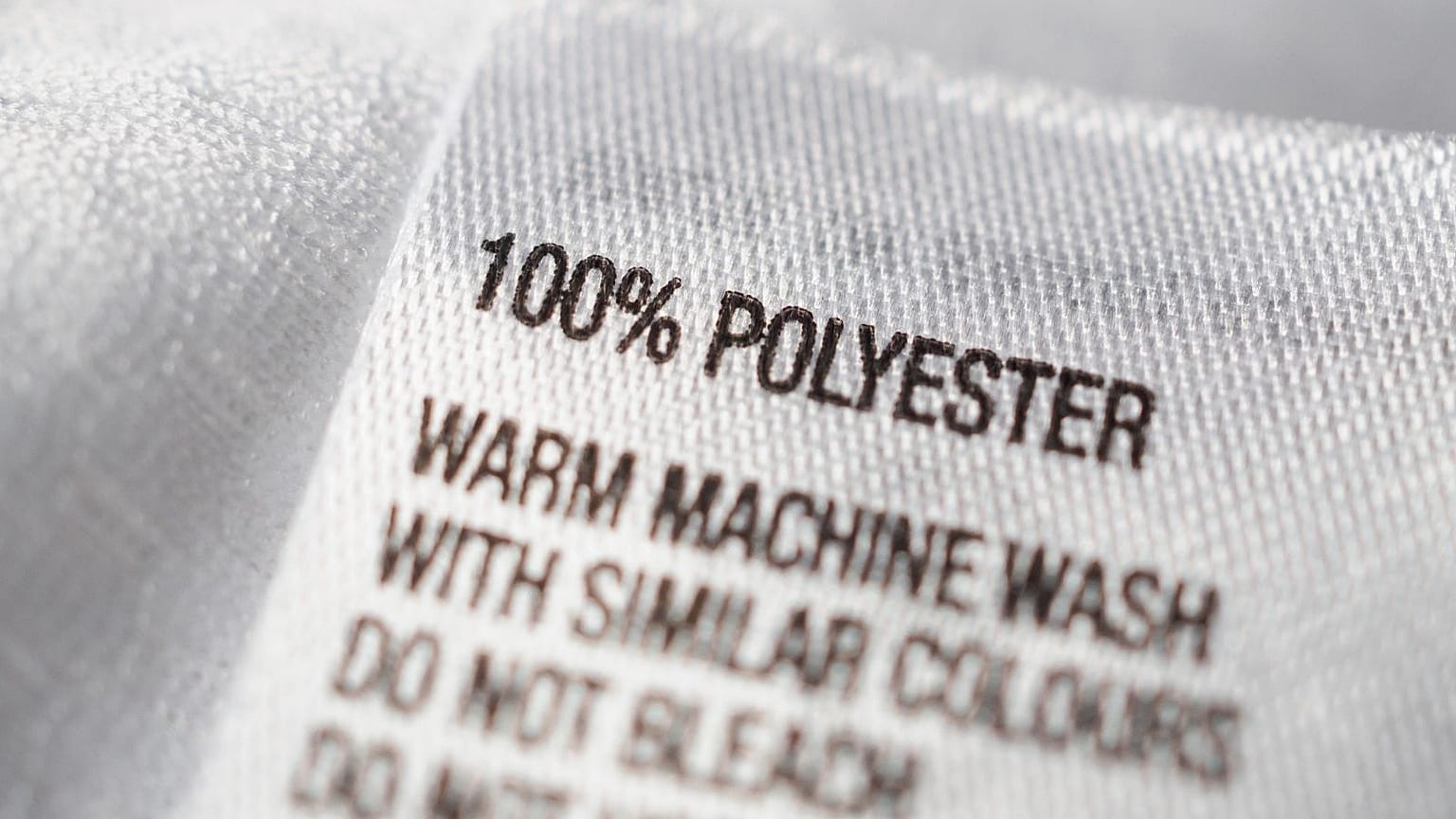
It doesn’t directly refer to the synthetic polymer (or does it?) but has become a new way to call something generic, inauthentic, or even try-hard.

A supposed candid moment that’s actually carefully staged? Polyester.

A public apology that rings false? Polyester.

A nose-bleedingly annoying influencer faking enthusiasm and sincerity when trying to peddle cheap merch or a product they’re contractually mandated to tout through sponsorship deals? Polyester. "Polyester Prince", actually.

You get the gist. For all you long-suffering Millennials out there, it’s the equivalent of calling something ‘basic’; but the Gen Z version is more layered than it seems.

Before it became the go-to shorthand to call out fakeness and throw shade, “polyester” described a style of fan-edit TikTok that cut clips of characters like Spider-Man and layered them over flashing and frenetic footage.

Then came a viral TikTok featuring an 18-year-old sharing his vision of his dream adult life.

"I want to wake up at 6 a.m. in my New York City penthouse, Bible study with the boys before anything else, crack open an organic yerba mate, and go for a morning run in Cnetral Park... Blue light glasses on, deep work, house music, locked in. I'm not gonna even be doing half of the work because my Claude agent is gonna be running automatic in the background while I eat lunch..."

The internet was quick to label this algorithm-designed clip yearning to be aspirational as ‘polyester’ or "Polyester lifestyle".

Then there's the choice of a fabric word, which isn’t coincidental.

It anchors itself in the backlash against the most-produced synthetic fibre on the planet.

Younger generations are not only trying to distance themselves from fashion brands hawking garments which look great online but which feel terrible IRL and don’t last; they’re also pushing back because of polyester’s disastrous impact on the environment, as the fibre is not biodegradable and sheds microplastics.

Countless creators online are promoting purging their wardrobes from mass-produced and synthetic fabrics, showing that it’s not just a backlash against ultra-fast fashion business models (hence the trending diss “It gives Shein”), but a growing desire to be more environmentally conscious.

In a wider context, the popularity of ‘polyester’ denotes that generations which have grown up online are waking up to the disingenuous nature of influencers / corporations / politicians trying to fool them with catch-all terms and weak promises.

Too much of a stretch? Not really, as ‘polyester’ didn’t come out of nowhere. It follows other viral terms like 'Larping', 'Slop', 'Performative Male', 'Industry Plant' and yes, 'FRFR' – all of which focus on authenticity and call out anything fake.

While many older generations may roll their eyes at a new here-today-gone-tomorrow expression, ‘polyester’ is another reflection of Gen Z’s healthy and expanding sense of distrust towards anything that appears to be artificial. Their growing desire for authenticity - especially at a time when AI is utilised to such a degree that it can be harder to distinguish what’s real from what’s not – shows a promising intolerance towards the insincerity thriving on social media.

Consider yourself un-Unced.


ERGONOMICS

Heavy school backpacks can strain children's bodies. Here’s how to lighten the load

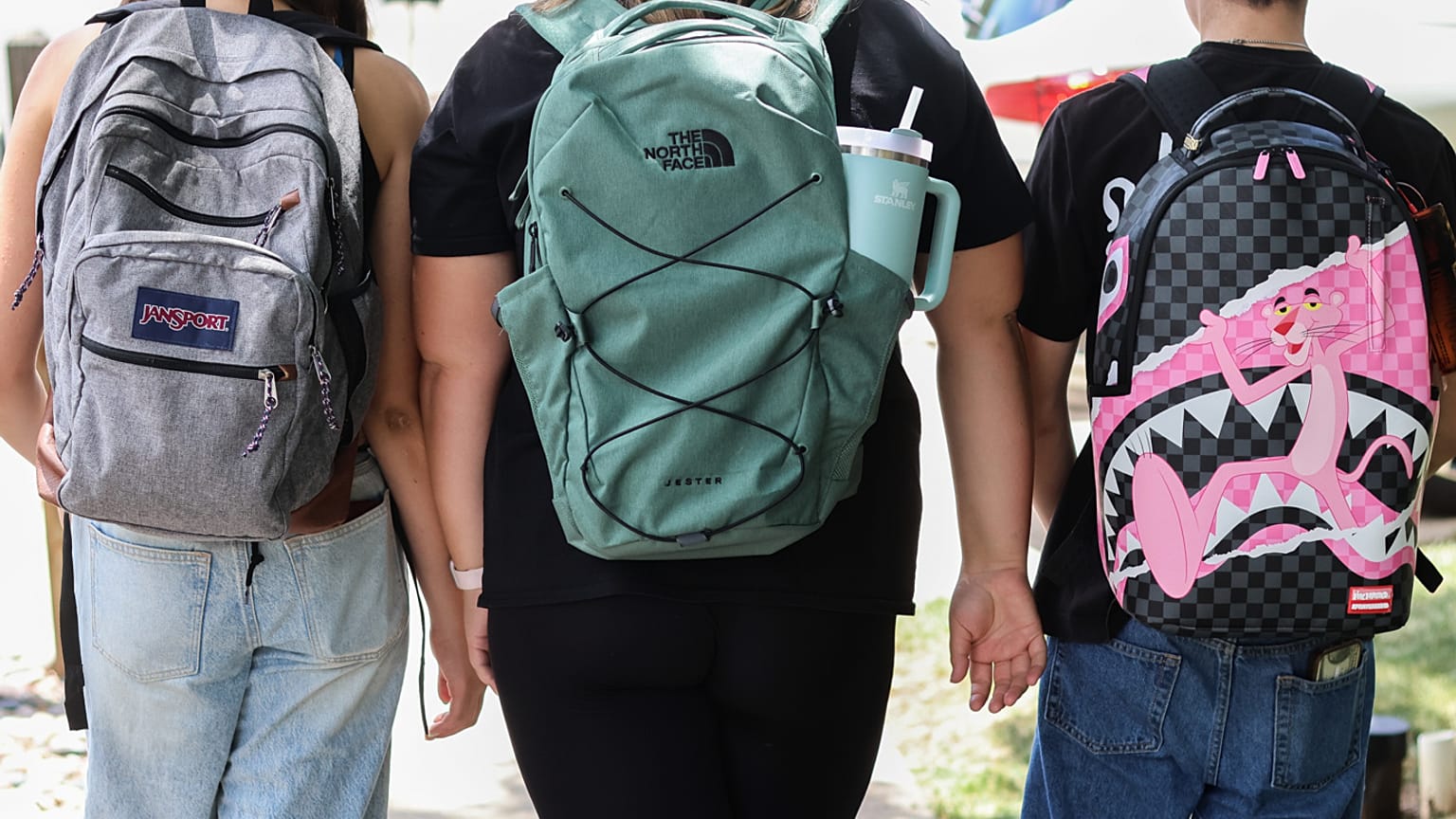
Heavy bags can strain kids’ bodies,
Copyright Cheyanne Mumphrey/Copyright 2026 The AP. All rights reserved.


By Marta Iraola Iribarren with AP
Published on

As back-to-school shopping gets underway, experts warn that overloaded backpacks can strain children's bodies.

Backpacks can be fashionable and functional, but they can also be too heavy — weighed down by books, digital devices, musical instruments, sports equipment and more.

It's good to be prepared, but children who walk to school or participate in extracurricular activities may be lugging more than their bodies can handle.

As families begin back-to-school shopping, here's how to know if your child's backpack is too heavy, and how to lighten the load.

How heavy is too heavy?

The modern school backpack has evolved, but it hasn’t necessarily got lighter. Whether students have textbooks, digital devices or both, they often are accompanied by notebooks, water bottles, lunch containers or workout clothes. Individually, those items may not seem heavy, but together they can add unnecessary strain to children's bodies.

According to the American Academy of Pediatrics, signs a backpack may be too heavy include a child leaning forward to support its weight or having difficulty walking. Straps should not dig into the shoulders.

Back injuries are uncommon but possible, particularly if a child falls while carrying a heavy backpack, said Sadika Kendi, a physician who chairs the academy’s injury-prevention efforts.

“It’s worse if, for example, they trip and fall and they have a huge, heavy backpack on their back. Then that’s just more weight that could increase the severity of an injury,” she told the Associated Press.

Although 10% to 15% of a child’s body weight is often cited as a backpack guideline, there isn’t enough evidence to establish a one-size-fits-all approach, Kendi said. Children vary in size, strength, physical development and daily routines, so caregivers should consider each child’s individual needs and, in general, keep backpacks as light as possible.

Choosing the right backpack

Health authorities recommend backpacks with two wide, padded, adjustable straps.

The straps should be tight enough to hold the bag close to the body and should be adjusted so that the bottom sits just above the child’s waist. A backpack with a waist belt can also help support some of the weight.

Backpacks with wheels can be helpful, especially for children with injuries, but experts say they may be problematic in schools with stairs or crowded walkways, where they can pose a tripping hazard.

Carry only the essentials

After families receive back-to-school checklists for classroom materials, they should take an audit of what a child really must carry every day.

According to Samantha Ness, a history teacher in Phoenix, in the United States, parents should focus on making sure children have basic supplies rather than getting caught up in trendy, decorative or expensive items.

Her pupils have access to classroom textbooks but are still expected to carry a laptop and charger each day. As technology becomes more central to schoolwork, some students have stopped bringing paper altogether, she said. They rely instead on their devices, which can also become distractions.

As students get older, Ness said, backpacks can become more like personal storage than school supplies, carrying items such as makeup, nail polish and hair dryers.


'They wrote little letters': How kids in Portugal are making money off their neighbours' plastic waste

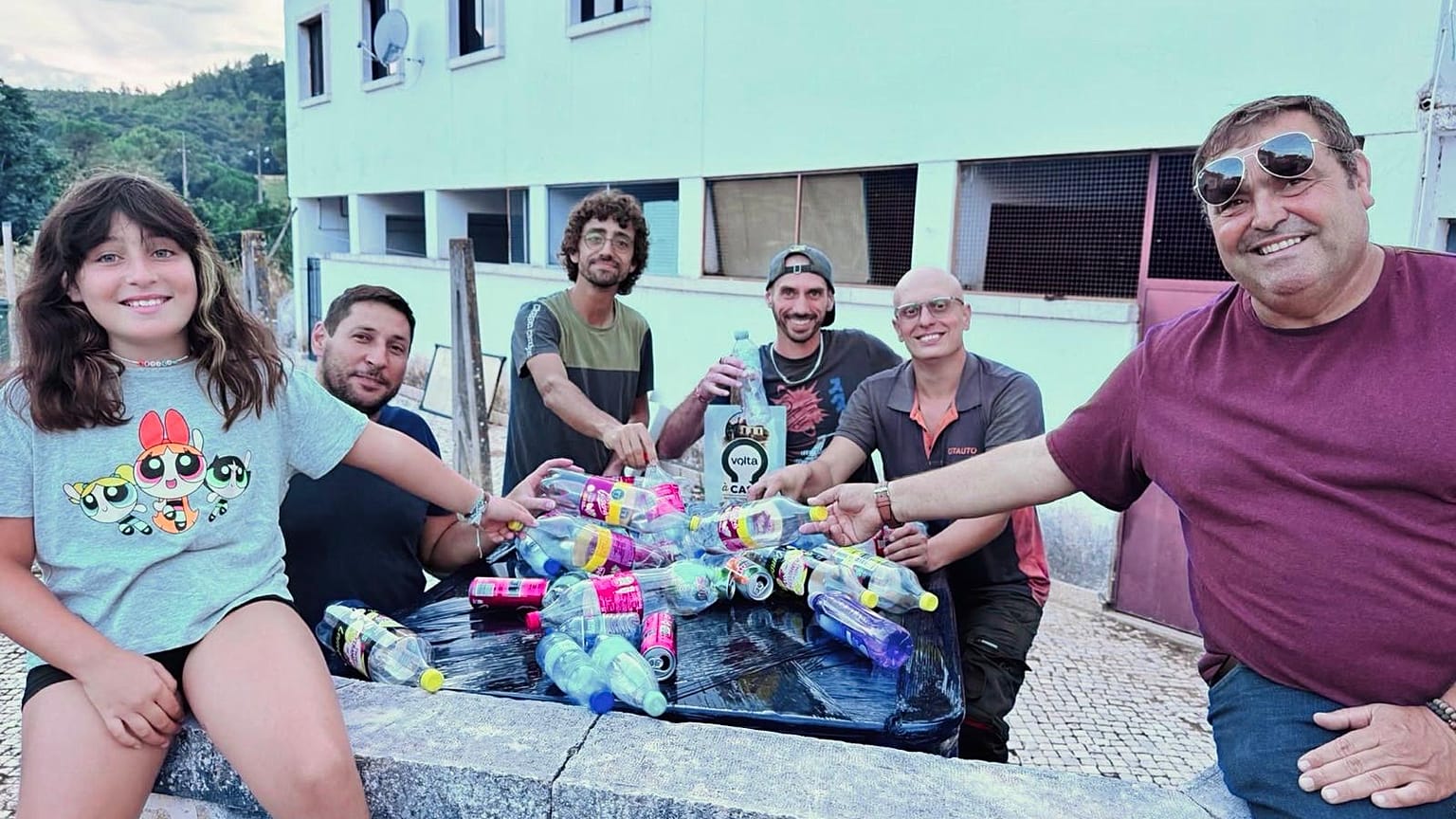
Members of the civic movement Guarda à Casa in Ota, Portugal, 24 August 2026.
Copyright Nelson Mota (Guarda à Casa)


By Lina Ferreira
Published on

The first ever bottle deposit return scheme in southern Europe is helping the environment - and funding kids' bucket list trips.

Sisters Ariela and Alice had already been using Portugal's bottle return scheme to earn money but since June they have upped the ante: now, instead of just returning their own bottles, they are asking their neighbours' for their empty plastic bottles and making money off those too.

Since April this year, when the Volta scheme launched, plastic bottles in Portugal have a €0.10 deposit included in the cost. If you return the empty bottle to a supermarket with a Volta machine, you're given a receipt which can be exchanged for discounts or cash.

Ariela and Alice have big plans for their cash: Alice, who is ten, wants to do a three-week exchange in South Korea. Her sister Ariela, 13, wants to do the same in the United States

"They wrote little letters and I printed them with their project and the time when they were going to collect the bag," explains their mother, Karina Lauro, who moved to Portugal from Rio de Janeiro in 2024. "They leave the bag at people's doors and every day, at nine o'clock in the evening, they go back to pick up that bag with the bottles."

The empty bottles are then exchanged for money. With a clear goal: by June next year they aim to collect 120,000 bottles so they can make €6,000 each.

It was the girls who came up with the idea of using Volta to raise funds and to involve the neighbours, after their mother warned them that just using the bottles from home would not make them much money. "It was very little, wasn't it? Because it was just the bottles from our house," says Karina Lauro. "Basically, if it were only us, there would be no way."

Some people go through rubbish bins to find bottles to return

Under the Volta scheme, plastic bottles of up to three litres now carry a deposit charge of ten cents. This money can then be reclaimed if the bottles are returned. The bottles are returned via machines in supermarkets, which issue a receipt that can be converted into discounts or cash. Kiosks are also starting to appear in other busy locations or to process large quantities of bottles.

This system, run by SDR Portugal, is the country's way of responding to the Single-Use Plastics Directive (DSUP), which requires 90 per cent of deposit bottles to be collected by 2029. The directive allows European Union countries to set up deposit systems in order to reach this target.

In Portugal, the system was rolled out in April. As consumers were getting used to it, reports began to appear of bins being rummaged through, leaving rubbish scattered on the ground. In Lisbon, several residents and parish councils complained about the rubbish pile-ups. At the end of July, the PSP arrested a man for rummaging through bins, whom it described as a "rubbish miner".

This scenario was not entirely new. In an interview with Euronews last year, the president of the Portuguese Environment Agency (APA), José Pimenta Machado, spoke about possible associated environmental risks. The report also noted that in Germany, which has had a deposit return system since 2003, it is common for homeless people to rummage through rubbish in search of bottles.

But not everyone who looks for bottles is homeless. Some are doing it as a way of earning a bit of extra money and, for some young people, it has become a real summer challenge.

That is the case for two young men who work at a beach concession in Loulé. In an interview with Rádio Renascença, they insist that they do not go "digging around in the rubbish", but simply put into Volta the bottles they already have to pick up at work.

Karina Lauro is aware of the phenomenon of people searching through bins for bottles, including "people who are indeed saving them to have an income". But in this case her daughters do not go through rubbish either.

"No, they're always given to us. We don't pick anything out of the rubbish," the mother explains. "Besides, we don't go out on the streets looking for them; we go straight to people's homes."

This is also an environmental project, supporting recycling, already with another of Alice's dreams in mind: studying at Harvard.

"The aim behind this is for them really to reach that recycling figure, so that it also counts as an environmental project for Alice," the mother explains, recalling the entry criteria for North American universities.

Plastic bottles are funding food for rescued cats

António Casa Branca is the owner of Gatil Original, a sanctuary in Vendas Novas that takes in older, sick and vulnerable cats. Around a month and a half ago he had an idea: to set up partnerships with local businesses.

Partner businesses hand over their empty bottles to the cattery, which takes them back and keeps the money. The funds are then used to buy food for the animals.

"In Vendas Novas there are lots of 'bifana' [a classic Portuguese sandwich] shops and we try to set up a partnership whereby every week we go and collect the bags they set aside from that recyclable rubbish, those plastic bottles and cans," he explains. "We then go to the machine, exchange them for vouchers and go to the supermarket to swap them for pâté."

On the first attempt, donations from one bifana restaurant filled a van.

"One of the bifana owners filled my van with bags of litre-and-a-half bottles and tiny ones. I filled the van and it came to around €50," António says.

The cattery already has five partnerships, which also involve a pastry shop, and there is even an accountancy office keen to help by donating the bottles used by its staff. António Casa Branca's plan is to go around the partner businesses every day after work. "For me it's gold. I don't mind going out to ask, to beg," he says.

"If we can get €50 a week from each restaurant, from three or four restaurants, that is already enough to cover the animals' food."

It's working: António Casa Branca manages to buy all the food for the roughly 40 cats he has at the cattery. Other costs, such as the vet's bill and medicines, are still unaccounted for.

Volta machines give the option to send the money to charity. Volta's website gives the examples of the Portuguese Firefighters' League, Caritas, the League for the Protection of the Environment and the Portuguese League for Animal Rights. The organisations available depend on the machine.

But some organisations are going further in this fundraising drive. They are asking donors to bring them refund vouchers or even the bottles themselves, taking on the task of depositing them at collection points.

"We can't let this fall apart"

For the past two weeks there has been a bin at Ota Parish Council's office for residents to leave their empty plastic bottles. In the centre of the parish a 1,000-litre container has also been left for bottles to be deposited - it filled up with bottles in just a few days.

"As we have a lot of people using it, we're thinking of putting out two more containers, one at each end of the parish," explains Nelson Mota.

Nelson grew up in Ota and remains closely connected to the area. He is part of Guarda à Casa, a civic movement that wants to restore the building where the forest rangers of the Serra da Ota used to live.

"We decided that we can do something; we can't let this fall apart," he says. "If the competent authorities can't reach us, because this year, with the deluges we've had, it's normal that the councils can't support certain projects."

Then the idea emerged of using the Volta system to raise money.

"Volta is an easy way to raise some money. It's not substantial amounts, but the kind of sums you need to start organising some events."

As well as the containers, the group also has the support of the Recreational and Sports Association, which is donating the bottles from its bar. Members of the civic group are also collecting bottles from friends and at work and then, themselves, reclaim the money at a Volta machine.

"I myself made a deposit yesterday; it came to €11.60. In other words, it was 116 bottles," explains Nelson Mota. "I handed in 116 bottles, which didn't take up space in the car, and it gave me €10 with no difficulty. I think it's worth it, isn't it?" he tells Euronews.

The success of the initiative does not surprise Nelson Mota: "Of course we're getting a good reception. People in Ota, whenever there are initiatives of this kind, always try to help. That's just how people are there."

"I never imagined it would get this big"

Ariela and Alice's project is being given a big boost by social media. Their "Sonho na garrafa" pages explain the collection process and keep a running tally of how many bottles they have managed to gather so far.

"I wanted to create that social-media presence and show this project so that it would reach people and be recorded for her future," says Karina Lauro, referring to her daughter's university dream. "But I never imagined it would get this big, because people started to embrace it."

The Instagram account has more than 12,000 followers and the TikTok has more than 250,000 likes. In this way more people have started to send encouraging messages and also to want to contribute, including people living abroad.

"Once the internet started to see them, people began wanting to donate bottles as well, to donate the money from exchanging bottles," says the mother, adding that she only accepts donations if they come from bottle deposits.

"There is a person in Ireland who sends money every week. In Ireland it's 25 cents per bottle, so she exchanges them there and sends it to the children."

Another big boost came from restaurants, which also wanted to get involved in the project. It is the mother herself who now collects the bottles from the restaurants, once a week.

By mid-August they had collected more than 5,300 bottles and €537.

"But now more messages have started to come in from other restaurants, wanting to help as well. So, with the restaurants coming on board, that number will probably double."