Using energy exports to punish U.S. would be unwise, Trans Mountain chief says
Updated:
CALGARY — Disrupting southbound oil exports in retaliation for U.S. tariffs is not viable and would have serious consequences for Canada, said the chief executive of Trans Mountain Corp.
“Interdependencies between both countries are high,” Mark Maki said in an interview Friday following the release of the Crown corporation’s second-quarter results, which saw its pipeline to the Vancouver area running 94 per cent full.
“I hope people put down the shovels here pretty quick. We’re hitting each other and we’ve got to stop that.”
There have been calls to keep the option open of using Canada’s natural resources as leverage in the latest trade flare-up. U.S. tariffs of 50 per cent on an array of Canadian goods worth $28 billion are in effect after Canada walked away from talks last week. Canada has since announced plans to hit back with countertarrifs and U.S. President Donald Trump threatened further levies.
So far, energy has not been part of the equation.
Maki said it’s his view that taking that path would be a version of “mutually assured destruction” — a Cold War-era concept whereby a nuclear strike by one of the world’s two superpowers against the other would trigger retaliation so devastating that both sides would end up annihilated.
“It’s highly destructive to both parties,” he said.
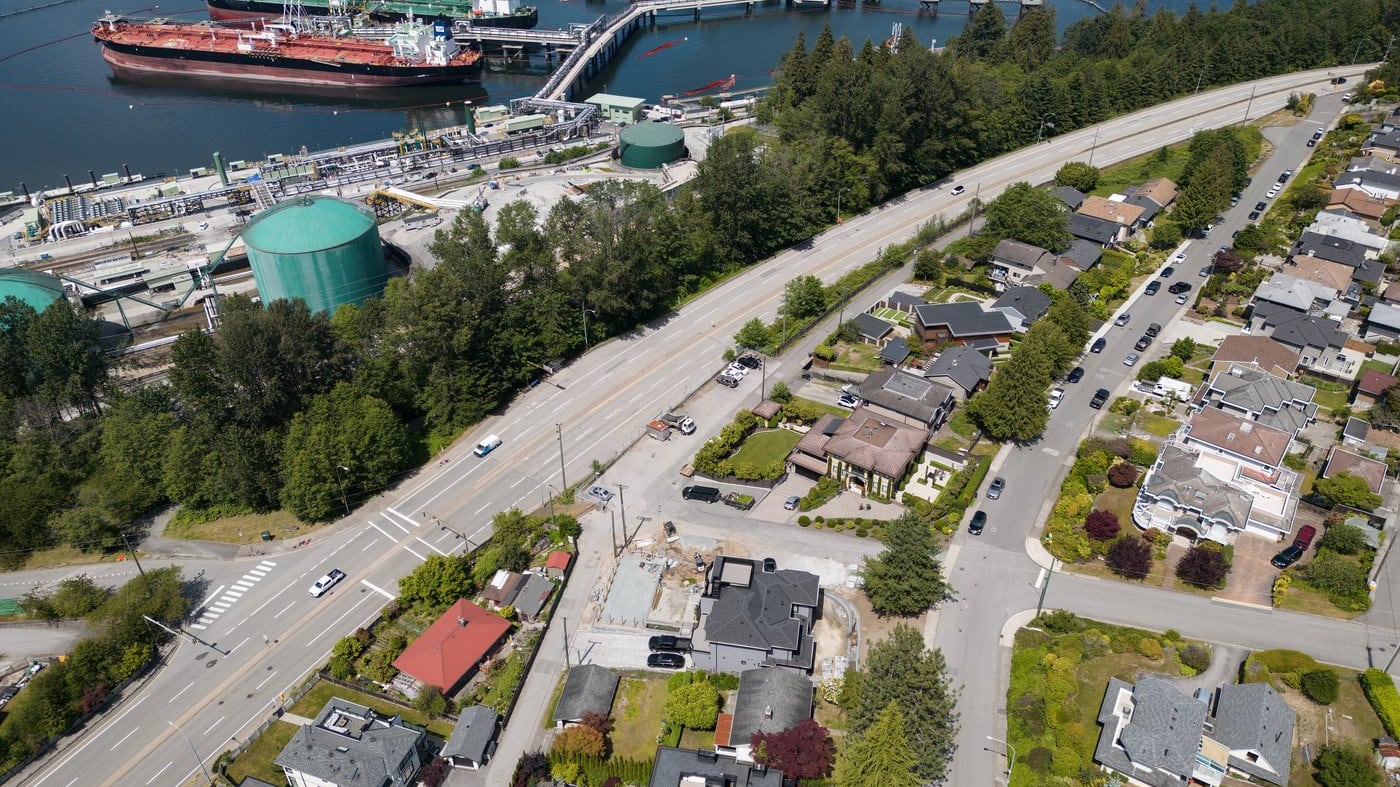
The 890,000-barrel-per-day pipeline Trans Mountain operates provides the only meaningful avenue for Canadian crude to reach non-U.S. markets, and projects are in the works to expand that in the coming years. Almost two-thirds of the oil that moves through the line goes to Asia via tanker, with some also serving the B.C. Lower Mainland and the U.S. Pacific Northwest.
Washington State refineries get about a third of their supply from Canada, Maki said. During the second quarter, an average of 234,000 barrels per day were delivered to that market on Trans Mountain’s system.
Even with the expanded international access, the links between Canada and the U.S. remain significant, especially to refineries in the U.S. Midwest and Gulf Coast. The Canadian Energy Regulator says that in 2025, Canada exported 4.3 million barrels per day of crude oil, and 90 per cent of that went to the United States.
If this country were to tighten the taps to the U.S., “where’s Canada going to put the barrels?” Maki asked.
Kent Fellows, an economics professor at the University of Calgary’s School of Public Policy, said while energy restrictions shouldn’t be totally off the table, it should be “very close to a last resort.”
“It’s a really, really big stick and it has very dangerous implications on both sides of the border.”
But not all retaliatory strategies are created equal, Fellows said. Export restrictions on southbound pipelines or export taxes would have a similar effect — raising costs to the U.S. while also hurting producers’ bottom lines and Alberta’s royalty revenues.
A third approach known as curtailment — the province setting temporary limits on production levels — would boost prices, potentially benefiting producers and government coffers while still raising costs in the U.S. It was a step Alberta took in 2019 in response to a collapse in western Canadian oil prices amid severe pipeline bottlenecks.
“It’s still a dangerous game because it is hurting the U.S. and you might get a more than proportional response from them,” Fellows said.
Earlier Friday, Trans Mountain said during the three months ended June 30, its pipeline carried an average of 840,000 barrels of oil per day, up from 703,000 during the same period a year earlier. It has been running even fuller since then, hitting or even exceeding its official capacity of 890,000 barrels a day.
The pipeline has been operating since 1953, and an expansion tripling its throughput came into service in 2024. Another 90,000 barrels per day is set to be added later this year by introducing chemical agents to help crude better flow through the line. By the end of 2028, Trans Mountain aims to boost it by another 210,000 barrels per day through new pipe segments, additional pumping power and other upgrades.
Trans Mountain has also been enlisted to develop, build and operate a new West Coast oil pipeline to southern B.C., proposed by the Alberta government, that would largely follow the path of its existing line. The province expects Ottawa to deem it a project of national importance this fall, clearing the way for a speedy review. Its cost has been estimated at $35 billion to $44 billion.
Trans Mountain’s net income for the quarter was $138 million, down from $150 million during the same quarter last year. The drop was mainly from an increased depreciation and amortization expense, the corporation said. Revenues rose to $808 million from $719 million.
Trans Mountain said it paid $450 million to its owner, the federal government, during the second quarter in the form of interest and dividends.
---
Lauren Krugel, The Canadian Press
This report by The Canadian Press was first published Aug. 28, 2026.