Monday, May 26, 2025


UK Energy Bills Set to Decrease This Summer

  • Ofgem has announced a seven percent cut to the energy price cap, which will lower average annual bills for UK households this summer.

  • While the price cap reduction offers temporary relief, experts caution that energy will remain unaffordable for many without deeper policy interventions and targeted support.

  • Structural issues such as rising fixed charges and the future allocation of energy costs are under review, as the UK balances decarbonization efforts with consumer affordability.

UK households are set to see a modest drop in their energy bills this summer, after regulator Ofgem revealed a seven per cent cut to its quarterly price cap – the first reduction in a year.

The announcement will bring the average annual bill for a typical household in the UK down from £1,849 to £1,720 between the months of July and September.

Offering short-term relief to consumers grappling with persistently high living costs, the move comes as a modest win for Keir Starmer’s government, which has faced growing pressure to act on affordability.

It follows a decline in wholesale gas prices, helped by mild weather and tempered demand across the pond, according to analysts at Cornwall Insight.

But, while the dropped cap will reduce household outgoings, experts have warned that underlying problems driving energy unaffordability will continue to persist.

Craig Lowrey, principal consultant at Cornwall Insight, welcomed the development, yet implied that energy “will remain unaffordable for many” without deeper policy intervention.

He urged the government to prioritise targeted support, such as introduing social tariffs.

This announcement follows a bruising period for energy consumers.

Bills remain hundreds of pounds higher than before the energy crisis of 2021, and April inflation data showed utility costs contributing to a 15-month high of 3.5 per cent in overall inflation – dampening hopes for near future rates cuts by the Bank of England.

Pressures remain despite lower bills

Beyond the latest change, broader structural questions loom, too.

In comments made last monthOfgem chief exec Jonathan Brearley flagged growing inequality in how energy costs are distributed, particularly as fixed charges like the standing fee begin to account for a larger share of household bills.

Ofgem is preparing a summer review into the future of allocation, with proposals expected to explore whether higher earners should be shouldering more of the burden in supporting the UK’s energy infrastructure.

Brearley said: “We expect variable costs to come down, but the proportion of costs tha are fixed will rise”.

“If unchecked, that could exacerbate the inequalities we see today”.

The debate unfolds as the UK rallies to decarbonise its energy system, investing heavily in renewables while dealing with the affordability of that transition for consumers.

The energy price cap, first introduced in 2019, remains a key lever in protecting households from price volatility, but questions remain on whether it is enough.

By CityAM 

QUAKE SHAKES

Ivanhoe withdraws production guidance at Kakula, shares dive

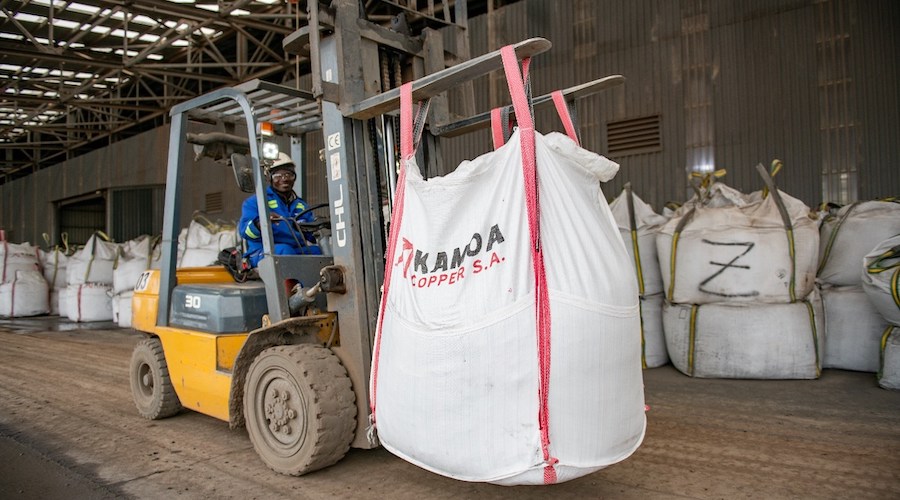
Copper production at Kamoa-Kakula. (Image courtesy of Ivanhoe Mines.)

Ivanhoe Mines (TSX: IVN) shares tumbled on Monday after the miner withdrew its production and cost guidance for the Kamoa-Kakula copper complex in the Democratic Republic of Congo following a temporary suspension of underground operations.

In a press release, the company said its is reviewing its 2025 copper production target of 520,000 to 580,000 tonnes after the Kakula underground mine was rocked by recent seismic activity. The ramp-up schedule for a new smelter has also been withdrawn.

Following the announcement, Ivanhoe Mines’ shares fell 16% in Toronto to C$10.79 ($7.86), giving the company a market capitalization of C$14.6 billion ($10.6 billion).

Kamoa-Kakula represents Africa’s largest copper-producing operation. Ownership is split among Ivanhoe (39.6%), Zijin Mining (39.6%), Crystal River Global (0.8%) and the DRC government (20%). In April, the mine outputted a record 50,176 tonnes of copper.

Normal by 2026?

In spite of limited information so far on the underground damage, Raymond James mining analyst Farooq Hamed said he’s assuming mining operations will be able to begin ramping up after de-watering and remediation efforts are completed.

“We have made an assumption that de-watering and remediation efforts will continue through the third quarter this year with the Kakula undergound beginning to ramp up in the fourth quarter with normalized run rates in early 2026,” Hamed wrote in a note on Monday.

“As a result, we are decreasing our target price to $21 per share from $23 based on the short-term impact to 2025 cash flows. The update has minimal impact to our long-term net asset value estimate on the assumption that remediation efforts will allow the mine to return normal operations in early 2026.”

More quaking

Underground operations at Kakula were paused again over the weekend after additional seismic activity, following a previous suspension last Tuesday. Mobile equipment has been removed from the mine, and employees have been brought to the surface.

Ivanhoe said it is working to boost pumping capacity to address increased water inflows into the mine.

Preliminary indications suggest the seismic activity “could potentially continue for weeks,” which would inhibit access to the mine and prolong the temporary suspension of operations at Kakula, according to the company.

Meanwhile, the Kamoa mine remains operational, and Kakula’s concentrators are currently processing surface stockpiles, Ivanhoe said.

On Friday, Ivanhoe disputed a claim by Zijin Mining regarding operational issues and the potential of missing annual production guidance.

“I remind readers that SpaceX—today responsible for approximately 90% of total payload launched into space by humanity—did not attain this status without numerous setbacks. Each setback brought their team new knowledge, making the mission stronger,” Ivanhoe executive co-chairman Robert Friedland said in a statement.

“We approach our operations at Kamoa-Kakula with the same mindset.”


Chile’s leftist presidential hopefuls spar over SQM-Codelco deal


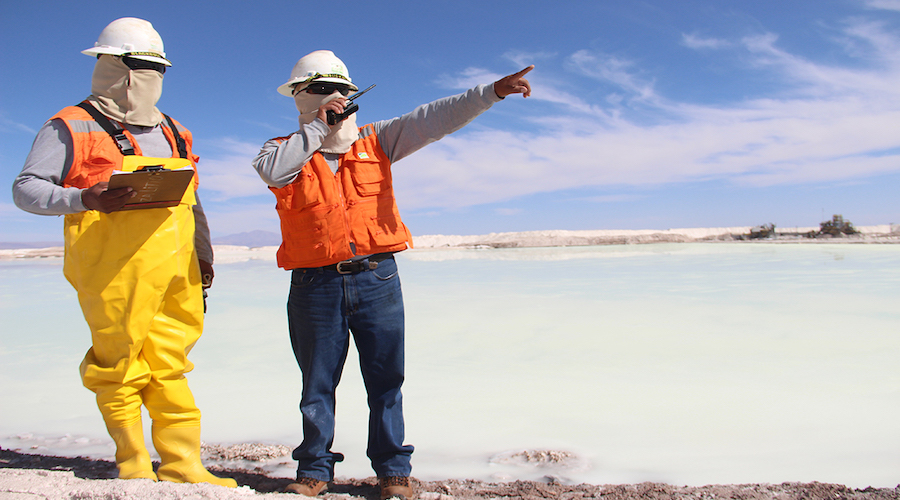
SQM already has a deal with Codelco to mine lithium in northern Chile. (Image courtesy of SQM.)

Chile’s left-leaning presidential contenders clashed over a landmark deal signed last year between lithium supplier SQM and state-owned Codelco, highlighting differences ahead of the sector’s primary vote.

“I am not willing to have the Chilean government form an alliance with SQM,” Jeannette Jara, who most recently served as President Gabriel Boric’s labor minister, said in an ADN radio debate Monday.

“I find it strange that people from the political left are supporting a deal” with SQM, a company that has “pending debts” with Chile, the Communist Party candidate said, without elaborating. SQM’s top shareholder Julio Ponce, the former son-in-law of dictator Augusto Pinochet, resigned from his decades-long reign as chairman in 2015 amid a probe over illicit political campaign financing.

By contrast, Carolina Toha, who has received backing from several center-left parties, described the SQM-Codelco deal as “something to be celebrated.”

“The fact that a natural resource belongs to the Chilean people doesn’t mean that private companies cannot participate in its exploitation,” said Toha, who served as Boric’s interior minister.

“Sometimes what’s most convenient for the country is to have private companies participate because they have more conditions to invest, they have technology, for distinct reasons,” Toha said.

It’s essential that Chile controls all lithium in its territory, Jara said.

The transaction would see SQM relinquish a majority stake in its prized Atacama salt flat operations to Codelco in exchange for three more decades of operations. Tianqi Lithium Corp., a key SQM shareholder, has said the tie-up lacks transparency and should go to a shareholder vote.

Last month, center-right presidential candidate Evelyn Matthei asked her coalition lawmakers to request information “in order to review the suitability of the pact for the country and the future development of that industry in Chile.” Last week, an investigative commission in Chile’s lower house voted against the SQM-Codelco tie-up.

Codelco expects to have the approval process wrapped up next quarter, which would allow the two companies to begin joint lithium operations before the next government takes office in 2026. Successive Chilean governments have respected contracts signed by their predecessors.

Chile’s center-left presidential hopefuls will compete in a primary vote on June 29. The winner will then advance to the Nov. 16 first round with other candidates from the political right.

Recent polls show Toha is the best positioned among the center-left contenders, followed by Jara and lower house Deputy Gonzalo Winter.

(By Matthew Malinowski)


Australia’s minerals stockpile to tackle ‘distorted’ rare earths market

Australia will build a strategic reserve of critical minerals such as lithium, cobalt and rare earths in a move to strengthen supply chains and reduce global reliance on China. (Image courtesy of Lynas.)

Rare earth and lithium producers are cautiously backing the Australian government’s proposed critical minerals strategic reserve, amid fresh details and ongoing concerns over its design.

The federal Labor government, re-elected in May, first announced the A$1.2 billion ($780 million) initiative in April during the closing days of its campaign. The plan aims to establish a stockpile of critical minerals to bolster national and allied supply chains. Initially met with limited detail and scepticism, the policy has started to take shape.

Australia’s only neodymium-praseodymium producer, Lynas Rare Earths (ASX: LYC), was among the first to raise concerns. Managing director Amanda Lacaze told The Australian Financial Review in April that the reserve could distort pricing and undercut domestic producers.

Speaking last week at a mining event in Perth, Resources Minister Madeleine King pushed back on that criticism.

“It’s been interesting, to say the least, to see some commentators claim that the government will distort market prices when these markets aren’t functioning properly in the first place,” she said.

Stockpile details emerge

King announced that the reserve could be operational by July 2026. She said the government may accumulate small, temporary stockpiles of select critical minerals, depending on market conditions. Participation will be voluntary, and the focus will be on securing strategic off-take agreements rather than propping up unviable projects.

“Off-take agreements are intended to secure supply of priority minerals for strategic reasons,” King said. “But naturally, certainty of off-take may also help in some cases. I would expect the reserve will generate cash flow from sales to key partners and deliver a return to government.”

A task-force of government and industry representatives will now be formed to hash out how the reserve will operate, including pricing, structure and storage locations.

Australia’s official list of critical minerals includes 31 commodities, but King noted the list wouldn’t necessarily dictate the stockpile. It will depend on global market dynamics, geopolitical factors and feedback from industry, she said.

Wyloo Metals CEO Luca Giacovazzi described the reserve as a potential “hybrid” between free-market dynamics and government intervention, particularly in the context of China’s dominant role in pricing.

“There’s an opportunity here, depending on how it’s designed, for government to act as an aggregator of material and negotiate country to country,” he said, “rather than relying on individual companies that are small and less competitive alone.”

Australian Strategic Materials (ASX: ASM) managing director Rowena Smith agreed that government aggregation could de-risk investments.

Australia’s minerals stockpile to tackle 'distorted' rare earths market
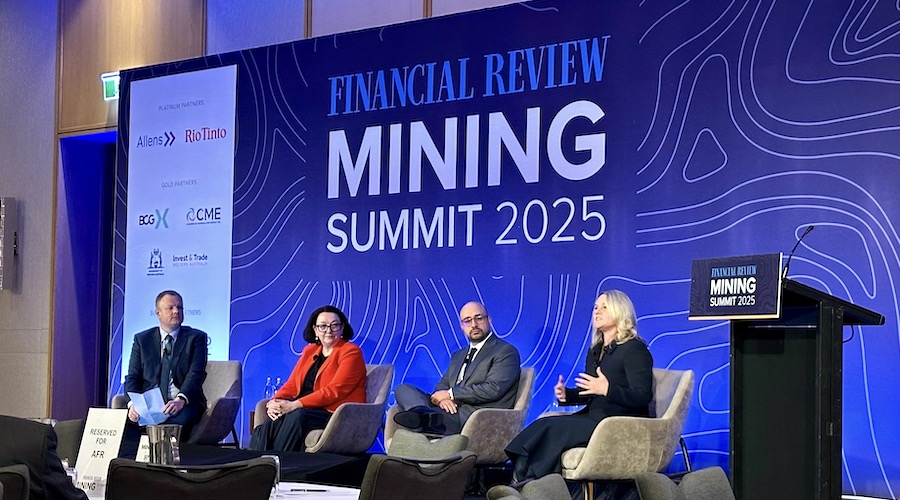
Left to right: AFR journalist James Chessell, ASM CEO Rowena Smith, Wyloo Metals CEO Luca Giacovazzi, CME WA CEO Rebecca Tomkinson. (Photo by Kristie Batten.)

“Overseas investors and off-takers are nervous about relying on small players,” she said. “If the government steps in and helps secure commitments, that could enable this sector to scale up and begin production.”

Giacovazzi stressed the importance of allowing the government room to refine the policy, adding that he doesn’t believe the stockpile will subsidize uneconomic projects.

“This isn’t a simple problem to solve,” he said. “They should be commended for trying something creative.”

Lithium sector scepticism

Not everyone is convinced. IGO Ltd. (ASX: IGO) CEO Ivan Vella pointed to historical cautionary tales, including the government’s failed wool reserve of the 20th century, which overshot its purpose and crashed the sector at the time.

“I’m sure the government’s thinking deeply, because it can go wrong,” he said. “We need global partnerships and a full value chain. Stockpiling minerals that still need to go to China for processing isn’t the solution.”

Pilbara Minerals (ASX: PLS) managing director Dale Henderson welcomed the opportunity to participate in the consultation phase but stressed the importance of price support.

“Governments globally need to be more active, letting the normal competitive landscape play out hasn’t worked,” he said. “Price support equals stability, and stability is what allows the full supply chain to develop. Volatility has prevented that from happening so far.”

As consultations begin, the reserve’s final shape remains uncertain. But with geopolitical tensions rising and global supply chains under pressure, Canberra’s move has put the issue of resource security squarely in the spotlight.


Barrick challenges Mali bid to control Loulo-Gounkoto

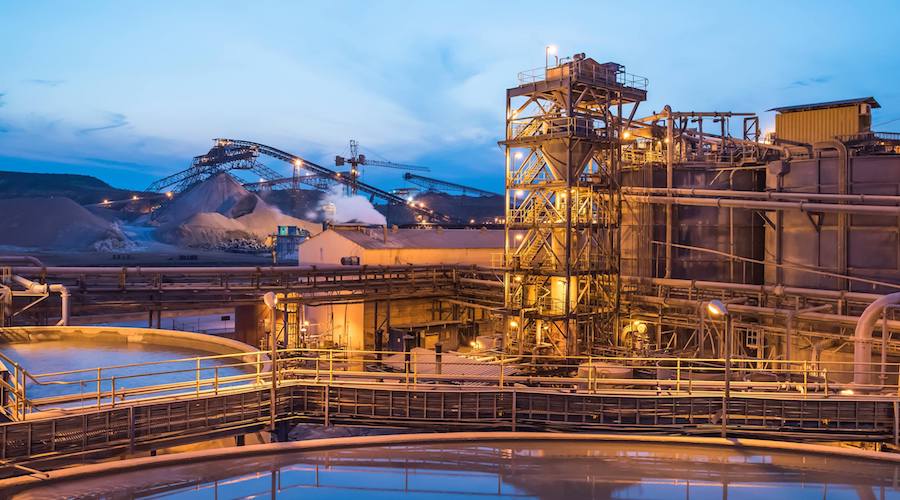
The Loulo-Gounkoto gold complex. (Image courtesy of Barrick Gold.)

Canadian gold giant Barrick (TSX: ABX; NYSE: B) is pushing back against an attempt by the Malian government to wrest control of the Loulo-Gounkoto mine complex away from the company.

Mali earlier this month formally asked a local court to impose provisional administration over the site – a request that Barrick opposes. A ruling by the president of the Bamako Commercial Tribunal following submissions made on May 22 is due June 2, Barrick said Monday in a statement.

Barrick suspended operations at Loulo-Gounkoto, its largest African asset, in January after Mali’s government seized around three tonnes of gold over alleged unpaid taxes.

Four Barrick employees have been held for over five months, a move that the company calls “unlawful,” and authorities have been blocking the company’s gold exports since November.

“There is no basis – either in law or in practice – for the day-to-day operations at Loulo-Gounkoto to be handed over to a court appointed interim administrator,” Barrick said in the statement.

“The attempt to interfere with Loulo-Gounkoto’s operations is without precedent or lawful justification. It disregards Barrick’s rights under both Malian law and binding agreements, and it is inconsistent with the principles of due process and mutual respect that should underpin partnerships between governments and long-term investors.”

Salaries paid

Barrick is paying about $15 million a month in upkeep and salaries while losing $1.24 billion a year revenue. The company, which called the suspension “reluctant,” has removed the complex from its production forecasts until 2028.

As recently as last week, Barrick wrote to the Malian Minister of Economy and Finances to reiterate its availability to resume talks on the terms of a satisfactory agreement allowing for the release of the detained employees and the resumption of activities.

Discussions with the regime have been stymied by lack of mining expertise on the government’s side, according to Barrick CEO Mark Bristow.

‘Knockdown’

“The numbers are all very muddled, because there are the settlement payments that we’ve been arguing about – it’s just a knockdown, somebody came up with a number – and then there’s legitimate tax revenues that, of course, you would pay and, and just to put it in context, if we had been operating all year to date, we would have paid a lot more than that in taxes,” Bristow told The Northern Miner in an interview earlier this month.

Barrick has been operating in Mali for nearly three decades. The company doesn’t want to put the site into full care and maintenance even though it would be at half the cost, Bristow said.

Shares of Barrick dropped 0.4% to C$26.08 in late morning trading on the TSX Monday. That gave the company a market value of about C$45 billion ($32.8 billion).


Nigeria to open two Chinese-backed lithium processing plants this year

Dutse Bridge, Abuja, Nigeria. Stock image.

Nigeria is set to commission two major lithium processing plants this year, the country’s mining minister announced on Sunday, marking a shift from raw mineral exports towards adding value domestically.

The facilities, largely funded by Chinese investors, could help transform Nigeria’s vast mineral wealth into jobs, technology, and manufacturing growth within the country.


Mining Minister Dele Alake said a $600 million lithium processing plant near the Kaduna-Niger border is slated for commissioning this quarter, while a $200 million lithium refinery on the outskirts of Abuja is nearing completion.

Two additional processing plants are expected in Nasarawa state, which borders the capital Abuja, before the third quarter of 2025, the minister said.

“We are now focused on turning our mineral wealth into domestic economic value – jobs, technology, and manufacturing,” Alake said.

Over 80% of the funding for the four facilities has been provided by Chinese firms, including Jiuling Lithium Mining Company and Canmax Technologies, according to separate announcements by governors of the states where the plants are located.

The remaining stakes are owned by local investor Three Crown Mines.

The Chinese firms did not immediately provide comment.

The push for domestic processing follows a 2022 study by Nigeria’s Geological Survey Agency, which discovered significant deposits of high-grade lithium across half a dozen Nigerian states, attracting considerable international interest.

These developments are part of Nigeria’s broader reforms to its underdeveloped mining sector, which currently contributes less than 1% to the nation’s gross domestic product.

Other reforms undertaken include restricting the export of unprocessed minerals, formalizing artisanal mining operations, which account for much of the current extraction, and establishing a state mining firm where investors can own up to a 75% stake.

(By Isaac Anyaogu; Editing by Sonali Paul)


DEI

Interview: Elpi Petraki, President of WISTA International

(Women's International Shipping and Trading Association),

Elpi Petraki
Courtesy WISTA International

Published May 26, 2025 3:12 PM by Tony Munoz


(Article originally published in Mar/Apr 2025 edition.)


As she enters her third year at the helm of WISTA (Women's International Shipping and Trading Association), Elpi Petraki can take justifiable pride in her many accomplishments – increased membership, new national chapters, a landmark second survey of "Women in Maritime" in partnership with the IMO, Observer Status at UNCTAD (United Nations Trade and Development) and more.

But that's not her style.

Instead, she's focused on the challenges ahead – raising the visibility of women in shipping, increasing their numbers, driving the diversity agenda forward and countering recent anti-DEI (diversity, equity and inclusion) developments to ensure that progress is not undone.

It's a tall order, but she's undeterred: "In the two-and-a-half years I have left as WISTA President, I plan to use every opportunity to raise the importance of diversity and encourage companies to adopt policies that support and foster inclusiveness, ensuring that women are valued for their knowledge and expertise – and are given the opportunities to grow. Collaboration is key, and by working together we can all share the load."

BACK STORY

On December 2, 1974, a handful of women brokers involved in the tanker market met for a Christmas lunch at the Ye Olde Cheshire Cheese in London. Eventually the conversation turned to the lack of women in their profession and how to change that. It marked the beginning of what would become the most influential voice advocating for women in the maritime, trade and logistics arenas.

It was, of course, a different world back then, more than fifty years ago. In those days, women in business were largely consigned to secretarial or administrative roles. In shipping, they were virtually non-existent.

Growth was slow at first. After all, there weren't that many women to begin with! The founders' original goal was to expand the base and bring more women into the profession. Otherwise, it wouldn't survive.

In 1981, the annual meeting was held in Hamburg instead of London. It marked a significant turning point. Interest was growing, and from that moment forward WISTA began to take root in several nations, leading to the establishment of many national WISTA associations, called NWAs for short. The message was clear: WISTA had to be an international organization, mirroring the global nature of the maritime industry.

1994 saw the first non-European NWA established – in Nigeria. Three years later came WISTA USA, now one of the largest chapters. In 1998 came the first Asian WISTA – in Singapore. In 2010, the first in Oceania – WISTA Australia. Today, WISTA boasts 62 NWAs and more than 5,600 members. Its annual meeting – to be held in Barcelona this year – attracts upwards of 400 delegates. It's no longer a matter of surviving. It's a matter of expanding and flourishing.

MISSION & PROGRAMS

As WISTA's membership has grown, so too has its mission. While "attracting, supporting and empowering women in the maritime, trade and logistics sectors" remains its core, the mission has expanded to include the following:

  • Fostering work environments that uphold DEI
  • Contributing to the global push for sustainable shipping
  • Narrowing the gender leadership gap
  • Strengthening the bonds within our community
  • Promoting the development of robust business relationships
  • Facilitating the professional development of our members, and Building bridges through collaboration with other associations across the globe.

"With these goals in mind," says Petraki, "we stand ready to navigate uncharted waters, ensuring that WISTA continues to lead the way, as we have done for the past five decades."

To accomplish all this, WISTA has a growing number of committees and programs. Chief among them are leadership and mentoring workshops, committees devoted to diversity, the environment, trade, technology and ports (where many jobs for women are located) and, of course, annual meetings and conferences where members can network, build relationships and discuss the challenges of the day, of which there are many.

Petraki makes clear that WISTA is not a women's organization driven by feminist ideologies: "We are, and always have been, a professional organization designed to empower women in the maritime industry – not by excluding others but by building bridges that create synergies across all genders."

Inclusiveness is the goal. "The world of shipping and the global marketplace require all hands on deck," she adds. "That includes everyone who can contribute to the sustainability of our planet and to fostering work environments that champion equal opportunity, fair pay and recognition for all."

CHALLENGES

It's no secret that shipping is undergoing significant transformations, most of them relating to decarbonization, sustainability and technology, including digitalization. There's also a growing shortage of qualified seafarers. Petraki sees these challenges as once-in-a-lifetime opportunities for women.

"These changes present a golden opportunity to reset gender imbalances, promoting more flexible working arrangements and increasing female participation in maritime roles," she explains. "Studies have shown that workforce diversity fosters innovation and makes sound business sense. Women have a critical role to play in helping solve shipping's transformation."

They also have a critical role to play in attracting, retaining and training the next generation of seafarers. Companies valuing diversity and inclusion are more likely to attract and retain employees by keeping them engaged, satisfied and committed.

Nonetheless, in recent years there's been a growing backlash against diversity initiatives in seats of government and corporate boardrooms. Petraki's response is to "double down" on WISTA's efforts to raise awareness of the importance and benefits of a diverse environment, ensuring women have the opportunities they deserve in the workplace: "We need to continue to work together and show that we are not afraid to stand up for what we believe in, to ensure everyone has a place in our industry."

THE ROAD AHEAD

So the road ahead is clear. While much has been accomplished, much needs to be done.

Topping the list is continued dialogue and collaboration with other international organizations to support evolving industry objectives and maintain WISTA's momentum and growth. This means continuing to raise awareness and levelling the playing field for women, building presence in locations that are challenging, reducing the gender leadership gap in maritime and facilitating the professional development of WISTA members.

It also means bringing more women into the fold. Petraki says one way to do that is through greater engagement with schools and universities outside of traditional hubs.

"I'd like to see more being done to encourage the next generation of women to a career in maritime," she says. "It can be hugely rewarding. Put in the hard work and continue to educate yourself as the industry continues to evolve. Every day is different, and it's an exciting, often fast-paced environment where you can thrive and never stop learning."

Tony Munoz is the publisher and editor-in-chief of The Maritime Executive. 

The opinions expressed herein are the author's and not necessarily those of The Maritime Executive.

 

India Fears Oil Spill as Cargo Ship Sinks in Arabian Sea

Indian authorities and coast guard were mobilized on Monday to contain an oil spill after a cargo ship sank off India’s West coast this weekend, leaking marine fuel and fuel from containers. 

Liberia-flagged container vessel MSC ELSA 3 sent a distress signal to authorities on Saturday, May 24, the Indian Coast Guard said. The vessel departed from the port of Vizhinjam Port on May 23, bound for Kochi with ETA on May 24. However, following the distress signal, the vessel capsized and sank in the early hours of May 25, reportedly due to flooding in one of the holds, the coast guard said on Sunday.  

All 24 crew were rescued safely.  

The vessel was carrying 640 containers, including 13 containing hazardous cargo and 12 with calcium carbide. Additionally, the ship had 84.44 metric tons of diesel and 367.1 metric tons of furnace oil in its tanks. 

The Indian Coast Guard has activated a comprehensive Pollution Response preparedness and is working in close coordination with the administration of the Indian state of Kerala to address all possible scenarios. Coast Guard aircraft equipped with advanced oil spill mapping technology are conducting aerial assessment of the affected area.

On Sunday, the state government of Kerala issued an alert to all Kerala coastal areas to warn of an oil spill. 

“Besides the oil in the fallen containers, marine fuel used in the ship has also leaked,” the Chief Minister’s Office said in a statement carried by The Indian Express

“As the oil slick can reach anywhere along the Kerala coast, an alert has been sounded across the coastal belt. The containers are drifting in the sea at a speed of 3 km per hour,” the Kerala state authorities added. 

The state government has banned fishing in an area of 20 nautical miles away from the ship that sunk. 

By Tsvetana Paraskova for Oilprice.com


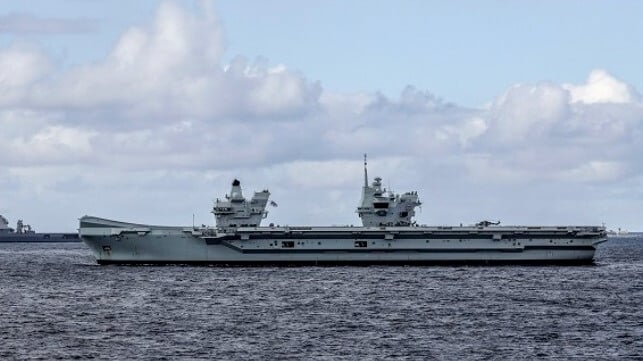
Royal Navy Carrier Heads "East of Suez"

HMS Prince of Wales

HMS Prince of Wales (Royal Navy file image)

Published May 25, 2025 6:33 PM by The Maritime Executive


Early on May 24, ships of the HMS Prince of Wales carrier strike group began a southerly transit of the Suez Canal. Although CSG 25 flagship HMS Prince of Wales (R09) was not spotted, HMS Dauntless (D33), Canadian HMCS Ville de Quebec (F332), Spanish ESPS Mendez Nunez (F104), Royal Norwegian Navy Nansen Class frigate HNoMS Roald Amundsen (F311) and Norwegian logistics vessel HNoMS Maud (A530) were seen in the northern reaches of the canal by @MT_Anderson early in the day. The complete CSG is now likely to be through the Canal. 

@MT_Anderson spotted the CSG on imagery passing through the mid-Canal Great Bitter Lake, and also identified that the CSG was accompanied by two US Navy Arleigh Burke destroyers, one of which could be USS Truxtun (D103). The presence with the CSG of a US Navy presence is politically useful, as the Houthis are in an agreed ceasefire with the United States, and the Houthis are unlikely to be able to identify individual units of the CSG.

At about the same time the USS Harry S Truman (CVN-75) carrier strike group sailed westwards through the Straits of Gibraltar and out of the Mediterranean, homeward bound.

Now that the military operation against the Houthis is over, the CSG 25 commander has the choice of making directly for the Bab el Mandeb and clearing the Red Sea. But the timetable for such a move would be predictable. Instead he may wish for a period to conduct maritime security operations in the central Red Sea, the area from which the USS Harry S Truman (CVN-75) mounted its air campaign against targets in Yemen. An exit southwards from the Red Sea would then become less predictable.

HMS Prince of Wales has on board two F-35B squadrons (809 Naval Air Squadron and 617 Squadron RAF), as well as Wildcat and Merlin surveillance helicopters, with Chinooks to lift the Royal Marines onboard.


Royal Navy Marks 85th Anniversary of the Dunkirk Evacuation

HMS Blazer little ships
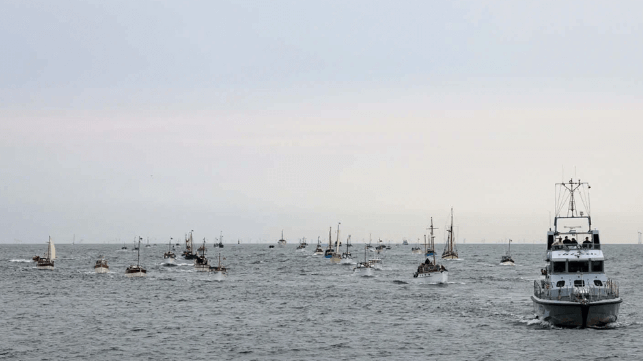
HMS Blazer escorts a recreation of the "Little Ships of Dunkirk" flotilla (Royal Navy)

Published May 25, 2025 7:43 PM by Royal Navy News


Royal Navy warships have escorted a flotilla of the legendary ‘Little Ships of Dunkirk’ across the English Channel for the anniversary of the great World War Two evacuation.

Eighty-five years ago – between 26 May and 4 June 1940 – about 850 private boats of all shapes and sizes sailed from UK shores through heavy enemy fire on a rescue mission to save allied troops stranded on the beaches and harbor at Dunkirk as the Nazis swept through France. 

Re-enacting the heroic Operation Dynamo voyage - which saw more than 338,000 soldiers rescued to fight another day - was a flotilla of 66 little ships which left Ramsgate Royal Harbor for a transit to Dunkirk.

These iconic ships were escorted to the French port by seven Royal Navy patrol vessels, as well as RNLI lifeboats, accompanied by scores of spectator craft.

Making the commemorations even more poignant was the death of one of the last naval known veterans of Dunkirk – telegraphist Duncan McInnes, who died at the age of 105 last week in Australia, just days before the 85th anniversary.

Duncan served on Admiralty S-class destroyer HMS Saladin during Operation Dynamo, and the little ships lowered their ensigns to half-mast on Monday to mark his passing.

“This will be the first time when we’ve gone over when there are no veterans,” said Ian Gilbert, Honorary Vice Admiral, Association of Dunkirk Little Ships. “The little ships are the veterans because the living link has now gone and we have to keep these boats alive to keep the memory alive.”

Commemorative events started May 20, with seven P2000 patrol craft of the Royal Navy’s Coastal Forces Squadron arriving in Ramsgate, joining the flotilla of little ships. 

Twenty-one personnel from Victory Squadron at HMS Collingwood were also involved, embarking in the little ships for the crossing.

Musicians of the Royal Marines Band from Portsmouth paraded in Ramsgate as His Royal Highness Prince Michael of Kent, Commodore-in-Chief of the Maritime Reserves, took the salute and unveiled a statue that commemorates the events on Dunkirk.

"It is hugely important to continue to commemorate such events in our history and highlighting the role such little ships had to play in Operation Dynamo. Coastal Forces Squadron is very proud to be a part of this event, particularly since it has been ten years since the last commemoration of this scale. It will be quite a spectacle to see so many paying their respects across the Channel," Coastal Forces Squadron Commanding Officer Commander Carla Higgins said. 

This article appears courtesy of the Royal Navy and may be found in its original form here.  

The opinions expressed herein are the author's and not necessarily those of The Maritime Executive.