Thursday, October 02, 2025

Kupyansk On The Brink And Ukraine’s Other Battlefield Woes – Analysis
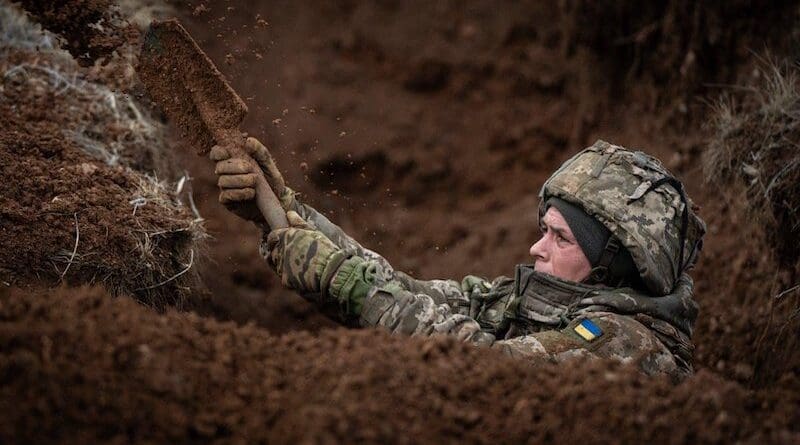
A Ukrainian soldier digs a trench. Photo Credit: Ukraine Defense Ministry

October 3, 2025

By 

By Mike Eckel


Ukrainian forces overran poorly prepared Russian defensive positions in September 2022, sweeping north, east, and south across the Kharkiv region, reaching all the way to the Oskil River and recapturing the rail junction city of Kupyansk.

It was a high-water mark for Ukraine, as much a sign of Ukrainian pluck as it was an symptom of Russian disarray.

Three years on, Kupyansk is on the verge of being seized by Russia once again. This time, it reflects Ukrainian struggles as much as it does Russian determination — and the Kremlin’s willingness to absorb mind-numbing casualties.

As the fourth fighting season of Russia’s all-out war on Ukraine nears an end, the situation across the 1,100-kilometer frontline largely resembles the situation at the beginning of the season.

Russia has suffered more than 1 million casualties to date, with at least one quarter of those killed, according to Britain’s spy chiefUkraine’s losses are fewer, but given its population size, arguably more onerous: an estimated 400,000 in total, with dead totaling at least 100,000.


“We are in a war of attrition,” said Thibault Fouillet, a military expert and deputy director of the Institute for Strategic and Defense Studies, a French think tank. “The decisive factor is only the capacity to endure, to patiently erode the enemy potential; all will be cumulative, not a decisive blow.”

Barring a major shift in fortunes, Kupyansk’s fall could coincide with onset of autumn rains and cold weather; for Ukrainian forces, a demoralizing coda 44 months into the invasion.

Here’s where things stand.

Kupyansk

Entrenched largely on the eastern banks of the Oskil River, Russian troops have slowly ground forward to the north for months, as commanders have prioritized other locations along the front.

The city is home to a major rail line that allows Ukrainian forces to resupply their positions from Kharkiv, the country’s second largest city.

Sometime in early September, Russian forces used parts of the underground gas pipeline network, creeping for kilometers underground, beneath the Oskil River, to bypass Ukrainian positions on the northern outskirts of Kupyansk.

It was at least the third time Russian troops had pulled off a tunnel ambush.

Ukrainian forces said they later destroyed the pipeline and killed or captured dozens of Russian troops. But they also acknowledged that an unknown number of Russian soldiers had slipped through and hidden – sometimes individually – in locations around the area.

“The enemy isn’t conducting assault operations. They’re infiltrating their personnel. They’re not trying to storm our positions. They’re simply bypassing them and trying to enter the city itself,” Vitaliy Shum, head of the training group for the 151st Reconnaissance Shock Battalion of the 10th Army Corps, told Current Time last week“The area is wooded, with lots of trees. And when there’s a gap between our positions, they try to push their personnel through it.”

According to Deep State, a battlefield tracking group that has ties to the Ukrainian military, Russian forces have entered several northern districts of Kupyansk. And Russian officials claim Ukrainian commanders have already redeployed forces to keep the city from falling.

“The situation is critical; the enemy is still in the city. There are sabotage and reconnaissance groups in the city, and our special forces are undertaking counter-sabotage operations,” Andriy Besedin, the head of the regional military administration, told a Ukrainian state broadcast on September 28.

Pokrovsk/Dobropillya

About a four-hour drive south in the Donetsk region, Pokrovsk – a bigger city with both road and rail junctions – has been under threat of encirclement by Russian forces for most of the year.

Driving the resupply route along a highway stretching toward the major metropolitan area of Dnipro, 180 kilometers away, became more dangerous earlier this year after Russian forces moved into the village of Kotlyne, to the southwest.

“Russian forces are pressed for time, because of worsening weather as well as the Kremlin’s political imperatives,” Lawrence Freedman, an emeritus professor of war studies at King’s College London, wrote in a recent analysis. Russia has “been targeting it for well over a year. Even if they can’t meet [President Vladimir] Putin’s ambitious timetable, capturing Pokrovsk would give them something to show for the year’s effort.”

Weather in recent days – in particularly high winds — made it more difficult for both Ukrainian and Russian drone units to operate in the Pokrovsk area, according to Maksym Bakulin, a press officer with the National Guard’s 14th Operational Brigade.

The situation northeast of Pokrovsk is more problematic for the Ukrainians.
In early August, an unknown number of small-sized Russian units broke through porous Ukrainian defenses east of the town of Dobropillya.

The breakthrough highlighted both how stretched and understaffed Ukraine’s defenses are, and the tactic Russian commanders have relied on over the course of 2025: send small units, sometimes just one or two soldiers, possibly using motorcycles or all-terrain vehicles, to speed past or around Ukrainian trenches, and then dig in until Russia can reinforce or use artillery drones to batter nearby defenses.

It also forced commanders to redeploy troops from some of Ukraine’s most battle-hardened units, including the Third Separate Assault Brigade.

“Russian troops’ primary method of operation is small infantry groups,” Denys Popovych, a Ukrainian military observer, told RFE/RL’s Ukrainian Service. “A process of infiltration, seeping in, and then creating these metastasizing pockets that then close in, and absorbing the enemy.”

“They create ‘kill zones’ where everything is destroyed,” he said.

Since the breakthrough, though, Ukrainian soldiers have managed to surround an unknown number of Russian troops. In some cases, experts point to defensive and offensive lines being dangerously entangled, with frontline soldiers unable to tell where enemy positions lie.

Captain Viktor Trehubov, a spokesman for the Dnipro regional command, told state TV that rear-guard Russian units had been unable to resupply the units that had managed to slip through Ukrainian defense.

The Russian “intestine,” Trehubov said, was now being “cut and dissected” by Ukrainian troops.

Zaporizhzhya

Further southwest, the front lines south of the city of Zaporizhzhya have been largely static for much of 2025, not to mention for much of the previous two years.

Over the summer, Ukrainian officials reported an uptick in small-scale infiltration tactics, again using motorcycles and off-road vehicles, along with drone units.

“We haven’t witnessed this level of activity in the past three years,” a battalion commander from the 65th Separate Mechanized Brigade told the online channel Espreso TV in July. He identified himself by the call sign “Forest” in line with military protocols.

In early September, Ukraine’s commander-in-chief, General Oleksandr Syrskiy, said that Ukrainian troops had thwarted a planned large-scale offensive in Zaporizhzhya, and Russian commanders redeployed marine infantry and other units east to the Donetsk region.

  • Mike Eckel is a senior international correspondent reporting on political and economic developments in Russia, Ukraine, and around the former Soviet Union, as well as news involving cybercrime and espionage. He’s reported on the ground on Russia’s invasion of Ukraine, the wars in Chechnya and Georgia, and the 2004 Beslan hostage crisis, as well as the annexation of Crimea in 2014.RFE RL
  • RFE/RL journalists report the news in 21 countries where a free press is banned by the government or not fully established.


Ukrainian Authorities Begun To Evacuate Kupyansk – Analysis

A Ukrainian soldier. Photo Credit: Ukraine Defense Ministry


By 

By Can KasapoÄŸlu


1. Battlefield Assessment

Fighting continued at a high operational tempo last week, with 120 to 140 tactical clashes each day. According to data circulated by the Ukrainian General Staff, 30 percent of these occurred around the long-embattled Pokrovsk sector, where Russian forces made advances. The area around Toretsk and the Lymansk sector each hosted roughly 10 percent of last week’s tactical engagements.

Russian forces continued to make incremental gains along the axis from Kharkiv to Kupiansk, prompting Ukraine to begin evacuating the latter city. Ukrainian press sources reported that covert Russian sabotage units have penetrated the area disguised as Ukrainian servicemen.

Heavy drone activity also continued throughout the battlespace. The area around Kharkivfaced intense Russian drone attacks. Dnipro bore the brunt of the salvo, which deliberately targeted the civilian population. Meanwhile, Ukrainian drones targeted 170mm Koksan self-propelled artillery pieces, which Russia received from North Korea.

Notably, signs emerged that Ukraine’s attacks on Russian oil infrastructure have made a significant impact. Open-source visual evidence indicates that Russia has been placing protective metal structures over its energy facilities to protect them from long-range Ukrainiandrone strikes. The Kremlin also recently banned the export of gasoline until the end of 2025 in an effort to conserve its resources for domestic use.

2. Swedish Gripens Could Soon Join Ukraine’s Air Force

Ukrainian First Deputy Defense Minister Ivan Havrylyuk announced that Ukraine plansto acquire Gripen combat aircraft from Sweden, though Sweden and Ukraine have not reached a final agreement on the procurement of the fighters.


The transfer of these advanced fighters has long been in the offing. As early as 2023, Swedish Defense Minister PÃ¥l Jonsson offered to familiarize Ukrainian pilots with the Gripen platform. As their need for a more advanced air deterrent has grown, Ukrainian officials have become less reluctant to operate a European fighter aircraft alongside American-supplied F-16s.

Along with the Eurofighter Typhoon and the French Dassault Rafale, the Saab Gripen baseline is one of three principal European platformsoperated by NATO member states. The Gripen family’s latest variant, the Gripen-E, was initially developed to replace older Gripen-C/D models. But the worsening threat landscape across Europe prompted Swedish military planners to equip some C/D platforms with modifications that extended their lifespan.

Thus far, the Swedish platform has not matched its competitors’ popularity in the international weapons market, nor have the world’s top militaries adopted the airframe. Still, Thai forces successfully used Gripens to target Cambodian artillery in the nations’ summer 2025 border dispute.

At the outset of Russia’s full-scale invasion of Ukraine, many Western analysts considered the Gripen the best option for Ukraine’s nascent advanced air deterrent. The Swedish Air Forcehas long centered its doctrinal approach on low-level air superiority concepts of operations that can succeed under severe pressure and from dispersed bases. Moreover, the Gripen requires a relatively modest crew. Operating the craft requires just two ground vehicles, six ground personnel, and one aviation maintenance professional. The Gripen can take off and land from highways, and it is designed to fly in temperatures as low as negative 78 degrees Fahrenheit. Finally, the aircraft’s electronic warfare suite has reportedly been optimized to counter Russian combat aircraft and air defense systems.

So while other fighters may have captured larger shares of the international weapons market and logged superior combat records, the Swedish Gripen could be the perfect European addition to Ukraine’s growing contingent of advanced aircraft.

3. Ukraine Joins NATO Naval Exercises

The Ukrainian Navy’s success in the Black Sea helped Kyiv secure a prominent place in the high-tech maritime exercises NATO put on last week.

This year’s exercises, in Portugal, focused on integrating unmanned systems into a connected operational environment. The drills combined two NATO initiatives: Robotic Experimentation and Prototyping with Maritime Unmanned Systems (REPMUS), a global showcase for military-grade maritime robotics; and Dynamic Messenger (DYMS), a part of NATO’s operational experimentation series. The exercise sought to assess new maritime capabilities includingorganic intelligence, surveillance, reconnaissance (ISR) measures, underwater infrastructure defense, and tactics to counter multi-domain unmanned vessels.

Co-organized by NATO’s Allied Command Transformation (ACT) and Allied Maritime Command (MARCOM) and hosted by the Portuguese Navy, the exercise deployed elements of Standing NATO Mine Countermeasures Group 2 and Standing NATO Maritime Group 1. The Ukrainian Navy played the enemy force, or the so-called red team. In the exercise, the red team had a force of one unmanned ground vehicle, 57 unmanned surface vehicles (USVs), and 61 aerial drones of varying designs. According to press sources, Ukraine’s hypothetical robotic flotilla also included the Magura V7 USV, which the real Ukrainian Navy reportedly used to shoot down two Russian Su-30SM combat aircraft earlier this year.

As its participation in these exercises demonstrates, Ukraine’s success against the Russian Navy in the Black Sea offers invaluable lessons for NATO. At present, the Ukrainian military boasts more experience with robotic naval combat operations than any other military in Europe. Ukraine’s success could significantly influence NATO’s future naval strategies and help foster continued maritime cooperation between the alliance and Kyiv.

  • About the author: Can KasapoÄŸlu is a nonresident senior fellow at Hudson Institute. His work at Hudson focuses on political-military affairs in the Middle East, North Africa, and former Soviet regions. He specializes in open-source defense intelligence, geopolitical assessments, international weapons market trends, as well as emerging defense technologies and related concepts of operations.
RIGHT WING THINK TANK
Hudson Institute

Hudson Institute is a nonpartisan policy research organization dedicated to innovative research and analysis that promotes global security, prosperity, and freedom.


WAR IS ECOCIDE

US reportedly to share intelligence with Ukraine for long-range strikes on Russian energy sites

US reportedly to share intelligence with Ukraine for long-range strikes on Russian energy sites
US-Ukraine relations are warming up following new intelligence sharing agreement. / bne IntelliNews
By bne IntelliNews October 2, 2025

The United States will provide Ukraine with intelligence support for long-range missile strikes against energy infrastructure inside Russia, the Wall Street Journal reported on October 1, quoting US government sources. 

This would be the first time Washington has directly backed attacks deep into Russian territory as President Donald Trump sharpens his stance toward Moscow. While the US has supplied Kyiv with battlefield intelligence since Russia’s 2022 invasion, it has until now avoided enabling strikes far beyond the front lines for fear of escalation with Moscow.

US intelligence is expected to make it easier for Ukraine to target Russian energy facilities, including refineries, pipelines and power plants. 

As bne IntelliNews previously reported, with Kyiv rapidly running out of money following the withdrawal of US support since Trump took office, Ukrainian President Volodymyr Zelenskiy has taken matters into his own hands: if the West cannot effectively cut Russia’s oil exports, Ukraine has begun to use its long-range drones and new cruise missiles to target Russian refineries, reducing throughput by some 20% since August and causing a fuel crisis in some Russia's regions.

Trump, meanwhile, has adopted increasingly confrontational rhetoric toward Russia after initially pushing what he called a “minerals diplomacy” approach. 

In recent weeks, he has urged European allies to cut oil purchases from Russia in return for his support for tougher sanctions. 

Alongside the intelligence support, Washington is understood to be weighing whether to supply Ukraine with long-range US missiles, including Tomahawk cruise missiles with a range of 2,500 kilometres. If approved, the weapons would allow Kyiv to strike strategic targets across much of European Russia, including Moscow.

Ukraine has also begun producing low-cost drones and a domestically developed long-range missile, the Flamingo.

Russian presidential spokesman Dmitry Peskov told a press briefing on October 2 that Moscow will respond "appropriately" if Tomahawks are sent to Ukraine, Russian newswire TASS reported. 

At the United Nations General Assembly in New York last month, Trump told world leaders that he now believed Ukraine could fully restore its territorial integrity if Nato allies provided sufficient US-made weapons, as bne IntelliNews reported.

He described Russia as a “paper tiger” and urged European capitals to bear more of the financial burden.

Trump also wrote on his Truth Social platform that Ukraine “could retake all its land occupied by Russia”, a striking reversal from his earlier reluctance to commit to Kyiv’s war aims.

The shift appears to reflect Trump’s recognition that efforts to resolve the conflict through economic deals with Moscow – particularly focused on energy and mining rights – have stalled.

Trump had previously pressed Ukraine to agree to grant access to US firms in exchange for limited security guarantees, a move criticised in Kyiv as one-sided.

Russia launched its full-scale invasion of Ukraine in February 2022. More than three and a half years later, fighting has settled into a grinding conflict with heavy casualties on both sides.

Russia has been ramping up its military production, and is now producing more arms and ammo than it needs to perpetrate the war in Ukraine, the Kiel Institute reported at the end of September. All the main arms categories – tanks, military vehicles, artillery and drones – have seen production increase by almost 200% or more since the war began in 2022.

DANGER, DANGER

Russian strikes cut power to Zaporizhzhia and Chernobyl nuclear plants


Ukraine’s Chernobyl and Russian-occupied Zaporizhzhia nuclear plants lost power on Wednesday after nearby Russian attacks, raising international safety concerns. Emergency diesel generators are keeping critical systems running while authorities warn of ongoing risks, Kyiv said.


Issued on: 01/10/2025 - 

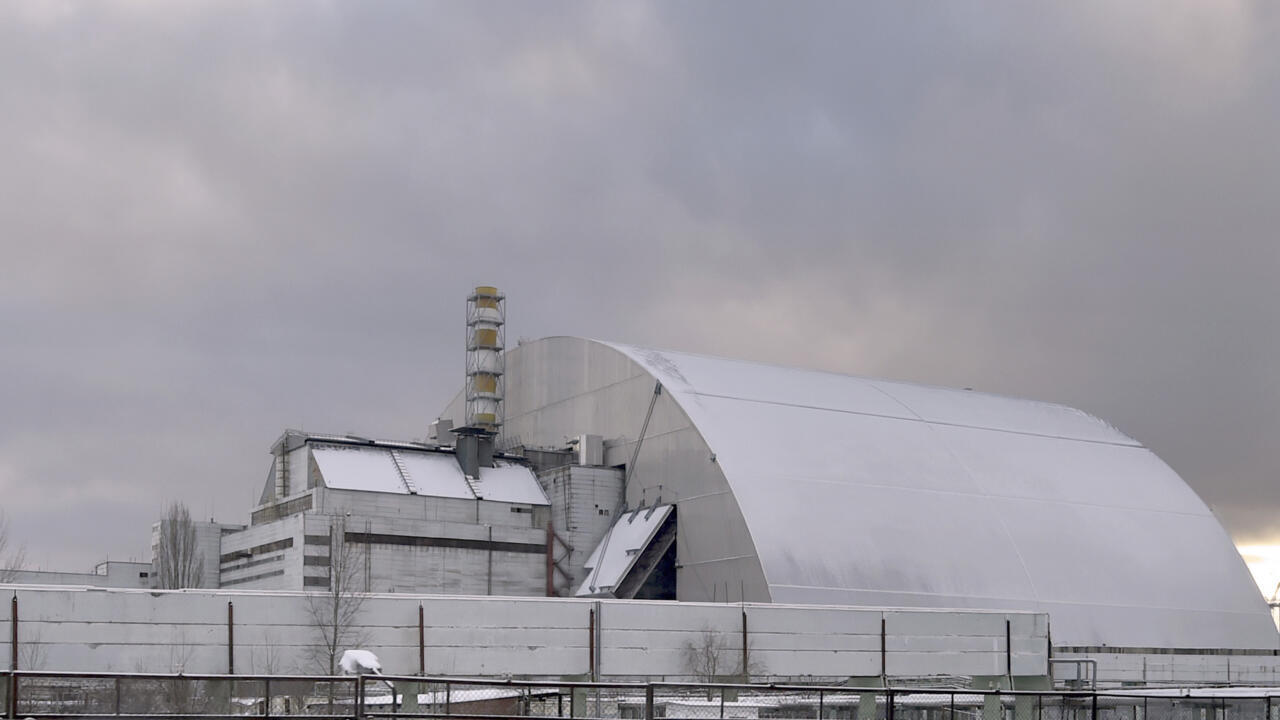
The New Safe Confinement was completed in 2016 © SERGEI SUPINSKY / AFP

The site of Ukraine's defunct Chernobyl nuclear plant – partially destroyed in a 1986 meltdown – lost power on Wednesday after Russia shelled a nearby substation, Kyiv said.

The UN's atomic energy watchdog said the blackout affected the confinement structure housing the plant's damaged reactor core and that two emergency diesel generators were now supplying it with electricity.

The incident comes eight days after the Russian-occupied Zaporizhzhia nuclear plant in southern Ukraine also lost power – an ongoing situation that Ukraine calls "critical" but that Russia says is "under control".

Both incidents have heightened concerns about the safety of Ukraine's nuclear sites, which have suffered repeated attacks since Russia's 2022 invasion.

"Today, a Russian strike on one of our energy substations in Slavutych caused a blackout lasting more than three hours at the former [Chernobyl] Nuclear Power Plant facilities," Ukrainian President Volodymyr Zelensky said on Facebook.

"This included the New Safe Confinement, which protects the environment from remnants of reactor four after the 1986 explosion, as well as from radioactive debris and dust," he added.

He accused Russia of posing a threat to global security and called for a "strong response".

The UN's International Atomic Energy Agency said the plant had lost connection to a substation in the town of Slavutych, without elaborating.

"The site swiftly switched to alternate lines and power was restored, except for the New Safe Confinement (NSC), which covers the old sarcophagus built after the 1986 Chernobyl accident," the UN agency said.

"Two emergency diesel generators are now supplying the NSC with electricity."

The New Safe Confinement, completed in 2016, is a large shield-like structure that surrounds the Unit Four reactor and prevents the release of radioactive material.

A Russian drone attack damaged the confinement structure in February but did not result in increased radiation in the surrounding area, Ukrainian authorities said.
Zaporizhzhia off the grid

The Russian-occupied Zaporizhzhia nuclear plant has, meanwhile, been disconnected from the power grid since last Tuesday.

Both Russia and Ukraine have traded blame for causing that blackout.

The plant's six reactors, which before the war produced around a fifth of Ukraine's electricity, were shut down after Moscow took over.

But the site needs power to maintain the cooling and other safety systems that prevent the reactors from melting down and releasing radiation into the atmosphere.

Zelensky said Tuesday the situation there was "critical" and that one of the backup diesel generators had "malfunctioned".

The Moscow-installed operator said Wednesday that the situation there was "under control".

Since the start of the war, Zaporizhzhia has seen multiple safety threats, including frequent nearby shelling, repeated power cuts and staff shortages.

The site sits near the city of Energodar on the Dnieper river, the de facto front line in southern Ukraine.


France to try Chinese captain of Russia 'shadow fleet' vessel

Rennes (France) (AFP) – A French court is to try the Chinese captain of a tanker from Russia's "shadow fleet" early next year, prosecutors said Thursday, after it was intercepted off the coast of France.


Issued on: 02/10/2025 - RFI

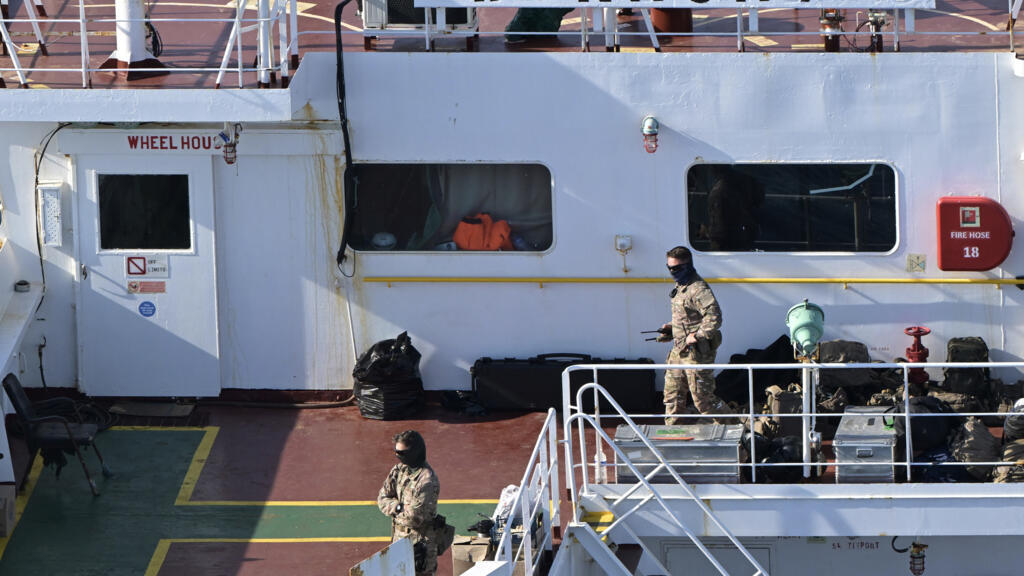
French military personnel remained on board the tanker.
 © Damien MEYER / AFP/File

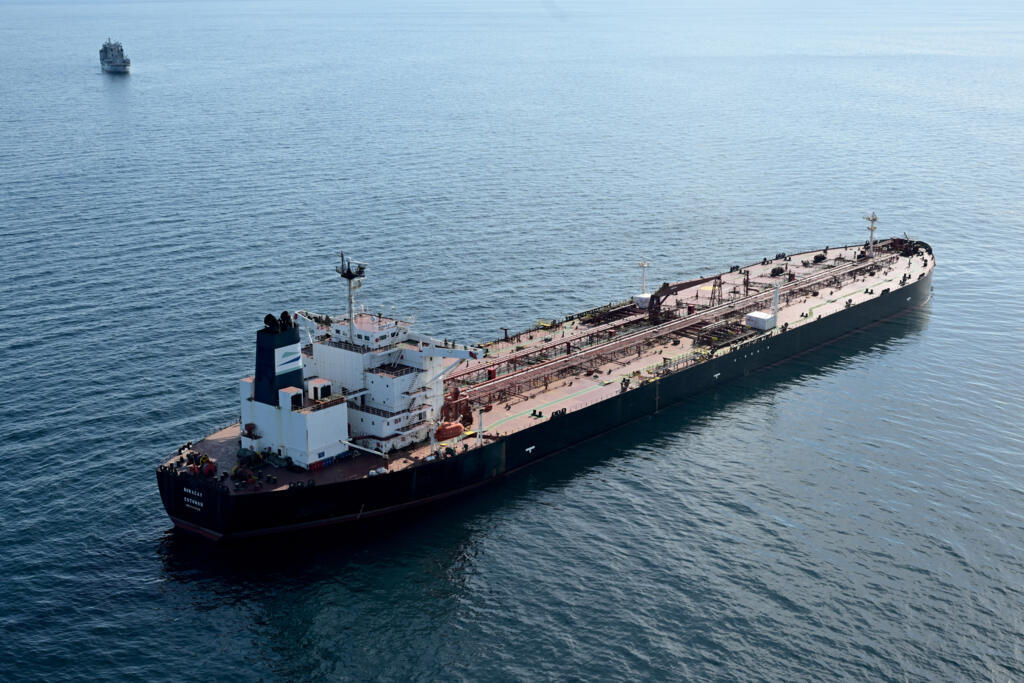
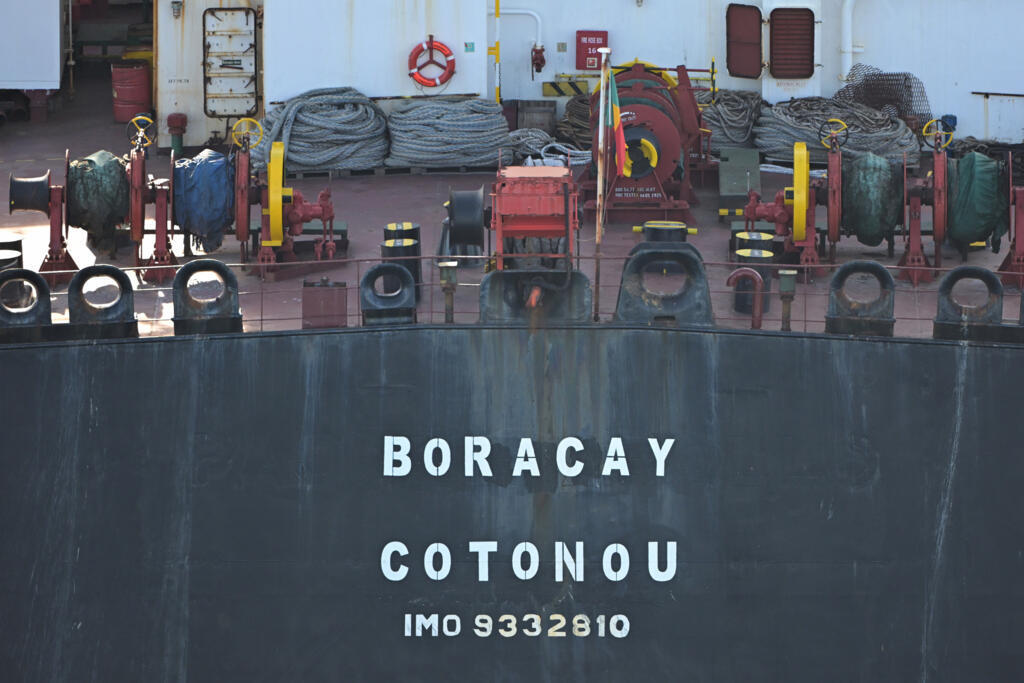
Boracay, a Benin-flagged vessel blacklisted by the European Union for being part of Russia's sanction-busting "shadow fleet" of ageing oil tankers, was stopped by French authorities on Saturday, according to a military source who asked not to be named.

Shipping data analysed by AFP has shown it was positioned off Denmark during mysterious drone flights over the country last month, including over military sites, that prompted brief closures at several airports.

French President Emmanuel Macron on Thursday urged Europe to "increase the pressure" on Russia's shadow fleet and follow his country's lead in detaining vessels used to fuel Moscow's war in Ukraine.

"You kill the business model by detaining, even for days or weeks, these vessels and forcing them to organise themselves differently," Macron told a leaders' gathering in Denmark.

He said on Wednesday France was probing the ship for "serious offences", but stopped short of confirming reports of a connection to the Denmark drone flights.

The captain and first mate of the Boracay were detained on Tuesday over refusing to provide evidence of nationality or cooperate with French authorities, according to the public prosecutor's office in the northwestern city of Brest.

The captain has been summoned to appear in court in February, but the first mate has been released, it said.

Russia's shadow fleet is estimated to include up to 1,000 ships 
© Damien MEYER / AFP

It was not immediately clear if the captain would be released under certain conditions or if the Russia-linked ship could go on its way.

French military personnel remained on board the tanker on Thursday, another military source who spoke on the condition of anonymity said.

'Navy commandos'

French Prime Minister Sebastien Lecornu on X thanked "navy commandos and the crews of the French navy who intervened this weekend aboard the tanker belonging to the Russian ghost fleet".

Estimated to include up to 1,000 ships, the shadow fleet is thought to represent "tens of billions of euros of Russia's budget" and make up "40 percent of the Russian war effort", according to Macron.

The vessels -- which fly flags of convenience, have opaque ownership, and often turn their transponders off -- enable Moscow to keep exporting its crude oil for much-needed revenue despite curbs on exports.

The first military source told AFP that Russian ships were common off the French coast.

"Every day between 10 and 15 vessels from the shadow fleet sail off the coast of Brest," the source said.

The tanker left the Russian port of Primorsk on September 20 
© Damien MEYER / AFP


The Boracay -- which has also been named the Pushpa or the Kiwala -- was positioned off Denmark from September 22 to 25, according to data from the maritime website VesselFinder analysed by AFP.

According to the specialist website The Maritime Executive, the 244-metre (801-foot) vessel is suspected of being involved in the drone flights over Denmark.

The publication said the tanker and other ships could have been used either as launch platforms or as decoys.

The tanker left the Russian port of Primorsk outside Saint Petersburg on September 20, shipping data showed.

Data from the Marine Traffic tracker showed the tanker was scheduled to arrive in Vadinar in northwestern India on October 20.

France detains two crew members of Russia-linked tanker off western French coast


France on Wednesday detained two crew members of a Russian "shadow fleet" tanker seized off the coast of the French western port of Saint-Nazaire, according to the Brest prosecutor.


Issued on: 01/10/2025 - 
By: FRANCE 24

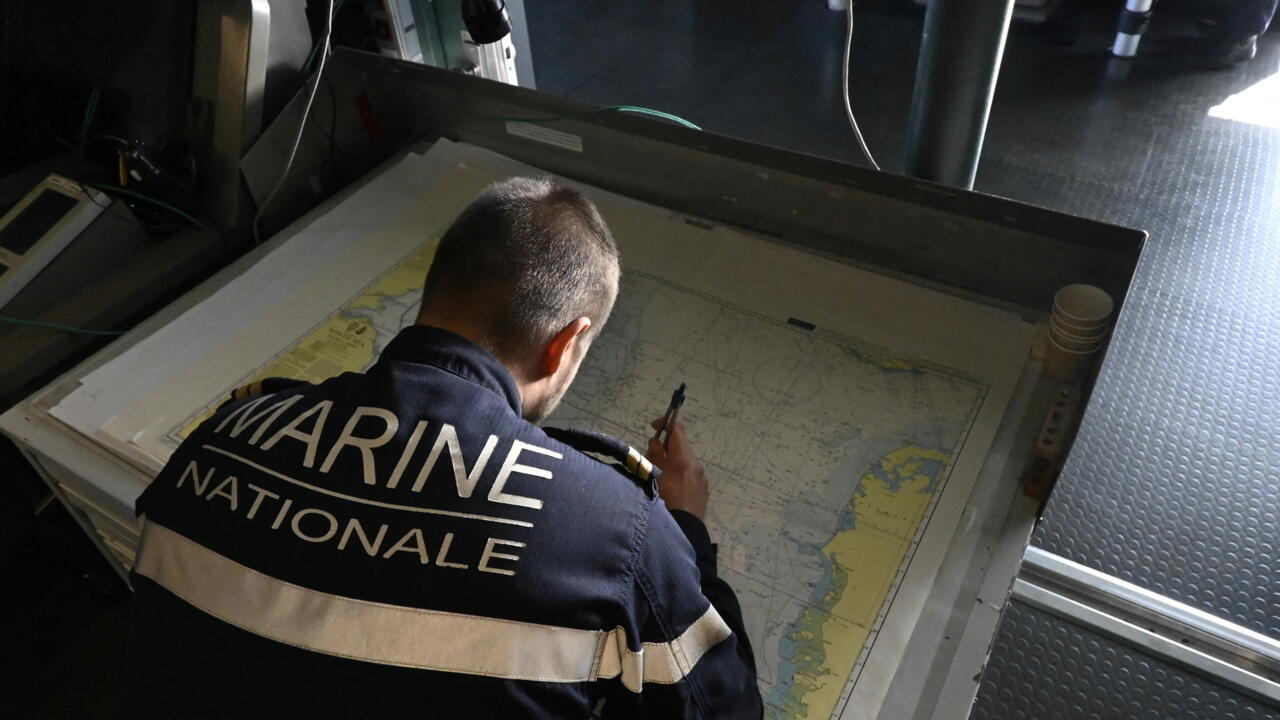
Navigator Second Master Timonier, Quentin, takes measures on a map of the North Sea on board of French Navy frigate Bretagne ahead of NATO Neptune Strike 2025 exercise on September 22, 2025. © Jonathan Klein, AFP

Two crew members of a Russian "shadow fleet" tanker seized off the French coast were taken into custody on Wednesday, according to the prosecutor for the western French port city of Brest.

The tanker is suspected of being involved in drone overflights in Denmark, and the two detained crew members "presented themselves as the ship's captain and his first mate", said Brest prosecutor Stéphane Kellenberger.

The prosecutor said the preliminary investigation is focused on "failure to provide proof of the vessel's nationality" and "refusal to comply" with instructions, for which the maximum penalty is one year in prison and a €150,000 ($175,000) fine.

Earlier Wednesday French armed forces boarded the Boracay, a Benin-flagged vessel blacklisted by the European Union for being part of Russia's sanction-busting fleet of ageing oil tankers.

France is probing the tanker, anchored off Saint-Nazaire in western France, for "serious offences", said President Emmanuel Macron – stopping short of confirming reports of a connection to mysterious drone flights in Denmark.

French authorities have opened a probe into the Boracay, a Benin-flagged vessel anchored off France's Atlantic Coast that has been blacklisted by the European Union for being part of Russia's sanction-busting "shadow fleet".

"There were some very serious offences committed by this crew, which justify the current judicial procedure," Macron told reporters at an EU leaders' summit in Copenhagen.

Read moreEU leaders meet to plan defence strategy after drone incursions over Denmark

Built in 2007 and variously known as Pushpa and Kiwala, the Boracay has been anchored off Saint-Nazaire in western France for several days.

According to the specialist website The Maritime Executive, the vessel is suspected of being involved in mystery drone flights that disrupted air traffic in Denmark in September.

The publication said the tanker and other ships could have been used either as launch platforms or as decoys.

But when asked about those claims, Macron said he would "remain very careful", as it was not for him to establish a link between the Boracay and the drone flights.

Read moreDenmark drone incursions: All signs point to Russia?

The French operation, however, underscored the importance of European efforts to stop the "shadow fleet" of vessels aiding Russia to circumvent Western sanctions.

The EU has sanctioned hundreds of ageing tankers used by Russia to circumvent oil export curbs imposed after the 2022 invasion of Ukraine to sap Moscow's war chest.

Among them is the Boracay, which was blacklisted in February under the name Kiwala.

The public prosecutor's office in the northwestern French city of Brest said it had opened an investigation following a report from the navy.

The probe was launched over the crew's "failure to justify the nationality of the vessel" and "refusal to cooperate", public prosecutor Kellenberger told AFP.

The tanker left the Russian port of Primorsk outside Saint Petersburg on September 20 and was due to arrive in Vadinar in northwestern India on October 20, according to data from the Marine Traffic tracking website.

(FRANCE 24 with AFP)
Fuel leak blows cover for alleged Russian submarine Novorossiysk off Gibraltar


At the end of September, a Telegram channel known for its network of Russian intelligence sources reported that a Black Sea fleet submarine had run into “serious technical problems” while on a mission off Gibraltar, in the Mediterranean. The Novorossiysk submarine was at risk of exploding, it said, and according to online sleuths, later surfaced, giving away its location. But the question remains, what was a Russian sub even doing there? This is what we know so far.


Issued on: 01/10/2025 - 
FRANCE24
By: Sébastian SEIBT

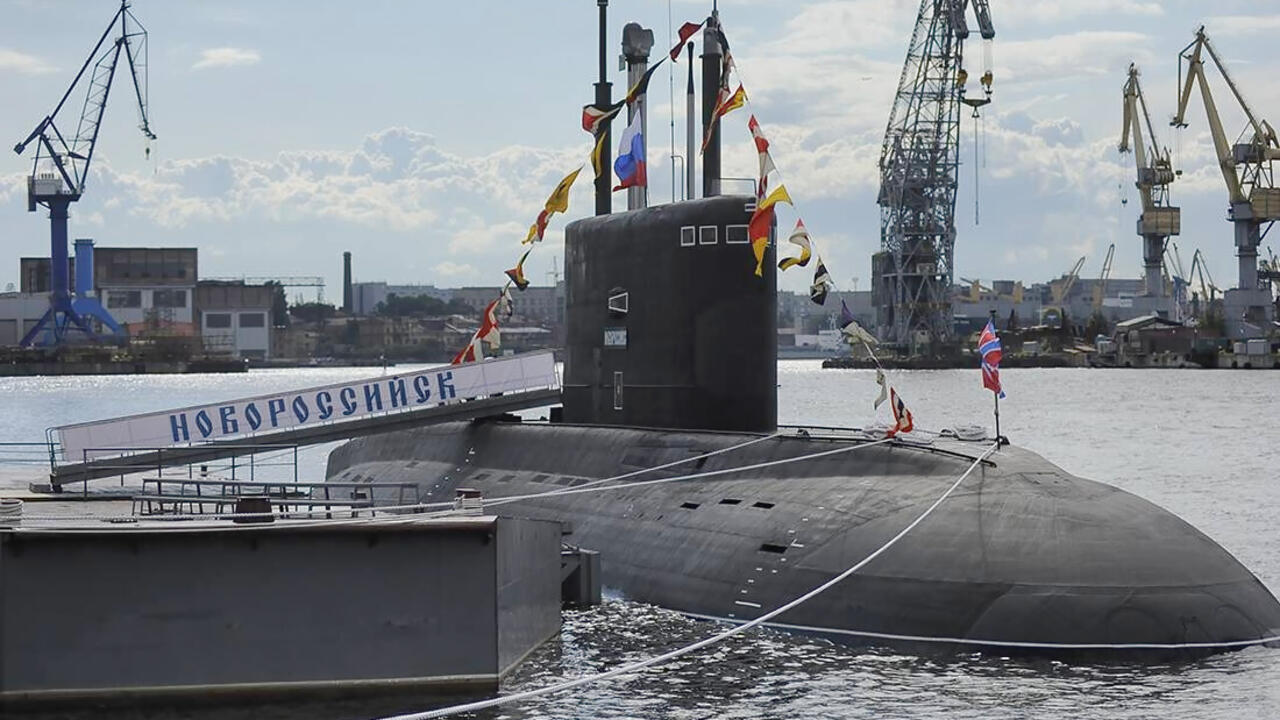
Russia’s Novorossiysk submarine, pictured in 2015, has reportedly experienced “serious technical problems” off Gibraltar’s coast and could be at risk of explosion. 
© Russian army/ File picture

The news that a short-range Russian stealth hunter was circling in the Strait of Gibraltar first came to public attention on September 27. The anti-Kremlin Telegram channel VChK-OGPU reported that the 74-metre-long Kilo-class Novorossiysk “currently on combat duty in the Mediterranean” had experienced a technical failure, and that fuel was leaking into the bilge, the very bottom of the vessel hull.

“The submarine has neither the spare parts nor the qualified specialists onboard to fix the malfunction,” VChK-OGPU wrote, and warned that the sub “now poses an explosion hazard”.

An alleged September 26 sighting of a submarine surfacing in the Strait of Gibraltar appeared to confirm its location. According to online sleuths, a US Navy maritime patrol plane also flew over the area where the submarine was spotted for several days in a row.

Neither Russian authorities nor state-controlled media have confirmed the sub’s presence in the Mediterranean.

FRANCE 24 takes a closer look at why the Novorossiysk was in one of the busiest and most strategic naval corridors in the world.


What kind of submarine is it?

The Novorossiysk is 74 metres long and can carry a crew of around 50 people. Alexandre Vautravers, a defence expert and editor-in-chief of the Swiss Military Review, said the diesel-electric sub is relatively modern.

“It was developed in the 1980s. It doesn’t belong to the submarines from the 1940s and 1950s which were frequently subject to breakdowns.”

The Kilo-class – a name given to these types of Soviet-era submarines by NATO – “isn’t very sophisticated”, he said.

“It was designed to be produced in large numbers rather than to give the Russian fleet a cutting edge. Russia has also exported a lot of these submarines because they don’t contain any secret technology.”

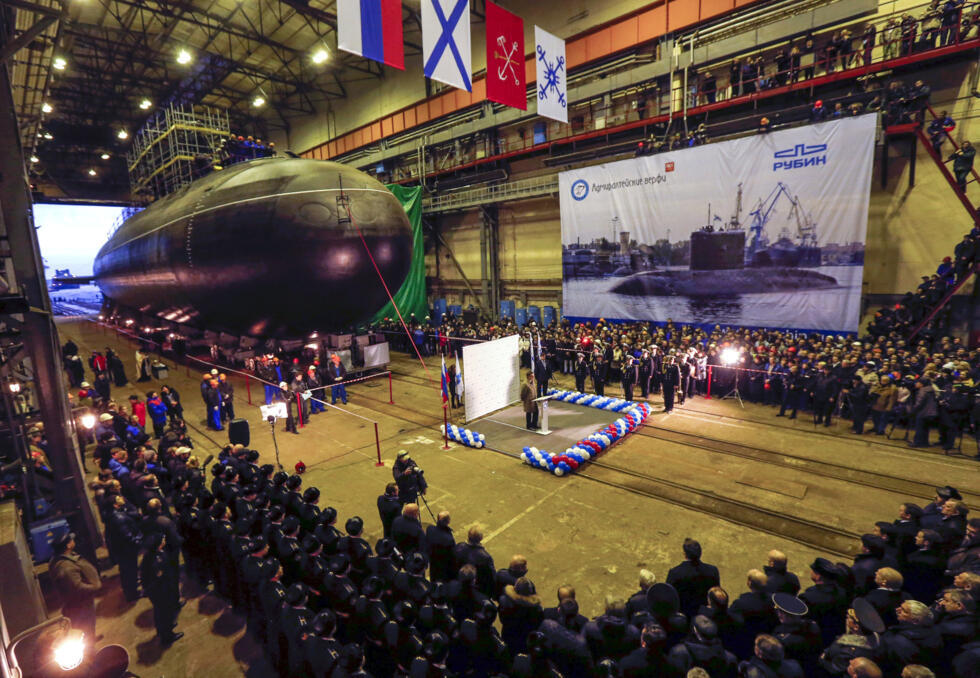
Sailors line up during a ceremony launching the Novorossiysk, a diesel-electric submarine, at the Admiralteiiskiye Shipyard in Saint Petersburg, on November 28, 2013.
 © Alexander Demianchuk, Reuters/file picture


The Novorossiysk belongs to one of the more recent Kilo-class models, and was put into service in August 2014. It joined Russia’s Black Sea fleet in September 2024.

Like other submarines in its category, the Novorossiysk’s main purpose is to “operate in coastal waters where the seas are not too deep”, Vautravers explained.

It is equipped with torpedoes, however, which would make a potential fire onboard particularly dangerous, and is capable of carrying Kalibr cruise missiles – the Russian equivalent of US Tomahawk missiles. It can also deploy naval mines.

Prior to its sighting near Gibraltar, the Novorossiysk was spotted off the French coast of Brittany in 2022, prompting authorities there to dispatch a vessel to follow it. In July this year, it was spotted again – this time in the English Channel – and was subsequently tailed by the British navy.
What was the Novorossiysk doing in the Strait of Gibraltar?

Although VChK-OGPU claims the Novorossiysk was on a “combat mission”, it does not necessarily mean it was intending to target British positions on Gibraltar, or anything else for that matter.

“Most often, these types of missions are about intelligence gathering or the discreet transport of personnel and equipment," Vautravers said.

The Strait of Gibraltar is perfect for these types of covert operations. It is the only maritime gateway between the Atlantic and the Mediterranean, and all vessels passing through it are closely monitored.

On top of that, Russia has a tradition of maintaining a naval presence in the Mediterranean, explained Basil Germond, an international security expert and maritime affairs at Lancaster University.

“It’s long-term naval deployments to achieve political, economic and strategic objectives by projecting its military influence in a region,” he said.

He described Russia’s ability to exert influence in the Mediterranean as “very limited” at the moment, however, pointing to the war in Ukraine and its recent loss of the naval base in Tartus, Syria.

“It was a major setback for the Russian navy,” he said.

This means that the Novorossiysk is likely one of the few Russian warships still operating in the Mediterranean, showcasing Moscow’s waning influential power in the region.


How serious is the damage to Novorossiysk?


With no official confirmation from the Kremlin, the extent of the reported damage – or whether there is any at all – remains unclear.

But in line with VChK-OGPU’s claim that Novorossiysk lacked both spare parts and competent staff to repair the potentially explosive fuel leak, Germond noted that: “Russian warships are known to be poorly maintained, with crews that are untrained to handle these types of situations."

Russia’s war efforts in Ukraine have resulted in even less spare parts and specialised staff being available.

Vautravers underscored that the Novorossiysk “is not a nuclear sub. So the environmental and safety impact of an explosion [of the ship itself] would be limited.” The risks, he said, are rather tied to the type of arms that might be onboard. Mines and missiles would make the situation much more dangerous.

Another challenge the crew faces, Germond said, is that Russia has no ports nearby and the Novorossiysk would have to be towed all the way to Saint Petersburg to be repaired. “Considering the current climate, Russia definitely won’t ask a NATO country for help if it isn’t able to resolve the problem by itself,” he said.

One of the few remaining solutions, a source told the VChK-OGPU channel, would be for the crew members to “start pumping out the bilge” themselves, into the sea.

This article was adapted from the original in French by Louise Nordstrom.