Wednesday, October 08, 2025


Poems in Opposition to Genocide


Poetry is a written form that through eloquence and wordmanship engages the senses to produce a vivid experience and stir emotions that differ from reading straight-on prose. As such, poetry can be a powerful method to speak truth to power and evoke consciousness that fillips protest and resistance in opposition to horrific crimes and in support of social justice and peace.

Buff Whitman-Bradley has compiled a collection of his poems, Broken Stars: Gaza Poems (Fomite Press, 2025) that is sure to raise consciousness and pull on readers’ heart strings

Genocide is the evilest human crime, one that demanded a convention against it after WWII. Whitman-Bradley brings the Jewish Israeli genocide against Palestinians to the forefront in several ways. And it is a genocide committed by Israelis, as the author makes clear in the headline he uses in a poem: “Poll: 82% of Israelis want to expel Palestinians from Gaza; 47% want to kill every man, woman, and child.”

Statistics aside, Whitman-Bradley exposes the insidiousness of genocide in far subtler and nuanced ways that adduce his poetic talent.

For instance, in “I could not help but think,” the author depicts the serene lifestyle of mom, dad, and their soccer-playing kids and contrasts this with Palestinian children living under bombs.

In “Gaza haikus,” Whitman-Bradley explores changes wrought by love among Palestinian family members under a genocidal onslaught.

Discussed in other poems are bombing, destruction, and rubble piercing consciousness; resurrecting dead Gazan children; making sense of what some humans are and the horrors some humans are capable of inflicting on others.

In “Vocabularies of outrage,” the poet laments:

Do we need new words, urgent words, ferocious words
To convey the profound evil
That is occurring in Gaza?

So many questions are raised. And what about the survivors? What about hearing the sounds of a genocide 7000 miles away? What goes through the mind of a sniper? What is the soul of a killer?

In the poem “After a good long rest,” how, after all the killing, does the Israeli fighter bring himself to resume

His slaughter of innocents
His massacre of children
His rape and murder of women.

In “Invasive species,” Whitman-Bradley asks:

What sort of creatures are these
Who gleefully pump bullets
Into the brains and bodies of infants and toddlers?

Further questions are answered through poetic evocations. What about the Israeli-imposed starvation of Palestinians? What is the response of the world?

Israel is not alone in inflicting horrors on Palestinians. The author notes a US Congress devoid of compassion for the death and destruction in Gaza. After all, cynically, it opens a real estate opportunity.

“Blasted Acres” assures Israelis that

They will not have to have to carry out
The grueling and messy work
Of total extermination,
That they can count on
the massive resources of their US collaborators

Broken Stars is an excellent read and reread that navigates the vicissitudes of feelings and what are harsh realities. The harshest reality is that some humans seek to dehumanize and destroy other humans; yet in turning upon other humans the blowback is that the genocidaires dehumanize themselves.

There is an obvious and undeniable fact that we are all humans. As such, morality demands we must all be imbued with equal rights to live in peace and share the earth’s bounty. Broken Stars imparts this morality.

Kim Petersen is an independent writer. He can be emailed at: kimohp at gmail.com. Read other articles by Kim.

The Ethnic Cleansing of Gaza City as Seen Through the Eyes of a Pediatric Nurse


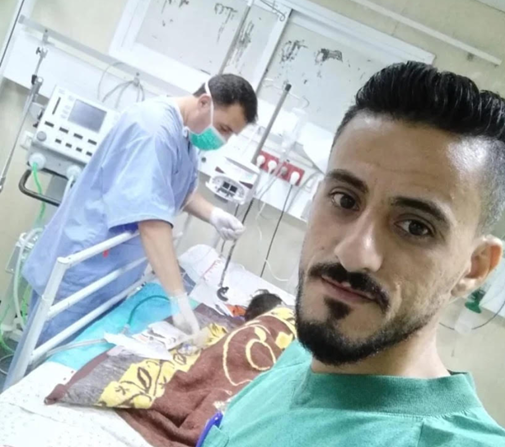
On the evening of October 6, 2023 Ali Lubbad, 33, was daydreaming about his new life in Germany. He had just completed his nursing exams and passed the language tests. Once his paperwork had been processed he would settle there with his wife Aya, his autistic daughter Alma, and his rambunctious son Hossam. There Alma would have other children like her who she could play with and they could afford the best autistic therapy the world had to offer. Ali had made it in life against all the odds that Palestinians face. Then came a genocide.

Now, it is September 2025 and Ali doesn’t daydream much. He’s too busy working as a pediatric nurse in the neonatal intensive care unit of Gaza’s only remaining children’s hospital, Al-Rantisi. He’s soft-spoken and used to comforting tiny infants clinging to life and parents clinging to hope. These days the parents are often dead, while those still living are struggling to stay alive. Unless they take shelter at the hospital, they don’t have time to visit. So the babies depend on medical professionals like Ali, incubators one step away from a power outage and what little medicine the hospital has to offer. With the Occupation’s build-up this summer in preparation for the invasion of Gaza City, casualties have been on the increase and the IDF bombs the children’s hospital or its surrounding area every few weeks. Each new massacre brings more half-dead infants into Ali’s life. We laugh at dead baby jokes, but Ali must watch them die.

On top of all this Ali cares for his pregnant wife, Aya, and their two small children. Alma is now 6 and Hossam is 5. Ali remembers their favorite activities: going to the beach for Alma, going to the park and racing bikes for Hossam. On his days off Ali and his wife would take them to the amusement park where they would jump in a giant bouncy castle and eat ice cream. None of those things are possible anymore. Instead, children play when they can among the tents and rubble that have taken the place of homes and hobbies. Traces of their previous life still live on in Facebook photographs—a pre-school age Alma looks like a sea of peace sitting in Ali’s lap at a beach-side cafe, the Mediterranean waves washing away every trace of pain. Recently, in far off Sweden, Ali’s sister Soha uploaded a video of her 2 year old daughter Celine dancing in a blue dress on her birthday. No bombed out buildings or cratered streets. Ali hearted the video. Per IDF orders, love is only allowed to leave Gaza through fiber optic cables.

The baby is due in October via a C-section Ali and Aya hope the hospital has anesthesia for. In the meantime mother and baby are malnourished like the children, and Ali barely sees them. He works shifts up to eighteen hours long which leave little time for much else besides searching for food and what little sleep he can get between the bomb blasts that periodically puncture the night.

The news is never good in Gaza City, and now it’s getting worse. Everyone, including the patients at the children’s hospital, have been ordered to evacuate south to a new place where they will suffer until they are forced to evacuate once more. Ali and his family have been displaced many times, from their original home in Gaza City to Khan Younis to Rafah and back to Gaza City.

The ethnic cleansing has intensified, and social media is full of proclamations: The operation is expected to begin as a pincer movement, starting from the north and south, and then from the east toward central Gaza, with the aim of forcing the population to move out. The IDF drops leaflets in Arabic emphasizing that they are saving the Palestinians from Hamas by destroying their cities. They use specific language to isolate Palestinians from the rest of the world: No one will feel for you. No one will care about you. You have been left alone to face your inevitable fate. Ali fights back the only way he knows how:

Despite everything, I try to hold on to my humanity. When I was displaced to Khan Younis and Rafah I volunteered at a shelter to provide first aid and nursing care to people, especially as skin diseases and respiratory infections spread. Children came to me with bodies burned from the cold and the elderly came with swollen feet. The lines were endless, even pregnant women who needed checkups had to stand for hours to be seen.

A couple of weeks ago Ali heard screams from his neighbor Muhammad Sharef’s house. He rushed over to find out what was wrong. The IDF had called Muhammad and informed him that they would bomb their house in ten minutes. Ali ran back to his apartment and grabbed his children while his pregnant wife grabbed the emergency bag. They took shelter in a friend’s pharmacy half a kilometer away while explosions rocked the area. After the bombing stopped they walked home. Their building had been spared, but many of their neighbors were now homeless, while those who didn’t flee fast enough were now martyrs. May God be with them, Ali writes on Facebook.

Such is life among refugees, and because they are so used to this, many of them say they will not leave Gaza City. They have nowhere to go and they fear the Occupation will never allow them to come back once they are gone. That’s what the Occupation did to their parents and grandparents in 1948 during the creation of Israel, and it’s what they’ve been doing in the West Bank every year since 1967. It’s just one long, slow wave of ethnic cleansing. To some, death seems the better choice. The IDF knows this, so they start bombing here and there to “encourage” people to leave. Aya wants to stay. She would rather die than give birth in a tent and spend what may be years on the sands of southern Gaza, subjected to scorching summers without AC and rain soaked winters without the ability to stay warm and dry.

So Ali finds an apartment for his family, and that is enough to coax his wife into leaving. Though he needs help paying the rent and travel expenses, there are Americans I know who will raise money for him. Rents have skyrocketed to $1,500 a month and taxis cost $600 to move a family and their belongings a few kilometers to Deir al-Balah, their new home. Ali’s pregnant wife suffers from hypertension and anemia and is in no condition to walk among the rubble and dust in the sweltering heat.

Ali’s father, Najeb, was martyred a year ago at age 65. After his house was destroyed at the beginning of the war and his relatives began to be killed, he stopped eating and died within a month. Ali’s mother, Safia, is 63 and still alive. She survived breast cancer many years ago and refuses to die. Ali helps take care of her, while the whole family works together to find a place to pitch a tent that will cost $1,000. Then Ali has to make multiple trips to the tent to dig sewage and water lines with his brothers-in-law in the hot and humid conditions. Nothing is easy. Like Aya’s pregnancy, life in Gaza is complicated, and working hard today may be the difference between being glad you are alive tomorrow and wishing you would die.

Back at the hospital Ali helps infants and young children cope with the horror. A rare paralytic disease called Guillain-BarrĂ© Syndrome (GBS) has broken out among the children of Gaza this summer. It tricks the body’s immune system to attack its own peripheral nerves which make it hard to walk or even breathe. One young girl named Lara has GBS and won’t let any of the nurses except Ali insert an intravenous line into her. Her father’s name is also Ali. He was blown apart one day by someone who believes in war and thinks bombing people is a good idea. So Lara thinks of Ali as her new father, and that makes her life bearable.

Ali plays a similar role in his own family. When they evacuated Gaza the first time, Ali had to get a then 3 year old Hossam motivated for the journey by telling him that it was his chance to see real tanks along the way. They left the next morning. Human bodies littered the landscape. “Don’t be afraid,” Ali told him. When they reached the line of no return a tank turned its cannon on their family. Ali raised his hands. “I was sure we were all going to die,” he told me. A small voice spoke to him from above: “Baba, do I have to raise my hands?” It was Hossam, who was sitting on his shoulders. Ali started to cry.

Breath if you need a break. Or take a walk. Genocide is never easy.

Lately, the IDF has been using robot bombs to terrorize the people. They fill old American armored personnel carriers with hundreds of pounds of explosives. Then drive them remotely through neighborhoods until the vehicles stop and explode. In late August one exploded seven hundred meters from Ali’s apartment. That’s almost half a mile away. Even so, debris fell all around his building. In the end most of the nine hundred thousand civilians in Gaza City will flee. The thousands who remain behind will most likely die.

This is now the worst time of Ali’s life. He had thought the worst part of his life was over: in early to mid-summer when famine hit his family hard. You can feel his pain in the updates he posted on his GoFundMe:

June 15, 2025

Indescribable Suffering

For the fifth day in a row, I’ve been going out daily in search of a bag of flour for my family without success. Every night, I walk more than nine kilometers on foot, hoping to return with something to feed my children. But sadly, I haven’t been able to bring anything home. I’m exhausted, drained, and all I can think about is: “What will I feed them tomorrow?”

The tragedy doesn’t end there… In the past two days, I’ve lost three of my cousins:
The first was killed at an humanitarian aid distribution point in central Gaza. The second was killed in northern Gaza while also waiting for humanitarian aid. Tragically, his head was separated from his body due to the intensity of the bombing. The third was run over by an aid truck. Now, I am facing the same fate.

A 25 kg bag of flour is enough to feed my family for a month. Its price on the market is now $600. If you can help, even with a small contribution, it can bring hope and food to my children. Please consider donating or sharing. Every act of kindness matters. You are our last hope after God.

July was a month of horrible waiting. From Ali’s Facebook:

July 19, 2025

Hunger in Gaza is very real, so real, it’s terrifying. It may soon become deadly. We are just days away from people dying in groups, collapsing in the streets and homes from starvation. No one in Gaza is talking about the war anymore, everyone is talking about hunger.

July 25, 2025

At the hospital, people see me in clean scrubs, with a mask, a stethoscope, and an ID that says “Nurse.” But no ID says anything about the hunger in my stomach, the weakness in my body, or the heaviness in my heart.

July 28, 2025

Do you know how heavy it feels to tuck your children into bed, not knowing if the night will be kind to them? You whisper “goodnight” with a voice that shakes, hoping it won’t be the last time they hear it. You watch their chest rise and fall, memorizing the rhythm—just in case. Every sound outside jolts your heart, even silence seems louder than a scream. In a place where safety is a dream, even the smallest acts of care feel like a desperate prayer.

But people listened, and Ali got a rush of donations at the end of the month. He posted this update on his fundraiser:

August 2, 2025

Dear friends,
I struggle to find the words to express how deeply grateful I am for your support. Because of your donations, I was able to feed my children, provide care and treatment for my pregnant wife, and pay the rent for our apartment this month, the shelter that is keeping our family safe and dignified. Each and every donation, no matter the amount, has made a real difference in our lives. You didn’t just help us survive; you gave us hope that we are not alone in this nightmare.

That last line encapsulates the ongoing drama that every refugee family in Gaza faces. They are all trying to raise enough money to buy food or a tent or medicine, whatever they need to stay alive. All summer long families plead for donations. Some never make it and end up as numbers on an ever growing list of civilian casualties. For others the money they raise gives them hope, gives them the will to live. Without it they would be poorer, sicker, hungrier and hotter. And thus more likely to die.

Ali’s desperate to share his story, so the world will know what is happening in Gaza. A friend of his helped edit Ali’s account of survival from October 7th, 2023 to July 2025, “A Pediatric Nurse From Gaza Shares His Story,” and posted it on Facebook in August. They added a subtitle: For Ali Lubbad, a Brave Father of Gaza. And that, in a heartbeat, is a miracle. All these people love Ali. They want to help him. Their compassion rains down on Gaza, seemingly bathing its inhabitants with their love. But many of the raindrops evaporate before they hit the ground. Ali:

The most heartbreaking moment of all was the night Alma went missing. We were in the camp after a long day of standing in lines, searching for food and water. The atmosphere was full of screaming, crying, chaos—and a fear that never left us. In a single moment, we lost track of her. I looked at Aya and asked, “Where’s Alma?” —and everything went silent. Aya started shouting her name, and I ran between the tents, searching, calling, running, screaming, begging anyone who might’ve seen her.

Two whole hours of hell. Every minute felt like a year. Bombs exploding everywhere. I could hear mothers screaming, smell the smoke in the air, and I was searching for my daughter who didn’t even know how to ask for help. My mind spiraled with all the worst possibilities… Alma, who doesn’t trust strangers, who’s terrified of loud noises—how would she react? Did she cry? Did she hide? Did she get lost between the endless, identical tents? Aya was collapsing. Her mother was crying. And I was losing my mind.

Then suddenly, a boy came running toward us and said, “There’s a girl sitting near the bread distribution point—she looks like she’s lost.” I sprinted like a madman. And when I saw her… she was sitting in the sand, barefoot, her eyes vacant, her face covered in dust. I grabbed her and held her tight, crying as I told her, “Baba’s here, Baba’s with you.” But she didn’t respond. It was as if she had disappeared from existence for a while, like something inside her broke. And at that moment, I was broken too.

At Al-Rantisi, joy and tragedy fill the hospital like they always have. On September 9th one of Ali’s colleagues, Reem Shakshak, gave birth to a baby girl. On September 14th another colleague was killed. On September 16th an air strike took out the roof and its electrical and communications systems as well as a water tank, but no one died. By September 21st they had evacuated most of the children to Al-Shifa Hospital, another medical center in the middle of a war zone. Only four or five children including two infants remained in the ICU with a handful of nurses. Ali tried to go back to work but was stopped when the IDF’s infamous quadcopters shot at him. Were the children too sick to move? Did the Israelis stop letting ambulances through? Ali doesn’t know. They might be dead by the time you read this.

So Ali gathered his wife and children together to take a taxi to their new home. If the driver was telling the truth, Ali let me know. Sometimes they lie, sometimes they die. Taxis are targets too. That’s why they charge so much. Ali’s family was evacuated the next day. Their driver had told the truth. The driver for two other families never showed up. Was the driver a liar or was he dead? Ali took an elderly couple with him and picked up a woman who they found walking down the street. Unfortunately, upon their arrival, Ali received news of his uncle Muhammad’s death and had to go to his funeral. During this war Muhammad had lost his son and his daughter. Two days ago he was displaced from his home to a tent in central Gaza. He couldn’t bear it and died of a broken heart, just like Ali’s father.

Before they left, the people of the neighborhood had to do something nice for those who would rather die than leave their homes, or were too sick to travel, or couldn’t afford a taxi, or who had been simply lied to. The man with the solar panels left them, so the people could use them to pump water from the well. The families who had food left some for those who remained, knowing that they may never receive food again. Finally, they left the keys to their homes—a gesture to let them know that they were welcome to seek shelter there if they had nowhere else to go. And in that way the people, like Ali, retained their humanity.

Eros Salvatore is an Irish-born American author who lives in Bellingham, WA and writes about love, death and trauma for various publications. He with Ali Lubbad have a forthcoming book on Gaza refugees and a foster daughter who grew up under the Taliban. Links to all of their published works can be found at https://erossalvatore.com/Read other articles by Eros Salvatore and Ali Lubbad.


Ultra-leftism won't help free Palestine

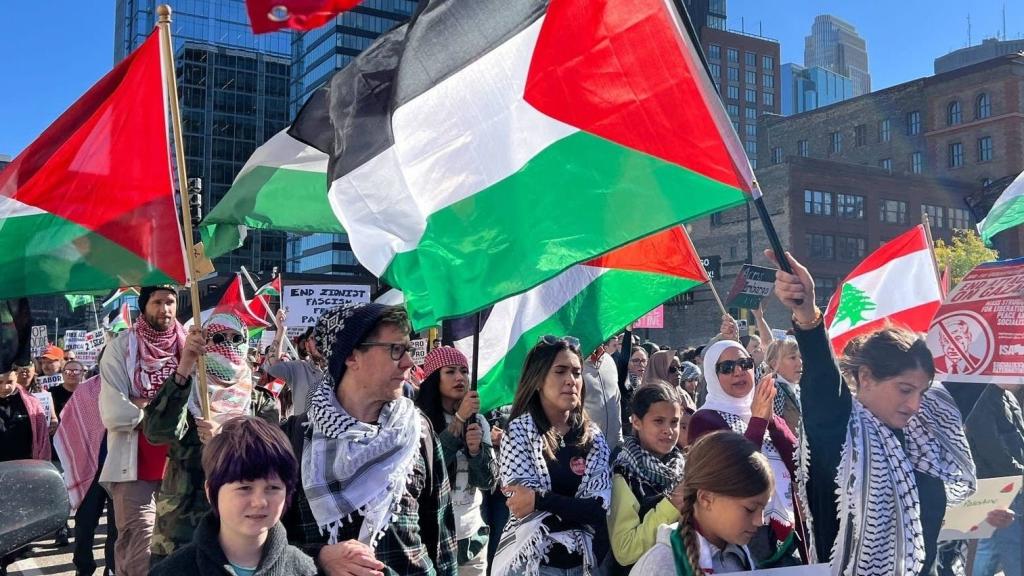
Palestine rally in US

First published at Labor Politics.

Two years after October 7, public outrage against Israel is widespread, yet the US grassroots movement in solidarity with Palestine is nowhere near as powerful as it needs to be. While Trump’s ceasefire plan might provide relief from Israel’s genocidal onslaught, Gaza has been decimated, and the proposed deal would codify a vastly deteriorated situation for millions of Palestinians.

To discuss how American organizers might more effectively fight to support Palestinians’ rights to freedom and self-determination, Eric Blanc spoke with Bashir Abu-Manneh, who is writing a book provisionally entitled Disposable Palestinians, and Hoda Mitwally, a member of New York City Democratic Socialists of America and LSSA/UAW Local 2320 speaking in a personal capacity.

Eric: I want to focus our conversation on the strategies and tactics necessary for Americans to effectively support Palestine, but we should first briefly address the current negotiations. We’ll see whether Israel again scuttles a deal, but as of this writing, it seems like we’re closer than before to a negotiated ceasefire agreement. What’s your impression of Trump’s proposal, reactions to it on the ground, and what the deal says about the relationship of forces in Palestine, Israel, and the US?

Bashir: This is an updated version of Trump’s 2020 Peace to Prosperity vision — basically a plan to formally ratify the Israeli occupation and the de facto annexation of swathes of the West Bank, leaving Palestinians in enclaved bantustans with a series of humiliating conditionalities to meet before calling the ghettos a “state,” if ever. Back then, it was seen as a total victory for Israel’s occupation and biblical messianic worldview, while providing no rights for the Palestinians.

Given that the architect of the 2020 vision, Jared Kushner, also drafted the current ceasefire proposal, it’s no surprise the new ceasefire declaration rehashes the same logic. There’s one proviso: now the conditions are infinitely worse for Palestinians after October 7. Gaza is flattened and destroyed, and the West Bank is dangerously edging toward Gazafication.

According to the deal, Gaza will be demilitarized. Hamas will either leave or surrender, with no guarantee Israel will ever withdraw from Gaza or stop military operations there. Under the guise of demilitarization, Israel will continue to target Palestinians when it deems necessary — just as it targets Lebanon today even after the ceasefire agreement with Hezbollah, a far more powerful group than Hamas.

In fact, Hamas is expected to trade the hostages upfront for Palestinian captives and prisoners and thus forego its only remaining leverage, making it reliant on external players under the auspices of the U.S. as the ultimate arbiter of the future of Palestinians in Gaza.

The fact that Hamas has agreed to this U.S. ceasefire deal with a ‘Yes, but’ and is seeking to amend some clauses — after Israel tried to assassinate its negotiators just the other day — shows the extent of Hamas’s political and military degradation. October 7 produced the exact opposite of what Hamas dreamily expected to achieve: more occupation, not less; the destruction rather than expansion of the Axis of Resistance; genocide and the total obliteration of Gaza. The reason Hamas is negotiating is because it’s severely weakened and trapped.

What Palestinians in Gaza welcome about the deal is easy to understand: it promises an end to the mass bloodshed, it takes mass ethnic cleansing off the table for now, and it raises hopes for reconstruction. No doubt this is better than mass death, endless forced displacement, and population concentration in tinier slivers of Gaza. But no one pretends this is a good deal.

Right, though I imagine supporters of Hamas would argue that they partially achieved their goal of isolating Israel at a moment when it was normalizing itself in the Middle East.

Bashir: How to safeguard Palestinian humanity and defend Palestinian rights and presence in Palestine should be central to the principles and calculations of progressives. That’s the politics Palestinians deserve.

What is clear is that October 7 gave Israel the pretext for a genocide that has cost Palestinians at least three percent of the Gaza population and has obliterated Gaza — no education, electricity, homes, health, safety, security, or water. Mass trauma is a pathetically inadequate word for what Palestinians have experienced since October 7.

Israel is responsible for its barbarism in Gaza and elsewhere, and it has to be held accountable for its genocide. But I fail to see how all this human cost can simply be framed as collateral damage for the sake of achieving Israel’s increased isolation, especially since Israel has succeeded in decimating Gaza for the foreseeable future, jeopardizing the lives of multiple generations.

If a ceasefire is reached and upheld, I worry that Trump and establishment Democrats will say that “peace has been reached” and that we don’t have to worry about Palestinians anymore. And for Americans who don’t follow politics very closely, it might seem now that there’s no more need to pressure Israel since “the war is over.” Hoda, how do you think activists in the US could effectively keep up pressure in solidarity with Palestine in such a new context?

Hoda: That scenario you outline is a real possibility, and there’s a risk it could weaken our solidarity movement.

I’m not optimistic about the final details of the ceasefire framework and what it will mean for Palestinian sovereignty. The U.S. has been a dishonest broker for decades. While Trump may superficially appear to have pressured Netanyahu more than Biden, there hasn’t been a real shift in the U.S.’s overall posture toward Israel. And the agreement likely won’t contain any “sticks” to dissuade Israel from attacking Gaza in the future, attacking Palestinians in the West Bank, or attacking any other country in the region.

The onus will be on activists here to explain in the simplest possible terms that Trump’s ceasefire is not a real, comprehensive peace agreement. Some Palestine solidarity activists might wince at the word “peace” due to its disingenuous use in the aftermath of the Oslo negotiations. But I think the Left here needs to reclaim it to build a broader anti-war movement and to challenge establishment politicians. Our side really does want peace — and that can only come about by honoring the rights of all Palestinians. Israel doesn’t want peace: its status quo relies on daily violence and injustice against Palestinians, even if the bombs on Gaza stop for now.

Given the ongoing negotiation talks, there are other key points of pressure where we can be effective. The reconstruction of Gaza is going to be a major point of contention, and we should fight to ensure that Palestinians are provided sufficient resources to rebuild their lives. Palestinians in Gaza are facing the worst conditions imaginable: going forward, any US funds ought to be redirected to making Gaza livable for Palestinians again, not to a genocidal, apartheid regime that will likely try to further decimate Palestine if given the opportunity.

No matter what happens with this deal, it’s a real problem that the US anti-war movement is weaker as an organized force than one might expect given how unpopular Israel and its conduct has become. And especially if Gaza is no longer in the headlines, it will be more important than ever for large numbers of people to be talking to their neighbors, co-workers, and fellow students about why the fight is far from over. But we don’t yet have that type of organized reach.

There are obviously huge external factors explaining the movement’s relative weakness: repression, entrenched interests, and the long-standing reluctance of Democratic Party centrists and aligned groups to ever talk about Palestine. But even if we acknowledge all those outside dynamics, there’s still a question for our side: Have tactical or strategic errors prevented us from maximizing bottom-up pressure to stop the genocide and cut off US funding for Israel?

Hoda: You’re right to point out the external factors — they’re very real. But I don’t think that’s the only reason our organized pro-Palestine movement is smaller than it could be. Public opinion has turned against Israel in the US, but I don’t think that’s primarily because the movement has been strong. It’s mostly because the horrors of Israel’s genocide are undeniable; it’s been live-streamed to the entire world, and people can no longer ignore it.

Internally, I think we’ve failed to consistently build the biggest and broadest coalition possible, a movement laser-focused on ending US support for Israel’s atrocities. To do that, we would have to more consistently work with people who don’t agree with us on every single thing. It would require a greater number of leftists leaving their comfort zone of being a powerless opposition, protesting on the sidelines, expressing our moral outrage online. It would require joining united-front, inside–outside efforts to win a permanent ceasefire — and, if a deal is soon reached, to enforce this ceasefire against Israel’s belligerence — and to win a full arms embargo. Fortunately, this get-your-hands-dirty strategy is starting to make some real progress.

Bashir: My sense is that external factors are absolutely key. If you take campuses as an example, the repression has been tremendous. People live in fear; there’s retaliation; there’s doxxing; people lose jobs. I wouldn’t underestimate that — it disorganizes people and makes them think twice.

I agree, but shouldn’t we always expect the ruling class to use repression wherever it can get away with it? And state repression often backfires or fails against mass movements that raise demands that resonate with the broad public and that involve as many people as possible — not just small cores of activists.

I think part of the reason why repression has been so effective on campuses is that, because of an excessive activist focus on “security culture,” there was often a relatively high bar to entry to getting involved, beyond a few mass democratic exceptions like San Francisco State. And the encampments’ rhetoric was often kind of inflammatory (and prone to misinterpretation), which undercut efforts to involve and persuade others to join the fight for a ceasefire and divestment.

That raises a question: what should be the movement’s united-front demands and red lines?

Hoda: In such a pivotal and urgent moment for the people of Palestine, it doesn’t make sense for the US left to draw a minimum program on the basis of ideological stances that don’t resonate with public opinion here. Most Americans are horrified by Israel’s actions, but don’t yet understand Gaza or Palestine primarily through the lens of Zionism.

For the first time in my lifetime, a majority of Americans disapprove of Israel and agree that its actions in Gaza constitute a genocide. They want a ceasefire; they want more humanitarian aid to go in; they want sanctions against Israel. That creates a political opening we’ve never had. We can channel that energy into a broad movement for divestment and a full arms embargo, which will remain essential no matter what the current ceasefire negotiations lead to. The way I see it: if you oppose genocide and want the U.S. government to stop funding Israel’s oppression of Palestinians, you belong in our movement.

Bashir: How can you help people like the Palestinians, who suffer daily, whose lives are totally dominated by Israeli occupation, who live under an apartheid regime? Even Palestinians inside Israel have no real chance of equality under Jewish supremacy. They also live in fear as a result of the genocide and what Israel might do next — inside Israel and in the West Bank.

If you’re organizing in the U.S., the question is: what are you going to do to improve that situation? Too much energy here goes into debating one state or two states or engaging in theoretical fights around Palestinian resistance tactics. And frankly I don’t see that as a useful debate here if your main goal is changing policy on the ground for people who are suffering today. That’s what matters most.

Among Palestinians, there’s legitimate contestation about favored outcomes and what liberation means. For a solidarity movement, I don’t see why it should enter that terrain of debate. Uphold one thing: unconditional support for the Palestinian right of self-determination. That’s the fundamental right Israel has violated. Fighting for that right by cutting off US military aid would be a huge contribution to Palestinian welfare.

There are always going to be ideological discussions on the Left. But if those become disablers that fragment the movement and make you less effective at improving conditions on the ground, then I don’t know what those discussions are for. Advocacy in the real world is about power — how you challenge the workings of power, how you build capacity, how you practice leverage. It’s the difficult work of winning over people to a just cause.

And while students on U.S. campuses can shape the conversation, they don’t have a lot of leverage to change policy. Many young people support Palestine because it’s a moral cause — that’s good. But if you’re going to build a mass movement among the broader working class, you also need to look for ways to help people see how it is in their interest to stop the genocide and stop funding Israel. This may not be as intuitive as in a union organizing campaign fighting for better wages and working conditions, but you can demand that funds going to Israel go to public services in the US. Money for schools and health care in the US and Gaza— not bombs. Make those links — show how American foreign policy serves the elite and the military and doesn’t serve the majority here or abroad. Without that, Palestine remains only a moral cause, and moral-cause organizing is hard to scale up as the links to material interests are hard to see.

I think that type of “no money for war” framing resonates widely even with some Republican voters — a significant number of people voted for Trump because they thought he’d end the wars.

That said, as an American Jew, I can say from personal experience that debates over Zionism are basically inevitable in our families and our communities. More generally, it seems that groups like the Democratic Socialists of America (DSA) and other anti-imperialist radicals do have a responsibility to make a case against Zionism, even if at this point it’d be counterproductive to make agreement on this a precondition for joint action or for our electoral endorsements.

The 1960s are instructive: so many young people got involved fighting the Vietnam War and then, through the radicalizing experience of that mass movement, they started asking wider questions about imperialism and the capitalist system. Similarly, if we build a united widescale fightback against arms to Israel (and push to include these demands and speakers in anti-Trump actions like No Kings rallies), that’s actually the best path towards helping large numbers of people start questioning deeper issues like Zionism, American imperialism, and capitalism.

Bashir: For me, the fundamental point is that fighting the occupation and fighting the genocide is fighting Zionism where it matters. You’re not saying, “We’ll put anti-Zionism on hold and come back to it later.” Look at Israel: most members of Knesset are against a Palestinian state in the West Bank and Gaza. If you fight to end the occupation in those territories, you are fighting Zionism. This is the frontline of Zionism and where it’s most vulnerable and exposed.

So it’s a matter of strategic focus, not fragmenting the movement over doctrine and hypothetical questions. If people are working against the occupation and for Palestinian self-determination, they are on the front line of the fight with Zionism. It is not the only thing progressives can do against Israel’s larger apartheid regime, but it’s a main site of confrontation, which is also prioritized by Palestinians inside Israel.

Hoda, both you and I were delegates to the DSA convention in Chicago this summer. My impression was that the underlying differences there centered on whether we should be orienting primarily to left activists or to people to our right. One of DSA’s leading left caucuses, for example, argued on the eve of the convention that DSA had chosen to “appease the most reactionary sections of the working class” at the “cost of alienating the advanced sections of the working class, who now mobilize to the left of DSA readily and in huge numbers in the ongoing Palestine movement.” What’s your take?

Hoda: I’m not sure what specific phenomenon they’re referring to. As far as I know, the only major industrial action in the U.S. related to stopping the genocide was ILWU Local 10 blocking weapons shipments to Israel at the Port of Oakland. Those actions are inspiring, and DSA members were part of them. But if we’re going to stop Israeli apartheid, we have to think bigger than one shipyard on the West Coast, where the union and the workers already agree with us.

I think what they’re referencing is more that some Palestine activist groups here, which have led some of the bigger protests, have insisted that DSA hasn’t been sufficiently anti-Zionist or sufficiently critical of our endorsed elected officials.

Bashir: The idea that a socialist movement should take strategic cues from middle-class activists — that’s the problem. Why should that layer set the line for a class movement?

There will always be segments of ethnic minorities who disagree with how you frame an issue. So what? We’re socialists. Our aim is to organize the working class in all its complexity and ethnic makeup. That doesn’t mean one constituency gets political primacy — to censor and shape what you say, how you articulate your struggle for working class power. And since every ethnic or national group is heterogeneous, and criss-crossed by competing class interests, there are always going to be real political differences within that group. If socialists end up being silenced by sectional interests as articulated by middle-class activists, we’re done.

To be honest, I get the impulse towards ultra-leftism. I have a toddler, and every day for the past two years I’ve woken up, read the news about more kids slaughtered in Gaza, and just felt absolutely devastated. And in those moments, I felt like expressing my outrage as loudly and as intransigently as possible.

But I think there’s also another source of this ultra-left impulse: some currents of leftists and Palestine activists have a pre-existing ideological orientation towards trying to break the Left from the Democrats immediately or in the very near future. And I think that’s part of the reason why there’s been so much focus from those milieus in, for example, attacking Alexandria Ocasio-Cortez.

Hoda: We need to think broadly and generously about what it means to have federal electeds standing up for Palestine and Palestinians. Until very recently, that simply wasn’t a feature of American politics. We also need to understand the different roles of organizers and electeds. For AOC, part of her unique power is that she has a congressional vote and can pressure other congresspeople to support bills like Block the Bombs.

It’s irresponsible when people on the Left spread misinformation about AOC’s record. She has never voted for military aid to Israel, she has never voted affirmatively for Iron Dome. She has consistently voted against Israel and the military-industrial complex.

Yes, she has made some clumsy rhetorical moves many of us may disagree with on Iron Dome and at the 2024 DNC. But I would argue rhetoric is not the same as a bad vote. It makes no sense to focus so much criticism on one of the few people in Congress who has generally been on the right side of this fight from day one. We want to create an incentive structure for politicians to start voting against funding. If we focus our fire on the electeds closest to us more than on those who are still vehemently backing Israel, it will be very hard for us to ever force a majority of American politicians to cut off the funds.

And while I think AOC is wrong on the offensive/defensive arms distinction, too much of the US activist left has incorrectly made Iron Dome into a make-or-break symbol, when in reality it’s a tiny part of American funding for Israel. Even before it was established in 2011, American military support already gave Israel a huge military edge against all its neighbors — this goes all the way back to the Lyndon Johnson administration.

Beyond AOC, how do you look at the relationship between Palestine solidarity and leftist electoral campaigns within the Democratic Party?

Hoda: Alongside a revitalized labor movement, electoral politics is one of the most effective ways to build the Left and to fight against the apartheid regime. I understand people’s frustrations with the Democrats, obviously — Biden chose to sacrifice his legacy on the altar of genocide, wiping out all the decent steps forward he took domestically. And so many of us were heartbroken by Bernie’s loss. But winning the presidency was a longshot in 2020 — and one of the main reasons we again have a real Left in the US after decades in the wilderness is because of Bernie’s insurgent primaries inside the Democratic Party.

Similarly, the Uncommitted movement may not have been powerful enough to force the DNC to meet its demands, but it succeeded in mobilizing over 700,000 people, and it paved the way for some of our recent successes. It’s a big deal that the Congressional Progressive Caucus — which represents roughly half of House Democrats — recently endorsed Block the Bombs and that twenty-four Senators voted to support Bernie’s bill to stop sending bombs and munitions to Israel.

I don’t see why we’d abandon this strategy when it’s bearing fruit. One of the biggest developments of the past year is how the Democratic base has lost faith in the party establishment and has turned leftwards. We see that in Bernie and AOC’s big rallies and in Zohran Mamdani’s campaign, which brilliantly centered working-class affordability demands alongside a commitment to justice for Palestinians.

Zohran won his primary almost a year to the day after Jamaal Bowman lost. Bowman’s loss scared so many politicians into thinking they couldn’t challenge Israel, but Zohran’s win has done the exact opposite: it’s emboldening candidates everywhere to finally take a stand. In the span of a year, we’ve caused a massive crisis for AIPAC. They can’t cakewalk into election wins anymore, because real constituencies of people will vote them out.

Bashir: The longer-term perspective remains to build a massive progressive movement around the American working class. That’s the best chance to change American foreign policy so you stop genocides and wars in the Middle East. It’s a hard, long road. You’re building, in a sense, from scratch.

So win over people who voted for Trump or Harris by explaining that billionaire-bought establishment politicians will never satisfy their material needs, and that they’re better off with a socialist alternative. It’s tough, but without focusing on that broader working-class agenda and without focusing on winning over people who don’t already agree with you, I have a hard time imagining how you’ll build enough power to seriously change US policy towards Israel and the Middle East. And you really do need a huge amount of power, because US ruling class support for Israel is not really about Israel or Palestine per se — it’s because the American elite needs to dominate in the Middle East to control oil, sell arms, and syphon off petrodollars.

One thing I’d add is that we need to intervene in the 2028 primary. One reason Uncommitted arose is that there wasn’t any pro-Palestine primary challenger — there wasn’t any challenger. We can’t make that mistake again. Whoever ends up being our candidate in 2028 may not necessarily share our full position on Israel — Bernie certainly never has — but I do think they need to at least be calling for an end to the genocide and for cutting off military funding.

Bashir: True, but no matter who ends up winning the Democratic nomination in 2028, you have to assess your voting tactics in relation to an assessment of the parties’ social base. Because the Democratic base is so much more pro-Palestine than the Republican base, it makes it more likely for you to succeed in pushing a Democratic president to cut off funding.

My last question has to do with labor organizing. Workplace disruption is one of our main sources of leverage, as we saw in the recent general strikes by Italian workers in solidarity for Gaza. What do you think it would take to move in that direction in the US?

Hoda: DSA’s campaign Labor for an Arms Embargo is doing exciting and unifying work that is pointing the way forward on how we can get the labor movement to use its power for Palestine. But we don’t often talk about what “get active in your union” actually means. It means building trust and relationships and doing the slow, tedious work with your co-workers so you can move people to action.

On the Left, we sometimes carry a romantic idea that the masses are ready to be activated at a moment’s notice for our goals, as if they’re disciplined soldiers in a reserve unit, and the only thing stopping them from taking action are union bureaucrats or Democratic misleaders. But that’s just not the reality on the ground in the US.

Many workers are horrified by the genocide but don’t yet see the relationship between what happens at work and the politics carried out in their name as Americans. In that context, don’t make your first appearance at a union meeting be a demand for a pro-Palestine resolution — people will be wary. Be as invested in building your union as you are in using it for broader social justice aims. Earn your co-workers’ trust. Show you care about your union; know its governance; understand the contract.

This practical piece is too often missing and this gap produces conflict, especially between veteran union members who have experienced decades of decline and newer, more zealous union members who sometimes carry a student-movement style into long-standing workplaces. Learn to be approachable and dependable unionists so that eventually your unions can act with teeth on Palestine.

Bashir: You’re asking unions to take a foreign-policy position. But it’s not intuitive why they should. So you have to be patient and do the political legwork to build trust and to show step by step how American foreign policy in the Middle East degrades rights and conditions here.

Don’t just dump righteous moralism on workers who are trying to feed their families while working two or three jobs. Many workers don’t see the link; it has to be built. It takes time, but you need to focus on persuading working people if you’re going to build a movement powerful enough to transform the United States and its foreign policy.

Gaza after October 7: A bitter account two years into the catastrophe

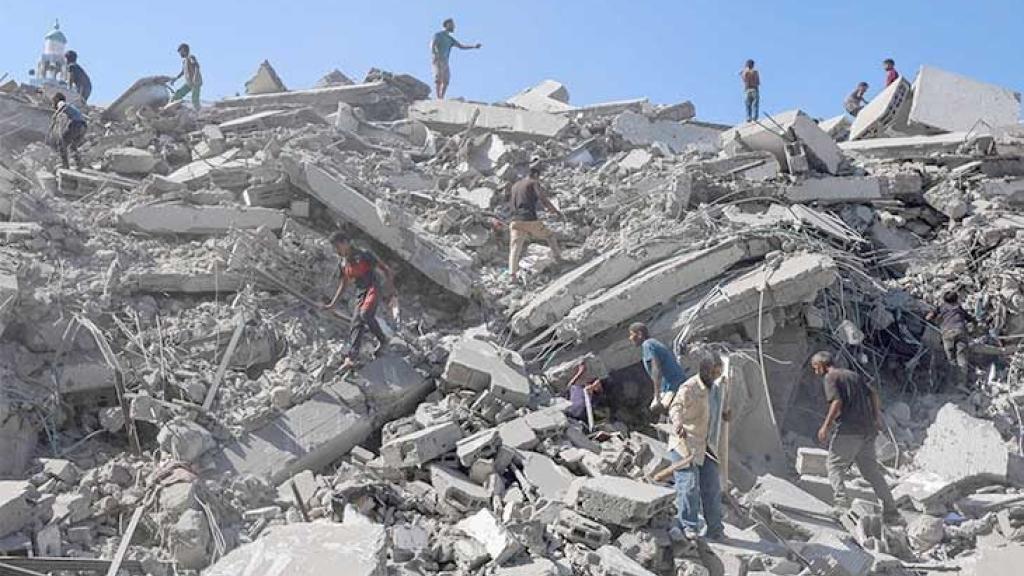
Gaza destruction

First published in Arabic at Al-Quds al-Arabi. Translation from Gilbert Achcar's blog.

Despite Israel’s strenuous attempts to commemorate the tragic events of 7 October 2023, and the overwhelming Western sympathy it received in the wake of Operation Al-Aqsa Flood, what dominates the global conscience today — two years after the operation — is primarily the far greater tragedy that the Zionist state has since inflicted on the people of Gaza and Palestine.

The recognition that Israel’s actions over the past two years constitute genocide is now widely accepted by experts and ordinary people in Western countries traditionally supportive of Israel. A recent poll shows that nearly 40% of American Jews themselves acknowledge that “Israel has committed genocide” (an additional 10% remain undecided). Today, only a minority in Western countries — along with governments and organizations that remain pro-Israel — deny the reality of this genocide. Every genocide, of course, has its deniers, as seen with the Armenian genocide or the Holocaust.

That the horror of the Zionist army’s genocidal war has generated over time intense global condemnation and growing sympathy for the people of Gaza offers little solace however, compared to the magnitude of the ongoing catastrophe. Worse still, the “peaceful settlement” on the horizon threatens to be far worse than the already disastrous framework established by the 1993 Oslo Accords.

Two years ago, it was easy to predict the catastrophe that would unfold for Gaza (see “Al-Aqsa Flood Risks to Sweep Gaza Away”, Al-Quds al-Arabi, 10 October 2023, in Arabic). Hezbollah’s 2006 operation — crossing the southern border of Lebanon, killing three Israeli soldiers and kidnapping two others — led to a devastating Israeli attack on the party’s civilian strongholds, including Beirut’s southern suburbs, known as Dahiya. Hassan Nasrallah later admitted that had he known the consequences, he would not have ordered the operation. Given the far greater scale of the Hamas-led operation across Gaza’s border on 7 October 2023 — resulting in the deaths of 1,200 and the kidnapping of over 250 on the Israeli side — it was clear that a much greater tragedy would follow.

This is not to mention the fact that the Zionist government at the time, and one that continues to this day, is the most extremist in Israel’s history. Thus, the planners of Operation Al-Aqsa Flood could not say, “If I had known”, as Hezbollah’s leader did (see “The Madness of Zionist Violence from the Dahiya to Gaza”, Al-Quds al-Arabi, 7 November 2023, in Arabic). Indeed, when a few months ago a member of Hamas’s political leadership attempted to express some regret over what had happened, the military wing quickly refuted his statement (see “Mousa Abu Marzook’s ‘If I Had Known’”, Al-Quds al-Arabi, 25 February 2025, in Arabic).

The leaders of Hamas’s military wing, and those within the political wing who share their viewpoint, have consistently maintained that their strategy was justified, despite the catastrophic outcome (see “On the Logic of Hamas’s Maximalist Wing”, Al-Quds al-Arabi, 20 May 2025, in Arabic). Eight months ago, they were still claiming victory as a result of the 7 October operation (see “Hamas: ‘We Are the Flood... We Are the Day After’”, Al-Quds al-Arabi, 11 February 2025, in Arabic). Let us measure this claim of victory in the light of the outcome and consider Hamas’s statement on the plan recently announced by Donald Trump, which was drafted by his son-in-law, Jared Kushner, and the infamous former British Prime Minister, Tony Blair (see an initial comment on the plan in last week’s article).

In its statement issued last Friday, Hamas asserts that it has adopted a “responsible position” toward the U.S. plan and is ready to contribute to a “comprehensive Palestinian national framework” (with the Ramallah Palestinian Authority, that is) “with full responsibility” — as if it wanted to acknowledge that its previous positions were less “responsible”. The statement declares that the movement “appreciates... the efforts of US President Donald Trump, calling for an end to the war on the Gaza Strip, an exchange of prisoners, the immediate entry of aid, the rejection of the occupation of the Strip and the displacement of our Palestinian people from it”. This, despite the fact that Trump, who has proudly boasted about being the most pro-Israel president in U.S. history and has previously approved Israel’s annexation of Arab Jerusalem and the Syrian Golan Heights, is the same person who allowed the Netanyahu government to openly state its intention to displace Gaza’s residents (claiming, of course, to be merely talking about “voluntary” migration, a point reiterated by the latest plan) and transform the Strip into a “Riviera” under U.S. ownership.

The new plan stipulates that Trump himself will chair a quasi-colonial “Board of Peace”, with Tony Blair among its members, that will oversee the “technocratic, apolitical Palestinian committee” in charge of governing Gaza, with the aim of implementing the “Trump Economic Development Plan” (sic). No doubt that, in the U.S. president’s mind, this latter plan is about turning the Strip into a U.S.-controlled “Riviera”. As for “rejection of the occupation of the Strip”, the plan asserts indeed that “Israel will not occupy or annex Gaza”, but it fails to set a timeline for the withdrawal of Israel’s armed forces, rather submitting it to conditions that are quite difficult to achieve. Moreover, the plan allows Israel to remain in control of a “security perimeter” along the Gaza’s borders, including the border with Egypt (the Philadelphi Corridor), for as long as it deems necessary.

The intention here, to be sure, is not to claim that Hamas should have fought on until the last Gazan. Rather, the argument is that the movement could have secured a better outcome and spared Gaza further devastation, had it adopted a more “responsible” approach from the outset. This opportunity remained valid even in recent months (see “Pity the people of Gaza!”, Al-Quds al-Arabi, 3 June 2025), as it became clear that the ceasefire declared earlier this year was only a temporary pause, allowing the Zionist army to regroup and prepare for a new phase of invasion. Meanwhile, Israel deliberately organized the starvation of the people of Gaza in cooperation with the administration of Donald Trump, whose efforts Hamas now “appreciates”.

Hamas has found itself cornered by the Zionist army’s resumption of the genocide, alongside mounting pressure from Arab and Muslim states that have aligned with the Trump administration. The movement thus faced a difficult dilemma: either it rejected the U.S. plan and proclaimed it determination to continue fighting, thereby assuming further responsibility for the ongoing catastrophe in Gaza and exposing itself to the loss of funding from Arab and Muslim sponsors; or it surrendered, which appears to be its current course. Hamas has now offered to give up the last remaining card in its hand by releasing all hostages it detains in exchange for Israel’s release of 250 Palestinian prisoners and the return of 1700 Gazans the Zionist army has taken as hostages over the past two years.

Much like Netanyahu accepted Trump’s initial plan five years ago — knowing that the Palestinians would reject it — he now embraces the new plan. His main objective is the release of the hostages, after which he would be much freer to maintain his grip on Gaza. He knows very well that the terms of the U.S. plan are designed to be so unequal and humiliating that they are likely to be rejected by most Palestinians, possibly including the Ramallah Authority itself.