AMERIKAN EXCEPTIONALISM
Arrogance Has Been on the Table by the US for a Very Long Time
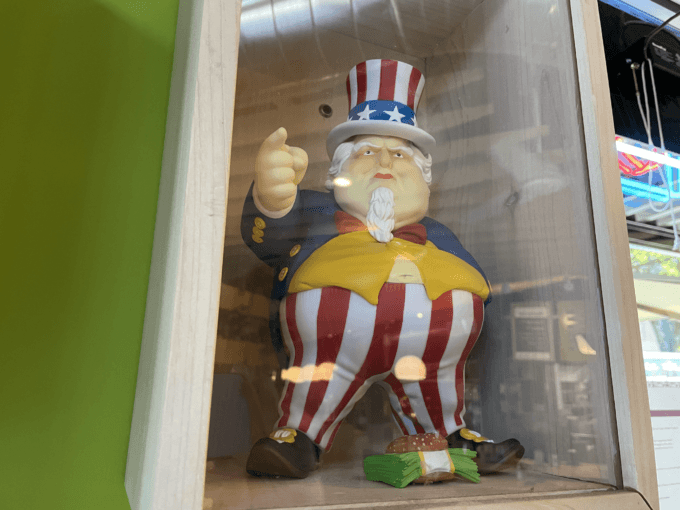
Photograph by Nathaniel St. Clair
Vijay Prashad was interviewed by K. Swaminathan, Tamil Nadu Untouchability Eradication Front (TNUEF), Tamil Nadu, India, May 2026.
K. Swaminathan: What is the fundamental difference between the wars waged by hereditary monarchs in the past to expand their kingdoms and the wars waged today by democratic governments against other countries?
Vijay Prashad: Hereditary monarchs reported largely to themselves and not to their own populations, although they could not fight wars that did not have some popular support and benefit. But there was no real need to inculcate support for these wars and there was no equality amongst peoples, so no expectation that they would have any input for the wars. After the emergence of a democratic consciousness, governments that claim to be democratic must provide governance that addresses the needs of the people and provides benefits to the people. Theoretically, decisions are not to be made by governments without the mandate or consent of the people. What happens, however, is that governments – in the name of national security or international terrorism – wage wars without seeking the mandate or consent of their populations, and so these wars are only made ‘popular’ through the manipulations of the press and of public opinion. That makes most of these modern imperialist wars ‘undemocratic’.
KS: Today, the United States is responsible for most of the wars taking place around the world. What are the reasons behind America’s military offensive? What advantages does the United States gain from these wars?
VP: The United States has attempted to manage a world system to the advantage of multinational capital, rooted in the United States and its Western allies (including Japan and South Korea). The system allows these firms to go into the Global South, steal resources and labour for under their value, and use these regions as markets for substandard industrial goods. The use of the dollar as the international currency has also allowed the US to create wealth out of nothing and to dominate countries by their reliance upon the dollar system. It is to defend this system that the US by and large goes to war, trying to break the will of any part of the world that defies the US agenda. By pain of war and sanctions, the US attempts to impose its view of the world on the rest of the planet. That is the reason for these wars.
KS: How does the United States construct false narratives for wars? How does the United States grant itself the authority of being the ‘world’s policeman’? How does this authority become accepted or legitimised?
VP: The United States has been losing its grip on various aspects of modern life, such as control over technology and raw materials. But it maintains its control over information through control over the infrastructure for news media (cables, satellites, platforms) and through the content delivered over them (particularly for international news). It is through this control that the US can argue that its view of the world is ‘normal’ and that others are defined by the US. However, this has been gradually changing through the failure of the US to be able to control every narrative, such as over the genocide by Israel of the Palestinians and by the US illegal war on Iran.
KS: What are the political, humanitarian, and economic impacts — both on the people of West Asia and globally — of the ongoing wars in Gaza and Iran?
VP: First, there is the genocidal language and practice of the Israeli and US actions in West Asia. Israeli officials speak bluntly about the genocide, and Trump says that he wants to wipe out Iranian civilisation. These kinds of statements are illegal but routine from these countries. And second, they are realised in the actions of Israel and the US to destroy civilian infrastructure and to kill civilians – all illegal under international law. The wars result in economic chaos, particularly the attack on Iran, but this does not directly bother Washington, which seeks to create chaos as a way to disrupt the peaceful economic development of the large BRICS+ states, allow their own populations to bear the cost of the crisis, and then in the long run reestablish their own power over the world system.
KS: The Trump administration claims that the United States and its allies have severely damaged Iran’s military and strategic infrastructure. How much truth is there in these claims?
VP: It is impossible to know accurately the status of the war machines because in a time of war, this is information that everyone either exaggerates or denies. But Iran continues to defend itself, so that itself is a refutation of Trump’s statements.
KS: A section of the global media often portrays Iran as a politically unstable country and frequently reports on public dissatisfaction and protests against the government. What is the current mood among the Iranian people?
VP: No country in the world is without its own contradictions, and no country has a population that is totally happy with the government. So, protests in Iran are not an illustration of instability by itself. In fact, after all this bombardment, the government remains in charge. An unstable country would have collapsed under the weight of the bombs. The illegal US-Israeli war has in fact brought the people of Iran together to resist the imperialist attack.
KS{ To what extent has Donald Trump’s return as President intensified military aggression and diplomatic arrogance?
VP: We must be careful not to personalise the US government. There is a structure in place. But the structure can afford different strategies. Trump is certainly far more aggressive in language and tone, but not necessarily in policy. Arrogance has been on the table by the US for a very long time.
KS: Although global finance capital has economically integrated the major capitalist countries and somewhat muted contradictions among imperialist powers, have Trump’s recent actions intensified contradictions between the United States and its NATO allies or other Western countries?
VP: I believe that the emergence of the BRICS+ states allowed the European bourgeoisie to seek new opportunities for itself through integration with Russia and China, for instance. This is what the US sought to control and reverse with the pressure campaign via Ukraine and through the new Cold War on China. So, yes, the US is seeking different ways to recover its hegemony over the European bourgeoisie through the means of pressure around NATO and around instability against BRICS+. Now, the European Union is suicidally going to not only continue and deepen its sanctions on Russia, but it will potentially start a trade war with China.
KS: What is the current position of NATO countries regarding the military actions being carried out by the United States in West Asia?
VP: The only NATO country to take a position contrary to the US-Israeli war on Iran has been Spain, and even there the government is under pressure. So, most of the NATO states are perfectly at ease with the illegal war.
KS: How do you assess the role of Russia and China in the present situation, as well as their diplomatic and economic relations with Iran?
VP: Russia and China are defensive, not offensive powers. They do not have the military capacity, especially the global footprint, to challenge the US in places such as Venezuela, Cuba, or even Iran. They are trying to defend themselves not to fight off the US attempt to establish its own hyper-imperialist power over the world.
KS: What impact will these wars have on countries in the Global South?
VP: The most immediate impact is that it has created food and fuel inflation around the Global South and has destabilised countries greatly. But secondly, these wars have placed on the table the old idea of imperialist defined sovereignty, namely flag independence: countries can be independent, but they cannot defy the United States. If they do, then they can be clobbered. This is a warning to the processes of sovereignty underway, such as the BRICS+.
KS: What is the current political situation in Latin American countries, especially in Venezuela? Has the new government in Venezuela taken a conciliatory position toward U.S. pressure?
VP: The government in Venezuela is in a tactical retreat to recover from the horrendous sanctions process inflicted by the US and because Venezuela does not have the means (political or military) to withstand the kind of war that the US and Israel have inflicted on Iran. This was a decision made by the political leadership to step back now to preserve their gains. How far this will impact morale in the country is to be seen. Whether these retreats continue will also need to be seen. The situation in Venezuela is in flux.
KS: To what extent are the Palestine issue and the conflicts involving Iran influencing global public opinion — especially among youth, workers, and democratic movements?
VP: Most young people who have an awareness about politics are heartsick about the genocide against the Palestinians. The issue with Iran is more complicated because the US has managed to define the government there as brutal. But over time, the US propaganda will suffer the biting reality of its own brutality. The Palestinians and Iranians as well as the Cubans are showing us what resistance is made of – the grit of national liberation in all three cases evident. We must study the power of national liberation movements and their hold on popular consciousness. Without that study, we will not be able to understand the resilience of the Iranian people or the Palestinian people or the Cuban Revolution.
What role should progressive, democratic, and anti-caste movements in countries like India play in opposing imperialist wars and defending world peace?
India’s people who seek dignity and justice in our own country must stand with others who also seek dignity and justice. US hyper-imperialism is contrary to dignity and justice. Our future is through our struggles and through our solidarity. Not through our surrender.
Even as wars and authoritarian tendencies are increasing globally, do you see possibilities for the emergence of new forms of international solidarity and people’s movements?
Yes, solidarity movements are growing globally. These have taken on different forms, whether direct solidarity (flotillas to Gaza, aid to Cuba) or political solidarity (governments and peoples sending messages to these countries). All of this is important. It must be increased. Working in the platform of the International Peoples Assembly, I see the impact that this solidarity has – you go to small towns in Cuba, and the act of solidarity gives them courage in their resistance. We must continue.


