Wednesday, June 03, 2026

Indonesia’s Sovereignty at Risk: The Consequences of the ART Agreement with the United States

 June 3, 2026

Photograph Source: The White House – Public Domain

More than sixty years ago, Indonesia’s first president, Sukarno, warned that political independence meant little without economic sovereignty. In his famous Trisakti doctrine, announced during the 1964 Independence Day speech, Sukarno argued that a truly independent nation must achieve three things: political sovereignty, economic self-reliance, and cultural dignity. He believed that former colonial powers would continue to dominate newly independent countries through economic dependency and political pressure, even after formal colonialism had ended.

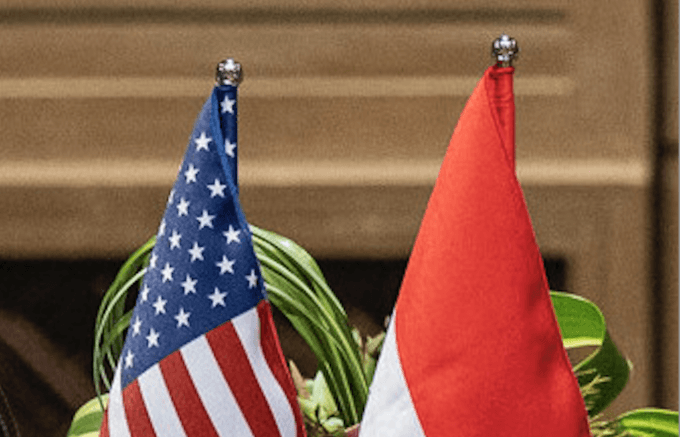
Today, many Indonesian scholars and activists believe those warnings are becoming reality once again through the newly signed Agreement on Reciprocal Trade (ART) between Indonesia and the United States. Negotiated throughout 2025 and finalized in Washington, D.C. in February 2026, the agreement is scheduled to take effect in May 2026. Supporters present ART as a modern trade agreement designed to reduce tariffs and improve economic cooperation. Critics, however, argue that it represents a deeper restructuring of Indonesia’s political and economic sovereignty in favor of U.S. strategic interests.

At the center of the debate is a simple question: does ART create an equal partnership, or does it reinforce an unequal relationship in which Indonesia is expected to adapt to the priorities of a more powerful state?

An Unequal Partnership

On paper, ART covers familiar elements of contemporary trade agreements: tariffs, digital trade, export rules, investment regulations, security coordination, and implementation mechanisms. Yet the deeper concern raised by critics is that the agreement is not genuinely reciprocal. Instead, it establishes a framework in which Indonesia must align many of its economic and geopolitical policies with those of Washington, while the United States assumes few comparable obligations.

One of the most controversial provisions reportedly requires Indonesia to coordinate aspects of its foreign policy and trade practices with U.S. sanctions regimes and export-control systems. Indonesia would also be expected to consult Washington before entering certain trade arrangements with third countries if those agreements could affect U.S. interests. Critics argue that such clauses effectively extend American strategic influence into Indonesian policymaking.

For many observers in the Global South, this reflects a familiar historical pattern. Powerful countries often use trade agreements not only to facilitate commerce but also to shape the political and economic behavior of weaker states. The language of ‘cooperation’ and ‘good faith’ may appear neutral, but the balance of power embedded within such agreements can produce relationships of dependency rather than partnership.

This concern resonates strongly in Indonesia because the country has long sought to maintain an independent foreign policy. Since the Bandung Conference of 1955, Indonesia has portrayed itself as part of a broader movement of postcolonial nations seeking autonomy from great-power domination. ART, critics argue, risks undermining that legacy.

The Human Cost for Indonesia’s Working Classes

The social consequences of ART may be felt most sharply by ordinary Indonesians — especially workers, peasants, fishers, and small entrepreneurs.

For farmers, the agreement is expected to increase imports of heavily subsidized U.S. agricultural products, particularly soybeans. Indonesia would reportedly import millions of tons of American soybeans annually, creating intense competition for local producers. Similar pressures could affect horticultural sectors such as fruit farming. Small farmers, who already struggle with volatile prices and rising production costs, may find it increasingly difficult to survive against large-scale industrial agriculture from abroad.

Fishers face similar challenges. Although ART includes regulations concerning sustainable fisheries and illegal fishing practices, critics argue that the removal of tariffs on U.S. seafood imports could flood Indonesian markets with foreign products. Small-scale fishing communities — already vulnerable to climate change, fuel costs, and declining fish stocks — may struggle to compete.

Industrial workers are also likely to feel the impact. One provision reportedly weakens Indonesia’s Local Content Requirements (known domestically as TKDN), which were designed to encourage foreign companies to manufacture products locally and support domestic industries. Without such requirements, multinational corporations could increasingly export finished products directly into Indonesia without building factories or creating substantial local employment. This could accelerate deindustrialization and contribute to job losses in manufacturing sectors.

The digital economy presents another area of concern. ART reportedly protects corporate algorithms from government disclosure requirements. For ride-hailing drivers, delivery workers, and other gig-economy laborers, this could limit the Indonesian state’s ability to regulate platform companies and protect workers from algorithmic exploitation. Around the world, digital platforms increasingly control wages, working hours, and labor conditions through opaque systems that workers themselves cannot fully understand or challenge. Critics fear ART could strengthen these asymmetries of power.

Taken together, these pressures could ripple through Indonesia’s broader social fabric. Small traders, neighborhood businesses, and informal workers often depend on the spending power of farmers, factory workers, and fishers. When those groups suffer economic decline, entire local economies can weaken.

Indonesia’s Place in the Global Economy

Beyond its immediate social effects, ART may reshape Indonesia’s long-term development strategy.

Indonesia possesses some of the world’s most important reserves of critical minerals, particularly nickel, which is essential for electric vehicle batteries and the global energy transition. In recent years, Jakarta has attempted to use these resources to promote downstream industrialization — encouraging domestic processing and manufacturing rather than simply exporting raw materials.

Critics argue that ART could weaken this strategy by granting greater access to U.S. corporations while easing restrictions designed to ensure local value-added production. If Indonesia becomes primarily a supplier of raw materials while importing higher-value manufactured goods, the country could remain trapped in a dependent position within the global economy.

This reflects a broader historical problem faced by many developing nations. Colonial economies were often structured around the export of raw materials and the import of industrial products from richer countries. Postcolonial governments have long tried to escape this pattern through industrialization and economic planning. ART, opponents argue, risks reproducing those same unequal structures under the language of free trade.

The agreement also carries significant geopolitical implications. Indonesia has deep economic ties with China, which is one of its largest trading partners and a major investor in infrastructure and industrial projects. Some provisions of ART reportedly pressure Indonesia to align more closely with U.S. definitions of ‘market economies,’ potentially limiting cooperation with China in sectors such as shipping, ports, and industrial technology.

For Indonesia, this creates a difficult dilemma. The country has traditionally sought to avoid becoming subordinate to any major power bloc. Yet ART may constrain Jakarta’s ability to balance relationships between competing global powers.

A Changing Global Order

The debate over ART also unfolds against the backdrop of major changes in the global balance of power.

The United States remains the world’s dominant military and financial power, but its global position is increasingly contested. Economic inequality within the U.S. has grown sharply, its industrial base has weakened in some sectors, and prolonged military interventions have strained its resources. At the same time, emerging powers — particularly within the BRICS bloc — are gaining influence in global trade, finance, and infrastructure development.

For critics of ART, this shifting landscape makes the agreement especially troubling. They argue that Indonesia should diversify its partnerships and strengthen regional and Global South cooperation rather than binding itself too closely to U.S. strategic priorities.

The broader issue is not simply trade policy. It is the question of whether developing nations can maintain meaningful sovereignty in a world still shaped by unequal power relations. Sukarno’s vision of political and economic independence was rooted in the belief that formerly colonized peoples could collectively resist domination and build alternative paths of development. Today, many Indonesians see ART as a test of whether that aspiration can survive in the twenty-first century.

The outcome will not affect Indonesia alone. Across the Global South, countries are confronting similar pressures as they navigate competition between major powers, global supply chains, and the demands of international capital. Indonesia’s experience with ART may therefore serve as an important example of the difficult choices facing postcolonial nations in a rapidly changing world.

This article was produced by Globetrotter.

Airlangga Pribadi Kusman is the Director of Postgraduate Studies on Political Science at the Airlangga University in Indonesia. Imam Moeljadi is a researcher in Philosophy of Political Economy at the LogikaPolitik Institute.

Not Much to See: The Release of the UFO Files

 June 3, 2026

Photo by Albert Antony

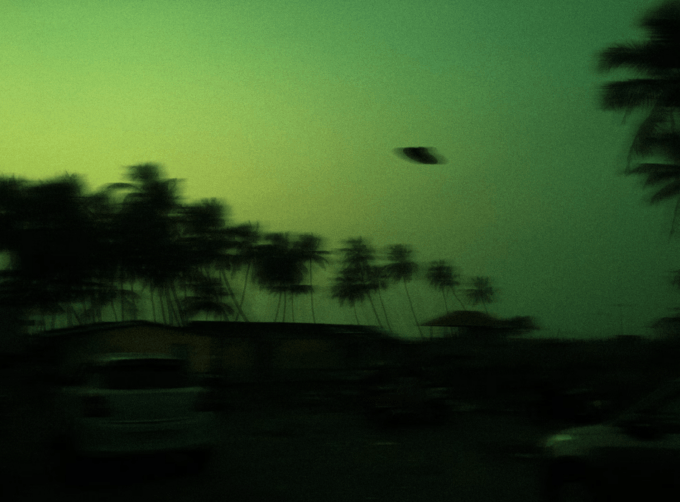
These are always occasions of anticipation and even celebration for the tinfoil hatters and those keen to spot the internal plot, the thriving fifth column and anything that could risk being seen as ordinary.  The human mind is obsessed by the need for a rounded explanation.  In place of that arises a form of mysticism, even superstition.  What cannot be explained must be otherworldly.  Few better tests for this proposition can be found in the discussion about unidentified objects of aeronautical import.

May saw the release of two tranches of records (May 8 and May 22) on Unidentified Anomalous Phenomena (UAPs), a distinctly more cautious term for what is known in the popular vernacular as Unidentified Flying Objects (UFOs).  This was done at the insistence of President Donald Trump, who claimed on Truth Social in February that “tremendous interest” had been shown in the matter, undisguised code for revealing his own keenness in the matter.

The quotidian, the banal, the prosaic – these are terms no UAP pundit or card-carrying follower wants to know.  But the reality remains that the files, as with previous declassified material, can often be put down to the explicable, even if a shade of doubt exists over sightings, photography and film.  The Pentagon states that the archived materials document “unresolved cases, meaning the government is unable to make a definitive determination on the nature of the observed phenomena.”

The best some commentators can do about the unusual material is to suggest that “something” is taking place, which is as non-committal as you can get.  What is interesting in these file drops is the signal change of heart in the Pentagon about UAPs.  James Hibberd, writing in The Hollywood Reporter, suggests that the US government wants a share of a genre made famous by the entertainment industry. “The Pentagon has gone from denying UFOs are a thing to dumping documents, photos and video concerning ‘anomalous’ phenomena.”  But Hibberd was not impressed by the Pentagon’s efforts. The “premier” was distinctly substandard, “vague, grainy, redacted mess.”

As for the scientific cognoscenti, the archives have been matters of qualified interest.  Theoretical physicist Avi Loeb of Harvard University admitted in an interview with Al Arabiya English (AAE) to feeling “like a kid in a candy store” at the release of the material, focusing his attention on, among other things, “a black sphere that was moving through the clouds.” Not a drone, it might have been a balloon.  But here, as with other assessments, not much can be made of it, and most certainly nothing about the speed “because we don’t know the distance to it.”  The same could be said of another “object that accelerated very quickly, much faster than you expect from a drone.”  Again, any evaluation regarding speed was impaired by not knowing the distance.

Loeb usefully describes the yawning gap between what is witnessed by the imperfect, often muddled eye and what is scientifically measured.  A report by a senior intelligence officer from 2025 reporting a “swarm of orbs and other unusual phenomena” during a helicopter-piloted mission merely provided “a testimony not data from instruments. The question is whether he was looking at human-made drones, perhaps by adversarial nations.”

Typical releases include a report from the Central Intelligence Agency in December 1973, documenting intelligence gathering in the Soviet Union.  The intelligence information report (IIR) notes the content of the report as informational and not evaluative.  Be that as it may, an incident in the summer of that year features: an observation of an airborne, luminous, bright green, unidentified object.  Concentric circles had formed around the observed phenomenon over a period lasting several minutes before dissipation.  No opinion was offered by the witness on the phenomenon, and no further details on the incident were provided.  Not exactly elucidating.

Military correspondence on the sighting of “flying discs” in 1947 serve as matters of curiosity rather than revelation.  In a December memorandum from the Department of the Air Force to the Commanding General of the Fourth Air Force at Hamilton Field, California, a dismissive note is evident about submitted photographs purporting to show flying objects.  “The marks appearing on the photographs inclosed in basic letter are believed to be defects in the film, paper, or camera and not pictures of ‘flying discs’.”

Photographs forwarded to headquarters of the Fourth Air Force taken by one Mary L. Herren of Portland, Oregon demonstrate the intrinsic vagueness and questionable value evident in such images. “She advises,” says the relevant memorandum by Lt. Colonel Donald J. Springer of the USAF to the Chief of Staff of the USAF in Washington on December 5, 1947, “these photographs were taken some time between November 5th and 12th, 1946, in the vicinity of Jefferson, Oregon, and points out the formation in the photographs as being objects she did not recall seeing herself but she thought might possibly be flying discs.”  The assessment afforded the photos is dismissive: “The objects referred to appear in the sky area of each accompanying photograph.  The uniformity of the markings would tend to indicate that the camera or film used to take these pictures was possibly defective.”  There had been no “incidents of flying discs” reported in that area over the dates mentioned.  How unfortunate for Mary Herren.

The pregnant question marks hovering over large swathes of these archives has stirred the relevant question: Have the intelligence and security agencies overseeing such matters been appropriately attentive?  The sheer volume of “unresolved” cases is bound to niggle the more security minded sorts.  Professor Loeb could not resist a caustic observation on that score; such poorly assessed sightings “imply that the US intelligence agencies are not doing a perfect job.  They cannot identify objects that are potentially human-made, and that’s a serious national security concern.”  If any such objects were, however, to be from beyond Earth, “of course, it’s the biggest discovery ever made by humanity.”  Best not wait up regarding the latter.

Binoy Kampmark was a Commonwealth Scholar at Selwyn College, Cambridge. He lectures at RMIT University, Melbourne. Email: bkampmark@gmail.com

What Claudia Sheinbaum Has Achieved for Mexico


 June 3, 2026

Photograph Source: Eneas De Troya – CC BY 4.0

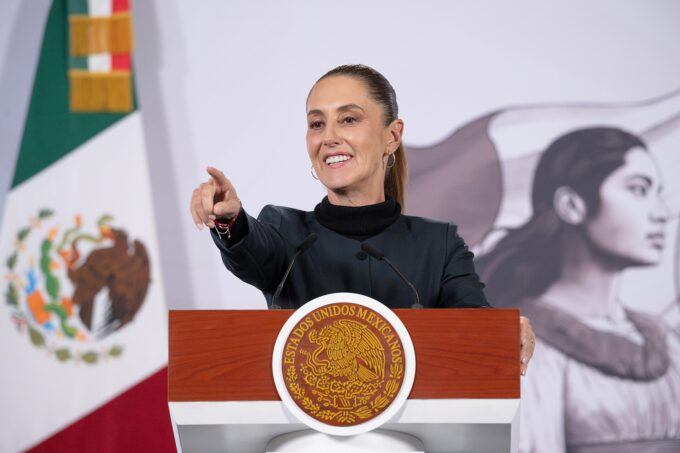
In less than two years, Mexico’s first woman president has instituted numerous social welfare improvements, while her rhetoric on foreign policy – even if her actions have in some cases lagged – consistently supports Global South nations such as Cuba and Venezuela, as they face barbaric assault from the world’s hyper-capitalist, would-be hegemon, the U.S. Claudia Sheinbaum gave Mexico the women’s well-being pension, universal education scholarships, “In-Home Healthcare Outreach,” worker rights and wages enhancements, which, among other things, upped the minimum wage, gender equality protections, universal healthcare expansion and constitutional enshrinement of social rights. These are not minute or insignificant contributions to the well-being of ordinary people. Each of these improves life immensely. Taken altogether, they add up to a social welfare revolution for Mexico’s poor and middle class.

According to Stephanie Brewer, writing for the Washington Office on Latin America on October 1, 2025, Sheinbaum aims to expand her excellent predecessor’s, Andres Manuel Lopez Obrador’s (AMLO’s) ruling party’s agenda. This plan is called the “Fourth Transformation.” Scheinbaum’s first annual report “demonstrated continuity in government priorities and showed that [AMLO’s party] MORENA’s policies have brought progress in poverty reduction.” Brewer adopts a critical tone toward some of AMLO’s policies, saying, “a year later, we can conclude that Sheinbaum has not changed course on these [supposedly regressive for democracy] policies.”

This article, cleaving to a U.S. media platitude in re AMLO, worries about the separation of powers, as if here the American model, which has failed so miserably in the arena where AMLO combated poverty, even when all those powers were quite separate, were some sort of holy grail. Maybe for some people it is. But for a country like Mexico, experiencing not merely extensive poverty but actual widespread destitution when AMLO took power, the issue is and was a matter of priorities. And AMLO’s priority was food, clothing, jobs, education and medicine for the poor – a priority that resulted in 13.4 million Mexicans surfacing from poverty during his administration. This was the emergency room issue. AMLO cannot be blamed for stopping the bleeding. And neither can Sheinbaum.

Brewer does note, however, that “Sheinbaum has had to devote a disproportionate amount of her first year to responding to…Donald Trump…the cyclical threats and partial implementation of tariffs, as well as the possibility of the United States taking military action in Mexico as part of the so-called ‘war on drugs.’” Sheinbaum had to insist to Trump on Mexican sovereignty and that her nation “will not allow unilateral actions on its territory.” You may recall that Trump threatened to deploy the U.S. military against cartels within Mexico’s borders. In fact, when he ascended to power the second time, Trump’s rhetoric indicated that he viewed Mexico like Canada or Greenland, namely as available land to be appropriated according to his whim.

Sheinbaum responded by stationing “thousands of additional Mexican military personnel to the shared border; [with] the transfer to the United States of dozens of Mexican nationals sought by the U.S. justice system…and efforts to show that Mexican authorities are seizing more fentanyl.” She also boosted bilateral cooperation between the two neighboring nations. Regarding Trump’s pet bugaboo, immigration, Sheinbaum detained more migrants and accepted “the return of non-Mexicans from the U.S.” So in other words, Sheinbaum, like AMLO, understood she was dealing with a mercurial despot and handled matters as diplomatically as possible.

The universal education scholarships that Sheinbaum instituted benefit public school students, per google. Starting in 2025 with secondary students, these grants now include primary students. The women’s well-being pension helps women aged 60-64, before the 65-year-old qualification for the universal seniors’ pension. As for enshrining social rights in a reformed constitution, these guarantee senior and disability pensions as inalienable social rights. Sheinbaum also created the Ministry of Women and secured equality for women “and the right to a life free of violence.” Regarding worker rights and wages, she implemented “explicit pay equity guidelines to close the gender wage gap,” and reforms “that recognize the right to adequate housing for all workers.”

In all of this, she builds upon AMLO’s sturdy foundation. According to AI’s list, he instituted universal pensions, youth and educational scholarships, paid apprenticeships, “provided monthly cash payments to rural famers and landowners who planted and maintained timber and fruit-bearing trees on their property,” and minimum wage increases. On March 31, 2024, the World Socialist Web Site ran an article analyzing his cash transfer and minimum wage policies, and criticizing AMLO and his “pseudo-left supporters.” This, to me, is silly. Lifting 13.4 million people out of poverty is nothing to sneer at, nothing to ignore. Just as, in recent years, China raised 850 million people from poverty into the middle class, AMLO’s accomplishment comes within the context of REGULATED capitalism. Considering that we here in the United States are the often wretched subjects of tyrannically UNREGULATED capital, it’s difficult to get upset about leaders who obviate this awful system, modify it or use it to advance social welfare. They may not be revolutionary, they may recognize limits, but they manage to improve ordinary people’s lives. No small accomplishment.

So Sheinbaum inherits AMLO’s legacy and continues it. To the dismay of Mexico’s oligarchs and of billionaires everywhere, there will be no rupture with the past, an important Latin American country of 131 million people will remain on its trajectory of social amelioration and a continuum of what might be called socialism with Mexican characteristics. To the chagrin of a far-right U.S. media and elite political class, Sheinbaum adroitly manages her government’s relationship with a difficult Donald Trump, no doubt having learned from AMLO that confrontation with such a ruler is best avoided and the less one has to do with him, the better. Like AMLO, she is neither flamboyant, trendy, nor a celebrity leader. She, like her predecessor, gets the job of her people’s welfare done, and if that means caution when the loose cannon to the north takes criminal aim at fraternal nations farther to the left, caution is what you get, though not at all in words, to the displeasure of those who insist her actions must match those words.

Writing in that WSWS article, Jesus Ugarte argued that AMLO’s policies, especially the cash transfers to the working poor, were “designed to ensure that the Mexican working class continues…as a pool of cheap labor for capitalist exploitation, as Washington steps up its economic warfare against China in the predatory drive for a new redivision of the world. And second, [the cash transfers] are aimed at keeping the rising class struggle in check.” Ugarte goes on to quote Mexico’s richest man, Carlos Slim, praising AMLO: “There is social peace, there is no confrontation.” Very likely the Zapatistas in the south agree with WSWS, and I’m not saying they’re wholly wrong, but overall, these cash transfers to poor working people are an unmitigated good. And good is so weak in the world that it deserves praise wherever it’s bold enough to act. If these cash grants dampened the fire of social revolution, that’s because they met a need; the largest, a pension for the elderly, benefitting roughly 11 million people. Among AMLO’s other programs: pensions for the disabled; support for children of working mothers as a cash transfer; Benito Juarez scholarships; minimum wage for unemployed people ages 18-29 enrolling as apprentices; direct funding for school infrastructure and maintenance and other initiatives.

I see nothing to quarrel with here, nothing, and it’s self-evident why these programs are so popular and AMLO so beloved. Sheinbaum traverses the same path he cut through the capitalist jungle; the working poor and other disadvantaged groups will applaud her. You should too.

Eve Ottenberg is a novelist and journalist. Her latest novel is Old Man Alone. She can be reached at her website.