Wednesday, June 03, 2026

Resistance is Only Half the Equation
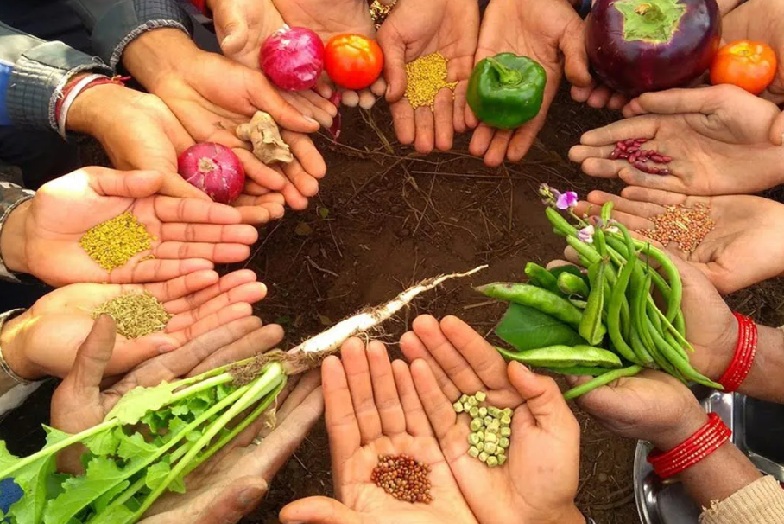
Source: Waging Nonviolence

We no longer live in a world where courts reliably enforce limits on executive power; where media calls out abuse as abuse or where politicians depend on legitimacy to hold power. These conditions are eroding, and power is becoming more and more centralized. 

In the U.S., the Supreme Court’s decision in Trump v. United States in 2024 significantly expanded presidential immunity for official acts, raising concerns about accountability. Globally, ruling parties in Hungary and Poland have reshaped judicial systems through court-packing and disciplinary regimes that weaken independent checks on executive authority. And in countries such as India, new laws restrict freedom of the press. 

In response, we see a grinding pattern of reaction from pundits and resisters, but the power of centralized authority remains. Trump has retained power despite his involvement in the Jan. 6 Capitol attack, as well as his name being all over the Epstein files. Leaders in Turkey and Egypt have been accused repeatedly of inciting democratic backsliding, yet they maintain power. At the same time, ecological, economic, cultural and political crises expand. 

This moment demands more than opposition. What is needed is not just resistance against corrupt centralized systems, but to create new, local systems that restructure power so it is dispersed throughout society. Because the problem is not only that those in power abuse it. The problem is that power is concentrated in the first place.

The work of Gene Sharp stands apart in the field of nonviolent theory for one central reason: his understanding of power. For Sharp, justice, equality, freedom and any meaningful form of democracy do not exist simply as ideals or constitutional rights. They exist only when power is actually dispersed throughout society — embedded in the daily practices, institutions and relationships of ordinary people. Without that dispersion, democracy is little more than a substanceless claim.

Many nonviolent activists and scholars have embraced part of Sharp’s insight. They recognize that governments do not rule by force alone, but by the cooperation and support of institutions, organizations and individuals. From this perspective, power is contingent. If people withdraw their cooperation strategically and nonviolently, regimes can be forced to concede, reform or even collapse. This understanding has shaped movements across the world, from civil resistance campaigns to election protection efforts.

And yet, there is an equally important part of Sharp’s insight they are missing.

The problem of concentrated power

We are seeing how deeply dependent we have become on centralized systems that do not have our best interests in mind. The COVID-19 pandemic exposed how centralized healthcare and supply chains have become, leaving many without timely access to care and essential goods. And recurring, large-scale electrical outages, such as the 2021 Texas power crisis, show how dependent millions are on centralized grids that can fail. 

When power is concentrated — whether in governments, corporations or some fusion of the two — corruption is not an accident. It is a structural inevitability. Systems organized around concentrated power will, over time, bend toward the interests of those who hold it. Policies, resources and decision-making processes become oriented toward preserving and expanding that power, often at the expense of the broader population.

Even the most well-intentioned leaders operate within structures that reward consolidation, control and self-preservation. For example, in an effort to make the U.S. government more efficient and effective, President Barack Obama reinstated presidential authority, ushering in an era of consolidated executive power. The result is an unfortunate recurring pattern: Inequality deepens, accountability weakens and public institutions drift away from the people they are meant to serve.

When decision-making is centralized, the distance between those who hold power and those affected by it widens, often to the point where meaningful feedback becomes filtered, delayed or ignored altogether. Over time, this creates an environment where leaders are not only insulated from consequences, but are also operating with an increasingly distorted understanding of reality. Citizens, in turn, become disengaged or disempowered, sensing that their voices carry little weight within systems designed to concentrate authority rather than distribute it. The result is not just corruption in the traditional sense, but a deeper erosion of responsiveness, adaptability and trust — conditions without which meaningful reform from within is exceedingly difficult.

Activism as external correction

In response to the erosion of democracy and the increasing inaccessibility of necessities like food, healthcare and housing, activists organize. They build networks to monitor elections, serve as watchdogs on corporate behavior, defend civil rights and provide essential services where governments fail. These efforts are vital. They protect people from immediate harm and at times, win meaningful reforms.

But rather than transforming how power is organized within society, these efforts often function as external correctives. They attempt to restrain abuse, mitigate harm and fill gaps left by failing institutions. In doing so, they implicitly accept the continued existence of centralized power structures, even as they resist their consequences.

This creates a paradox. Activists devote enormous energy to building parallel systems. Yet the underlying structures that concentrate that power remain largely intact.

The burden of endless resistance

Over time, this dynamic places an unsustainable burden on civil society. Activists become responsible for preventing abuse by those in power, holding institutions accountable and providing services that those institutions fail to deliver.

This is, in effect, a permanent state of resistance. It is also a reactive posture. Each new harm requires a new response, a new organization, a new campaign. The work expands endlessly, while the root cause — the concentration of power — remains unaddressed. 

One example of this is the environmental justice movement, particularly the coordinated pushback against federal rollbacks. Coalitions such as We Are Still In and the U.S. Climate Alliance mobilize states, municipalities, businesses and civil society to uphold the commitments of the Paris Agreement. Additionally, environmental groups repeatedly challenge deregulation, while states advance their own regulations. This created a multi-level infrastructure of resistance. Yet, even these efforts are forced into a constant defensive posture, expending vast energy to block or mitigate harms rather than dismantling underlying structures that enable federally sanctioned reversals of policy. 

While it’s true that it matters who holds office — we know that Trump’s policies are far more harmful to the environment than were Biden’s — this distinction does not resolve the deeper problem. The structure of centralized power remains unchanged, meaning that environmental policy can be rapidly advanced or dismantled with each shift in administration. As a result, even hard-won gains remain fragile. This volatility prevents the kind of long-term, consistent action required to address the climate crisis at scale. 

The question that follows is both simple and profound: Why do we accept a system in which people must constantly organize to defend themselves against the very structures meant to serve them?

Reimagining the mainstream structure

If we take Sharp’s theory of power seriously, the answer cannot lie solely in resistance.

Withdrawing cooperation from unjust systems is a vital tool. But it is only half of the equation. The other half is construction: building a society in which power is distributed from the outset, rather than concentrated and then contested.

This requires a shift in orientation. Instead of asking how to better monitor and constrain centralized power, we must ask how to redesign the structures that produce it. What would it mean to organize political, economic and social systems so that decision-making authority is broadly shared? So that communities have direct control over the conditions of their lives? So that power is not something granted from above, but something exercised collectively?

In such a system, the need for vast external networks of resistance would diminish. Not because injustice would disappear, but because the mechanisms for addressing it would be built into the fabric of society itself.

And this is key. When power is disbursed throughout society into local communities — for example, when food is grown locally, housing is owned by cooperatives, health care is operated by neighborhood clinics, and so on — then community members can withdraw from or reduce their dependence on centralized, mainstream agribusinesses or real estate corporations or medical institutions. Empowering communities to take care of more and more of their own essential needs is a grassroots process that restructures how power is distributed in society. And the more communities that are empowered by these local initiatives, the more dispersed and decentralized power becomes. 

Addressing concerns of centralized power

The task ahead then is not only to resist concentrated power, but to replace it with distributed forms of governance and organization. To shift from a model of external oversight to one of internal design. In other words, the goal is not merely to challenge power, but to reconfigure it.

Around the world, communities are already doing this. They are realizing Sharp’s theory of decentralized power. By developing community gardens, housing coops and health centers, people can opt out of mainstream institutions and systems, greatly weakening the power those systems have over them. This is not merely an effort to fill in gaps. Instead, it deliberately shifts how power is distributed in society. Because, as dependency decreases, so does the ability of centralized authorities to command compliance. What emerges is not a parallel safety net, but a reconfiguration of power itself, one in which legitimacy flows from local and collective production and governance rather than from those who live far away.  

In the examples below, we see communities around the world building local control over essential needs such as housing, food, health care, energy, technology and safety. Each project that enables people to meet these needs locally — rather than through international corporations or federally controlled institutions — is a step toward local empowerment. As more communities adopt this approach, power becomes increasingly distributed across society.

Housing: Community control over land and shelter

In southern Spain, the town of Marinaleda has created a radically different housing model. Following the election of Mayor Manuel Sánchez Gordillo — a labor leader pivotal to the town’s fight for self-governance — Marinaleda expropriated a significant amount of land from the state and launched a de-commodified housing system. Residents build their homes on collectively owned land; the town supplies construction materials and labor while occupants pay minimal mortgage payments tied to maintenance rather than profit. While operating within a broader national system, the town has effectively removed housing from market forces, placing control in the hands of the community itself.

In Jackson, Mississippi, Cooperation Jackson is working to build a solidarity economy rooted in worker ownership and community land control. Based on the model of Mondragon, Spain, residents are reducing dependence on both state and corporate systems.

Food: Feeding communities without external control

Few examples demonstrate community power more clearly than the Zapatista Autonomous Communities in Chiapas, Mexico. There, Indigenous communities have built autonomous systems of governance and agriculture, producing food collectively on communal land. In food forests, families and collectives farm milpa plots (corn, beans and squash) alongside cooperative coffee production. These systems operate independently of state programs and corporate supply chains, ensuring that communities can feed themselves on their own terms.

Community control goes beyond food. Volunteer medical professionals provide training for locals and help operate small community clinics that provide basic care, vaccinations and maternal support. Local community-run schools provide education that includes Indigenous languages, history and agroecology. And security as well as justice issues are brought before community assemblies. 

Power is dispersed by rooting it in the community itself and sustaining it through ongoing practice rather than reliance on institutions organized and controlled far from the people they are meant to serve. This reduces residents’ vulnerability to political shifts, market fluctuations and external control. Participation is embedded into daily life, making autonomy a lived reality rather than an abstract ideal. 

Likewise, in India, Navdanya, a woman- and Earth-centered movement to protect biodiversity, supports networks of farmers who preserve and share native seeds, rejecting dependence on corporate-controlled agriculture. Though funded in part by donations from corporate partners, they maintain seed sovereignty, which allows them to retain control over the very foundation of food production.

Health care: Care as a collective practice

Across many Indigenous communities, healers and midwives operate within community structures where knowledge is passed through generations. Care is often relational, land-based and spiritually integrated. For example, within the Navajo Nation, Diné traditional healing is an active, community-embedded system. And in Maya Ixil regions, comadronas (traditional midwives) guide pregnancy, birth and postpartum care using herbal remedies and spiritual practices. While outside funding supports this work, it nevertheless provides examples of how traditional and alternative healing can replace total dependence on mainstream health care systems. 

These health care practices are examples of mutual aid networks — many of which have expanded rapidly in recent years — in which communities can organize care without institutional backing. Funded through direct contributions and relationships of trust, these networks provide medical support, caregiving and essential supplies outside formal systems.

Energy and technology: Infrastructure in community hands

Energy and technology are often treated as inherently centralized, but communities are challenging that assumption. For example, Barefoot College trains local residents in the Global South — often women — to build and maintain solar infrastructure themselves, placing both knowledge and power in community hands.

Digital infrastructure is also being reclaimed. Community-built mesh networks, such as Guifi.net, provide locally owned internet systems governed by its users rather than corporate providers. These networks demonstrate that even complex technological systems can be decentralized and collectively managed.

Safety: Community-based security and governance

In the Indigenous Mexican town of Cherán, residents expelled external political authorities and established their own system of governance and security. Community patrols replaced state police, and decision-making shifted to local assemblies.

Similarly, within Zapatista communities, systems of justice and conflict resolution are handled collectively, without reliance on external courts or enforcement structures. Safety, in these contexts, emerges from shared responsibility rather than imposed authority.

From meeting needs to redistributing power

It’s worth noting that not all community-based efforts are entirely self-sufficient. Some, like community land trusts, rely heavily on ongoing government funding. And Germany’s energy democracy movement makes use of public grants and corporate support. Additionally, community safety groups provide programs that interrupt violence and reduce harm, but still depend on local police. Yet, they are models for systems and structures that can and sometimes do transition to total independence.

What unites these examples is not perfection but a desire to reduce their dependence on centralized institutions. They demonstrate that communities can meet essential needs through systems they control. That reduction matters because dependence is the mechanism through which power is maintained.

A fair critique of decentralizing power is that it can fragment capacity and deepen inequality between communities. Not all localities begin with the same resources, skills or cohesion, and without coordination, decentralization can produce uneven outcomes, duplication of effort or gaps in essential services, especially in moments that require large-scale response. It can also risk exclusion or local capture if decision making is dominated by a few voices. 

These are real concerns. But they point to the need for networking, not isolation. They reveal the importance of shared standards, mutual aid across communities and federated structures that allow coordination without recentralizing authority. In this model, power is distributed, but not disconnected. Communities retain control over their systems while participating in broader networks that pool knowledge, redistribute resources and maintain accountability.

When communities no longer rely on governments or corporations for housing, food, energy or care, their participation in those systems diminishes. And their withdrawal is not merely tactical. Rather, it becomes a condition of life that rebuilds societal power structures from the ground up. 

And when this is multiplied across communities, something larger begins to emerge: a society in which power is not concentrated and contested, but dispersed and practiced. This is what it means to take Gene Sharp seriously — not only to withdraw cooperation from unjust systems, but to build the capacity to live without them.


This article was originally published by Waging Nonviolence; please consider supporting the original publication, and read the original version at the link aboveEmail

Barbara Peterson is a professor at Granite State College in Portsmouth, New Hampshire. She earned her doctorate in education at University of New Hampshire. Her areas of scholarship are in indoctrination in education and in nonviolent action as a necessary component of educating for peace, democracy, and civics. She founded Nonviolent Citizen Action, which educates individuals and organizations about strategy and coalition building in people power movements. Her first book, "Reclaiming Power: Building a Stronger Resistance in the Age of Trump," was published September 2018.


Source: Jacobin

Britain’s local elections in May offered the Left much reason for anxiety. Nigel Farage’s far-right Reform UK swept up over 1,400 new council seats and won outright control of fourteen councils, leapfrogging Keir Starmer’s Labour Party, which is now in free fall. It’s a wearily familiar story across Europe: neoliberal decline, and establishment parties’ meager proposals to manage it, has produced fertile ground for the continued rise of nationalist-conservative forces.

Yet Britain is perhaps something of a distinct case. These elections were also lauded as a victory for the Green Party, consolidating its growth trend over the past year. The Greens won 441 new seats and outright control of four councils. Set against Reform UK’s gains, these are modest numbers. Yet read alongside the Greens’ recent membership growth and parliamentary breakthroughs, they suggest that something is stirring on the British left. This demands reflection on the changes that have recently taken place in the Green Party and how far they can go.

Filling Labour’s Vacuum

The Greens’ approach has shifted massively since Zack Polanski took over as party leader last September. Once perceived as a niche, middle-class environmentalist outfit, the party under Polanski has begun to look like something closer to a left-populist formation. He has railed against “Rip-Off Britain” and entrenched wealth inequality, called for an end to UK arms exports to Israel, demanded nationwide rent controls, and pushed for a substantial rise in the minimum wage. The party has begun advancing a political platform that the Economist has described, with evident alarm, as “Corbynism on steroids.”

As trade union leaders have voiced their frustration with Labour’s milquetoast reforms, Polanski has promised to overturn the anti-union legislation built up under successive Conservative governments and left untouched during Labour’s tenures in between. He’s even described the Greens as “the new workers’ party.”

This has also fueled a change in the party’s base. Last July, during discussions surrounding the launch of Jeremy Corbyn’s Your Party, Momentum cofounder and former Corbyn adviser James Schneider sketched the task of any new socialist party in Britain. It must, he said, reconstitute itself through “the asset-poor working class, downwardly mobile graduates, and racialized communities.” The Greens, under Polanski, appear to be doing precisely this — retaining their existing support among urban graduates, expanding within Muslim and ethnic-minority communities, while making inroads among lower-income voters. According to a More in Common study, there are now only two parties whose voting intention figures rise linearly as individuals’ financial situation worsens: Reform UK and the Greens.

It’s not just about the money in people’s wallets. The Palestine solidarity movement has played no small part in helping along this transformation, catalyzing a rejection of a Labour leadership unwilling to abandon its fervent military, financial, and political support for Israel. Together with a vocal rejection of austerity and a new communication style capable of reaching beyond the already politicized, the Greens’ stance on Gaza has helped drive a tripling of the party’s membership since Polanski’s election. Membership rose another 10 percent after plumber-turned–Green MP Hannah Spencer defeated both Labour and Reform UK in February’s parliamentary by-election in Gorton and Denton.

The Architect

How much of this is Polanski’s own doing? A former Lib Dem who joined the Greens only in 2017 and won the leadership last fall, Polanski does not come with a traditional left-wing pedigree. Yet he has rapidly pushed the party’s messaging in a left-populist direction, fueling growth in both membership and electoral scores.

Polanski is a talented orator and handles the spotlight well, but he is no extraordinary tribune. The importance of his leadership for the party’s growth seems to lie less in his rhetorical gifts than in his ability to redirect its strategy. This points to a more general truth: leadership matters in contemporary politics, including on the Left, but “leadership” can mean very different things. There is a purely external version of leadership, in which the party is reduced to the leader’s personal electoral machine. And there is an internal version, in which the leader guides some wider body in society. Polanski’s role is central because he is the architect of a strategic shift inside the Greens. For that shift to consolidate, however, it must eventually spread throughout the party’s structure. Otherwise, the project risks meeting the same fate as Corbyn’s Labour, which, despite the influx of new members he brought in, never transformed the party deeply enough.

Polanski’s personal profile is also worth dwelling on. He is Jewish and gay, vegan and teetotal, and refuses to fly in order to avoid carbon emissions — declining even to meet Zohran Mamdani in New York, for that reason. At first glance, this might not look like the profile of a leader capable of pushing the Green Party toward economic populism and a lower-income electorate. And yet that is exactly what is happening. It is a useful reminder that so-called identity politics issues are not, in themselves, necessarily a liability for class politics, as left-conservatives have insisted. What matters is how these themes are embedded in broader political profiles and aims, not the themes themselves. It is the perennial problem of how to construct a collective “we” capable of transcending identitarian particularisms without denying their existence.

Beyond the Urban Core

The Greens’ transformation surely has not yet made them the “new workers’ party” Polanski proclaims them to be. A large share of Green voters are still primarily concerned with environmental issues, more than the cost of living. That makes many of them outliers in a country that overwhelmingly cites high costs among the key issues shaping its vote. Critics have also highlighted the party’s inability to overcome its geographical limits, with its appeal still largely confined to urban areas. Mobilizing the Greens’ active membership to overcome those limits is important but fraught with difficulties: local campaigns are often shaped by voluntaristic middle-class activism that lacks training and clear direction, and is not always fully aligned with Polanski’s new economic populism.

Tough though it may be, the key to making the Greens’ rise something more than a passing windfall from Labour’s temporary collapse lies in the need to root the party in working-class mobilization and to build a working-class presence in its ranks. Polanski’s populist turn has certainly opened prospects in this direction, but the road ahead is long. Here it is worth looking at the experience of post–2008 crisis European left populism, which Polanski’s new course at times recalls. Those left-populist parties were better than the radical-left formations that immediately preceded them at fostering a common identity around clear, shared goals during election campaigns. But their leaderships — media-driven, personalized, and often drawn from culturally elite backgrounds — proved rather weak at the slower work of building on-the-ground organizations solid enough to hold working-class voters over time.

Comparing Reform’s base with the Greens’ offers some insight into the challenges ahead and where attention should be concentrated. Both parties have a cross-class base but draw differing levels of support from distinct fractions of the working class. The Green Party does well in areas with larger Muslim communities and high numbers of renters. In one YouGov poll, Reform UK has more support than other parties from routine workers doing repetitive, often low-income jobs — except among those aged between 18–34, who massively favor the Greens. Reform UK also does well in the areas of organized abandonment where such routine work is more common. Recent research by Sacha Hilhorst has shown that there is a concrete appetite for progressive politics and economic populism among large sections of Reform’s voter base.

In 2018, the Labour Party under Jeremy Corbyn launched a community organizing unit meant to help extra-parliamentary struggles around local issues. Arguably, such a program could be understood as a form of base building — a strategy which has garnered interest among socialist organizers in recent years. This seeks to develop support for socialism among broader sections of the working class through initiating and participating in localized campaigns. In this sense, Peter Mertens — leader of the rising Belgian Workers’ Party (PTB) — has highlighted the importance of building campaigns around the demands that local residents themselves raise. By listening first, rather than imposing a program from above, the PTB has won support through creative actions such as organizing to protest the closure of local swimming pools. While the logic of elections can create its own priorities and pace, the Greens should explore revitalizing projects such as the community organizing unit, and a similar strategy. This could offer the possibility of surpassing their current geographic limitations and attracting a broader stratum of current Reform voters or abstainers.

Moreover, to successfully challenge Reform’s advance among working-class voters, the Greens will also need to draw upon some of the deeper sentiments and emotional registers that resonate with that electorate — sentiments Reform has been able to tap into — while reframing them in solidaristic terms, in contrast to Farage’s politics. For instance, the global right today excels at weaponizing nostalgia for reactionary ends. But that should not mean abandoning this sentiment altogether. It is thus important that Polanski continues, as he is already doing, to articulate a form of nostalgia that bends toward left-wing ends. His recurring slogan “Make Hope Normal Again” is exemplary of this. Hannah Spencer’s victory speech offered another: “Working hard used to get you something — it got you a house, a nice life, holidays. It got you somewhere. Now, working hard — what does that get you?”

Finally, to become a party that represents broader sections of the working class and create what Antonio Gramsci called a “national-popular” force, the Greens shouldn’t be squeamish about foregrounding their attachment to specifically British traditions. This doesn’t mean echoing Farage’s anti-immigration rhetoric, nor, like one dismal recent Labour leadership contender, pretending you’ve never had a cappuccino for fear of being deemed “metropolitan.” It means, for instance, mobilizing the deep affection most people feel for the National Health Service into a demand for its revival and constructing a vision of place-based pride that bends toward an inclusive, welfarist politics. Doing so counterposes the visions of Britain offered by Reform with something more expansive and aspirational: that is, a story of the country that working-class people, of any background, can recognize as their own.

The Storm Ahead

Britain’s media establishment has already given a foretaste of what awaits Polanski in the run-up to a general election: an attempted character assassination of the kind it ran against Corbyn. They appear to be using almost exactly the same playbook, with figures like Sky News’ Trevor Phillips desperately attempting to tie Polanski and the Palestine solidarity movement to violent antisemitism.

In this respect, the Greens must learn from Corbyn’s experience, not least to avoid repeating the same tactical mistakes in the face of a coordinated media assault. Going on the defensive — or offering apologies and retreats on terms dictated by hostile media — may feel safer in the moment than facing the uncertainty of open confrontation. But it is the path to defeat. Here, Jean-Luc Mélenchon’s record in France offers a lesson: he has consistently refused to be dragged onto the defensive by bad-faith media controversies or to apologize in response to dishonest, whipped-up accusations.

For now, Polanski appears to be moving in this direction. He has, for instance, been willing to use his Jewish identity to push back against the antisemitic narratives being constructed around him and the party. Remaining forthright in his positions will not only help retain those members drawn to the Greens by their vocal stance against the ongoing destruction of Gaza; it will also help Polanski withstand the media storm that awaits him.

But facing that storm will require more than Polanski himself standing firm. A Left without support among economic and media elites can only rely on the mass backing of ordinary people. It must count on the one vehicle that, despite the fluidity of contemporary society, can still turn that support into sustained political force, namely a mass party. That is why building a party that is more structured, and more capable of sinking deep roots in working-class communities, matters so much: it is not simply a recipe for electoral growth but the precondition for weathering a hostile media environment and a volatile political landscape.

The British left has spent the years since Corbyn’s defeat in a kind of wandering exile. And Your Party, the new Corbyn–Sultana left formation, after initially raising great hopes, ended up imploding. Could Polanski’s Greens become the vehicle for the kind of left-wing political reorganization among the working class that, for now, we are seeing only in fits and starts — from the PTB in Belgium to La France Insoumise in France, or Mamdani in New York? The current opening is thin but real, and it might not stay open for long. What the Greens do with it is now the most important question on the British left.


This article was originally published by Jacobin; please consider supporting the original publication, and read the original version at the link above.

Charlie Thomas is a PhD student at Queen Mary University of London, where he researches the relationship between trade unionists and the Palestine solidarity movement.

The Merchant of Fear and the Buyers of War: Trump’s Middle Eastern Story

Source: Originally published by Z. Feel free to share widely.

Donald Trump is back at it again, making one of those big, dramatic statements that only he can deliver. This time, he claimed that if the United States hadn’t bombed Iran, Israel would have been wiped out by a nuclear bomb. At first, it sounds like a serious security warning. But when you look closer, it feels more like classic fear-mongering — the kind where complicated realities get boiled down to a simple Hollywood-style story: America is the hero, Israel is the helpless victim, and Iran is the ultimate villain about to unleash the end of the world.

This kind of narrative isn’t new. For decades, a big chunk of Washington’s Middle East policy has relied on hyping up existential threats. What makes Trump different isn’t that he uses fear — lots of politicians do that — but how far he takes it. He turns it into full-blown apocalyptic drama and uses it as his main political weapon.

The real problem with his recent claim isn’t just that it’s exaggerated. It’s that it clashes pretty hard with what we actually know from intelligence reports and political history. If Iran was truly seconds away from nuking Israel, why have U.S. intelligence agencies spent the last twenty years saying they have no solid evidence that Iran has even decided to build a nuclear weapon? If the threat was that urgent, why did world powers spend years negotiating the nuclear deal to monitor and limit Iran’s program? And if it was truly that dangerous, why did Trump pull the U.S. out of that very agreement?

These aren’t just minor contradictions. They point to a deeper pattern: threats are defined more by political convenience than by hard evidence. When the nuclear deal existed, Trump called it “the worst deal in history.” After he tore it up, the resulting crisis became proof that he needed to be tougher. Now, the same crisis is being repackaged as “I saved the world.”

Throughout his career, Trump has always been more of a master marketer than a traditional foreign policy thinker. He knows fear sells. In an atmosphere of fear, people ask fewer questions, overlook inconsistencies, and desperately look for someone strong to follow. The bigger you make the danger, the bigger your own role as savior appears.

In this game, security turns into a kind of political product. The scarier the threat, the more military action seems necessary. The more evil the enemy looks, the easier it becomes to justify the costs of war. And the closer the catastrophe feels, the easier it is to position yourself as the only one who can stop it.

This playbook isn’t limited to Iran. Think about Saddam’s Iraq and the phantom weapons of mass destruction, Afghanistan as the forever war on terror, or Libya as an imminent danger to the region. In each case, the threat was pumped up to justify intervention. The result? More chaos, broken states, and fresh cycles of violence — not peace and stability.

The painful irony is that many of today’s “reasons” for new interventions were actually created by previous ones. Yet in the Trumpian story, America is always the firefighter who shows up heroically — never the one who helped start the fire. History conveniently starts when Trump enters the picture.

This style of politics carries real risks for the Middle East. It kills space for diplomacy. Once you label someone an existential monster, talking to them looks like weakness. It also fuels an endless arms race of suspicion and deterrence. And perhaps worst of all, it stops people from honestly weighing the real human and financial costs of war.

The Middle East has already paid a terrible price for these fear-driven policies. This region knows better than anyone how apocalyptic talk can become a self-fulfilling prophecy. Every time a leader paints a picture of imminent doom, the policies that follow often make that doom more likely.

Trump’s claim about saving Israel from nuclear destruction should be seen in this light. It’s not really about whether the specific statement is true or false. It’s about a whole way of doing foreign policy — one that prefers dramatic gestures and personal myths over patient diplomacy and careful management of risks.

History usually isn’t very kind to these savior narratives. Leaders who cast themselves as the world’s heroes often leave behind messes far bigger than the ones they claimed to solve. The Middle East has seen this movie too many times: create a monster, declare an emergency, bomb something, and then use the new problems to justify the next round.

At the end of the day, the real question isn’t just about Iran or Israel. It’s about whether real security comes from exaggerating threats and selling fear — or from honestly managing them. Does the region need more self-proclaimed saviors, or does it need leaders willing to stop treating fear as a profitable political business?

Trump can keep telling the world he saved it. But for many people in the Middle East, he represents something much more familiar: a style of politics that creates monsters and then sells protection from them. In this market, fear always finds buyers. The ones who pay the real price, though, are Americans and the people of the region.