Thursday, July 09, 2026

Macron says Syria must not be destabilised after bombs wound 18

French President Emmanuel Macron warned on Tuesday that Syria must not be destabilised after twin bomb attacks near the Damascus hotel where he spent the night, during a landmark state visit to a country emerging from years of civil war.

Issued on: 08/07/2026 - RFI

Emergency personnel work as smoke and fire rise at the site where explosive devices blew up near a hotel where French President Emmanuel Macron was meant to be staying, in Damascus, Syria, in this screengrab obtained from a video, July 7, 2026. © 路透社图片

The attacks cast a shadow over the first trip of a European Union head of state since Bashar al-Assad was toppled in late 2024, as President Ahmed al-Sharaa tries to rebuild the country's image after more than a decade of conflict.

The two leaders vowed to step up economic and diplomatic ties with new ambassadors to be installed in each country.

In a joint press conference with his Syrian counterpart, Macron said we must "not let ourselves be destabilised" by such attacks, before which he had already left for the presidential palace in the heart of the Syrian capital, and reiterated Paris' support for the country.

Sharaa saluted Macron's "courage" for carrying on with his visit despite the bombings.

France's President Emmanuel Macron and Syrian President Ahmed Al-Sharaa shake hands on the day they meet in Damascus, Syria, on 7 July, 2026. REUTERS - Mahmoud Hassano

A team of French press agency AFP saw Macron arrive for a meeting with Sharaa, while other journalists heard at least one blast echo through Damascus before seeing a plume of smoke rising near the hotel, where security forces closed a road and ambulances rushed to the scene.

Syria's interior ministry said one bomb had been placed inside a car parked on the side of a road, while the second was planted in a garbage container.

It said they exploded "while preparations were underway" to dismantle them.

Syria state media said the blasts wounded 18 people, including four police officers.

An AFP photographer near Syria's tourism ministry, opposite the hotel, saw windows damaged by one of the explosions, amid a heavy security presence.
Economic forum

France's Elysee Palace said Macron would continue his trip until his expected departure on Tuesday evening, when he travels to Ankara for a NATO summit and holds talks there the following day with Turkey's president.

The explosions are the second in the Syrian capital since Thursday, when 10 people were killed in a bombing in a Damascus cafe.

The French president had postponed announcing the date of his visit until his plane landed on Monday, for security reasons.

Syrian Foreign Minister Asaad al-Shaibani said that Macron's visit marked a "pivotal point" in the two countries' relations, vowing to continue to "confront terrorism in all its forms".

Sharaa also announced "our agreement to begin the process of exchanging resident ambassadors between Damascus and Paris as soon as possible, signalling the return of diplomatic relations to their normal state".

The blasts came moments before Syrian state television announced Macron's arrival at the palace.

The visit included an economic forum during which the two sides signed 15 bilateral agreements in several sectors, including civil aviation, health, banking, water infrastructure and roads, although French investors remain cautious about the situation.

"After the Strait of Hormuz crisis, the world realises the value of a safe and stable corridor," Sharaa said at the forum.

"Here the importance is highlighted of the geography of Syria, which today has regained its vital role as an indispensable link in the global corridors market."

Macron was accompanied by several economic players including Rodolphe Saade, chief executive of maritime transport giant CMA CGM, and TotalEnergies head Patrick Pouyanne.

Before the Damascus blasts, Pouyanne said that "the security situation still doesn't allow us to operate, but I think it is a positive initiative to come here, to Damascus".


TotalEnergies to discuss Syria offshore exploration, still wary of insecurity

TotalEnergies CEO Patrick Pouyanné said security concerns still rule out a return to onshore oil operations, but confirmed the French company is rebuilding its Iraq-Syria oil transit routes.


Issued on: 08/07/2026 - RFI

France's President Emmanuel Macron and Syrian President Ahmed Al-Sharaa shake hands on the day they meet in Damascus, Syria, on 7 July, 2026. REUTERS - Mahmoud Hassano

Pouyanné, said on Tuesday that he would discuss signing an offshore exploration contract with Syrian officials, but added that lingering insecurity meant a return to onshore oil activities was still not a viable option.

The CEO was accompanying French President Emmanuel Macron on his visit to the country as part of a business delegation, but the meetings were overshadowed by bomb attacks in the capital Damascus on Tuesday.

Prior to pulling out of Syria in 2011 owing to EU sanctions, Total produced around 30,000 barrels of oil per day in the country's east, as well as some gas.

"Clearly the security situation still does not allow us to work here today," Pouyanné told journalists in Damascus.

"Today the sector is in poor condition. Various groups continued producing during the conflict, but in a completely irregular way. Frankly, Syria is not a major oil story," he said.

Pouyanné was speaking shortly before the bomb attacks. A Total press representative declined to comment on whether his schedule had been affected by the incident.

The blasts wounded 18 people near the Four Seasons hotel, where Macron had spent the night. Macron, whose motorcade had left the hotel shortly before the blasts, did not hear the explosions. He pressed ahead with his visit, meeting President Ahmed al-Sharaa at the presidential palace.


Offshore exploration

Total signed a memorandum of understanding with the Syrian Petroleum Company in May to explore an offshore block in the Mediterranean.

"Syria's offshore area has never really been explored historically, so we have partnered with other companies to look into it. We will discuss it today with our Syrian counterparts to see whether we can move towards a contract," Pouyanné said.

TotalEnergies CEO Patrick Pouyanne on 23 March, 2026. 
REUTERS - Danielle Villasana

"Obviously, we'd rather find oil than gas, but in the eastern Mediterranean most discoveries so far, in Cyprus and Israel, for example, have been gas," he added.

Total has also recently spoken about the need to build pipelines through Syria to transport oil from Iraq as an alternative to the Strait of Hormuz in the wake of the US-Israeli war with Iran.

Pouyanne reiterated on Tuesday that projects to rebuild oil transit routes between Iraq and Syria, such as the Kirkuk-Baniyas pipeline, were the priority.

No project site visits were planned for Total during the trip, the CEO said, because the terrain was not safe enough to send teams in.

"We need to give the government time to establish control over the country, we also have to be realistic with a country emerging from 15 years of civil war. We need patience, this will be part of our discussions," he said.
Looking to rebuild

France and Syria will begin restoring €51 million in confiscated Rifaat al-Assad assets, the Elysée said.

Macron said France was working to redefine its security and military cooperation with Syria, including possible support from French special forces in the fight against Islamic State, which has claimed several attacks on Syrian forces this year.

Posting on the social network X shortly after the blasts, Macron said his visit was continuing and praised the "dignity, courage and determination" of the Syrians he had met.

Rebuilding Aleppo brick by brick

"We are not naive about the risks, but they are being managed," Macron

said later in a news conference with Sharaa. "Certain groups" sought to prevent "Syria's full and complete reintegration into the international community", he added.

Macron led calls for the lifting of Western sanctions on Syria last year, and said France was ready to help rebuild Syria's economy and banking sector.

The Elysee said the logistics company CMA CGM signed a partnership deal with Syria, including air cargo freight handling at Damascus airport, and that France and Syria would start a process to restore to Syria €51 million of assets confiscated from the late Rifaat al-Assad, Bashar's uncle.

 

China weaponises port inspections to punish Panama over ports ruling

China weaponises port inspections to punish Panama over ports ruling
Strip the sovereignty rhetoric from Washington and Beijing, and what remains is a resource fight over who controls the infrastructure bookending the world's most valuable shortcut / bne IntelliNews
By Alek Buttermann July 8, 2026

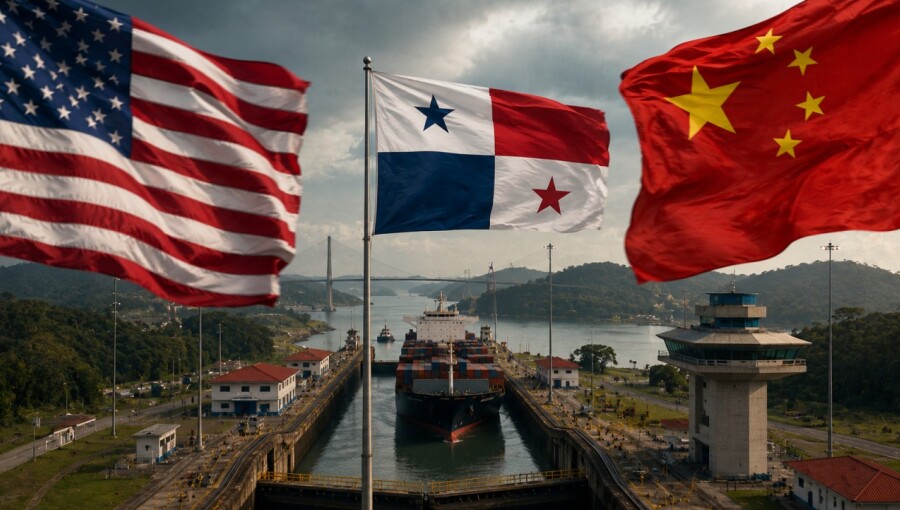
Panama's top maritime officials land in Beijing on July 16 with a mandate that looks technical and is anything but. Officially, Panama Maritime Authority (AMP) administrator Luis Roquebert leads a delegation to renew a bilateral shipping treaty and discuss inspection protocols. In reality, Panama is going to beg its way out of a blockade dressed up as bureaucracy, one that has already driven over 200 vessels off its flag.

The case

Strip away the geopolitics and the underlying dispute is simple. Since 1997, Panama Ports Company, a subsidiary of Hong Kong conglomerate CK Hutchison, has run Balboa and Cristóbal, the container terminals sitting at the Pacific and Atlantic mouths of the Canal. These are not the waterway itself, which Panama has operated independently since 1999, but they are the chokepoints on either side of it: whoever runs them controls the first and last mile for a large share of the roughly 14,000 vessels transiting the canal each year.

In 2021, that concession was quietly extended for another 25 years, to 2047, without competitive bidding. In January, following an audit which found Panama had collected barely a third of what it was owed under the contract, the Supreme Court ruled the 1997 concession law and its 2021 extension unconstitutional. The court's core finding: the deal was never put out to public tender, a breach of Article 266 of the constitution, and its terms caused direct harm to the public interest. Hutchison lost both ports. It has since filed an international arbitration seeking more than $2bn in damages.

Washington's fingerprints all over

The ruling did not land in a vacuum. A year earlier, after Trump accused China of "running the Panama Canal," Hutchison struck a $22.8bn deal to sell its non-Chinese port empire, Balboa and Cristóbal included, to a consortium led by BlackRock and MSC's Terminal Investment Limited. Beijing's antitrust regulator froze the sale as capitulation to American pressure, and Hutchison spent 2025 trying to appease both capitals by inviting Chinese state-owned COSCO Shipping in as a co-investor.

The court's ruling landed in the middle of that stalemate, and the White House did not hide its satisfaction, touting it as a decisive blow against Chinese-linked control of the canal's flanks. Panama then handed interim operations to Maersk and MSC's TiL, the exact consortium that Trump's pressure had assembled a year earlier. Panama's court may have ruled on solid procedural grounds. Yet coincidentally, it also delivered Washington the outcome it had spent a year manufacturing, which makes Panama's insistence on pure judicial independence a harder sell than officials in Panama City want to admit.

China's punishment campaign is real

None of that, however, legitimises what Beijing did next. China weaponised Port State Control (PSC) the way only a dominant port authority can: quietly, deniably, devastatingly. Tokyo MOU records show detentions of Panama-flagged vessels at Chinese ports climbing from 20 in February to 92 in March, 135 in April, and a peak of 140 in May, easing only to 64 in June as diplomatic heat rose. COSCO suspended its own Balboa service in solidarity. The message needed no press release: cross a Chinese state-linked firm, and Beijing makes your flag radioactive.

It has worked. Panama's open registry, its single greatest commercial asset at 8,638 vessels and 233.2mn tonnes representing the world's largest merchant fleet, is now its greatest vulnerability, and shipowners have already voted with their re-flagging.

Beijing then overplayed its hand in public. At the Organisation of American States (OAS) General Assembly in late June, China's permanent observer Xie Feng told Panama to "correct its errors," a demand for a democracy to overrule its own top court that foreign minister Javier Martínez-Acha threw back hard by revealing Chinese officials had asked him directly, more than once, to intervene in the ruling. US ambassador Kevin Cabrera called Beijing's denial of any link between the detentions and the ruling an outright lie. 

US counterweight is self-interest wearing a rule-of-law mask

Federal Maritime Commission (FMC) Chairman Laura DiBella's July 7 statement escalated things further, warning that China's "retaliatory and unjustified" inspections could trigger a US investigation and corrective measures against Chinese-controlled carriers. The legal hook is genuine. So is the self-interest: Washington spent a year engineering Hutchison's exit and will not now watch Beijing claw the outcome back through customs paperwork. Trump's claim that "China's trying to take over the Panama Canal" conflates commercial terminal operators with sovereignty over the waterway itself, a narrative his administration has found useful since it first floated retaking the canal outright.

Peel back the sovereignty rhetoric from both capitals, and what remains is a resource fight over who controls the infrastructure bookending the world's most valuable shortcut. China is punishing Panama for a ruling Washington did much to engineer. The White House is defending a rule-of-law outcome it spent a year manufacturing for its own strategic ends. Panama, caught in the middle, dispatches a technical delegation to Beijing and hopes Roquebert can squeeze out a renewal of the treaty, prolonging a ceasefire neither superpower has much incentive to make permanent.

HRW: German Government Is Curbing Freedom Of Information Act


July 9, 2026 
By Eurasia Review

Key Takeaways

Germany Plans Major Rollback of Transparency — The government intends to amend the Freedom of Information Act by requiring proof of “legitimate interest,” excluding non-EU citizens and organizations, removing fee caps, and allowing routine redactions of officials’ names.

Changes Would Severely Undermine Accountability — The amendments would make it much harder for journalists, civil society, and the public to access government records, hindering oversight and increasing the risk of corruption and abuse of power.

Moves Violate Human Rights Standards — Restricting access to information breaches Germany’s obligations under the European Convention on Human Rights and the International Covenant on Civil and Political Rights, threatening democracy and public trust.


The German government should abandon its plans to gut Germany’s Freedom of Information Act, Human Rights Watch said Wednesday. The proposed amendments will threaten core human rights essential to transparency and public participation in a democracy based on the rule of law.

On July 2, 2026, the coalition committee of the German government, comprised of the Christian Democratic Union/Christian Social Union (CDU/CSU) and the Social Democratic Party (SPD), decided to significantly amend Germany’s Freedom of Information Act. The changes will severely restrict the ability of the public, including civil society and journalists, to obtain public records that relate to the actions of the government and authorities.

“The German government seems to perceive transparency and freedom of information as threats and an administrative burden instead of essential safeguards in a democracy,” said Almaz Teffera, senior Europe researcher at Human Rights Watch. “Restricting access to public records denies everyone basic information, makes it harder to hold the government and authorities to account, and risks increasing public distrust in their actions.”


The government seeks to adopt five key amendments to Germany’s Freedom of Information Act:People will have to prove a “legitimate interest” to obtain official information, giving authorities broad discretion to reject information requests and deter people from seeking information of public concern. The government provided no further details on what would constitute a “legitimate interest.”
Non-EU citizens who do not live in Germany would not be able to obtain public records, regardless of whether they may be able to prove a legitimate interest.
Only individuals would have access to public records, preventing civil society organizations like Human Rights Watch or media organizations from making requests.
The government would remove the cap, currently at €500, on fees for information requests, which risks creating financially prohibitive barriers, deterring and excluding people from access.

The government would allow routine redactions of names of public officials, which would obscure individual responsibility for government actions.

FragDenStaat, a German civil society platform for freedom of information, called the government’s plans “the most serious attack on state transparency in the history of the Federal Republic [of Germany].” They suggest that removing the cap could result in fees of thousands of euros.


Reporters Without Borders and German journalist networks have criticized the government’s plans as barriers to information for journalists and attempts to limit the media’s oversight, since they would make it significantly more difficult for journalists to do their jobs of monitoring the actions of politicians and the authorities.

The government’s plans also drew criticism from state-level independent watchdogs like Berlin’s commissioner for freedom of information, Meike Kamp, who said that “Now more than ever, the state and its authorities should have an interest in ensuring that their actions can be reviewed and understood by the public” to create trust and strengthen democracy.

Currently, anyone can request access to government documents and thus monitor the actions of authorities and the government. Civil society and media investigations using information requests based on the act have exposed numerous political and corruption scandals in the past, including some that involve allegations linked to officials of the current government who are now pushing for the amendments.

In its coalition agreement adopted last year, the government set out a commitment to reform the Freedom of Information Act to provide “added value for citizens and the administration.” However, the government’s plans to limit freedom of information in Germany would breach not just its own commitment but also international and European human rights law, Human Rights Watch said.

Germany is bound by international and regional human rights standards that protect the right to seek and receive information as part of the right to freedom of expression, including the European Convention on Human Rights and the International Covenant on Civil and Political Rights.

The European Court of Human Rights has recognized that access to information is especially important for journalists, civil society organizations, and other public watchdogs, whose ability to inform public debate depends on obtaining relevant public records. Restrictions on access must be lawful, necessary, and proportionate to a legitimate aim. Blanket exclusions, redactions of government officials’ names, and arbitrary eligibility rules are inconsistent with a transparent government and risk chilling journalism and civic participation, key pillars of a functioning democracy.

“Political transparency and public scrutiny do not have an off switch when it gets uncomfortable for the government,” Teffera said. “The German government should reverse course on this dangerous pursuit to gut Germany’s Freedom of Information Act and preserve meaningful access to official records for individuals and organizations alike.”
Kenya journalist escapes abduction after criticism of president, says CPJ

The Committee to Protect Journalists has called for an investigation into the attempted kidnapping of a senior journalist in Kenya, which followed angry criticism of his newspaper by President William Ruto.


Issued on: 08/07/2026 - RFI

A Kenyan reads national daily newspaper The Standard, with a headline reporting the election of Kenya's 5th President elect William Ruto, in Eldoret, in August 2022. AFP - SIMON MAINA

The Committee to Protect Journalists (CPJ) called late on Monday on Kenyan authorities to investigate the attempt by heavily armed men to snatch The Standard Group associate editor Alex Kiprotich from his car, and to ensure those behind the incident are brought to justice.

The incident happened days after the president criticised the media house.

"The attempt to forcibly disappear Alex Kiprotich, three days after President William Ruto railed against The Standard Group, reflects the growing dangers that journalists face in Kenya, despite the president's earlier promise to allow the press to work freely," said CPJ Africa director Angela Quintal.

"Kenyan authorities must respect the democratic role of the media in commenting on the government's achievements and shortcomings ahead of next year's elections and bring an end to this horrific trend of enforced disappearances," she added.


Criticism and threats


On 27 June, Kiprotich was driving to work in the central city of Nakuru when a car intercepted him and three men in plain clothes, armed with AK-47 assault rifles, stepped out, the journalist told CPJ.

Kiprotich said his assailants were in a Toyota Probox, a car that has been used to seize numerous activists in Kenya, which investigations by The Standard Group found was owned by the police's Crime Research and Intelligence Bureau (CRIB).

One assailant opened the passenger door to check that Kiprotich was alone and then walked towards the driver's side. Kiprotich said he locked all the doors and sped away.

"As the editor responsible for The Standard's content, I knew I had become a target," said Kiprotich, adding that he and a witness gave statements at the local police station.

Press freedom at lowest level in 25 years, warns Reporters Without Borders

On 24 June, Ruto criticised The Standard Group, one of Kenya's largest media houses, in a post on X addressed to "GMoi" – in reference to politician Gideon Moi, the son of late former President Daniel arap Moi, whose family are majority shareholders in The Standard Group.

Ruto said the group was producing "5 days a week EXTORTIONIST propaganda HEADLINES on me & my administration's transformative track record".


Political implications


The two politicians are heading rival parties ahead of August 2027 elections in which Ruto is likely to seek a second term.

The Standard Group has been critical of Ruto's administration, including a KTN News series this month called "The Gallery of Ruto's Lies."

When Ruto won the 2022 election, he said he believed in media freedom and encouraged journalists "to criticise us when we go wrong".

But rights groups have reported dozens of abductions of government critics in Kenya in recent years.

Forcible disappearances of government critics have soared in Kenya in recent years, including of Tanzanian journalist Maria Sarungi Tsehai in 2025.

Although a Kenyan court ruled that police unlawfully killed Pakistani journalist Arshad Sharif in 2022, no one has been held to account.

In response to CPJ's question as to whether the police were involved in the incident, police spokesperson Muchiri Nyaga said via messaging app: "Police and abduction in the same line? You need to get your facts right."

Nyaga did not respond to CPJ's request for comment on the letter from Kiprotich's lawyer to the police, which included the names of the officers involved in the 27 June incident.

World Cup sparks wave of racist misinformation online


By James Thomas
Published on

False claims and AI-generated videos with racist overtones have circulated during the FIFA World Cup alongside genuine incidents of racism and xenophobia.

The FIFA World Cup quarter-finals are about to begin, and as the pressure on each team ramps up, so too has the misinformation surrounding the tournament.

AI-generated images, false claims and fake news reports have all spread online over the past couple of weeks, many with racist overtones aimed at European teams that have already been knocked out of the competition.

For example, one TikTok video allegedly shows the Netherlands' manager, Ronald Koeman, launching into a racist rant after Morocco knocked his team out on penalties on 30 June.

The clip amassed more than three million views and tens of thousands of shares and likes, but, it was posted by an account that clearly labels itself as an "AI football account". The video itself also contains a tag saying it was artificially generated.

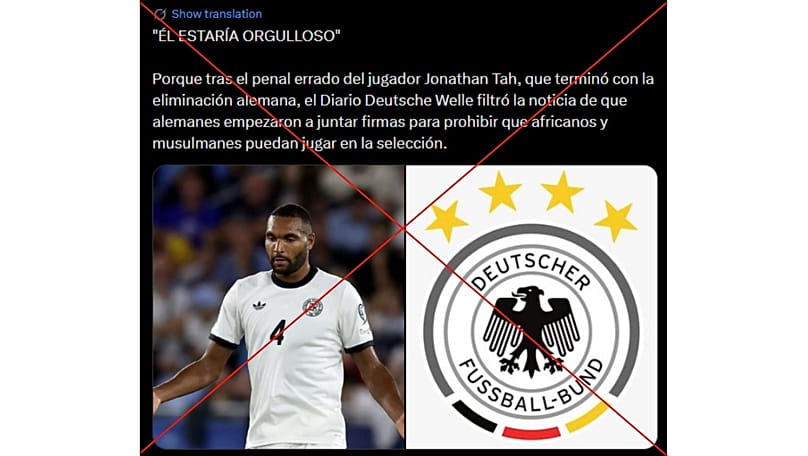
Elsewhere, posts circulated online claiming that German fans had started a petition to ban African and Muslim players from their national team after Germany was knocked out by Paraguay on 29 June, also in a penalty shootout.

The posts cite German news outlet Deutsche Welle as the source of the story, and take particular aim at Jonathan Tah, the centre-back who missed the decisive penalty that sent Germany out of the cup.

There is no evidence of the alleged petition anywhere
There is no evidence of the alleged petition anywhere Euronews

However, there is no evidence that such a petition exists, and there is no mention of it anywhere on Deutsche Welle's platforms.

Nevertheless, fabricated reports exploiting tensions at the World Cup sit alongside genuine racist incidents that have attracted widespread condemnation.

Perhaps the most high-profile to have emerged is the spat between French football star Kylian Mbappé and Paraguayan senator Celeste Amarilla.

The senator sparked outrage after posting a tirade against Mbappé on X following France's victory over Paraguay on 4 July.

She falsely claimed that he was a "colonised Cameroonian" trying to pass himself off as French. Mbappé responded that Amarilla was a "despicable woman" who did not represent Paraguay.

Paraguay's Ministry of Foreign Affairs itself posted on X that it rejected Amarilla's statements and that it was committed to human rights and the fight against racism and discrimination.

Amarilla later posted an open letter to Mbappé online, in which she partly doubled down on her attack against the footballer, but also said that she regretted insulting him and that she had deleted the post. However, as of the time of publishing, the post is still visible on her X account.

She said she was angered by his "arrogance and contempt" and that she was hurt by his "refusal to shake hands with our goalkeeper," which occurred at the end of the tense and heated match between France and Paraguay, which saw Les Bleus win 1-0.

The game was marred by controversy due to repeated rough tackles, scuffles between players and an apparent attempt by Paraguay to scuff the penalty spot before Mbappé scored the winner. Social media users and football pundits alike branded Paraguay's style of play as "dirty" and unsportsmanlike.

Others have also weighed in on the war of words between Mbappé and Amarilla: UN Human Rights said on X that the senator's remarks were "despicable" and "regrettably not isolated", and Spanish club Real Madrid, which Mbappé plays for, said it expressed its "strongest condemnation of the deplorable racist and xenophobic remarks".

President Emmanuel Macron also posted his support for Mbappé, touting the values of "dignity, respect and fraternity" in the face of racism.

French prosecutors have since launched an investigation into aggravated public insult and incitement to hatred or violence over the matter, after the national unit for combating online hate received a complaint from the French Football Federation.


South Korean law targeting 'fake news' takes effect as journalists' groups raise concerns

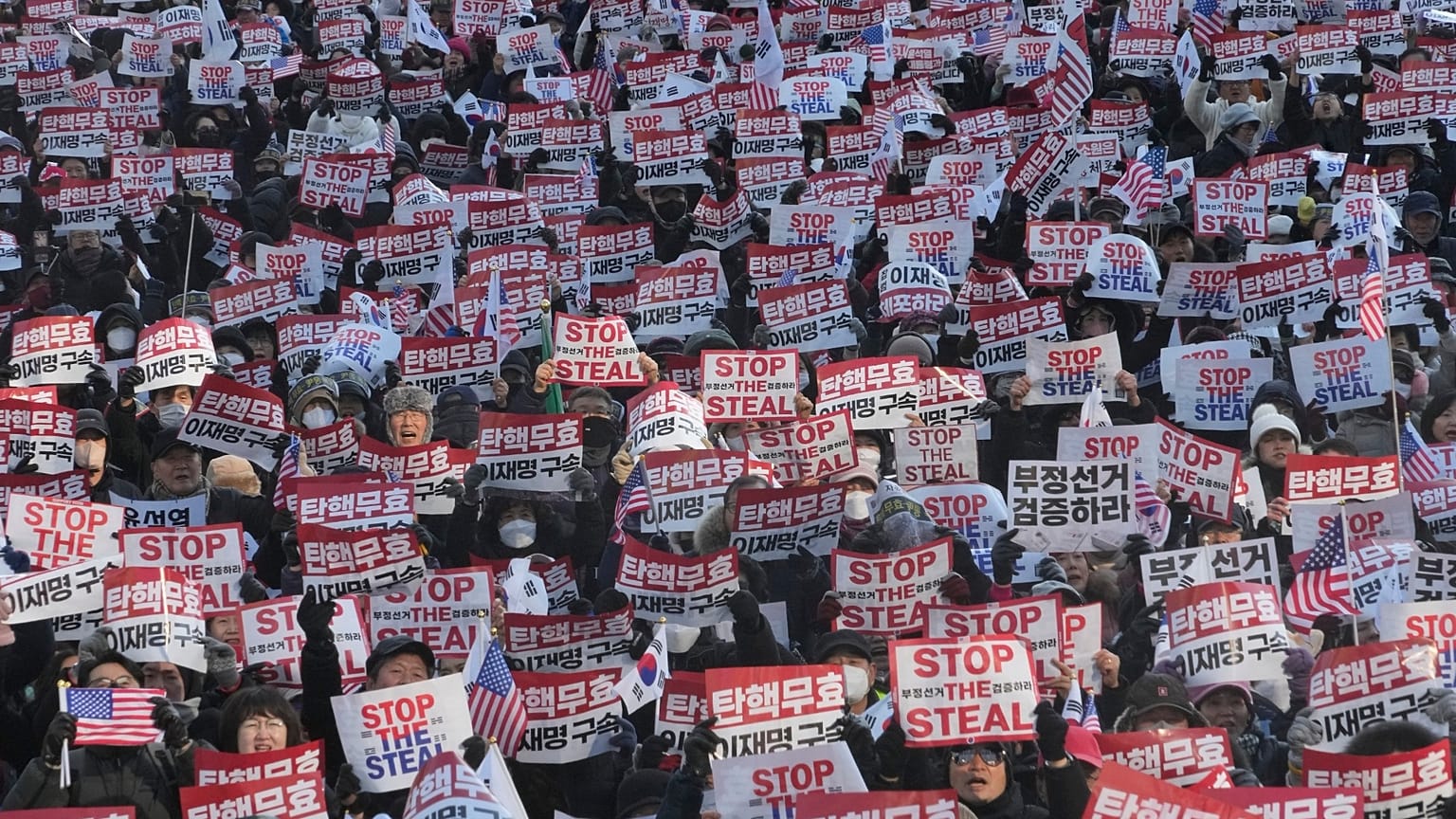
Supporters of impeached South Korean President Yoon Suk Yeol stage a rally to oppose his impeachment in Seoul, 11 January, 2025
Copyright AP Photo


By Gavin Blackburn
Published on


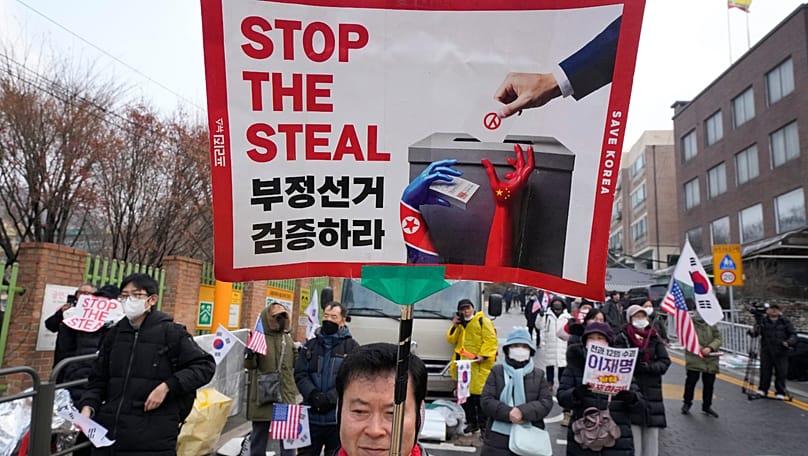
South Korea saw a surge in online misinformation following the botched 2024 martial law attempt, including unsubstantiated allegations of Chinese interference in the electoral system.

South Korea began enforcing a revised law targeting false information posted online on Tuesday, toughening penalties for repeat offenders despite concerns over the impact on free speech.

The law, which requires major platforms to set up new response systems, comes as concern grows in the country over digital misinformation, including high-profile cases involving celebrities.

But opposition politicians, civic groups and media experts warn it could chill free speech and open the door to government-influenced censorship.

The Asian tech powerhouse previously relied on general defamation laws and civil damage claims to address false information, without a clear legal framework targeting so-called fake news.

With the revision to the information and communications network act it joins many countries trying to tackle the flood of falsehoods online that can have serious real-life consequences.

Supporters of impeached South Korean President Yoon Suk Yeol stage a rally to oppose his impeachment in Seoul, 6 January, 2025
Supporters of impeached South Korean President Yoon Suk Yeol stage a rally to oppose his impeachment in Seoul, 6 January, 2025 AP Photo

Now users who intentionally spread illegal false or manipulated information could be ordered to pay up to five times the actual cost of damages.

And repeat offenders whose content has been ruled illegal by courts face fines of up to 1 billion won (€573,000).

Platforms including South Korea's Naver and Kakao and US giants Google and Meta must introduce systems for users to report alleged false or manipulated information and publish transparency reports every six months detailing complaints and actions taken.

South Korea saw a surge in online misinformation following the botched 2024 martial law attempt, including unsubstantiated allegations of Chinese interference in the electoral system.

Separately, in a recent high-profile case, a right-wing YouTuber was indicted for using AI-generated audio to falsely claim that actor Kim Soo-hyun had dated a late actress while she was a minor.

The allegations snowballed into a major scandal, forcing Kim to suspend public appearances while a major project was indefinitely postponed.

Critics of the revised law warn that the lack of a clear legal definition for false or manipulated information could create uncertainty and invite overly broad legal enforcement at first.

The main opposition People Power Party (PPP) has repeatedly criticised the revision, arguing that platforms will censor content to avoid clashing with the government, while users will self-censor.

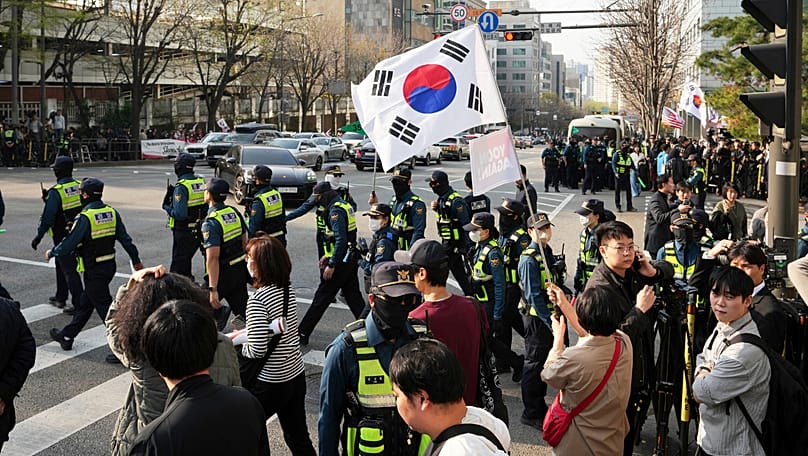
Supporters of former South Korean President Yoon Suk Yeol gather as police officers arrive near the private residence in Seoul, 11 April, 2025
Supporters of former South Korean President Yoon Suk Yeol gather as police officers arrive near the private residence in Seoul, 11 April, 2025 AP Photo

"We will see a world where platform companies excessively remove information, investigative journalism is stifled and citizens find it difficult to even speak their minds," PPP spokesperson, Cho Yong-sool said in a statement.

The Journalists Association of Korea also called for safeguards to ensure public-interest reporting and news-gathering are not suppressed.


Pakistan says 54 militants killed after coordinated attacks in Balochistan

Pakistan says 54 militants killed after coordinated attacks in Balochistan
/ Muhammad Irfan Baloch - UnsplashFacebook
By IntelliNews July 9, 2026

Pakistan's security forces have killed 54 militants during operations launched after a series of coordinated attacks in Balochistan over the past four days, while 42 civilians and security personnel also lost their lives in the violence, Director General of Inter-Services Public Relations (ISPR) Lieutenant General Ahmed Sharif Chaudhry said on July 8, Dunya News reported.

Speaking at a press conference, the military spokesperson said the attacks targeted civilians, police personnel and soldiers in the Hanna Urak, Ziarat and Bela-Winder areas. He said the Pakistan Army, Frontier Corps (FC), law enforcement agencies and intelligence services were continuing counterterrorism operations at multiple locations.

According to Chaudhry, the first attack took place on the night of July 4-5 in Hanna Urak, where armed militants attacked local residents. He said civilians resisted the assault before security forces responded, adding that four civilians were killed and six others injured.

The second incident occurred at a police checkpost guarding Mangi Dam's Pumping Station No. 3 in Ziarat district. Chaudhry said police personnel repelled the initial assault, killing 15 militants before reinforcements arrived. However, the attackers briefly took several police officers hostage, prompting security forces to avoid aerial strikes and instead continue ground operations to minimise civilian casualties. He said 27 police personnel were killed during the attack and subsequent clashes, while security forces eliminated a total of 26 militants during the ongoing operation.

In the third attack, an army convoy came under fire near the N-25 highway in the Bela-Winder area. Chaudhry said 11 soldiers, including one Junior Commissioned Officer, were killed in the fighting, while security forces killed 14 militants belonging to the banned Baloch Liberation Army (BLA), which the government refers to as "Fitna al-Hindustan".

He added that separate operations in Kharan and Dalbandin resulted in the deaths of another 14 militants, bringing the total number killed over the four-day period to 54.

The military spokesperson said the three major attacks claimed the lives of four civilians, 27 police personnel and 11 soldiers.

Chaudhry also repeated Pakistan's longstanding allegations that India was backing militant groups operating in Balochistan and claimed Afghan territory was being used to plan and launch attacks against Pakistan. India has consistently rejected allegations that it supports militant activity inside Pakistan.

The ISPR chief said security operations against militant groups and their alleged facilitators would continue, adding that the government remained committed to eliminating terrorism and restoring security across Balochistan.

CRIMINAL CAPITALI$M

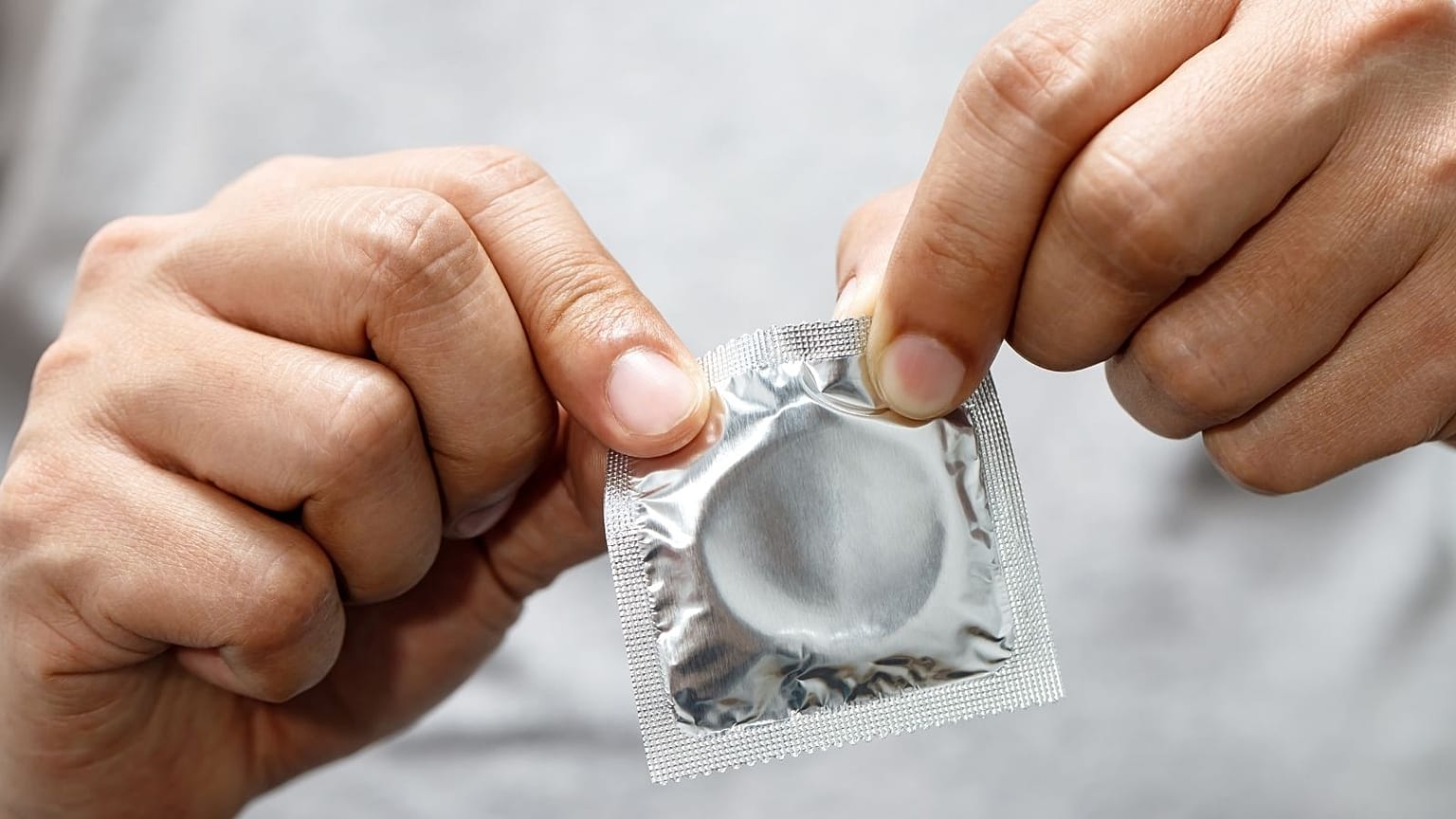
200,000 ‘untested, uncontrolled and unsafe’ condoms detected in Europe

Fake condoms — worth over €200,000 — were seized in Romania, Serbia and Spain.
Copyright Cleared/Canva

By Giedre Peseckyte
Published on

The European Anti-Fraud Office uncovered a trafficking route used to distribute counterfeit condoms in Europe, putting the sexual health of thousands of Europeans at risk.

Over 200,000 condoms coming from China — falsely declared as toys — bypassed the European Union quality requirements, exposing consumers to the risk of sexually transmitted infections, unplanned pregnancies and unsafe chemicals and materials.

In Europe, condoms are categorised as medical devices and must meet strict health and safety standards, including microbial contamination controls, biocompatibility, leak resistance, dimension requirements, shelf life and stability.

The counterfeit products from China bypassed those.

“Counterfeit condoms are dangerous,” European Commission's anti-fraud office chief Petr Klement said in a press release. “They are untested, uncontrolled and unsafe.”

Fake condoms — worth over €200,000 — were seized in Romania, Serbia and Spain.

They were sold in Europe using the name and logo of a well-known brand, according to the European anti-fraud office. The office did not disclose the brand, where the products were sold, or how many of the more than 200,000 condoms had reached consumers.

"It is difficult to give accurate data ... given the nature of illicit networks," a spokesperson of the European office told Euronews Health. As it is "difficult to trace" counterfeit goods, "it is difficult to inform individual consumers" who might have bought such condoms, the spokesperson added.

Working with the Chinese authorities, the European office identified the exporter behind the shipments but did not disclose its identity.

The story was updated with a response from the European Commission's Anti-Fraud Office. The name of the European Anti-Fraud Office was corrected.


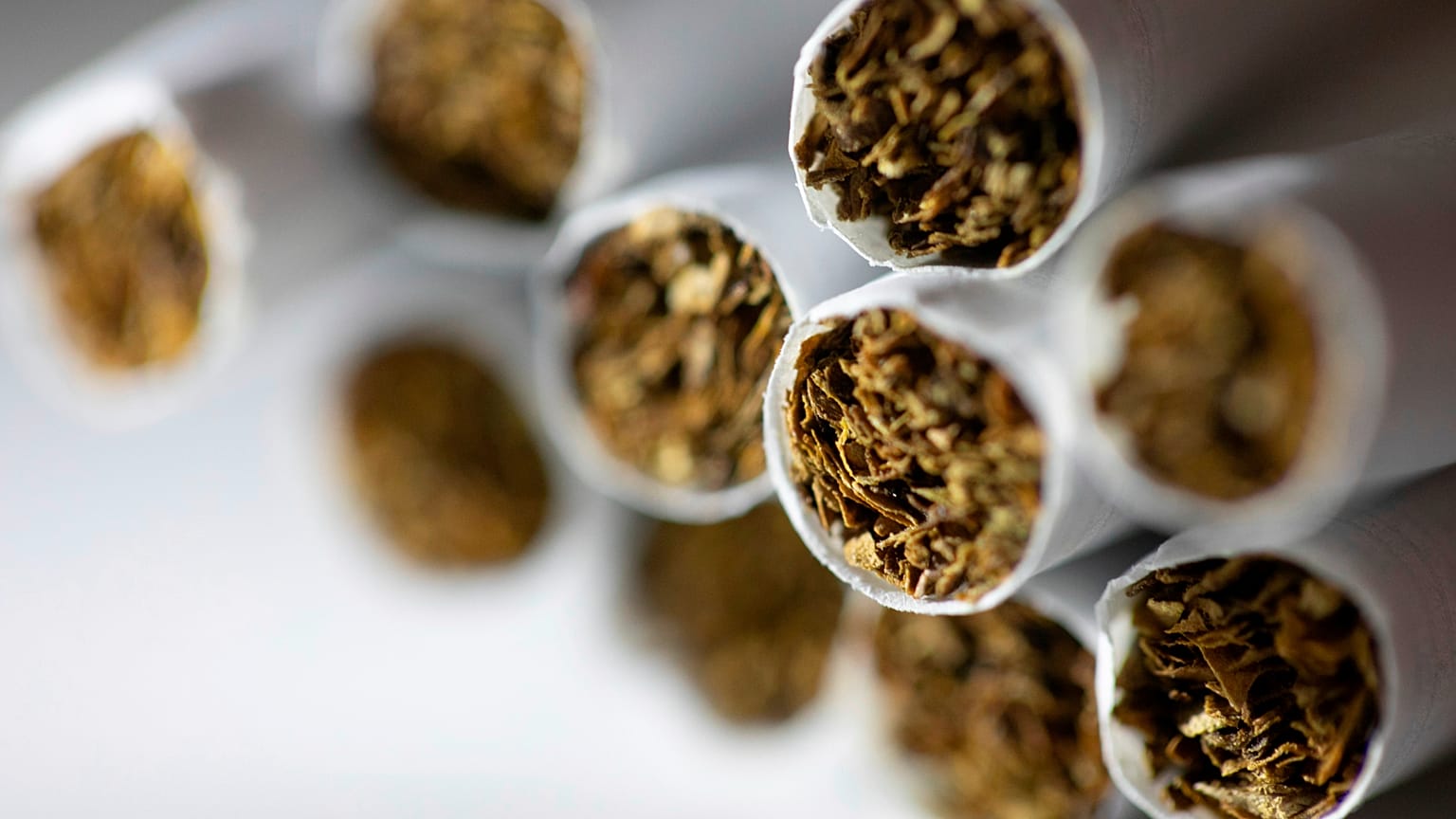
20 million cigarettes and over 38 tonnes of tobacco seized in EU countries

Investigators also confiscated 18 vehicles, tobacco manufacturing equipment, encrypted electronic devices, €170,000 in cash and several firearms.
Copyright Copyright 2024 The Associated Press. All rights reserved.


By Giedre Peseckyte
Published on


Authorities have seized 20 million cigarettes and 38.4 tonnes of tobacco leaf and cut tobacco after dismantling two international criminal networks based in Spain.

European countries, together with the EU's anti-fraud office (OLAF) and Europol, dismantled a multimillion-euro illicit cigarette supply chain, targeting groups suspected of manufacturing, distributing and trafficking counterfeit tobacco products worth an estimated €10 million, OLAF said in a press release.

Last month, officers carried out 23 searches at homes, commercial premises and industrial warehouses across the Spanish provinces of Alicante, Cuenca, Huelva, Murcia, Sevilla and Toledo.

Investigators also confiscated 18 vehicles, tobacco manufacturing equipment, encrypted electronic devices, €170,000 in cash and several firearms. A total of 50 people were arrested, including two suspects who have since been handed over to the Polish authorities.

The operation brought together Spain's Guardia Civil, Poland's Central Bureau of Investigation, Portugal's National Republican Guard, Lithuania's Criminal Police Bureau, OLAF and Europol.

"Smoking is dangerous," OLAF chief Petr Klement said. "Smoking counterfeit cigarettes is even worse."

"On top of the harm to health, every illicit cigarette robs taxpayers and rewards organised crime," he added.

OLAF said that the investigations remain ongoing.