Hungary shuts down one reactor at Paks NPP in an unprecedented move as Danube hits record-low levels
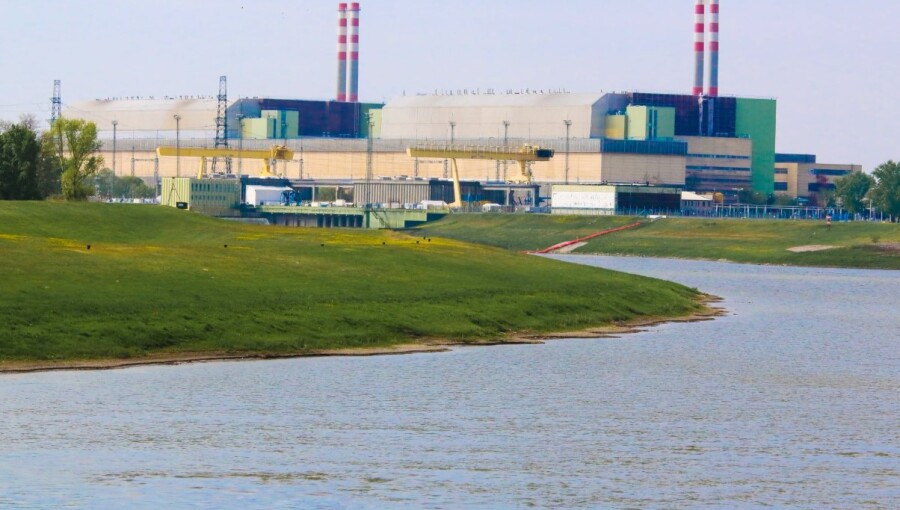
Hungary’s state utility company MVM was forced to shut down one of four blocks at the Paks power plant with 500 MW capacity for the first time ever due to environmental regulations as water levels on the Danube fell to historic low levels, state news agency MTI writes on July 29.
The state-owned operator had begun scaling production earlier this week. Output of block 1 was cut by 254 MW, followed by a 237 MW reduction at unit 3 before that latter block was fully shut down. This means that Hungary’s sole power plant, accounting for 40% of electricity consumption, was operating at 60% of capacity during the day, and further measures could be taken if the situation deteriorates.
The latest disruption highlights the increasing pressure that climate extremes are placing on thermal power generation across Europe. Nuclear power plants rely on rivers for cooling, but environmental regulations restrict the temperature of discharged cooling water to safeguard aquatic ecosystems. In Hungary, cooling water returned to the Danube must not raise the river's temperature above the regulatory limit of 30°C at the designated downstream monitoring points.
Energy analyst Zsolt Harfas told MTI that MVM has repeatedly reduced output during previous summers because of high river temperatures, but this is the first time an entire block was taken offline due to exceptionally low water levels. The measure was taken to ensure the safe operation of the remaining units and comply with environmental regulations. This time, the operator cut the output not because of the river's high temperature, as in previous cases.
Citing data from grid operator Mavir, Harfas said that lower output was replaced by higher electricity imports and by ramping up production at gas-fired power plants. Imports were expected to approach 4 GW during the evening peak as solar generation declined sharply after sunset. After 6 pm, PV plants were producing only about 1 GW, while wind generation remained negligible at just 20-25 MW despite 325 MW of installed capacity.
During last month’s heatwave, the grid operator reported a record 7,488 MW consumption at one stage, surpassing the previous summer record of 7,036 MW set in July 2024. Analysts said that the summer consumption record is unlikely to be broken as many Hungarians are abroad on holiday.
Environment Minister Laszlo Gajdos said water authorities have deployed four floating pumping units and two floating cranes near Paks while placing 55 specialists on 24-hour standby. Although pumping is not yet required, the equipment is ready to secure cooling water supplies should river conditions deteriorate further.
Other analysts did not rule out further production cuts at Paks if extreme weather conditions persist. Paks, which was considered insulated from weather-related disruptions, has become increasingly vulnerable to prolonged droughts and rising river temperatures.
Paks, which supplies roughly half of Hungary's domestic electricity generation in normal operating conditions, has become increasingly exposed to periods of low river flow and elevated water temperatures as summers become hotter and drier. The country is simultaneously expanding renewable energy and preparing to build two new Russian-designed VVER-1200 reactors under the long-delayed Paks 2 project.
The shutdown comes as Hungary faces its most severe drought on record, with another extreme heatwave expected to hit the country in the coming days, with temperatures in the upper 30s.
The government has declared the highest level of drought emergency after 66 of the country's 84 water management districts exceeded critical drought thresholds. This means that emergency defence measures were taken across 74% of the country to combat the drought.
Prime Minister Peter Magyar, in a Facebook post, sought to reassure the public that electricity supplies remain secure, stressing that Hungary's 3.6-3.8 GW of cross-border import capacity would allow the country to maintain supply even under more adverse scenarios.
Under clear rules, only major industrial consumers may have their usage temporarily restricted in an emergency, he said, adding that the public could also help by using energy more efficiently. Magyar said the government was not asking people to stop using electricity or air conditioning, but was recommending restructuring consumption where possible to ease pressure on the grid during the evening demand peak.
Low water levels are also threatening drinking water supplies in some areas. Regional response committees are assessing the settlements affected, while water works and the Hungarian Armed Forces are prepared to refill reservoirs and, if necessary, provide drinking water via tankers, the prime minister said.
The minister for the living environment will meet with the 10 water utility providers on July 30 to finalise a list of major industrial consumers whose usage could be restricted if the situation worsens.
The government has established an Energy Supply Operational Unit to coordinate contingency planning and, if needed, prepare emergency demand-management measures.
Hungary’s chief medical officer has declared a third-level heat alert for the entire country from midnight on July 30 until midnight on August 4, based on the latest weather forecast.
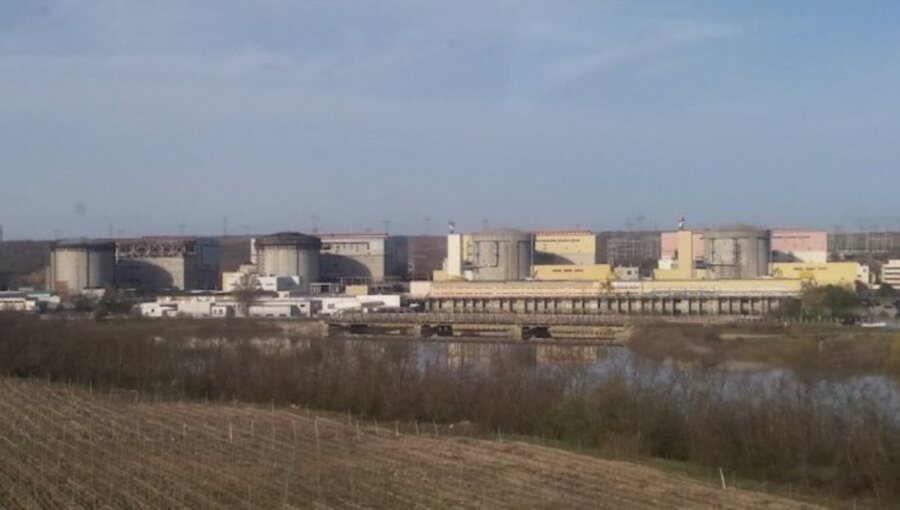
Romania's Nuclearelectrica announced it will temporarily shut down the second reactor at the Cernavoda nuclear power plant on July 30, two days after Unit 1 was taken offline, leaving the country's sole nuclear facility without generation for several days as severe drought pushes Danube water levels to unprecedented lows.
Nuclearelectrica said the controlled shutdown of Unit 2 was required because of the "very low, unprecedented water level of the Danube". The reactors use Danube water for cooling, making the plant particularly exposed to low river flows. The two Cernavoda reactors normally cover nearly 20% of Romania's electricity demand during peak hours.
Based on current hydrological forecasts, Unit 1 is expected to resume production on August 4, while Unit 2 is scheduled to return on August 10, according to Economica. The latest forecast from the national company Romanian Waters and the Hydrology Institute INHGA, however, questions these expectations, as the Danube flow rate on August 4 is expected to be the same as currently, according to Mediafax.
First Danube-related shutdown in 23 years
The simultaneous shutdown of both units is the second such incident in several months, but it is the first time in 23 years that the Cernavoda plant has been forced offline because of the Danube's flow, according to Dumitru Chisăliță, president of the Smart Energy Association, in an analysis for Mediafax.
The situation is part of a broader regional impact from the low Danube level. Hungary has already reduced production at its Paks nuclear plant to prevent overheating, and Bulgaria's Kozloduy nuclear power plant could also face a shutdown if water levels continue to deteriorate, according to Ziarul Financiar. Unlike nuclear plants in Slovakia and the Czech Republic, which use natural or artificial lakes for cooling, Cernavoda, Kozloduy and Paks depend on river water, leaving them exposed to drought-related restrictions.
Separately, Serbia has cut output at the Djerdap 1 hydropower plant to around one-third of its capacity, reported Reuters,
Djerdap 1, also known as Iron Gates 1, has an installed capacity of 1,000 MW for Romania and 1,000 MW for Serbia and accounts for roughly one-tenth of Romania's electricity output, adding to the pressure on the country's power system.
Romania to rely more heavily on imports
Acting Prime Minister Ilie Bolojan, who is also interim Energy Minister, speaking on July 29, said that Romania would activate all available generation capacity and urged households and industrial consumers to reduce electricity consumption during the evening peak between 20:00 and 23:00.
"We will have to bring online all capacities that we can use, namely gas-fired power plants, photovoltaic, storage, wind power, and also resort to imports," Bolojan told Digi24.
Notably, the coal-fired power plants supplied roughly 10% of domestic electricity consumption on July 29 and accounted for more than 10% during peak hours, when they produced around 900 MW against total consumption of approximately 7,000 MW.
Romania was already importing around 1,600 MW during peak hours on July 29, mainly from Bulgaria, while Cernavoda was still contributing approximately 680 MW, according to Transelectrica. The loss of that nuclear generation from July 30 will increase the country's reliance on imports and domestic thermal, hydro, wind, solar and storage capacity.
Imports from Bulgaria are expected to reach the available interconnection capacity during the evening peak. On the day-ahead market for delivery on July 30, the Bulgaria-Romania interconnection was already fully booked between 19:00 and 23:00, with imports exceeding 1,800 MW during the 20:00-23:00 period, according to the market operator OPCOM.
The traders booked the available capacity at prices above €150/MWh ($172/MWh), with some hourly segments approaching €350/MWh ($402/MWh), compared with a daily average of around €130/MWh ($149/MWh).
Higher costs likely to reach consumers
The Romanian power system is considered capable of managing the temporary loss of Cernavoda's output by using all available generation sources and imports, but the adjustment will come at a cost.
AEI expert Dumitru Chisăliță said consumers should not expect an immediate increase in electricity prices as a direct result of the shutdowns. However, the higher costs incurred by suppliers are likely to be reflected in future offers when existing contracts are renewed.
"We will not necessarily see an increase [in the electricity price] tomorrow or next month, but the situation we are witnessing generates costs that will be recovered by suppliers from future price offers," Chisăliță said.
He added that the disruption could also increase the risk premium incorporated into suppliers' offers as companies seek to protect themselves against the possibility of further supply disruptions.
"All this will most likely lead to increases in price offers in the market," the AEI president said.
The impact will therefore depend partly on how quickly the Danube recovers and whether the two Cernavoda reactors can return to operation according to the current timetable. For now, Romania's power system will have to operate without its source of nuclear generation while regional drought simultaneously limits some neighbouring countries' ability to provide additional electricity.

No comments:
Post a Comment