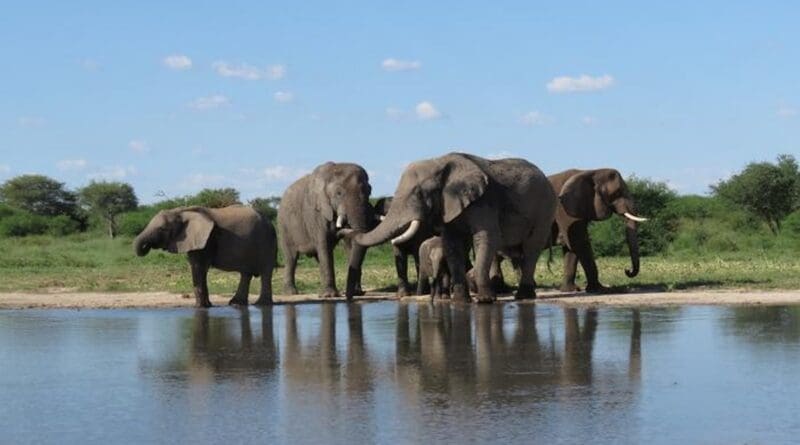
Rewilded elephants on !Khamab Kalahari Reserve, who were observed during this research project (from left to right: Ngwedi, Mana, Michael, and Chikwenya).
CREDIT: Elephant Reintegration Trust, CC-BY 4.0
July 30, 2026
By Eurasia Review
Key Takeaways
Stress markers stay within the normal wild range. Fecal samples showed slightly higher levels, especially in females, but nothing indicating chronic stress.
Individual differences shape successful adaptation. High behavioral variability among the elephants—over half of South Africa’s rewilded population—points to personality and history as key factors in thriving after release.
Ex-captive elephants released into the wild adapt quite well to the return to wild environments, according to a study published July 29, 2026 in the open access journal PLOS One by Tenisha Roos and Tamara Eggeling of the Elephant Reintegration Trust of South Africa and colleagues.
While there have been a few instances of elephant rewildings in southern Africa, limited research has investigated how well these rewilded elephants manage to adapt to natural environments. In this study, Roos, Eggeling and colleagues examined the behavioral and physiological responses of eleven formerly-captive elephants which had been released onto four reserves across South Africa.
Each elephant was observed for three weeks at a time at least once per year over a period of five years. The team looked for behavioral indicators that the elephants might be uncomfortable in their wild surroundings, such as increased wariness, and for behaviors that might be hold-overs from their time in captivity, such as conflict and confrontation, as well as increased self-directed touching
Overall, they found that rewilded elephant behavior was very similar to that of their wild neighbors. The researchers also collected fecal samples from each elephant to test for signs of metabolic stress, finding that the rewilded elephants, particularly females, did show generally higher stress levels, but not outside of the normal range for wild elephants. These differences may reflect their previous captive experiences, social circumstances, environmental conditions, and tourism or management pressures.
These results show that rewilded elephants behave very similarly to their wild counterparts, despite some consistent differences, suggesting that they have adapted well to the return to wild habitats. The authors also note a high degree of variability in behaviors between individual rewilded elephants, which might be related to each animal’s personality, suggesting that each individual has found their own unique ways to cope with their relocation.
The study animals, eleven elephants in total, represent more than 50% of the rewilded elephant population across South Africa so far, however the sample remains small. Further research could involve multiple herds across countries.
Tenisha Roos adds: “Overall, rewilded elephants exhibited behavioural and physiological patterns comparable to those of wild elephants, despite some individual, age- and sex-related differences. While a few elephants showed slightly elevated stress biomarkers, all values remained within the normal range for wild populations, indicating successful adaptation with no evidence of chronic stress.”
“What I found most fascinating was watching elephants that had spent decades in captivity adapt so successfully to life in the wild. Seeing them respond to their environment and function much like wild elephants was truly awe-inspiring and a powerful reminder of their remarkable resilience, adaptability, and behavioural flexibility.”
Tammy Eggeling adds: “Although previously captive elephants may carry the memories of a life spent in confinement, our research has shown that, when given the opportunity, they can leave that past behind. They are able to learn new skills, adapt to unfamiliar environments, and ultimately thrive as wild elephants.”
Brett Mitchell adds: “The data from this project show that when captive elephants are rewilded and given the opportunity, they can regain full autonomy and re-establish natural patterns of movement and behaviour. Through this research, we are also seeing that rewilded elephants can make a meaningful contribution to the conservation of their species.”
About Eurasia Review
Eurasia Review is an independent international news and analysis platform founded in 2009. We publish timely news, in-depth analysis, and expert commentary on geopolitics, economics, security, and international affairs.
View all posts by Eurasia Review →
July 30, 2026
By Eurasia Review
Key Takeaways
Formerly captive elephants adapt well to the wild, behaving much like their free-ranging neighbors. A five-year study of 11 rewilded elephants on South African reserves found little lingering captivity-related behavior such as excess wariness, conflict, or self-touching.
Stress markers stay within the normal wild range. Fecal samples showed slightly higher levels, especially in females, but nothing indicating chronic stress.
Individual differences shape successful adaptation. High behavioral variability among the elephants—over half of South Africa’s rewilded population—points to personality and history as key factors in thriving after release.
Ex-captive elephants released into the wild adapt quite well to the return to wild environments, according to a study published July 29, 2026 in the open access journal PLOS One by Tenisha Roos and Tamara Eggeling of the Elephant Reintegration Trust of South Africa and colleagues.
While there have been a few instances of elephant rewildings in southern Africa, limited research has investigated how well these rewilded elephants manage to adapt to natural environments. In this study, Roos, Eggeling and colleagues examined the behavioral and physiological responses of eleven formerly-captive elephants which had been released onto four reserves across South Africa.
Each elephant was observed for three weeks at a time at least once per year over a period of five years. The team looked for behavioral indicators that the elephants might be uncomfortable in their wild surroundings, such as increased wariness, and for behaviors that might be hold-overs from their time in captivity, such as conflict and confrontation, as well as increased self-directed touching
Overall, they found that rewilded elephant behavior was very similar to that of their wild neighbors. The researchers also collected fecal samples from each elephant to test for signs of metabolic stress, finding that the rewilded elephants, particularly females, did show generally higher stress levels, but not outside of the normal range for wild elephants. These differences may reflect their previous captive experiences, social circumstances, environmental conditions, and tourism or management pressures.
These results show that rewilded elephants behave very similarly to their wild counterparts, despite some consistent differences, suggesting that they have adapted well to the return to wild habitats. The authors also note a high degree of variability in behaviors between individual rewilded elephants, which might be related to each animal’s personality, suggesting that each individual has found their own unique ways to cope with their relocation.
The study animals, eleven elephants in total, represent more than 50% of the rewilded elephant population across South Africa so far, however the sample remains small. Further research could involve multiple herds across countries.
Tenisha Roos adds: “Overall, rewilded elephants exhibited behavioural and physiological patterns comparable to those of wild elephants, despite some individual, age- and sex-related differences. While a few elephants showed slightly elevated stress biomarkers, all values remained within the normal range for wild populations, indicating successful adaptation with no evidence of chronic stress.”
“What I found most fascinating was watching elephants that had spent decades in captivity adapt so successfully to life in the wild. Seeing them respond to their environment and function much like wild elephants was truly awe-inspiring and a powerful reminder of their remarkable resilience, adaptability, and behavioural flexibility.”
Tammy Eggeling adds: “Although previously captive elephants may carry the memories of a life spent in confinement, our research has shown that, when given the opportunity, they can leave that past behind. They are able to learn new skills, adapt to unfamiliar environments, and ultimately thrive as wild elephants.”
Brett Mitchell adds: “The data from this project show that when captive elephants are rewilded and given the opportunity, they can regain full autonomy and re-establish natural patterns of movement and behaviour. Through this research, we are also seeing that rewilded elephants can make a meaningful contribution to the conservation of their species.”
About Eurasia Review
Eurasia Review is an independent international news and analysis platform founded in 2009. We publish timely news, in-depth analysis, and expert commentary on geopolitics, economics, security, and international affairs.
View all posts by Eurasia Review →

No comments:
Post a Comment