Thursday, July 09, 2026

The U.S. Army And The Golden Dome Program – Analysis


US President Donald Trump announces plans for Golden Dome in the Oval Office. Photo Credit: White House, X


July 9, 2026 
Congressional Research Service (CRS).
By Hannah D. Dennis and Andrew Feickert


Key Takeaways

Golden Dome is America’s New Integrated Missile Defense System — Led by the Army Space and Missile Defense Command (ASMDC) in support of NORTHCOM, it aims to protect the U.S. homeland from aerial and missile threats using a “system of systems” approach.

Key Army Systems Involved — Includes THAAD, Patriot (with IBCS and LTAMDS), and other air and missile defense capabilities. The Army is expanding Patriot battalions and integrating advanced sensors and command systems.

Significant Budget and Oversight Issues — The program is estimated to cost $185 billion through 2035 (or up to $1.2 trillion over 20 years per CBO). Congress has raised concerns about mandatory funding, lack of detailed requirements, stationing plans, and personnel implications.


What Is Golden Dome?


The Golden Dome for America (Golden Dome)—initially known as the Iron Dome for America—refers to an integrated homeland air and missile defense system being developed by the Department of Defense (DOD), which is “using a secondary Department of War designation” under Executive Order (E.O.) 14347, dated September 5, 2025. President Donald J. Trump introduced the program in E.O. 14186 of January 27, 2025. According to a May 2025 Pentagon press release, DOD plans to combine a range of capabilities to create a “system of systems” to protect the United States from “aerial attacks from any foe.” Golden Dome’s development is managed by DOD’s Office of Golden Dome for America, led by Senate-confirmed U.S. Space Force General Michael A. Guetlein, who reports directly to the Deputy Secretary of Defense (who is using “Deputy Secretary of War” as a “secondary title” under E.O. 14347). The system’s operational lead is the Army Space and Missile Defense Command (ASMDC) in support of U.S. Northern Command (NORTHCOM).

Some Members of Congress have considered information released by DOD about Golden Dome to be insufficient and have requested additional information. In the National Defense Authorization Act for Fiscal Year 2026, Congress required DOD to submit an annual report on Golden Dome efforts that is to include a threat assessment, system architecture, and cost and schedule estimate (P.L. 119-60, §1652). President Trump has said the system “should be fully operational before the end of my term.” General Guetlein has testified the system will cost $185 billion through delivery in 2035. The Congressional Budget Office has estimated that the system will cost $1.2 trillion to develop, deploy, and operate over 20 years.

Army Command and Control

On January 15, 2026, NORTHCOM established Joint Task Force (JTF)-Gold led by Army Lieutenant General Sean Gainey, who also serves as commanding general of ASMDC. JTF-Gold and ASMDC are co-located at Peterson Space Force Base in Colorado. Reportedly, in fall 2025, the Army approved the transfer of the 32nd and 263rdArmy Air and Missile Defense Commands from the then Army Forces Command (FORSCOM) and Army Northern Command to ASMDC. By placing JTF-Gold under the ASMDC commander, the ASMDC commander reportedly becomes “the operational lead for Golden Dome activities in support of NORTHCOM, while also giving that headquarters control of the Army formations most directly tied to domestic air and missile defense.”
Selected Golden Dome-Associated Army Systems

During what a press report described as a Golden Dome “first look” on April 23, 2026, numerous Army systems that could be part of the initial iteration of Golden Dome were on public display at Joint Expeditionary Base Little Creek-Fort Story in Virginia. According to the press report, program officials did not address the requisite number of systems or those systems’ potential locations and costs. Some of the major Army systems on display are briefly described in the following sections.

Terminal High Altitude Area Defense (THAAD)

THAAD is a mobile anti-ballistic missile system designed to destroy short-, medium-, and intermediate-range missiles in their terminal phase using hit-to-kill technology. The THAAD interceptor can intercept enemy missiles both inside and outside the atmosphere and reportedly defends targets at ranges of 150-200 kilometers (km). The Army currently has eight THAAD batteries in the Active Component and has no plans to field additional batteries, according to information provided to CRS by the Army. A September 2025 American Enterprise Institute (AEI) working paper estimates incremental costs to procure a single THAAD battery and 192 interceptors to be $2.73 billion.
Patriot

Patriot is an acronym for “Phased Array Tracking Radar to Intercept on Target.” Patriot is a mobile air defense system capable of defeating both high-performance aircraft and tactical ballistic missiles. Patriot can also be employed against cruise missiles and certain types of uncrewed aerial systems and drones. According to information provided to CRS by the Army, 15 Patriot battalions are currently in the Active Component with planned growth for three additional battalions: one battalion each year from FY2029-FY2031. A four battery Patriot battalion, equipped with the Integrated Battle Command System (IBCS) and the Lower Tier Air and Missile Defense Sensor (LTAMDS), costs an estimated $1.792 billion.
Integrated Battle Command System (IBCS)

IBCS is described as the centerpiece of the Army’s Integrated Air and Missile Defense (AIAMD) capabilities. It replaces legacy command and control (C2) systems in THAAD and Patriot units, providing 360-degree protection coverage and, according to the system’s developer Northrop Grumman, “expands battlespace for longer range intercepts and defense depth.”

Lower Tier Air and Missile Defense Sensor (LTAMDS)

According to the Army, “LTAMDS is the Army’s next-generation radar designed to counter advanced and evolving threats, providing increased detection range, improved classification, and all-sector coverage.” LTAMDS is intended to replace legacy Patriot unit radars, and a prototype has been tested. According to its developer Raytheon, LTAMDS is “designed to defeat advanced and next-generation threats, including hypersonic weapons.”

Army Budget-Related Issues


In its FY2027 budget, DOD requested $17.5 billion for a “Golden Dome for America Fund,” including $434 million for Army Operations and Maintenance and Research, Development, Test, and Evaluation. The Army also requested $11.4 billion for THAAD procurement and $12.2 billion for Patriot Advanced Capability-3 Missile Segment Enhancement (PAC-3 MSE) procurement. DOD would be able to allocate these systems to homeland or theater defense. Of the $17.5 billion, $17.1 billion (98%) was requested as mandatory funding for Congress to provide in a reconciliation measure (as opposed to discretionary funding for Congress to provide in a regular annual appropriations act). Additionally, 92% of the amount the Army requested for THAAD procurement and 89% of the amount the service requested for PAC-3 MSE were mandatory funds. Assistant Secretary of Defense for Space Policy Marc Berkowitz, who is using “Assistant Secretary of War for Space Policy” as a “secondary title” under Executive Order 14347 dated September 5, 2025, testified that mandatory funding provides speed and flexibility. An observer noted that putting the bulk of the request in mandatory funds puts the future of Golden Dome “on unstable footing.” The budget reconciliation process may also limit Congress’s opportunity for oversight if, for example, funds are provided for general purposes without specifying line-item amounts for DOD programs, projects, and activities as requested by the Administration.

Recent DOD budget requests and operational requirements indicate growing demand for missile procurement and replenishment. The department has increased funding for munitions, with requests for missile procurement nearly tripling in FY2027 to $95 billion as part of broader efforts to rebuild stockpiles and address operational demand. Taken together, these trends suggest scaling a layered Golden Dome architecture could require sustained investment in interceptor procurement, industrial base capacity, and long-term sustainment. DOD and industry have announced several joint agreements to increase production capacity. Congress may weigh these costs against competing priorities, including force readiness, modernization, and overall Army personnel requirements.

Potential Issues for Congress

Numbers of Army Systems and Units Required. Although the Army has identified some potential elements of the Golden Dome architecture, the service has not published how many systems or types of units will be needed to establish Golden Dome. As specific Golden Dome requirements emerge, Congress could examine the planned numbers of Army units and weapons systems that are to be dedicated to Golden Dome, including associated budgetary implications.

Time Required to Field Army Golden Dome Systems and Units. Congress could also examine the time requirements for industry to produce and field Golden Dome-dedicated systems and for the Army to establish associated units. This may include assessing resource needs for replenishing regional stockpiles, increasing homeland defense stockpiles, and filling foreign military sales orders. As system and interceptor production could take several fiscal years, such an examination could help future appropriations decisions.


Stationing of Army Golden Dome Systems and Units. Once the Army has established quantities and types of Golden Dome systems and units, Congress could review associated stationing plans, including when and where new units are planned to be stationed; funding requirements, including military construction (MILCON); and socioeconomic impacts on affected local communities.

Army Golden Dome Personnel Issues. Golden Dome could have implications for Army personnel requirements, particularly in air and missile defense, space operations, and command-and-control specialties. The Army’s current IAMD force relies heavily on specialized military occupational specialties (MOS) within the Air Defense Artillery (ADA) branch. Golden Dome could increase demand for these specialties, which have historically experienced high operational tempo and persistent global demand. In addition, Golden Dome could require greater integration of personnel from emerging fields, including space and cyber domains. Recruiting, training, and retaining personnel with these technical skill sets may present challenges for the Army. The Government Accountability Office has identified workforce gaps in cyber and other high-skill areas within the services. Expanding Army force structure to support additional Golden Dome requirements could require adjustments to training pipelines, soldier incentives, and force management policies.

Potential Role of the Army National Guard. At present, the Army National Guard (ARNG) has three ADA brigades: the 164th ADA in Florida, the 174th ADA in Ohio, and the 678th ADA in South Carolina. These brigades specialize in short-range air defense (SHORAD). In addition, the Colorado-based Army National Guard 100th Missile Defense Brigade operates the Ground-Based Midcourse Defense (GMD) System, which defends the United States against intercontinental ballistic missiles (ICBMs). As a possible means to staff new Golden Dome-dedicated units without increasing Army end strength, Congress and the Army might examine the feasibility of converting some or all three ARNG SHORAD brigades to Golden Dome units, perhaps using the National Guard’s 100th Missile Defense Brigade as a model.


About the authors:

Hannah D. Dennis, Analyst in U.S. Defense Policy

Andrew Feickert, Specialist in Military Ground Forces

Source: This article was published by the Congressional Research Service (CRS).

About CRS
The Congressional Research Service (CRS) works exclusively for the United States Congress, providing policy and legal analysis to committees and Members of both the House and Senate, regardless of party affiliation. As a legislative branch agency within the Library of Congress, CRS has been a valued and respected resource on Capitol Hill for nearly a century.
View all posts by CRS →



 

Artemis II astronauts reunite with Orion after record-breaking Moon mission

Artemis II crew members Reid Wiseman, from left, Victor Glover, Christina Koch and Jeremy Hansen stand as President Donald Trump speaks during Salute to America.
Copyright AP Photo/Mark Schiefelbein

Published on

What comes next for NASA’s Artemis missions after a historic lunar fly-around?

Three months after their record-breaking flight around the Moon, the Artemis II astronauts were reunited with their Orion spacecraft at Kennedy Space Center in Florida, United States, on Wednesday.

Launched atop NASA’s Space Launch System rocket in April, Artemis II was the first crewed flight of the Orion spacecraft and the first mission to send humans towards the Moon in more than 50 years.

The last time the four astronauts saw the launch pad, the towering rocket had stood on it.

“It’s a lonely place without that rocket on it,” said Reid Wiseman, the mission’s commander.

Wiseman, Victor Glover, Christina Koch and Canadian astronaut Jeremy Hansen spent the day thanking the teams who helped send them into space.

Their mission set a new record for the farthest distance travelled by humans from Earth, reaching 406,771 kilometres during the lunar fly-around.

The crew are now preparing to hand over to the next Artemis team. Last month, NASA announced the Artemis III crew, made up of three US astronauts and Italian European Space Agency astronaut Luca Parmitano.

Set for 2027, Artemis III is expected to remain in Earth orbit, where the crew will practise docking with lunar landers being developed by SpaceX and Blue Origin.

The all-male Artemis III crew has drawn attention because Artemis II’s Christina Koch became the first woman to fly around the Moon.

But Koch said she was not concerned by the selection, saying it would have been worse for someone to overrule NASA’s process simply “to make it look a certain way”.

“I am so glad and so proud that that’s not the situation we have,” she told reporters.

Artemis IV is expected to follow as early as 2028, with NASA planning to land two astronauts on the Moon. The astronauts chosen for that landing have not yet been announced.


'Total Eclipse Of The Heart' singer Bonnie Tyler dies aged 75

'Total Eclipse Of The Heart' singer Bonnie Tyler dies aged 75
Copyright AP Photo

By David Mouriquand
Published on

Legendary Welsh singer Bonnie Tyler has died at the age of 75. She achieved international fame in the 1980s, with the release of the hit single 'Total Eclipse Of The Heart'.

Welsh music icon Bonnie Tyler has died aged 75. Best known for her songs ‘Total Eclipse Of The Heart’, ‘Holding Out For A Hero’ and ‘It’s A Heartache’, Tyler died after being hospitalised in Faro, Portugal, where she had owned a home since 1988.

She began to experience abdominal back pain in April and was rushed to hospital for emergency intestinal surgery. However, she began to suffer complications and a reported serious infection. She was placed in an induced coma and last month, Tyler’s spokesperson said she was out of the coma but remained “very unwell and in intensive care”.

A statement published on her official website today reads: “Bonnie’s family and team are heartbroken to announce that Bonnie unexpectedly passed away last night in hospital in Portugal as a result of the illness that she was being treated for. We will issue a further statement shortly but for now ask for privacy to deal with this tragedy.”

Bonnie Tyler AP Photo

Born on 8 June 1951, Tyler – whose legal name was Gaynor Hopkins – first shot to fame in the late 1970s thanks to singles like ‘Lost In France’ and ‘It’s A Heartache’.

She rose to international fame with her iconic 1983 power ballad 'Total Eclipse Of The Heart' and the 1984 hit 'Holding Out For A Hero', featured in the Footloose movie soundtrack.

Both 'Total Eclipse Of The Heart' and 'It's A Heartache' have estimated sales of over 6 million units each, and are among the best-selling singles of all time.

Tyler represented the United Kingdom at the Eurovision Song Contest in 2013 and was awarded an MBE by the late Queen Elizabeth II for her services to music in 2022.

She said at the acceptance ceremony a year later: “I never ever thought I would have something like this, my mother and father would be so proud. To be nominated for a Grammy was wonderful, but to be given an MBE for something I absolutely love doing is a highlight of my career.”

Bonnie Tyler with her MBE after being made a Member of the Order of the British Empire AP Photo

Over the course of her lengthy career, she released 18 studio albums – her final one being 2021s ‘The Best Is Yet To Come’.

 Tyler is survived by her husband, Robert Sullivan, who she married in 1973.

RIP Bonnie Tyler 1951 - 2026


'Total Eclipse of the Heart' singer and 80s power ballad queen Bonnie Tyler dies aged 75

Issued on: 09/07/2026 - 

Best known her power ballad “Total Eclipse of the Heart” that topped the charts in 1983, Bonnie Tyler, the gravelly voiced, Grammy-nominated Welsh pop star has died. She was 75 and passed away in hospital in Portugal from an illness, after undergoing emergency intestinal surgery in May. Her signature voice was actually the result of an accident after not resting enough following an operation to remove nodules on her vocal cords.

Video by: Emerald MAXWELL


Ice baths, saunas and hypoxic chambers: inside Erling Haaland's routine

Norway's Erling Haaland (9) leads the team as they participate in a viking boat row after the World Cup round of 16 soccer match between Brazil and Norway.
Copyright AP Photo/Frank Franklin II


By Marta Iraola Iribarren
Published on


“I feel tired, but I tell my body I’m not,” that’s a motto of Erling Haaland, who leads Norway towards a first World Cup quarter-final. He shared his great performance secrets that include ice baths, fatty steaks and enough sleep with fans on YouTube before the World Cup.

Over 1,200 players are participating in the men’s World Cup 2026, which is taking place in Canada, Mexico and the United States.

With 92 games already played, however, some players are outshining others. This is the case with Erling Haaland. The Norwegian forward scored two goals against Brazil to book his country's place in the quarter-finals for the first time, one step closer to the final on 19 July.

“Maybe this will write history in Norway,” Haaland said after the game. “Everyone just needs to enjoy themselves. This is just an insane day. It’s one of the most insane days in Norwegian history. Just enjoy it, embrace it and enjoy the moment.”

He has been a key part of the national team since his debut in 2019.

What is his secret? Part of the answer may lie in his background: Haaland comes from a sports family and both his parents were professional athletes.

Alf-Inge Haaland is a former professional footballer with an extended career both in Norway's national team and at English clubs. Gry Marita Braut was a national champion heptathlete, competing at the top level in Norwegian track and field.

But genetics is only part of the story, Haaland points to a disciplined daily routine, built around training, recovery and nutrition, as the foundation of his form.

“You need to be a 24/7 athlete; it's not just the two hours of the game,” Haaland said on his YouTube channel.

“Our bodies can handle so much more than we think; a lot is in the mind,” he added. “I feel tired, but I tell my body I’m not. It’s a psychological thing.”

For Haaland, the 90 minutes of football are the end result of everything else he does during training.

“It’s how you sleep, how you prepare yourself for the next training, how you prepare yourself for the next game, how you recover from the game,” he added. “It’s a whole package.”

As with any professional footballer at such a high level, Haaland follows a tight routine designed to get the maximum out of his body.

Pro training conditions

Haaland lives in Manchester, where he plays for Manchester City and won the Premier League twice, in 2023 and 2024.

In between stretches, strength exercises and cardio, flexibility is a key factor in Haaland’s training.

“I have a natural good flexibility in my groins and hips, which is so important for me to keep, because how do you score these goals? We need to have good mobility or flexibility to score these crazy goals,” he added.

As part of his training at Manchester City’s facilities, he performs some of his exercises in a hypoxic chamber.

This chamber is designed to create a controlled low-oxygen environment that replicates higher altitudes. It can also increase heat and humidity levels.

According to Haaland, training in these conditions helps him recover faster between sprints during matches.

“You need to find what’s good for you, because everyone is different,” said Haaland. “The important thing is to move your body and stay active.

Even 10 or 15 minutes of stretching or mobility can make such a big difference, he noted.

Importance of recovery

The same way the game doesn’t start with the first kick, it doesn’t end with the final whistle.

For Haaland, recovery is essential to his routine. An ice bath and sauna are part of his post-training regime, something he tries to do four or five times a week.

Many athletes take ice baths as a way to soothe muscle pain and alleviate soreness.

In the video, Haaland also uses red light — a treatment that uses low levels of red light to reportedly improve your skin’s appearance, like reducing wrinkles, scars, redness and acne —which he says compensates for the lack of sunlight that he gets in Manchester.

There is ongoing research to determine whether red light treatment is effective. Some early studies suggest it might help certain skin problems such as acne and psoriasis, but the evidence is still limited.

Haaland has also stated in multiple interviews that sleep is the most important thing in the world and that a healthy sleep schedule is non-negotiable.

‘Simple nutrition’

Another important aspect of Haaland's daily routine is food and nutrition. In the video documenting a typical day, he begins the morning with a coffee containing raw milk and maple syrup.

Raw milk is milk that has not been pasteurised, a process that removes disease-causing germs by heating milk to a high enough temperature for a certain length of time.

It is not recommended by public health authorities and its sale is strictly regulated.

Good nutrition is essential for any high-performing athlete.

"I like to read and try out new things. Why not? For my life and also my career, why not try to optimise some easy small things as much as I can?" Haaland added.

He said that "nutrition is simple". He prefers a straightforward breakfast and fatty steaks. "I love food, and I said it before; I live to eat food no matter what happens in the day."


How appeal court verdict against Le Pen puts her back in the running for 2027

A French appeals court this week upheld Marine Le Pen's conviction for embezzling funds from the European Parliament and sentenced her to house arrest – something the far-right leader previously said would rule her out of France's 2027 presidential race. Yet Le Pen still has one last legal recourse to overturn her conviction and, pending that appeal, remains free to hit the campaign trail.


Issued on: 09/07/2026 - RFI

Marine Le Pen of France's far-right National Rally at a party event in Liévin, northern France, on 4 July 2026. © Tom Nicholson/Reuters

Despite maintaining the guilty verdict against Le Pen, Tuesday's ruling by the Paris court of appeal worked in the politician's favour.

It shortened a ban on public office that would have kept the leader of the far-right National Rally (RN) – formerly the National Front – out of next year's presidential election and cleared the path for a second appeal that effectively puts her sentence on hold.

Le Pen was convicted last year of participating in a fake jobs scam at the European Parliament which saw more than €2.8 million of EU funds fraudulently diverted to the RN's coffers between 2004 and 2016.

A lower court had sentenced her to a four-year prison sentence, a fine of €100,000 and, crucially, a five-year ban from public office.

Effective from March 2025, it would have put the 2027 election definitively out Le Pen's reach.

But the appeals court this week shortened the ban to 15 months – plus 30 suspended – starting from her conviction. That period expired at the beginning of this month.

Le Pen, who had been preparing her protégé Jordan Bardella to stand in her place, announced her candidacy the same evening.


House arrest

The biggest legal obstacle that remains is Le Pen's custodial sentence.

The appeals court shortened it from four years to three, with two suspended. The remaining year can be served under house arrest, with an electronic ankle monitor.

That sentence would severely limit Le Pen's movements, with a judge's approval required to travel or even leave her home outside designated times.

Before the ruling, Le Pen indicated she would not run for president under house arrest, telling the LCI news channel: "I can't be dependent on a judge to authorise me to go hold a campaign rally... or to visit a market."

Yet Le Pen, who denies any wrongdoing, has announced that she will appeal her conviction again in France's highest court, the Court of Cassation, which has the power to uphold the verdict definitively or to order a new trial.

Until the court rules – which typically takes around a year – her sentence will not be enforced.

"I had said that I would not campaign while wearing an electronic ankle monitor, but since I have the option to appeal... and since an appeal to the Court of Cassation suspends the effects of the ruling, I will therefore campaign without an ankle monitor," Le Pen told broadcaster TF1 after Tuesday's ruling.

Marine Le Pen leaves the Paris Court of Appeal on 7 July, after receiving a lighter sentence. © AFP - DIMITAR DILKOFF


Legal gamble

The Court of Cassation "may be able to issue its ruling no later than early April 2027", it said in a statement on Wednesday, while cautioning that the timeline depended on multiple factors and could be extended.

The first round of France's presidential election is set for 18 April, with a run-off on 2 May.

That raises the possibility that, if the court rejected Le Pen's appeal, she could find herself under house arrest at a crucial point in the campaign.

Her lawyer Rodolphe Bosselut, speaking to Radio France, admitted there was "a risk" that Le Pen's campaign could be disrupted, but said the sentence could be adjusted by the specialised judge responsible for deciding how it is applied.

The process of setting the terms of house arrest and fitting an ankle monitor often takes several months.

Alternatively, if the court orders a new trial, it is unlikely to take place until after the vote.

If she were to be elected president, Le Pen would benefit from immunity from prosecution for as long as she remained in office.

"I'm not playing for time," she told reporters as she kicked off her campaign in the Loire town of La Flèche on Wednesday.

Le Pen's opponents argue the embezzlement charges should disqualify her, if not legally then morally. Socialist MP Boris Vallaud called her "a delinquent" – while centrist presidential candidate Édouard Philippe pointed out that Le Pen has previously called for politicians convicted of corruption to be barred from holding office "for life".


Dogs and cats at work: Yes or no? Here are Europe's most pet-friendly countries

Copyright Euronews
By Alessio Dell'Anna 
Published on

In a new survey of 16,000 workers, more than half would consider switching job for a dog-friendly company.

To each their own. Some parents need to bring their children to work, while others...their dogs.

Whether that's going down well with the management largely depends on the country.

For example, the UK really seems to have a soft spot for pets.

An analysis of online job openings by career platform Flexa revealed that around two-thirds of vacancies (64%) on the British market claim that dogs are allowed.

And that seems to have quite a few benefits. Bringing dogs to the office might reduce stress and anxiety, encourage better social interaction and even improve cognitive powers, according to the study “Dogs in the Workplace: A Review of the Benefits and Potential Challenges.

Charlotte the dog shares a tender moment with a woman at the Palm Dog award ceremony in Cannes, southern France, Friday, May 22, 2026 AP/Andreea Alexandru

Germany has the second-highest number of dog-friendly workplaces, with nearly half of job listings saying pets are welcome (45%). The US ranks third (42%), followed by Australia (32%), then France (28%), the Netherlands (28%) and Spain (27%). Ireland is last, with only 17%.

Could having strict pet policies make a company less competitive? It might. Mars' 2026 Workplace report surveyed 16,000 workers and found that more than half would consider switching jobs if pets were allowed at their new workplace.

The most eager to switch jobs if their furry friends are allowed are the Romanians (65%), followed by Greeks (64%), Swiss (64%) and Hungarians (63%).

Meanwhile, the French (49%), Belgians (49%) and Spaniards (49%) are among the least concerned, with fewer than half saying that pets would influence their decision to switch jobs.

How to make a workplace pet-friendly?

That's certainly an important factor for employers, who also have to consider the disadvantages.

Some workers may be scared of dogs or allergic to pet hair, for example.

Additionally, pets can cause damage to personal property, so businesses might have to obtain specific insurance or pay additional fees to allow animals on the premises.

However, for those businesses planning to make their space more pet-friendly, the study suggests creating designated "pet-free" and "pet-friendly" zones, and providing "essential amenities like outdoor relief areas, hydration stations and outdoor green spaces", as well as conducting a thorough safety walkthrough to remove any hazards – from loose cables to toxic office plants.

The 'canine CV' as imagined by Mars
The 'canine CV' as imagined by Mars Mars 2026 Workplace Report

The most peculiar tip is perhaps "canine CVs” introducing the participating pets and their personalities (i.e. “loves a good ear scratch” or “hates the doorbell”).

When it comes to actual pet-friendly policies, the most welcome ones by the employees are flexible work schedules (62%), pet insurance as part of employee benefits (59%), financial support for pet-care when travelling for work (58%), on-site pet-care (56%) and paid leave for a new or sick animal (55%).

Ugandan farmers take TotalEnergies' pipeline to UK court
 
Four Ugandan farmers filed a case against the East African Crude Oil Pipeline (EACOP) at the UK's High Court on Tuesday, seeking to have Ugandan constitutional, environmental and climate law applied to EACOP Ltd, the UK-registered company financing the project

Issued on: 08/07/2026 - RFI

Police apprehend a Ugandan activist during a protest against the East African Crude Oil Pipeline (EACOP) plans in Kampala, Uganda, on 15 September, 2023. © Reuters


Rights NGO Avaaz, which is supporting the case, has called it "first-of-its-kind" litigation against the $5.6 billion project, led by French energy giant TotalEnergies, which holds the majority stake.

Due to begin operating in 2027, EACOP would become the world's longest heated pipeline, running 1,443km (897 miles) from Uganda's oilfields near Lake Albert to the Tanzanian coastal port of Tanga.

The claim was filed before the pipeline starts operating and asks the court to enforce Uganda's legal protections against a company incorporated in England and Wales.


EACOP has already faced several lawsuits in France, where a Paris court ruled last week that TotalEnergies was liable for emissions generated by its clients, a decision hailed as a landmark for climate law.

A 'global test case'

The claimants argue the project would affect more than 100,000 people through land acquisition, and that it crosses critical freshwater systems and protected habitats.

"The case seeks remedies that could go to the heart of the project's commercial viability, including an injunction to stop oil being transported through the pipeline," Avaaz said in a statement earlier this year.

The NGO said it believes this is the first time Ugandan environmental law has been brought before a foreign court, describing EACOP as a "global test case for whether new fossil fuel megaprojects can still be forced through despite mounting legal, financial, climate and community opposition."

Claimants say a successful ruling could ultimately prevent the pipeline from becoming operational.

Company denies harm

TotalEnergies maintains that "strict measures have been taken to avoid, mitigate and offset" the project's environmental impact, pointing to efforts to restore forest and wetland areas and boost biodiversity nearby.

Ugandan opponents of the pipeline, meanwhile, have told local media they have faced intimidation and arrest by police in the area, where the project is seen as a political priority.

The UK claim alleges that the pipeline violates Uganda's constitution and breaches the country's environmental and climate legislation.


Belgium has the worst forever chemicals record in Europe: Are they breaching citizens' human rights?

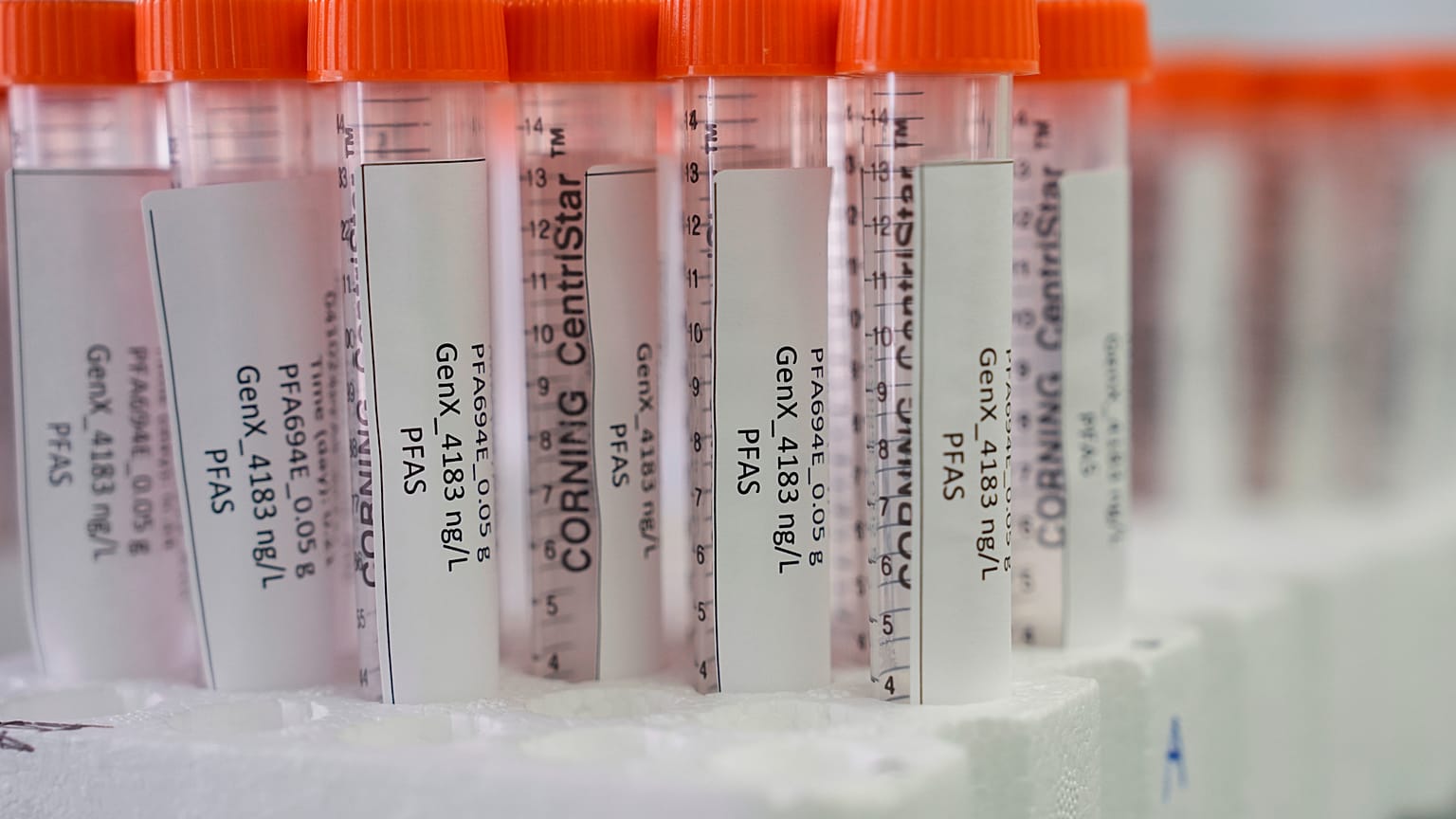
Vials containing samples of forever chemicals, known as PFAS, sit in a tray, April 10, 2024, at a U.S. Environmental Protection Agency lab in Cincinnati
Copyright AP Photo/Joshua A. Bickel, File

By Alice Carnevali
Published on


Environmental NGO ClientEarth argue Belgian authorities have not acted despite knowing about high levels for years.

Lawyers have filed a complaint against Belgium over its failure to protect its citizens’ from the significant health risks of forever chemicals.

ClientEarth has filed a human rights complaint with the European Committee of Social Rights (ECSR). Belgium has the highest levels of forever chemicals (PFAS) of any European country.

“Not only is there contamination for a long time, but we noticed that authorities have had information about this contamination for years, if not decades, and that very little has been done,” says Hélène Duguy, environmental lawyer at ClientEarth.

The NGO ClientEarth has a strong track record of filing legal procedures against governments and companies on environmental issues. This is the first time they’ve addressed the ECSR, a Council of Europe’s monitoring body that judges whether member states are respecting the European Social Charter. “We chose it because we know that this committee has a very big enforcement power,” Duguy tells Euronews Earth.

Life in Zwijndrecht: A European PFAS hotspot trying to tackle PFAS | Euronews Tech Talks

A half-baked roadmap’: What’s missing from the EU and UK’s so-called crackdown on forever chemicals

Belgium: The major European PFAS hotspot

PFAS, also known as forever chemicals, are a group of more than 10,000 man-made chemicals widely used by the industry for their water, stain, and grease-resistant properties. They’re also found in pizza boxes, non-stick pans, menstrual pads and outdoor clothing.

They have been linked to multiple health risks such as certain types of cancer, metabolic diseases and fertility issues.

Belgium has the highest levels of PFAS pollution in Europe, according to The Forever Pollution Project, which collected data and mapped PFAS pollution across the continent.

Major Belgian sites affected by PFAS pollution include Zwijndrecht, a town near Antwerp heavily impacted due to its proximity to the multinational 3M plant, and Chièvres, near the French border, where contamination has been linked to a nearby air base. The map also shows that Brussels is significantly impacted by PFAS pollution, particularly in the areas around Anderlecht and Uccle.

ClientEarth’s complaint is based on examples like Zwijndrecht, where public agencies knew about the PFAS issue years before the scandal erupted in 2021.

Members of the Flemish government, including Bart De Wever, the then-mayor of Antwerp and now Belgium’s Prime Minister, were informed of the contamination as early as 2017 but took no action.

As far back as the early 2000s, 3M and Flemish agencies had discussed the PFAS pollution in the area near the plant, but underestimated the extent of the problem.

What are the health risks of forever chemicals?

PFAS are associated with several health conditions. In 2023, the World Health Organization classified perfluorooctanoic acid (PFOA) as carcinogenic to humans and perfluorooctanesulfonic acid (PFOS) as possibly carcinogenic to humans.

These two PFAS are banned in the EU, but because they can take hundreds of years to decompose they are still present in soil, water, and the blood of people in many contaminated areas across Europe.

Cancer is not the only health hazard associated with PFAS. “These compounds are associated with various metabolic diseases like diabetes, decreased fertility, obesity,” Philippe Grandjean, professor of environmental medicine at the National Institute of Public Health in Copenhagen, told Euronews Earth.

Grandjean highlighted that PFAS not only pose a risk to adults currently exposed to them, but also to future generations.

“PFAS will affect the health of the father's semen, that is the semen’s quality, and PFAS will increase the risk of infertility or involuntary abortion,” he explained. “PFAS will pass the placenta, and therefore the mother will share her PFAS burden with her foetus, and third thing is that PFAS are excreted in human milk,” he added.

All these health risks, according to Grandjean, should therefore act as important drivers for governments to invest in prevention.

How forever chemicals became a human rights issue

It is not the first time that PFAS pollution has been linked to human rights violations. In 2024, United Nations experts called PFAS pollution generated by DuPont and Chemours in North Carolina a human rights issue.

Legal actions on PFAS pollution are ongoing across Europe, with environmental NGOs and residents suing France over its failure to tackle PFAS pollution in May 2026. A decision is expected in 2027.

“We really want to have a complaint that supports and is complementary to those [European] actions,” Duguy explains.

“PFAS is not only an environmental issue, it’s also very much a human issue and governments and public authorities have a duty to protect those rights,” she continued.

In a press release, ClientEarth noted that the ECSR is expected to decide on the admissibility of the complaint in 2027 and a final decision is estimated in two to three years.

With this complaint, ClientEarth hopes to spark concrete changes in Belgium’s PFAS regulation.

Specifically they want Belgium to ban all forever chemicals and provide solutions to affected communities. “Those measures are, for example, making sure there is systemic biomonitoring of people, specifically vulnerable populations like children or pregnant women. But it's also starting to remediate and decontaminate, which is something that's still very slow in Belgium,” Duguy told Euronews Earth.

Cleaning up PFAS pollution, however, is incredibly complicated. According to a study published on Monday (6 July) in the Environmental Science: Processes and Impacts journal, even if Europe invested €100 billion a year in remediation, it would remove a tiny fraction of forever chemicals from the environment.