Thursday, August 20, 2026


Istanbul-listed cement maker Cimsa to build Ireland’s largest rooftop solar plant at Mannok facility

Istanbul-listed cement maker Cimsa to build Ireland’s largest rooftop solar plant at Mannok facility
Mannok’s Ballyconnell plant in the Republic of Ireland. / mannokholdings.comFacebookTwitter
By IntelliNews August 20, 2026

Turkey-based cement maker Cimsa (CIMSA), a unit of Sabanci Holding (SAHOL), is set to deliver the Republic of Ireland’s largest rooftop solar installation at its Mannok facility, Cimsa said on July 29.

The company has already commenced construction of the 6-MW project, which will cover approximately 38,800 square metres (m2) equivalent to around 5.5 football pitches and will comprise approximately 10,000 solar panels.

Once completed, the project will increase the company’s total installed solar capacity across all of its operations to more than 30-MW. Cimsa has built a combined solar capacity of 24.7-MW across its Afyon (Turkey), Bunol (Spain) and Eskisehir (Turkey) facilities over the past three and a half years.

Together with its waste heat recovery power generation facilities currently operating in Mersin and Eskisehir, the company’s total installed renewable energy generation capacity will exceed 41-MW.

Cimsa, launched in 1972, operates three cement factories in Turkey while it has a white cement plant in Bunol, Spain and a grinding facility in the US.

In 2024, the company completed the acquisition of a 95% stake in Ireland-based peer Mannok Holdings DAC from US-based Brigade Capital Management.

Attempts to curb Ebola cases in DR Congo fail with more than 5,000 confirmed

The Democratic Republic of Congo is facing the biggest Ebola epidemic in its history. Government data showed on Tuesday that cases now exceed 5,000. Efforts to contain the deadly illness are being hampered by weak health infrastructure, community resistance and instability.


Issued on: 19/08/2026 
By: FRANCE 24

A health worker sprays a colleague with disinfectant after taking part in a burial service for a 3-year-old who died of Ebola in Bunia, Ituri province of eastern Congo, on August 18, 2026. © Dieudonne Dirole, AP Photo

The number of confirmed Ebola cases in ​the Democratic Republic of Congo now exceeds 5,000, government data showed late on Tuesday, as health ​officials ‌warn that response efforts are ⁠failing to contain the deadly disease.

Congo’s 17th Ebola epidemic ‌turned into the biggest in the country’s history ⁠in terms of number of cases in late July and over the weekend ​the death toll hit 2,378, ‌the public health institute said, surpassing the previous worst outbreak in 2018-2020.

The institute has so far ‌logged 5,021 cases, according to its latest situation report, making ​it the second-worst outbreak globally, behind only the 2014 to 2016 epidemic in West Africa in both ​infections and deaths.

The ongoing outbreak is ​caused by the Bundibugyo species ​of Ebola, which has no approved vaccines or treatments.

It has ​gained momentum since it was declared on May 15, as weak health infrastructure, community resistance, instability and protests by response workers hinder efforts ⁠to identify and respond to cases.

(FRANCE 24 with Reuters)


Public media dossier sheds light on how Orban's Fidesz Party maintained political control over  Hungary’s state news agency

Public media dossier sheds light on how Fidesz maintained political control over Hungary’s state news agency
/ bne IntelliNewsFacebook
By IntelliNews August 20, 2026


Poland plans middle-class tax cut and higher levy on big companies

Poland plans middle-class tax cut and higher levy on big companies
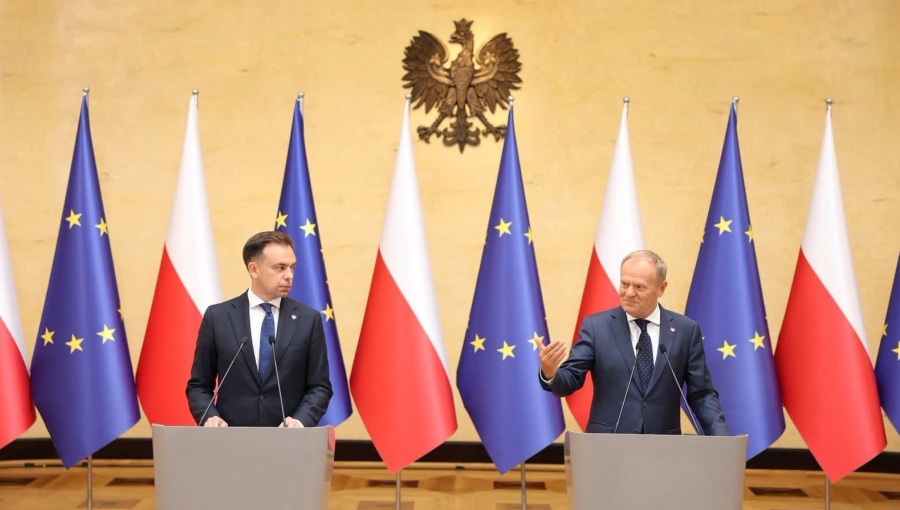
Poland's Finance Minister Andrzej DomaƄski (left) and Prime Minister Donald Tusk outline taxation plans at a press conference on August 19. / Andrzej DomaƄski via FacebookFacebook
By Wojciech Kosc in Warsaw August 20, 2026

Poland plans to lower personal income tax for middle earners and raise taxes on large companies from 2027, proposing a broadly budget-neutral package a year before the next parliamentary election.

The threshold above which annual taxable income would be subject to higher rates would rise to PLN130,000 (€34,850 equivalent) from PLN120,000. A new 24% rate would apply to income between PLN130,000 and PLN150,000, while income above PLN150,000 would continue to be taxed at 32%, Prime Minister Donald Tusk said on August 19.

The annual tax saving would reach PLN3,600 at a taxable income of PLN150,000 and remain unchanged at higher income levels because the portion above PLN150,000 would still be taxed at 32%.

The standard corporate income tax rate would rise to 22% from 19% for companies with annual revenue above €50mn, offsetting the PIT reduction, Tusk said.

“The changes proposed today more or less balance each other out,” Finance Minister Andrzej DomaƄski said at at a press conference outlining the proposal. It would be “probably” the first tax change in years that would not cost the budget, DomaƄski also said.

The PIT threshold has been frozen since 2022 despite rapid wage growth, pushing an estimated 11% of people taxed under the general scale into the 32% bracket, Finance Ministry data showed.

Lower personal taxes were a central pledge of Tusk’s Civic Coalition in the 2023 campaign, but its flagship promise to double the tax-free allowance to PLN60,000 remains unfulfilled.

The Finance Ministry estimates that implementing that pledge in 2027 would cost PLN58.6bn. Tusk has said several times that the budget is under pressure from the need to maintain adequate defence spending.

Since Russia’s invasion of Ukraine in 2022, Warsaw has been wary of Russian provocations or a potential attack and has become one of NATO’s largest defence spenders relative to GDP.

The new tax plan is likely to prompt competing proposals from opposition parties as campaigning intensifies before next year’s parliamentary election.

The main opposition party, the right-wing Law and Justice (PiS), has already proposed raising the threshold at which the 32% PIT rate applies to PLN180,000 from 2028 if it wins the election.

Tusk’s five-party coalition is struggling in the polls against a potential right-wing bloc comprising PiS, two far-right parties and RozwĂłj Plus, a new group that recently broke away from PiS.

The proposed tax changes would require parliamentary approval and President Karol Nawrocki’s signature. The opposition-backed president has repeatedly opposed tax increases and could veto the package. The ruling coalition lacks the three-fifths parliamentary majority required to override a presidential veto.


Sahel lithium boom risks opening new revenue streams for African jihadist groups

Sahel lithium boom risks opening new revenue streams for African jihadist groups
/ bne IntelliNewsFacebook
By bne IntelliNews August 20, 2026

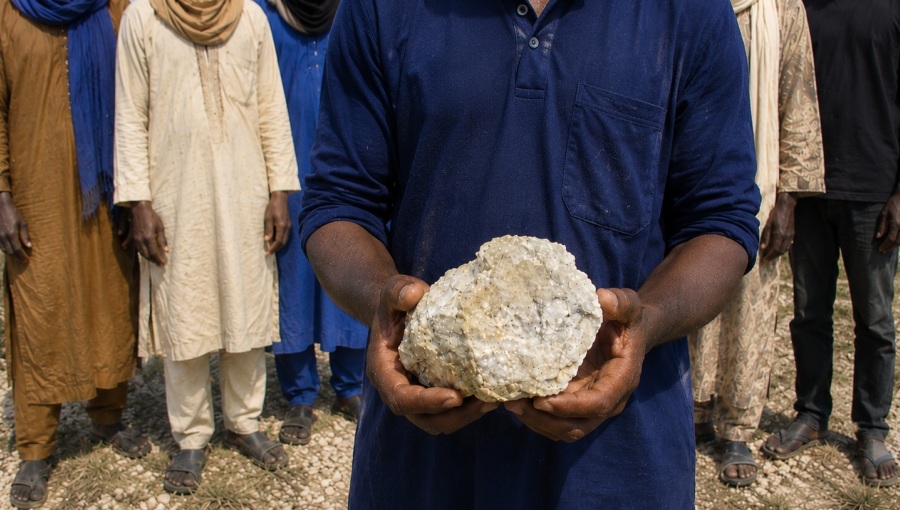
Expanding lithium production across the Sahel could create new revenue streams for jihadist and criminal groups as weak regulation, informal mining and porous borders expose emerging supply chains to exploitation, according to research by Bradley A. Mortin of King’s College London.

Mortin, a researcher in the Department of War Studies, examined lithium mining in Nigeria, Mali, Burkina Faso, Niger and Chad, arguing that rapid development of the sector is intersecting with insurgencies, organised crime and established mineral smuggling networks. His research was published this year in the African Journal of Terrorism & Insurgency Research and in The Conversation.

Mortin warned in the paper that “weak governance and insecurity threaten to transform this resource into a new avenue for terrorist financing.”

Africa’s lithium industry is expanding rapidly as demand grows for batteries used in electric vehicles, electronics and energy storage, with new mines and processing projects advancing across several countries.

Mortin argues that the same conditions that make parts of the Sahel difficult to govern — weak state control in remote regions, informal mining, cross-border smuggling routes and armed insurgencies — could allow militant groups and criminal networks to extract revenue from the lithium trade.

The risk would not necessarily require armed groups to operate mines themselves. They could benefit through taxation, extortion, protection payments, control of transport routes and participation in illicit trading networks.

In Nigeria, Mortin identifies the largely artisanal lithium sector as particularly vulnerable to criminal groups seeking protection payments or access to legal and illicit mineral supply chains.

Mali already has an industrial lithium industry. Ganfeng Lithium (SZSE: 002460; HKEX: 1772) brought the first phase of its Goulamina spodumene project into production in December 2024 and shipped its first lithium concentrate to China in 2025. Ganfeng currently lists its interest in the project at 100%.

Phase I of Goulamina has planned annual capacity of about 506,000 tonnes of lithium concentrate, potentially rising to around 1mn tonnes under a second phase.

The Bougouni project is operated through a partnership between Kodal Minerals (AIM: KOD) and China’s Hainan Mining. Kodal owns 49% of Kodal Mining UK, while Hainan holds 51% and ultimate control. That company in turn owns 65% of Les Mines de Lithium de Bougouni, with the Malian government holding the remainder. Kodal describes Bougouni as a producing lithium project.

The emergence of Goulamina and Bougouni has positioned Mali as one of Africa’s most important new hard-rock lithium producers despite the country’s continuing political instability and jihadist insurgency.

Mortin argues that armed groups already familiar with taxing and extorting gold miners could apply similar methods as lithium production expands, particularly where mining and transport take place beyond effective state control.

Nigeria’s sector is less mature but is attracting substantial investment. In July, President Bola Tinubu commissioned a $250mn lithium mining and processing plant in Nasarawa State developed by privately held Chinese company Diamond New Energy in partnership with the state government and Chinese groups Jiuling and Canmax. The government says the plant can process 6,000 tonnes of material a day.

Chariot Corporation (ASX: CC9) is also building a Nigerian hard-rock lithium portfolio after acquiring a 66.7% interest in projects at Fonlo, Gbugbu, Iganna and Saki across Oyo and Kwara states. The company says all four areas have a recent history of artisanal lithium mining, highlighting the overlap between formal exploration and the informal supply chains identified in Mortin’s research.

The study says Burkina Faso faces comparable risks because jihadist groups have already generated revenue from artisanal gold production and informal trading networks during the country’s long-running insurgency.

In Niger, the research argues that routes long used to move gold, weapons and other contraband could also provide channels for illicit lithium shipments as domestic production develops.

Chad has yet to develop a lithium industry on the scale of Mali, but Mortin identifies weak institutions, corruption and porous borders as factors that could leave future mineral supply chains vulnerable to criminal exploitation.

Burkina Faso, Niger and Chad remain much earlier-stage lithium jurisdictions, with no industrial projects comparable with Goulamina or Bougouni currently operating. Their relevance to Mortin’s study lies more in prospective mineralisation, informal extraction and the security risks surrounding future development than in established listed-company production.

The paper also warns that armed groups are “exploiting the governance void surrounding artisanal lithium mining.”

The concern echoes the experience of other African minerals. Diamonds helped finance conflicts in Sierra Leone and Angola, while gold mining and trading have provided revenue to armed groups across parts of West Africa and the Sahel.

Lithium is becoming strategically more important as governments and manufacturers seek secure supplies for the global energy transition, but forecasts for African and global output vary depending on whether they measure contained lithium, lithium carbonate equivalent or spodumene concentrate.

Mortin argues that governments should formalise artisanal mining, strengthen mineral tracking systems and improve intelligence sharing across borders before lithium production expands further.

The study also calls for stronger state authority in mining regions and tighter traceability to make it harder for armed groups to extract revenue or move illegally mined material into legitimate export channels.

Greater domestic processing could also allow African producers to capture more of the value generated by lithium rather than relying largely on exports of raw ore or concentrate.

The challenge for governments is to develop a potentially valuable new source of export earnings without allowing lithium to replicate the security problems associated with gold and other minerals in poorly governed parts of the Sahel.

France measures more than 7,300 excess deaths – and counting – during historic heatwaves


More than 7,300 excess deaths have been recorded in France over the historically hot summer as Europe grapples with worsening heatwaves, wildfires and droughts, public health authorities said Wednesday. France has suffered a record-breaking 52 days of heatwaves since mid-June, an AFP analysis found.


Issued on: 19/08/2026 
By: FRANCE 24

Paris residents sweltered during a heatwave in June. © Joel Saget, AFP

France experienced more than 7,300 excess deaths during heatwaves so far this year, health authorities said Wednesday, as the country has also endured a record number of hot days since mid-June, according to an AFP analysis.

France has been hit by three summer heatwaves in quick succession: a 14-day spell in June, 16 days in July and another lasting 22 days that began in late July and has yet to be officially declared over as of August 18.

Together they mean the country – parts of which are ill-equipped to deal with heat, and where air-conditioning is scarce – has endured a record 52 days of heatwaves since mid-June, according to the AFP analysis.

France's public health agency on Wednesday said it had recorded 1,243 more deaths than usual between July 2 and 22.

That added to the 5,764 excess deaths recorded from June 17 to 30, and 300 deaths identified so far during the year's first period of high temperatures in late May, for a total of 7,307.

Nearly three-quarters of the extra deaths "concern people aged 75 and over", though they affected "all age groups from 45 and over", the health ministry said.

The deaths were due to all causes and cannot yet be definitively attributed to the heat, the agency said. Final figures are expected in the autumn.

The figures came as an AFP analysis of data from the national weather service Météo-France showed the number of days of heatwaves this year far exceeds the 33 heatwave days recorded in 2022 and the 22 days seen during the deadly summer of 2003.

The country has had only two periods of respite, lasting three and eight days respectively, since the first heatwave began on June 17.

Beyond France, western Europe experienced its hottest start to summer on record, with recurring heatwaves in June and July causing widespread drought and devastating wildfires fuelled by human-driven climate change.
Second-longest recorded heatwave

France has recorded more heatwave days in 2026 than in any other year since records began in 1947.

The previous standout year, 2022, also saw three separate heatwaves, but their combined duration was almost 20 days shorter than this year's total.

READ MOREIn pictures: Drought exposes World War II ships, strands boats as Europe’s river levels plunge

Extreme heat contributed to more than 15,000 deaths in France in 2003, but the main heatwave was concentrated over about two weeks in August, following a less severe week-long episode in June.

The August 2003 heatwave nevertheless remains the most severe observed to date – based on an indicator combining heat duration and intensity.

Heatwaves in France: exceptional series in 2026. 
© Nalini Lepetit-Chella / Paz Pizarro, AFP

But 2026 has set another milestone, with June 24 and 25 the hottest days ever recorded on average across mainland France, according to the national temperature indicator, which combines daytime and nighttime readings from 30 reference weather stations.

The indicator reached 30°C, surpassing the previous record set in 2003.

The heatwave that began in late July has meanwhile become the second-longest recorded nationwide.

At 22 days and counting, it is just short of the 23-day heatwave recorded in July 1983.

More than half of the 54 heatwaves France has experienced since 1947 have occurred since 2010.

Météo-France defines a national heatwave as a period lasting several days during which temperatures are significantly higher than normal.

A heatwave begins when the indicator reaches or exceeds 25.3°C for one day and the national average temperature remains at or above 23.4°C for at least three consecutive days.

It ends when it drops below 23.4°C for at least three days in a row or falls briefly below 22.4°C.

A spell of unusually warm weather in May, for example, was not intense enough to meet France's threshold for a heatwave.

(FRANCE 24 with AFP)

Heat linked to around 14,000 deaths in Germany so far this year


20.08.2026, DPA

Photo: Frank Hammerschmidt/dpa

Around 14,000 people in Germany are estimated to have died in connection with periods of extreme heat so far this year, the country's public health institute said on Thursday.

That corresponds to almost 17 deaths per 100,000 inhabitants, according to the latest report by the Robert Koch Institute (RKI) on heat-related mortality, which covers the period from April 6 to August 9.

The number so far this year is already significantly higher than the totals for most entire years. Over the past decade, particularly high numbers were recorded in 2018, with an estimated 9,400 heat-related deaths, and 2019, with 7,600.

The RKI said its estimates are conservative, meaning the actual number of heat-related deaths this year could be even higher.

Last week, the institute estimated the number at 12,500. The figure can be revised retrospectively.

Most deaths among people aged 85 and over

The largest number of estimated deaths, 7,040, occurred among people aged 85 and over. Around 3,450 deaths were recorded among those aged 75 to 84 and 2,170 among people aged 65 to 74.

A severe heatwave at the end of June accounts for a large proportion of this year's estimated heat-related deaths.

Of the estimated 14,000 deaths so far this year, around 9,600 occurred in the week from June 22 to 28 alone, according to the RKI.

Temperatures approached 40 degrees Celsius in many parts of Germany during that period.


Croatia's foreign-owned banks face a 50% profit tax after their euro boom

Croatia's foreign-owned banks face a 50% profit tax after their euro boom
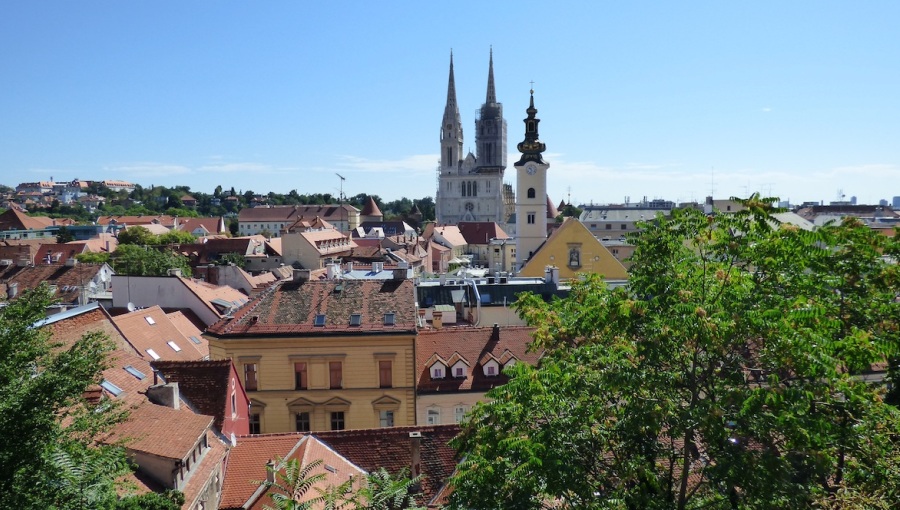
Three years of euro membership and record tourism have handed Croatia's Italian- and Austrian-owned lenders their fattest returns in a generation. Now Zagreb wants a share. / Image by Arvid Olson from PixabayFacebook
By Ben Aris in Berlin August 19, 2026

Croatia's banks, almost all of them owned from Milan, Vienna or Budapest, are among the most profitable in Europe. A new 50% tax on excess profit is aimed squarely at them.

The sector cleared €1.4bn in net profit in 2025, down 6.1% on the record set a year earlier but still enough to return 14.6% on equity, the Croatian National Bank (HNB) reported. Bad loans sat at 2.3% of the book, capital at 22.7% of risk-weighted assets — a picture of comfort that has caught the government's eye.

Prime Minister Andrej Plenković's cabinet unveiled the charge in May as part of a broad anti-inflation package: a 50% levy on “excessive” gross profit, measured against each firm's 2023-2025 average plus a 15% buffer, with exporters largely spared. Banks, which earn their money at home, have nowhere to hide.

“Croatia has experienced above-average growth in economic activity in recent years, which in itself produces an overheating of the economy,” Finance Minister Tomislav Ćorić said as he presented the measures, framing the tax as a way to “distribute the burden more fairly”.

The euro dividend

Croatia's banks have had an extraordinary three years. The country adopted the euro on January 1, 2023, scrapping the kuna and the currency risk that had shadowed a system where most loans were already priced in or linked to euros. Overnight the lenders lost their foreign-exchange margins but shed a layer of risk, and gained direct access to European Central Bank (ECB) funding.

The bigger windfall came from rates. As the ECB lifted its deposit rate to counter inflation, Croatian banks — flush with cheap current-account deposits from a cash-rich, tourism-fed economy — watched their net interest income balloon. Croatia's record visitor numbers pour euros through the banking system every summer, and the lenders have converted that float into some of the fattest margins in the European Union.

The macro backdrop has rarely looked better. S&P raised Croatia to 'A' in March, citing reforms and resilience; the treasury sold a €2bn 10-year Eurobond into strong demand in February; and Zagreb's former central-bank governor, Boris Vujičić, recently started his term as ECB vice-president. A trade deficit that widened to €10.2bn in the first half is the main blemish on an otherwise gilded run.

Owned from abroad, run from two towers

For all the national success, the profits mostly leave the country. Croatia runs one of the EU's most concentrated and foreign-owned banking systems. The two largest lenders — Zagrebačka banka (ZABA), part of Italy's UniCredit, and Privredna banka Zagreb (PBZ), owned by Intesa Sanpaolo — between them hold roughly 46% of banking assets, with market shares near 25% and 20% respectively.

Behind them, Erste&SteiermÀrkische Bank (Austria's Erste Group) holds about 18%, OTP banka Hrvatska (Hungary's OTP) around 10% and Raiffeisenbank Austria (RBA) some 8%. The one substantial domestically controlled name is Hrvatska poƥtanska banka (HPB), 77% state-owned and ranked fifth, whose after-tax profit edged up just 0.4% in the first half. Smaller independents such as Agram banka fill out the tail.

That ownership map means the sector's fortunes are booked as much in Milan and Vienna as in Zagreb. Raiffeisen Bank International, RBA's parent, lifted first-half profit 25% at group level excluding Russia, with a non-performing exposure ratio of just 1.6% — an all-time low. Croatia is a small, steady, high-return contributor to each of these groups, rarely the source of their troubles.

Consolidation, not fresh competition, is the pattern. RBI spent much of 2026 in a bruising bidding war with Slovenia's NLB for control of Addiko Bank, the Balkan lender spun out of the failed Hypo Alpe Adria, in a contest that will further thin the field across the former Yugoslavia.

A regional pattern of squeezing the banks

Croatia is not acting alone. From Bratislava to Budapest, cash-strapped governments have spent the past two years reaching into bank profits swollen by the same rate cycle. RBI has calculated that by early 2025 the great bulk of central and southeast European banking assets were subject to some form of special taxation, warning the levies risk hardening into permanent fiscal fixtures.

The design of Croatia's tax leaves questions. It is pitched as temporary and anti-inflationary rather than a standing bank levy, and by keying off a 2023-2025 baseline it targets exactly the firms whose earnings jumped during the boom. Foreign parents are likely to argue, as they have elsewhere, that the charge eats into the capital their Croatian units need to keep lending — even as those units sit on capital ratios above 22%.

For now the strains are hard to find. Bad debts are low, deposits plentiful and the ECB's rate path is easing funding costs after the tightening cycle. The HNB has flagged imported inflation and external shocks — from US tariffs to Middle East tensions — as the main risks to the outlook, not the health of the banks themselves. The open question is whether a government that has discovered how much money its banks make will treat this year's tax as a one-off, or the start of a habit.

Tax hack: What we know about the cyberattacks on French government agencies

French government systems came under attack by hackers who stole information on hundreds of thousands of households and private businesses in June and July, notably from the tax authority. Here's what we know about the latest cyberattacks, and what the government is doing to keep personal information secure.


Issued on: 19/08/2026 
By: FRANCE 24

Cover image: A woman walks near the French Economy and Finance Ministry building known as Bercy along the River Seine in Paris, France, August 11, 2026. © Sarah Meyssonier, Reuters
01:57


Cyber hackers have stolen detailed financial information on hundreds of thousands of individuals and companies from tax and land registry computers, French authorities admitted on August 14.

France's Public Finance agency (DGFiP), which oversees the tax system, said there were two separate cyber attacks on its computers. Details from more than 678,000 individual and professional accounts were taken in the first hack in June, with names, "income reference data" and tax rates paid among the details taken. The second theft in July concerned details on 200,000 land registry accounts.

The agency's head, AmĂ©lie Verdier, ​said Tuesday that another data breach was detected on Monday that ⁠is still being evaluated.


© Octav Ganea, AP
01:10


The thefts were claimed on a dark-web forum by ZeroBytes, a self-proclaimed French hacking duo that said they had access to a VPN used by tax officials.

Contacted by AFP and asked about motives, the duo said they had no "particular motivation" before adding: "money, I imagine". They said the stolen information had already been sold to "two people" for "thousands of euros".

The duo claim to have details on 250,000 land registry accounts involving about 2 million people who own land and property in France.

On Monday, the group said they also obtained information on millions of students and tens of thousands of teachers, some of it dating back 20 years.

Experts say France is one of the countries most targeted by cybercriminals.


Prime Minister Sébastien Lecornu on Wednesday asked the National Cybersecurity Agency to set up a new "cyber unit" to counter cyberattacks.

Budget ​Minister David ​Amiel said on Tuesday that his ministry will ​use ‌artificial intelligence tools ⁠to test the cybersecurity vulnerabilities of government ‌agencies following last week's disclosure. He stressed that the government would only work with what he described as "sovereign" AI providers – such as France's Mistral – and explicitly excluded US-based OpenAI.

France's identity document agency ANTS was hit by a massive attack in April affecting the data of nearly 12 million individuals and professionals.

In February, the finance ministry said that a large-scale breach of its computer system had resulted in the theft of the details of 1.2 million bank accounts. Days later, hackers stole the medical information of some 15 million individuals.

(FRANCE 24 with AFP and Reuters)
Reporters Without Borders calls for 'immediate release' of two French filmmakers held in Togo

Reporters Without Borders (RSF) has called for the "immediate release" of two French filmmakers and their Togolese fixer in a statement issued late Wednesday. Detained since July 27, all three have now been remanded into custody to await trial, the group said.


Issued on: 19/08/2026 
By: FRANCE 24

Reporters Without Borders published a photo of French filmmakers GaĂ«l MocaĂ«r and Sebastian Perez Pezzani, and their Togolese fixer Fred Vedomey, to accompany a statement about their detention. © Courtesy Reporters Without Borders

Detained since July 27, all three were remanded into custody on Monday to await trial, Reporters Without Borders said, adding that they are being held at the AgoÚ Logopé camp near Lomé.

"RSF calls for the immediate release of French filmmakers Gaël Mocaër and Sebastian Perez Pezzani and their Togolese fixer Fred Vedomey, who are in pre-trial detention," the statement said.

"The filmmakers entered the country on work visas and obtained authorisation to film, but were charged with making 'false declarations' on August 17," RSF said.

France's foreign ministry confirmed on Wednesday that the French nationals had so far received three consular visits.

"The ministry's departments in Paris and Lomé are fully mobilised to monitor their conditions of detention and their state of health, and to ensure respect for their right to a [legal] defence," the ministry said.

The two men were arrested while filming in northern Togo for a documentary series broadcast by France Televisions, according to Patrice Lucchini, head of Tony Comiti Productions. Lucchini said the filmmakers were detained near the city of Kara after venturing beyond the area they had been advised to remain in.

RSF said Pezzani is suffering from "serious health problems" and may require immediate medical attention.

Appeals from the men's families were included in the RSF statement, in which they also asked for consideration to be given to Pezzani's health issues, warning that "his condition could deteriorate".

"We hope for a swift resolution. The uncertainty and anguish weigh daily on the families of the two detained filmmakers, who are enduring the painful wait for news and for their release," they said.


Togo has been led since 2005 by Faure Gnassingbe, who succeeded his father who ruled the west African state for 38 years.

Since late 2021, the country's far north has been plagued by incursions from jihadists based over the border in Burkina Faso, where groups linked to al Qaeda and the Islamic State group are active.

The government declared a state of emergency the following year in a northern region and has extended it several times, most recently in February for a period of one year.

Radio France Internationale and France 24 were taken off the air in June 2025 for three months, accused of relaying "inaccurate and tendentious remarks" after demonstrations critical of the government, which shook the country that same month.

Togo ranks 97th out of 180 countries in the annual press freedom index compiled by Reporters Without Borders.

(FRANCE 24 with AFP)

Wednesday, August 19, 2026

BILLIONAIRE  BASKET CASE ECONOMY

US national debt exceeds $40 trillion for first time amid rising borrowing

The US gross national debt surpassed $40 trillion for the first time, Treasury data showed on Wednesday, exceeding earlier forecasts as borrowing, interest costs and long-term obligations rose. Total public debt reached $40.05 trillion on Tuesday, above a Congressional Budget Office forecast of $39.4 trillion by end-fiscal 2026.


Issued on: 20/08/2026 
By: FRANCE 24


The National Debt Clock is displayed, Monday, April 7, 2025, in New York
 © Yuki Iwamura, AP


The US gross national debt has surged past $40 trillion for the first time, government data showed Wednesday, outstripping earlier forecasts at a pace fuelled in part by President Donald Trump's invalidated tariffs.

The uptick in borrowing comes as longer term US obligations linked to social security and health care have been growing, while interest payments have climbed as well.

Total public debt outstanding stood at $40.05 trillion at the close of business Tuesday, according to data released Wednesday by the Treasury Department.

This stands in contrast to an earlier forecast by the Congressional Budget Office that overall borrowing would hit $39.4 trillion by the end of fiscal year 2026.

Rising US debt comes as concerns over inflation, war in the Middle East and government spending have been driving investor worries, and the cost of borrowing has grown.

Yields on long-term Treasury bonds rose Tuesday to the highest level since 2007, reflecting growing price pressures due to war on Iran and anxiety over US deficit spending.

The increase forces the US government to refinance debt at the highest rates since before the 2008 global financial crisis.

But the US Treasury Department moved to steady the long-term bond market early Wednesday, sending yields lower.

The federal government operates at a deficit and borrows money to help cover its obligations, including its war spending and tax cuts.

"It's been well known for a while that the United States government was on a pretty unsustainable path with deficits," said Jessica Riedl, a budget and tax fellow at the Brookings Institution.

"Over the last few years, the United States has moved into roughly $2 trillion deficits, even during peace and prosperity," she added.

While deficits of three percent to four percent of GDP used to worry financial markets, she noted that levels are closer to six percent to seven percent of GDP now.

"That has made markets more nervous," she said.

As inflation pushed interest rates higher, interest costs on the debt have risen as well, and costs linked to an ageing population are pushing up deficits.

Risks ahead

Analysts note that there is no debt-to-GDP level that automatically triggers a crisis.

Although the gross debt marks a symbolic threshold, many economists consider debt held by the public to be the most economically meaningful measure.

"But psychologically, these are the landmarks that warn financial markets that they need to take another look at rising debt," Riedl said.

Federal borrowing surged during the Great Recession of 2007-2009 and increased following the government's response to the downturn triggered by Covid-19, said Caleb Quakenbush, director of fiscal policy at the Bipartisan Policy Center.

But he told AFP that the trajectory of US budget spending has not been addressed by Congress or US administrations in a "meaningful or durable way."

He warned of uncertainty surrounding the "unprecedented levels of borrowing that we're seeing now."

Bond markets could face steep challenges in a crisis scenario, he noted.

But even outside that situation, the United States could see higher borrowing costs for consumers and businesses, squeezing the economy.

Treasury Secretary Scott Bessent had previously set a goal of cutting the US deficit to three percent of GDP.

(FRANCE 24 with AFP)