Thursday, August 20, 2026


Russia and Myanmar sign ten documents as Putin dangles LNG, nuclear power and a deep-water port

Russia and Myanmar sign ten documents as Putin dangles LNG, nuclear power and a deep-water port
Min Aung Hlaing's first Moscow trip as president produced a long list of agreements, an anti-sanctions declaration and very little trade. / bne IntelliNewsFacebook
By Ben Aris in Berlin August 19, 2026

Russia and Myanmar signed ten documents in the Kremlin on August 18, including a joint declaration on countering Western sanctions.

The talks between Vladimir Putin and Myanmar's president Min Aung Hlaing produced a package covering nuclear power, liquefied natural gas, a deep-water port and search-and-rescue satellites.

It was the former junta chief's first official visit to Russia since he took the presidency in April, and the fifth country he has visited in the role after India, China, Laos and Thailand. He has made four previous trips to Russia as junta leader, the first in June 2021, five months after seizing power.

The substance was almost entirely prospective. Behind a package covering everything from nuclear power to search-and-rescue satellites sits a bilateral trade relationship worth less than $75mn a year - roughly what Russia earns from crude oil exports in about three hours.

The signing was headed by the Declaration of the Russian Federation and the Republic of the Union of Myanmar on Ways and Means to Counter, Mitigate and Redress the Adverse Impacts of Unilateral Coercive Measures - the standard Russian formulation for Western sanctions, and the clearest statement of what each side is getting from the other. Both are under sweeping Western restrictions; neither can do much about it except say so together.

The rest were interagency memoranda: electric power and oil and gas, the electronics industry, digital technologies, information and communication technologies, culture and the arts, satellite navigation and manned space exploration, the Cospas-Sarsat search and rescue system, and ASPOS, Russia's automated warning system for hazardous situations in near-Earth space. A memorandum was also signed between Russia's Federal Anti-Monopoly Service and Myanmar's Competition Commission.

The one item with a commercial mechanism attached was a set of protocols implementing an April 16, 2026 memorandum between Russia's RC-Investments Fund and Myanmar's Ministry of Electricity and Energy, covering long-term supplies of liquefied natural gas.

Energy was where Putin spent most of his statement. “Joint construction of a power plant and an oil refinery in southern Myanmar is under consideration,” he said, adding that Russian companies were “ready to participate in hydrocarbon exploration and production, including offshore”.

On gas he was more specific about the ambition than the timetable: “There are good prospects for exporting liquefied natural gas to Myanmar, both for domestic consumption and for transit to neighbouring countries.” Myanmar is a gas producer in long-term decline whose Yadana field is fading, and which has spent two years rationing fuel - the idea of it becoming an LNG transit route for Russian cargoes is a considerable stretch of the map.

The nuclear project got the strongest billing. “Last year, an intergovernmental agreement was signed on the construction of a Russian-designed nuclear power plant in Myanmar,” Putin said. “This is truly a flagship bilateral project.” That agreement, signed in March 2025 by Rosatom director general Alexei Likhachev and Myanmar science and technology minister Myo Thein Kyaw, covers a 110MW small modular reactor with scope to expand to 330MW. Myanmar has no nuclear power, generated 24.3 TWh of electricity in 2019, and is a country where armed resistance groups control something close to a third of the territory.

Putin also listed “an ironworks and an organic fertiliser production facility” under construction, and plans “to build a deep-water seaport on the country's southern coast capable of handling large-capacity vessels”.

That last one is the Dawei project, and it is where the Russian corporate involvement is actually visible. Inter RAO (MOEX: IRAO) has been working up a coal-fired power plant, an oil refinery and an LNG terminal tied to the Dawei deep-sea port, and signed an agreement in June with the Launglon Economic Development Company. Gazprom (MOEX: GAZP) International has discussed the engineering for the Dawei refinery. RosGeo signed a memorandum in October 2025 to run an artificial-intelligence pilot extracting gas from thin sand layers at five wells in the Aphyauk field - Myanmar's first AI-based production enhancement project.

The most substantive economic disclosure was about plumbing rather than projects. “Reliable financial settlement mechanisms have been established,” Putin said, “with two-thirds of commercial transactions now conducted in Russian rubles.”

That is the real achievement here, and it is a sanctions-evasion achievement rather than a trade one. Mir cards are now accepted at Myanmar hotels and shops. Myanmar's central bank delegation went to Moscow in July to talk to Sberbank (MOEX: SBER) about cybersecurity, fraud prevention and its biometric Smile Pay system, and attended a St Petersburg forum on ruble-based digital payment platforms and cryptocurrency regulation.

Economic Development Minister Maxim Reshetnikov set out what Russia actually ships. “This year we began supplying large volumes of mineral fertilisers, previously only petroleum products,” he said, adding Russia was “ready to further increase our supplies of mineral fertilisers, petroleum products, engineering products and, of course, agricultural products” and to “increase imports of light industry and agricultural products from Myanmar”. He said the relationship was “now entering the investment phase”.

The base is very low. Bilateral trade ran at $34.45mn in the 2020-21 fiscal year and $74.73mn in 2023-24 - more than doubling, and still negligible. Myanmar sends Russia garments, socks, mango puree, footwear, bags and human hair. Russia is also raising labour quotas for Myanmar workers, of whom some 3.5mn are already employed across Southeast Asia.

On security Putin was brief but unambiguous. “Our countries have established close military and military-technical cooperation,” he said. “Bilateral naval exercises are regularly held off the coast of Myanmar, and Russian Navy ships also make port calls there.”

No new defence document was announced. A five-year military cooperation agreement was signed in February 2026 and its terms have not been published. The existing relationship runs through arms sales to a military blacklisted by Western governments, army training, and university scholarships for thousands of Myanmar soldiers. Russian is now taught at the universities of Yangon and Mandalay and at the Defence Services Academy; about 400 Myanmar students are at Russian universities and more than 7,000 have been educated there in total.

Min Aung Hlaing said the two had discussed cooperation in “defence, security, tourism, agriculture, healthcare, and a number of other fields”, and used his statement mainly to advertise. “Myanmar has a strategically advantageous geographical location. There are huge sales markets near our country. We have rich resources, a wonderful climate and a coastline of more than 1,300 miles,” he said. “That's why we want to invite investors from Russia to cooperate with our country. Dear Mr President, I ask you to support the arrival of investors in Myanmar.”

He also delivered the line the visit was designed around: “Myanmar is a reliable partner of Russia in Southeast Asia. Myanmar always stands ready.”

Putin's own framing leaned on history rather than commerce. “Russia and Myanmar are bound by truly strong, time-tested ties of friendship, partnership, and mutual support,” he said, noting Soviet support for Myanmar's nation-building in the 1950s and 1960s and that relations established in 1948 had become “especially trusting in recent years”. He thanked Min Aung Hlaing for “your assistance in promoting Russia's relations with ASEAN” - which is the other thing Moscow wants here, given Myanmar's seat in a bloc where Russia has limited traction.

He opened with condolences for the monsoon floods still running in Myanmar, and Min Aung Hlaing reciprocated by thanking Russia for sending rescue teams after last year's earthquakes: “Russia promptly dispatched rescue teams, and many of our people were rescued. I still remember this.”

The softer items were unusually prominent for a summit read-out, which tells you something about how much hard material there was. A Myanmar consulate general is to open in Vladivostok. Myanmar cultural and religious centres already operate in the Altai Territory and the Kaluga and Moscow regions. Min Aung Hlaing told Putin an agreement had been reached to build a Russian Orthodox church in Yangon. He goes on to the Republic of Tuva, a centre of Russian Buddhism, and to a Russia-Myanmar business forum at the Plekhanov Russian University of Economics on August 19, organised by Myanmar's embassy and the Roscongress Foundation.

Prime Minister Mikhail Mishustin, whom Min Aung Hlaing also met, offered the same forward tense as everyone else: “We see excellent opportunities to boost our bilateral trade, economic, and investment potential,” and a readiness to share Russian work on “the digital economy, autonomous electronic systems, and artificial intelligence applications”.

What Min Aung Hlaing came for is not really the LNG or the reactor, neither of which is close to delivery. It is the photograph. He took the presidency in April after a general election held in only 102 of Myanmar's 330 townships, with a claimed 52% turnout, which UN experts and rights groups called neither free nor fair. Since then he has been collecting state visits. Russia, which needs friends in ASEAN and buyers who will settle in rubles, is the least demanding host available, and the one most willing to sign a joint declaration saying that sanctions are the problem.

How Myanmar’s SMEs Are Coping With An Economy Of Uncertainty – Analysis


Credit: The Sabai

August 20, 2026

Shwetaungthagathu Reform Initiative Centre

By Hsu Latt Phyu


Key Takeaways:

Myanmar’s SMEs are navigating an economy shaped by inflation, power shortages, trade disruptions, labor migration, and policy uncertainty, forcing many businesses to prioritise survival over growth.

Despite these challenges, SMEs have demonstrated resilience through practical adaptation strategies, including alternative energy use, flexible workforce arrangements, informal financing, and digital innovation.

Strengthening SME resilience through supportive policies, improved infrastructure, access to finance, and capacity-building initiatives will be critical for Myanmar’s long-term economic sustainability and recovery.


1. Introduction


Since the 2021 military coup, Myanmar has faced a prolonged polycrisis characterised by political instability, inflation, currency depreciation, power shortages, trade disruptions, and labor migration. More recently, fuel supply disruptions linked to the Middle East conflict have further increased production and transportation costs, amplifying existing economic vulnerabilities. While large firms may possess greater financial capacity to absorb shocks, small and medium-sized enterprises (SMEs) have been disproportionately affected. Yet despite operating in an environment where uncertainty has become the norm, many SMEs continue to adapt and survive. This article examines how Myanmar’s SMEs are coping with an economy of uncertainty.

2. Myanmar’s Current Economic Situation

Although Myanmar’s economy showed signs of a modest recovery in early 2026, the improvement remains fragile amid ongoing political instability and economic uncertainty. Inflation rose to 24.6 percent in April 2026, driven largely by higher fuel and transportation costs, while the depreciation of the kyat increased the price of imported goods and raw materials. At the same time, foreign exchange controls and import restrictions have made it more difficult for businesses to access essential inputs, while conflict-related disruptions continue to raise logistics costs and delay deliveries. Businesses also face persistent electricity shortages, forcing many to rely on generators and alternative energy sources, which increase operating costs. Meanwhile, labor migration, skills shortages, and compulsory military service have made recruitment increasingly difficult. Together, these challenges have pushed many SMEs to prioritize survival and adaptation over growth.

3. The Role of SMEs in Myanmar’s Economy

Small and medium-sized enterprises (SMEs) are widely recognized as the backbone of Southeast Asian economies, accounting for over 90 percent of businesses and employing a large share of the workforce. In Myanmar, SMEs make up 94 percent of enterprises and between 52 and 97 percent of total employment. Beyond their economic contribution, SMEs play an important social role by creating livelihoods, supporting local communities, and generating income opportunities in both urban and rural areas.

However, despite their importance, SMEs continue to face significant structural challenges. Previous studies have highlighted constraints such as limited access to finance, outdated technology, low productivity, and poor market access. Moreover, formal policy support for SMEs remains limited, reducing their ability to reach their full economic potential.

4. Challenges Facing SMEs

Since 2021, Myanmar’s SMEs have faced overlapping economic, operational, workforce, and financial challenges. Unlike large corporations, SMEs are often more vulnerable to external shocks and have fewer resources to absorb rising costs.

Inflation, currency depreciation, and fuel price increases have significantly raised production and transportation costs, while weaker consumer purchasing powerhas reduced demand and squeezed profit margins. At the same time, frequent power outages, import restrictions, and supply chain disruptions continue to increase operational uncertainty and business expenses.

International sanctions have added further pressure on some SMEs. Although sanctions primarily target military-linked entities, Myanmar’s military-dominatedeconomy means that restrictions on financial transactions, trade, and supply chains can also create unintended spillover effects for civilian-led SMEs. These indirect impacts make it more difficult for businesses to access foreign currency, credit, imported inputs, and international markets, placing additional pressure on firms with limited financial resources.

Labor shortages have become another major challenge, driven by skills gaps, outward migration, and compulsory military service, resulting in higher recruitment and training costs. Access to finance also remains limited, as many SMEs face difficulties obtaining affordable credit and must cope with ongoing liquidity constraints.


Together, these challenges have created a business environment where many SMEs prioritise survival and continuity rather than growth and expansion.

5. Resilience of SMEs in Myanmar


Despite operating in an increasingly uncertain environment, many Myanmar SMEs have demonstrated remarkable resilience by adapting their business models and day-to-day operations. Rather than pursuing expansion, many firms have focused on maintaining continuity, preserving cash flow, and responding flexibly to changing circumstances.

5.1 Energy Adaptation

Frequent power outages have forced businesses to invest in alternative energy sources such as diesel generators and off-grid solar systems. In October 2025, approximately 42 percent of firms’ electricity consumption came from diesel generators and off-grid power sources. While these investments increase operating costs, they enable businesses to continue production and maintain essential services during prolonged outages.

5.2 Workforce Adaptation


To cope with labor shortages caused by outward migration, skills mismatches, and compulsory military service, many SMEs have adjusted how they manage their workforce. As the labor market shifts toward more informal, part-time, and casual employment, particularly in urban areas, firms have adapted by relying on more flexible labor arrangements to maintain business operations. Many businesses have also raised wages and provided short-term training to attract and retain workers, despite the additional costs involved. These workforce adjustments have enabled SMEs to sustain operations in an increasingly constrained labor market.

5.3 Financial Adaptation

Limited access to formal credit has encouraged SMEs to explore both formal and informal financing mechanisms. Following the 2025 earthquake, state-backed recovery loans and subsidised lending programs contributed to a significant increase in SME lending. At the same time, informal financing remains an important coping mechanism. Some firms rely on loans from friends and family, while many businesses facing cash-flow shortages use personal networks to sustain operations. These informal support systems often serve as an important source of resilience when formal financial channels are difficult to access.

5.4 Digital Adaptation


Myanmar’s digital economy has long been shaped by social commerce, with Facebook serving as a major platform for communication, marketing, and online sales. However, internet restrictions and the nationwide VPN block introduced in 2024 disrupted access to many digital platforms and reduced online business activity. In response, SMEs have diversified their digital presence by adopting alternative channels such as Telegram, Viber, and TikTok to reach customers and maintain sales. This ability to adapt to a rapidly changing digital environment highlights the flexibility and innovation that characterise many Myanmar SMEs.

Although these adaptive strategies have helped businesses survive, resilience should not be mistaken for recovery. Many firms continue to face significant constraints and remain focused on sustaining operations rather than pursuing long-term growth.

6. Recommendations


Strengthening the resilience of Myanmar’s SMEs requires coordinated efforts from businesses, policymakers, and development partners.

For SMEs

SMEs should continue investing in energy diversification through solar power and other alternative energy solutions to reduce vulnerability to electricity disruptions.
Businesses should also adopt digital tools such as e-commerce websites, chatbots, artificial intelligence (AI)-enabled customer service, and digital payment systems to improve efficiency and expand market access.

Where possible, firms can strengthen local supply chains by sourcing raw materials domestically to reduce dependence on imports and foreign exchange volatility.
Developing workforce retention strategies, including employee training, flexible working arrangements, and career development opportunities, may also help address labor shortages.

For Policymakers

Policymakers should prioritise improving electricity infrastructure, facilitating access to affordable financing, and simplifying import and licensing procedures.
Expanding vocational training programs and workforce development initiatives can help address skills shortages.

In addition, targeted tax relief and regulatory support for SMEs could reduce operational burdens and encourage business investment.

For Development Partners and the International Community

Development partners can support SME resilience through renewable energy programs, digital literacy initiatives, business continuity training, and concessional financing schemes.

Technical assistance and capacity-building programs can also help SMEs strengthen their ability to adapt to future economic shocks while contributing to inclusive and sustainable economic development.

Governments imposing sanctions, such as the EU and the United States, should strengthen targeted sanctions while minimizing unintended impacts on civilian-led SMEs by maintaining access to essential financial services, trade, and humanitarian support.

7. Conclusion


Myanmar’s SMEs support SDG 8 and SDG 9 by creating employment, sustaining livelihoods, and demonstrating innovation in the face of economic challenges. SMEs are operating under extraordinary economic pressures arising from inflation, energy shortages, trade disruptions, labor migration, and political uncertainty. Despite these challenges, many businesses continue to survive through adaptation, flexibility, and innovation. From investing in alternative energy sources to adopting new digital platforms and informal financing mechanisms, SMEs have demonstrated remarkable resilience in the face of prolonged uncertainty.

However, resilience should not be viewed as a substitute for structural economic reform. The future of Myanmar’s economic sustainability will depend not only on macroeconomic stabilisation and improved infrastructure but also on strengthening the resilience of SMEs.

About the author: 
Hsu Latt Phyu is a Junior Research Fellow at the Sustainability Lab of the Shwetaungthagathu Reform Initiative Centre (SRIc). She holds a Master’s degree in Social Innovation and Sustainability from Thammasat University, Thailand.


Source: This article was published at The Sabai


About Shwetaungthagathu Reform Initiative Centre

The Shwetaungthagathu Reform Initiative Centre (SRIc) is a hybrid think tank (non-partisan) and consultancy firm that advances sustainable governance, policy innovation, and sustainability literacy in Myanmar. Through its Sustainability Lab, SRIc conducts in-depth public policy research and analysis to promote sustainable development and guide Myanmar toward a more resilient, equitable, and environmentally conscious future. SRIc provides strategic policy advocacy, CSR consultation, and the development of sustainability roadmaps grounded in Environmental, Social, and Governance (ESG) principles. These services support public institutions and private sector actors in aligning their operations with the Sustainable Development Goals. By integrating rigorous research with actionable consultancy, SRIc supports responsible business practices, fosters innovative CSR strategies, and designs impactful sustainability pathways. SRIc contributes to local transformation & global sustainability efforts through this dual approach.
View all posts by Shwetaungthagathu Reform Initiative Centre →
Is Putin’s ‘Caspian Express’ A New Lifeline Between Russia And Iran? – Analysis


A Russian cargo ship docked at Port Olya in Russia's Astrakhan region on the Caspian Sea 
(RFE/RL file photo)

August 20, 2026
RFE RL
By Alex Raufoglu

Key Takeaways:

Russia and Iran are increasingly using the landlocked Caspian Sea as a secure logistics corridor to exchange goods and military-related supplies beyond the reach of Western naval power.

The route allows larger, quieter shipments than vulnerable open-sea paths, with Russia already moving military-related cargoes to Iran according to reports confirmed by Western officials.

While shielded from direct Western naval interdiction, the corridor remains exposed to Ukrainian long-range strikes, as shown by recent attacks on Caspian infrastructure and vessels.


The Caspian Sea is emerging as a potentially important logistics corridor in the expanding military relationship between Russia and Iran as they look to move goods beyond the reach of Western naval power.

The corridor opens a route that could allow Moscow and Tehran to exchange large quantities of cargo through an inland sea that Western navies cannot directly enter.


NBC News reported this week that it had obtained a document, which it confirmed with a Western official, that shows Moscow is already using the Caspian Sea to send military-related supplies to Iran.

Barry Pavel, a former senior director for defense policy and strategy at the US National Security Council, says the corridor deserves greater attention as the two countries — both in the throes of war and international sanctions — deepen their cooperation.

“As these two countries get closer together, one should expect increased traffic and use of this corridor for moving things back and forth — whatever Iran’s helping Russia with and vice versa,” Pavel told RFE/RL.

Glen Howard, president of the Saratoga Foundation, added that the Caspian is a “natural kind of secure lifeline supply line that goes both ways for the Russians and for the Iranians.”

That lifeline is shielded, which is exactly why Russia and Iran chose it.

Iran became a major supplier to Russia in its full-scale war against Ukraine, now in its fifth year, providing drones, military technology, and other equipment. Iran also helped Russia develop its Shahed drone production capabilities, including at the Alabuga Special Economic Zone.


Russia now appears to be returning that support as Iran seeks to restore capabilities depleted in fighting through almost six months of conflict with the United States and Israel.
Mystery Cargoes

The contents of individual shipments through the Caspian Sea are largely unknown, and therefore it’s difficult to determine how much of the traffic is commercial, military-related, or raw materials. The route is also an economic artery, with grain and other goods moving between the two countries.

“We just don’t know what’s in the cargoes of those ships,” Howard said. “But we know it’s there. We know it’s vibrant.”

Senior US administration officials, speaking on condition of anonymity because of the sensitivity of the issue, told RFE/RL that Washington is closely watching the broader Russia-Iran military and logistics relationship and monitoring signs that wartime supply arrangements could develop into more durable infrastructure.

The officials declined to discuss intelligence or specific cargoes and would not confirm speculation about outside assistance to Ukraine’s Caspian operations. They cautioned that the closed nature of the Caspian and limited public transparency make it difficult to determine the contents or purpose of individual shipments.

But they said the wider issue is increasingly relevant to US policymakers assessing how Russia, Iran, and other partners are building supply networks less vulnerable to sanctions, maritime pressure, and other forms of Western coercion.

The geography is crucial. Unlike the former so-called Syrian Express, which supplied Bashar al-Assad’s government through Mediterranean Sea lanes and the Bosporus, the Caspian is landlocked.

Russian equipment can be loaded at ports such as Olya or Astrakhan and transported across the Caspian, making the route potentially useful for large shipments. Sea transport can also provide a relatively discreet way to move cargo.

“You can send more quantity, and you can also send it in a much quieter way,” Howard said, adding, “It’s very stealthy and secure.”

“The US Navy cannot plow through the Caspian,” he said, describing it as a protected Russian “bastion” that Western naval forces cannot directly enter.

On the flip side, the Caspian is not entirely beyond Ukraine’s reach.

Ukraine’s expanding long-range campaign against Russian military and economic targets has increasingly affected infrastructure around the northern Caspian, including in Dagestan. Last month Kyiv struck an Iranian commercial vessel, killing an Iranian sailor and prompting Tehran to demand compensation and threaten retaliation.Alex Raufoglu is RFE/RL’s senior correspondent in Washington, D.C.

About RFE RL
RFE/RL journalists report the news in 21 countries where a free press is banned by the government or not fully established.
View all posts by RFE RL →


CULTURAL GENOCIDE
Beijing Resumes Demolition Of Major Tibetan Buddhist Academy


An Aug. 11, 2026, photo shows demolition of monastic quarters in progress by local authorities at Larung Gar Monastery. (Citizen Photo via RFA)

August 20, 2026

RFA

By Noh Jung Min and Dickey Kundol


Key Takeaways:

Chinese authorities have expanded demolition of residences at Larung Gar Buddhist Academy in Sichuan, targeting at least 1,060 monks’ and nuns’ homes since mid-July 2026, continuing a long-running campaign that has already halved the site’s size.

Satellite imagery and local sources confirm clearance of residential areas, with further demolitions planned, following earlier expulsions and restrictions framed by Beijing as overcrowding and fire-safety measures but viewed by rights groups as control over Tibetan religious life.

Concurrent surveillance includes tourist limits, mandatory tracking devices, monitored communications, and movement restrictions, occurring against the backdrop of China’s new Ethnic Unity and Progress Law aimed at reshaping ethnic and religious identity.


Chinese authorities in Tibet have over the past month continued and expanded demolition of the Larung Gar Buddhist Academy, satellite imagery analyzed by Radio Free Asia shows. It is the latest in a series of moves by Beijing to downsize the major center of Tibetan Buddhist learning which at its peak in the early 2000s was home to 40,000 Buddhist monastics.

Last year, Chinese authorities expelled thousands of Tibetan monks and nuns from Larung Gar, which is in Serthar county (Seda in Chinese) within the Kardze (Ganzi) Tibetan Autonomous Prefecture of Sichuan province. Sources at the time said that thousands of homes had been marked for demolition.

The demolitions have been carried out in separate phases since 2001, according to the Central Tibetan Administration, or CTA, the official government-in-exile located in Dharamsala, India.

This time, at least 1,060 residences belonging to monks and nuns are targeted for demolition, which appears to have begun around July 13, Tenzin Pema, director of strategic communication at the Washington-based International Campaign for Tibet, or ICT, and formerly RFA Tibetan director, told RFA.

“RFA’s August 14 imagery appears to show clearance spreading around the academy’s central area, supporting our July 17 report that a new demolition campaign began around July 13,” Pema said. “The current campaign raises fears of another major assault on Tibetan Buddhist religious, cultural, and educational life.”

ICT is concerned that this latest round of demolitions at one of the largest Tibetan Buddhist centers in the world represents a further tightening of restrictions on religious practice, Pema said.

Cultural nexus

Established in 1980 to revive Buddhist scholarship, Larung Gar has grown into one of the world’s largest centers for Tibetan Buddhist learning. Over the decades, it became one of the most influential centers for the study of Tibetan language, culture, and religion, attracting thousands of Chinese Buddhist practitioners, in addition to Tibetans.

The current phase of demolition follows an earlier one about a decade ago, where Chinese authorities destroyed half the compound and sent away thousands of monks and nuns, over what authorities said were overcrowding and fire-safety concerns. Rights groups, however, have saidthat the demolitions are part of Beijing’s attempt to exert control over religious and educational institutions.

Satellite imagery captured Aug. 14 confirms that approximately 2.5 acres (1 hectare) has been cleared from a residential area of the academy since demolition started. Dump trucks and excavators remain visible at the site, and demolition is scheduled to be completed by Aug. 20, according to RFA sources familiar with the situation on the ground in Serthar.

According to ICT, Larung Gar has been reduced to about half its size through the demolition of dwellings over the years. In 2016 and 2017, about 5,000 monks and nuns were evicted from the academy and nearly 5,000 dwellings were demolished, Pema said.

Sources told RFA that last year, after some monks and nuns were expelled from Larung Gar, a number of residences were left vacant. This year, however, some of the residences are reportedly being demolished without public notice. There are also reportedly plans to continue demolishing additional residences next year.

Prior to the current round of demolitions, Chinese authorities intensified restrictions at Larung Gar, limiting the number of monks and nuns at the religious institute and expelling some of them, RFA Tibetan reported. The number expelled has not been confirmed, but demolition began in residences that had been vacated under these restrictions.

In apparent protest of the demolitions, a monk reportedly displayed a large portrait of the 10th Panchen Lama, from a window of one of the residences.

The Panchen Lama is the second most important figure in Tibetan Buddhism after the Dalai Lama. After the 1989 death of the 10th Panchen Lama, the Dalai Lama and the Chinese government spent the next six years looking for his successor, with each appointing a different person. The 10th Panchen Lama is therefore the last person to hold the position to have been recognized by both the Chinese government and Tibetans.

Some sources familiar with the situation in Larung Gar told RFA that it remains unclear whether the monk who hung the portrait has been detained by Chinese authorities. Other sources said that the monk has disappeared and his whereabouts are unknown. Tight restrictions on communication between the area and the outside world have prevented confirmation of details, including the monk’s name.

The Chinese government’s demolition of monks’ residences at Larung Gar is a “serious situation” that demands global attention, Tenzin Lekshay, spokesperson for the CTA, told RFA.

“Despite China’s widespread claims and propaganda that religious freedom exists in Tibet, the actual situation on the ground clearly demonstrates a lack of religious freedom,” Lekshay said. “The international community must directly protest against the Chinese government.”

Increased Surveillance

Concurrent with the demolitions, local level authorities have placed restrictions on the number of tourists allowed to visit Larung Gar and limited movement within the academy’s grounds.

In a notice issued July 11, Serthar County tourism authorities said road maintenance work leading to Larung Gar would begin on July 13, and that the operating hours of public buses traveling to the site would be temporarily changed.

The Serthar County Public Security Bureau also reminded tourists that they must only travel to Larung Gar via official arrangements and are prohibited from entering on their own. Authorities also warned visitors not to trust information provided by people with no connection to the local area and prohibited individuals from bypassing restricted areas or crossing mountains to enter the site independently, according to information obtained by RFA Tibetan.

Visitors are reportedly allowed to remain for no more than 90 minutes and must travel on designated shuttle buses. They are also required to rent a small electronic tracking device for 200 yuan ($29). According to sources, the device is used to monitor visitors’ movements, enforce time limits and restrict access to certain areas.

People with contacts inside Tibet told RFA that telephone conversations with individuals in and around Larung Gar are believed to be closely monitored by Chinese security authorities, making residents reluctant to speak openly.

Sources also said local people are increasingly afraid to answer questions directly about conditions at Larung Gar, adding that this level of surveillance is no longer unique to the area but has become common across many parts of Tibet.

Forced unity

ICT emphasized that these developments must be viewed against the backdrop of Larung Gar’s recent history and in the context of China’s new Ethnic Unity and Progress Law. The latest demolitions come after China implemented the law, which focuses on reshaping ethnic identity, changing the legal framework around language, expanding state oversight of religion, and extending the law’s reach beyond China’s border.

“It is especially concerning that the demolitions began just weeks after the new law came into effect on July 1,” Pema said. “The law codifies broader coercive assimilation policies aimed at erasing Tibetan identity and threatens the future of key centers of Buddhist learning and practice such as Larung Gar.”


About RFA
Radio Free Asia’s mission is to provide accurate and timely news and information to Asian countries whose governments prohibit access to a free press. Content used with the permission of Radio Free Asia, 2025 M St. NW, Suite 300, Washington DC 20036.
View all posts by RFA →


‘A formidable predator’: Italian scientists relying on octopuses to get blue crab populations in check

Octopus are being bred in Italy in the fight against invasive blue crabs
Copyright Nick Brice via Unsplash
By Ruth Wright with AFP
Published on

The Italian government has previously been urged to declare a state of emergency over the blue crab explosion, fuelled by climate-warmed waters.

Italian scientists have become octopus breeders in the latest battle of a long running war against invasive blue crabs. Known for their sharp, blue-tinted claws the creatures are estimated to have wreaked €200 million worth of damage on the fishing industry.

From a fishing trawler in the Adriatic, the scientists gently release thousands of tiny octopuses in the hope of fighting an invasive crab species that has devastated local fisheries.

"We chose the octopus because, in the wild, it is a formidable predator of crustaceans," Antonio Casalini, one of the researchers, told the AFP news agency.

A single blue crab lays millions of eggs

Native to the North American Atlantic coast, blue crabs arrived in the Mediterranean decades ago, likely transported via ballast water from ships. But in 2023 their numbers exploded, obliterating the seafood Italy’s Po Delta is famous for, like mussels, ‘vongole veraci’ - a species of clam - and pink oysters.

The suspected culprit is climate change. “With warming waters, the crabs have become more active and voracious,” fisherman Bellan told news agency AP in 2023. When the temperature of the water drops, the crabs eat and reproduce less, but recently the opposite has occurred.

“Usually, at certain times of the year, when the water drops below 10°C, this crab does not live well, but now finds the ideal temperature 12 months of the year,” said Enrica Franchi, a marine biologist at the University of Siena.

Since then authorities and fishing lobbies have been looking for ways of using and disposing of the shellfish - including sending container loads to the US where it is considered a delicacy.

Authorities in Bologna's Emilia-Romagna region said last year the species has caused almost €17 million in damages there since 2022.

Farming and fishing group Coldiretti has put the figure at about €200 million for the whole of Italy, with the northern Veneto region also badly affected.

"It eats everything including young clams lying on the seabed," Davide Sanulli, a fisherman and mussels farmer with thick eyebrows and grizzled hair, says of the crab.

Excellent swimmers and weighing up to a kilogram, the crabs have few natural predators - something the researchers are hoping to change.

Octo-Blu: Octopus hatchlings destined for artificial dens underwater

A team from University of Bologna is betting that the common octopus can help contain the burgeoning population of blue crab - a voracious crustacean that has ravaged shellfish production in the Adriatic.

Launched last year and funded by the Emilia-Romagna region, the ‘Octo-Blu’ project seeks to increase octopus numbers as a counterweight to the hard-shelled invaders.

The team breeds octopus hatchlings in white water tanks at a lab in the port town of Cesenatico. When ready, the tiny invertebrates are scooped out by the thousands into a large plastic bag and taken out to sea, sometimes using Sanulli's rugged blue fishing boat.

The hatchlings are then released near underwater reefs where the group has laid cement-and-clay artificial dens to help the octopuses thrive.

Some 80,000 have been let out since June, a figure the research team is seeking to double by the end of August, hoping to see a few grow into fully developed octopuses.

"The idea is to establish a small community close to shore so that it can better combat the spread of the blue crab," says Casalini, an aquaculture technician.

Some argue seabass would be more effective predators

The project has some clear drawbacks.

The common octopus is not prone to live in the sandy, warm waters typical of the lagoon areas where the blue crab is making the most damage, making its potential impact there negligible - something the researchers are well aware of.

Other experts have suggested that seabass could be more effective at crab-fighting and the Bologna University team is also looking at eels, which are avid eaters of crustacean eggs, to complement the octopus's efforts.

Yet, if replicated, the pilot could still help limit blue crab numbers and the related impact on the Adriatic coast's marine environment, Casalini says.

"Blue crabs have an incredible reproductive potential and fertility rate," says Pietro Emmanuele, another University of Bologna researcher, noting a single crab lays millions of eggs, most of which hatch.

Although only some hatchlings reach adulthood, were an octopus to catch even a single female, it would make a difference, he says.


In London, children’s lungs grow faster as traffic pollution falls

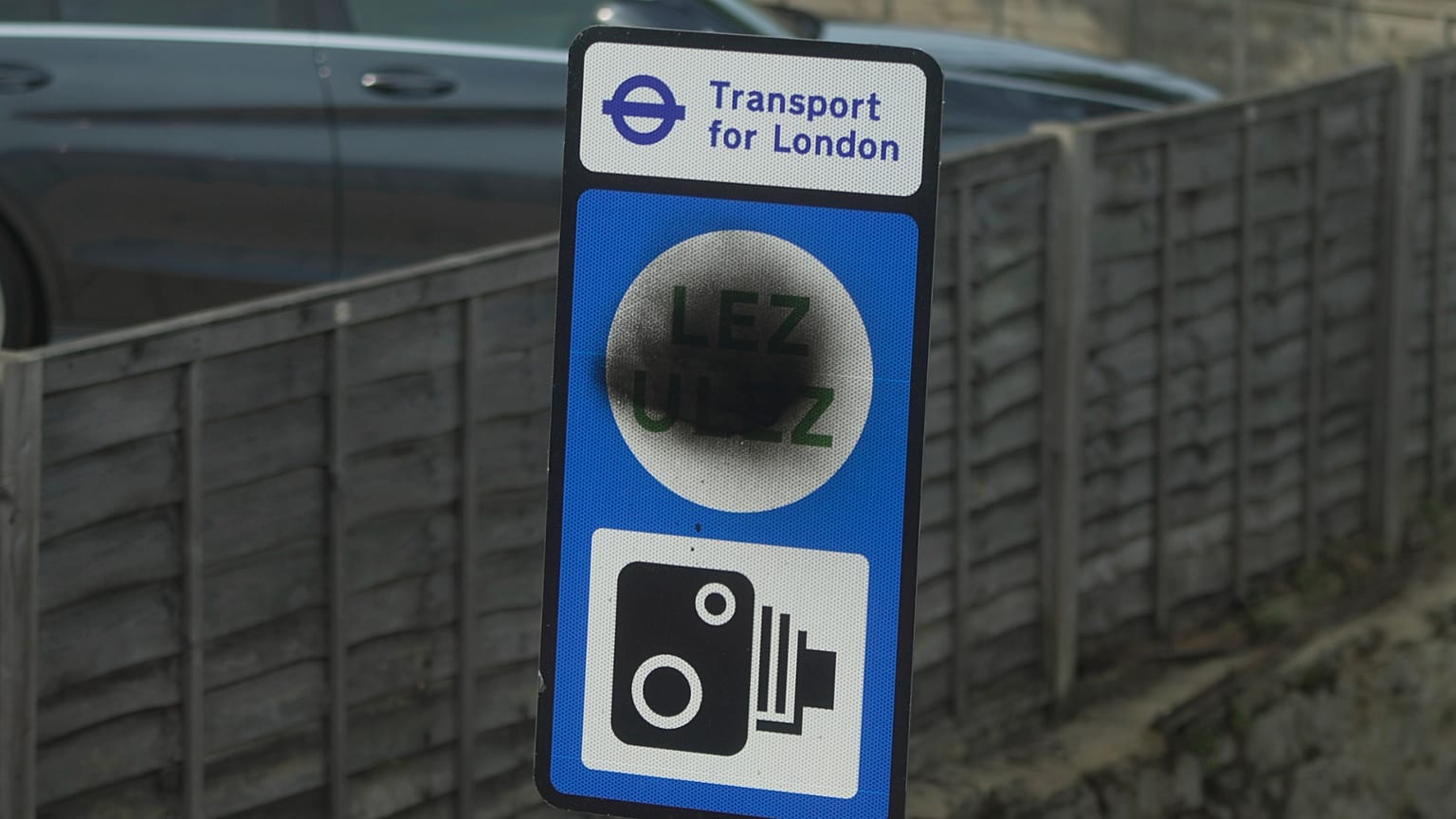
A road sign indicating the Ultra-Low Emission Zone (ULEZ) is defaced, in London, Tuesday, Aug. 29, 2023.
Copyright Copyright 2023 The Associated Press. All rights reserved

By Alexandra Leistner
Published on

A new study is the first to link improved air quality from a clean-air zone with faster lung growth in children living in London.

Cutting traffic pollution is linked to faster lung growth in children, according to a new study conducted in London.

To reduce the health effects of air pollution, many cities have introduced so-called Ultra Low Emission Zones (ULEZs). These schemes restrict or charge drivers of more polluting vehicles to encourage cleaner transport.

A study published in The Lancet Public Health suggests that reducing traffic pollution can benefit children’s lung health.

Scientists from Queen Mary University of London followed more than 3,400 children aged 6 to 9.

The introduction of the ULEZ provided a “natural experiment”, allowing them to compare children in central London with a similar group in Luton, where there was no clean-air zone.

Each year, the researchers used a breathing test to measure how much air the children could forcefully exhale in one second, a standard measure of lung function.

Before the ULEZ was introduced, children in London had slower lung growth, the researchers found. But within five years, this began to change.

Pollution fell more than twice as fast in London

Pollution levels fell in both Central London and Luton, but the reduction was more than twice as large in Central London. Levels of nitrogen dioxide, a pollutant closely linked to vehicle exhaust, fell by about 3.8 micrograms per cubic metre per year in London, compared with 1.8 in Luton.

As pollution levels fell, the London children’s lungs began to grow faster. Their lung function grew by an average of 233 millilitres per year, compared with 223 millilitres in Luton.

After four years, the difference between the two groups had disappeared: the children in London had caught up with those in Luton.

The researchers say theirs is the first study to show that improving air quality through a clean-air zone is associated with faster lung growth in children.

The findings could have important health implications. Children whose lungs do not fully develop are at greater risk of asthma and other health problems later in life. In Central London, the proportion of children with impaired lung function fell from 14% to 9% as pollution levels dropped.

ULEZ introduction has been controversial

The ULEZ has nevertheless been controversial, with a number of its cameras vandalised or stolen, according to the Metropolitan Police.

The zone was extended from central London to inner London in October 2021, and across all of London’s boroughs in August 2023.

The 2023 expansion was challenged in court by several London councils, but the High Court ruled that it could go ahead.


Record-breaking investment in renewables could cement Canada as new clean energy superpower

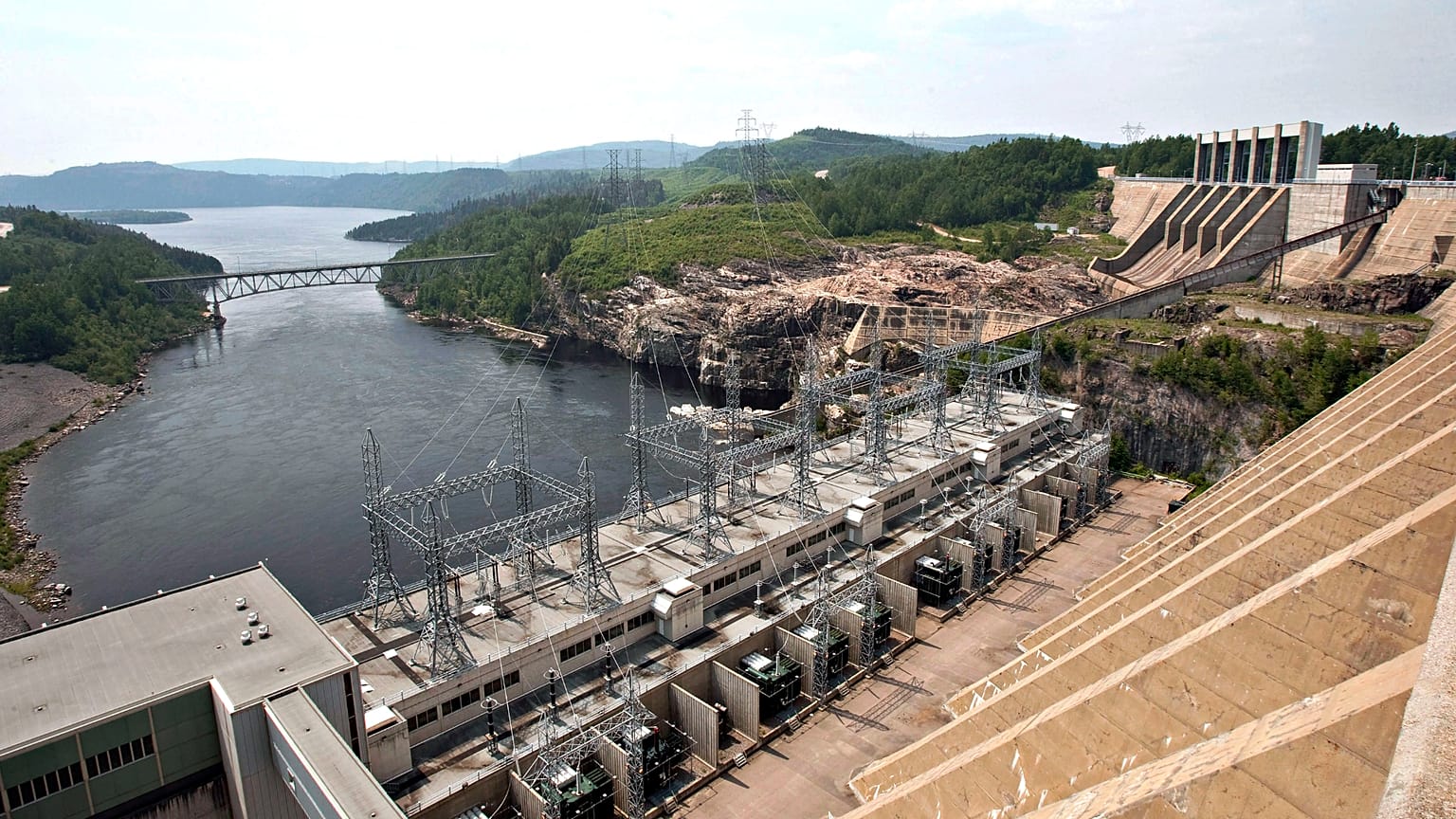
FILE - dam generates power along the Manicouagan River north of Baie-Comeau, Quebec, June 22, 2010.
Copyright Jacques Boissinot/The Canadian Press via AP, File

By Angela Symons with AFP
Published on

The slated green energy plans could light, heat and cool all the homes in Toronto, Montreal and Vancouver combined.

Canadian officials have announced plans for "the largest clean energy investment in North American history."

A total of CAN$70 billion (€43.6 billion) is earmarked to massively enhance wind and hydropower generation in the eastern part of the country.

While plans remain tentative, they mark a major effort to increase electricity production in the country. The agreement was made between Prime Minister Mark Carney's government and the provinces of Quebec and Newfoundland and Labrador

If the project moves forward, Carney says the 14,000 megawatts of power generated would be "enough to light, heat [and] cool the homes in Toronto, Montreal and Vancouver combined", as well as supporting 23,000 jobs and contributing $31 billion (€19.3b) to Canada’s GDP through the early 2040s.

It could also put a major dent in the country's planet-heating carbon emissions by reducing reliance on burning fossil fuels for energy.

Already, around 80 per cent of electricity generated in Canada comes from non-emitting sources – primarily hydro, alongside nuclear, wind and solar – contributing to the country having the lowest residential electricity costs in the G7.

Through a combination of clean economy tax credits, efficient project approvals, cooperation agreements with provinces and territories, and attractive financing, "We are making Canada the best place in the world to build and invest in clean energy," says Carney.

A boost for hydroelectric power in North America

The agreement includes plans to upgrade the Churchill Falls generating station while developing a new hydro project on Gull Island. Both sites are in Labrador, on Canada's Atlantic coast.

Some of the new power generated would also be transmitted to Quebec, with utility Hydro-Quebec selling a significant amount of electricity into the northeastern United States.

Importing more of Canada's hydroelectricity is seen by some as a key component to decarbonising the US electric grid, as well as improving energy reliability and cost for American consumers.

But the initiative could be stalled within months.

At the signing ceremony on Monday 17 August in Newfoundland, Quebec Premier Christine Frechette acknowledged that her political opponents, the separatist Parti Quebecois, could tear up the agreement if they win provincial elections in October, an outcome current polls suggest is likely.

Renewables investment could boost energy security and lower bills

Since taking office last year, Carney has been criticised by environmentally conscious groups who accuse him of betraying climate pledges backed by his predecessor Justin Trudeau.

A member of Carney's cabinet resigned last year over plans to advance a new oil pipeline running from Alberta to the Pacific coast.

Monday's announcement was however welcomed by the Canadian Climate Institute, which said it showed "the level of ambition needed to reach Canada's goal of doubling the electricity grid with clean energy".

The group's president, Rick Smith, said that enhancing domestic clean energy supply will also "improve energy security and affordability in a time of volatile energy price swings".