Friday, September 04, 2026

A philosopher predicted Trump’s surreal new strategy 75 years ago


August 31, 2026
ALTERNET

I still come across people who believe Trump won the 2020 election, that the attack on the U.S Capitol on January 6, 2021, was an act of patriotism, that Trump’s subsequent indictments and felonies were Biden’s work, that most immigrants are criminals, that Democrats are evil, that Jews are trying to replace white Christians born in America, that Muslims can’t be trusted, that a significant amount of voting is fraudulent, that we’re winning the war against Iran, that the economy has never been as good, that climate change is a hoax, that Canada poses a threat to the United States and it’s only fair for Lake Ontario to be renamed Lake America.

To label these people “deluded” is to overlook an entire world created by Trump and his assistants, Cabinet secretaries, “spokespeople,” other political appointees, Republican enablers in Congress and state legislatures, and billionaire accomplices in the media (Musk, Murdoch, Pichai, Bezos, Zuckerberg, the Ellisons) — all of whom have reinforced Trump’s “artificially fabricated insanity,” as the philosopher Hannah Arendt once termed the technique of totalitarian tyrants.

Google, for example, just updated its Maps application to rename Lake Ontario “Lake America.”


(It’s already relabeled the Gulf of Mexico the “Gulf of America.”)

Totalitarian movements, Arendt wrote, succeed not by convincing people of a specific lie but by creating a consistent, logical fictional world that defies ordinary common sense and human experience.


Which raises the questions that a growing number of Americans are asking: Is Trump insane? Are those who believe Trump’s artificially fabricated world insane? Are they making the rest of us insane?

I remember during the Biden administration when a panel of medical experts — the U.S. Preventive Services Task Force — recommended that doctors screen all adult patients under 65 for depression and “anxiety disorders.” The advisory group said the guidance was intended to deal with a rise in mental health disorders that were going undetected and untreated.

The advice highlighted the extraordinary stress levels that have plagued Americans in recent years, especially since Trump and his enablers and accomplices have come to power. Lori Pbert, a clinical psychologist and professor at the University of Massachusetts Chan Medical School, who served on the task force, called mental health disorders “a crisis in this country.”

But maybe we need to stop thinking about anxiety and depression as “disorders” and start regarding them as rational responses to a society that’s become ever more disordered under Trump, and to an economy that’s been leaving so many behind.

Sane Americans are outraged by Trump’s continuous lies, terrified by his attacks on our democracy, upset by his arbitrary renaming and rearranging of our reality, angry about his brutality toward immigrants in our communities, and furious at his encouragement of homophobia, transphobia, and racism. They’re also concerned about the soaring costs of living and growing insecurity of jobs.

Let me be clear: Trump is out of his gourd. He’s losing all connection to reality. His lies are becoming more brazen. His statements about Canada, his war in Iran, the economy, and immigrants, all increasingly bizarre.

But his MAGA movement is just about over. His polls are in the cellar. Many of his followers now see through his lies. “It is in the moment of defeat that the inherent weakness of totalitarian propaganda becomes visible,” Arendt wrote. At such point, the followers of tyrants “quietly give up the movement as a bad bet.”

Yes, of course, we need better access to mental-heath care. We also need better wages, more job security, and stronger safety nets.

Perhaps even more important to the mental well-being of most Americans, we need an administration and media that don’t promote artificially fabricated insanity but that consistently and reliably tell Americans the whole truth.

If you’d like Google to return to naming it Lake Ontario, I urge you to open Google Maps on your computer or mobile app and sign in, then click or tap the menu icon (three lines) or your account profile picture in the top corner, select “Edit the Map” or “Your opinions about Maps,” type your feedback explaining that the lake should remain designated Lake Ontario, and click Send. You might do the same for the Gulf of Mexico.

Robert Reich is a professor of public policy at Berkeley and former secretary of labor. His writings can be found at https://robertreich.substack.com/


Trump resorts to punishing those who tell the truth about his many failures


August 31, 2026   
ALTERNET

President Donald Trump's list of failures continues to grow, and as a new analysis from MS NOW argued, he has now resorted to seeking punishments for those who tell the truth about his unpopularity.

In a piece published Monday morning, Steven Benen, a longtime contributor to the network and producer for host Rachel Maddow, discussed Trump's recent demand that his FCC Chair, Brendan Carr, investigate NBC and anchor Kristin Welker after comments she made about him having a "mixed" endorsement record in the midterms so far. Trump accused this of being "purposeful inaccuracy" that ought to be investigated.

“How can anyone be allowed to say this, working for freely given Public Airwaves?” Trump posted to Truth Social on Friday. “Because of this purposeful inaccuracy, she will be reported to the FCC for rebuke or punishment... The Press is a Disgrace to our Nation, and I hope that Chairman Brendan Carr, and the fine people of his Commission, will take this Threat to our Country very seriously.”


ADVERTISING


Benen called this demand from Trump "brazen nonsense," and highlighted how ridiculous the anger seemed given that Welker's comment only came "in passing during a live shot on NBC’s local D.C. affiliate." He further argued that the post from the president "reflects an inherently authoritarian worldview — one in which media professionals are supposed to fear federal investigations for telling the public the truth."

He also highlighted a follow-up post Trump made on Sunday, accusing the media of using "fake polls," which just so happen to be the ones in which his approval and popularity are faltering.


"The missive came five days after the Republican concocted a deeply weird conspiracy theory alleging that the national surveys conducted by major independent news organizations, universities and research institutions have been secretly being coordinated by Democratic officials, as part of a fiendish and undisclosed plot to make GOP voters feel discouraged," Benen detailed. "There are, according to the president’s same pitch, a series of undisclosed polls that paint an entirely different picture about public attitudes, but that we’re apparently not allowed to see for reasons Trump hasn’t explained."

He added later: "Time will tell whether Carr and his colleagues take the president’s directives seriously, but let’s not miss the forest for the trees: Confronted with data showing his broad unpopularity, Trump can either (a) change course; (b) accept the fact that his presidency lacks public support; or (c) pursue investigations into journalists and independent entities that have dared to present him with information he doesn’t want to see or hear. The fact that he’s choosing door No. 3 isn’t surprising, but it does offer a timely reminder about his twisted perspective."
The US Supreme Court is trembling over the next election


(REUTERS)

September 01, 2026 
ALTERNET

With its latest ruling on the Trump administration's attempt to seize control of the midterm election, the Supreme Court's right-wing majority once again advertised its contempt for democracy and the Constitution. By allowing the president to proceed with his bureaucratic war on mail balloting -- even as many states are about to send those ballots to voters -- the court majority not only violated the constitutional stricture against federal control of elections but threatened to impose partisan meddling and White House chaos on the democratic process.

While the high court has yet to deliver a final decision on the Trump executive order at issue, the majority bestowed an undeserved legitimacy on the president's openly stated and nefarious plan to derail an election that appears certain to deliver a negative judgment on him and his party.

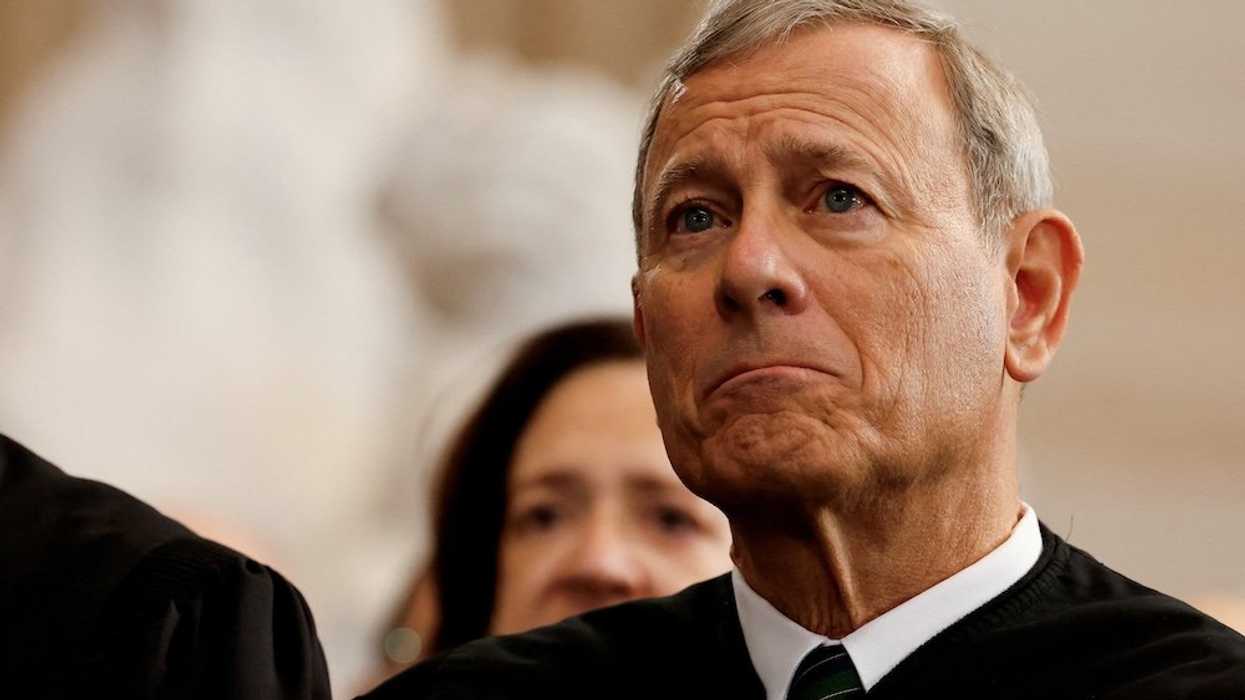
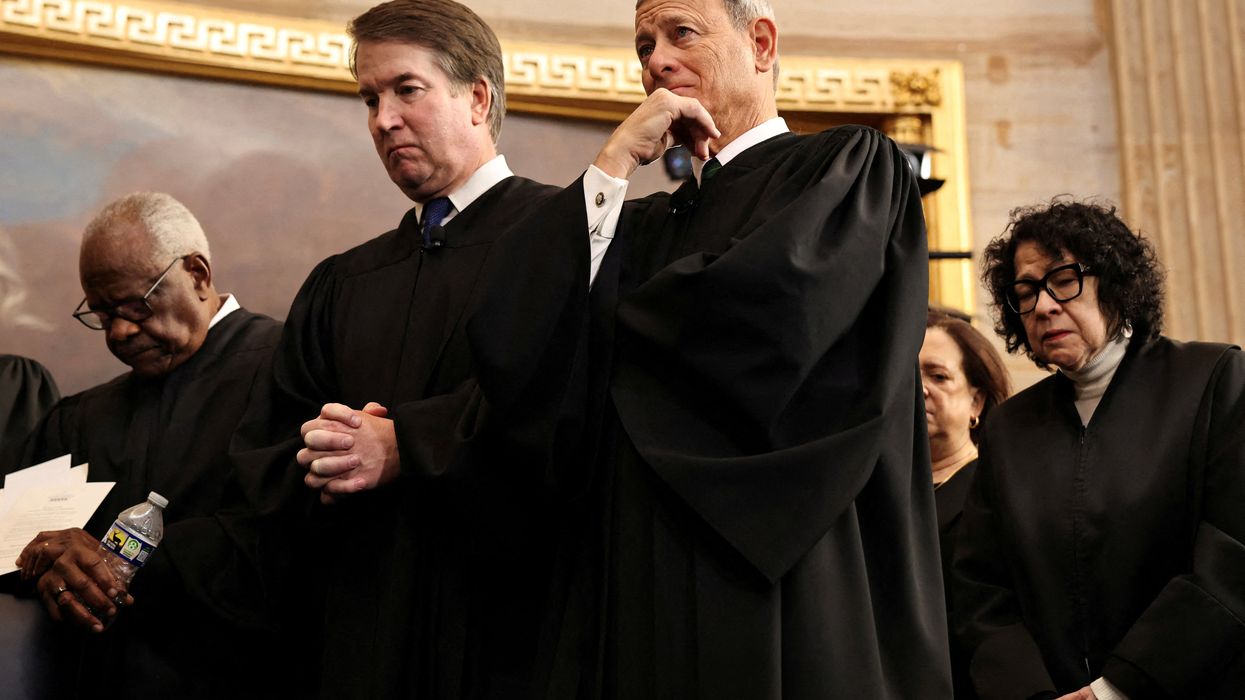
The court's action, although temporary, raised the deepest concern about the intentions of Chief Justice John Roberts and the "conservative" bloc (whose version of conservatism no longer extends to upholding legal precedents or constitutional norms).


Americans rightly worry that the court will allow or even encourage President Donald Trump to deny voting rights, intimidate voters, and tamper with balloting, if only because the court majority has so relentlessly expanded his authority and exempted him from ordinary oversight.

In one decision after another, they have awarded him the powers and immunities of a monarch in a casual manner that would have made the founders retch.


Indeed, the majority has consistently lent its authority and reputation to his dictatorial ambitions, while increasing the power of the wealthy in politics and diminishing or eliminating the protections afforded to society's least powerful groups. Making many of these bad decisions worse is the justices' recent habit of issuing important rulings on the "shadow docket," unsigned and unexplained, which undermines their integrity and shields them from criticism. It is hard to know how to evaluate a decision when no logic or law is offered to undergird its validity.

It would not be unlike the Roberts right-wingers to upend this election with a shadow docket ruling, a cowardly maneuver they have adopted in more than two dozen cases since Trump returned to the White House -- and ruled in his favor in more than three out of four.

Everyone should understand that if the Supreme Court majority intercedes now to sway an election that may bring Democratic control of both houses of Congress, they are indulging a gross conflict of interest to protect themselves. No longer can these justices be regarded as disinterested umpires. The Republican justices in particular -- specifically Clarence Thomas, Samuel Alito, Neil Gorsuch and the chief justice himself -- must dread the advent of a Democratic Senate that will investigate their festering conflicts of interest.


The grossly unethical payments and benefits accepted by Thomas are by now notorious. But how many Americans are aware of the disbarment complaint now pending against Roberts before the District of Columbia bar? Evidence delivered by a whistleblower to support that complaint shows that Jane Sullivan Roberts, the chief justice's spouse, earned more than $10 million between 2007 and 2014 as a "legal recruiter" for a headhunting firm for elite firms that had appeared before the high court hundreds of times.

Roberts failed to recuse himself from cases argued by lawyers who firms had remunerated his wife's company -- and mislabeled her commission income from that outfit as "salary."

After Business Insider published the whistleblower documents three years ago, Roberts amended his public disclosure to reveal the commission deal and also admitted for the first time that he owned equity in his wife's subsequent employer -- information he had omitted in three previous filings.


How would a Democratic House and Senate confront the shifty characters who now adorn the top bench? Congress might consider and perhaps enact judicial reforms requiring the justices to meet the minimum ethical standards enforced in the lower federal courts. While those standards at present don't apply to the Supreme Court, Democrats have vowed to take up court reform as a top priority should they win in November.

Be assured that the justices have heard about that promise. Do not doubt that the court's majority fears a season of terribly embarrassing and possibly ruinous scrutiny could be just over the horizon.
Invisible coup: Shadow-docket decision just handed Trump Congress' power


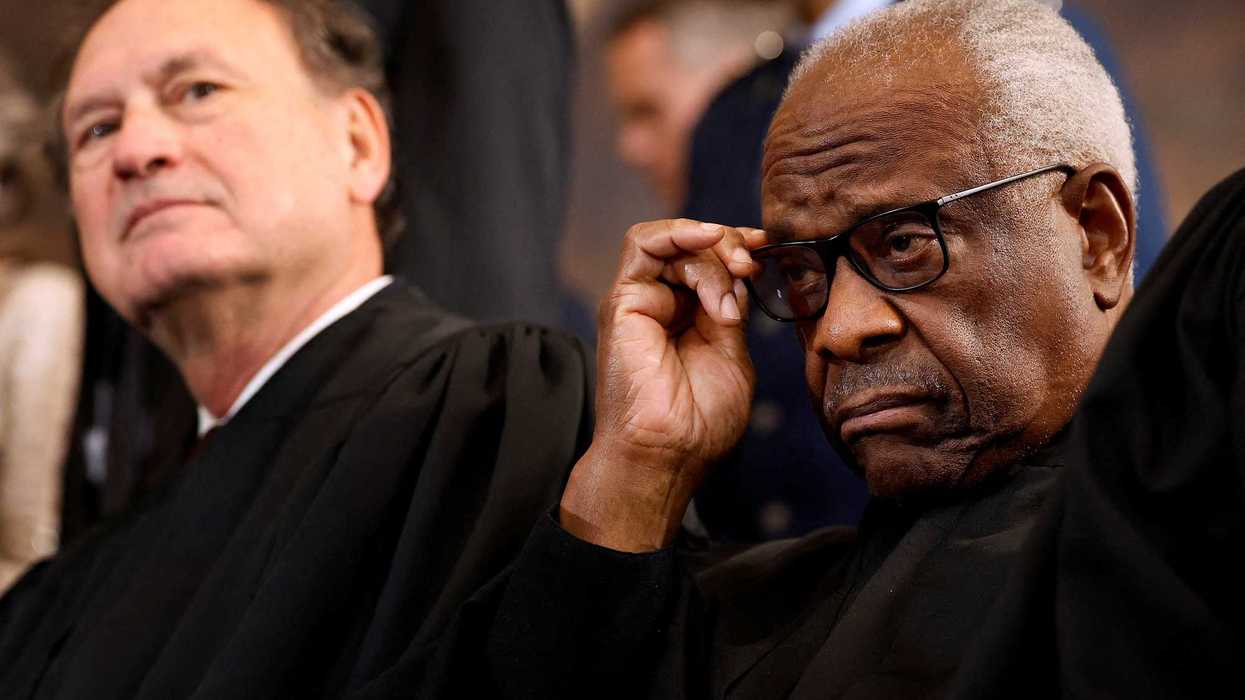
U.S. Supreme Court Associate Justices Samuel Alito (L) and Clarence Thomas on January 20, 2025 in Washington, DC. Chip Somodevilla/Pool via REUTERS/File Photo

September 02, 2026
ALTERNET


Law school professor and Supreme Court analyst Leah Litman is warning that the Supreme Court's decision about the construction of the White House ballroom reflects a serious misunderstanding of the Constitution's separation of powers.

Writing for The Atlantic on Wednesday, Litman explained that the problem is not that the federal courts temporarily blocked the project. Instead, it's that the president allegedly used taxpayer money for a White House construction project without authorization from Congress. Trump announced in 2025 that he would build the ballroom using full donations and that was why he didn't need to ask for permission from Congress. Then he failed to raise enough money to pay for new structure.

Under the Constitution, Congress has the "power of the purse," dictating all spending authority over not merely the federal government but also over federal property, including the White House. Litman contends that the Court treated “the federal government” as if it were synonymous with the president, overlooking Congress’s separate constitutional role.


The unsigned shadow-docket decision from the high court called the ballroom something that "the federal government" started. It's not accurate, Litman argued. Trump’s executive branch initiated the work, and Congress never authorized it.

It's all part of the "unitary-executive theory and the accompanying expansion of executive power" that the Supreme Court has supported previously.


"This theory maintains that all executive power resides in the president, and that Congress cannot limit the president’s exercise of that power," wrote Litman. "Yet these days, the president, occasionally with the Court’s blessing, is claiming to possess legislative powers too. That is the case when the president declines to spend funds that Congress has obligated or when the president decides to spend funds that Congress has not authorized. Under the Constitution, Congress, not the president, has the power of the purse. Nevertheless, the unitary-executive theory unites all government power in the president, paving the way for an executive unbound by law."

When the Supreme Court tried to claim the lower courts all made a mistake, they tried to use the "doctrine of standing, which maintains that a plaintiff challenging the government’s actions must show that they have been injured by the actions they are contesting."

The National Trust for Historic Preservation challenged the demolition and construction, alleging violations of federal law and a lack of congressional approval. It challenged the standing, but said that the building could continue while the matter worked its way through the courts.


Broadway lawyer Michael C. Dorf penned his own column attacking the Supreme Court's "standing" argument, made the doctrine all the more difficult for citizens and organizations to meet. The far-right justices held that a historic-preservation advocate’s interest in seeing the White House before its East Wing was altered wasn't enough for a lawsuit.

Chief Justice John Roberts and the Court’s three Democratic appointees dissented, saying precedent dictates that people can suffer legal harm even when the government's action impairs something they have a particularized professional, aesthetic, or personal interest in observing.

The idea that an individual must "use" a place to have standing makes no sense for historic structures, whose central value is often visual, cultural, and symbolic, Dorf said.


Litman argued that these "standing" requirements could make congressional statutes effectively unenforceable. If neither affected citizens nor preservation organizations can challenge allegedly unlawful executive action, it may be unclear who can enforce the legal limits Congress has enacted, she explained.

Her final point was the argument that somehow Trump would suffer “irreparable harm” if lower courts blocked the project. Stopping potentially illegal conduct can't logically count as "injuring the president." Litman compared the ballroom case with another recent shadow docket decision, like the birthright citizenship case. Both matters are clearly outlined in the Constitution, but the Supreme Court's attempt to shield Trump's actions from judicial review while diminishing Congress’s ability to make enforceable laws doesn't hold water, she asserted.


John Roberts stuns with dissent as Supreme Court rules for Trump’s ballroom


Chip Somodevilla/Pool via REUTERS/File Photo
August 31, 2026   
ALTERNET


On Monday, the Supreme Court ruled that President Donald Trump can move forward with the construction of his much-demanded White House ballroom. The opinion was split 5-4, with conservative Chief Justice John Roberts siding with his liberal counterparts in opposing the ballroom. According to Roberts, "The President ordered the demolition of the East Wing of the White House to make way for a new, privately funded state ballroom in its place. Construction of the ballroom has proceeded apace for the better part of a year. That construction is likely unlawful."

As NBC News explains, "The court, divided 5-4, granted an emergency request filed by the Trump administration, blocking lower court rulings that would have put the aboveground portion of the project on hold. This followed an interim decision along similar lines issued by Chief Justice John Roberts on Aug. 21. The legal challenge was brought by the National Trust for Historic Preservation, which argued that the president did not have unilateral authority to proceed with construction. In the unsigned ruling, the court said that the trust likely does not have legal standing to bring the underlying lawsuit. The court did not reach any conclusion on whether Trump has authority to carry out construction without congressional approval."

“Today, we do not pass upon the legality of the government’s East Wing project. We conclude only that, based on the submissions before us, the government is likely to prevail in showing that the Trust lacks ... standing to challenge the project in federal court,” the court declared.

This technicality emerged from the unusual nature of the original lawsuit. According to NBC, "The trust’s claim for standing hinges on a declaration made by member Alison Hoagland, a preservationist who lives in Washington and serves on the organization’s board of trustees. Hoagland regularly walks by the White House, adding that she would 'suffer both professional and personal injuries, including to my aesthetic, cultural and historical interests, if a ballroom of the proposed form and scale were constructed.' The Supreme Court majority concluded the court had never found legal standing in such a situation before."

"Barring another lawsuit," noted Washington Post White House reporter Dan Diamond, "Trump poised to get his ballroom."

According to the Hill, "In recent days, the Trump administration has insisted the ballroom is now too far along to stop construction. The Justice Department indicated in its Supreme Court filings that the project is 65 percent complete, with a concrete-and-steel structure already stretching five stories deep and 70 feet high." A report by the Washington Post released on Friday, however, suggested that the White House may be dramatically inflating that number.
Trump’s fear of smart people explains absolutely everything: biographer


U.S. President Donald Trump reacts on the day of delivering remarks at Rockland Community College in Suffern, New York, U.S., May 22, 2026. REUTERS Kylie Cooper

September 03, 2026 
ALTERNET

In his 1513 political treatise "The Prince," Italian philosopher and statesman Niccolò Machiavelli wrote that truly great leaders surround themselves with the best and brightest advisers they can find. Indeed, he famously summed up his perspective by saying that “the first method for estimating the intelligence of a ruler is to look at the men he has around him.” More than four centuries later, a Republican president named Dwight Eisenhower was rumored to have privately made a similar observation, reportedly saying that "the greatest leaders are the ones smart enough to have people smarter than them around them."

By contrast, according to a journalist with multiple inside sources into President Donald Trump's White House, America's current chief executive has the different philosophy — he surrounds himself with incompetence.

"Speaking on the Inside Trump’s Head podcast, Trump biographer Michael Wolff said, 'This is not a secret,'" reported The Daily Beast's Erkki Forster on Thursday, describing a conversation between Wolff and co-host Joanna Coles. Wolff pointed to Trump's Secretary of Defense, telling Coles that “Pete Hegseth is a... blithering incompetent... yes-man, a suck-up, a man who... knows nothing, and no logic would say he would know enough to run the military-industrial complex."

He added that Hegseth's "primary qualification is that he was... a weekend television co-host. So what in the name of God would he know about running... the United States military... at a moment... in which we are in the middle of a, basically, a revolution in terms of munitions, logistics, and supply.”

Wolff concluded, “Pete Hegseth is in this job because Donald Trump is intimidated by competence. It’s not just that he doesn’t want to be bossed around by people; it’s that he can’t deal with people who know things because—for the obvious reason—because he doesn’t know things.”

This is not the first time Wolff has observed that Trump seems to actively avoid smart people. In August he observed that “he’s filled the administration of the second term with unqualified people, morons of one variety or another, because he can’t have people who are clearly smarter than he is.”

Similarly-famed entrepreneur and investor Jason Calacanis said earlier in September that Presidential Rule No. 1 should be "don't start a never-ending war in the Middle East. Americans have PTSD from them. Presidential Rule No. 2: it's the economy, always has been. Leadership Rule No. 1: Surround yourself with competent people who tell you uncomfortable truths – not sycophants or loyal incompetents. The sycophants will do you in every time. Never get high on your own supply.”
33 Dems Help Pass House Bill That Would Strip Funds From Colleges That Boycott Israel

“The goal here is to basically say every university not only cannot refuse cooperation with Israel but must actively seek every opportunity to cooperate with Israel,” said one analyst.


A George Washington University student wearing a graduation cap with the message “Our Tuition Killed Gaza’s Class of ‘25” shouts slogans during a walkout at the National Mall as President Ellen Granberg delivers her commencement address on May 18, 2025.

(Photo by Probal Rashid/LightRocket via Getty Images)


Stephen Prager
Sep 03, 2026
COMMON DREAMS

The US House of Representatives on Thursday passed what critics say could be one of the most severe infringements on free expression in recent memory—a bill that could effectively require colleges and universities to do business with Israel or risk losing federal funds.

As Israel’s genocide in Gaza and accelerating ethnic cleansing of Palestinians in the West Bank continue to fuel protests, the bill is the latest piece of legislation aimed at punishing the Boycott, Divestment, and Sanctions (BDS) movement, which uses nonviolent economic tactics to pressure Israel to end its illegal occupation of Palestinian territory and human rights abuses.

HR 4795, introduced in July 2025 by Reps. Virginia Foxx (R-NC) and Josh Gottheimer (D-NJ), is known as the Protect Economic and Academic Freedom Act. But Lara Friedman, the president of the Foundation for Middle East Peace, described it as an “Orwellian” turn of phrase for what the legislation actually does.

“The goal here is to basically say every university not only cannot refuse cooperation with Israel but must actively seek every opportunity to cooperate with Israel,” she told Responsible Statecraft. “And if they’re not doing that, they’re pro-BDS and anti-Israel.”

As the outlet described:
[The bill] would bar colleges that receive federal funds from engaging in what it defines as a “nonexpressive commercial boycott” of Israel, including “refusals to deal” or terminating business relationships in order to limit commercial ties without a “valid business reason.” The law would require these institutions to submit annual certification that they were giving students and faculty access to academic programs in Israel on the same terms as programs in other countries.

In a brief opposing the bill, Friedman argued that it was not just forcing universities to do business with Israel, but with its settlements in the West Bank, which are considered illegal under international law. With backing from the Israeli state, violence by Israeli settlers against Palestinians in the West Bank has exploded to never-before-seen highs this year, according to the United Nations.


“This legislation,” Friedman wrote, “sets up a situation in which the alleged absence of engagement with any Israeli partner/party, including in settlements, will become the basis for an accusation of boycott, putting universities in the position where, if they universities want to avoid being accused of boycotting Israel/settlements, they will need to adopt an affirmative policy of prioritizing maximal engagement/partnership with Israeli entities (including in settlements).”

The bill passed by a 237-169 vote, with support from all but two Republicans—Reps. Thomas Massie (R-Ky.) and Warren Davidson (R-Ohio). And although the vast majority of Democratic voters now hold negative views of Israel, 33 Democrats also voted in favor of the bill.

The legislation now heads to the narrowly Republican-controlled US Senate, where it would need 60 votes to advance.


Introducing the bill last year, Gottheimer said it was necessary because BDS was an “antisemitic, hate-fueled... movement” that “seeks to destroy Israel—and has no place on our college campuses.”

But even critics of the BDS movement, like Rep. Jerry Nadler (D-NY), chafed at its potential chilling effect on protected speech.

“No matter how strongly I oppose the BDS movement, I also believe that those who engage in BDS have a First Amendment right to do so,” Nadler said before voting against the bill. “The First Amendment right to free speech does not apply only to agreeable speech.”

He cited a letter sent to Congress by the ACLU opposing the bill’s contention that schools should need a “valid business reason” to cut ties with Israel.

“Many of those engaged in boycotts of Israel do so not for commercial reasons, but because they wish to express their political opposition to the policies of the Israeli government—matters of overwhelming public concern and debate in the present moment. HR 4795’s labeling such boycotts as ‘non-expressive’ does nothing to change this reality,” the letter said.

The bill comes as members of Congress, especially Democrats, are under increasing scrutiny for their support from pro-Israel lobbying groups like the American Israel Public Affairs Committee (AIPAC), whose political spending arm has poured more than $104 million into supporting its preferred candidates this election cycle.

Meanwhile, President Donald Trump has spent more than six months embroiled in a costly war with Iran that Israeli Prime Minister Benjamin Netanyahu played a key role in persuading him to launch.


“We just got dragged into a war by Benjamin Netanyahu. He’s bragging about it,” Rep. Mark Pocan (D-Wis.) told Julian Andreone of Drop Site News. “That’s about as embarrassing as you can get... So let’s leave universities alone.”

Aaron Regunberg, a contributing editor at The New Republic, described it as outrageous that Democrats who supported the bill were “actively joining the far-right’s war on higher education in order to shield a genocidal ethnostate that most Americans increasingly want nothing to do with.”

Dylan Williams, the vice president for government affairs at the Center for International Policy, said the bill was “another effort to single out Israel for special treatment and erode Americans’ rights on its behalf.”

“Will it be your child who can’t afford to go to college after 33 Democrats voted with Republicans to help Trump defund US universities? Because it certainly won’t be any of theirs,” he said. “Shame on them for joining the attack on our schools and constitutional rights on behalf of Israel.”
‘Wealthy Tax Cheats Reaping the Benefits’: IRS Audit Revenue Plummets After Trump Purge

“While working families are expected to pay their fair share, Trump is making it easier for the rich to get away with not paying theirs.”


Internal Revenue Service CEO Frank Bisignano prepares to testify before the House Ways and Means Committee n March 04, 2026.
(Photo by Chip Somodevilla/Getty Images)


Jake Johnson
Sep 01, 2026
COMMON DREAMS

A report published Monday by an independent federal watchdog shows that Internal Revenue Service audit revenue plummeted last fiscal year as the Trump administration gutted the chronically understaffed and underfunded tax agency’s workforce, rolling back recent Democratic efforts to bolster enforcement.

The Treasury Inspector General for Tax Administration (TIGTA) found that IRS audit revenue fell by 35% last year compared to fiscal year 2024, when enforcement revenue reached a historic high. The report notes that the audit revenue plunge followed the Trump administration’s 27% cut to the agency’s examination and collection staff, the effects of which “are likely to become more apparent over time.” Among the gutted IRS units was one tasked with auditing billionaires and other super-rich individuals.

Rep. Don Beyer (D-Va.), a member of the House’s chief tax-writing committee, wrote in response to the new figures that “Trump gutted the IRS and wealthy tax cheats are reaping the benefits.”

“While working families are expected to pay their fair share,” Beyer wrote on social media, “Trump is making it easier for the rich to get away with not paying theirs.”

The huge decline in audit revenue comes years after congressional Democrats and then-President Joe Biden approved nearly $80 billion in additional funding for the IRS, including more than $45 billion for enforcement.

But Biden and congressional Democrats subsequently cut a deal with Republicans that rescinded much of the funding boost, which the IRS had said could yield roughly $560 billion in federal revenue over a decade—largely from rich tax cheats and large corporations.

“We know who benefits the most when the IRS doesn’t have enough staff to dedicate to audits,” the Institute on Taxation and Economic Policy said in response to the TIGTA report. “It’s the richest Americans.”


The IRS is currently headed by scandal-plagued former financial services executive Frank Bisignano, whom Treasury Secretary Scott Bessent picked to serve as the agency’s first “CEO.”

Bisignano has defended the Trump administration’s massive IRS staffing cuts, insisting that there is “no staffing shortage here.”

But the TIGTA report notes that “staffing reductions starting in January 2025 significantly reduced enforcement staffing,” leaving the agency less equipped to audit the often complex returns of ultra-rich Americans and big corporations.

“An obvious fact: If you get rid of auditors, you raise less money from audits,” Natasha Sarin, president of Yale University’s Budget Lab, said Tuesday.

“Winners are tax cheats, losers are those who are playing by the rules,” Sarin added.
ICE Hired Unqualified Goons After ‘Unprecedented Lowering of Standards’: Whistleblower

Immigration and Customs Enforcement “chose... to be more convenient rather than thorough,” even though “there was a potential to put lives at risk,” said the whistleblower.


A Border Patrol Tactical Unit agent sprays pepper spray into the face of a protester in Minneapolis, Minnesota on January 7, 2026.
Photo by Alex Kormann/The Minnesota Star Tribune via Getty Images


Brad Reed
Sep 03, 2026
COMMON DREAMS

A whistleblower is claiming that US Immigration and Customs Enforcement has dangerously lowered its hiring standards for new recruits, who were given final job offers without undergoing even preliminary vetting.

The New York Times reported on Thursday that the whistleblower, who has worked at ICE for 17 years, filed a complaint in August 2025 with the Office of Inspector General in the Department of Homeland Security that sounded alarms about what he described as an “unprecedented lowering of standards” for hiring.

According to the complaint, applicants were offered jobs before they they even passed fingerprint and identity checks, which the whistleblower said created “grave national security risks” for the agency.

In an interview with the Times, the whistleblower said that ICE “chose... to be more convenient rather than thorough,” even though “there was a potential to put lives at risk and jeopardize national security.”

This is at least the second whistleblower complaint to raise concerns about the deterioration of standards at ICE.

In February, former ICE lawyer Ryan Schwank alleged in a complaint that he “received secretive orders to teach new cadets to violate the Constitution by entering homes without a judicial warrant.”

Schwank also alleged that “the legally required training program at the ICE academy is deficient, defective, and broken,” which he warned “can and will get people killed.”

ICE’s hiring standards came under scrutiny this summer after it was revealed that ICE agent David Brouillette, who fatally shot a 25-year-old Colombian immigrant named Johan Sebastián Durán Guerrero, had a lengthy history of allegedly abusive behavior.

As noted by the Times, Brouillette was even rejected for a job at the police department in Hallowell, Maine because he had “too many red flags.”

The ICE hiring surge came shortly after passage of the 2025 One Big Beautiful Bill Act, which allocated more than $170 billion in funding for immigration enforcement operations. ICE last year said it would use some of the money to hire 10,000 additional agents, more than double the number of agents who had previously worked at the department.
Amnesty Warns Israel Is ‘Brazenly Expanding Its Annexation Agenda’ in Occupied West Bank

“Any states providing assistance to Israel’s expansion of illegal settlements or other war crimes risk complicity in international crimes against Palestinians.”


Israeli soldiers stand guard next to settlers in front of Palestinian houses in the village of Qusra, south of Nablus, in the occupied West Bank on August 12, 2026.
(Photo by Zain Jaafar/AFP via Getty Images)


Jake Johnson
Sep 03, 2026
COMMON DREAMS

Amnesty International said Thursday that the far-right Israeli government’s recent flurry of land confiscation orders in the illegally occupied West Bank “deepens Israel’s illegal settlement enterprise and further undermines the rights of Palestinians,” who are facing an increasingly destructive and deadly wave of settler violence.

The new Amnesty report noted that in July alone, the Israeli military signed “at least 15 land confiscation orders covering approximately 200 dunams (20 hectares) of land in Areas A and C in the Jenin governorate in the north of the occupied West Bank, with the apparent goal of connecting two planned Israeli settlements in the area: Emek Dotan and Noa.” Those two settlements are among the more than 30 approved this year by the government of Prime Minister Benjamin Netanyahu.

“These latest confiscation orders from Area A show how Israel is now brazenly expanding its annexation agenda to areas that have been under the control of the Palestinian authorities since the Oslo Accords,” said Heba Morayef, Amnesty’s region director for the Middle East and North Africa. “States with close trade and political relationships with the Israeli government must urgently take action to pressure Israel to rescind these land confiscation orders. Any states providing assistance to Israel’s expansion of illegal settlements or other war crimes risk complicity in international crimes against Palestinians.”

“Alongside Israel’s forcible transfer and ethnic cleansing of Palestinians in Area C,” Morayef added, “these measures illustrate in action the Israeli authorities’ determination to intensify its formal annexation of Palestinian land across the occupied West Bank.”

Amnesty’s analysis came amid another wave of settler violence in the West Bank over the past 24 hours. The BBC reported early Thursday that “funerals have taken place for two Palestinian teenagers who local officials say were killed by Israeli settlers and soldiers in an attack on their village in the occupied West Bank on Wednesday.”

“The village council in al-Mughayyir told the BBC that Omar al-Nassan, 19, and Khalil Abu Alia, 16, were killed as they tried to stop Israeli settlers stealing sheep and that confrontations broke out,” the outlet noted. “The Israeli military stated that its forces had entered the village to provide security for an Israeli civilian and police trying to retrieve livestock. It said they fired on and struck what it called ‘key instigators’ of a ‘violent disturbance,’ in which Palestinians threw stones at its troops.”

The United Nations has tallied an average of nearly seven settler attacks per day in the West Bank this year, the highest number on record.

Amid the settler rampages as well as the ongoing genocidal assault on the Gaza Strip, the Israeli government has advanced “its controversial E1 settlement plan in violation of international law with an announcement that it has opened tenders for the construction of 1,234 Israeli homes in the occupied West Bank,” Amnesty noted on Thursday.

“If implemented, the plan would isolate East Jerusalem from the rest of Palestinian territory and will effectively divide the West Bank in two, making Palestinian movement across these areas of the occupied Palestinian territory more difficult and further fragmenting Palestinian communities,” the group said.

Last last month, the European Union’s diplomatic service called on the Israeli government to “withdraw the tender, halt its E1 plans as well as all other settlement expansion projects, and ensure accountability for settler violence.”

But Morayef said Thursday that the international community must do much more than issue statements condemning the Israeli government’s actions.

“States with close trade and political relationships with the Israeli government must urgently take action to pressure Israel to rescind these land confiscation orders,” said Morayef. “Any states providing assistance to Israel’s expansion of illegal settlements or other war crimes risk complicity in international crimes against Palestinians.”
What the Flock? Exposing Big Tech’s Surveillance State

As spying becomes big business, more people are mobilizing to resist mass surveillance.


A Flock Safety automated license plate reader is seen in Aurora, Colorado on June 27, 2024.
(Photo by Tony Webster/flickr/cc)


Tim Karr
Sep 03, 2026
Common Dreams

For many, Labor Day signifies a time of transition, the end of summer and the return to business as usual, whether it be school or work. But the holiday weekend was born out of a more radical past, and at a place charged with a history of protest and free expression.

On September 5, 1882, more than 10,000 workers sacrificed a day’s pay to march on Union Square and demand an eight-hour workday and an end to child labor. The success of their protest paved the way for Labor Day to become a federal holiday in 1894.

Initially a gated garden enclave for New York’s wealthiest, architects Frederick Law Olmsted and Calvert Vaux redesigned Union Square in 1872 as an open plaza for public assembly and patriotic demonstration.

By the beginning of the 20th century, Union Square became the epicenter of radical American politics, a setting for protests by anarchists and socialists. Noted activist Emma Goldman frequently used the public plaza to challenge government censorship and advocate for women’s reproductive rights and free speech.
Fenced in by Surveillance Technology

Today, however, Union Square has been fenced in by a barricade of a different sort. Ringing the plaza is a spiky array of cameras, installed on streetlights by a New York Police Department seeking to surveil New Yorkers and anyone else who happens by the square.

The cameras include automatic license-plate recognition technology, which captures data on every car that passes the square down Broadway or across busy 14th Street.

Whether you’re driving to the grocery store for a quart of milk or attending a local No Kings protest, odds are that law enforcement has recorded, processed, and archived your activities for future reference.

Such setups are so ubiquitous to cities and major intersections that they’re easy to dismiss as normal features of a busy streetscape. But that’s changing.

The company that produces many of these surveillance cameras—Flock Group Inc.—has become a focus of concern among activists, advocates, and people of every political stripe who don’t want law enforcement documenting and archiving their every activity.

Spying on the Haystack


But Flock is not alone. Surveilling everyday Americans is now a multibillion-dollar business that’s growing fast.

Flock has struck license-plate reading camera contracts with 7,000 law-enforcement agencies, accounting for 40% of all such departments nationwide. There are more than 130,000 of these cameras deployed across 49 states, likely at a busy intersection or gathering point near you.

Whether you’re driving to the grocery store for a quart of milk or attending a local No Kings protest, odds are that law enforcement has recorded, processed, and archived your activities for future reference.

The philosophy behind such mass surveillance is that authorities need to capture data on everyone’s movements to identify those few who step out of line. It’s as though you need to know the habits of every blade of grass in the haystack to cull out the one wayward needle.

If that’s not disturbing enough, there have also been extensive reports of abuse, including local police officers deploying department surveillance technology to stalk romantic interests—including strangers—while innocent people have been thrown in jail based on a misread license plate or an inaccurate biometric scan.

“The constant and ongoing surveillance of people in public places raises serious First and Fourth Amendment concerns,” says Jenna Ruddock, Free Press’ advocacy director. “Even decisions about where to install these cameras map onto well-established practices of racist policing, aside from the fact that facial-detection technology has an alarming track record when attempting to identify people of color.”

Mass Surveillance Is Big Business


Still, more major tech companies are getting in on the expanding surveillance business. Powerful artificial intelligence companies are marketing AI-enabled video analytics with facial-recognition capacities for real-time threat detection (think Minority Report).

And while Meta doesn’t directly market its Ray-Ban smart glasses to law enforcement, local police departments and immigration agencies have been buying them in bulk via Amazon.

For its part, Amazon is chasing multimillion-dollar contracts to provide law enforcement with cloud infrastructure for data storage, analytics, and biometric systems, including more than $250 million from the Department of Homeland Security to host many of the databases and systems used to track, monitor, and deport immigrants.

Though he once promised that he wouldn’t allow anyone to use company technology to harm people, Google CEO Sundar Pichai is now seeking to profit from mass surveillance. The company is already doing business with Immigration and Customs Enforcement while vying with Amazon and other tech giants for government cloud-computing contracts. Google is also under contract to provide the tech at the center of federal projects to upgrade the “virtual wall” that surveils US borders.

Lost to the Surveillance State

As more cameras sprout up in more locations, the movement to oppose such government spying is spreading. Dozens of cities across the country have cut ties with Flock over their residents’ data-privacy concerns. People have flocked to public hearings and city council meetings to pressure local elected officials to turn the cameras off. Some have taken matters into their own hands, covering nearby Flock and other surveillance cameras with trash bags—or even cutting down camera-attached light poles with electric saws.

DeFlock, an anti-surveillance activist group, has been mapping locations of Flock and other cameras nationwide. (This author used this tool to identify the many non-Flock surveillance cameras surrounding Union Square).

In August, privacy advocates organized the DeFlock National Week of Action, which featured a series of protests, town halls, and informational events to oppose automated license-plate readers and other mass surveillance technology.

The pushback against local surveillance cameras is occurring alongside the fast-spreading movement to stop the unchecked construction of data centers. There’s a common culprit in both popular uprisings: the unholy alliances struck between Big Tech and government. Others are rightfully suspicious of the billionaire class pushing the rapid, reckless development of advanced AI and surveillance tools without first seeking the consent of surrounding communities.

In Union Square on a recent Monday, I asked local busker Lawrence Kidwell whether he knew what all of the nearby police cameras were about. “The NYPD just wants to listen to my music,” he said.

Perhaps. But the cameras are also in place to discourage other forms of expression and muzzle voices of dissent. Something that Union Square has long welcomed may become lost to the new deprivations of the surveillance state.

This piece was originally published at Pressing Issues.


Our work is licensed under Creative Commons (CC BY-NC-ND 3.0). Feel free to republish and share widely.


Tim Karr
Tim Karr is a senior director at Free Press, the U.S.-based organization that advocates for more just and democratic media.
Full Bio >


It’s Not Just Flock. Police Can’t Be Trusted With Our Data.


An Illinois State Police database available online listed personal information, including Social Security numbers.
September 3, 2026

Illinois State Police stand guard while monitoring protesters gathering near an Immigration and Customs Enforcement facility in Broadview, Illinois, on October 4, 2025.OCTAVIO JONES / AFP via Getty Images

A growing movement has been campaigning against surveillance cameras from companies like Flock Safety, which allow local police to gather mass surveillance data, often citing the possibility of misuse of that data. But for years police have steadily been building a digital infrastructure with personal information on people with criminal backgrounds in the name of public safety — and often without proper digital security

Since 2020, the state police in Illinois have maintained a publicly accessible online map of 30,000 people that it has labeled as “offenders” in 685 nursing homes across the state. The map included the first and last names, dates of birth, home addresses, phone numbers, FBI numbers, and Social Security numbers of people listed. These are elderly people who are vulnerable to scammers. It’s not stated what they have been convicted of. They may have a drug charge from decades ago before marijuana was legalized in Illinois, but their past still follows them.

Matt Chapman, a researcher with the Chicago-based Lucy Parsons Labs, stumbled across the map when he was researching license plate readers maintained by the Illinois State Police (ISP). “Anybody can find this,” Chapman told Truthout. “Anybody can use this for nefarious purposes.”

“Why do these agencies have all this information?” Chapman questioned. “Why are they not protecting it? It really speaks to the lack of care that Illinois State Police have for the information of sensitive folks — the people they’re supposedly supposed to protect.”
Registries, Databases, and Shackles

As police build an increasingly sophisticated surveillance apparatus, they have been shown to be poor stewards of the mass amounts of information they collect on the public. Police have also wrongly entered people into gang databases. In 2020, a scandal erupted in Los Angeles after cops there falsified records in a gang database, which led to the suspension of several officers with the city’s police department. Last year, Kilmar Abrego Garcia was sent to CECOT, the mega-prison in El Salvador, after Immigration and Customs Enforcement accessed information from a disgraced Maryland cop who put him into a gang database linking him to M-13 for wearing a hoodie and Chicago Bulls baseball cap.


What DeFlock? A Week of Action Confronts the AI Surveillance State
A Kansas activist discovered that police tracked him with Flock-style cameras after he wrote an op-ed criticizing them. By Mike Ludwig , Truthout/TheAppeal August 19, 2026

In 2021, Protocol, a company owned by BI Incorporated (a subsidiary of the private prison builder GEO Group), which supplies the Cook County Sheriff’s Office with electronic monitors, leaked the personal information of thousands of people across Chicago wearing the devices, what expert James Kilgore calls “ankle shackles.” Chapman, who also uncovered this data leak, said it included “an enormous amount of private information,” such as names, email and home addresses, and the “detailed movement schedules” of people on these digital tracking devices.


“Any scammer could have an absolute field day with this data.”

States have been expanding the use of registries to track individuals — most commonly people convicted of sexual offenses, but also those found guilty of murder, arson, methamphetamine production, and other crimes. In Kansas City, a multi-jurisdictional police operation recently rounded up nearly 100 people on the state sex offender registry who were living within 1,000 feet of a school, which is a violation. Police claimed they were protecting children heading back to school. Thirty years after they were first established, research shows there is little proof that registries make people safer.

Last year, a company that sells an app to monitor the phones of people convicted of sex offenses had the information publicly leaked in what a hacker called “one of the easiest” breaches they had ever done.

Formerly Incarcerated People Still Have Rights


The map of 30,000 names, which the Illinois State Police took down after being notified about it by Truthout, was an interactive map of nursing homes across the state. Nursing home facilities in Illinois are mandated by law to do background screenings and notify the Illinois Department of Public Health (IDPH) of what are referred to as “identified offenders.” The department is then supposed to alert the Illinois State Police, who conduct an investigation and assess the risk.

Alan Mills, an attorney at Kaplan & Grady who advocates for incarcerated and formerly incarcerated people, told Truthout: “That has meant that a lot of nursing homes simply won’t take anybody with a criminal history, and that has been a real serious problem for people getting out of prison.”


“The sharing of private information about thousands of Illinois nursing home residents is a violation of state law.”

To his knowledge, there is no stipulation that this personal information be made publicly available — and especially no justification for publicizing Social Security numbers. “That sounds completely outrageous and has nothing to do with public safety,” said Mills.

As the IDPH website states, the program is ostensibly meant to “prevent abuse and promote the safety” of its residents and staff. The release of this private data about “identified offenders” raises the question — what about the safety and abuse of those with criminal histories who are living in nursing homes?

“Convicted felons still deserve privacy rights,” said Cooper Quintin, Senior Staff Technologist with the Electronic Frontier Foundation. The list includes people who were born in the 1940s — far more likely to struggle with technology and be vulnerable to harm, rather than causing it themselves. “Any scammer could have an absolute field day with this data,” Quintin told Truthout.

“They haven’t even taken the basic steps here to secure this data,” said Quintin. “It’s open on the internet to anyone, and that’s just incredibly irresponsible.”
“Trust Us”

This breach could be dismissed as a clerical mistake. It could be claimed that laws are failing to keep up with increasingly sophisticated technology. But this pretty simple violation throws into question whether police can be trusted with our information.

In an email to Truthout, Benjamin Ruddell, a lawyer and director of criminal justice policy at the ACLU of Illinois, stated:


The sharing of private information about thousands of Illinois nursing home residents is a violation of state law. Illinois residents should be able to trust that ISP would take seriously its legal duty to secure personal information that could be exploited to do real harm — including identity theft, stigmatization, fraud, or harassment of thousands of people across the state. In recent years, we have been told repeatedly that we must trust law enforcement with ever-increasing surveillance capabilities — often enabled with artificial intelligence — to collect an ever-increasing volume of data about all of us to enhance public safety. This example shows that their mishandling of this surveillance data has the potential to make people less, not more, safe.


“The Illinois State Police … should immediately halt its expansion of its statewide surveillance infrastructure.”

Truthout reached out to inform Illinois State Police about the map, and the Illinois State Police responded to the data breach by immediately removing the map from their website. According to the Illinois Personal Information Protection Act, any state agency that collects personal information on an Illinois resident must notify them of a data breach within 45 days and provide notice to the attorney general.

When asked for comment, Melaney Arnold, the chief public information officer for the Illinois State Police, told Truthout: “This specific dashboard was initially created as part of an internal pilot data source and it was not intended for public dissemination. The data has been decommissioned and is no longer accessible to the public. ISP is in the process of notifying impacted parties.”

“With how trivial it was to find,” said Chapman, who is the first known person to have found the information online, “it fills me with dread knowing that the Illinois State Police have no idea what information it’s exposing to the public — they’re simply not looking. ISP should immediately halt its expansion of its statewide surveillance infrastructure and any agency in Illinois that works with ISP should truly reconsider whether their trust in a such a reckless agency is justified.”


This article is licensed under Creative Commons (CC BY-NC-ND 4.0), and you are free to share and republish under the terms of the license.

Brian Dolinar
Brian Dolinar is an independent journalist based in Urbana, Illinois. His articles have appeared at The Appeal, In These Times, The Nation, and Truthout. You can follow his stories by subscribing to his Substack newsletter called “Sentences.”