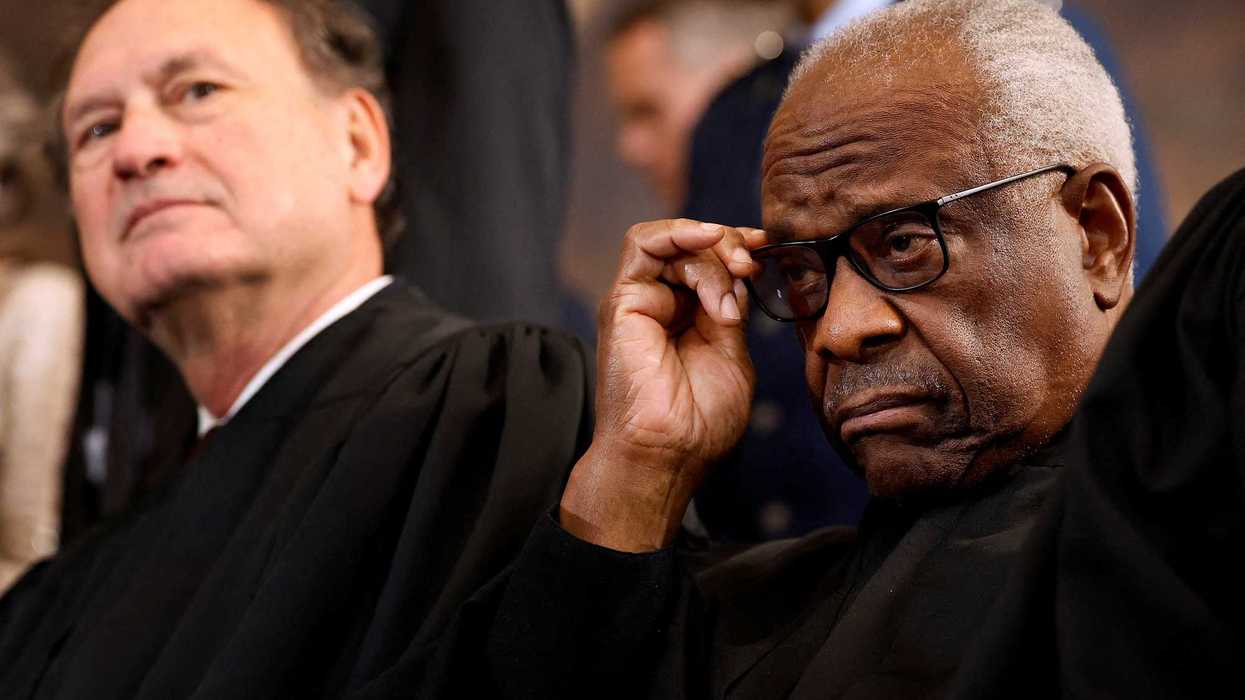
U.S. Supreme Court Associate Justices Samuel Alito (L) and Clarence Thomas on January 20, 2025 in Washington, DC. Chip Somodevilla/Pool via REUTERS/File Photo
September 02, 2026
ALTERNET
Law school professor and Supreme Court analyst Leah Litman is warning that the Supreme Court's decision about the construction of the White House ballroom reflects a serious misunderstanding of the Constitution's separation of powers.
Writing for The Atlantic on Wednesday, Litman explained that the problem is not that the federal courts temporarily blocked the project. Instead, it's that the president allegedly used taxpayer money for a White House construction project without authorization from Congress. Trump announced in 2025 that he would build the ballroom using full donations and that was why he didn't need to ask for permission from Congress. Then he failed to raise enough money to pay for new structure.
Under the Constitution, Congress has the "power of the purse," dictating all spending authority over not merely the federal government but also over federal property, including the White House. Litman contends that the Court treated “the federal government” as if it were synonymous with the president, overlooking Congress’s separate constitutional role.
The unsigned shadow-docket decision from the high court called the ballroom something that "the federal government" started. It's not accurate, Litman argued. Trump’s executive branch initiated the work, and Congress never authorized it.
It's all part of the "unitary-executive theory and the accompanying expansion of executive power" that the Supreme Court has supported previously.
"This theory maintains that all executive power resides in the president, and that Congress cannot limit the president’s exercise of that power," wrote Litman. "Yet these days, the president, occasionally with the Court’s blessing, is claiming to possess legislative powers too. That is the case when the president declines to spend funds that Congress has obligated or when the president decides to spend funds that Congress has not authorized. Under the Constitution, Congress, not the president, has the power of the purse. Nevertheless, the unitary-executive theory unites all government power in the president, paving the way for an executive unbound by law."
When the Supreme Court tried to claim the lower courts all made a mistake, they tried to use the "doctrine of standing, which maintains that a plaintiff challenging the government’s actions must show that they have been injured by the actions they are contesting."
The National Trust for Historic Preservation challenged the demolition and construction, alleging violations of federal law and a lack of congressional approval. It challenged the standing, but said that the building could continue while the matter worked its way through the courts.
Broadway lawyer Michael C. Dorf penned his own column attacking the Supreme Court's "standing" argument, made the doctrine all the more difficult for citizens and organizations to meet. The far-right justices held that a historic-preservation advocate’s interest in seeing the White House before its East Wing was altered wasn't enough for a lawsuit.
Chief Justice John Roberts and the Court’s three Democratic appointees dissented, saying precedent dictates that people can suffer legal harm even when the government's action impairs something they have a particularized professional, aesthetic, or personal interest in observing.
The idea that an individual must "use" a place to have standing makes no sense for historic structures, whose central value is often visual, cultural, and symbolic, Dorf said.
Litman argued that these "standing" requirements could make congressional statutes effectively unenforceable. If neither affected citizens nor preservation organizations can challenge allegedly unlawful executive action, it may be unclear who can enforce the legal limits Congress has enacted, she explained.
Her final point was the argument that somehow Trump would suffer “irreparable harm” if lower courts blocked the project. Stopping potentially illegal conduct can't logically count as "injuring the president." Litman compared the ballroom case with another recent shadow docket decision, like the birthright citizenship case. Both matters are clearly outlined in the Constitution, but the Supreme Court's attempt to shield Trump's actions from judicial review while diminishing Congress’s ability to make enforceable laws doesn't hold water, she asserted.
John Roberts stuns with dissent as Supreme Court rules for Trump’s ballroom
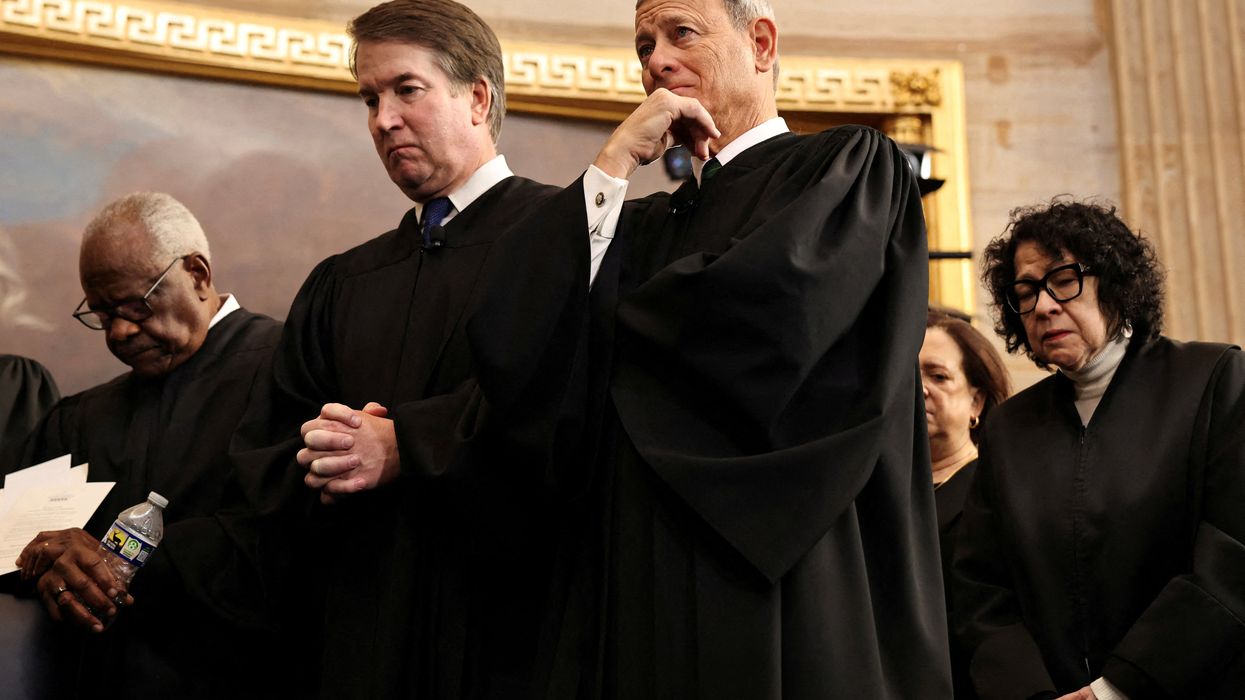
Chip Somodevilla/Pool via REUTERS/File Photo
On Monday, the Supreme Court ruled that President Donald Trump can move forward with the construction of his much-demanded White House ballroom. The opinion was split 5-4, with conservative Chief Justice John Roberts siding with his liberal counterparts in opposing the ballroom. According to Roberts, "The President ordered the demolition of the East Wing of the White House to make way for a new, privately funded state ballroom in its place. Construction of the ballroom has proceeded apace for the better part of a year. That construction is likely unlawful."
As NBC News explains, "The court, divided 5-4, granted an emergency request filed by the Trump administration, blocking lower court rulings that would have put the aboveground portion of the project on hold. This followed an interim decision along similar lines issued by Chief Justice John Roberts on Aug. 21. The legal challenge was brought by the National Trust for Historic Preservation, which argued that the president did not have unilateral authority to proceed with construction. In the unsigned ruling, the court said that the trust likely does not have legal standing to bring the underlying lawsuit. The court did not reach any conclusion on whether Trump has authority to carry out construction without congressional approval."
“Today, we do not pass upon the legality of the government’s East Wing project. We conclude only that, based on the submissions before us, the government is likely to prevail in showing that the Trust lacks ... standing to challenge the project in federal court,” the court declared.
This technicality emerged from the unusual nature of the original lawsuit. According to NBC, "The trust’s claim for standing hinges on a declaration made by member Alison Hoagland, a preservationist who lives in Washington and serves on the organization’s board of trustees. Hoagland regularly walks by the White House, adding that she would 'suffer both professional and personal injuries, including to my aesthetic, cultural and historical interests, if a ballroom of the proposed form and scale were constructed.' The Supreme Court majority concluded the court had never found legal standing in such a situation before."
"Barring another lawsuit," noted Washington Post White House reporter Dan Diamond, "Trump poised to get his ballroom."
According to the Hill, "In recent days, the Trump administration has insisted the ballroom is now too far along to stop construction. The Justice Department indicated in its Supreme Court filings that the project is 65 percent complete, with a concrete-and-steel structure already stretching five stories deep and 70 feet high." A report by the Washington Post released on Friday, however, suggested that the White House may be dramatically inflating that number.
Chip Somodevilla/Pool via REUTERS/File Photo
August 31, 2026
ALTERNET
On Monday, the Supreme Court ruled that President Donald Trump can move forward with the construction of his much-demanded White House ballroom. The opinion was split 5-4, with conservative Chief Justice John Roberts siding with his liberal counterparts in opposing the ballroom. According to Roberts, "The President ordered the demolition of the East Wing of the White House to make way for a new, privately funded state ballroom in its place. Construction of the ballroom has proceeded apace for the better part of a year. That construction is likely unlawful."
As NBC News explains, "The court, divided 5-4, granted an emergency request filed by the Trump administration, blocking lower court rulings that would have put the aboveground portion of the project on hold. This followed an interim decision along similar lines issued by Chief Justice John Roberts on Aug. 21. The legal challenge was brought by the National Trust for Historic Preservation, which argued that the president did not have unilateral authority to proceed with construction. In the unsigned ruling, the court said that the trust likely does not have legal standing to bring the underlying lawsuit. The court did not reach any conclusion on whether Trump has authority to carry out construction without congressional approval."
“Today, we do not pass upon the legality of the government’s East Wing project. We conclude only that, based on the submissions before us, the government is likely to prevail in showing that the Trust lacks ... standing to challenge the project in federal court,” the court declared.
This technicality emerged from the unusual nature of the original lawsuit. According to NBC, "The trust’s claim for standing hinges on a declaration made by member Alison Hoagland, a preservationist who lives in Washington and serves on the organization’s board of trustees. Hoagland regularly walks by the White House, adding that she would 'suffer both professional and personal injuries, including to my aesthetic, cultural and historical interests, if a ballroom of the proposed form and scale were constructed.' The Supreme Court majority concluded the court had never found legal standing in such a situation before."
"Barring another lawsuit," noted Washington Post White House reporter Dan Diamond, "Trump poised to get his ballroom."
According to the Hill, "In recent days, the Trump administration has insisted the ballroom is now too far along to stop construction. The Justice Department indicated in its Supreme Court filings that the project is 65 percent complete, with a concrete-and-steel structure already stretching five stories deep and 70 feet high." A report by the Washington Post released on Friday, however, suggested that the White House may be dramatically inflating that number.

No comments:
Post a Comment