Wednesday, September 02, 2026

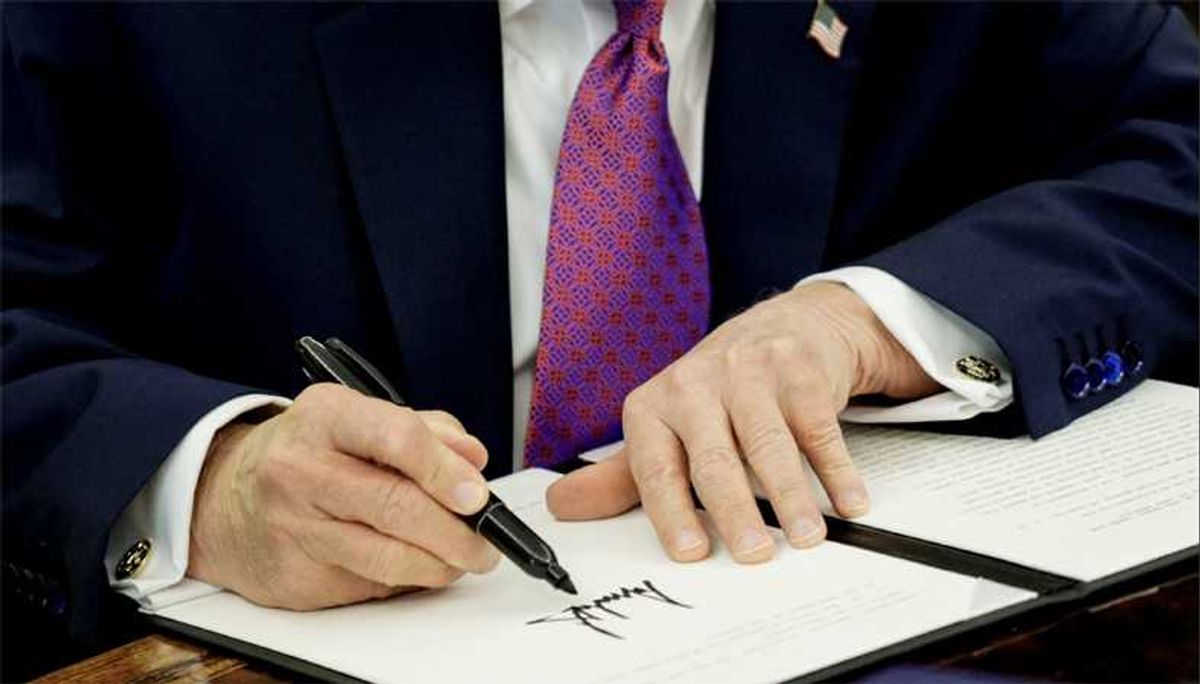
Marveling Trump slaps his name on his latest masterpiece

Nick Anderson. Raw Story
August 25, 2026


Nick Anderson/Raw Story

Nick Anderson is a Pulitzer Prize-winning editorial cartoonist.


'Incredible spike': CNN anchor marvels at scourge blamed on Trump cuts

Travis Gettys
August 31, 2026 
RAW STORY


Taylor Farms products are displayed for sale, amid reports of slumping consumer confidence in lettuce and other fresh produce during the current cyclosporiasis outbreak that has sickened thousands across the U.S., at a grocery store in Washington, D.C., U.S., July 24, 2026. REUTERS/Nathan Howard/File Photo

Federal health officials say they are confident that all iceberg lettuce linked to a nationwide cyclospora outbreak has been removed from U.S. markets, even as the case count from the summer-long outbreak continues to rise.

More than 11,000 people have been sickened this summer in an outbreak tied to iceberg lettuce from Taylor Farms of Mexico, CNN medical correspondent Meg Tirrell reported. Nearly 500 have been hospitalized, and two people have died — a rare outcome for cyclospora infections. Both deaths occurred in Michigan, which has emerged as the epicenter of the outbreak.

"It's pretty incredible when you see when you see that spike there in Michigan," said CNN's John Berman, reacting to her reporting. "Yeah, that's just an incredible spike."

The recall was issued July 17, and the lettuce's sell-by dates ran through Aug. 3. The most recent reported illness began Aug. 15, and the Food and Drug Administration says it remains confident that all recalled product has been pulled from shelves. Officials are urging anyone who still has Taylor Farms iceberg lettuce that expired around that date to discard it.

Illnesses in Michigan peaked in early July, before the recall took effect, but new cases continued to be reported into early August. Tirrell noted that cyclospora symptoms can take up to two weeks to appear after exposure, and it can take as long as six weeks for a case to be confirmed and linked back to the outbreak, which helps explain the lag in reported illnesses. The outbreak has now been tied to 20 states, with the Midwest hit hardest.

Food safety experts say the contamination has been isolated specifically to Taylor Farms' shredded iceberg lettuce, and that consumers should not stop eating produce more broadly.

The Trump administration is shutting down two of the three U.S. Department of Agriculture research projects dedicated to studying cyclospora after Congress defunded them earlier this year, according to Politico.

The third is being moved from Maryland to Iowa this fall as part of USDA reorganization, but every scientist studying the parasite has declined to relocate, and the upheaval is expected to hamper food safety research as public concerns mount.


'Whoa!' Bottom drops out for Trump as decisive midterm voting bloc flees in droves

Travis Gettys
August 31, 2026 
RAW STORY


(Screengrab via CNN)

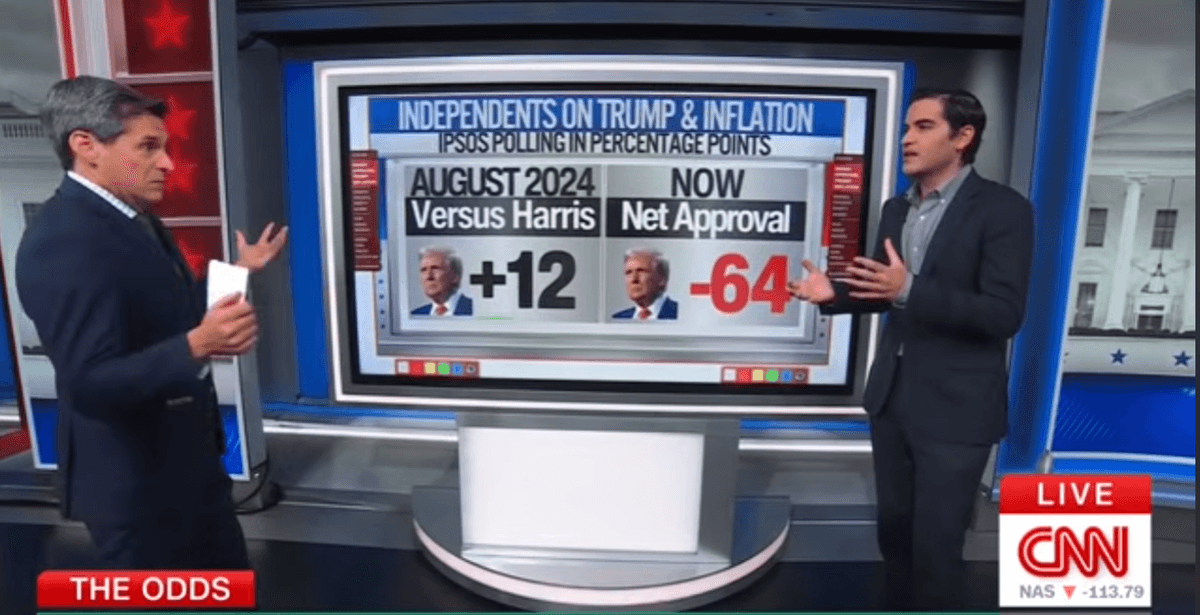
The decisive voter bloc in this year's midterm elections has dramatically shifted away from President Donald Trump and the Republican Party on the issue that helped elect him, according to CNN's Harry Enten.

In August 2024, independents trusted Trump over then-Vice President Kamala Harris on inflation by 12 percentage points, a margin Enten described as a key factor in Trump's victory. That advantage has since collapsed, and Trump's net approval rating on inflation among independents now stands at 64 points underwater – marking a swing of 76 points in a little over two years.

"Whoa!" Enten said. "You don't see changes like this. But the key issue that got him elected, now he's way down there in the Gulf of Mexico.

A similar reversal has occurred at the party level. In August 2022, ahead of that year's midterms, independents trusted Republicans over Democrats on inflation by 27 points, a margin that helped the GOP retake the House, but independents now say they trust Democrats more on the issue, by 18 points — a 45-point swing from four years ago.

Enten said such large shifts in voter trust on a single issue are unusual, and noted that the change matters because inflation remains the top concern for independent voters heading into November.

According to the data presented, 38 percent of independents named inflation as their top issue, followed by 14 percent who cited the broader economy and 10 percent who pointed to the conflict with Iran, which Enten said is also closely tied to economic concerns. Combined, more than half of independents identified inflation or the economy as their most pressing issue.

Gas prices, a visible driver of inflation concerns, may not offer Republicans relief before Election Day.

Enten said the combination of persistently high gas prices and the sharp erosion of trust on inflation, the very issue that fueled Republican gains in both the 2022 and 2024 elections, could pose a significant risk for the party in this year's midterm contests, given how central the issue clearly remains to independent voters' concerns.


GOP Senate alarms blare as Trump now in 'serious trouble with farm country'

Travis Gettys
August 31, 2026
RAW STORY


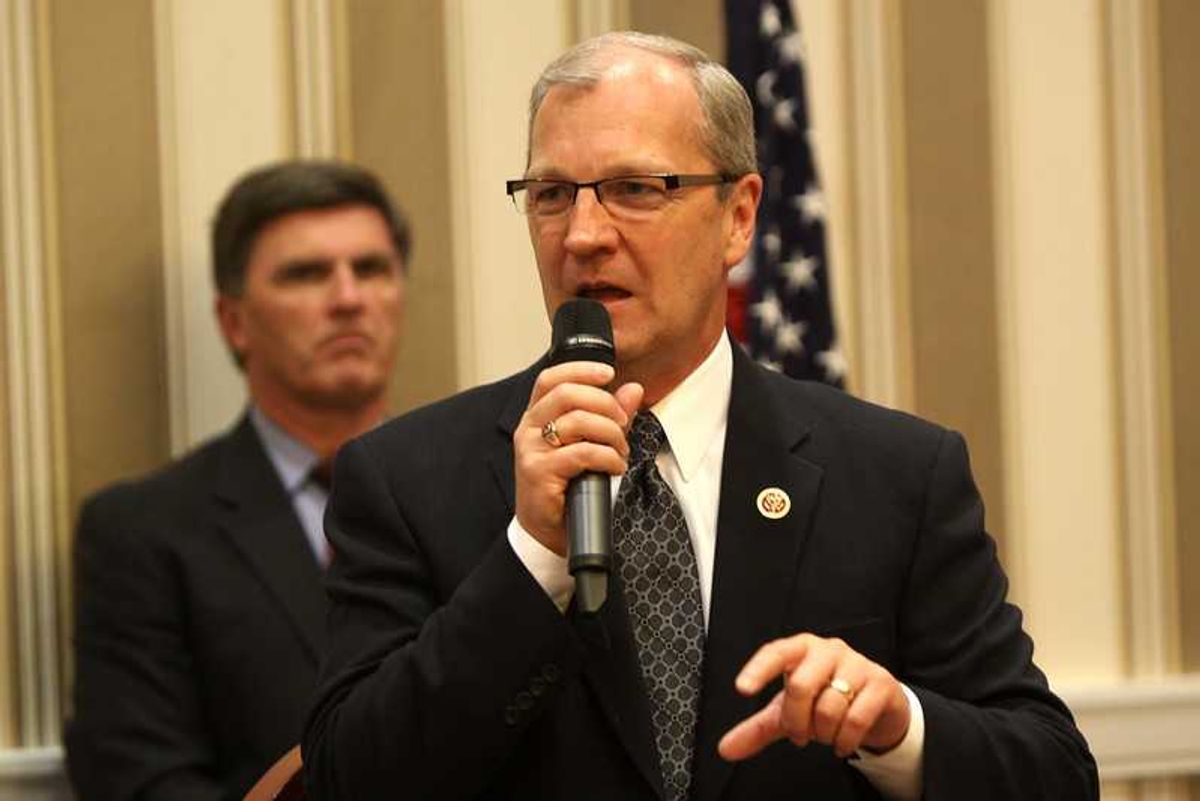
Sen. Kevin Cramer (R-ND). (Photo credit: Gage Skidmore / Flickr)

Republican senators are increasingly convinced the battle for Senate control will be decided in the Midwest, and that agricultural voters angered by tariffs, fuel costs and beef imports could hand Democrats the majority

Democrats need a net gain of four seats to flip the chamber, and strategists say that becomes attainable if they capture Republican-held seats in Ohio and Iowa while holding Michigan, then find a fourth seat in North Carolina or a longer-shot state, reported Politico.

"He's in serious trouble in farm country," Sen. Kevin Cramer (R-ND) said of President Donald Trump. "He being Trump — and Trump is us. I'm not very optimistic."

Farm-state Republicans point to a combination of tariffs, expensive diesel and fertilizer, and administration moves to ease tariffs on imported beef as driving frustration among agricultural voters who have historically backed the party.

Cramer said the beef issue in particular has infuriated producers. "The one ag producer making money for a change and you shrink his revenue," he said.

Democratic candidates say they're hearing similar frustration on the trail. Josh Turek, running for Senate in Iowa against Rep. Ashley Hinson, has described conditions facing farmers as a second farm crisis. Adam Hamilton, a former pastor challenging Sen. Roger Marshall in Kansas, said many Republican voters are reluctant to criticize Trump directly but expect their senators to push back on policies hurting them.

Iowa, which Trump carried three times but which hasn't elected a Democratic senator since 2008, is considered a bellwether for whether the discontent extends beyond reliably blue territory. Republicans are also watching unusually competitive polling in Kansas, Nebraska and parts of the South, along with Maine and Alaska, states with economies tied closely to trade and fuel prices.

Adding to the frustration is the hundreds of millions of dollars sitting in GOP-aligned groups, much of it controlled by Trump, that officials say hasn't been deployed to help endangered incumbents. Republicans have privately complained the president is focused more on personal priorities than defending the party's majorities.

Sen. Susan Collins (R-ME) said she has urged Trump to reconsider his approach toward Canada, a major trading partner for border states. "I would remind him that Canada is our friend, our closest ally and our biggest trading partner," Collins said, adding that damaging that relationship would hurt Maine and other states along the border.

Republican strategists have compared the environment to 2006 and 2018, both rough midterms for the party in power, with uncertainty over which precedent fits this November.


Internal revolt as 'nuts' Apple execs appease Trump: 'There is not a soul who is for it'

Tom Boggioni
September 2, 2026 
RAW STORY


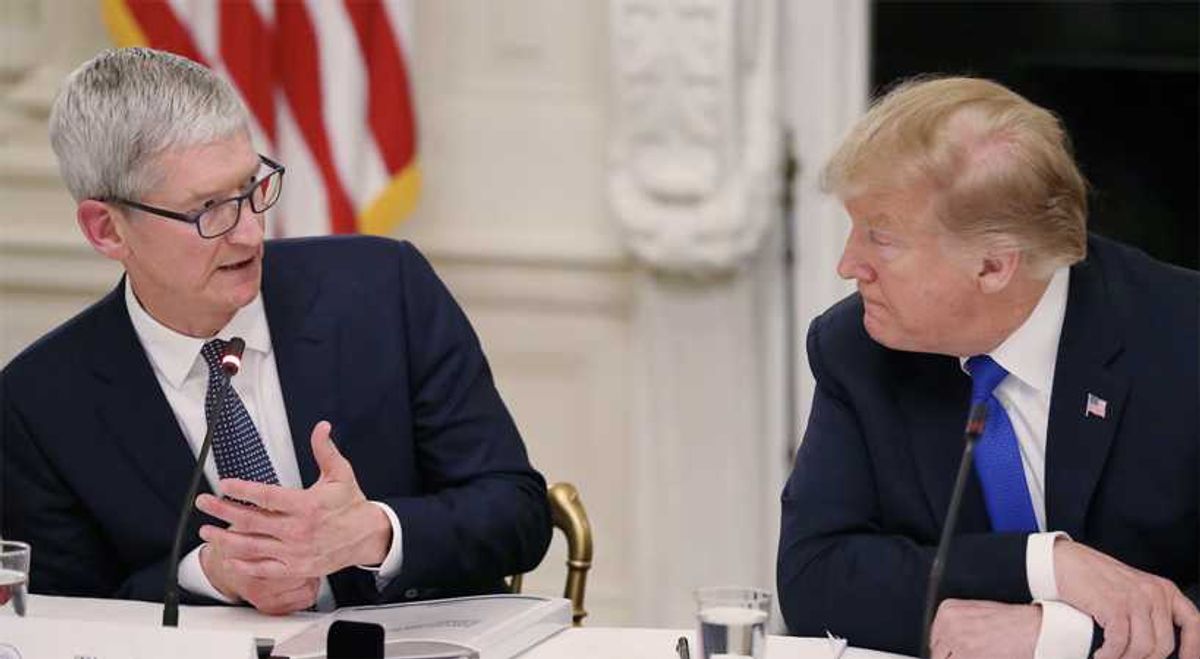
Apple executive Tim Cook speaks with Donald Trump (Photo via Leah Millis for Reuters)

Apple executives' decision to rename Lake Ontario "Lake America" on its Maps app is setting off a firestorm inside the tech giant, with employees furious that leadership caved to President Donald Trump out of fear of his wrath, according to a new report.


Employees are furious that the company is rolling over because of higher-ups' fear of the wrath of President Donald Trump who demanded the name change in an executive order, media watchdog Status reported Wednesday.

At the same time the public is rejecting the “deeply stupid” name change, which Google has also agreed to follow, Apple was late to the game and employees are not happy.

The controversy intensified after Interior Secretary Doug Burgum appeared on Fox Business on Monday, telling host Maria Bartiromo, "I know that the president reached out to Apple directly, so I'm sure that we may be seeing that change coming up soon to Lake America."

According to Oliver Darcy at Status, "While Apple had likely always planned to update its map to reflect the executive order—it had, after all, also swapped Gulf of Mexico for 'Gulf of America'—Status has learned that executives at the company were irked by Burgum’s comments. By disclosing that Trump had personally phoned Cupertino, the White House had framed any decision Apple made as one in which it 'was capitulating to the president’s demands.'"

Inside the company, Status reported it would be difficult to find a single employee who genuinely supports the change.

"There is not a soul who is for it," one person familiar with the matter told Darcy, adding that "everyone considers it f-----g nuts."

Still, Apple's leadership and most of its rank-and-file are described as "resigned" to these kinds of concessions under Trump's second term, understanding "that Trump will f--- with the company if the company doesn't do what he wants," the person said.

The dispute over Lake Ontario's name has become one of the more visible flashpoints in Trump's escalating trade dispute with Canada, whose officials have mocked the renaming effort as absurd. Like Google's version, Apple's change applies "only to Maps for users located in the United States." Canadian users and much of the rest of the world still see the lake listed under its original name.
Susan Collins' re-election bid haunted by exposed Oath-Keeper hire

Tom Boggioni
September 2, 2026 
RAW STORY


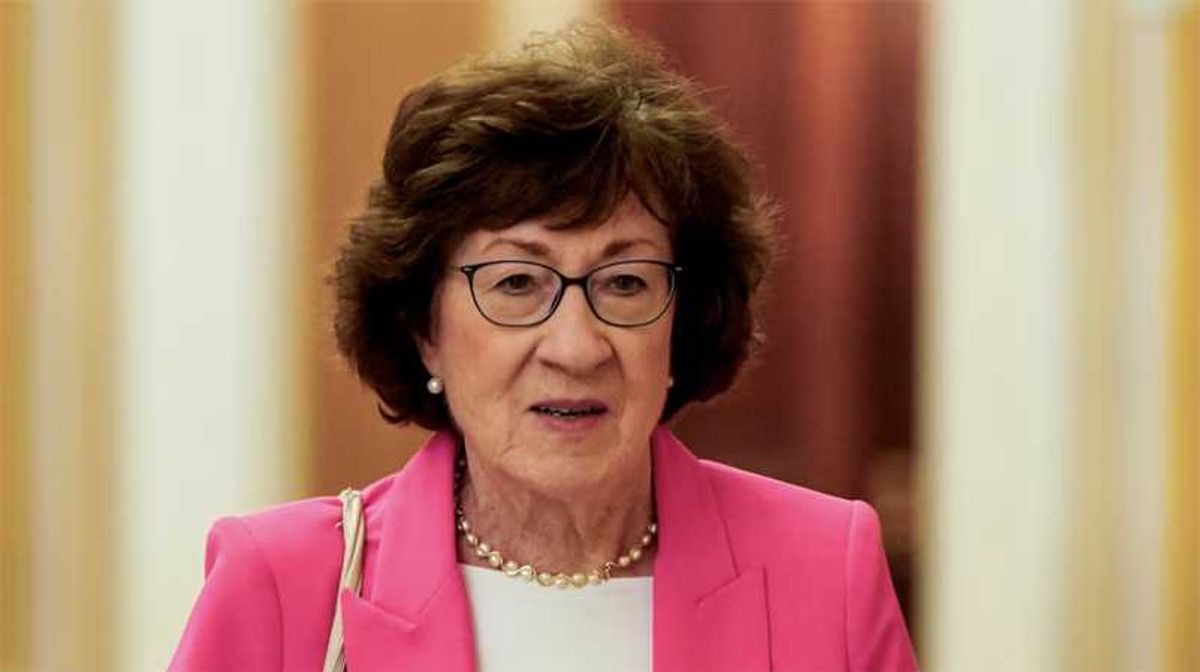
U.S. Senator Susan Collins (R-ME) walks in Capitol Hill, as Republican lawmakers struggle to pass U.S. President Donald Trump’s sweeping spending and tax bill, in Washington, D.C., U.S., June 30, 2025. REUTERS/Elizabeth Frantz

Republican Sen. Susan Collins' hold on her Maine Senate seat is slipping as Democrats pounce on her ties to a member of the far-right Oath Keepers organization.

It's been one headache after another for Collins as she fights to defend a seat targeted by Democrats for a November flip, the Daily Beast reported Wednesday.

Those headaches include billionaire donors with ties to Jeffrey Epstein, gas-money pleas to voters to fuel her re-election tour, and President Donald Trump's trade war with Canada, according to the Beast.

Now she is about to face questions about her hiring of Piscataquis County Commissioner Wayne Erkkine, 81, as her town chair in Greenville, which "puts him in charge of grassroots campaigns and voter outreach."

According to the report, Erkkinen's name popped up in the Oath Keepers' leaked membership rolls of more than 38,000 names and has been identified by the Anti-Defamation League as a member of the group behind the January 6 Capitol attack.

Erkkine told the Beast he quit "years ago," before the riot, claiming, "It wasn't what I thought it would be.

Nonetheless, his ties to the Collins campaign has reportedly given Democrats "fresh ammunition," by linking the embattled GOP lawmaker to extremists who took part in the assault on Washington, D.C., as part of a Trump-inspired insurrection.
'Palpable fear': Overlooked story flagged as Trump 'holds a gun' to federal workers' heads

Daniel Hampton
September 2, 2026 
RAW STORY


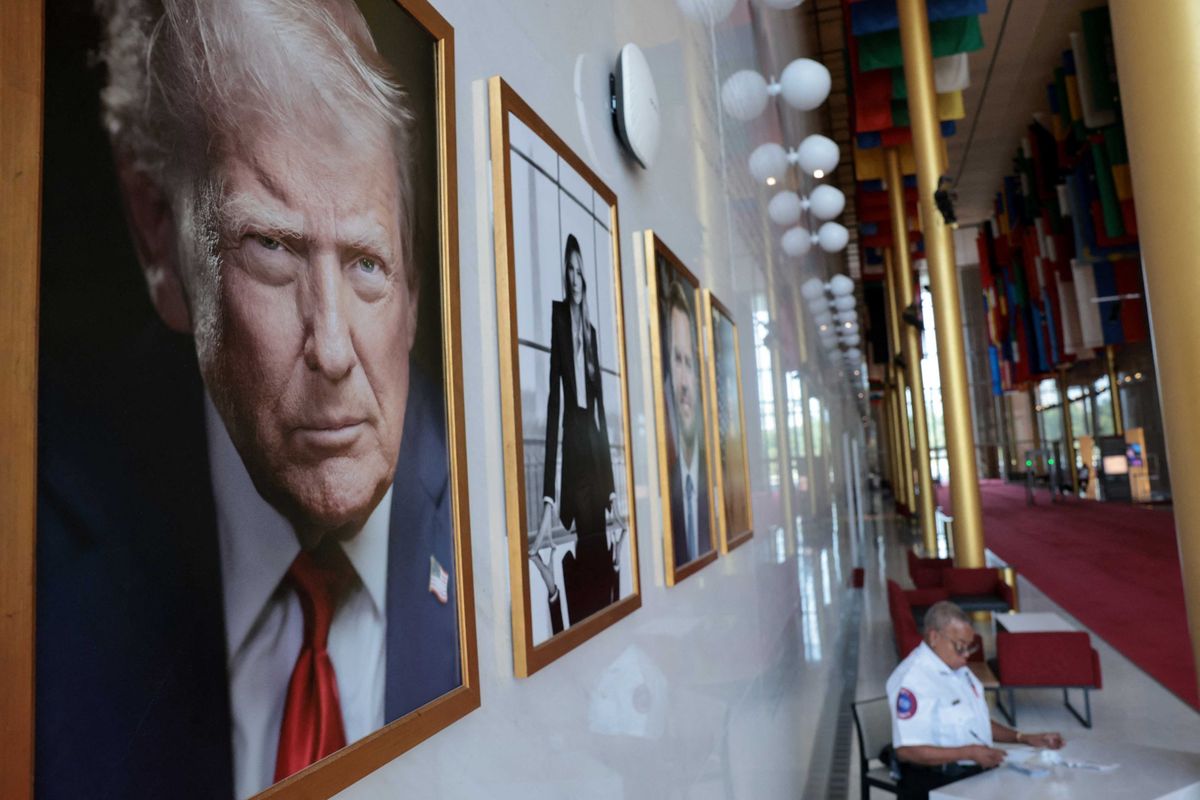
An official portrait of U.S. President Donald Trump hangs in the Hall of Nations at the Kennedy Center, which the Trump administration argued in a court filing could eventually face demolition if major repairs are not undertaken, in Washington, D.C., U.S., August 26, 2026. REUTERS/Jonathan Ernst

Fear has grown so suffocating inside federal agencies that whistleblowers now feel they have a "gun to their heads," former Trump Homeland Security official Miles Taylor warned this week, saluting a U.S. Postal Service employee who braved that climate to expose the administration's rushed effort to police the nation's mail ballots in defiance of a court order.

The complaint, released Tuesday by Sen. Richard Blumenthal (D-CT), warns that the Postal Service built an "untested" barcode system to carry out President Donald Trump's order restricting voting by mail. As designed, the whistleblower said, if a single barcode in a batch of 10,000 ballots fails to scan, the entire batch is bounced back to state officials, potentially stopping millions of ballots from reaching voters. Work began in June and continued despite a court injunction, according to the disclosure, which was prepared with Whistleblower Aid.

The revelations set off alarm among election lawyers and Democrats days ahead of mail voting for the November midterms. A federal judge has temporarily blocked Trump's order, which 23 states and Washington, D.C. are challenging in court. The White House disputed the whistleblower's account, with spokesperson Lauren Bis calling the software "neither complex nor unique," and USPS said it is "carefully reviewing" the concerns.

For Taylor, the missed story was the person who stepped forward.

"The fear is palpable inside federal agencies," he wrote in a Tuesday essay for his anti-Trump group Defiance, which has partnered with the nonprofit representing the whistleblower. He pointed to a Partnership for Public Service survey in which the share of federal employees confident they could report wrongdoing without retaliation fell from about 75% to roughly 22% since Trump returned to office. Taylor also noted the administration has fired at least 17 inspectors general and floated a governmentwide gag rule that critics have said would silence potential whistleblowers.

Taylor himself blew the whistle on Trump years ago, and said the disclosure is already bolstering the legal fight against the mail voting order.

"Somewhere out there in America, a public servant looked at a plan to sabotage your vote. Over their own self-doubt and the daunting consequences of self-sacrifice, he or she decided their oath to the Constitution mattered more than their own safety. That’s what saving a democracy actually looks like, friends. It’s rarely the famous people swinging their fists at the dictator. It’s almost always someone like this," he concluded.
Trump’s 'hilarious' new gold desk phone sparks swift backlash: ‘The dumbest stuff’

Erik De La Garza
September 2, 2026 
RAW STORY


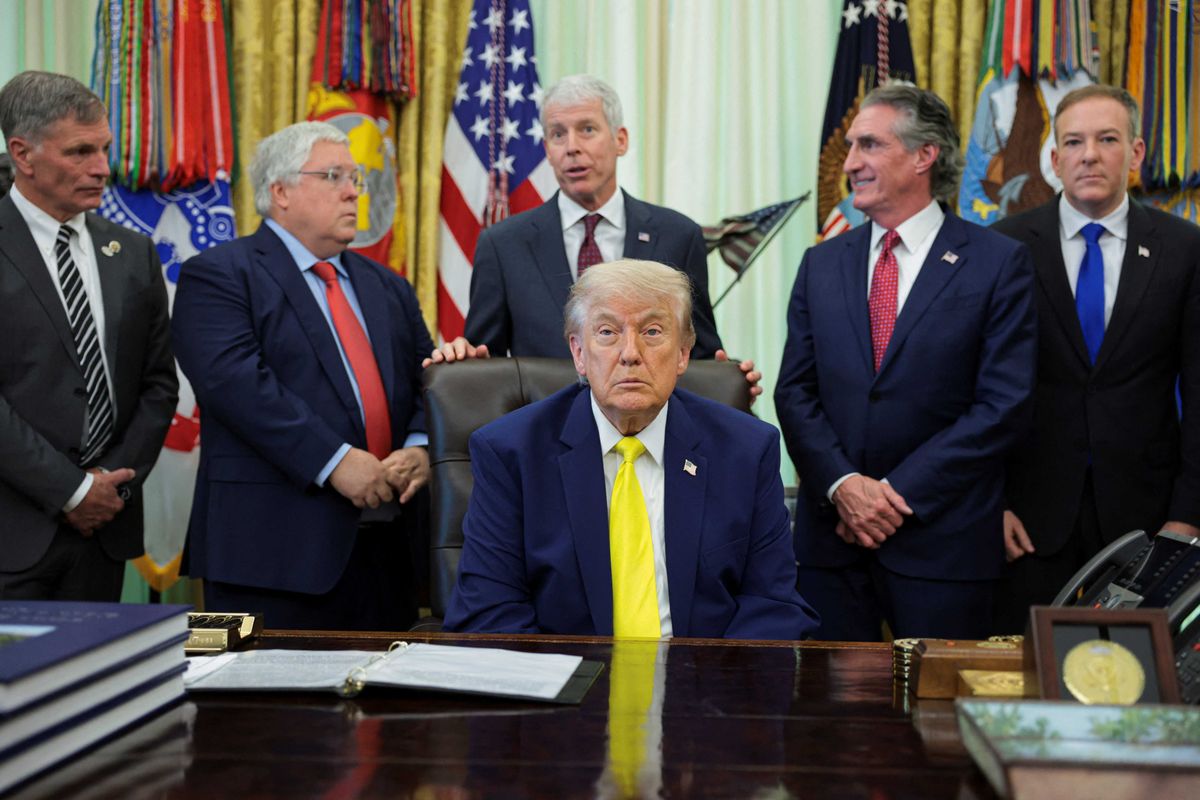
U.S. President Donald Trump looks on as U.S. Secretary of Energy Chris Wright delivers remarks to reporters about the Trump administration's support for coal energy production, flanked by West Virginia Governor Patrick Morrisey, Interior Secretary Doug Burgum and Environmental Protection Agency (EPA) Administrator Lee Zeldin, in the Oval Office at the White House in Washington, D.C., U.S., June 4, 2026. REUTERS/Jonathan Ernst

President Donald Trump’s flashy new desk phone sparked stunned and mocking reactions after it was spotted Wednesday inside the Oval Office.

CNN’s Kaitlan Collins shared a photo captured by Fox News correspondent and pool reporter Peter Doocy. The black Cisco phone features gold-colored trim, the presidential seal and an image of the White House. The words “THE PRESIDENT” appear above the keypad, while “Donald J. Trump” is written underneath.

“Our taxes are being spent on the dumbest stuff,” Vanity Fair special correspondent and “Fast Politics” host Molly Jong-Fast wrote.

British infectious disease physician Dr. Neil Stone added: “This phone is hilarious.”

“Americans can’t afford to gas up their cars, but they’re paying for the President to get a gold-plated new phone,” wrote J.J. Abbott, a Pennsylvania-based media strategist.

Other users mocked the phone's resemblance to a toy.

“Fisher-Price really knocked it out of the park with this one,” the popular X account @aintscarylarry posted to its over 100,000 followers.

“Was it made in China?” another user asked.

Democratic strategist Chris D. Jackson accused Trump of wasting money on “frivolous” items, while political commentator Kevin Walling summed up his reaction in one word: “Priorities!”

Reuters correspondent David Shepardson confirmed to his social media followers that the phone was manufactured by Cisco.

“I've asked all the major US phone companies who gave @POTUS the phone,” he wrote, later adding, “The phone companies don't make handsets -- this is from @Cisco.”


THE GRIFT

Trump becomes first sitting US president to appear on a coin as Mint releases $1 piece

The 2026 Semiquincentennial President Donald J. Trump $1 Coin, 2 September 2026
Copyright US Mint

By Quirino Mealha
Published on

The US Mint has issued the 2026 US President Donald J. Trump $1 coin, marking the first time a serving American president has featured on a coin made for everyday use, with the Mint saying the pieces are already in circulation and rolls and bags going on sale from midday Eastern time.

American money now carries the current US president's face.

The US Mint confirmed on Thursday that the "golden dollar" featuring the likeness of US President Donald Trump has been released, urging people to check their pocket change while collectors can buy it in rolls and bags sold exclusively through its own channels.

The products are priced at $61 for a 25-coin roll and $154.50 for a 100-coin bag.

In practice, finding one in everyday change may take patience, since dollar coins have caught on widely with American shoppers and circulate far more sparsely than notes

Collectors also have another detail to chase as the US Mint struck 250,000 of the coins on 4 July carrying a special "July 4th" privy mark, dispersed through the rolls and bags.

Despite its colour, the coin contains no gold, being 88.5% copper with smaller quantities of zinc, manganese and nickel.

The coin was struck in Philadelphia and carries no mint mark.

Chief Engraver Joseph Menna designed the obverse from an official White House photograph, showing Trump facing almost directly forward beneath the inscriptions "LIBERTY", "IN GOD WE TRUST" and the dual date 1776 to 2026.

The reverse carries the Presidential Seal, originally sculpted by former chief engraver Frank Gasparro, with the numeral 250 added to the eagle's shield to mark the country's 250th anniversary.

There is one precedent for this initiative, though an imperfect one.

Calvin Coolidge appeared alongside George Washington on a 1926 half dollar marking 150 years of independence, making him the first living president on American coinage.

However, that was a commemorative issue rather than a coin intended for daily use. The legal basis for placing a Trump coin in circulation has been contested.

US law generally bars portraits of living people from coins, and the administration has relied on the Circulating Collectible Coin Redesign Act of 2020, signed by Trump during his first term, which permits $1 coins bearing designs emblematic of the anniversary throughout 2026.

The design process also drew criticism.

The US Commission of Fine Arts had recommended a profile portrait and a different eagle design, neither of which was adopted, while the Citizens Coinage Advisory Committee, which normally reviews Mint designs, declined to consider it.


Deathly design gaffe spotted as Trump coin goes on sale to deluge of derision


Daniel Hampton
September 2, 2026 
RAW STORY


(Photo courtesy of US Mint website)


The U.S. Mint began selling its new $1 coin stamped with President Donald Trump's face on Wednesday, and the internet instantly ridiculed the launch.

The coin, gold-colored but struck from base metal, sells in 25-coin rolls for $61 and 100-coin bags for $154.50 as part of the Mint's series marking America's 250th birthday. The Mint told buyers to "check your pocket change," noting the dollars are "also in circulation."

But internet detectives quickly zeroed in on the fuzzy economics of the coin, as well as the ominous implication etched into it.

"Deal of the century right here folks," wrote The Bulwark's Sam Stein. "You can purchase 25, $1 Trump coins for the price of.... $61."

The Bulwark's Catherine Rampell homed in on the "1776 ~ 2026" dual date.

"I like that this design appears to show the birth date of liberty as 1776, and its death as 2026," she quipped. Progressive media group MeidasTouch quote-posted the Mint's announcement with a one-word review: "Accurate," also pointing to the curious birth and death dates of liberty.

Rep. Ted Lieu (D-CA) used the rollout to bash the administration's economic record, ticking off rising gas, grocery and utility costs.

"[T]rump and Republicans have mismanaged the American economy," he wrote, pointing to prices at the pump and the checkout line. "So what are trump and Republicans focused on? See below. November is coming." He added a jab at the portrait: "(Also, why is trump wearing a wig)?"

Conservative writer David Frum pointed out a glaring historical comparison.

"The Caesars and Napoleon won some wars before stamping their images on the coinage of their fallen republics," he wrote.

Trump is only the second U.S. president depicted on a coin during his lifetime, after Calvin Coolidge on a 1926 commemorative half dollar. Critics have decried that the design flouts federal law barring living people from U.S. currency, but a federal court declined to block it. The administration said the 2020 law authorizing the 250th-anniversary coins makes it legal.


Trump official buried in mockery for downplaying corruption as 'minor stuff'

Travis Gettys
September 2, 2026 
RAW STORY


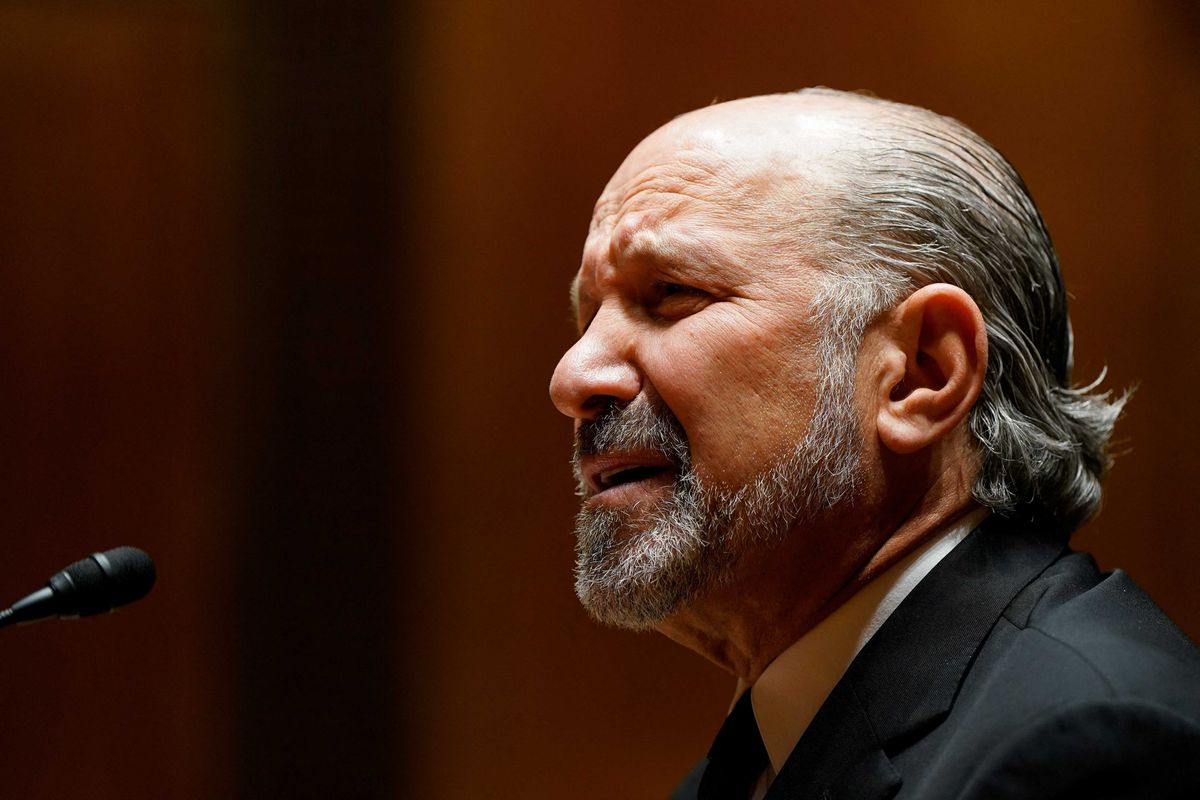
U.S. Commerce Secretary Howard Lutnick testifies before the Senate Appropriations Subcommittee on Commerce, Justice, Science, and Related Agencies hearing to examine a review of broadband deployment funding at the Department of Commerce, on Capitol Hill in Washington, D.C., U.S., February 10, 2026. REUTERS/Elizabeth Frantz

Commerce Secretary Howard Lutnick was criticized for downplaying concerns about his family's corruption as "minor stuff."

President Donald Trump's commerce secretary appeared Wednesday morning on CNBC's "Squawk Box," where host Joe Kernan pressed him to explain possible conflict-of-interest concerns involving his sons, Brandon and Kyle Lutnick, who took over top leadership roles at Cantor Fitzgerald after their father joined the cabinet.

"The perception is you're sitting at Commerce, and you're able to control what Cantor is getting in terms of fees with your sons running that company," Kernan said. "It looks like a conflict of interest. How do you respond to that?"

Lutnick insisted there was no conflict and there was no reason for concern, despite questions from Democratic lawmakers about how the firm he led for 30 years and handed off to his sons, who have since benefited from government contracts.

"I had no idea that Cantor was involved at all; it never came up to me," Lutnick said.

"I didn't put my companies in a trust," he added. "My kids bought my companies, so I'm no longer involved in my own companies at all. My kids bought it from me; they own it, and I had nothing to do with that decision, and this is minor stuff anyway."

Critics pounced on his claims and served reminders of Lutnick's ties to disgraced financier Jeffrey Epstein.

"The second term Trump presidency ranks among the biggest heists in the history of the world," argued conservative writer David Frum.

"Committing Minor Corruption is now on my bucket list," snorted popular X account PoliticsOhMyGawd.

"That's a limp answer," observed writer Bruce Wilson.

"Many such corruptions," joked writer Kirk Rudell.

"Lutnick is as crooked as a $3 bill," quipped newsman Bruno J. Navarro.

"Minor stuff," insinuated widely followed X user Jo from Jerz. "He knows all about 'minor' stuff doesn’t he?"

"Said the guy who brought his family to Epstein Island and lied about it," recalled X user Robert Boone.

"So his answer to clear conflict of interest questions is not really, not strongly that there is no conflict," noted retired journalist Andrew Meacham. "No, the only strong, passionate statement he made was, 'I don’t care.'"


Bulldozer for beloved Kennedy Center artwork amid Trump's takeover tantrum

Tom Boggioni
September 2, 2026 
RAW STORY


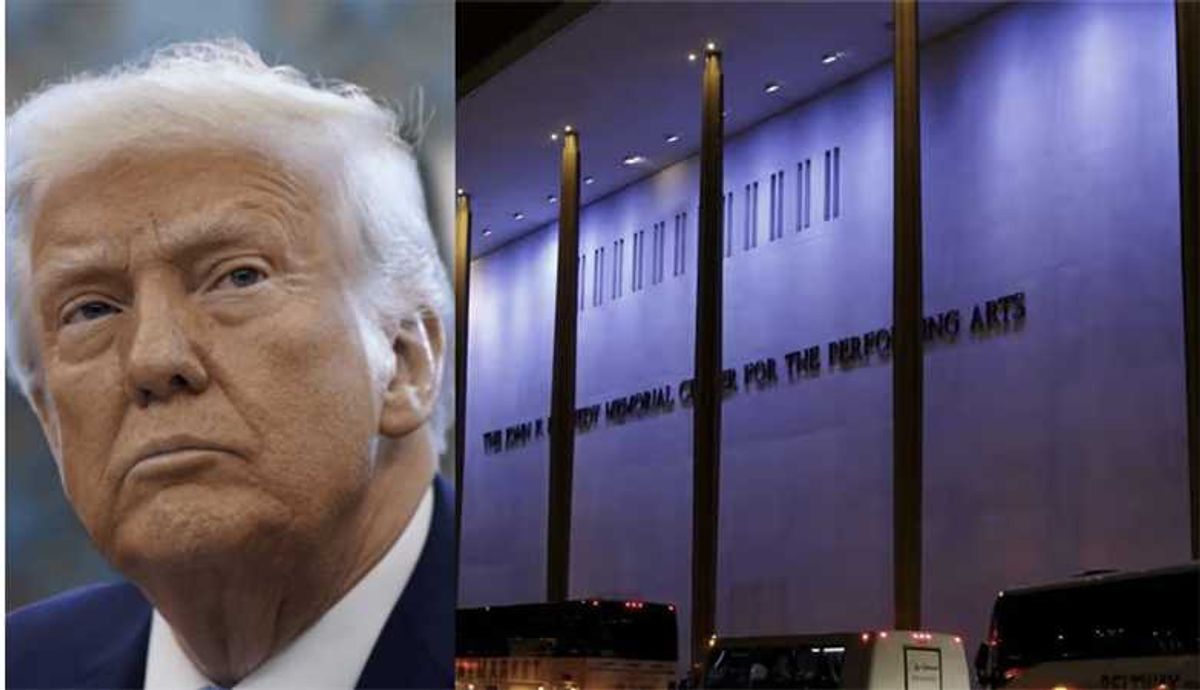
Donald Trump, Kennedy Center for the Performing Arts (Photos by Yuri Gripas, Elizabeth Frantz for Reuters)

President Donald Trump’s handpicked Kennedy Center Board has decided to remove a popular and whimsical piece of outdoor artwork without notice and explanation, according to a new report.

The towering sculpture "Blue," by artist Joel Shapiro, was removed from the Kennedy Center's grounds this week, the latest apparent move to remake the arts venue under Trump's stewardship, the Washington Post reported Wednesday.

The "cobalt-colored, stick-figure sculpture" was installed in September 2019 at the Reach expansion overlooking the Potomac River, its mid-kick pose designed to shift depending on the viewer's position. Shapiro described the piece as being "about action and risk and performance and energy" — "a celebration of possibility." He died in June 2025.

The Kennedy Center "gave no advance notice of the removal and offered no explanation," when pressed by the Post, nor did it immediately respond to requests for comment. A former curator told Artlyst that internal documents showed the work had been "earmarked for elimination" early in Trump's takeover, criticizing the secrecy around removing art "held in trust for the American people."

The sculpture's removal marks the latest controversy at the venue since Trump took it over in February 2025. His reshaped board of trustees voted to make him chairman and rename the center after him; a judge initially blocked efforts to install his name on the building, ordering the letters removed, before the board revived the plan by voting to add his name as an inscription. Ticket sales and fundraising have since collapsed, the Post has reported.

Advocacy group Hands Off the Arts, which has campaigned against the changes, responded to the sculpture's removal on social media: "First they came for the facade, and now they come for the grounds."
Trump's 'deeply stupid' stunt flops with voters — and a smirking Joe Rogan: analysis


U.S. President Donald Trump signs an executive order renaming Lake Ontario as Lake America, at the Oval Office of the White House in Washington, D.C., U.S., August 27, 2026. 
REUTERS/Evan Vucci

Tom Boggio
September 2, 2026 
RAW STORY

President Donald Trump’s decision to sign an executive order renaming Lake Ontario as “Lake America” has been a spectacular flop with voters — and one very high-profile political podcaster, according to a new analysis.

Two “Morning Joe” co-hosts Wednesday morning discussed Joe Rogan's dismissal of the move as a mere 14 percent of Americans voters report support for the decision.

The segment begins with a clip of a smirking Rogan.

“It’s to distract you from the fact we are in a war we can’t win with Iran — it doesn’t make any sense,” Rogan said. “Who cares if it’s Lake Ontario? It’s a good name. We’ve had that name forever."

Co-host Jonathan Lemire and Willie Geist were quick to pile on.

Geist reported that a recent Ipsos/Reuters poll found 63 percent of respondents opposed Lake Ontario’s renaming, a mere 14 percent supported the decision and 21 percent said they weren’t sure how they feel about it.

"Perhaps because it was so, so deeply stupid,” Geist said with a laugh. "Jonathan Lemire, this again, the case of President Trump diving headfirst into an issue that apparently has no audience.”

"I don't say this a lot, but Joe Rogan? Exactly right," Lemire said. "It's meant to be a distraction; it's a culture war. And, you know, it's to get us to talk about something else. But there is a serious underbelly here, which is the fact that this trade war with Canada, as we just discussed, is going to have real political implications and not good ones for Republicans. And frankly, Willie, it also shows Trump's just running out of ideas. We already did the Gulf of America. Now it's Lake of America.”


Pentagon caught purging decades of classified docs after generals' warnings leak: WaPo

Bennito L. Kelty
September 2, 2026 
RAW STORY


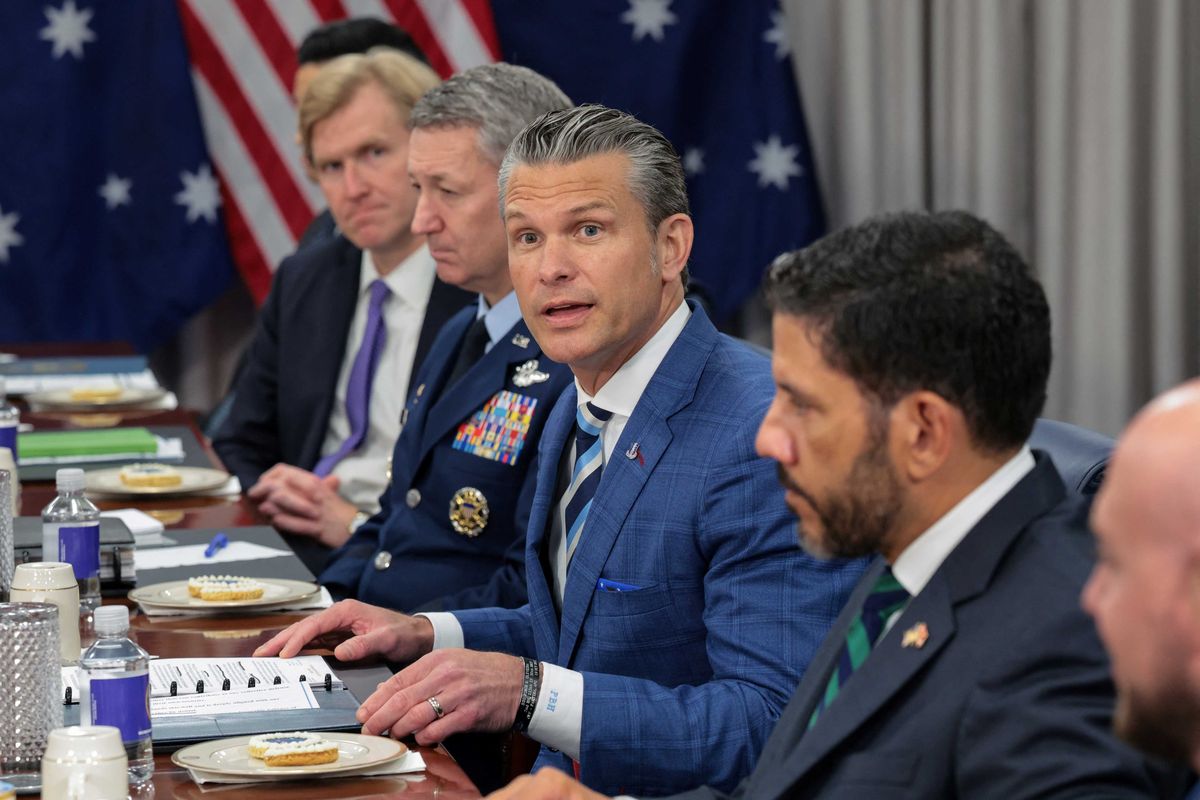
U.S. Defense Secretary Pete Hegseth speaks during a meeting with Australia’s Deputy Prime Minister and Defence Minister Richard Marles, not pictured, at the Pentagon, in Washington, D.C., U.S., September 2, 2026. REUTERS/Kylie Cooper

Anonymous insiders told The Washington Post that the Pentagon scrubbed decades of classified documents following a story about senior military officials' warnings about Iran.

In a Wednesday article, The Post revealed that the Pentagon pulled decades' worth of classified documents from a secret computer system that is commonly used by defense officials and U.S. troops. Insiders tipped The Post off following a story on Sunday about several top generals and admirals cautioning Defense Secretary Pete Hegseth about the risks of extending a war with Iran.

The documents were removed from the internal web portal on the Secret Internet Protocol Router Network (SIPRNet), according to three anonymous insiders who spoke to The Post. SIPRNet contains information that is labeled 'secret,' while top-secret information is put on other highly classified networks where fewer people have access, according to The Post.

Insiders told The Post that the documents were associated with the Secretary of Defense Orders Book (SDOB), which details the location and availability of U.S. warships, military units, weapons systems, and other resources. The SDOB also gives top generals and admirals a forum in which they can disagree with President Donald Trump and Hegseth while still carrying out their orders, The Post noted.

SDOB provides a "non-concurring" process where top generals and admirals can explain any reservations or disagreements they have with the orders or describe the detrimental effects of those orders on other military plans.

The Post noted that the SDOB became the "focus of intense discussion" after a story detailing how top generals and admirals told Hegseth that a prolonged, large-scale conflict against Iran is unsustainable. Those senior military officials also told Hegseth that operations against Iran risked weakening their ability to confront threats elsewhere.

Those warnings from senior military officials appeared in an August 14 edition of the SDOB, according to The Post.

Sean Parnell, a Pentagon spokesman, declined to discuss the removal of the classified documents with The Post, saying, "The Department of War does not publicly discuss internal operational deliberative processes," and "the success of our service members is Secretary Hegseth's top priority."

Who Has The Right To Tell Our Story: The Fight Over Cultural Heritage In The United States – OpEd


Key Takeaways:

  • The author says an Aug. 27, 2026 letter from 600+ groups opposes a rewrite of National Historic Preservation Act Section 106 that would let federal projects sidestep public comment and put historic sites in the wrecking ball’s path—developers call the old rule slow and costly; he says it is not a jobs killer and loss is permanent.

  • Heritage fights are framed as global and existential for Indigenous, local, and diasporic communities (a Mongolian herder: comforts without ceasing to be Mongolian); officials treat culture as “soft” next to extraction.

  • The rewrite is cast as narrative control, not streamlining—likened to erasing a people (ICC Timbuktu case)—and he urges taking the past back from federal whim so places can still tell who lived there.

Cultural heritage is under attack in the United States. The National Historic Preservation Act’s Section 106 regulation, which balances economic development and historic preservation, has been rewritten to leave historic places in the path of the wrecking ball at the federal government’s whim. Developers contend that a new regulation is required because the Section 106 process is too slow, too unpredictable, and too costly. They argue that locking up lands from oil and gas extraction, timber interests, and mining costs jobs and denies the country needed resources. But they’re wrong. Section 106 does not cost jobs, money, or time. Allowing the public to comment on what happens on public land is not to be deplored but celebrated. Most importantly, once destroyed, cultural and historic sites are irretrievably lost, and all of us diminished.

While currently playing out in the United States, fights about heritage are not unique to America. Battles between development and preservation play out across the globe—in countries rich and poor, autocratic and democratic, and new and old. Some of these struggles escalate into loud, contentious, take-no-prisoners pitched battles.

Economic development is often a Faustian bargain for local and affected communities. The lure of a better life must be weighed against unknowable and incalculable costs to one’s way of life. Most communities embrace the jobs, improvements, and well-being that ensue from development. What they fear is severing ties to land and places—some known and others yet to be discovered—that hold meaning and values essential for their community to persist. For local, Indigenous, and diasporic communities, severing these ties is yet another cut added to the thousands of previous cuts that continues to transform their culture in ways they do not like and that they cannot control

Many developers and government officials mistake cultural heritage as a “soft” or secondary concern for communities. They base their arguments for development on economic and material concerns, convinced that these are paramount in the minds of community members. For some, these arguments resonate. But for most, economic and infrastructure improvements are only beneficial if they do not transform society into something foreign and unrecognizable. As one Mongolian camel herder explained to me, “We would like the comforts promised by the mining companies but not at the expense of being Mongolian. We’ve been poor for a thousand years; being poor is not that big a deal. Not being nomads or having nomads in the country would be the end of our way of life and the end of Mongolia.”

On August 27, 2026, more than 600 organizations sent an open letter to Congress outlining their opposition to the proposed changes to Section 106. Why the outrage? It’s simple. Though couched as common sense reform to enable economic development, the rewrite of the Section 106 regulation is nothing less than the federal government’s attempt to usurp control over whose history counts and whose can be disregarded. If the proposed regulation is simply about the timeliness and cost of development projects, then it would not have elicited so much opposition. Many in the preservation community offered to engage in regulatory reform. But the authors of the proposed change are not interested in reform. Their objective is to control the country’s historical narrative—whose story gets told and whose story is forgotten.

History is replete with attempts to legitimize the present by destroying vestiges of the past. Ofttimes these attempts are resisted, sometimes violently. In these clashes, groups are oppressed and their material culture destroyed. Rarely are such attempts forgotten or forgiven. Remarking on the guilty verdict in the case of Ahmad Al Faqi Al Mahdi for destruction of ancient texts in Timbuktu, Mark Ellis of the International Bar Association, stated in 2016: “Politically, there will be those who will question why Bensouda [then-International Criminal Court Prosecutor Fatou Bensouda] is focusing on ancient sites rather than going after rape, torture and murder convictions, but destruction of cultural heritage is not a second-rate crime. It’s part of an atrocity to erase a people.”

We need to wrest control of the past from the federal government and give it back to the people of this country. This is not a fight we sought. But it is the fight we must win. All of us need to spread a message about why Section 106 matters and why we will not let the government destroy it. Simply put, we will not give up the right to tell who we were and what we did through the places we lived, as we want it to be known free from government censure or control.


About Jeffrey H. Altschul

Jeffrey H. Altschul is the co-president of the Coalition for Archaeological Synthesis.

View all posts by Jeffrey H. Altschul →

Russia: Prosecutions For Cooperation With ‘Undesirable Organizations’ – Analysis


Olga Sibiryova, March 2023 Photo Credit: Private


September 2, 2026
F18News
By Victoria Arnold


Key Takeaways:

Forum 18 reports Moscow Region prosecutors charged Sova researcher Olga Sibiryova under Admin. Code 20.33 because the U.S.-coordinated International FoRB Alliance—listed “undesirable” in Jan. 2025—cited her public annual reports; first hearing is Sept. 10. Sova (a 2016 “foreign agent,” liquidated 2023) says neither she nor the centre ever dealt with the Alliance.

Days after Mission Eurasia was listed in May 2026, courts fined a Krasnogorsk Baptist pastor and ordered 178 New Testaments and 74 John booklets destroyed; St Petersburg Christian University was fined 60,000₽ for library copies; Baptist Union rector Pyotr Mitskevich took a 20,000₽ fine. Lawyers note a 2017 prosecutor letter distinguished classic texts from an NGO’s own output.

Repeat 20.33 can become Criminal Code 284.1 (up to 4 years). The “undesirable” list has 391 entries; Jehovah’s Witnesses have been fined for on-camera discussion of Watch Tower material. Prosecutors did not answer Forum 18 on why a third-party citation or a locked-room Bible counts as “participation.”


A researcher for one of Russia’s leading freedom of religion and belief monitors is facing administrative prosecution after a different organisation, deemed “undesirable” by Russia, cited her work in its own materials. Prosecutors in the Moscow Region have charged Olga Sibiryova of the Sova Centre for Information and Analysis with “participation in the activities” of the International Freedom of Religion or Belief Alliance, with which the Sova Centre says neither it nor Sibiryova has ever interacted.

The case against Sibiryova appears to be the first under Administrative Code Article 20.33 (“Participation in the activities of an undesirable organisation”) to be based exclusively on a citation by an “undesirable organisation”. Fines under this Article are relatively small, but a further offence could lead to criminal prosecution with up to a 4-year jail term (see below).


The Justice Ministry added the Sova Centre to its register of “foreign agents” in 2016, and went to court to have it liquidated as a legal entity in 2023. It has since operated as an unregistered group of researchers (see below).

Forum 18 wrote to Naro-Fominsk City Prosecutor’s Office and Moscow Region Prosecutor’s Office, asking which documents of the International Freedom of Religion or Belief Alliance form the basis of the case, and why prosecutors had initiated a case under Article 20.33 simply on the basis of an “undesirable organisation” citing Sibiryova’s publicly available reports without her knowledge. Forum 18 received no response (see below).

Other recent prosecutions reviewed by Forum 18 appear to be based on minimal or unknowing “participation”. They include those of a Baptist church and two Protestant higher education institutions, for continuing to “distribute” books published by Mission Eurasia a matter of days after the organisation – a US-based Protestant missionary body – was added to the register of “undesirable organisations” (see below).

Krasnogorsk City Court in Moscow Region fined the pastor of a local Baptist church, Aleksey Kruchinin, under Administrative Code Article 20.33 on 23 June. The judge also ordered that the literature confiscated from his church – 178 copies of the New Testament and 74 booklets containing the Gospel of St John, published by Mission Eurasia – be destroyed. The decision went into force on 20 August when the Pastor lost his appeal (see below).


Pastor Kruchinin’s lawyer Sergey Chugunov questions the aims of decisions to seize and destroy religious literature produced by organisations such as Mission Eurasia. “The text of the Bible is being classified as material from an ‘undesirable’ organisation simply because the book was printed by that organisation. But does the content of the text change because of that? Has it suddenly become a threat to public safety?” (see below).

Moscow Region Prosecutor’s Office, Krasnogorsk City Court and Krasnogorsk department of the bailiffs’ service did not respond to Forum 18’s questions on why the possession of ordinary Biblical texts had been considered to be “participation in the activities of an undesirable organisation”, and whether the books have yet been destroyed (see below).

In a 20 August court hearing when St Petersburg Christian University was fined for having books published by Mission Eurasia in its library, the university representative “maintained that steps had been taken to destroy the books”, according to the city courts’ press service (see below).

If the General Prosecutor’s Office decides that a foreign or international organisation poses a threat in Russia’s political and security sphere, it can order it to be added to the Justice Ministry’s register of “undesirable organisations”. Inclusion in this list shuts down a legal entity immediately and bars individuals’ involvement with it, even outside Russia (see below).

“In practice, independent media outlets, as well as political, human rights, religious, educational, research, and other projects, are designated ‘undesirable’ for simply carrying out their lawful activities,” human rights monitor OVD-Info notes. The register currently has 391 entries, including more than 20 which are religious bodies, religious media, missionary, or educational organisations, or non-governmental organisations with religious links or which promote freedom of religion and belief (see below).

Charges and punishments

Administrative Code Article 20.33 punishes “Participation in the activities of a foreign or international organisation whose activities have been declared undesirable within the territory of the Russian Federation in accordance with the legislation of the Russian Federation, or violation of prohibitions established by Federal Law No. 272-FZ of 28 December 2012 ‘On Measures Against Persons Involved in Violations of Fundamental Human Rights and Freedoms and the Rights and Freedoms of Citizens of the Russian Federation'”.

This is punishable by the following fines: for individuals – 5,000 to 15,000 Roubles; for people in an official capacity – 20,000 to 50,000 Roubles; for legal entities – 50,000 to 100,000 Roubles; staff of election commissions are disqualified for one year. A fine of 100,000 Roubles represents about six weeks’ average wage.

A repeat offence may lead to criminal prosecution under Criminal Code Article 284.1, Part 1 (“Participation in the activities of a foreign or international organisation whose activities have been declared undesirable within the territory of the Russian Federation in accordance with the legislation of the Russian Federation, committed by a person who has been subjected to an administrative penalty for a similar act”).

Penalties for this include: a fine of 300,000 to 500,000 Roubles; up to 360 hours’ compulsory labour [obyazatelniye raboty]; up to 4 years’ assigned labour [prinuditelniye raboty] with up to 2 years’ possible restriction of freedom [ogranicheniye svobody]; or 1 to 4 years’ imprisonment with a possible ban on “holding certain offices or engaging in certain activities” for up to 10 years.

(Criminal Code Article 284.1 also includes Part 2, which covers the financing of “undesirable organisations”, and Part 3, which covers the organisation of their activities.)
Moscow Region: “Anyone could be deemed a ‘collaborator'”

lOn 17 August, prosecutors in the town of Naro-Fominsk in Moscow Region charged Olga Sibiryova, a researcher at the Sova Centre for Information and Analysis, with “participation in the activities of an undesirable organisation” (Administrative Code Article 20.33) because an “undesirable organisation” – the International Freedom of Religion or Belief Alliance – had cited her work in their own reports. Naro-Fominsk City Court has listed the first hearing of the case on 10 September, according to the court website.

“We believe that the charge brought against Olga Sibiryova under Article 20.33 of the Administrative Code is entirely baseless”, the Sova Centre said in a statement on 17 August. “Neither she personally nor the Sova Centre as a whole has ever had any interaction with the International Freedom of Religion or Belief Alliance; the organisation is mentioned on the Sova website solely in connection with its designation as ‘undesirable’, and even then, without any value judgments whatsoever.”


Sibiryova has worked for the Sova Centre, Russia’s leading organisation monitoring freedom of religion and belief violations, for over sixteen years. Among other work, she produces the Centre’s annual reports on such violations in Russia.

The Justice Ministry added the Sova Centre to its register of “foreign agents” in 2016, and went to court to have it liquidated as a legal entity in 2023. It has since operated as an unregistered group of researchers.

The International Freedom of Religion or Belief Alliance describes itself as “a network of like-minded countries fully committed to advancing freedom of religion or belief around the world”, which “brings together senior government representatives to discuss actions their nations can take together to promote respect for freedom of religion or belief and protect members of religious minority groups”. The US State Department coordinates its activities.

On 25 December 2024, Russia’s General Prosecutor’s Office named the Alliance an “undesirable organisation”. The Justice Ministry added it to its register of “undesirable organisations” on 17 January 2025.

On 4 August 2026, officers from the Interior Ministry’s Centre for Countering Extremism carried out an “inspection of premises” at Sibiryova’s home and seized electronic devices and books, the Sova Centre noted in its 17 August statement on the case.

On 17 August, Naro-Fominsk City Prosecutor’s Office summoned Sibiryova for an interview. Only then did she learn which organisation she was accused of cooperating with, and was charged under Article 20.33. The case appears to be based on the Alliance having allegedly cited Sibiryova’s 2024 and 2025 annual reports on freedom of conscience in Russia in its own documents, although it is unclear which documents these may be.


“This may be the first instance of an individual being accused of collaborating with an organisation simply because that organisation cited them. Moreover, the issue is not a matter of an expert providing specific commentary, but rather the fact that an organisation designated as ‘undesirable’ has made use of publicly available material from another project”, Sova emphasised in its statement.

“And this in itself, in our view, contradicts both the letter of the law and common sense: if this approach were applied consistently, anyone could be deemed a ‘collaborator’ with an undesirable organisation – for instance, any Russian media outlet whose material such an organisation chose to mention on its website.”

Forum 18 wrote to Naro-Fominsk City Prosecutor’s Office and Moscow Region Prosecutor’s Office on 24 August, asking which documents of the International Freedom of Religion or Belief Alliance materials form the basis of the case, and why prosecutors had initiated a case under Article 20.33 simply on the basis of an “undesirable organisation” citing Sibiryova’s publicly available reports without her knowledge. Forum 18 had received no response by the end of the working day in Moscow Region of 31 August.
General Prosecutor’s Office names Mission Eurasia “undesirable organisation”

Russia’s General Prosecutor’s Office named Mission Eurasia an “undesirable organisation” on 30 April 2026, and the Justice Ministry added it to the register of “undesirable organisations” on 13 May 2026.


Mission Eurasia was founded in 1991 by American Protestant pastor Peter Deyneka to evangelise in the former Soviet Union. It now trains local Protestant leaders in Eastern Europe, Central Asia, and Israel, who then engage in church planting and evangelism in workplaces and schools. It also publishes and distributes translations of the Bible and what it calls “strategic Christian books and resources”.

“The likely reason for the organisation’s inclusion on the Russian [undesirable organisations] list is that, following the outbreak of the full-scale war, Mission Eurasia has been actively assisting Ukraine, documenting pressure on believers in occupied territories, criticising the persecution of religious communities in Belarus and Russia, and reporting on the influence of the ‘Russky Mir’ [Patriarch Kirill’s ‘Russian World’ ideology] and the Russian Orthodox Church”, Christians Against War noted on 14 May.

It is common for Protestant churches and educational institutions to possess Bibles and other literature published by Mission Eurasia, even if they have no other relationship to the organisation.

The law on “undesirable organisations” includes a ban on “the dissemination of information materials issued by a foreign or international [undesirable] organisation and/or disseminated by it – including via mass media and/or using the Internet information and telecommunication network – as well as the production or storage of such materials for the purpose of dissemination”.
Prosecutions only days after “undesirable organisation” listed, Bibles to be destroyed?

Almost immediately after the designation of Protestant organisation Mission Eurasia as “undesirable” in May 2026, prosecutors in Russia began seizing books and initiating administrative cases.

Prosecutors searched a Christian bookshop in St Petersburg on 14 May, one day after Mission Eurasia appeared on the Justice Ministry’s List. St Petersburg Christian University and the Baptist Union’s Moscow Theological Seminary were searched on 15 May, a Baptist church in the Moscow Region town of Krasnogorsk on 23 May.
In Moscow Region ..

Krasnogorsk City Court in Moscow Region found the pastor of a local Baptist church, Aleksey Kruchinin, guilty under Administrative Code Article 20.33 on 23 June. Judge Yekaterina Govorun handed him an unknown fine. She also ordered that the literature confiscated from his church – 178 copies of the New Testament and 74 booklets containing the Gospel of St John, published by Mission Eurasia – be destroyed.


Pastor Kruchinin appealed unsuccessfully at Moscow Regional Court on 20 August. The decision entered legal force on that date, meaning that the New Testaments and Gospels “could be destroyed at any moment”, according to Kruchinin’s lawyer Sergey Chugunov. He added that they will nevertheless continue to appeal.

“In court, we naturally pointed out that the inspection took place just ten days after the organisation was added to the list of ‘undesirable’ organisations, and that no dissemination of materials occurred during that period – the books were kept in a locked room”, Chugunov commented on his Telegram channelshortly after Kruchinin’s guilty verdict.

Chugunov also pointed out that, in 2017, the Deputy General Prosecutor had stated in a letter to the Culture Minister (No. 27/3-491-2015/Нд26284-17) that, firstly, “It is necessary to distinguish between materials that disclose the content and results of an ‘undesirable’ organisation’s activities, and works by well-known authors that were merely republished or distributed by such an organisation as part of humanitarian projects”, and secondly, “If the organisation is not the author of the works and their content is unrelated to the activities of the ‘undesirable’ organisation, the possession of such books cannot be considered a violation of the law and does not require their seizure”.

“The texts of the New Testament and the Gospel of John are widely known and form part of the Bible. The fact that the books bear the imprint of the ‘Mission Eurasia’ publishing house is a technical detail”, Chugunov argued.

“This raises the question: what is the aim of such decisions? The text of the Bible is being classified as material from an ‘undesirable’ organisation simply because the book was printed by that organisation. But does the content of the text change because of that? Has it suddenly become a threat to public safety?”

The first instance court decided that “the mere possession of printed literature belonging to [an undesirable organisation] constitutes an administrative offence. The lack of access to the premises where said literature was stored does not indicate the absence of the elements of an administrative offence”, Chugunov quoted the court decision as saying.

“The fact that the door was locked and only the pastor held the key is not sufficient proof – you have to prove that no one had entered the room. But did we need to? In short, that is how the hearing unfolded; the conclusion was that everything was lawful and justified, and the ruling was upheld”, Chugunov wrote on 20 August, after Kruchinin’s unsuccessful appeal.

Forum 18 wrote to Moscow Region Prosecutor’s Office and Krasnogorsk City Court on 24 August to ask why the possession of ordinary Biblical texts had been considered to be “participation in the activities of an undesirable organisation”, especially given the General Prosecutor’s Office’s stance on the matter, and whether the books have yet been destroyed.

Forum 18 also wrote to the Krasnogorsk department of the bailiffs’ service to ask whether it had destroyed the New Testaments and Gospels of John, and if so, how this had been done. Forum 18 had received no response from any of these agencies by the end of the working day in Moscow Region of 31 August.

.. and in St Petersburg

In St Petersburg on 20 August, Lenin District Court fined the St Petersburg Christian University 60,000 Roubles under Administrative Code Article 20.33 for having books published by Mission Eurasia in its library two days after the latter was added to the “undesirable organisations” register.

The university was founded by the Russian Baptist Union in Krasnodar in 1990. It moved to St Petersburg and became an interdenominational Evangelical institution in the early 1990s. On its website, it describes its library as “one of the best Protestant libraries in Russia”, with over 28,000 books, mostly on Biblical studies.

Prosecutor’s office officials seized all Mission Eurasia books from the university library on 15 May, having determined that “any library patron could easily obtain the material”, 7×70 News reported on its Telegram channel on 20 August. In court, Judge Anastasiya Spiridonova ordered the university “permanently to cease the dangerous dissemination of undesirable literature”.

The seized books included “A Professional Mission: Achieving the Maximum While Overcoming Challenges” and “The Alphabet of Family Worship: 55 Characteristics of God for Family Worship”, which were “available for circulation to an unlimited number of individuals upon presentation of a library card (membership pass)”, the St Petersburg court system’s unified press service stated on 20 August.

“During the court hearing, the representative of the religious organisation did not admit guilt and maintained that steps had been taken to destroy the books”, the press service added.

The day before the search of St Petersburg Christian University, just one day after Mission Eurasia appeared on the register of “undesirable organisations”, prosecutor’s office officials also inspected Slovo, a Christian bookshop in the city. They confiscated “about 100” copies of the Synodal translation of the Bible, published by Mission Eurasia, 7×70 News reported on 17 May. According to the booksellers, investigators told them that someone had made a complaint against the shop.

“Shop staff emphasised that although Mission Eurasia has been designated an undesirable organisation, the book itself is no different from other Protestant editions”, 7×70 noted in its report of the incident. “Everyone publishes the Bible in this format,” bookshop staff told the outlet. “No matter which organisation publishes it, it is still the Bible. To us, this feels like an insult – seizing the most affordable edition of the Bible, the one pensioners used to buy.”

Neither the shop nor any of its staff appears to have faced charges under Administrative Code Article 20.33. It is unclear what has happened to the confiscated books.

Forum 18 wrote to the St Petersburg Prosecutor’s Office on 24 August to ask why the presence of books published by Mission Eurasia was considered an administrative offence only one or two days after Mission Eurasia was added to the register of “undesirable organisations”, and what has happened to the books seized in the inspections. Forum 18 had received no response by the end of the working day in St Petersburg of 31 August.

.. and in Moscow

In Moscow, prosecutors accused another Protestant educational institution – the Baptist Union’s Moscow Theological Seminary – of “participation” in Mission Eurasia activities because of the books in its library. In this case, however, they brought the charge against the seminary’s rector, rather than against the institution itself.

Moscow’s Perovo District Court found Pyotr Mitskevich (who is also head of the Russian Baptist Union) guilty under Article 20.33 on 20 July 2026. According to the court decision, seen by Forum 18, he received the minimum fine for a person in an official capacity, which is 20,000 Roubles. He “agreed with the charge” and has not appealed.

The Prosecutor’s Office of Moscow’s Eastern Administrative Okrug carried out an inspection of the Moscow Theological Seminary’s library and reading room on 15 May. This “revealed the presence of informational materials (books) published by ‘Mission Eurasia’, which by Order No. 629-r of the Justice Ministry of the Russian Federation of 13 May 2026, was included in the List of foreign and international non-governmental organisations whose activities have been declared undesirable”, according to the court decision.

These included: “Holistic Mission”, “Evangelical Culture: History and Modernity”, “The Phenomenon of Leadership”, “School Without Walls”, “Steps of Faith”, “A Perspective on Theological Education”, “Leadership in Ministry”, “Stars of the Reformation”, “A Collection of Interviews with Church, Ministry, and Mission Leaders and Ministry Experts”, “Ministry to Professional Communities”, “Faith and Work”, and “The Zohar” (in Aramaic).

Prosecutors interpreted the presence of these books as “participation by the religious spiritual educational organisation of higher education ‘Moscow Theological Seminary of Evangelical Christian-Baptists’ in the activities of [an undesirable organisation]’, through the storage and dissemination of informational materials (books) published by ‘Mission Eurasia'”.

Judge Olga Ashurova noted that Mitskevich “has recently taken steps to remedy the violations”, and did not order the books to be destroyed.

Forum 18 wrote to the Prosecutor’s Office of the Eastern Administrative Okrug and Perovo District Court on 24 August to ask why the presence of books in the library only two days after Mission Eurasia was added to the register of “undesirable organisations” was considered grounds for administrative prosecution. Forum 18 had received no response by the end of the working day in Moscow of 31 August.
St Petersburg: Online discussion

A wide range of activity can lead to prosecution under Administrative Code Article 20.33, even if it does not involve any direct interaction with the “undesirable organisation” in question. In February and June 2026, Kirov District Court in St Petersburg handed two Jehovah’s Witnesses fines of 5,000 Roubles each. They were punished for discussing their faith using resources from the Watch Tower Bible and Tract Society of Pennsylvania, in videos which investigators claim were posted on a Telegram channel.


The Watch Tower Bible and Tract Society is the Jehovah’s Witnesses’ main publishing house, which produces and distributes religious literature worldwide and maintains the main Jehovah’s Witness website, jw.org. The website was banned and blocked in Russia as “extremist” in 2015. Russia’s General Prosecutor’s Office deemed the Watch Tower Society an “undesirable organisation” on 12 October 2023, and the Justice Ministry added it to its register of “undesirable organisations” on 8 November 2023.

In September 2024, Federal Security Service (FSB) investigators found two videos on a Telegram channel in which three men “are conversing on the topic of Jehovah’s Witness beliefs, discussing religious dogma”, according to one of the court decisions, seen by Forum 18. One of three, Sergey Oblakov, allegedly shared his computer screen, showing content from jw.org. Investigators later found this to be “Lesson 42” from “Enjoy Life Forever! An Interactive Bible Course: What the Bible Says About Marriage and Singleness”.

“The prosecutor’s office construed this as the ‘use and dissemination of materials’ and, accordingly, as participation in the activities of the Watch Tower Bible and Tract Society of Pennsylvania”, the European Association of Jehovah’s Witnesses told Forum 18 on 25 August. “Any engagement with [the Watchtower Bible and Tract Society] – even talking about one’s faith on camera – is treated by the court as an offence.”

The Telegram channel, “Researchers of Scripture” [Issledovateli Pisaniya] stated in its profile that “We invite all believing brothers and sisters to join in the study of Scripture”, and used a tower as its profile picture. Its address, cited in court documents seen by Forum 18, does not as of August 2026 lead to a public or private channel. The channel is not connected to either of the two men prosecuted, the European Association of Jehovah’s Witnesses told Forum 18 on 27 August, and is not officially affiliated with the Jehovah’s Witnesses.

Judge Darya Shmeleva found Oblakov guilty on 18 June 2026. He has lodged an appeal at St Petersburg City Court, which is due to be heard on 9 September 2026.

Prosecutors also charged a second man whom the FSB identified in the videos, Aleksandr Smirnov, with the same offence, although it is unclear what material he is alleged to have shared, or whether he only engaged in discussion of it. Judge Shmeleva found him guilty on 5 February 2026. He appealed unsuccessfully on 8 April 2026.
Designating organisations “undesirable”

The process of designating organisations “undesirable” is governed by Article 3.1 (adopted on 23 May 2015) of the 2012 Federal Law “On measures of influence on persons involved in violations of fundamental human rights and freedoms [and the] rights and freedoms of citizens of the Russian Federation” (known as the Dima Yakovlev Law).

This legislation applies to foreign or international non-governmental organisations which allegedly threaten Russia’s constitutional order, defence capabilities, or state security – explicitly including influence on elections and referendums – or which are deemed to have acted as a financial intermediary for an “undesirable organisation” already on the list.


Once listed, an “undesirable organisation” must close all its branches in Russia and is banned both from opening more and from founding any other legal entities. It can no longer produce, distribute, or store any informational materials, online or offline, and is barred from carrying out any programmes or projects.

In 2021, Russian legal entities and citizens (plus stateless persons resident in Russia) were barred from involvement with “undesirable organisations” outside Russia (punishments for such involvement inside Russia had already been in place since 2015). In 2024, further amendments made it possible for organisations founded by foreign government bodies to be placed on the register.

“Because the law does not clearly define the criteria for designating an organization as ‘undesirable’, the authorities can, in effect, ban any activity that runs counter to their interests under the guise of protecting the constitutional order”, human rights monitor OVD-Info notes.

“In practice, independent media outlets, as well as political, human rights, religious, educational, research, and other projects, are designated ‘undesirable’ for simply carrying out their lawful activities,” OVD-Info adds.

The register currently has 391 entries, including more than 20 which are religious bodies, religious media, missionary, or educational organisations, or non-governmental organisations with religious links or which promote freedom of religion and belief. These include: Jehovah’s Witness bodies from the US, Germany, and Ukraine; Brigham Young University (which is sponsored by the Church of Jesus Christ of Latter-day Saints); Friede Allen (Peace Unto All), which supports Russian clergy who have opposed Russia’s war in Ukraine; and seven Falun Gong or Falun Gong-linked organisations.


About F18News
Forum 18 believes that religious freedom is a fundamental human right, which is essential for the dignity of humanity and for true freedom.
View all posts by F18News →