Saturday, September 05, 2026


The Demand Side Has Spoken

What an intermodal corridor asked for, in its own words
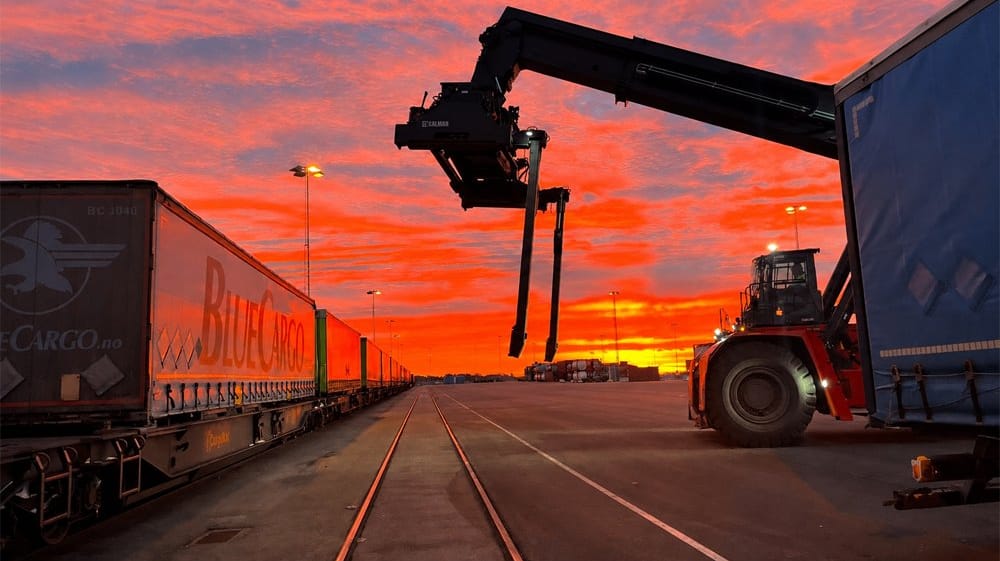
Intermodal image
(TT-Line)

Published Sep 4, 2026 8:35 AM by Shad Blidberg Hallam, Mikael Lind, and Wolfgang Lehmacher


For several years, the case for federated data sharing in transport has been made from the infrastructure side — by researchers, by public bodies, by the communities building trusted data infrastructures. The argument has been patient and principled: coordination across a transport chain requires primary data, shared under the control of those who generate it, without surrendering it to a central owner.

On 27 August, at the TT-Line Intermodal Conference at Maryhill Estate in southern Sweden, something quietly significant happened. More than one hundred leaders from across the intermodal transport system — ferry and short-sea operators, rail undertakings, road hauliers, ports and terminals, freight forwarders and infrastructure owners — were asked what was needed to make intermodal transport work better. Their input was captured live from the room. And when the themes were surfaced, they were not about technology. They were about coordination.

The room asked for cooperation within intermodal transport, and for interfaces that make partnerships workable. It asked for the ability to subscribe to data as an intermodal customer — to receive the data each actor needs, at the right time, in the form they need it. It asked for transparency of data and of transport. It named the lack of standards. It reached for the phrase "digital ecosystem". And it anchored all of it in the commercial test that ultimately decides adoption: making intermodal transport more competitive, reliable and easier to buy.

Read as a list, these are familiar conference themes. Read together, they are something else: a specification.

What those requirements imply

Consider what is being asked for. Interfaces for partnership — but among actors who compete as often as they cooperate, making it difficult for any one actor to own the interface on which everyone else depends. Data at the right time, in the right form, for the right actor — which is not a report, and not a portal, but governed access to primary data as events occur. Transparency across parties — which requires that the parties trust what they see, and trust what happens to what they share. Standards — because bilateral integrations have been built for decades and have never added up to a system.

None of this is easily solved by a product that one company sells and another adopts. It points instead towards infrastructure that is shared, neutral and governed by the actors who depend on it. That is why the ask has remained unmet for so long. Centralised platforms can aggregate data efficiently, but aggregation is not the same as trusted operational coordination. Where participation depends on surrendering control, neutrality becomes difficult to sustain.

The participants did not, of course, ask for "federated data sharing". That is our interpretation of what these requirements imply. Taken together, however, they point towards a federated model: each actor retains control of its data, shares what the shipment requires, and every party sees the operational picture it is entitled to see. The shipment — not the platform — becomes the coordination object. That distinction matters. In a fragmented industry, the durable source of value is not exclusive possession of information; it is the ability of independent actors to make better decisions from a trusted, time-relevant common picture.

The regulation is arriving at the same place

It is equally notable that European regulation is moving in a compatible direction. In February, the European Commission adopted harmonised specifications for data sharing in rail transport under the Data Act, covering freight tracking, tracing and electronic consignment information. From July 2027, authorities across the EU must accept electronic freight transport information under the eFTI Regulation. Access to specified categories of transport information is becoming more regulated, more standardised and increasingly expected across the European freight environment.

That should change how the industry thinks about the question. As access to transport data becomes increasingly standardised, data access itself will no longer be the principal constraint. The scarce thing will be the trusted, shared operational context in which that data means something: where planned, updated and actual events are linked around real shipments, and where every actor in the chain can contribute to and act upon a shared operational picture.

From infrastructure to activation

This is precisely the practical problem the Virtual Watch Tower community has sought to address: creating a federated environment for trusted primary-data sharing and shared situational awareness, developed with shippers, logistics actors, authorities, research institutes and technology providers, and governed through its community. Through VWTnet, shipment itineraries become shared coordination objects; ecosystems form around real transport flows rather than around membership drives; and value grows each time another shipment ecosystem chooses to participate.

The lesson of the August conference is that the coordination problem no longer needs to be explained solely from the infrastructure side. A corridor's own leaders, asked openly, described the coordination gap and articulated many of the conditions needed to close it. What they described is unlikely to emerge from another platform alone. It requires a shared coordination environment that can be activated around real transport flows: corridor by corridor, shipment by shipment.

Corridors such as the southern Baltic — where ferry, rail, road, port and forwarding actors already depend on one another daily — are where that activation is most natural. The actors are known to each other. The interdependence is real. And now, on the record, so is the demand.

About the Authors

Shad Blidberg Hallam is Founder and Executive Lead of Nomon AB and Co-founder and CCO of AKA Innovation AB. He has more than twenty years of executive leadership experience in international logistics, including senior roles at DHL Express and most recently as COO of Green Cargo, Sweden's national rail freight operator. He brings a multimodal operator and transport-buyer perspective spanning rail, road and air.

Mikael Lind is a Senior Strategic Research Advisor at Research Institutes of Sweden (RISE) and was appointed the world's first Adjunct Professor of Maritime Informatics at Chalmers University of Technology. He is co-initiator of community-driven initiatives including collaborative decision making (CDM), Sustainable Port and the Virtual Watch Tower. He is frequently published in international trade press and co-editor of three books on Maritime Informatics and Maritime Decarbonization.

Wolfgang Lehmacher is a global supply chain logistics expert. The former director at the World Economic Forum and CEO Emeritus of GeoPost Intercontinental is an advisory board member of The Logistics and Supply Chain Management Society, an ambassador for F&L, and an advisor to GlobalSF and RISE. He contributes to the knowledge base of Maritime Informatics and is co-editor of the book Maritime Decarbonization.

The opinions expressed herein are the author's and not necessarily those of The Maritime Executive.

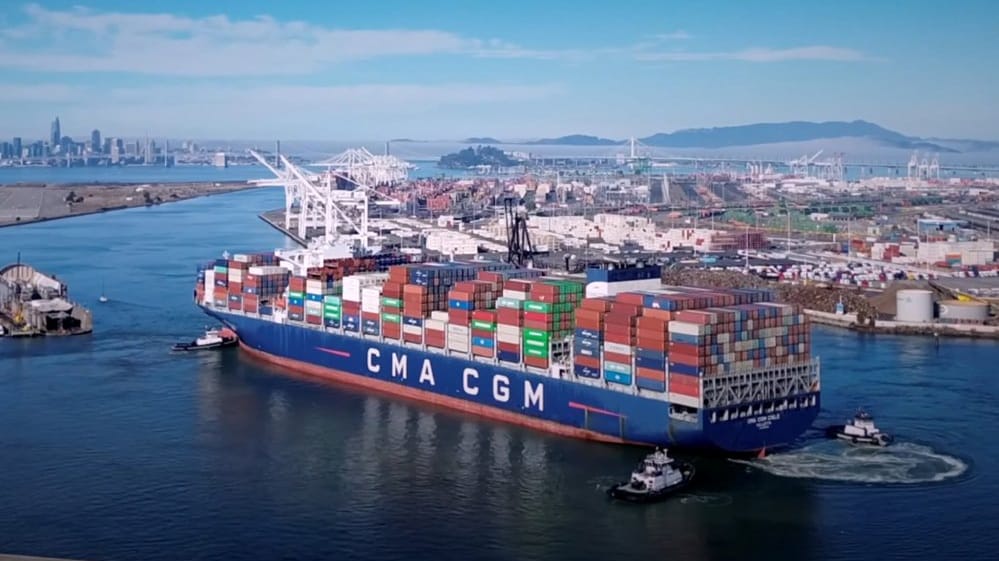
 

California's Port of Oakland to Expand Turning Basin to Handle Larger Ships

Port of Oakland California
Port of Oakland will expand its turning basins to handle and provide more flexibility in maneuvering large containerships (Port of Oakland)

Published Sep 4, 2026 8:35 AM by The Maritime Executive


California’s Port of Oakland in the San Francisco Bay Area has completed an agreement with the U.S. Army Corps of Engineers to increase the port’s ability to handle larger vessels. After years of planning, an agreement was signed on August 27 with designs for widening and modernizing the turning basins for the Port of Oakland.

The project will expand both the inner and outer harbor turning basins. It calls for widening the estuary between Oakland and Alameda, California.

As port officials explain it, the current challenge is that at its widest point, the estuary is approximately 1,500 feet. The new generations of containerships are getting larger and longer at upwards of 1,300 feet. Often, it leaves as little as 150 feet of clearance between each side of the estuary for the big ships. When the effects of wind and currents are also factored in, the port may be limited to just one period a day when the large ships can be safely turned.

The Oakland Harbor Turning Basins Widening Project started roughly in 2020 and is now expected to be completed in 2030. Construction is scheduled to begin in 2028, and it is projected to cost $640 million. It will involve dredging just under five acres of the north Alameda shoreline. It will add approximately 344 feet to the width of the inner turning basin.

The project has gone through years of review, including an extensive environmental review process. The design agreement with the Army Corps is a critical step in the project.

Port officials are saying the project is key to modernizing the port’s infrastructure and ensuring that it remains competitive as a port city for large cargo ships. They said when completed, the project will provide more flexibility to maneuver larger ships multiple times per day. It will also reduce disruptions to ferry operations in San Francisco Bay.

Container volumes at the Port of Oakland have been largely stable for the past 20 years. Last year, 2025, it handled 2,253,976 TEU, and so far, this year it has handled 1,294,664 TEU, which is down nearly four percent versus 2025.

Port officials have highlighted the obstacles in the container operations, calling July 2025 a “challenging month.” The uncertainties in the market have meant that laden volumes have been essentially flat this year, although the port has seen a slight increase in export volumes. In July, the Port of Oakland recorded 81 vessel calls during the month, compared with 95 in July 2025.

In the near term, they noted they are hearing a positive outlook for the remainder of the year from the ocean carriers that call at the port. Port officials emphasize the competition from the Southern California ports of Los Angeles and Long Beach and Seattle, Washington. Oakland recently installed the West Coast’s tallest cranes, and with the expanded turning basin, they expect to enhance the Port of Oakland’s competitive position. 


Engine For 1st Ethanol-Powered Very Large Ore Carrier Completes R&D Test

Everllence

Published Sep 4, 2026 8:10 AM by The Maritime Executive


[By: Everllence]

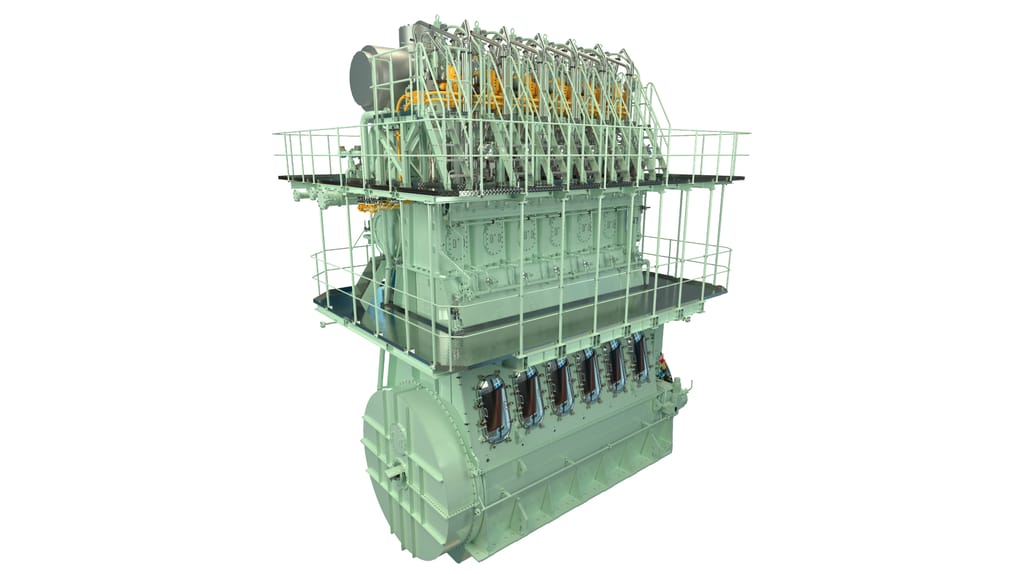
Everllence has announced that the world’s first Everllence B&W G80 ethanol capable engine has been tested and verified at an R&D test at HD Hyundai Heavy Industries Engine and Machinery division in Korea. The engine is bound for the third in a series of 10 × Very Large Ore Carriers ordered by Shandong Shipping for chartering to Brazilian mining and logistics operator, Vale. Vessel delivery is set for early 2027.

Bjarne Foldager – Head of Two-Stroke Business, Everllence – said: “This marks a major milestone for the G80 engine platform, transforming it into a fully flexible tri?fuel engine capable of operating on fuel oil, methanol, ethanol, or any blend of the latter two. The project reflects our shared commitment with Vale regarding pragmatic and scalable decarbonisation pathways within the hard-to-abate shipping sector, and positions Vale at the forefront of maritime sustainability. By selecting the G80 tri-fuel engine, Vale is advancing its strategy to reduce emissions across its maritime logistics chain while maintaining operational robustness in what are – currently – demanding conditions for low-carbon fuels.”

The new announcement stems from a cooperation agreement signed by Everllence and Vale in February 2026 regarding the development of an advanced, ethanol-powered engine based on the well-proven Everllence B&W ME-LGIM (-Liquid Gas Injection Methanol) platform.

Christian Ludwig – Vice President, Head of Global Sales & Promotion, Two-Stroke Business, Everllence – said: “The G80 ethanol engine is based on the proven B&W ME-LGIM platform. It represents the latest evolution of Everllence’s two-stroke dual-fuel engines, designed to enable shipowners to transition seamlessly towards lower-emission fuels without compromising operational efficiency, reliability or safety. In general, interest in ethanol as a marine fuel has increased over the past five years as multi-fuel capability increases shipowner flexibility. We foresee the core demand for this engine coming from bulk carriers, tankers and container vessels. With over 250 methanol engine orders under our belt already, of which more than 100 are in service, Everllence is the leading engine designer for methanol and ethanol-fuelled engines”

Dual-fuel leadership

With the order, Everllence continues to expand its footprint across multiple alternative fuel technologies, including methane, methanol, ammonia, ethane, LPG, and now ethanol. As the maritime industry explores new fuel pathways, the company emphasises the importance of mature, reliable technologies that can be deployed at scale.

The G80 ethanol project underscores a shift from early-stage announcements towards tangible implementation, reinforcing Everllence’s role in enabling the next phase of shipping’s energy transition.

The products and services herein described in this press release are not endorsed by The Maritime Executive.


ZPMC Launches First SOV Built for French Shipping Group LD Armateurs

LD Armatures vessel launched

Published Sep 4, 2026 8:21 PM by The Maritime Executive

[By ZPMC]


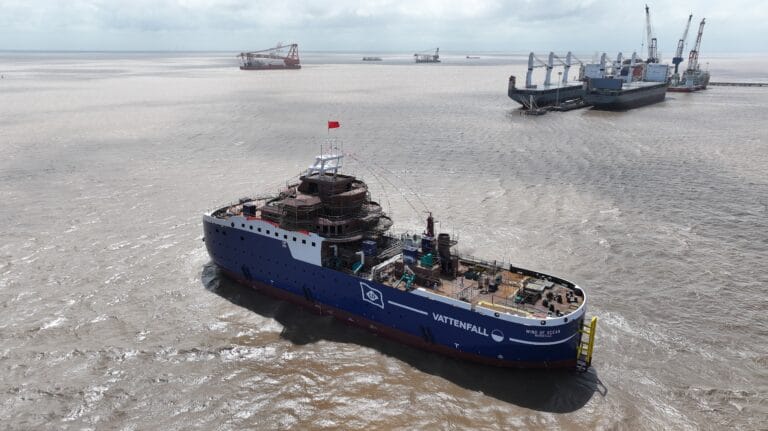
The Wind of Ocean, the first service operation vessel (SOV) built by Shanghai Zhenhua Heavy Industries Co., Ltd. (ZPMC) for French shipping group LD Armateurs (LDA), was successfully launched recently. The milestone marks the beginning of a new phase in which key equipment will be installed and onboard systems commissioned. The next-generation SOV is designed to combine lower environmental impact with efficiency, safety and comfort.

The vessel represents a significant step in ZPMC's efforts to serve Europe's offshore wind industry with high-end offshore engineering equipment. The energy-efficient SOV measures 90 meters in length, 19.6 meters in beam and 7.3 meters in depth, and can accommodate up to 96 people. With an endurance of more than 30 days without resupply, it is designed for unrestricted service and can operate in the challenging conditions of the North Sea. The vessel features a diesel-electric hybrid propulsion system incorporating lithium batteries, along with a Dynamic Positioning Class 2 (DP2) system, a 3D motion-compensated crane and a wave-compensated gangway. These systems enable the safe transfer of personnel and equipment even in high sea states. Designed as a "floating hotel," the vessel combines lower-emission operations, offshore safety and comfortable living quarters, enhancing life onboard for crew members and maintenance technicians.

The project comprises two SOVs, with the second vessel having already reached the keel-laying milestone. It marks the first collaboration between ZPMC and LDA. Once completed, the vessels will be deployed to the DanTysk and Sandbank offshore wind farms in Germany's North Sea, where they will provide long-term operations and maintenance support, including equipment servicing and spare parts replacement, throughout the wind farms' operational lifecycles.

The products and services herein described in this press release are not endorsed by The Maritime Executive


Gulf War Forces Antarctic Expedition Firm to Replace Historic Liner

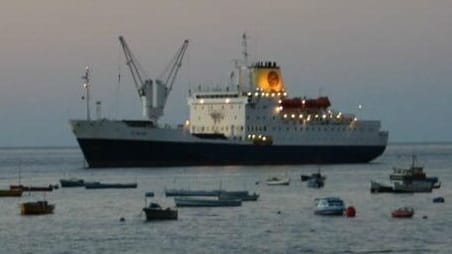
St Helena cargo-passenger ship
St. Helena transported passengers and cargo till 2018 as the last long-distance RMS vessel and sailing to the remote British outpost in the middle of the South Atlantic (Burgh House photo)

Published Sep 3, 2026 7:04 PM by The Maritime Executive


The start-up Terra Nova Expeditions announced this week that it has been forced to change plans for its inaugural expedition cruise season to Antarctica. The company had planned to bring back the historic liner St. Helena for a new career as an expedition ship, but was forced to replace the ship, creating an uncertain future.

St. Helena, built at the Appledore Shipyard in the UK and commissioned in 1990, provided a vital service to the island of the same name located more than 1,100 miles west of Africa and became one of the last RMS (Royal Mail Ships) in service. She is 344 feet (105 meters) in length and approximately 6,800 gross tons. She plods along at 14 knots, but her service primarily between Cape Town and Saint Helena, and continued to Ascension Island, was vital to maintaining a link to the outside world before there was an airport. The introduction of air service was her death knell, and despite the protests of her loyal following, St. Helena was retired in 2018.

The historic ship cheated the scrappers, finding a repurposing. She was briefly used as a vessel-based armory in the Gulf of Oman and later sold to the car racing group Extreme E, which used her as a transport for materials and cars. The company extensively renovated the ship in 2022, retrofitting her engines, updating her systems, and refurbishing her cabins and public spaces.

Terra Nova Expeditions emerged in 2025, saying they had chartered the quirky little ship and were refitting her to commence Antarctic voyages in 2026-2027. The first voyage was planned for December 2026. 

The company reported this week that St. Helena is currently unable to reposition from the Persian Gulf in a safe and timely manner for the start of the 2026/2027 Antarctic season due to the ongoing situation in the Middle East. According to her AIS transmissions, the ship, which is currently registered in Djibouti, has been caught in the Dubai area and last reported near Port Rashid in the United Arab Emirates. 

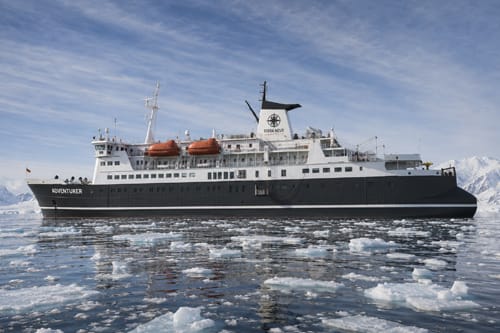
Terra Nova Expeditions said it spent several months working to secure an alternate vessel and has been forced to abandon plans for St. Helena and proceed with an alternate ship. It reports it secured a three-year season charter for the vessel that formerly operated as the Expedition and G Expedition, which it will rechristen Terra Nova Adventurer.


Terra Nova Adventurer will be a suitable replacement but is not the quirky St. Helena (Terra Nova Expeditions)


The replacement ship has a long history as well, and Terra Nova has the advantage of having an extensive history of expedition cruising in Antarctica, the Arctic, and other remote destinations. She had been sailing for the Canadian company G Adventures since being rebuilt for expedition cruising in 2008. The 6,333 gross ton ship started her life as a passenger car ferry in the Baltic, built in 1972. Currently, she appears to be laid up as the Vestland Adventurer, registered in Liberia.

Terra Nova Expeditions says it will undertake a series of enhancements ahead of the vessel’s first season with the company. Alongside new soft furnishings and décor throughout the ship, the project will include the remodeling of the bar and lounge areas and the addition of a Jacuzzi and new sauna on Deck 5. It reports, “The result will combine the vessel’s established expedition credentials with a refreshed onboard experience aligned with Terra Nova Expeditions’ approach to small-ship polar travel. 

The company says that its Antarctic itineraries and expedition program will continue as planned aboard Terra Nova Adventurer. Under the charter, the ship will remain with the company through the 2028/29 season.

The fate of the historic St. Helena, however, appears uncertain at best. 


Red Sea Coastal Battles Intensify Raising New Concerns for Shipping

Iran arms shipped to Yemen
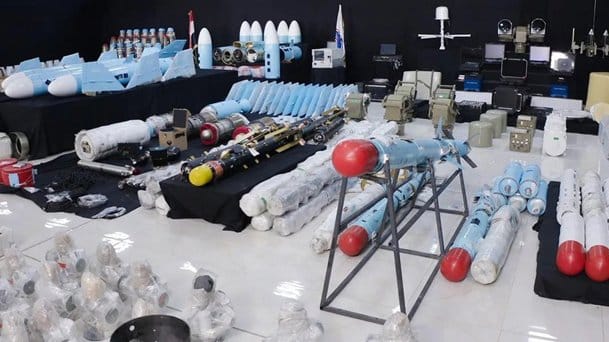
A display of the Iranian arms shipment intercepted on August 22 by National Resistance Forces on its way to the Houthis (NRF)

Published Sep 3, 2026 10:25 AM by The Maritime Executive


Fighting has intensified on most of the border between Houthi forces in Yemen and the areas held by the internationally recognized government (IRG). The scale of fighting is much worse since an informal ceasefire came into force in March 2022, but has not yet returned to full-scale warfare, largely because the Saudi-led coalition has not fully engaged – although most parties are preparing for the worst.

Probably the principal focus of the current fighting is the coastal strip bordering the eastern side of the Red Sea. To the north and south of Hodeida, the coast is held by the Houthis, including Yemen’s second biggest  port in Hodeida itself, plus Ras Isa, and Salif further north – through which aid reaches the country, but also the arms and munitions which the Houthis need to arm their war machine. The IRG holds a small stretch of the coastline leading up to the Saudi border, and then the coastline south of Hodeida down to the Bab el Mandeb and the entrance to the Red Sea. Most of the islands in the Red Sea remain in the hands of the IRG, save those close-in to the Houthi-held coastal strip. By hanging on to the coast south of Hodeida, the IRG makes smuggling of arms to the Houthis difficult, and also inhibits attacks on ships where the Red Sea, at its southern end, is at its narrowest.

In the current clashes, the Houthis seek to expand their coastal strip – to make it easier to smuggle in goods and attack shipping. The IRG, in contrast, led in this area by the murdered President Ali Saleh’s nephew, Major General Tariq Saleh, is intent on regaining Hodeida, to reduce the Houthis’ access to the outside world.

From the number of funerals being held in the Tihama coastal strip from both sides of the conflict, the fighting appears to have been heavy, with large numbers of casualties attributed to the novel use by both sides of camera- and bomb-equipped drones. But as yet, there appears to have been no substantial change to front-line positions or territory held.

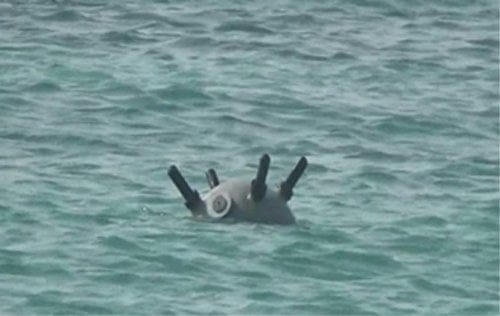
The importance to the Houthis of gaining ground in this area has been demonstrated in recent days by the Houthi’s firing of at least six high-value Fateh-110 ballistic missiles from the Ibb and Ta’izz areas at targets in the IRG territory being defended by General Tariq and his National Resistance Forces (NRF), most notably at the harbor facilities in Mocha, Khawkah, and on the Hanish Islands, as well as front-line positions further inland. General Tariq’s forces claim to have fended off an attack by five Houthi speedboats that were aiming to make a landing on Zuqar Island off Khawkah. The Emiratis built an airfield on this island before they left earlier this year precisely because Red Sea commercial traffic could be interdicted by any force holding the island, using speedboats, mines or missiles. The NRF also on August 22 apparently recovered a very clean (hence only recently sown) Iranian Maham-1 sea mine in the Bab-el Mandeb area, together with a bobby-trapped boat. 


The Maham-1 sea mine swept by NRF marine forces in the Bab el Mandeb (NRF) 


In an alarming development, the NRF reports that on the same busy day, they intercepted a large consignment of Iranian arms destined for the Houthis on board a dhow in the Red Sea. If this is verified, it suggests that the IRGC arms smugglers of Unit 190 can still slip past the US naval blockade in the Gulf of Aden in small dhows. Or more likely, that they have employed their well-practiced flexibility and use of drug-smuggling routes to find arms shipment corridors to the Horn of Africa, and thence by dhow across the Red Sea.

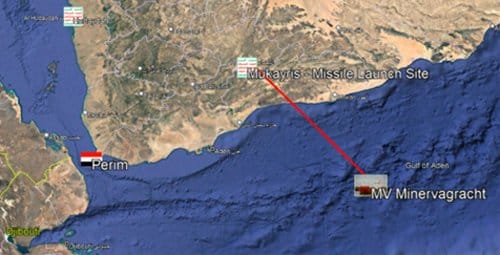
If the pictures published by the NRF are to be believed, the consignment included complete assemblies and components for at least 25 Mandab-2 anti-ship cruise missiles, which are based on the Iranian Noor/Ghadir missile and in turn upon the Chinese C-802. This is a missile with a range of about 180nm, and was probably the missile used by the Houthis to attack the MV Minervagracht (IMO 9571521) in September 2025.


Having such range as well as its own independent active radar terminal guidance, a Mandab-2 missile can be fired from high ground inland, threatening both ships in the lower Red Sea and on the Maritime Security Transit Corridor in the Gulf of Aden, needing only a cue from a Chinese or Russian imagery satellite.

Warfare between tribes and different parties has been endemic in Yemen for centuries. It becomes relevant for the international maritime community when one side appears intent on improving their ability to attack the shipping of external parties in the Red Sea and Gulf of Aden, hoping to exploit political leverage out of such attacks as the IRGC is attempting to do in the Strait of Hormuz. As yet, general warfare has still not quite resumed, but when and if it does so, the Saudis are well prepared, lessons having been learned from the last round of the contest. While reluctant to get involved in fighting yet again in Yemen, the Saudis know that with the Strait of Hormuz blocked, their gateway to Asia through the Red Sea must at all costs be kept open.


Captain and Third Officer Arrested on Negligent Homicide in Turkish Crash

tanker and coast guard vessel
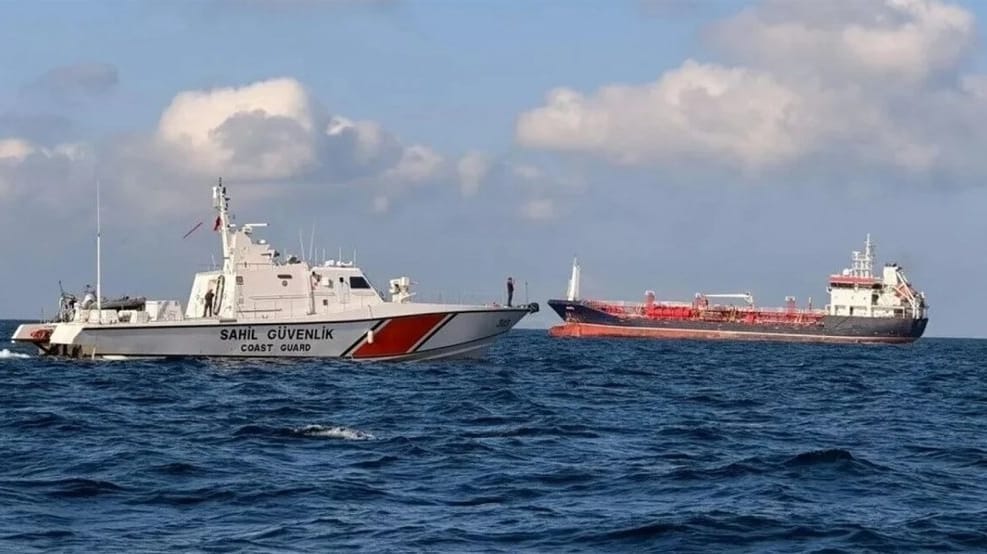
Tanker Alsu was detained by the Coast Guard with the crew remaining aboard (Istanbul Governor's Office)

Published Sep 4, 2026 12:07 PM by The Maritime Executive


Turkish prosecutors have moved quickly since the early Tuesday morning collision between a tanker and a cargo ship, reporting on Friday that a court has charged the master and third officer of the tanker Alsu with negligent homicide. The captain, who was not on the bridge, and the officer who was on watch were arrested late on Thursday for failing to fulfill the navigational safety obligations and take the necessary measures to prevent the collision.

Prosecutors presented the captain, several officers, and crewmembers to the district court in the Silivri region west of Istanbul on Thursday. Four of the crewmembers were released under court supervision while the captain and third officer were arrested. The authorities had detained a total of nine crewmembers after the collision, with only the ship’s cook not detained.

The preliminary findings of an expert panel that was assembled after the collision provided the basis for the arrest. According to Turkish media reports, the tanker Alsu was in command of a junior third officer who had just joined the vessel and was standing his first watch aboard the tanker. They asserted that he was unfamiliar with the ship’s navigation equipment. Some media reports said a trainee was acting as lookout, while others said there was no helmsman or lookout.

The report cites multiple issues with both vessels. The cargo ship Tugberk Imamoglu was not transmitting an AIS signal. It is unclear if the system was malfunctioning, and the expert panel said the loading condition of the cargo ship should be examined. The ship, which was carrying a cargo of 4,199 tons of rolled steel, is thought to have capsized and sunk within 10 minutes of the collision.

The captain of the Alsu was asleep and, in his testimony, said he awoke after the collision and went to find out what had happened. He is being charged for failing to fulfill his duty of supervision and oversight of navigation safety.

The junior third officer is charged with failing to take necessary measures to prevent the collision. Media reports indicate that about five minutes before the collision, the two ships spoke with each other, setting conditions for passing. Prosecutors said they would be listening to the recording of the conversation, and they have also ordered preservation of the navigation records and other information.

Alcohol tests were conducted, and the media accounts said they were negative. Full blood tests had also been ordered.

The 10 crewmembers from the cargo ship remain missing despite an extensive search and rescue operation. The Turkish Navy reported on Friday that its vessel TCG Akin has located the wreck of the cargo ship. No additional details were provided on its location, depth, or condition. Reports had said the depth in the area is about 900 meters (2,950 feet).


IMO Concludes Next Round of Net-Zero Discussions Still Divided

IMO working group meeting
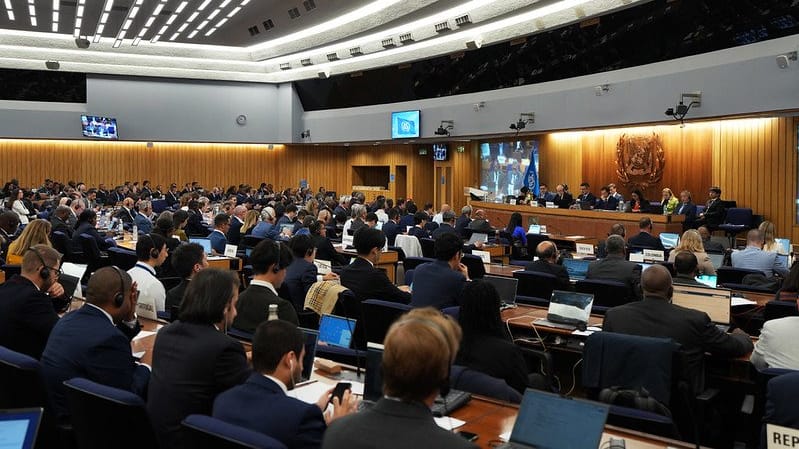
Nearly 1,200 participants registered for the IMO's Intersessional Working Group on Reduction of GHG Emissions from Ships (IMO)

Published Sep 4, 2026 4:02 PM by The Maritime Executive


The International Maritime Organization completed its next working group session discussing efforts to reach a decarbonization approach still largely divided, and is now aiming for a potential resolution by the end of 2026. Optimists are noticing a productive discussion and less political maneuvering and backstabbing, but the United States and others continued their opposition to the Net Zero Framework, and key issues were deferred to more intersessional discussions or a consequential series of three sessions in late November and early December 2026.

The session came against a backdrop where climate scientists assert that the evidence of the consequences of greenhouse gas emissions is building. Europe and many other parts of the world suffered through a blistering summer of heatwaves, and Nepal is still reeling from what appears to have been a major glacier collapse leading to catastrophic flooding. The United Nations released scientific reports saying the globe would exceed the previously ascribed goal to limit the increase to 1.5 Celsius (2.7 Fahrenheit) above mid-19th century temperatures, and likely more harsh consequences.

The United States, Saudi Arabia, and primarily other oil-producing states, continued their opposition in the IMO discussions that emerged and led to the deferral of adoption votes. They continue to push to scrap key elements of the Net Zero Framework or call for additions such as different fuels and more pathways. The proposed GCG Fund remains one element of strong opposition even with proposed changes and a renaming.

Other states put forward yet different approaches, such as Liberia, which wants to tie in the availability and affordability of cleaner fuels to the structure. Japan proposed replacing the pricing structure with shipowner-directed contributions, but according to observers in the closed-door sessions, that was “robustly rejected.”

Smaller and island nations continue to push for stricter requirements while many of the individual issues remained open to discussion. Researchers at UCL Energy Institute noted likely efforts to soften the initial Global Fuel Intensity pathway in the NZF as well as broad debate on issues such as pooling and transfer of credits. China put forward a proposal that includes reward payments and could form a single transaction, which was reported to receive broad support.

Observers are saying that it appears at least two-thirds of the states are supporting the approach of a centralized pricing and collection system that also rewards early adopters. At the end of the four days of meetings, it seemed that despite the continued block of opposition, overall, there is no significant support for an alternative to adopting the Net-Zero Framework. 

“Whilst there are many positives to take away,” Dr. Tristan Smith, Professor of Energy and Transport at UCL Shipping and Oceans Research Group, said, “there remains high uncertainty in the extent that both industry’s transition and low-income countries' transitions will be supported. There remains high risk that in the effort to find a creative way forwards, the equilibrium between these two aspects, that enabled the NZF in the first place, is lost to the detriment of the outcome overall.”

The IMO in its official summary also seeks to highlight that there was strong participation, over 1,200 registered for the intersessional working group, and that there was a “genuine willingness within the group to make concrete further progress.” However, while there might have been a hope to come toward a finalized text, they instead spent the four days debating and discussing and were also forced to defer some elements to the next sessions. The lifecycle framework, for example, was not considered and was delayed to the next session.

Summarizing where things stand, UCL concludes that “several key aspects of the negotiation are wide-open and didn’t narrow this week.” It sees as a core question the level of the early transition, how soft it is, and the regulatory tools and support for businesses to manage the changes. It expects the draft documents will evolve more informally and warns, “There could well be twists to come as different concepts are merged together to find common ground.”

The official IMO timeline calls for the intersessional working group to reconvene November 23 for a week of discussions. The following week, MEPC 85 runs from November 30 to December 4, and the extraordinary sessions adjourned in October 2025 resumes on Dember 4, assuming MEPC 85 produces conclusions.


Japan Announces First Tranche, $3.8B Investment in Shipbuilders

Japan's Imabari Shipbuilding
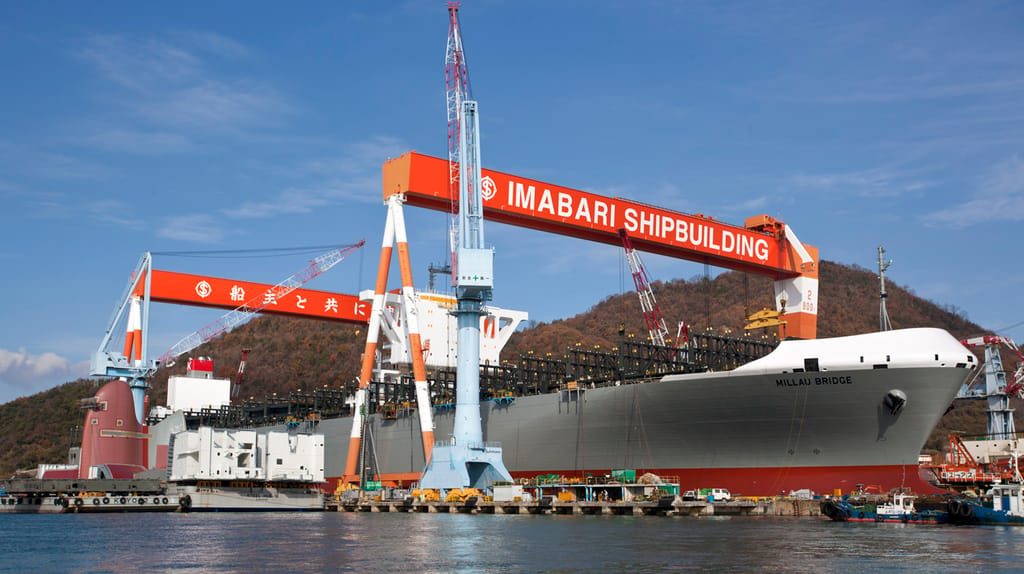
Imabari Shipbuilding is among the first shipbuilders to receive grants from the Japanese government as part of an effort to grow the industry (Imabari file photo)

Published Sep 4, 2026 6:56 PM by The Maritime Executive


Japan’s Minister of Transport unveiled the government’s first investments in the shipbuilding industry as part of an ambitious plan to dramatically expand the industry. Minister Yasuyuki Kaneko highlighted that shipbuilding is one of 17 priority areas in the government’s growth strategy.

Once one of the leaders in shipbuilding, Japan’s market share has declined dramatically as lower-cost competition emerged in South Korea and China. For 2025, the Japan Ship Exporters’ Association (JSEA) reported total orders of 186 ships totaling just under 9 million gross, which was down 16.5 percent versus 2024. It delivered 191 ships for export, totaling 8.32 million gross tons. Its market share was approximately 9 percent of the global orders.

“The revitalization of Japan's shipbuilding industry is finally getting underway,” said Kaneko speaking with the press on Friday. 

The government’s goal is to double Japan’s shipbuilding volume by 2035. He highlighted that the program will be rolled out in several phases with a total investment of approximately 1 trillion yen ($6.4 billion) coming from a combination of public and private partnerships. The Japanese shipbuilding industry had outlined to the government the critical need for investments, saying it would require government support to reclaim a portion of its lost business.

The first three investments are going to Imabari Shipbuilding, Japan Marine United Corp. and Namura Shipbuilding. The total value is 600 billion yen ($3.8 billion), with the government contributing nearly $1.4 billion.  Japan’s JiJi Press reports that Imabari and its subsidiary Tadotsu Shipyard will receive the largest portion, approximately 114 billion yen ($729 million) in government subsidies. JMU will receive a maximum of 49.4 billion yen ($316 million), while Namura and its subsidiary Hakodate Dock Co. will also get up to 49.9 billion yen.

The companies are meant to use the investment to expand and modernize their plants. One of the focuses is developing advanced technologies for the next generation of advanced ocean shipping.

“These three cases represent just a small portion of the numerous investment plans submitted by various businesses, essentially the first phase,” said Kaneko.


Japan Plans to Equip Submarines with Hypersonic Missiles

launch of Japanese submarine
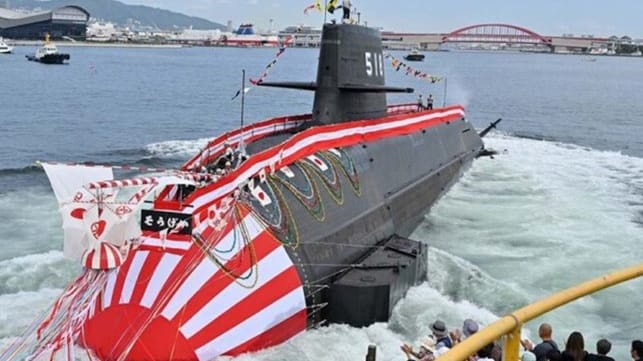
 The launch in Kobe of the sixth Taigei Class submarine JS S?gei (SS-518) in October 2025 (JMSDF)

Published Sep 4, 2026 2:31 PM by The Maritime Executive


Japanese Prime Minister Sanae Takaichi has presented a preliminary fiscal year 2027 defense budget request to the Diet, the Japanese parliament, which includes reference to an intention to equip Japanese forces with an “underwater-launched,” “high-survivability missile” which can be launched “at an early stage and at long range.” The ambiguous language opens up two possibilities: either a vertically-launched hypersonic ballistic missile, or a torpedo-tube-launched scramjet-powered hypersonic cruise missile. The key common features of both these types of hypersonic missile systems are their very high speed over long range, giving the target little time to react or evade, as well as the ability to maneuver in flight so as to complicate any attempt to track and intercept the warhead or warheads.

The Japanese Maritime Self-Defence Force, Japan’s Navy, has neither the necessary submarines nor hypersonic missiles in service yet, so the budget intent is likely to have a long gestation before the capability can be delivered. The Asia Times notes that Japan has previously described development work on both types of system: the Type 25 hyper-velocity gliding projectile system, with its Block 2B version having a planned range of 1,620nm “at Mach 5 and faster,” and a less advanced project to build a scramjet-powered hypersonic cruise missile.

The latest attack submarine that Japan is deploying is the Taigei Class, which is equipped with 6 533 mm torpedo tubes and thus can already launch subsonic cruise missiles such as the Harpoon UGM-84. Japan has up to now commissioned five Taigei Class submarines, the latest being JS Ch?gei (SS-517), which was launched in March 2026. The Taigei Class was designed from the start to be an operational test bed for the development of new and improved technologies, and each succeeding launch is of an upgraded variant. Incorporating vertical-launch tubes into the Taigei profile is probably a stretch too far however, and Kawasaki Heavy Industries have been working on a new design for a diesel-electric attack submarine since December 2023. Notwithstanding Japan’s constitutional limitations, the Japanese Defense Minister Shinjir? Koizumi has openly discussed the need for Japan to have nuclear-powered submarines, which if adopted would mean the future design with vertical launch tubes would conceptually look very similar to that being developed by AUKUS.


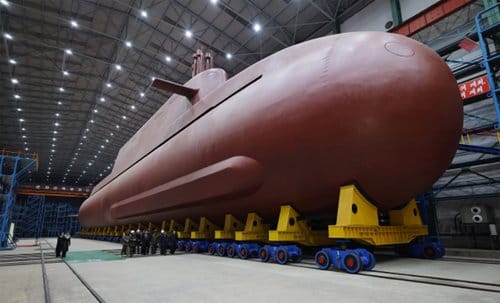
Kim Jong Un inspects an 8,700-ton submarine under construction, December 2025 (Korean Central News Agency)
 

Japan’s Prime Minister Sanae Takaichi was elected with an unusual super-majority on a platform for radically strengthening Japan’s defense posture, being faced with rising threats from China, Russia and North Korea. The drive for submarine-launched hypersonic weapons has particular relevance to the threat posed by North Korea’s growing nuclear arsenal – and the likelihood that North Koreas is attempting to develop a submarine-launched nuclear ballistic missile threat. 

North Korea’s Dear Leader Kim Jong Un has already been seen inspecting an 8,700-ton submarine under construction, with analysts unclear whether it is nuclear-powered or has vertically-launching missile tubes in the dorsal fin which looks large enough for the purpose. There is concern in Japan and South Korea that assistance in developing this capability has been the price paid by Russia for North Korean help in the war against Ukraine, cooperation that could end up with North Korea being able to launch a ballistic missile with a nuclear warhead from a long-range nuclear-powered submarine.