Saturday, September 05, 2026


Is our personality written in our genes? A new study provides new clues


Estonian Research Council
Study authors Ted Schwaba, Uku Vainik, and Kerli Ilves at the DJ booth during the European Conference on Personality (ECP) in the summer of 2026. Photo: Pirjo Mõttus. 

image: 

Study authors Ted Schwaba, Uku Vainik, and Kerli Ilves at the DJ booth during the European Conference on Personality (ECP) in the summer of 2026. Photo: Pirjo Mõttus.

view more 

Credit: Photo: Pirjo Mõttus.


The DNA of two randomly selected people is approximately 99.9% identical. However, differences in the remaining 0.1% of the genome influence many individual traits, including appearance, disease risk, and the body's response to medications. A study by researchers at the University of Tartu found that this small amount of genetic variation may also be linked to several personality traits.

In a study published this week in Nature, researchers from the University of Tartu identified more than one thousand genetic variants associated with human behavioural traits. The paper is based on a study involving more than one million participants and sought to uncover possible links between DNA variation and differences in personality, focusing on five major personality traits: openness, conscientiousness, extraversion, agreeableness, and neuroticism.

Over the past century, numerous studies have shown that personality variation is influenced by both genetic and environmental factors. Identifying genetic markers associated with personality is challenging because many genes contribute to these traits, and the effect of any single genetic variant is extremely small. Consequently, uncovering reliable associations requires very large study populations.

In 2021-2022, the Estonian Biobank conducted a personality study involving nearly 80,000 participants. While this is a very large sample in the Estonian context, it is not sufficient for personality genetics research. Researchers from Tartu joined forces with 45 other international datasets to make the overall sample as representative as possible. As a result, data from as many as 1.1 million individuals could be used to analyse certain personality traits. The contribution of Estonian biobank participants stood out for both its size and depth: the Estonian sample was the third-largest, and personality was assessed using the most comprehensive questionnaire among all participating cohorts.

The results were remarkably consistent across different study groups, including participants of different ages and geographical backgrounds. However, the identified genetic variants explained only a small proportion of the differences in personality traits, approximately 4.8% to 9.3%. This suggests that environmental factors, social relationships, and life experiences, together with their interaction with genes, may have an even greater influence on the development of personality than genetic factors alone.

Others’ Perspectives Confirm the Genetic Basis of Personality Traits

A unique feature of the Estonian Biobank personality study was that participants could ask someone they knew to evaluate their personality as well. “No other biobank in the world offers such an opportunity!” said Uku Vainik, Professor of Behavioural Genetics at the University of Tartu. Thanks to the distinctive design of the biobank’s personality study, researchers were able to compare whether self-assessments and assessments provided by close acquaintances reflected the same genetic signal.

The results of the two assessment methods showed substantial overlap. This indicates that the genetics of personality do not merely reflect how individuals perceive themselves but also observable behavioural characteristics recognised by others. “This shows that measurable personality traits are truly real, publicly observable characteristics of people, rather than merely individuals’ own opinions about themselves,” explained René Mõttus, Professor of Personality Psychology and co-lead of the study.

Personality Influences More Than Just Social Skills

Now that researchers have gained an initial overview of the genetics of personality, new and exciting questions can be addressed. For example, Kerli Ilves, a junior research fellow, is investigating potential causal links between personality and health using genetic data. Preliminary findings suggest that personality traits play an important role in shaping health behaviours, influencing factors such as body weight, smoking tendencies, and alcohol consumption. Ilves has also identified associations in the opposite direction, where established behavioural patterns may themselves influence personality. “We especially see this kind of relationship in smoking,” Ilves noted.

Researchers in Tartu emphasise that these findings are still preliminary. “The next step is to use other methods, such as longitudinal studies, to determine whether changes in personality are accompanied by changes in health behaviour, and vice versa,” explained Vainik. To support this work, the Estonian Biobank is planning a future study on personality and cognitive functioning. A better understanding of the links between personality and health could help pave the way for more effective and person-centred approaches to supporting healthy behaviours.

Read more: https://doi.org/10.1038/s41586-026-10992-9


A ‘raincoat’ protects lead-free solar cells from the elements


UW–Madison researchers design a more durable tin-based material to replace toxic lead while achieving high solar-cell efficiency


University of Wisconsin-Madison


One drawback of most solar cells made with efficiency-boosting perovskite is the presence of hazardous lead in the materials that turn sunlight into electricity. Next-generation solar cells made with the most promising, lead-free replacement — non-toxic tin perovskite — have had their own major weakness: they don’t hold up against the elements.

Now, researchers at the University of Wisconsin–Madison, the National Laboratory of the Rockies and other collaborating institutions have designed a new tin-based perovskite with built-in protection against air and moisture. It’s a coating that gives the solar cells protection like a raincoat.

The advance, published recently in the journal Nature Materials, addresses one of the biggest challenges facing tin-based perovskite solar cells by making them more durable for practical use while also enhancing performance. The researchers’ solar cells reached 16.2% efficiency — among the state-of-the-art for tin perovskite cells — and remained remarkably stable during extended testing.

“Tin perovskites are very promising materials for solar energy, but they are extremely sensitive to air and moisture,” says Song Jin, a UW–Madison professor of Chemistry and a corresponding author of the study. “We wanted to find a way to protect these materials while preserving the properties that make them attractive for solar cells.”

Perovskite solar cells have attracted intense interest as a next-generation photovoltaic technology. They can efficiently convert sunlight into electricity and potentially offer advantages in how solar cells are manufactured and used. Researchers and startup companies around the world have been working on improving their efficiency and stability and scaling up the manufacturing for commercial deployment.

However, most of the highest-performing perovskite solar cells contain lead, raising significant environmental concerns. Tin-based perovskites are considered the most promising lead-free alternatives because of their excellent light-absorbing and electronic properties.

The problem is durability. Tin perovskites are especially vulnerable to oxygen and moisture, which can rapidly degrade the material and reduce its performance.

Jin and his collaborators tackled the problem by understanding the way the components of these hybrid materials are assembled and designing new tin perovskite materials that can impede the damage from oxygen and water. The researchers made and compared tin perovskites containing a family of closely related organic components substituted with different halogen atoms (fluorine, chlorine, and bromine). They discovered that the chlorinated version allowed the tin perovskite material’s crystals to pack most tightly together.

The difference was striking, landing in the sweet spot for both durability and efficiency. Conventional tin perovskite materials began degrading within hours or days in ambient air. The newly designed material maintained its structure and bright luminescence in ambient air for several months. Even sitting for days immersed in water, the new tin perovskite remained undissolved — unlike typical perovskite materials.

Theoretical calculations performed by postdoctoral researcher Jiahao Xie and Professor Yanfa Yan from the University of Toledo further showed that the tight packing of the new materials makes it much more difficult for oxygen and water to penetrate and damage the sensitive tin-containing perovskite material.

“What is exciting is that a relatively small change in the material's design produces such a large improvement in stability,” says Christopher T. Triggs, the first author of the study who recently earned his doctorate in materials chemistry at UW–Madison. “It shows how designing the organic components and controlling the way perovskite structures pack together can provide powerful protection of the resulting perovskite materials from the surrounding environment.”

The researchers put their material design to a tougher and practical test by incorporating it into working solar cells, working in collaboration with Lei Chen and Kai Zhu, solar cell researchers at the National Laboratory of the Rockies.

After optimization, beyond the 16.2% power-conversion efficiency, the best of the new solar cell devices also retained more than 95% of their initial efficiency after 1,600 hours in dry air. Even when operated continuously under simulated sunlight at 55 degrees Celsius (131 degrees Fahrenheit), the cells retained 80% of their initial efficiency after 1,000 hours. These are among the best stability and device performance reported for tin-based perovskite solar cells to date.

The results also show that improving durability can go hand-in-hand with improving solar-cell performance.

“This gives us a new design strategy for making tin perovskite solar cells both efficient and much more robust,” Zhu says. “By understanding how the different parts of these hybrid materials interact, we can design and further improve the stability of these promising non-toxic solar materials to enable future applications.”

The researchers say the work opens up new strategies for designing more stable tin-based perovskites and helps move lead-free perovskite photovoltaics closer to practical applications. The National Laboratory of the Rockies and the Wisconsin Alumni Research Foundation have jointly filed for a patent related to the new material.

This research was supported in part by grants from the Department of Energy (DE-SC0002162, BES-ERCAP0032847 and Perovskite Enabled Tandems award 52776) and a National Science Foundation graduate fellowship (DGE-2137424).


Chimpanzees have accents too, study finds


Queen Mary University of London

Kassandra Giragosian and a chimp 

image: 

Dr Kassandra Giragosian and a chimp

view more 

Credit: Kassandra Giragosian


A study by Queen Mary University of London finds that young chimpanzees develop dialect, providing a new way of understanding ontogenetic evolution.    


A study has found that young chimpanzees develop distinct population-specific vocal patterns as they mature (ontogeny), challenging the long-held assumption that their calls are inflexible and determined solely by genetics. 

Led by Doctoral researcher Kassandra Giragosian from the School of Biological and Behavioural Sciences at Queen Mary University of London, in collaboration with the University of Portsmouth, the research compared the vocalisations of infant and juvenile chimpanzees from two geographically separated populations.  

By analysing grunts, whimpers and laughter, the team discovered that differences between the groups became more pronounced as the animals grew older, suggesting that vocal behaviour continues to develop throughout early life. 

Analogously to people - who recognise different regional accents - the team found that young chimpanzees from different communities produced subtly different vocal patterns too. Moreover, some population-specific vocal characteristics were already present in infancy, while others emerged during the juvenile years. This developmental pattern suggests that social interactions, environmental conditions and other non-genetic influences may all contribute to shaping how young chimpanzees communicate. 

The findings provide the first evidence that population-specific vocal differences become increasingly distinct during chimpanzee development. By focusing on how communication changes over time, rather than simply comparing adults from different populations, the research offers a new perspective on the processes that shape vocal behaviour in other species.  

"Understanding how communication develops during early life is fundamental to understanding animal behaviour. Our findings show that chimpanzee vocalisations are not simply fixed from birth but continue to develop as young animals interact with their social and ecological environments." says doctoral researcher, Kassandra Giragosian.  

The research contributes to a growing body of evidence that primate communication is more flexible and dynamic than previously recognised. By examining vocal development through an ontogenetic lens, the study provides a valuable framework for investigating how communication systems emerge and diversify within animal populations.  

Although the study does not suggest that chimpanzees possess language or human-like speech – a process that involves agreed grammar and lexicon, for instance – but it convincingly demonstrates that their vocal development is influenced by more than genetics alone. By showing that population-specific vocal patterns emerge and become more pronounced during development, the research provides new insight into the biological and environmental factors that shape communication in primates and offers a fresh perspective on the evolution of complex communication systems. 


Tree diversity protects forests from climate extremes


New study finds species diversity leads to greater resistance and resilience


Anglia Ruskin University


New research has found that tree species diversity can play a crucial role in protecting forests from the growing threat of extreme climate events.

The study analysed data from 88,116 separate forest plots across the United States to investigate the impact caused by “compound climate extremes”, which is when events such as drought and extreme heat occur at the same time.

Published in the journal Nature Communications and led by Peking University in Beijing, China, the research was carried out by an international team of scientists, including Dr Hannah White from Anglia Ruskin University (ARU) in Cambridge, England.

Using satellite observations alongside forest inventory data, the researchers examined forests’ resistance, which is their ability to withstand climate extremes, as well as their resilience, measured by how effectively they recover afterwards.

While previous studies have typically focused on the impacts of individual climate events, such as heatwaves, climate extremes rarely occur in isolation. As a result, concentrating on single events may underestimate the risks posed by climate change.

The new research found that when extreme heat and moisture-related events occur together their effects tend to be amplified, resulting in greater negative impacts than the sum of the impacts of individual extremes.

For example, extreme heat can intensify extreme drought by increasing evapotranspiration and exacerbating water stress, while heat combined with excessive moisture, causing waterlogged soil, can exacerbate hypoxia and root damage.

Across all 88,116 forest plots analysed, compound heat and moisture extremes occurred at least once between 2001 and 2020, and when exposed to these combined events, forests generally showed lower resistance and poorer recovery than when subjected to individual climate extremes.

Crucially, however, the study found that forests with greater tree species diversity were better able to cope with these pressures. Forest plots containing a wider variety of tree species experienced smaller declines in productivity during compound climate extremes and recovered more effectively afterwards.

The findings suggest that biodiversity can act as a form of "biological insurance", helping forests maintain stability in an increasingly unpredictable climate.

Study co-author Dr Hannah White, Senior Lecturer in Ecology and Conservation at Anglia Ruskin University (ARU), said: “Forests are one of the most productive ecosystems on Earth and are vital to how our planet functions, but they are increasingly exposed to more frequent and intense extreme weather events as our climate changes.

“Much of the research to date has focused on the effects of individual extremes such as droughts or heatwaves. Our study, which used extensive forest survey data and satellite-derived productivity measures, shows that when these extremes occur together, the consequences can be substantially more severe, reducing both the forest’s ability to withstand disturbance and its capacity to recover afterwards.

“However, we also found that biodiversity can be crucial for governing forest stability, as those with a greater diversity of tree species consistently performed better under these challenging conditions. Our findings have implications for future carbon cycle projections and demonstrate the important role biodiversity can play in helping to mitigate the impacts of climate change.”


Floating solar emerges as India’s next frontier in the clean energy transition

Floating solar emerges as India’s next frontier in the clean energy transition
/ Maximus Beaumont - UnsplashFacebook
By IntelliNews - Mumbai bureau September 1, 2026

India has achieved commendable success when it comes to solar power. Electricity generated from solar power projects constitutes the biggest share of India’s renewable energy capacity. The last financial year, FY2025-26, was a milestone year for the renewable sector, especially the solar power industry. The year witnessed record additions in both solar and non-fossil fuel capacity.

India added 44.61 GW of solar capacity, nearly double the 23.83 GW added in FY2024–25, according to the government data published in early August. Schemes like Pradhan Mantri-Kisan Urja Suraksha Evam Utthaan Mahabhiyan (PM-KUSUM), which helps farmers achieve energy independence by promoting solar power in agriculture and replacing diesel pumps, and PM Surya Ghar: Muft Bijli Yojana, the world’s largest domestic rooftop solar initiative, have been a great enabler of this growth.

In another boost to the sector, the Indian Union Cabinet recently approved the ‘Pradhan Mantri Surya Sarovar Yojana (PM-SSY)’, a scheme for the development of floating solar photovoltaic (FSPV) projects. The solar projects will be combined with energy storage systems (ESS) and the combined outlay for PM-SSY will be to the tune of INR50.7bn ($534mn).

The PM-SSY is designed to facilitate the development of 5,000 MW of floating solar photovoltaic capacity, with each project required to include a co-located energy storage system capable of providing at least two hours of storage or equivalent to 10,000 MWh in total. According to the Indian government, projects will be approved over the five-year period from FY2026-27 to FY2030-31, while financial support under the scheme is expected to continue through FY2032-33.

The government’s green light to the PM-SSY comes after the recent assessment done by the National Institute of Solar Energy (NISE). According to the NISE study, a floating solar project holds potential of about 102.18 GWp across reservoirs and other suitable inland water bodies in the country.

Under the scheme, Central Financial Assistance (CFA) of INR10mn per MW will be provided for eligible floating solar photovoltaic projects after successful commissioning. In addition, CFA of up to INR5mn per project will be available for undertaking feasibility studies, including bathymetry and hydrography assessments, environmental studies, and other preparatory activities required for de-risking the project development.

The government believes that the states and Union Territories will benefit through this scheme. The scheme would enhance the floating Solar PV capacity in the country by 5,000 MW, which is presently just around 700 MW.

The government is of the view that the combination of an energy storage system with the power project will help boost grid reliability. The government also envisions that the floating solar power scheme would facilitate the reduction of around 10mn tonnes of CO₂ emissions every year. The scheme is also expected to generate about 16,000–17,000 full-time equivalent employment opportunities across the project value chain. The scheme is further expected to give impetus to domestic manufacturing of floating systems as well as the entire value chain of the projects, like PV cells, modules and energy storage systems.

Advantages of floating solar systems

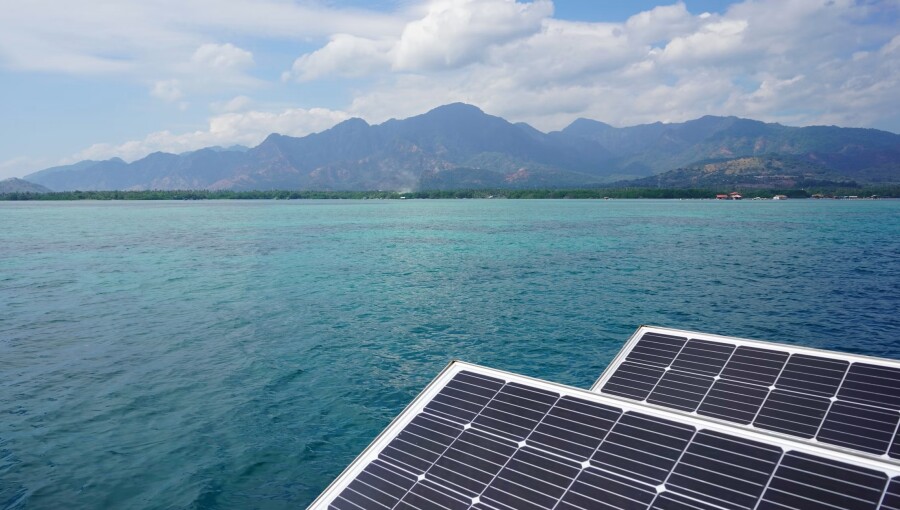
Floating solar systems offer many advantages since the solar modules are installed on water bodies such as lakes and water reservoirs.

According to a report by Economic Times, the most important benefit of floating solar systems is that they help conserve land. In India, land is a very vital resource given the country’s large and growing population. The floating systems also offer the advantage that they help reduce the extent of evaporation of water from the water bodies and boost the efficiency of solar modules by keeping them cooler during the summer months.

Some prominent companies have already begun work in this space. State-owned power giant NTPC Limited launched two of India’s biggest floating solar projects in 2022. The first, 100-MW Ramagundam project in the state of Telangana. The second project, 92-MW Kayamkulam project, is located in the southern state of Kerala. The proposed 600-MW Omkareshwar floating solar park in the central Indian state of Madhya Pradesh is another vital project, with 278 MW currently operational.

The Economic Times report stated that CFA can help improve the economics of the project. The floating systems are generally more expensive than land-based projects, mainly due to the cost attached to floating platforms, anchoring systems, specialised electrical equipment and installation. The addition of energy storage adds to the final cost of capital. The report argues that project developers will require financing that is affordable. The developers will also require a visible and attractive revenue stream through long-term power purchase agreements (PPAs) for project viability.

Although the ambition behind the PM-SSY is relevant, the success of the scheme depends on factors such as clean execution, the bankability of eligible projects and strong coordination among institutions. The process will require careful identification of suitable water bodies, detailed feasibility assessments and the development of climate-resilient systems capable of withstanding extreme winds, waves and changing water levels. Protecting the environment will also be essential, with ecologically sensitive locations subject to comprehensive impact assessments before any project is approved.


Q&A: The Arctic melt season is a week longer now than it was in the 1980s, shows new UW research on sea ice trends


University of Washington
Sea ice 

image: 

Researchers collecting measurements of algae and sea ice properties in the Chukchi Sea in July 2011, as part of NASA’s Impacts of Climate on the Eco-Systems and Chemistry of the Arctic Pacific Environment (ICESCAPE) mission. The changes of the Arctic sea ice cover have repercussions for the functioning of the polar marine ecosystem.

view more 

Credit: Melinda Webster/University of Washington


Relatively few people have been to the Arctic, and even fewer have set foot in Antarctica. Most of us rely on our imaginations and media to visualize these landscapes and the ways they are changing.

Research shows that the Arctic is warming four times faster than the global average. The sea ice is melting, exposing more open ocean and throwing the ecosystem out of balance. The story of Antarctica contains fewer details, but emerging trends are concerning to researchers.

Conceptualizing this change can be challenging for those of us who have only glimpsed Greenland from the airplane window, but for someone with firsthand experience, it’s eye-opening.

Melinda Webster, a research scientist at the University of Washington’s Applied Physics Laboratory, has visited the Arctic at least once a year since 2009, sometimes staying for as long as five months.

Webster is the lead author of a new research paper, published Sept. 2 in Nature Reviews Earth and Environment, that describes how sea ice has changed in the past 50 years.

Their analysis arrives as the world begins preparations for the fifth International Polar Year, a dedicated period of observation that will peak during the 2023 to 2033 season. International Polar years have occurred every 30 to 50 years since the late 1800s to advance polar research and track environmental change. The upcoming International Polar Year will occur just 25 years after the last, held in 2007, due to the acceleration of climate change.

“There aren’t many colors on Arctic sea ice. It’s a gradient of blues and grays; a stunning, stark icescape that makes you appreciate how harsh the environment is, and how fragile," Webster said. "The state of ice cover is both an indicator and an amplifier of climate change”.

What motivated this study?

Melinda Webster: We have known for a long time now that the extent, or area, and thickness of sea ice is declining, especially in the Arctic. But we wanted to take that a step further to examine the properties of the ice, especially perennial ice, which doesn’t completely melt away in summer. We updated trends for sea ice with 15 to 20 more years worth of data to understand how it has changed through the contemporary period. We also wanted to emphasize the divergent responses we see in the Arctic and Antarctica, and make recommendations for future research.

What did you discover?

MW: The Arctic sea ice melt season has gotten approximately seven and a half days longer since 1979, and this is mostly driven by sea ice forming later in the fall. This has sweeping implications for the global climate system. The superpower of sea ice is its high albedo, meaning that it reflects a lot of sunlight — somewhere between 60% and 90% — back into space. Dark ocean water, on the other hand, reflects just 7%. The open ocean absorbs much more sunlight than ice does, and with that absorption comes warming. In the fall, the ocean is too warm for ice to form and it is taking longer for that heat to dissipate.

The seasonal ice that ultimately forms is thinner, and easier to melt in the following spring and summer. So this creates a cycle of warming that reduces ice coverage and increases the amount of energy in our climate system over time.

What’s the deal with Antarctica?

MW: Antarctica is a land mass covered in ice and surrounded by water. The Arctic is an ocean surrounded by land. Although they share certain qualities, the two regions are very different from one another, with distinct responses to climate change. For a long time, the sea ice cover wasn’t declining in Antarctica, but in the last four years the sea ice cover experienced record losses.

Logistically, it’s a lot more difficult to deploy instruments in the Antarctic than the Arctic. The measurements we do have are less accurate because the Antarctica sea ice system is more complicated. But, we need to unravel these recent changes, which is a priority research area we identify in the paper.

What other impacts do you foresee these changes having?

MW: Another key result we presented is that snow cover on Arctic sea ice has gotten thinner and the sea ice itself is smoother. That has huge repercussions for polar bears and seals, as it impacts their ability to build dens for raising their young.

There’s also a connection to fisheries. Changes in sea ice cover also impact algae, which form the base of the food web. These algae are accustomed to very low light conditions, but thinner snow and ice let more light in and the algae are essentially getting sunburnt.

When you take an ecosystem that was adapted to an ice environment and introduce open ocean, it disrupts its regular functioning. The health of algae impacts the entire food web, which has important implications for fisheries in the sub-Arctic and Arctic. Less food might mean fewer fish, and that introduces a whole new set of concerns.

Are there any potential solutions? 

MW: To mitigate climate change, you have to reduce greenhouse gas emissions. That’s at the center of the problem. There are various alternative geoengineering strategies floating around but little consensus on how safe and useful they are.

I think that it is critical to have international regulations that are shaped by representative communities on what kind of research we need before any geoengineering action is taken, if at all. Still, at the end of the day, geoengineering is a Band-Aid. We need to reduce greenhouse gas emissions to deal with the underlying cause of climate change instead of just treating its symptoms.

I’m optimistic about solutions for reducing emissions. Technological and scientific innovation are progressing at a rapid pace, which gives me hope about the future.

Co-authors include Stefanie Arndt of the University of Hamburg; Angela Bliss of NASA Goddard Space Flight Center; Sahra Kacimi of the Jet Propulsion Laboratory at California Institute of Technology; Ted Maksym of Woods Hole Oceanographic Institution; François Massonnet of Université Catholique de Louvain; Aku Riihelä of the Finnish Meteorological Institute and Takenobu Toyota of Hokkaido University.

This research was funded by the U.S. National Science Foundation, the U.S. Office of Naval Research, NASA, the Alfred-Wegener-Institut, Helmholtz-Zentrum für Polar- und Meeresforschung, the University of Hamburg, the German Research Foundation, SnowCast, the DFG Emmy Noether Programme Project Snowflake and the Research Council of Finland.

For more information, contact Webster at melindaw@uw.edu.