Thursday, July 30, 2026


Low water levels: EU clears old Nazi warships from the Danube

Wreck of a German Second World War warship in the Danube near Prahovo, Serbia, 29 August 2022
Copyright AP Photo

By Lutz Faupel
Published on

Near Prahovo in Serbia, relics of the Second World War emerge when river levels are low. On the riverbed lie numerous wrecks of German warships scuttled by their crews in 1944 as they retreated from the Red Army.

Persistent heat is causing water levels in the Danube to drop in many places, bringing relics from the past to light. Near Prahovo in Serbia, numerous wrecks of German warships become visible every year; some of them are to be salvaged in the coming years, others have already been hauled ashore. Earlier this week, the magazine "Fokus" was the first to report on this.

Witnesses to the advance of the Red Army

The story of the wrecks begins more than 80 years ago, towards the end of the Second World War. In the autumn of 1944, the Wehrmacht retreated before the advancing Red Army, on land and on water. Hitler's soldiers had orders not to let any usable military equipment fall into enemy hands. That applied to the naval squadrons of the Kriegsmarine on Europe's second-longest river as well. As a result, crews scuttled their ships in the Danube.

The plan was to use the wrecks to block the shipping lane and thus stop the Red Army from moving upstream along the Danube. This blockade is still having an impact today.

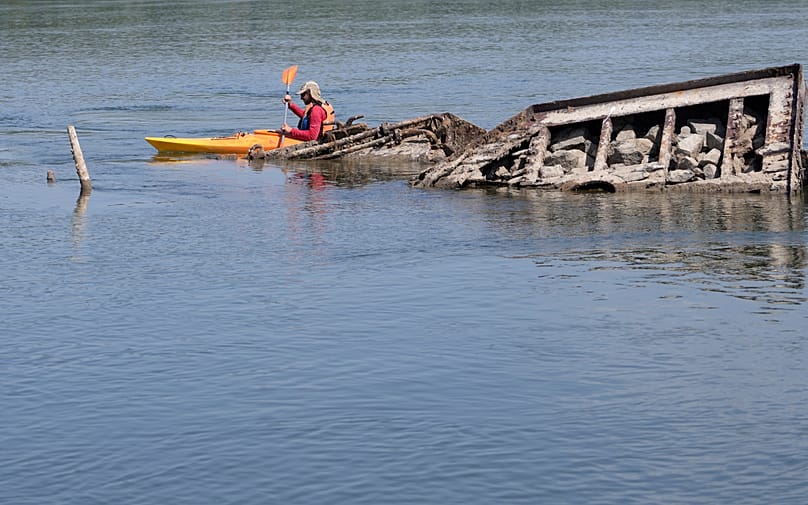
In previous heatwave summers, falling Danube levels had already exposed some of the wrecks, for example in August 2022. In response, an EU-backed project under the Western Balkans Investment Framework(WBIF) set about raising 21 of the most obstructive wrecks.


Canoeist passes the wreck of a German Second World War warship on the Danube near Prahovo in Serbia, 29 August 2022 AP Photo

200 wrecks, risky salvage

The European Investment Bank (EIB) is the strategic partner of the investment framework. According to the EIB, some of the remains in a five-kilometre bottleneck of the Danube were already recovered in 2024. They were hauled out of the river with ropes and cleared of mud. In an article published on the EIB website in the same year, Serbia's then deputy minister for construction, transport and infrastructure is quoted as saying:

 Aleksandar Banjac 
then Serbian deputy minister for construction, transport and infrastructure.

According to the EIB's information at the time, the work is due to be completed by 2028. Before the salvage operations began, around 200 vessels were thought to lie on the bed of the Danube, including destroyed cargo ships, tugs and barges.

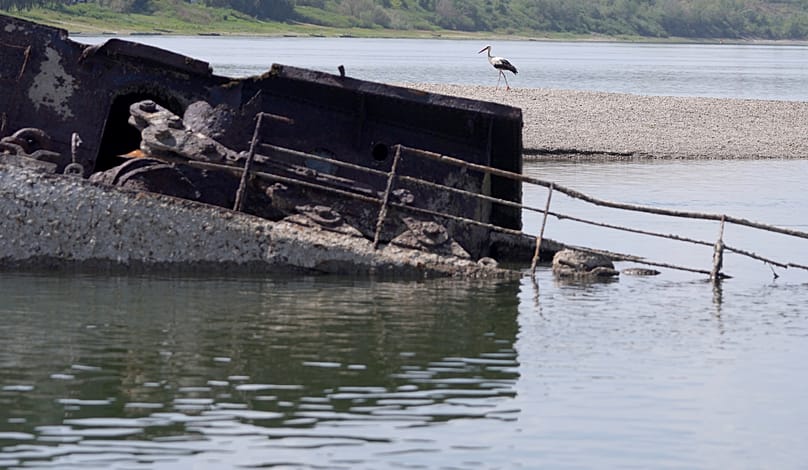
Wreck of a German Second World War warship in the Danube near Prahovo in Serbia, 22 August 2022 AP Photo


Salvaging armed vessels belonging to different armed forces is considered particularly challenging. According to the EIB, some boats may still have ammunition on board, which could lead to explosions during recovery.

Wrecks caused losses of millions of euros a year

The recovery of the first 21 wrecks also had economic reasons, according to the bank. The debris had caused significant delays in freight transport. As a result, Serbia was estimated to be losing around five million euros a year.

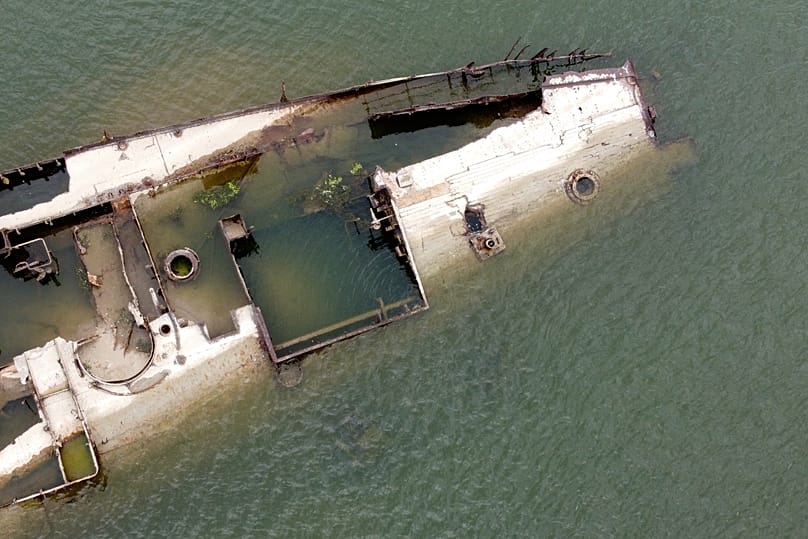
Deck of a German warship that sank in 1944 in the Danube near Prahovo in Serbia, 29 August 2022 AP Photo

According to Banjac, divers are to be deployed in the salvage of the ships, along with pumps to remove sand and silt. However, he described some wrecks as too large for such a recovery. Some have been left in the riverbed and buried deeper so as not to obstruct shipping.

In July 2024, the EIB granted a subsidy of 16 million euros for the project, with the aim of making inland navigation in Serbia and the region more competitive in future. The project is part of the Economic and Investment Plan for the Western Balkans, worth 30 billion euros, which according to the EIB is also intended to help shift more freight traffic from road to water.

’Magical material’: How Europe’s drought-struck islands could soon harvest water from dry air

A render of the Ahbstra ARK water harvesting device in a hotel setting.
Copyright Ahbstra


By Angela Symons
Published on


Europe’s tourist islands are facing severe water stress. Is tech that harvests water from dry air a solution?

When wells on his Ibiza property ran dry, Hashem Arouzi experienced Europe’s water crisis first hand.

The British entrepreneur set about to find a solution – not only for himself, but for the thousands of island-dwellers whose water supplies are dwindling due to drought, over-extraction and seawater intrusion.

“In Ibiza alone, there are more than 15,000 properties that are not connected to the water supply, and need to secure their own water,” says Arouzi. “The wells that have previously supplied them are running dry.”

Water deliveries by truck offer temporary reprieve but now even the reservoirs that supply them are running dry.

Desalination plants are increasingly coming to the rescue of mains-connected properties but off-grid homes are being left behind.

“This reflects a global challenge: around the world there are millions of homes that are off-grid and water-stressed – in areas where existing methods of water harvesting would struggle with arid conditions,” says Arouzi.

Machines that harvest drinking water from the air – even in hot and dry climates – could be a life-saving solution.

Making use of Nobel-winning water harvesting tech

As soon as next year, off-grid villas and hotels in the Mediterranean and Balearics could be bolstering their water supplies with tech that achieves just this.

Unveiled today (30 July) in Barcelona, the ARK is a plug-and-play device by Arouzi’s climate tech company Ahbstra that the company claims is capable of harvesting up to 500 litres of water a day from the air.

Its secret weapon? Breakthrough molecular chemistry that was awarded the Nobel Prize in Chemistry in 2025.

Metal-Organic Frameworks, or MOFs, feature an innovative molecular structure engineered to have a huge internal surface area – the equivalent of a whole football pitch in one gram of material.

The structures are the result of the decades-long work of three scientists: Susumu Kitagawa from Kyoto University in Japan, Richard Robson from the University of Melbourne in Australia, and Omar M. Yaghi from the University of California, Berkeley, in the United States.

The Ahbstra ARK was unveiled n Barcelona on 30 July. Ahbstra

How does MOF-based water harvesting work?

With large cavities in which molecules can flow in and out, MOFs can be used to separate pollutants from water and extract carbon dioxide or water from the air.

Conventional atmospheric water generators (AWGs) work like dehumidifiers, cooling air down to its dew point to create water condensation. At low humidity, the dew point drops, often making it unviable to cool the air sufficiently.

MOFs on the other hand are adsorbents, not condensers, meaning they can hold molecules of gas or liquid on their surface. This allows them to physically bind water vapour molecules directly out of low-humidity air, without the need for energy-intensive deep cooling.

A modest amount of heat is needed to release the captured water as liquid.

Yaghi's own company, Atoco, unveiled the world's first MOF-based water harvester in February 2026, with orders opening later this year.

Capable of producing up to 1,000 litres a day using only ambient thermal energy, the units – roughly the size of a shipping container – could be a lifeline for disaster hit communities, as well as providing resource-hungry data centres with water generated using waste heat.

How a ‘magic material’ could ease off-grid water stress

“For years, MOFs have been a ‘magic material’ on the cusp of delivering vital results for the environment, from water harvesting to carbon capture,” says Arouzi.

But their high energy requirements previously made their use unviable at scale.

Ahbstra says it addresses this with its patented Suspended Particle Reactor, which cycles air through MOF granules in a fluidised state to maximise their performance.

Priced at £150,000 (around €175,000), the company's units still aren’t cheap – but they could be invaluable for properties that are at risk of being devalued or abandoned due to a lack of water security, the developers say.

Water from the ARK can be used to replenish wells and cisterns, or be sent directly to a property’s mains water system.

Both Ahbstra and Atoco are currently developing systems for smaller water volumes, too.

Part of a whole-system approach to water stress

This summer, successive heatwaves and droughts have subjected many southern European countries to severe water shortages, with around 30 per cent of people facing permanent water stress across the region, according to the European Environment Agency.

“It’s clear that weather and rainfall patterns are changing, leading to more extreme and prolonged drought conditions in many places,” says Richard Perkin, CTO of Ahbstra. “Tackling this requires a whole-system approach, from water efficiency to recycling and better infrastructure.”

But if dams or wells are dry, they can only be refilled when it rains in the right place, no matter how responsibly the water is managed.

“This is why atmospheric water harvesting is a necessary part of the response,” he says.

Independent, peer-reviewed data on the ARK’s real-world performance and durability is not yet available.


Breaking news. UEFA announces boycott of future FIFA World Cups over investment plan

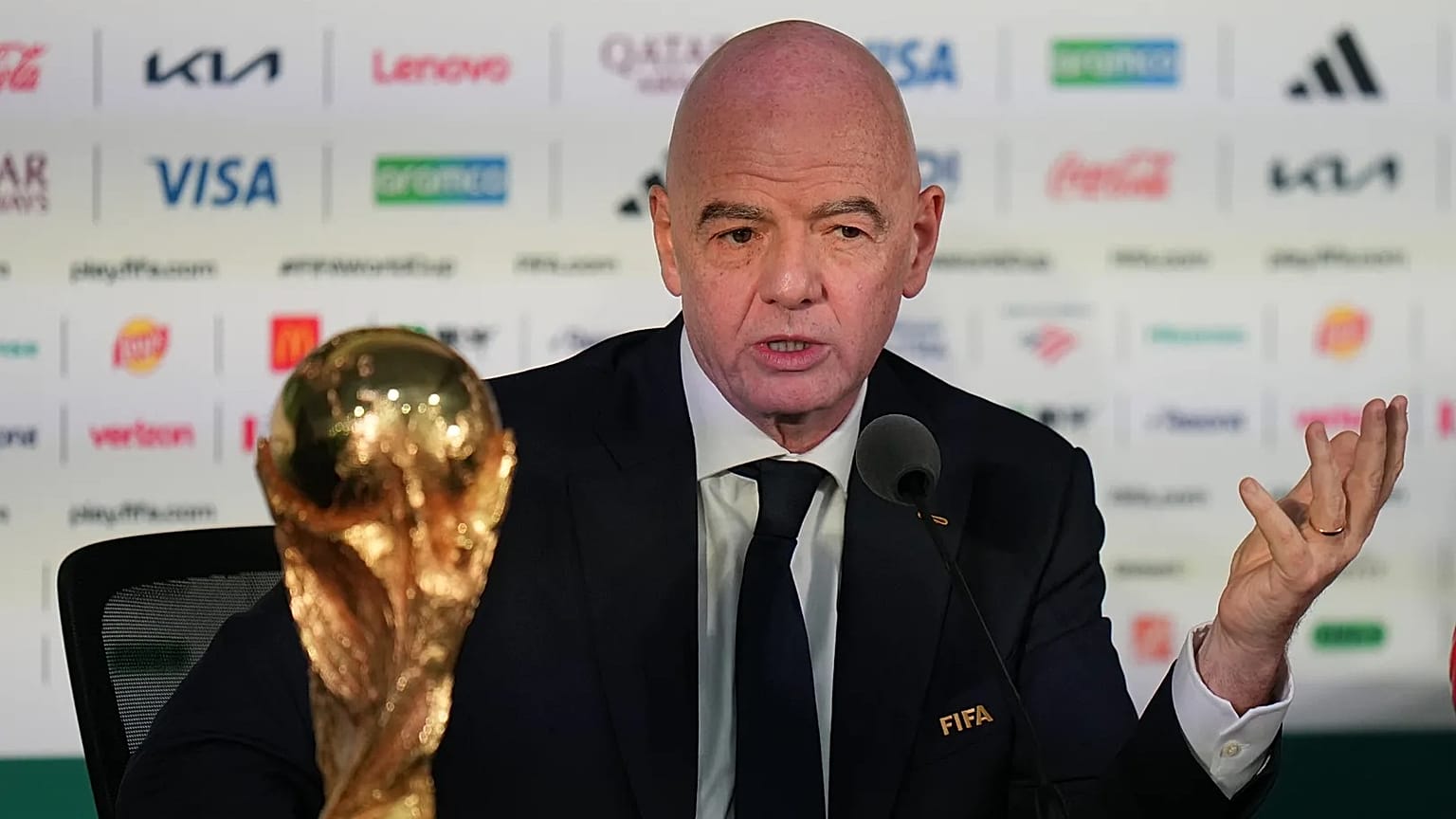
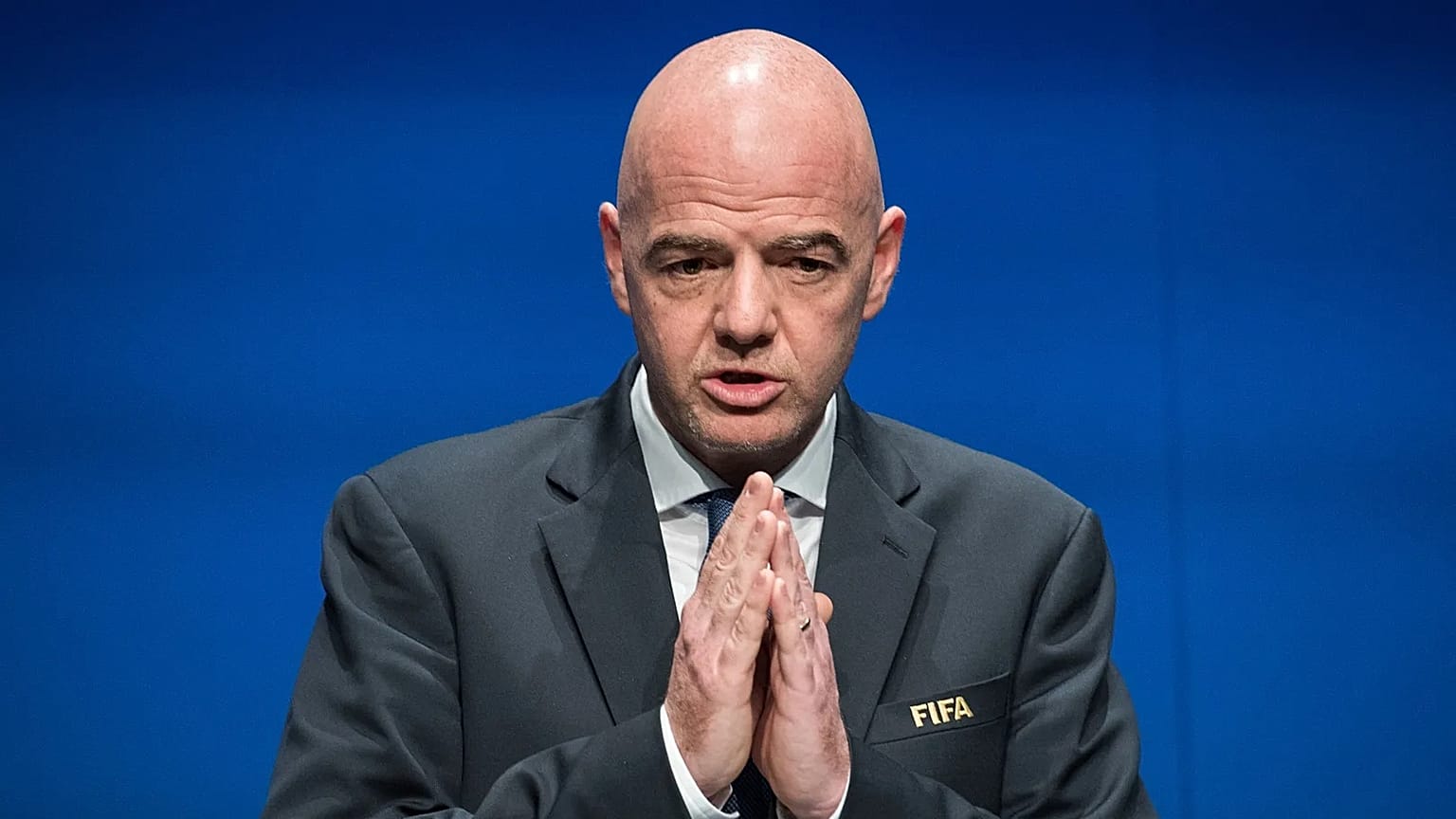
FIFA President Gianni Infantino.
Copyright Copyright 2026 The Associated Press. All rights reserved


By Vincenzo Genovese & Sonja Issel
Published on

UEFA says the World Cup "cannot be treated as an investment product" and has threatened to pull its national teams from FIFA competitions unless the proposal is permanently withdrawn.

The Union of European Football Associations (UEFA) announced on Thursday that it would boycott future men's and women's World Cups in response to FIFA President Gianni Infantino's plan to allow private investment in its competitions.

In a statement issued after an emergency meeting of its 55 member associations, UEFA "unanimously and unequivocally" rejected FIFA’s proposal to launch a new World Cup spin-off. The plan involves selling stakes of up to ​20% to external investors, including Joshua Kushner, whose brother Jared is US President Donald Trump’s son-in-law.

The World Cup "cannot be treated as an investment product," the statement said.

Without Europe's participation, Infantino's venture would become far less attractive, both competitively and commercially as Europeans dominate the competition. Three of the four teams to reach the semi-finals were European: France, England and winner Spain.

During the meeting, representatives of more than 40 football associations took the floor to describe the plan as unacceptable, with all of them agreeing to a boycott, sources familiar with the matter told Euronews.

"National associations around the world are now presented with an ultimatum: accept the irreversible capture of football's greatest competitions or bear the consequences," the statement said.

UEFA added that no national team from its member associations would take part in any FIFA competition "for so long as these proposals remain alive", unless FIFA abandons the plan in its entirety and provides binding assurances that it will never again open its governance or competitions to private ownership.

The next men's World Cup will be hosted by Spain, Portugal and Morocco in 2030, while the next women's World Cup will take place in Brazil in 2027.

UEFA believes that under Infantino's proposal, commercial pressure from investors would spill over into sporting decisions, leading to an unprecedented change in the world of football.

"Football’s future cannot be dictated by the expectations of those whose first duty is to maximise financial return," the statement reads.

EU Commissioner for Sport Glenn Micallef welcomed the decision, writing on social media after the boycott was announced: "Proud to see Europe’s football associations leading on governance, standing firm on their principles and defending the integrity of the game."

Infantino's plan on the ropes

In theory, Infantino's plan could still be approved even if the European associations reject it. The proposal requires the backing of a majority of FIFA members, as well as the FIFA Council, the governing body's 37-member decision-making panel chaired by the president.

FIFA's voting system gives each national association one vote, regardless of its size, wealth or football tradition. That means the European associations could be outvoted if the other confederations back the plan.

However, a coordinated European withdrawal from the World Cup would have major consequences for players, broadcasters and sponsors, making the tournament considerably less appealing to global audiences.

UEFA is FIFA’s most influential confederation, both politically and financially, and its 55 member associations represent more than a quarter of FIFA’s 211 members.

European national teams are arguably the most valuable asset for FIFA, having won 13 of the 23 men's World Cups and four of the nine women's World Cups so far.

The Confederation of North, Central America and Caribbean Association Football (CONCACAF) is holding an emergency meeting on Thursday evening and could follow UEFA's lead.


FIFA's plan to sell World Cup to private investors has not been well received - but can they pull it off?

File. 10 June. 2026
Copyright AP Photo
By Simon Ormiston
Published on

Gianni Infantino’s plan to sell stakes in FIFA’s commercial operations to private investors faces fierce opposition from UEFA, which could potentially have enough votes to block the proposal.

FIFA president Gianni Infantino has proposed creating a new commercial subsidiary that would allow private investors to buy minority stakes in the business generated by the World Cup and FIFA's other competitions.

The proposed FIFA Forward Enterprise (FFE) would put FIFA's commercial and event operations under a separate company while FIFA retained majority control. FIFA says the plan could unlock more than $10 billion (€8.7bn) for football development.

But Europe's members, led by UEFA, have reacted furiously, saying "the soul and governance of football are not assets to trade", while also complaining about a lack of consultation.

It has called an emergency meeting of its 55 national associations to coordinate its response, with the Asian and North American confederations also raising concerns.

FIFA's headquarters are in Zurich, Switzerland. AP Photo

What does Infantino need to gain FIFA approval?

FIFA is not a conventional company with shareholders. It is an association governed by Swiss law, headquartered in Zurich and ultimately controlled through its 211 national member associations, referred to as the FIFA Congress.

FFE would represent a significant change because it proposes transferring FIFA's commercial and event operations into a subsidiary in which private investors could acquire minority stakes.

Although Article 12 of FIFA's July 2026 Governance Regulations shows that simply creating a subsidiary does not necessarily require a majority of the Congress to agree, Infantino has confirmed the FFE proposal will be subject to approval by FIFA's members.

For most decisions, the FIFA Congress can act by a simple majority of more than 50% of valid votes cast. But if implementing FFE requires an amendment to FIFA's Statutes, the threshold is significantly higher.

For Congress to vote on a Statutes amendment, more than half of FIFA's associations entitled to vote must be represented. Once that has been reached, the amendment requires the support of 75% of the associations.

That distinction could prove crucial to whether Infantino can get his proposal through.

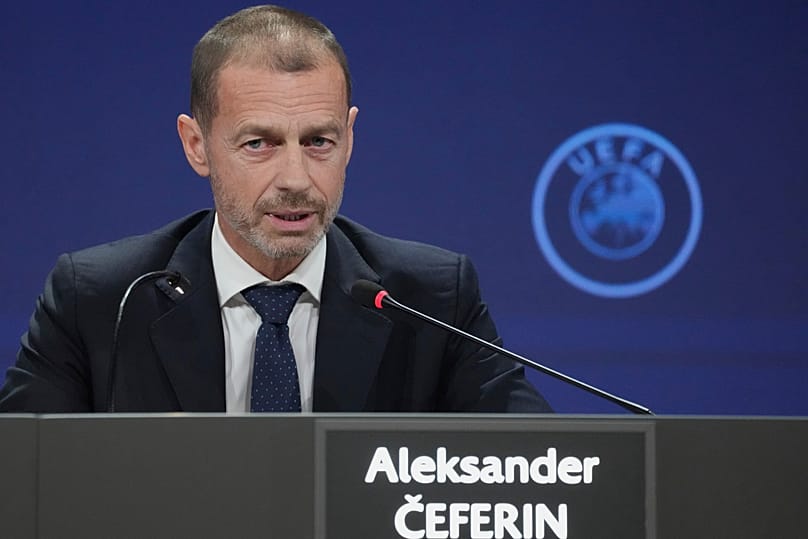
UEFA President Aleksander Ceferin did not attend the World Cup final in the US in protest over recent FIFA decisions. FILE AP Photo

Can UEFA block the proposal?

Potentially — but it depends on what type of approval FFE requires.

UEFA's 55 members could have considerable power if it can convince FIFA Congress that FFE requires an amendment to FIFA's Statutes.

If all 211 associations attended and were eligible to vote, Infantino would need 159 votes to reach the required three-quarter majority for statute change. If all UEFA members voted against those changes, Infantino could only reach 156 supporters even if every other association backed him.

FIFA's Governance Regulations already give its administration substantial powers to create subsidiaries and the Council-wide authority over strategy and commercial policy.

But if transferring FIFA's commercial operations into a partly privately-owned company requires changes to its Statutes, Infantino faces a much tougher threshold — and UEFA's 55 associations could hold enough votes to stop him.

When will a decision be made?

FIFA announced on Thursday that a consultation process was launched on 28 July 2026 and will share further details with member associations and the FIFA Council.

Infantino has given member associations until 19 September to decide whether they support the proposal, telling them in a letter: "The decision on whether or not to proceed with this proposal belongs entirely to you**."**

FIFA says the plan must be approved through a democratic vote of its members and also requires approval from the FIFA Council.

However, no Congress or Council meeting has yet been announced to formally approve the plan.

The next Congress meeting will be in 2027 unless an extraordinary meeting is called.

The Council is due to meet again before the end of 2026, but no date has been made public.


Italy: recipe for ancient elixir, possible Coca-Cola precursor, found in convent

Door of the chamber that holds Coca-Cola's secret recipe at the World of Coca-Cola museum in Atlanta.
Copyright AP Photo


By Euronews Roma
Published on

In the archive of Florence's historic San Marco Pharmacy, a recipe for an "Elixir vinoso ricostituente" has been found, using the same ingredients as "French Wine Cola", the medicinal precursor of today's Coca-Cola.

In the archives of the historic San Marco Pharmacy, in Florence, a mid-19th-century slip of paper has been found containing the recipe for an "Elixir vinoso ricostituente", described as a drink capable of easing physical and mental fatigue and weakness caused by age or exertion.

The person who found the recipe was Father Manuel Russo, rector of the San Marco convent.

"I stumbled across the old advert for this elixir while I was consulting our archive. I began delving deeper into the documentation kept in the convent and discovered that it was one of the most sought-after products in the friars' pharmacy," he told the weekly Toscana Oggi.

The composition and history of the recipe

What is most surprising is the composition of the tonic: thirty grams of kola nut and ten grams of Bolivian coca leaves, infused in a litre of alcoholic blend. It is the same mixture that underpins the medicinal compound which, in 1886, American pharmacist John Stith Pemberton is thought to have used to create his "French Wine Coca", the forerunner of modern Coca-Cola.

The only difference lies in the absence of alcohol, due to Prohibition in force in America at the time, which the pharmacist compensated for with carbonated water and syrup.

Father Manuel Russo told Toscana Oggi that the recipe dates back to the 18th century, but that it enjoyed its widest circulation between the late 19th and early 20th centuries. According to the weekly, during the period when Florence was Italy's capital, from 1865 to 1871, it was not uncommon for officials and office workers to stop at the San Marco convent during their breaks to sip the tonic.

According to the rector, this story, evidenced by the note with the recipe, some original labels and a few empty bottles, highlights the advanced pharmaceutical tradition of the Dominican friars.

As for any connection between the composition of the Florentine elixir and that of the American medicine, there is no proof whatsoever. What remains is a suggestion and a series of coincidences that arouse curiosity about the history of one of the world's most famous drinks.

The mystery of Coca-Cola's origins

Florence is not the only city where a recipe similar to that of the US beverage is hidden.

In Aielo de Malferit, a small town in Spain's Valencian Community, a very similar syrup was also produced in the 19th century, called "Nuez de Cola Coca", and it is still made today.

Originally its name was "Anís Celestial" and it was produced by the Aielo Liquor Factory, founded in 1880 by three friends, Bautista Aparici, Ricardo Sanz and Enrique Ortiz.

With their liqueurs, the owners won numerous prizes and took part in international events, including the 1889 Paris World's Fair and a drinks competition held in Philadelphia in 1885, just one year before the official birth of Coca-Cola.

"Aparici often travelled to the United States to open up new markets. In those years a blight destroyed our vineyards and he brought back a more resistant vine, the American one, which we still use today. In return he left bottles of Nuez de Cola Coca," says Juan Juan Micó, the factory's current owner, speaking to the BBC.

There is no further evidence of links between Aparici and America. What is known is that the following year pharmacist John Stith Pemberton created "French Wine Coca", which would later take the name Coca-Cola and go on to enjoy extraordinary success first in the United States and then around the world.

In the meantime, the Aielo liquor factory passed from hand to hand and, after being requisitioned during the Spanish Civil War, in 1953 it crossed paths again with the US multinational. When Coca-Cola arrived in Spain, it realised there was a similar drink hindering its expansion and it bought the patent.

Nuez de Cola Coca continues to be produced in its alcoholic version, and in Aielo de Malferit the question lingers: what if Coca-Cola really originated in a small town in the province of Valencia?

Trust Among Farmers Key To Scaling Climate-Smart Innovations
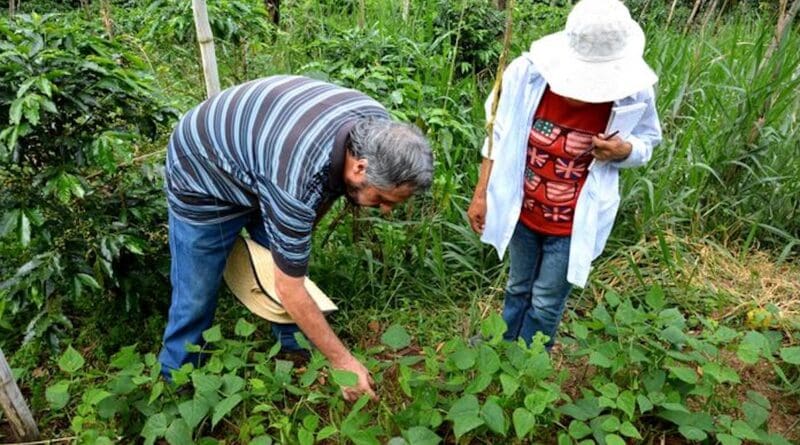

The study analyzed data from 514 smallholder farmers involved in Climate-Smart Villages in Guatemala and Honduras. CREDIT: Alliance of Bioversity International and CIAT

July 25, 2026
By Eurasia Review

Key Takeaways:

Social Capital Drives Early Knowledge Sharing: Among 514 smallholder farmers in Climate-Smart Villages in Guatemala and Honduras, trust, close interpersonal relationships, and mutual support among farmers themselves are key enablers of knowledge sharing about climate-smart agricultural practices—more influential than trust in external organizations.
Knowledge Sharing as an Early Signal of Responsible Scaling: The study reframes the start of innovation diffusion as a social process (discussion, adaptation, and peer learning) rather than solely a technical one, proposing that observable knowledge circulation can indicate the early stages of responsible scaling before widespread adoption becomes visible.


Implications for Scaling Strategies: Governments, development organizations, and innovation programs should prioritize building community-level social dynamics and peer networks to support more inclusive, context-sensitive, and sustainable adoption of climate-resilient agricultural innovations.

A recent study published in Agricultural Systems provides new evidence on the role of social relationships in knowledge sharing among farmers and proposes a new way of understanding how the responsible scaling of climate-smart agricultural innovations begins.


As the climate becomes increasingly variable and extreme events more frequent, accelerating the use of innovations that can strengthen agricultural resilience has become a priority for agrifood systems. Science has made progress in developing solutions with the potential to help farmers address these challenges. However, ensuring that knowledge about these innovations reaches more farmers and is understood, adapted, and scaled remains one of the major challenges in research for development.

Addressing this challenge requires understanding not only which innovations work, but also how knowledge about them begins to circulate among farmers. The study Trust, support, and knowledge sharing: The role of social capital in responsible scaling of climate-smart agriculture, published in Agricultural Systems, provides new evidence that this process depends not only on the technical characteristics of an innovation, but also on relationships of trust, mutual support, and knowledge sharing among farmers.


To examine this question, researchers from the Alliance of Bioversity International and CIAT, the University of Copenhagen, and the Gates Foundation analyzed data from 514 smallholder farmers participating in Climate-Smart Villages—known in Spanish as Territorios Sostenibles Adaptados al Clima (TeSAC)—in Guatemala and Honduras. The aim was to understand how different dimensions of social capital influence knowledge sharing about climate-smart agriculture and what this process means for the responsible scaling of innovations.

Beyond sharing information, one of the study’s main contributions is a new way of examining how agricultural innovations begin to spread. The findings suggest that innovations do not begin to diffuse solely because of their technical characteristics. They also depend on social relationships that enable knowledge to circulate among farmers, allowing new practices to be understood, discussed, and adapted to different contexts.

The success of an innovation is traditionally assessed once it has already been adopted by large numbers of people. This study, by contrast, focuses attention on a much earlier stage: when farmers begin to share experiences, discuss new practices, address questions, and learn from one another.


The study proposes that knowledge sharing can be understood as an observable sign of the early stages of responsible scaling. Examining how knowledge circulates among farmers can provide a better understanding of how the processes that may later support broader adoption and expansion of innovations begin to take shape.

From this perspective, knowledge sharing is not limited to the transmission of technical information. It is a social process through which experiences are shared, discussed, and adapted to different production realities. Understanding these dynamics makes it possible to analyze how knowledge about innovations begins to circulate before adoption becomes visible at scale.

“Our study shows that the success of scaling does not depend solely on the technical characteristics of an innovation. It also requires understanding the social dynamics that enable knowledge to circulate among farmers. Trust, close relationships between people, and mutual support create conditions that foster knowledge sharing, a process that can be observed as a signal of the early stages of responsible scaling.” Dr. Deissy Martínez-Barón, Researcher in Scaling for Impact and Climate Action, Alliance of Bioversity International and CIAT.
What does the research reveal? Trust among farmers plays a fundamental role in enabling knowledge sharing about climate-smart agricultural practices. When farmers trust other members of their community, they are more likely to share experiences, discuss new practices, and learn from one another.
Close relationships among farmers strengthen learning networks, making it easier for knowledge and experience to circulate within communities. These connections create an enabling environment in which knowledge about innovations can be shared, discussed, and adapted to different contexts.
One of the study’s most important findings concerns the role of mutual support. The researchers found that it becomes particularly important in communities where levels of trust remain low. Under these circumstances, guidance, collaboration, and the exchange of experiences help sustain the flow of knowledge among farmers.
By contrast, the study found that trust in organizations had less influence than trust built among farmers themselves, highlighting the importance of relationships developed within communities in promoting knowledge sharing.


Finally, the researchers identified a positive association between the adoption of climate-smart agricultural practices and knowledge sharing, reinforcing the close relationship between the two processes.
What does this mean for farmers and decision-makers?

In practice, these findings help explain how knowledge begins to circulate among farmers. For example, a farmer may observe a neighbor implementing a new practice to cope with drought, discuss the results, adapt the practice to the conditions on their own farm, and later share that experience with other community members. Although the study does not examine individual cases such as this one, it provides evidence that knowledge about innovations begins to circulate among farmers and is an important component of the processes that may support their subsequent expansion.

For governments, development organizations, and innovation programs, these findings provide evidence of the need to place social dynamics at the center of innovation-scaling processes, as this supports local ownership and, in turn, sustained results and impact over time. The findings also support the responsible scaling approach by showing that understanding how knowledge circulates among farmers can contribute to the design of innovation strategies that are more inclusive, context-sensitive, and better able to anticipate and manage potential unintended consequences that may arise as innovations are scaled up.

In a context where agrifood systems need to accelerate the adoption of solutions to climate change, this research highlights that the impact of an innovation depends not only on its technical quality, but also on people’s ability to share knowledge, learn from one another, and build relationships of trust that enable knowledge to circulate.

Understanding these processes creates new opportunities to design more effective and inclusive innovation and scaling strategies that are adapted to local realities.
Catholic Moral Theologians Express Concern Over Reports Of U.S. And Iranian Strikes On Civilian Infrastructure


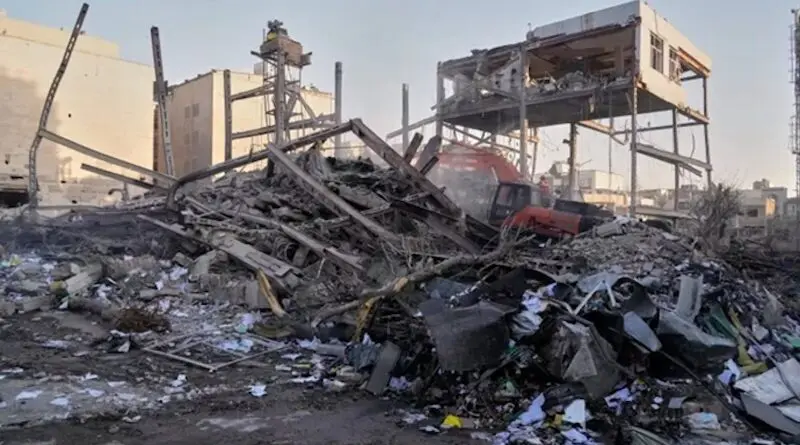
Aftermath of airstrikes in Tehran, Iran. Photo Credit: PMOI

July 25, 2026
EWTN News
By Tyler Arnold


Key Takeaways:

Theologians Condemn Targeting of Civilian Infrastructure: Catholic moral experts (Joseph Capizzi, Charles Camosy, and Taylor Patrick O’Neill) state that intentionally striking civilian infrastructure or using civilian suffering as a means of pressure violates just war doctrine, the principle of double effect, and absolute moral norms protecting non-combatants.

Accusations and Escalating Threats: Iran alleges U.S. strikes on water desalination plants, ports, and other civilian sites; Iran has targeted power and water facilities in Kuwait and Bahrain; both sides have issued explicit threats (Trump: “one bridge or power plant” per ship attacked; Iran: “eye for an eye”).

Emphasis on Intention, Proportionality, and Peace: The theologians stress that dual-use targets require strict scrutiny, civilian harm cannot be the intended mechanism of military advantage, and the ultimate goal of any just war must be a just peace rather than unrestricted destruction.


Iran and the United States have faced accusations of strikes on civilian infrastructure and have explicitly threatened attacks on civilian infrastructure going forward, prompting concerns from Catholic moral theologians.

“I have deep concerns that the war will widen and the greatest impact will be on the civilian populations of Middle East nations,” Joseph Capizzi, director of Notre Dame’s McGrath Institute for Church Life, told EWTN News.

Charles Camosy, a moral theologian at The Catholic University of America, told EWTN News that threats to civilian infrastructure are “absolutely not” consistent with moral conduct during war or Catholic just war doctrine.

“The dignity of the human person — including a commitment to Christʼs command to love oneʼs enemies — must be paramount,” he said. “Not winning a war. Not gaining political advantage. … Catholics are not consequentialists.”

A Pakistan‑mediated ceasefire that began April 8 ended on July 8. Last week, Iranian state media alleged that the U.S. struck a water desalination plant in the Hormozgan Province that supplies water to 30 villages, impacting thousands of people. U.S. officials confirmed military strikes in the province but have not confirmed a strike on the plant.

The U.S. has confirmed strikes in southern Iran that destroyed port infrastructure. Pro-regime media in Iran in Iran reported commercial and fishing piers were among the targets, citing the Iranian Red Crescent Society. That report also alleged strikes on a wheat storage facility, roads, and bridges.


U.S. Central Command denied strikes on the wheat facility but has not addressed every specific allegation. U.S. military officials have repeatedly said they only target Iran’s military capabilities.

When reached for comment about the other specific allegations, a spokesperson for U.S. Central Command told EWTN News “we refer you to our published releases” and “we have nothing further to add.”

In response to these alleged attacks, Iran has repeatedly struck power plants and water facilities throughout Kuwait and Bahrain. Officials in Kuwait, which relies on water desalination plants for 90% of its drinking water, are urging people to conserve energy and water. Bahrain’s supply of drinking water is 100% reliant on water desalination plants.

On July 22, Trump escalated threats to civilian infrastructure, saying he would strike “one bridge or power plant” for every ship Iran strikes. Iranian Foreign Minister Seyed Abbas Araghchi said in response that Iran’s doctrine is “an eye for an eye” and “those who contribute” to aggression “will also be considered as legitimate targets.”

When a reporter asked Secretary of State Marco Rubio on July 23 whether he would rule out strikes on civilian infrastructure, he did not say. Rather, he pointed to Araghchi’s statement and said: “The president’s policy is a head for an eye — I mean, honestly, that’s what it’s going to be.”
Just conduct in war

Three Catholic moral theologians who provided comments to EWTN News — Capizzi; Camosy; and Taylor Patrick O’Neill, a theology professor at Thomas Aquinas College — all said it is not moral to intentionally target civilian populations in war.


“The prohibition against targeting civilian infrastructure is absolute in moral and international law,” Capizzi said. “States are prohibited from targeting civilian infrastructure.”

He urged caution about purported justifications for striking “dual use” infrastructure targets that may be used for both military and civilian purposes. He said “no party is allowed merely to claim targets are ‘dual use.’”

“When there is doubt as to the dual or single use of a target, international [law] stipulates the presumption begins with single use, and therefore the target is inadmissible to be targeted, unless proven to the contrary,” Capizzi said.

Camosy also said this is a moral absolute and there is no circumstance in which it is moral to target civilians. He said that “even in war, even when the stakes are highest,” Catholics do not adhere to the consequentialist moral philosophy of the ends justifying the means.

The Catechism of the Catholic Church explains a person can never engage in intrinsically evil acts — such as targeting innocent people for harm — regardless of the reason because “the end does not justify the means.” Acts also require “good intention,” so while “good intention” is not sufficient and does not justify evil acts, bad intention — such as intending to harm innocent people — always “makes an act evil,” it explains.

Camosy said: “Protection against the targeting of civilians is an absolute value in war. Catholics are called to be prepared to lose a war rather than violate exceptionless moral norms or commit intrinsically evil acts in this area.”

Sometimes an act, in war or elsewhere, can also have several effects. St. Thomas Aquinas explains in the “Summa Theologica” that it can be proper to engage in an act that is morally neutral in and of itself but has both good and bad consequences, so long as only the good consequence is the one that is intended. This is the principle of “double effect.”

The Catechism of the Catholic Church teaches that proportionality is required in war. The evil inflicted through war cannot be more severe than the evil one is aiming to defeat.

“We need to ask if civilian harm is the intention and/or the mechanism of action in the military strike or [if] it is a merely foreseen side effect,” Camosy explained.

“If the rationale for hitting the electric grid or desalination plant is that widespread darkness, spoiled food, rampant disease, failed hospitals, and more will generate political pressure on the Iranian regime, then the suffering of peaceful civilians becomes the causal pathway to the advantage sought,” he said. “This then becomes the object of the act itself and not a merely foreseen side effect.”

Alternatively, Camosy added: “Attacking a generator dedicated to a command bunker, however, would likely not suffer the same kind of critique, however, even if one foresaw but did not intend that it would also have bad impacts on civilians.”


Similarly, O’Neill said the moral analysis of striking a facility that results in civilian harm is about intention and proportionality. It is never moral to intend the suffering of innocents or target them.

“You cannot intend or rely upon civilian death or fear to aid in your military effort,” O’Neill said. “In other words, the foreseen evil cannot itself be the means by which you attempt to achieve some good.”

A specific bridge that is “dual use,” such as one used by civilians but also used “to transport tanks from factory to battlefield,” he said could possibly be justified under double effect. The moral analysis would have to consider intention and proportionality and “you must also try to minimize the negative.”

“Will blowing up the bridge make civilian life uncomfortable or will it result in the loss of life, access to basic necessities, etc.? All of these things have to be taken into account just for double effect,” O’Neill said.

“Under double effect, itʼs theoretically possible to strike a dual-use target,” he added. “But any strike on merely civilian infrastructure (or even [a target] with indirect ties to the war effort) would be intrinsically unjust.”

“At that point, the attack would have more in common with an act of terrorism,” O’Neill said.
‘Blessed are the peacemakers’

St. Augustine, in a letter to the Roman general Boniface, emphasized that the intention of war must be to ultimately establish a just peace — not to simply to unleash destruction: “Peace should be the object of your desire; war should be waged only as a necessity, and waged only that God may by it deliver men from the necessity and preserve them in peace.”

The fifth-century bishop and theologian cited the words of Jesus Christ in Matthew 5:9: “Blessed are the peacemakers, for they will be called children of God.”

O’Neill explained that in the context of a just war, “the Christian always seeks war for the sake of peace and that of both his own people and the people of the enemy nation.”

“To consider the civilians of an enemy nation as the enemy is already to lose the necessary distinction of combatant from innocent,” he said.

Camosy noted that Trump, in his 2024 campaign, promised “to be deeply skeptical of war” and encouraged him to move back in that direction.

“Trump himself was aggressively pursuing the Nobel Peace Prize on this basis,” he said. “It would be much better to go back to this way of thinking about war. Think about becoming a peacemaker again.”

Trump told Axios on July 23 that he is “considering a massive attack, bigger than ever before” but did not say whether this includes the civilian infrastructure he has threatened. He said that Iranians want to negotiate, but “they havenʼt received enough pain yet.”


About EWTN News
EWTN News is the rebranding of the Catholic News Agency (CNA), following the decision by EWTN — which was launched as a Catholic television network in 1981 by Mother Angelica, PCPA — that brings CNA and its affiliated ACI international outlets under a single, unified identity. Previous CNA articles may be foundby clicking here.
View all posts by EWTN News →