Sunday, August 09, 2026

Investigation raises alarm over uranium in DRC cobalt shipments to China

An investigation by Lighthouse Reports, The Financial Times and Le Monde traces the possible export of uranium from the Democratic Republic of Congo back to a confidential International Atomic Energy Agency memo obtained in 2024. Chinese mining group CMOC, which owns the main site examined in Katanga, disputes the findings.


Issued on: 09/08/2026 - RFI

An artisanal miner holding a cobalt stone at the Shabara artisanal mine near Kolwezi, in Katanga, in October 2022. © AFP/Junior Kannah

Lighthouse Reports obtained a previously undisclosed internal memo from the International Atomic Energy Agency in 2024 and began investigating its contents.

The 2009 document cited credible information indicating that uranium was present in “significant quantities” in most cobalt ores from Katanga, in the southeast of the Democratic Republic of Congo, and was “effectively exported as a cobalt by-product”.

Lighthouse Reports conducted the investigation in partnership with The Financial Times and Le Monde.

Infrastructure at the Shinkolobwe uranium mine, near the city of Likasi in the Democratic Republic of the Congo. Rene Nijenhuis/UNEP/OCHA


Uranium in mineral-rich Katanga

The Katanga region – part of Central Africa’s Copperbelt – has increasingly turned towards cobalt extraction as demand has grown for the metal, which is used in lithium-ion batteries and aerospace alloys.

But the region’s mines have also long been known to contain uranium. A significant proportion of the uranium used in the Manhattan Project, which developed the first atomic bombs, came from Katanga’s Shinkolobwe mine.

The mine was closed after independence and later placed within an exclusion zone. In 2004, then president Joseph Kabila declared the area a prohibited mining zone, citing national security, public safety and the presence of uranium, which Congolese law classifies as a reserved mineral substance.

“There are always by-products in Congolese mining exports – particularly cobalt – and these by-products are effectively monitored by the Congolese authorities. All except one: uranium,” Tomas Statius, a Lighthouse Reports journalist and co-author of the investigation, told RFI.


Mining professionals say uranium, copper and cobalt frequently occur together in the Congolese and Zambian Copperbelt.

“It is not limited to specific locations; it is a constant feature,” Statius said.

Steve Muanza, head of the DRC’s nuclear energy agency, told The Financial Times that it was “technically possible” and even “probable” that Chinese companies were extracting uranium from cobalt ore exported from the country, although he said there was no direct evidence.

He said his agency had requested funding to install radioactivity detectors on trucks travelling from the DRC into Zambia.
Up to 5,000 tonnes exported

To estimate the amount of uranium potentially exported, Lighthouse Reports worked with Sébastien Philippe, then a senior researcher at Princeton University, and geologist Ryan Manzuk.

Their calculations drew on previous analyses of uranium concentrations in Katanga ores, mine production data and geological samples held by the AfricaMuseum in Belgium.

A paper by Manzuk and Philippe, published on 30 July in Nature Communications, estimated that between 2,000 and 5,000 tonnes of uranium were exported from the DRC to China in cobalt hydroxide shipments between 2000 and 2024.

According to the researchers, even the lower estimate would be sufficient to fuel a one-gigawatt nuclear reactor for at least a decade.

The investigation did not establish whether the uranium was subsequently extracted or used in China.


The most extensively documented site was Tenke Fungurume Mining (TFM), one of the DRC’s largest cobalt producers.

The mine was owned by US company Freeport-McMoRan until it was acquired by Chinese group CMOC in 2016.

Internal company documents reviewed by the investigators recorded uranium-rich cobalt samples, including a peak concentration of 1,100 parts per million in December 2016 – around 15 times the export limit cited by the investigation.

Further documents indicated that significant uranium concentrations remained in cobalt produced at TFM in June 2021.

“There is an established, known method for removing uranium from cobalt exports,” Statius said, adding that it had not been used.

“We have been unable to determine whether CMOC intends to retain the uranium for economic or strategic reasons,” he added.

Doug Alexander, a former senior metallurgist at Eurasian Resources Group, suggested there could be two supply chains in the region – one in which contamination is addressed once detected, and another in which lower-quality products containing greater levels of impurities are shipped directly to China.

The mining site of Kamoa Kakula, in the 'Katanga Copperbelt', Lualaba Province, is one of the largest unexploited copper field in the world. © CAROLINE THIRION / AFP


CMOC rejects findings

CMOC has categorically disputed the investigation. The company said all cobalt hydroxide currently produced by TFM complied with Congolese regulations and international customer standards, with no recorded breaches of permitted limits or trade rules.

It said it did not know the source of the investigation’s historical data and maintained that uranium levels were below the relevant threshold, making a dedicated removal process unnecessary.

CMOC denied carrying out uranium separation or extraction in either the DRC or China. It also challenged the use of 75 parts per million as a universal limit, citing alternative thresholds of up to 100 parts per million.

Freeport-McMoRan did not respond to requests for comment, while the investigators said they stood by their findings.

“Our investigation is based on internal documents from the mine and its owners, spanning nearly a decade, that reveal both the contamination and attempts by certain metallurgical engineers to address the issue,” Statius said.

“It also draws on a peer-reviewed scientific paper published in one of the world’s top journals.”

The investigation also found that a refinery in Kokkola, Finland, had received Congolese material containing uranium.

This has been adapted from the original article in French by RFI's Patient Ligodi
Kurdish PKK criticises Turkey bill on fate of its fighters

Istanbul (AFP) – Outlawed Kurdish group the PKK on Sunday criticised a proposed Turkish law setting out the fate of its fighters after disarmament, a day before parliament prepares to consider it.


Issued on: 10/08/2026 -

Kurds have regularly demonstrated for the release of PKK leader Abdullah Ocalan
 © Ilyas AKENGIN / AFP


And they warned that its provisions would remain a "dead letter" if Abdullah Ocalan, the leader of the Kurdistan Workers' Party (PKK), was not released from jail.


The legislation, part of efforts to end decades of deadly fighting, would allow some PKK members to return to civilian life under certain conditions but falls short of offering a general amnesty.

But Sunday's PKK statement said: "This law contains serious errors and shortcomings. The recommendations... regarding democratisation and the resolution of the Kurdish issue have not been taken into account."

"The fact it refers only to disarmament without using the term 'Kurdish' shows the issue has not been addressed in its entirety," the PKK leadership added.

The statement, carried by ANF news agency, which is close to the group, also called for guarantees that former fighters would be able to take part in political life without facing imprisonment over their political views.

The legislation is due to be debated by Turkey's parliament on Monday.
Call for Ocalan's release

Last year the PKK announced plans to disband and disarm, following a call from its jailed founder and longtime leader Ocalan.

But on Sunday, the group warned: "Many provisions of the law will remain a dead letter" unless 77-year-old Ocalan, in jail since 1999, was released from prison.

Ocalan last year called on the PKK to lay down its arms in response to a peace initiative launched by Turkish authorities late 2024, but his fate has not officially been decided.

Kurds have also been demonstrating for the release of Selahattin Demirtas, who on Sunday backed the bill © Ilyas AKENGIN / AFP

Backed by President Recep Tayyip Erdogan's ruling Justice and Development Party (AKP) and the pro-Kurdish DEM party, the bill would suspend prosecutions and prison sentences for some offences between five and 10 years.

If those covered by the measure do not reoffend during that period, investigations would be dropped and sentences considered served.

However, some serious crimes such as intentional homicide would be excluded. Pro-government media have argued that that should apply to Ocalan, who is serving a life sentence.

Earlier Sunday, prominent Kurdish leader Selahattin Demirtas, jailed since 2016, backed the bill, saying he hoped "another crucial step forward" would be taken in this "historic peace effort".

Demirtas, the former co-chair of Turkey's main pro-Kurdish party, said the law would "radically transform the fate of our country and our region" after more than four decades of armed conflict that has claimed at least 50,000 lives.

© 2026 AFP


Syria, Russia agree to end military use of key Mediterranean bases

Syria and Russia have agreed to end Moscow’s use of two strategic Mediterranean bases as military outposts, Syria's foreign ministry said Sunday. Under the deal, Damascus will take control of the Hmeimem air base and part of Tartous port, while the remaining military facilities will be converted into joint training centres.


Issued on: 09/08/2026 - 
By: FRANCE 24

A satellite image shows a Russian naval facility, in Tartous, Syria in this handout picture taken on December 6, 2024. 2024. © via Reuters

Syria and Russia have reached an agreement over the future of two strategic Mediterranean coastal bases that ultimately ends their use a military outposts for Moscow, Syria's Foreign Ministry said Sunday.

Russia was the top political and military ally of ousted President Bashar Assad between 2011 and 2024 when Syria fought against an Islamist-led armed opposition of which current interim President Ahmad al-Sharaa was a prominent militant leader.

Throughout the conflict, the Hmeimem air base near Latakia and the Tartous naval base were key Russian outposts in the eastern Mediterranean.

Under the agreement, Syria will take control of the Hmeimem air base and the commercial berth at Tartus port as part of its civil administration. The military facilities at both sites will become “joint training and qualification centers”, the foreign ministry said.

The new arrangements represent a “reorganising of the Russian presence” along Syria's coast, the ministry said.

“This move marks the most significant development since negotiations began approximately a year and a half ago, paving the way for a new phase in Syrian-Russian relations,” a statement read.

Russia did not immediately comment on the agreement.

Moscow did not interfere during the lightning insurgency that led to the overthrow of Assad, but it did provide the longtime Syrian leader and his family asylum. After Assad's ouster, Russian troops remaining in Syria gradually left the country.

Syria's new leadership has aimed to maintain strong bilateral ties with Moscow. Al-Sharaa has visited President Vladimir Putin in Moscow twice since taking power, with the two Mediterranean bases being key points of discussion.

Since Assad's ouster, Syria has also bolstered its ties with the United States, Europe, and neighbouring Arab countries that had cut ties with Damascus during Assad's crackdown on protests. Washington has lifted most of its crippling sanctions on the country, and French President Emmanuel Macron made a visit to Syria in July during which he announced that the two countries would appoint respective ambassadors for the first time in 14 years.

(FRANCE 24 with AP)

Syria says reached deal with Moscow on fate of Russian bases


Damascus (AFP) – Syria said on Sunday that it reached a deal with Russia on the fate of its two bases in the country, which Moscow once used to provide military support to ousted leader Bashar al-Assad during the Syrian civil war.


Issued on: 10/08/2026 - RFI

A portrait of Russia's President Vladimir Putin hangs above the military base of Hmeimim in Latakia province in western Syria in 2024 © AAREF WATAD / AFP/File

Russia was a key Assad ally during the 13-year conflict, helping to keep the former leader in power, and his ouster in 2024 dealt a major blow to its influence in the region.

President Vladimir Putin has since worked to build relations with the new Islamist authorities in Damascus to secure the future of Russia's only two official military bases outside the former Soviet Union.

Syria's official SANA news agency quoted the foreign ministry as saying that the Hmeimim airbase and Tartus naval base would be turned into "joint training and capacity-building centres, within new arrangements that preserve mutual interests".

The memorandum of understanding, which followed a year and a half of negotiations, "set a time limit of no more than three months to complete the process", SANA said.

In the meantime, civilian facilities at both bases will be handed over to Damascus.

Russia has yet to officially comment on the agreement.

Both the Hmeimim and Tartus bases had remained operational while talks were ongoing.

Syrian Foreign Minister Asaad al-Shaibani visited the sites on Sunday "to inspect the facilities and installations included in the historic memorandum of understanding", according to SANA.

'Important step'

Omar al-Hasri, head of Syria's Civil Aviation Authority, said the body was taking control of Latakia's international airport, a civilian facility adjacent to Hmeimim whose operations were closely linked to Russia's presence.

"The Authority's specialised teams have begun the technical and operational assessment of the airport, its facilities and systems, in preparation for developing a plan to rehabilitate it," Hasri said.

He called the move "an important step towards restoring and operating Syrian airports and reintegrating them into the national civil aviation system".

Syria has expressed a willingness to cooperate with Moscow, and President Ahmed al-Sharaa has been received by Putin in Moscow twice since taking over.

During Sharaa's last visit in January, Putin said "much has been accomplished in terms of restoring our interstate relations", commending Sharaa for his "efforts to restore Syria's territorial integrity".

While Sharaa praised Russia's "historic role" in Syria and the region, Damascus has repeatedly demanded that it extradite Assad, who has been sheltering in Moscow with his wife since his ouster.

Earlier this year, the Kremlin withdrew its forces from the Qamishli airport in Syria's northeast.

© 2026 AFP
As the planet heats up, butterflies are seeking out cooler climes

Climate change is driving shifts in where butterflies are found globally, according to a major new study, with some species moving northwards or seeking out higher elevations in search of cooler conditions.


Issued on: 09/08/2026 - RFI

A Peacock Aglais butterfly © AFP - ANDREW BLADON / OXFORD UNIVERSITY

The study, published in Nature Ecology & Evolution, is one of the most comprehensive to date on how butterfly distributions are changing, assessing more than 1,700 species across 105 countries and territories.

Researchers found that nearly 80 percent of the reported shifts in the geographic ranges of butterflies were associated with climate change and extreme weather events.

Other factors were also driven by human activity: changes in land use, intensive agriculture, urbanisation, habitat fragmentation and the introduction of invasive species.

Butterflies are considered important indicators of ecosystem health because they are highly sensitive to temperature changes, have short life cycles and depend on specific host plants.

As the planet warms – primarily because of the burning of coal, oil and gas – some butterfly species are relocating northwards or seeking out higher elevations in search of cooler conditions.


Complex responses

Overall, 80 percent of butterfly species expanded their range while 27 percent experienced range contractions, with some showing different patterns in different regions, underscoring the complexity of responses to climate change.

"This is rather good news as it proves that butterfly species are capable of migrating and shifting their range to adapt to changes," study co-author Jonathan Lenoir, an ecologist from France's national scientific research centre (CNRS), told French news agency AFP.

Lenoir cautioned that range expansions were easier to detect than contractions because it was simpler to confirm that a species has colonised a new area than prove it has vanished entirely from another.

Many observations, including those made by citizen scientists, were concentrated in lowland areas and near urban centres, potentially skewing the findings.

But butterflies could only adapt so far, Lenoir said.

It was possible that beyond a certain warming threshold more butterflies would contract their range, causing "much more rapid and sudden upheavals" among certain species and "potential extinctions".
Citizen science

A 2024 study in Global Ecology and Biogeography found that 84 per cent of roughly 270 butterfly species studied in Europe would reduce their range by 2080 if global temperatures keep rising.

"Some butterfly species will not necessarily be able to migrate further north in latitude, or higher up in the mountains, in response to the global rise in temperatures," said Lenoir.

Species endemic to mountain regions on islands could become "trapped" as their habitat is reduced "to almost nothing" with limited options to shift elsewhere, he added.

The authors advocated for stronger conservation policies, the protection and restoration of butterfly habitats, ecological corridors and micro-climatic refuges, and improving biodiversity monitoring – particularly through citizen science.

They also emphasised the urgent need to limit global warming.

Knowledge gaps, too, must be addressed: just one in 10 butterfly species has documented data on how its range is changing and tropical regions remain largely understudied, the authors added.

(with AFP)


Western Europe experienced hottest June-July on record: EU monitor

Paris (France) (AFP) – Western Europe experienced its hottest June-July on record as climate change fuels an historic summer of heat, drought and wildfires across the region, the EU's global warming monitor said Monday.


Issued on: 10/08/2026 - RFI

© Idriss Bigou-Gilles / AFP

Europe is the world's fastest-warming continent and the first two months of summer have been marked by successive heatwaves, scorching temperatures and bone-dry conditions.

The Copernicus Climate Change Service said the combined average temperature in western Europe for June-July was 21.62C -- beating the 2022 record for the same period.

This reflected "the exceptional persistence of heat" so far this summer, Copernicus said.

Levels of soil moisture were "significantly lower" than in July 2022 when the last severe drought gripped western Europe, Copernicus added.


Europe: huge scale of heatwaves across the continent in 2026 © Nalini LEPETIT-CHELLA, Valentina BRESCHI / AFP

"This is a clear example of how climate change is intensifying heat extremes, with heat and drought increasingly reinforcing one another," said Samantha Burgess from the European Centre for Medium-Range Weather Forecasts, which operates Copernicus.

Very dry conditions were observed in July across western and central European nations including France, Spain, Austria and Hungary but also the United Kingdom, Ireland and part of Iceland.

River flows were unusually low with the Seine, Rhine and Danube particularly affected. Transport, irrigation and energy production has been impacted in several European countries.

These hot and dry conditions were also ideal for fires and scientists say the frequency of extreme fire-prone weather in Europe is increasing with climate change.

France and Spain have battled their worst infernos in living memory this summer, while other nations in Europe and as well as the US northwest and Canada have also experienced serious blazes.

- Heat on the horizon -

Copernicus also said the world's oceans hit record-high temperatures for a second straight month in July, driven by marine heatwaves around Europe and a powerful El Nino taking shape in the Pacific.

Record ocean temperatures for July © Jonathan WALTER, Sophie RAMIS / AFP

Global average sea surface temperatures in July were 20.96C, beating the previous record of 2023.

Copernicus director Carlo Buontempo said parts of the Mediterranean and Atlantic were unusually warm but the developing El Nino "is probably the driving force" behind the record sea temperatures.

"We are now facing a very large El Nino -- possibly unprecedented in terms of amplitude. It is clear that the contribution coming from the tropical Pacific becomes quite important," the climate scientist told reporters on August 5.

El Nino is the warm phase of a natural climate cycle that temporarily raises ocean temperatures in the tropical Pacific and can influence weather extremes like drought and floods around the world.

It also adds heat to a planet already warmed from burning fossil fuels.

El Nino events typically peak at the end of a year before heat is released from the ocean into the atmosphere, pushing up global temperatures.

The last El Nino helped make 2023 and 2024 the second- and first-hottest years on record, respectively.

Buontempo said scientists expect a new record for global average temperatures later this year or early 2027.
Climate regulator

Globally, last month was the joint second-warmest July on record with an average surface air temperature 1.47C above the 1850-1900 pre-industrial benchmark, Copernicus said.

Western Europe: record July drought © Valentin RAKOVSKY, Sabrina BLANCHARD / AFP

The last 11 years have been the hottest on record and "we have not seen a climate that warm during our lifetime, and very possibly our civilisation", Buontempo said.

"And the main driver for this warming -- as we know -- are the greenhouse gases", he said.

Oceans absorb most of the excess heat caused by humanity's carbon emissions and therefore play a key role in regulating the climate.

Hotter seas can have damaging knock-on effects on the planet, fuelling stronger storms and rainfall and bleaching coral reefs.

Copernicus takes measurements using billions of satellite and weather readings, both on land and at sea, and their data extends back to 1940.

© 2026 AFP


Over 20,000 flee wildfires as British Columbia declares state of emergency


By Evelyn Ann-Marie Dom
Published on

The fires that erupted on Friday spread rapidly, nearly doubling in size overnight into Saturday. National police are investigating a possible death near Summerland, although the casualty has not yet been confirmed.

Over 20,000 people have been forced to flee fast-moving wildfires raging across western Canada, prompting British Columbia to declare a state of emergency on Saturday as officials warned of "explosive" conditions that could put more communities at risk.

Residents were evacuated from Summerland, home to about 12,000 people, and Peachland, home to 8,000, along the Okanagan Lake.

The so-called "Bald Range Fire" was discovered on Friday and nearly doubled in size overnight into Saturday, forcing even emergency officials to flee.

“I had to leave the Emergency Operations Centre to come and get my family to leave this area. We’re heading south,” Erick Thompson, an emergency official with the Regional District of Okanagan-Similkameen said in a video posted early Saturday.

In a news conference on Saturday, Premier David Eby said a firefighting official compared the fire to a "bomb going off".

BC wildfires escalated fast, like a 'bomb going off'

"The fire goes across the top of the trees," Eby said recounting the official's description, adding that "he described flames on 100-foot (30.5 metres) tree, flames going 200 feet (61 metres) above that, and the fire creating its own weather system, which creates lightning, which then feeds on itself".

While tens of thousands fled, search and rescue teams continued efforts to look for residents that were trapped as the fire advanced.

"Air evacuations are underway for people who remain isolated behind the fire perimeter," Eby said.


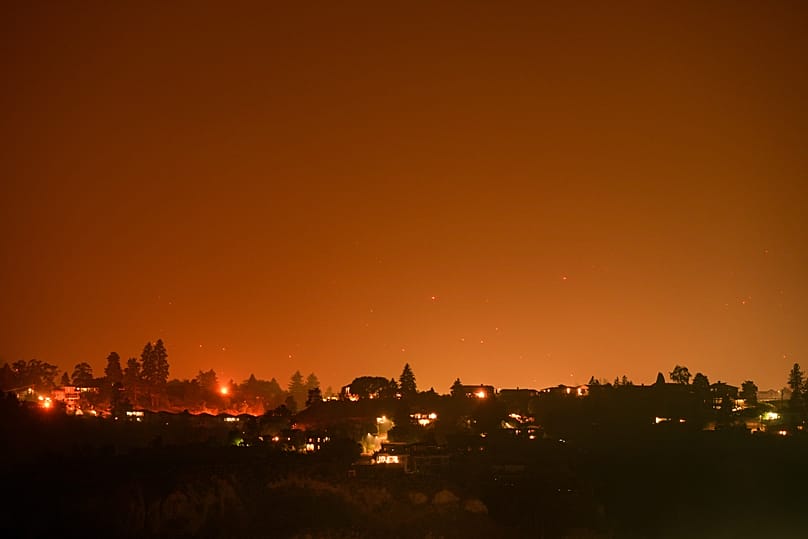
Hot spots from the Bald Range wildfire burn on the mountainside above houses in Summerland, British Columbia, late Saturday, Aug. 8, 2026. Darryl Dyck/The Canadian Press via AP

National police are also investigating a potential death near Summerland, but current hazardous conditions have prevented authorities from confirming the death.

No official figures have been released yet on casualties or damage caused by the fires.

Canada's Prime Minister Mark Carney thanked firefighters and first responders on X for "working tirelessly to keep people safe".

"The federal government stands ready to help and support the Government of British Columbia in these efforts," Carney added.

As of early Sunday, a total of 102 wildfires were reported across the province, the BC Wildfire Service reported.

Many wildfires remain out of control amid extreme heat, strong winds and prolonged drought conditions across the country.

So far this year, wildfires have burned nearly 4 million hectares across Canada, according to the Canadian Interagency Forest Fire Centre.

Researchers warn that human-caused climate change doubled the likelihood of extreme fire conditions behind this years Canadian wildfires.


Wildfires: British Columbia declares state of

emergency, thousands forced to flee homes


Issued on: 09/08/2026 - FRANCE24

Canada’s British Columbia has declared a state of emergency as a fast-moving wildfire forced more than 20,000 people to evacuate overnight. Officials say strong winds helped the flames spread rapidly, with significant challenges still remaining to bring the blaze under control. Simon Moritz has the latest.


Video by:  Simon MORITZ

OOPS


Ukraine denies targeting Bulgaria as drone explodes near pipeline, Kyiv promises inquiry

Copyright 2026 The Associated Press. All rights reserved

By Gael Camba & AFP
Published on

An unidentified drone of a type used by Kyiv's army exploded near a pipeline bordering Bulgaria and Romania. The drone entered Bulgarian airspace from Romania before exploding 1,000 metres from the Trans-Balkan gas pipeline.

Ukraine denied on Saturday targeting Bulgaria after a drone exploded close to the strategic Trans-Balkan gas pipeline linking Turkey to Ukraine near the Romanian border.

Bulgaria's defence ministry said the drone was of a type "widely used by the Ukrainian military", and the foreign minister summoned the Ukrainian ambassador for a meeting on Monday in response, her office said.

Kyiv said it was "in close contact with the Bulgarian side to clarify the circumstances" of the incident, the latest case of a drone straying into NATO airspace as Ukraine fights off Russia's invasion.

"We can say with certainty that the Ukrainian Armed Forces did not intentionally direct any assets toward Bulgaria," Ukraine's foreign ministry spokesman Georgiy Tykhyi said, blaming Russia's invasion for the incident.

No casualties reported

While the explosion caused no casualties, Bulgarian Prime Minister Rumen Radev said the amount of explosives it was carrying was "significant".

"The drone exploded in the immediate vicinity of the Kardam border-crossing with Romania," near the Black Sea in the country's northeast, "1,000 metres from the Trans-Balkan gas pipeline's compressor station," he said in a video released by the government.

After analysing the debris from the crash, Bulgaria's defence ministry, however, said that "currently, nothing suggests that this was a deliberate incident".

The drone eventually crashed into a sunflower field, Radev said.

'Significant amount of explosives'

Romania border police recorded the sound of the drone, then a Bulgarian border police patrol spotted "a loud explosion accompanied by black smoke", Radev added, speaking after an extraordinary meeting of his cabinet's security council.

"One thing is certain: the drone was carrying a significant amount of explosives, given that it could be heard from a distance and produced such black smoke," he said.

The drone had not been detected by either of the two neighbouring countries, he said, adding: "As you know, identifying and neutralising these drones poses a major challenge."

Incidents involving drones have become increasingly frequent in recent months across eastern European countries that are NATO members and supporters of Ukraine in its conflict with Russia.

Romania has faced frequent drone incursions since the start of Russia's full-scale invasion of Ukraine in 2022 — including some crashes on its territory. It ordered the expulsion of a Russian embassy staff member in late July.

Radev said that, following the latest incident, Bulgaria had boosted its surveillance and would redeploy troops and soldiers to the borders to detect drones and employ anti-drone measures.

Turkey asks for 'moratorium'

Bulgaria, Romania, and Turkey all front onto the Black Sea, an arena of drone combat by both Ukraine and Russia which has seen attacks on civilian ships.

Turkey's foreign minister on Saturday called for a "moratorium" on attacks by Russia and Ukraine in the body of water in an interview with Turkey's state news agency Anadolu.

"To begin with, they targeted the ports and the military ships," said Turkish Minister for Foreign Affairs, Hakan Fidan. "Now, they are attacking all commercial shipping without distinction."

Turkey had already on Tuesday denounced Black Sea drone attacks on two Turkish civilian vessels the previous day, in which some crew members were injured.

Bulgaria in June halted its military aid to Ukraine. Radev said the country did not belong in the coalition of Kyiv's allies supplying arms and that he preferred to see diplomatic efforts to end the war.

Further west, a German military operational command spokesman told AFP on Saturday that drones were detected this week above an army installation in western Germany known to house a large underground depot.

Among other armaments, the Mechernich special site is home to parts for US-made Patriot air-defence systems long coveted by Kyiv.

Those sightings came days after an explosives-laden drone was found near a Ukrainian cargo plane at Leipzig-Halle airport, which plays a key role in the transport of military goods by the German military and NATO allies.


FIFA defends Infantino after revelations of his alleged 'lover' paid off by UEFA


By Gael Camba & AP
Published on

After staying silent during Infantino's plan outcry, FIFA now defends its president over what it calls a 'concerted and ongoing effort' to undermine his leadership. This comes after revelations stating Infantino's 'lover' was paid off by UEFA when he was general secretary.

FIFA has issued a statement defending its president, Gianni Infantino, against what it calls a "concerted and ongoing effort" to undermine his leadership of the organization.

The statement was released Saturday, a day after a report by British newspaper The Daily Telegraph raising questions about an exit package paid by UEFA to a female staffer who worked with Infantino when he was general secretary of European soccer’s governing body.

The Daily Telegraph claims a woman received a six-figure sum as a payoff from UEFA after an alleged love affair with Gianni Infantino. During their alleged relationship, Infantino would have promoted the woman, reports say.

While confirming the exit payment "was in line with the regulations that existed for departing staff at the time," UEFA said the rules had been tightened since 2016 and currently "reflect those found in a modern, high-profile organization."

Senior figures of UEFA have been considering an investigation into Infantino's time at UEFA to understand how the payments were made and whether the alleged relationship affected decision-making.

Infantino worked at UEFA for 16 years before being elected FIFA president.

'Misinformation' campaign

In a statement Saturday, FIFA accused Infantino’s critics of trying to weaken his authority and remove him from office without due process.

"It is increasingly evident that there is a concerted and ongoing effort by some to undermine FIFA and its president," the FIFA statement said. "Those who do not have the support of FIFA’s member associations should not seek to achieve through allegation, insinuation or misinformation what they cannot achieve through FIFA’s established democratic processes."

It said some reporting has included "unsubstantiated assertions and demonstrably false claims," which shouldn’t be presented as fact.

"Change inevitably challenges established interests, but disagreement with that change cannot justify efforts to undermine the democratic mandate of FIFA’s president or the institution he was elected to lead."

Infantino's plan backlash

Infantino faced intense backlash after details of his plan to sell World Cup profits to private equity were published. UEFA and two other continental confederations — North America’s CONCACAF and the Asian Football Confederation — rejected the plan.

He did receive backing from FIFA’s management board last Wednesday following a meeting in Morocco, and he apologized for the process. UEFA’s threat to have its 55 member countries boycott FIFA competitions until the plan was scrapped remained, with UEFA saying Thursday that the announcement "changes nothing."


Infantino denies affair allegation, FIFA


slams ‘concerted’ effort to weaken him

FIFA on Saturday issued a statement defending its president, Gianni Infantino, against what it called a “concerted and ongoing effort” to undermine his leadership of the organisation. It came a day after a British newspaper accused the FIFA boss of paying off a fomer lover while at UEFA, allegations Infantino has categorically denied.

Issued on: 09/08/2026 -
By: FRANCE 24
Video by: Camille Corcoran


Cover image: FIFA president Gianni Infantino denied allegations by a British newspaper of paying off an alleged lover while at UEFA. © Denis Balibouse, Reuters
01:59


FIFA on Saturday warned against what ⁠it called a "concerted ​and ongoing effort" to undermine its leader, Gianni Infantino, saying attempts to challenge his leadership must follow the governing body's statutes ​and democratic procedures.

It came amid an increasingly bitter standoff over Infantino's leadership following the collapse of his proposal to raise about $4.2 billion by selling a stake in the commercial rights of the World Cup and other tournaments.

The statement was released Saturday, a day after a report by British newspaper The Daily Telegraph raising questions about an exit package paid by UEFA to a female staffer who worked with Infantino when he was general secretary of European football’s governing body. Infantino has categorically denied the allegations, according to the article.

UEFA confirmed that a “departure payment” was made to the employee and said it was “in line” with regulations at the time.

Infantino worked at UEFA for 16 years before being elected FIFA president.

In the statement Saturday, FIFA accused Infantino’s critics of trying to weaken his authority and remove him from office without due process.

“It is increasingly evident that there is a concerted and ongoing effort by some to undermine FIFA and its president,” said the FIFA statement, which was also posted on X. “Those who do not have the support of FIFA’s member associations should not seek to achieve through allegation, insinuation or misinformation what they cannot achieve through FIFA’s established democratic processes.”

It said some reporting has included “unsubstantiated assertions and demonstrably false claims” which shouldn't be presented as fact.

“Change inevitably challenges established interests, but disagreement with that change cannot justify efforts to undermine the democratic mandate of FIFA’s president or the institution he was elected to lead.”


Infantino faced intense backlash after details of his plan to sell World Cup profits to private equity were published. UEFA and two other continental confederations – North America’s CONCACAF and the Asian Football Confederation – rejected the plan.

He did receive backing from FIFA’s management board last Wednesday following a meeting in Morocco, and he apologised over the process. UEFA’s threat to have its 55 member countries boycott FIFA competitions until the plan was scrapped remained, with UEFA saying Thursday that the announcement “changes nothing”.

While confirming the exit payment “was in line with the regulations that existed for departing staff at the time”, UEFA said the rules had been tightened since 2016 and currently “reflect those found in a modern, high-profile organisation”.

(FRANCE 24 with AFP and Reuters)


Roman shipwreck with hundreds of amphorae found off Sicily


By Fortunato Pinto
Published on

A Roman-era shipwreck has been found off Mazara del Vallo, along with hundreds of amphorae on the seabed. Culture Minister Giuli has hailed the discovery as "extraordinary".

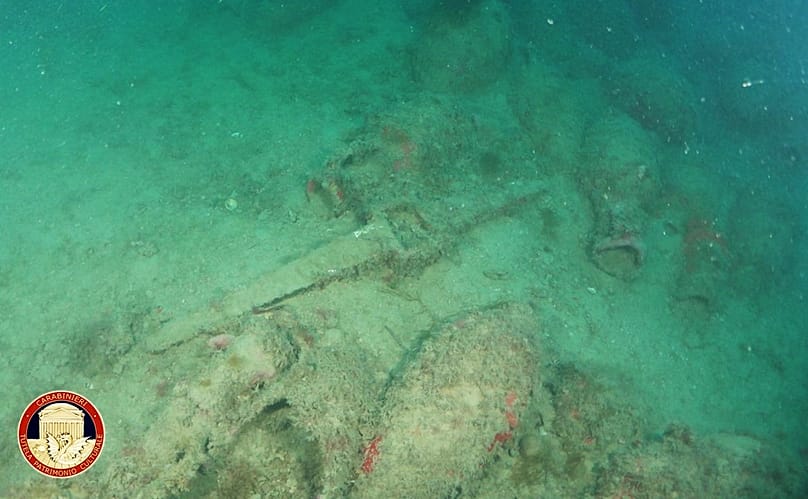
Extraordinary discovery off the coast of Sicily. A Roman-era shipwreck, probably dating from between the 2nd and 1st centuries BC, has been located around three miles off the coast of Mazara del Vallo, at a depth of 46 metres.

On the seabed, the Italian Ministry of Culture reports, there are hundreds of amphorae, mostly of the Dressel 1A type, two lead anchor stocks and another structure made of the same material.

The Minister for Culture, Alessandro Giuli, has described it as one of the most important underwater archaeological discoveries of recent years. "I congratulate the Carabinieri, their specialised units and the Sea Superintendency of the Sicilian Region for the expertise and dedication that made this result possible. The sea continues to give back precious fragments of our history and the wreck of Mazara del Vallo tells us about the people, the routes and the trade that made the Mediterranean a crossroads of civilisations. Research will continue to uncover its story and share it with the public," Giuli said.

The discovery was made during a joint inspection carried out by the Carabinieri Cultural Heritage Protection Unit (TPC) in Palermo, the Sea Superintendency of the Sicilian Region and the Carabinieri Underwater Unit in Messina, with support from the Carabinieri patrol boat in Trapani, following a tip-off from private citizens.


Remains of the Roman wreck found off Mazara del Vallo Ministero della Cultura italiano

The site will now be the focus of further documentation and research by the Sea Superintendency, aimed at reconstructing the archaeological context and putting in place the necessary protection measures.

The volcano discovered off Panarea

Only a few days ago another major discovery off Sicily was announced. In this case, however, it was not an archaeological find. A large crater hidden beneath the sea and new hydrothermal vents were identified off the island of Panarea, in the Aeolian archipelago. The discovery will allow scientists to deepen their study of the island's submarine volcanic system and raises new questions about its evolution.

The structure lies about one nautical mile north-east of Panarea, at a depth of between 60 and 80 metres. The crater is of impressive size: about 100 metres long and 60 metres wide. Next to this formation, new hydrothermal vents have also been identified, characterised by gas emissions from the seabed.


Israel 'rejects' the US ceasefire plan for Gaza accepted by Hamas

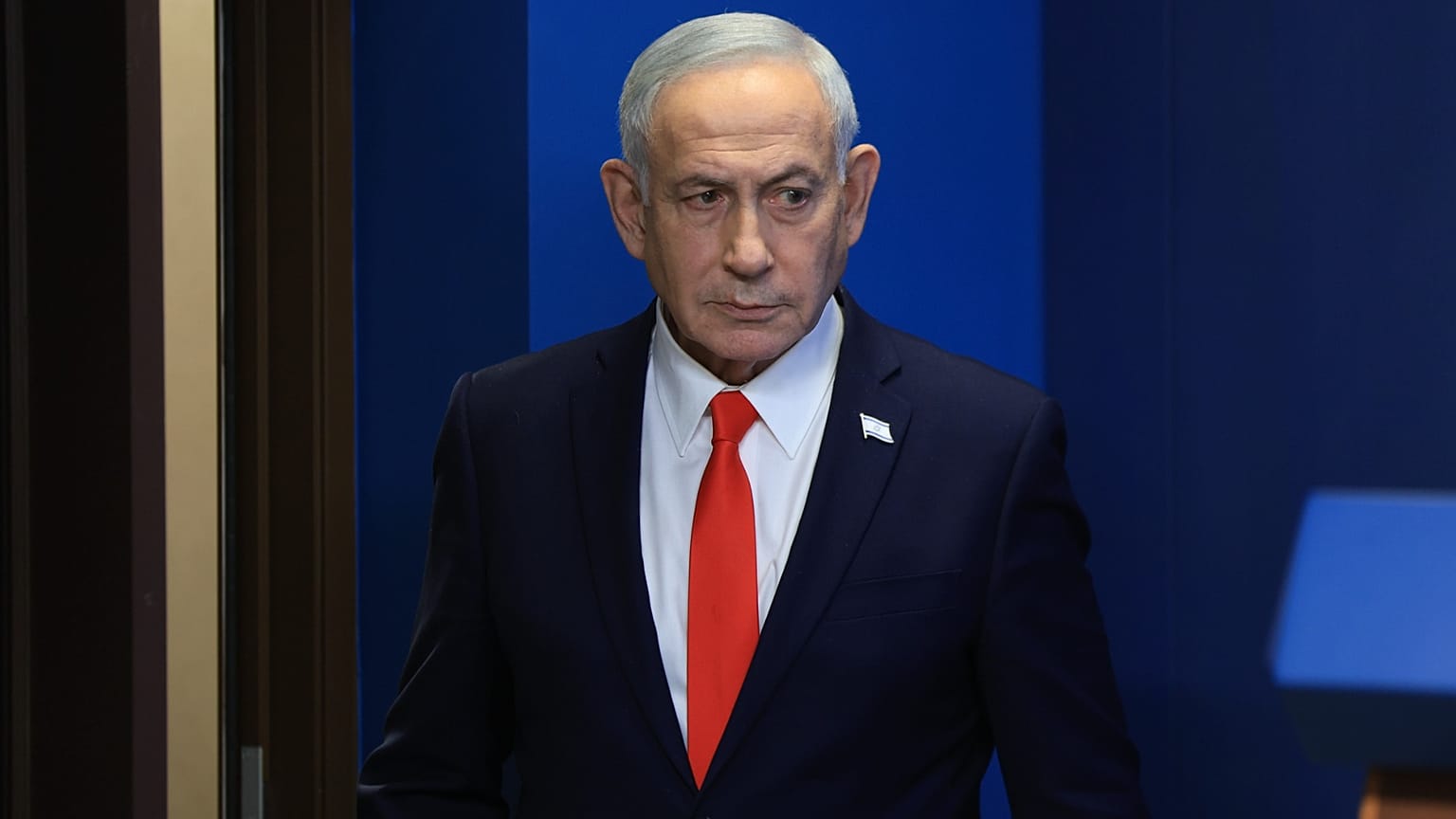
Benjamin Netanyahu's press conference in Jerusalem on 15 June 2026.
Copyright Ronen Zvulun, Pool Photo via AP

By Olivier Tolachides
Published on

At a cabinet meeting, Israeli Prime Minister Benjamin Netanyahu said the army would make 'no withdrawal until Hamas is truly disarmed,' scrapping the ceasefire plan.

Israeli Prime Minister Benjamin Netanyahu rejected the latest US roadmap accepted by Hamas to launch the second phase of the Gaza peace plan, taking fresh distance from President Donald Trump as he faces razor-tight elections.

After more than a week of gradually escalating criticism of the plan, Netanyahu explicitly opposed it in the face of pushback from his right-wing base.

The Israeli government says any withdrawal of Israeli forces from the Gaza Strip is conditional on the Islamist group being "genuinely" disarmed.

"Israel rejects the 15-point document" presented at the end of July by Donald Trump’s Peace Council, Benjamin Netanyahu said during a cabinet meeting.

The Israeli army would carry out "no withdrawal as long as Hamas is not genuinely disarmed and will continue to thwart threats against our forces and our citizens," Netanyahu said.

US efforts ditched

Israeli PM described Trump, with whom he has also had a growing break on Iran, as "our greatest friend in the White House" — but quickly made clear he was willing to challenge him.

He said Israel was raising its objections to the Gaza plan with the United States.

"They have ideas; some of them are acceptable to us, and some are not, and we know how to stand our ground on these matters," he said.

Hamas, days after selecting a new leader, Khalil al-Hayya, announced it supported the Gaza plan. It called on the United States to pressure Netanyahu.

"We expect the mediators and the American guarantor to pressure Netanyahu and his government to adhere to the roadmap and not obstruct the process for internal political and electoral reasons," Bassem Naim, a member of Hamas's political bureau, told AFP.

Growing friction with Trump

Netanyahu until recently campaigned on the strength of his relationship with Trump, who since his first term has taken unprecedented steps to back Israel, including moving the US embassy to Jerusalem.

Trump joined Netanyahu in late February in attacking Iran. But the two diverged when Trump sought a ceasefire with Iran in April, as the war sapped his popularity at home and sent oil prices soaring.

Netanyahu told his cabinet that "with an agreement or without an agreement, as long as I am prime minister, Iran will not have nuclear weapons", a goal he has long alleged Tehran is pursuing.

Netanyahu last week also ordered fresh strikes on Lebanon in response to what Israel called a ceasefire violation by Iran-backed Hezbollah, just as Israel and Lebanon were holding US-mediated talks.

The Gaza plan was the latest stage in a US-brokered ceasefire announced in October that has reduced but not ended Israeli operations in Gaza.

Trump had described, as a "major milestone," the agreement by Hamas to surrender weapons to a nascent Palestinian governing body.

Netanyahu's base scorn plan

The plan said Israel would begin pulling out forces in tandem with the disarmament, a timeline adamantly rejected by Israel.

After meeting Netanyahu last week, Trump's body implementing the deal, dubbed the Board of Peace, backtracked and said Israel would only need to withdraw after "complete" disarmament, but it was apparently not enough for the Israeli leader.

Netanyahu said that Hamas must give up all of its weapons.

"We are talking about real disarmament, not fictitious disarmament," Netanyahu said.

Polls show that the Gaza plan is widely unpopular with Netanyahu's right-wing base and far-right members of his cabinet, who have urged him to call a new vote to kill the Gaza plan.

Netanyahu, Israel's longest-serving leader, is running even or trailing in some polls ahead of the 27 October elections, the country's first since the devastating 7 October 2023 attack by Hamas.