Excerpt: How To Close a Camp
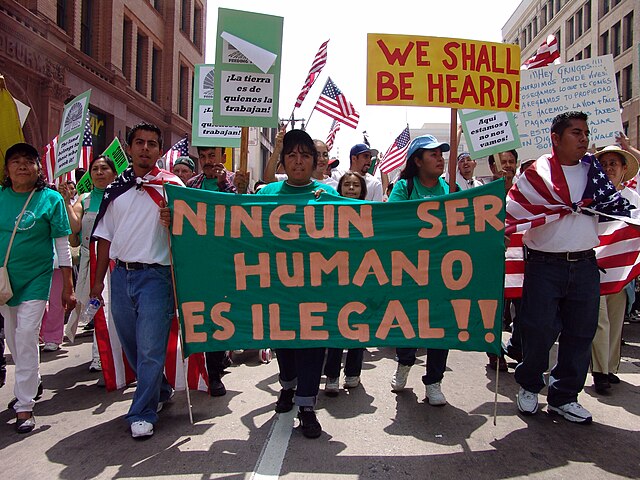
Editor’s Note: The following is excerpted with permission from How to Close a Camp: Dispatches from the Fight Against Immigrant Detention, out from Haymarket Books July 2026.
The Prison-Immigration Knot
By the late 1980s, thanks to over a decade of laws criminalizing immigrants and expanding the camp system, prison and immigration detention industries were operating by their own economic logics. Even in the face of recessions, the prison industry kept growing. Immigration detention was seen by the Reagan administration as “recession-proof.” For private corporations like CoreCivic (formerly Corrections Corporation of America), founded in 1983, immigration detention was a financial lifeline. Federal contracts insulated companies from state budget crises and guaranteed steady revenue streams.
Detention was sold as both a law-and-order necessity and an economic opportunity, welding together the racist politics of the drug war with the rise of private prisons. Communities hollowed out by deindustrialization welcomed detention centers as employers of last resort. Local politicians who couldn’t secure new factories or union jobs instead competed for prisons and INS contracts. Officials in Port Isabel, Texas, for instance, saw the expansion of what was known as El Corralón, or “the big corral,” as a way to cash in on Reagan’s willingness to lock up asylum seekers.
But if Reagan set the foundation, the Clinton administration built the superstructure. Clinton rode into office pledging to be tough not only on crime but also on immigrants. Governor of Arkansas at the time of the Mariel boatlift, he was furious at the Jimmy Carter administration for detaining migrants at an Arkansas camp. The political backlash had been costly for him, and his resentment carried into his presidency. Clinton’s 1994 crime bill funneled billions into prison construction and policing, while his 1996 immigration laws fundamentally reshaped the landscape of enforcement. The Antiterrorism and Effective Death Penalty Act and the Illegal Immigration Reform and Immigrant Responsibility Act (both of 1996) expanded the categories of deportable offenses, introduced mandatory detention for a wide range of crimes (including minor and decades-old convictions), and sharply curtailed judicial discretion. The antiterrorism law, ostensibly in response to the most home-grown of terror acts (especially the 1995 Oklahoma City bombing by white nationalist Timothy McVeigh), in fact focused on purported threats coming from abroad. The law changed the detention of many migrants from discretionary to mandatory, allowing migrants to be detained for up to two years before seeing an immigration judge.

How to Close a Camp: Dispatches from the Fight Against Immigrant Detention
The 1996 laws, the “aggravated felony” category introduced in 1988, and the expansion of INS camps like Krome in Miami and Port Isabel in Texas marked the complete insertion of immigration detention into the American carceral state. Now, the same logic that incarcerated millions of Black Americans under mandatory minimums and three-strikes laws also ensnared migrants—justified by the same political rhetoric of danger, disorder, and deterrence. Both carceral outgrowths served the same economic interests of private prison companies and, purportedly, struggling rural economies. And both entrenched a culture of disposability, where human beings were warehoused in the name of public safety. The expansion of the immigration camp system was rapid and dramatic. In 1994, there were fewer than 7,000 immigrants in detention on any given day. By 2001, the INS was detaining an average of 19,500 noncitizens daily, with nearly 190,000 detained over the course of that fiscal year. And while the expansion was sold to localities as an economic windfall, the promise was empty. Researchers Amy Glasmeier and Tracey Farrigan compared fifty-five rural counties with prisons constructed between 1985 and 1995 to similar counties without prisons. They found “little evidence of prisons fostering economic growth especially in persistently poor communities.” As the “century of the camp” began to sunset, the prison industrial complex had become a catchall political solution.
The course was set in the 1990s, but, as they did for so much else, the September 11, 2001, attacks marked another key inflection point for immigration camps. In one of the first immigration enforcement moves after the towers fell, INS Acting Deputy Commissioner Peter Michael Becraft implemented a new parole policy targeting Haitian asylum seekers: No Haitian could be paroled out of detention without direct approval from INS headquarters in Washington, even if they had proven their eligibility for asylum. As migrant justice organizer Silky Shah tells me, “Anti-Black racism is the underlying component of the rise of these anti-immi-grant systems.” 9/11 also prompted the creation of the Department of Homeland Security and its subagency ICE.
Many such senseless, vindictive, and downright racist policies would follow, such as the PATRIOT Act, allowing for indefinite detention, or the 2004 Intelligence Reform and Terrorism Prevention Act, which mandated ICE increase detention capacity by eight thousand per year from 2006 to 2010.
From the inception of his administration in 2000, George W. Bush oversaw a massive expansion of border militarization, including hundreds of miles of border barriers and doubling the number of Border Patrol agents. The vilification, scapegoating, surveillance, and arrests of Muslims, in particular, presaged the open revilement cast on Haitians and other darker-skinned migrants during the Trump administration. At the same time, looking at either the Clinton presidency before Bush or Obama’s presidency after highlights the bipartisan reliance on criminalization of migrants and on the camp. In 2009, Democratic Senator Robert Byrd from West Virginia introduced a clause in the DHS Appropriations Bill that the department “shall maintain a level of not less than 33,400 detention beds.” In 2012, that “bed quota,” as it became known, was raised to 34,000. The federal government pays out contracts for those beds—via the so-called “guaranteed minimum” clauses—whether they’re filled or not.
On the state level, Arizona, followed by both Georgia and Alabama, led the way in 2010 by trying to make unauthorized migration not only a federal crime but also a state violation. The hypocrisy of crackdown culture continued: All three states passed harsh anti-immigrant laws at the same time they courted ICE contracts to open new detention centers, meaning local jurisdictions increasingly depended on detaining the very people they wanted out.
The experience of detention in Georgia’s Irwin County highlights the local effects of that dependency. What had been a US Marshals facility in the rural county in the early 1990s had shut down. In 2004, a private company reopened the facility to serve as an overflow lockup, detaining people from other counties. With the economy in Irwin struggling—a drought and a lack of migrant agricultural workers were making things worse—in 2007, the county passed a $55 million bond package to expand the prison. They were hoping to attract federal agencies in the detention business and turn the prison into the county’s lifeline. It didn’t quite work. There simply wasn’t enough revenue, and by 2011, after another change in ownership, the facility was nearly a million dollars behind on its taxes. As reported in The Nation, Hazel McCranie, president of the Ocilla-Irwin Chamber of Commerce, told local officials: “You’ve got to go out and get a contract with ICE. That’s your salvation.”
To entice ICE, the joint owners of the prison, with the support of members of Congress and former Senator Johnny Isakson, offered a deal: Instead of spending the typical $60, $90, or sometimes over $160 per day to lock a person up, ICE could cage someone in the Irwin camp for only forty-five dollars a day. ICE soon began transferring people from Alabama’s Etowah jail (where, as we saw in the introduction, Juan was locked up for almost five years) to Irwin.
In January 2011, four people locked inside the Irwin camp went on hunger strike and were sent to solitary confinement as punishment. One detained person held in the Irwin camp, Florent Firmin Kalonji Kalala, told reporters, “We’re fed like dogs.” He added: “I just feel humiliated—that’s the feeling I have every day.”
Years later, the county’s moral and financial compromise deepened. In 2020, reporter José Olivares and I broke a story about Irwin that made international headlines: Besides dangerously lax protocols amid the COVID-19 pandemic, an ICE-contracted doctor who treated patients at Irwin was multiply accused of performing invasive, nonconsensual, and unnecessary gynecological surgeries. We spoke with one woman, Yuridia, who was held in the camp and went to see the doctor after suffering lower abdominal cramps. Without proper explanation, she was soon on the operating table. It wasn’t until she was deported to Mexico that, still suffering the after-effects of the surgery, she learned she had had her uterus removed.
Once exposed, the conditions prompted international outcry, lawsuits, and a Senate investigation, while giving more fuel to people inside and out fighting to shut down the camp. In 2021, ICE announced it was closing the Irwin camp. Then, just as we’ve seen time and again with other camps that aren’t demolished or turned into something new, in 2025 the Trump administration announced its reopening. Steady source of tax revenue, reliable employer, wholesome community partner the camp is not.
Much of the camp infrastructure we see today was established in the Obama years. In 2014, as more families, mostly from Central America, fled violence and poverty and headed toward the United States, the Obama administration—following the encrusted playbook first written in the nineteenth century to try to dispel the Chinese—reverted to using detention as an attempted means of deterrence. First they reoutfitted a law enforcement training site in Artesia, New Mexico; then, they opened the 2,400-bed South Texas Family Residential Center in Dilley, Texas, to lock up mothers and their children. In 2015 I spent a week in and out of the camp in Dilley—then one of the largest detention camps in the country—frequently referred to as a “baby jail.”
Though school-age kids attended classes inside Dilley and had ready access to milk and apples—adding a thin veneer of humanism to the camp—the atmosphere was starkly punitive. Many of the children I met had colds or coughs. Medical attention was slow and, according to women I interviewed, sick kids were regularly told by medical staff simply to drink water. This was the same tap water that a cook at a local drive-thru taco shop told me not to drink “cuz of the oil”—a reference to the fact that residents in and around Dilley were concerned about fracking wastewater contaminating their groundwater. Many of the kids had trouble sleeping, and women I spoke with reported that their children were depressed and not eating. One told me that her 11-year-old boy had lost more than ten pounds since coming to Dilley. “We are creating a mental health crisis,” one attorney representing the moms and kids, and working to shut the place down, said. “These kids are going to have PTSD and need serious therapy.”
The same year, in 2014, the Obama administration also opened an ICE staging facility in Alexandria, Louisiana:a camp with an airport, allowing for more efficient deportations. As Nora Ahmed, the director of ACLU Louisiana, explained to me, the facility was “really what allowed Obama to become the deporter-in-chief.” (In the Trump era, the cruel efficiency of the Obama administration’s camp-airport infrastructure has proven incredibly useful.)
Protests, hunger strikes, shutdown campaigns—all of it pushed the Obama administration to issue cosmetic changes and scale back some of the most dehumanizing excesses of the camp system. While Dilley was finally shuttered in 2024, the following year the Trump administration announced it was reopening it. A few months later, a legal complaint detailed how young children held in the Dilley family camp, sometimes for months, did not have reliable access to clean drinking water, soap, or shampoo. The echoes of 2015— nearly identical human rights complaints coming out of the same camp—were clamorous. Parents and their young children reported sleep deprivation due to lights being on 24/7 and a lack of emergency medical attention for kids in acute medical distress. One 11-year-old girl wrote to her attorneys, “Sometimes I see kids who are sad. Most of the kids don’t play because they are afraid.” One nine-year-old boy regressed so severely he could no longer control his bowel movements and had to start using diapers.
Kids who don’t play, diapers on nine-year-olds—this is Clinton, Obama, and Biden’s immigration policy legacy: building out the camp infrastructure to humiliate, starve, abuse, and lay the groundwork for their virulently anti-immigrant successors.
And yet there are ways—long established and newly dusted off, storied and hardly recognized—to push back.
It can start with simply questioning the legitimacy of the camps.
A fascinating 1993 Department of Justice report, Resolution of Prison Riots, mentioned Cuban migrants protesting their detention and included a section called “Breakdown of Legitimacy of Imprisoning Criteria,” which notes: “We observe that most inmates most of the time accept as legitimate the imprisonment of their fellow inmates. They may protest their own conviction or sentence but, at the same time, believe that the other inmates are guilty of crimes, deserve prison sentences, and ought not to be discharged en masse. In uncommon periods in history, however, these beliefs may be challenged. Once it is held that the criteria for imprisonment are arbitrary, it is a short step to the belief that rebellion is justified.”
In other words, if we recognize the arbitrariness of imprisoning people because of where they are from or where they have moved, we begin to see through the illusion of the camp. We are in such an “uncommon” period now. We can see through the illusion, and we can take that short step toward rebellion against the camp.
John Washington, a reporter at Lookout News, is an investigative journalist and translator based in Tucson. His most recent book, The Case for Open Borders, was published by Haymarket Books in 2024.
“That is just not medical care,” said one expert, “that is torture.”

Kurdish filmmaker Gabar Choli, seen here in a screenshot from his YouTube channel, was force-fed for eight months while detained by US Immigration and Customs Enforcement.
(Photo by Gabar Choli/YouTube)
Brett Wilkins
Aug 10, 2026
COMMO0N DREAMS
In the latest articles in his series on former hunger-striking asylum-seekers who were force-fed while detained by US Immigration and Customs Enforcement, Guardian immigration reporter José Olivares on Monday featured a Kurdish filmmaker who said he is still suffering from physical and psychological pain from the torture he endured last year.
Iran-born Gabar Choli told Olivares that he went voluntarily with guards to the infirmary at ICE’s Port Isabel Service Processing Center in Los Fresnos, Texas, the first time he was force-fed.
“First I did not resist,” he said. “But after I saw they were torturing me, I started protesting: ‘I’m not coming with you people.’”
From there, things only got worse. Choli said that guards would pin him down while staff shoved a plastic tube through his nose, down his throat and esophagus, and into his stomach to pump him full of nutritional liquid without his consent.
“Two guards would hold my feet; two hold my hands; one hold my head—and they would shove tubes in my nose,” Choli told Olivares. “It’s not easy to be wrestled to the ground twice a day by men that are stronger than you. And you just take it. You have 60cm (2 feet) of tube going through you, and you just feel every centimeter of it.”
“I was respectful. I just told them I am protesting for humane treatment, nothing else,” he said. “But they were determined to break me.”
Choli recounted how one nurse working for ICE “shoved the tube so hard” that “he tore my nose from the inside.”
“They would take me to solitary cell and I would just choke on my blood and drink the blood from inside [my throat],” he said.
The force-feeding continued for the next eight months. One time, a guard’s rough treatment injured his ribs and made breathing painful for weeks. Another time, guards “pressed so hard on my shoulder, I thought my chest was going to break in half.”
During another session, medical staff ignored Choli’s warnings and accidentally shoved the nasogastric feeding tube into his lung.
On some Fridays, Choli agreed to drink the nutritional shakes if guards let him pray and socialize with other detainees.
Court records viewed by Olivares showed Choli suffered injuries and medical issues including swollen sinuses, esophageal damage, and stomach problems following his force-feeding.
Dr. Chanelle Diaz, an assistant professor at Columbia University’s medical center, told The Guardian, “That is just not medical care, that is torture.”
Choli admitted: “It just broke me, mentally broke me. It came to a point that I decided to write my body an apology letter.”
The writer and director of short dramas including Waves Goodbye, Love if Loud, and We Don’t Understand Him, He Speaks in Broken English, Choli advocates for Kurdish independence and legally sought asylum in the United States upon entering the country from Canada in 2022. He lived legally in Los Angeles, attended his required ICE check-ins, and obtained a US work permit while his asylum case was processed.
An immigration judge denied Choli’s asylum claim in 2024, but granted him protection against being deported to Iran, barring the government from sending him back there. He was arrested in February 2025 during a routine ICE check-in following President Donald Trump’s return to the White House.
Choli was first sent to the Desert View Annex in Adelanto, California—run by private prison profiteer GEO Group—where detainees have reported medical and mental health neglect, excessive use of force and pepper spray, mold, punsafe drinking water, inadequate food, poor sanitation, and use of solitary confinement, among other alleged abuses.
The following month, as ICE officials pressured him to agree to be deported to Iran—where his advocacy for Kurdish independence could cost him his life—Choli began his hunger strike, demanding better conditions and a fair resolution to his case.
“I am not suicidal,” Choli declared to a judge. “I am using hunger strike as the only available option to protest the abuse and mistreatment.”
Around two weeks after beginning his hunger strike, Choli was transferred to Port Isabel, where he was held in solitary confinement—which survivors and experts call a form of psychological torture—as he continued his hunger strike.
US District Judge Rolando Olvera—an appointee of former President Barack Obama—ordered Choli’s force-feeding following a request from ICE, which called the detainee’s hunger strike an attempt “to manipulate the immigration system” and “a serious threat to the security and good order” at Port Isabel. Olvera did not meet with Choli, who had no legal representation throughout his ordeal.
The US Department of Homeland Security told The Guardian that ICE “provides involuntary medical treatment only to prevent imminent life-threatening harm or death.”
However, under the World Medical Association’s Declaration of Malta, doctors are advised not to force-feed prisoners who choose to hunger strike and understand the consequences of their actions.
During The Troubles in Northern Ireland, British authorities allowed 10 imprisoned Irish Republican Army members, including former Member of Parliament Bobby Sands, to starve themselves to death.
In contrast, force-feeding is institutional policy in US prisons, including the Guantánamo Bay concentration camp in Cuba, where detainees—most of whom were charged with no crime—were force-fed during the George W. Bush and Barack Obama administrations.
During Trump’s two terms, hundreds of people have gone on hunger strike at ICE detention centers across the country to protest overcrowded and unsanitary conditions, spoiled and worm-infested food and water, inadequate medical care, delays in immigration procedures, alleged physical and psychological torture, and other mistreatment.
In May, US Homeland Security Secretary Markwayne Mullin dismissed the hunger strikers as a “handful” of detainees whom he falsely claimed were striking because they “want their ethnic right food.”
“This isn’t Holiday Inn,” Mullin said, referring to the hotel chain.
In early January, ICE deported Choli to Canada, where he was reunited with his siblings. He told Olivares that he had to learn to eat again.
“The price of it was my kidneys, my gallbladder,” he said. “My intestines. My being. My bladder, you know, is damaged. Every time I twist and turn, I feel pain. But this is the price you pay for making a stand for what is right.”

Going to Wilson Creek in the Pisgah National Forest is something of a Sunday routine for many Latino families in this corner of the Appalachian Mountains. On a recent Sunday, Argenis Eduardo Torres Rosales joined other parents and children for a day outdoors.
While they swam and picnicked on the rocks, Immigration and Customs Enforcement (ICE) agents set up a checkpoint in Caldwell County, North Carolina, on the narrow road that was the only way in and out of the creek. Rosales was sitting in his car when the agents approached him, his aunt said; according to an advocate, they had been stopping people and asking them for their citizenship status.
“Some people that were down at the creek didn’t know what was happening,” said Andreina Malki, defense manager for Siembra NC, a local advocacy organization. “Some people that went back to their cars didn’t come back down.”
By late afternoon, Rosales and 12 others had been detained and separated from their families, including a father whose wife and children were stranded on the side of the road with no signal in the forest because she didn’t have a driver’s license. As far as anyone could remember, this was the first-ever ICE raid in a national forest in North Carolina. It has since become a deterrent to immigrant families who were already underrepresented among visitors to national parks.
Hispanics or Latinos made up only about 8 percent of visitors to national forests, according to the most recent U.S. Forest Service National Visitor report, released in 2022.
Malki grew up hiking and swimming around Pisgah National Forest. “It’s a sacred place to me,” she said. “What they did to families who were probably experiencing that same communion with nature … to have it desecrated by violent and cruel law enforcement activity is heartbreaking.”
Weaponizing the outdoors for immigration enforcement doesn’t only exacerbate a gap in access to the outdoors for people of color. The fear of it becoming a place for more immigration enforcement also prevents families from visiting parks and engaging in nature-based activities, resulting in missed opportunities to explore and learn about the environment, advocates say.
“When families live in terror, environmental justice becomes impossible,” said Kim Bailey, president and CEO of Justice Outside, an environmental organization that promotes the participation of people of color in the outdoors. “Children cannot participate in outdoor programs because families fear leaving home, environmental education becomes inaccessible to communities most impacted by environmental racism, and outdoor spaces transform from healing sanctuaries into surveillance sites.”
The raid came after the Republican-led North Carolina General Assembly voted to override Democratic Gov. Josh Stein’s veto on SB 153, which requires state law enforcement agencies to collaborate with ICE. Last weekend, community members hosted a prayer vigil in Raleigh to protest the legislation.
In a statement to The 19th, ICE confirmed that the agency worked with the Forest Service to arrest 13 people on July 26. The agency said that “many” of them “had criminal histories including DUI and illegal reentry — a felony.”
“My nephew is no criminal,” said Torres Rosales’ aunt, Wuendy Rosales. She has worked with Siembra NC to independently confirm that her nephew does not have a criminal record. She told The 19th that Rosales, 32, is from Venezuela, entered the United States as an asylum seeker and, as such, received a permit to legally work in the country.
He is being held at an immigration detention facility in Folkston, Georgia – 433 miles from Caldwell County, where his wife and stepson have been waiting for him to come home.
Wuendy Rosales said he has called her from detention every day.
“This is his first time being detained, it’s been a nightmare for him. That’s why I’m speaking up for him, because he can’t speak for himself,” she said.
Between paying attorney fees and depositing funds into his account to afford phone calls home, the family has spent thousands of dollars. That’s on top of Rosales’ already expensive asylum application process, Wuendy Rosales said.
On the first Saturday after the raid, a group of over 100 people gathered for a prayer vigil at a nearby town in Caldwell County. “We gathered here to say unequivocally, the waters and forests belong to everyone,” said Rev. Adam Love from Oak Hill United Methodist Church.
There, questions immersed in confusion and fear swirled around the community: Are forest rangers ICE agents now? Will this happen at other parks?
“It’s creating fear, which is exactly what they want. I think this is a way of them telling folks that they don’t belong in our states, or in our national forests and we think that is not the case,” Malki said, adding that the park appeared to be empty. “We hope that people keep enjoying our natural resources.”
Deputies from the Caldwell County Sheriff’s Office were also a part of the raid. Malki and Rosales both said that a partnership between the Forest Service, ICE and local law enforcement felt shocking — and a very intentional way to make people feel less safe.
“They were not looking for someone who had escaped to a national forest or run away,” Malki said. “They were setting up an intentional check point on a Sunday midday to detain and arrest sunbathers and families enjoying the day with their loved ones.”
“We never expected ICE to go there,” Wuendy Rosales told The 19th. The operation, she added, felt like “a trap” because the local enforcement knew the area was frequented by the Latino community.
The community’s relationship with the Forest Service wasn’t always this way. In 2023, the Pisgah National Forest Land Management Plan stated a “desired condition” to serve “historically underserved” communities to increase diversity of visitors, volunteers and partners. In 2024, the Forest Service worked closely with Caldwell County and local partners to create a community action plan for the creek.
“People are scared now to approach a sheriff at the national forest because they were participating in this operation,” Malki said. “If they are aligned with ICE, or doing their job for them, are they a safe agency to approach for other things that are actually forest-related?”
Officers assigned to the Forest Service’s law enforcement division don’t report to local Forest Service units, an agency spokesperson told The 19th.
“While officers have no authority to enforce immigration law, the Forest Service complies with Executive Orders and Administration Policies directing cooperation with agencies tasked with immigration enforcement,” the spokesperson added.
For Wuendy Rosales, the explanation does not make sense. “They’re detaining my nephew, taking his freedom away. For me, it’s a political thing,” she said. “We are paying the price for a political war.”


No comments:
Post a Comment