Saturday, September 05, 2026


Navigation Warning After Ship Loses 46 Containers in Philippine Waters

containership Philippines
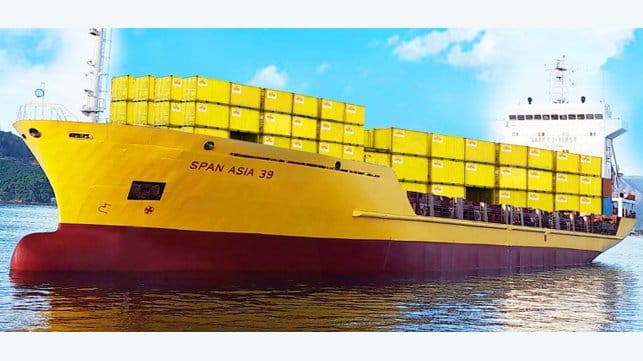
Interisland containership lost 46 boxes at sean and then one more in the Manila anchorage (Philippine Span Asia Carrier Corp. )

Published Sep 4, 2026 5:23 PM by The Maritime Executive


The Philippine Coast Guard issued a navigational warning for one of its busy shipping lanes after a containership lost 46 boxes overboard in the Batangas region. Surveys were underway to find the containers, while pictures showed that at least one has washed ashore.

The interisland containership Span Asia 39 (8,300 dwt) reported the container loss around 11:00 a.m. local time on September 3 while it was approximately 1.5 nautical miles offshore near Hamilo Point. Built in 2006, the 115-meter (377-foot) ship, which has a capacity of 564 TEU, was acquired by Philippine Span Asia Carrier Corp. The company called the ship a "game changer" with a speed of 15 knots for the Manila-Cebu-CDO-Cebu-Manila route.


At least one container washed ashore while the Coast Guard is searching for others in the shipping lane (PCG)


The ship reported that it encountered rough sea conditions accompanied by heavy and continuous rolling on Thursday morning. As a result, the container lashings loosened. It said that 30 of its 20-foot containers, 11 of its 40-foot containers, and five open containers went overboard. The ship said the containers were empty. It had departed from Davao International Container Terminal on August 31 with 332 containers onboard.

The ship proceeded into the North Manila Anchorage, but while maneuvering there Thursday afternoon, it reported another container fell overboard. This one was reported to have sunk.

The Coast Guard dispatched CGS Cavite to the area where the containers were lost, and it deployed a drone. BRP Malapascua, the multi-purpose response vessel, was also proceeding to the area. It will be aiding in the search and drift-tracking as they look for any other boxes that might still be afloat.


UK Confirms Sale of HMS Bulwark to Brazilian Navy

amphibious ship Royal Navy Bulwark
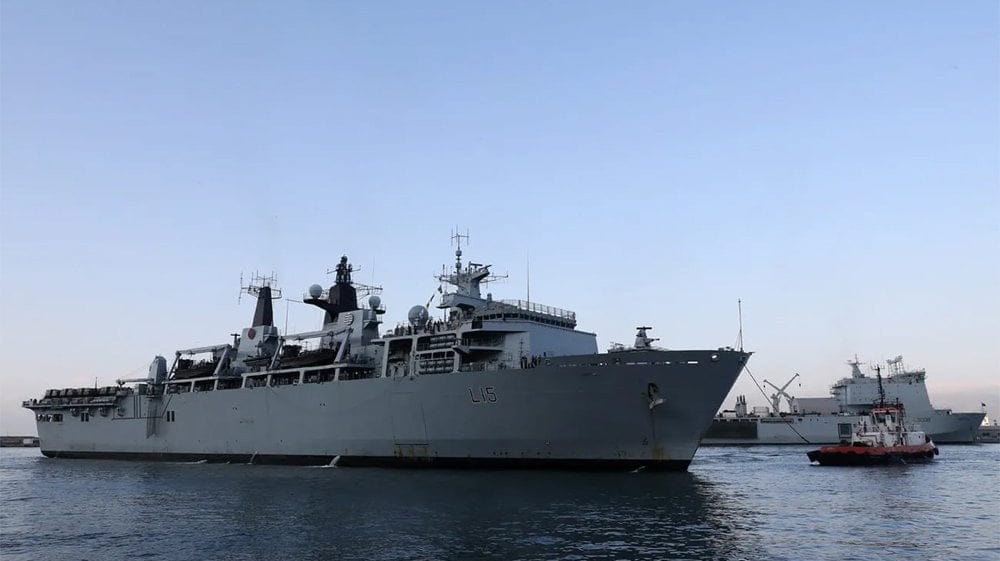
Bulwark, once flagship of the fleet, arriving in Gibraltar (Royal Navy)

Published Sep 4, 2026 6:16 PM by The Maritime Executive


A United Kingdom navy ship that was instrumental in the evacuation of civilians from Beirut in 2006 and active from 2005 to 2016 is ending its service with the Royal Navy. The Ministry of Defence confirmed the long-rumored transfer of HMS Bulwark to Brazil.

The HMS Bulwark (L15) is one of two Albion Class amphibious assault ships whose fate has been the subject of speculation. Both ships have been out of service for years, undergoing life-extension overhauls with the British government committing significant investments in their upgrade program.

For Bulwark, which was commissioned in 2005, the government has spent a total of $100 million on her midlife upgrade project that is nearing completion. The revitalization program has involved the modernization of its command and control systems, upgrades to communications equipment, and a full overhaul of its propulsion and power generation systems. The aim was to extend her operational service life by another two decades.

Instead of returning the landing platform dock ship to service with the Royal Navy, the UK’s Defense Ministry has now ended the speculation by confirming she is being sold to the Brazilian Navy. While the government did not reveal the price at which the ship was sold, reports indicate it was sold at only $26 million. The same fate is likely to befall her sister ship, Albion, which remains moored at the Devonport naval base pending disposal.

The MoD asserts the disposal of the two ships was part of the government’s plan to modernize navy ships. It highlights the effort to transition to a hybrid Navy, which it says will be anchored by a £1.5 billion ($2 billion) Defense Investment Plan.

A new £2.4 billion ($3.2 billion) deal has since been signed in partnership with the Netherlands for construction of a fleet of eight next-generation amphibious transport ships that will replace the capability provided by the Albion class. At 160 meters (525 feet) in length and displacing 15,000 tonnes, the new vessels will be capable of transporting troops, vehicles and equipment, including drones, wherever they are needed. 


Bulwark passing her sister Albion in December 2016 when she ended active service (Royal Navy)


Bulwark, which is 176 meters (577 feet) long, displaces 18,500 tonnes, and has capacity for 700 military personnel, is being sold after an illustrious service with the Royal Navy. The ship’s core roles were amphibious deployments, humanitarian missions, and multinational exercises. It is credited for her role in Operation Highbrow that involved the evacuation of British citizens during the 2006 Lebanon crisis. Other critical missions included providing maritime security for the Sailing Regatta at the London 2012 Olympics and counter-piracy operations in the Horn of Africa. Bulwark was also involved in various naval exercises and served as the Royal Navy’s Fleet Flagship between 2011 and 2015.

“HMS Bulwark served this country and our allies with distinction for over two decades, and I’m pleased that she will continue her story in Brazilian service, with a nation that has long stood alongside us as a defense partner,” said Lord Coaker, UK Minister of State for Defense.

The ship was ordered to stand down at the end of 2016, entering a period of Extended Readiness scheduled to run until 2021. For the next two years, until 2023, she was scheduled to undergo her overhaul and modernization. Critics now question the investments in the ships, which have never returned to service.

When she enters service with the Brazilian Navy, the ship is expected to be primarily deployed in operations in the Blue Amazon region, where she will be useful for a wide variety of both military and humanitarian aid operations supporting the civil community.

This is not the first time the UK has sold naval hardware to Brazil. The multipurpose aircraft carrier, NAM Atlântico (A140), which is the flagship and largest warship in the Brazilian Navy, was acquired from the UK at a cost of $84 million in 2018.


COSCO Calls Allegations of “Intelligence Collection” False and Unfounded

containerships docked in Long Beach
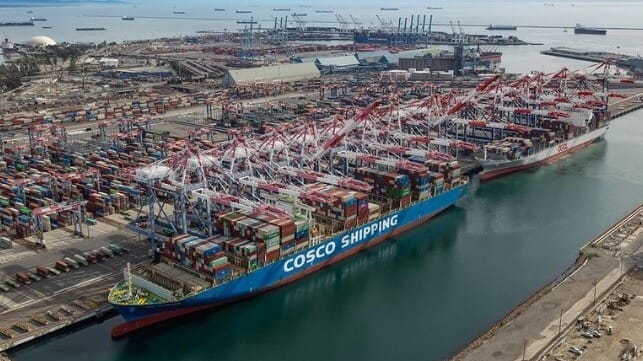
Vessels from COSCO and its subsidiary OOCL dock in the Port of Long Beach

Published Sep 4, 2026 1:42 PM by The Maritime Executive


COSCO Shipping issued a strongly worded statement saying it “firmly opposes” false and unfounded claims by “certain media” alleging its ships have hidden equipment for the purpose of intelligence collection. Its strong statement followed a similarly strong response to Reuters from the Chinese Embassy in Washington, D.C., after it ran a story saying two unnamed senior Trump administration officials made the allegations.

The state-owned shipping company said it strongly opposed any acts that try to “undermine our corporate brand and hinder our global operations through dissemination of false or misleading information.” It cited its legal rights to protect its reputation and business interests.

A shipping major, COSCO has grown rapidly and continues to place large orders for new ships. It ranks as the world’s fourth-largest container carrier with 566 ships and a capacity of over 3.6 million TEU, according to AlphaLiner. COSCO also has operations in dry bulk and tankers.

In an exclusive story released by Reuters on September 1, unnamed Trump administration officials reported that COSCO ships have concealed equipment to intercept military communications near the coastline. They asserted that the data collection effort was being done for the Chinese government to collect communication signals from vessels and aircraft operating across Europe, North America, and Asia. The article asserts that the information permits the Chinese to monitor key shipping lanes and maritime routes crucial for trade and military navigation.

The officials, Reuters reports, asserted the COSCO vessels have “’sophisticated signals intelligence collection platforms,’ not routine communications hardware.”

COSCO responded by saying, “All communication, navigation, safety and operational equipment installed on our vessels is used solely for legitimate commercial purposes, including navigation safety, ship-to-shore communications and emergency response. None of the equipment on board our vessels is used for intercepting military communications or gathering intelligence as alleged in the report.”

It is not the first time the U.S. has asserted that COSCO has ties with the Chinese military. The U.S. Department of Defense, on its annual listing of companies linked to China’s military, added COSCO Shipping and two of its subsidiaries, as well as other companies including the Chinese oil company CNOOC, to the designation in January 2025. It is largely a symbolic move but could be used to urge companies not to do business with the Chinese companies.

The allegations come as the Trump administration continues to seek to challenge China. Donald Trump and China’s leader Xi Jinping, however, are also scheduled for a summit in Washington, D.C., this month after the two leaders met in China in May 2026.

It is also the latest in a series of assertions of Chinese spying. In 2023 and 2024, there were repeated allegations that the large Chinese-manufactured cargo cranes used in ports around the world could collect information or “call home.” Multiple groups dismissed the claims, but it led to a renewed effort to reshore crane manufacturing capabilities in the United States. The Trump administration included the Chinese-manufactured cranes on its tariff lists, along with an effort to charge fees for Chinese-built or operated ships calling in U.S. ports. 


GAO Critical of US Navy Saying Submarines Are Idle Due to Shipyard Logjam

US submarine undergoing repairs
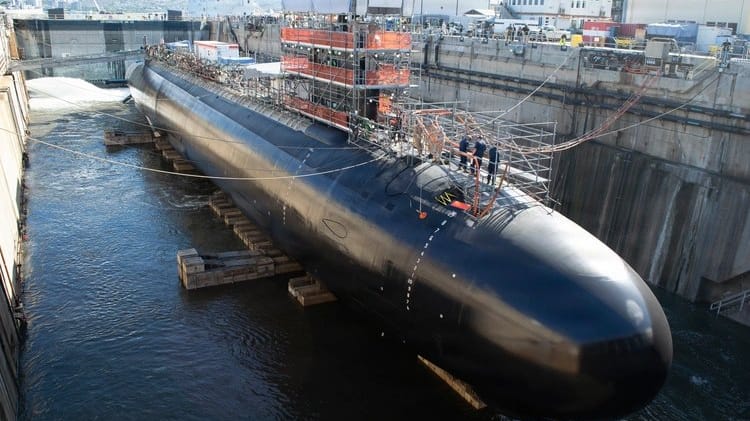
GAO says backlog means submarines are idle too long or cannot be decommissioned (USN)

Published Sep 4, 2026 7:26 PM by The Maritime Executive


Too many of the U.S. Navy's attack submarines are sitting idle across shipyards awaiting maintenance and decommissioning, according to a new report by the Government Accountability Office (GAO). The report highlights the challenges, saying it is impacting operational readiness and costing billions of dollars in lost productivity.

GAO is once again putting the U.S. Navy in the spotlight with its latest audit report focusing on attack submarines. It asserts that over the past decade, idle time has become the “buzzword” owing to submarines' inability to secure yard space for maintenance. For boats that have reached end of life and are awaiting decommissioning, it similarly asserts that shipyards are unable to start the process due to lack of capacity.

In the report, GAO is highlighting that the Navy has lost more than 15,000 operational days due to maintenance delays and idle time on active submarines over the last 10 years. The delays have resulted in an estimated $3.4 billion in costs to sustain crews and submarines that provided no operational capability. Another $3.1 billion is being swallowed due to decommissioning delays.

The U.S. Navy operates a fleet of 44 attack submarines. The 20 Los Angeles class and 24 Virginia class boats typically enter an extensive depot maintenance period, often lasting 24 to 36 months at a certain period during their life cycle.

Currently, the four public naval shipyards, Portsmouth, Norfolk, Puget Sound, and Pearl Harbor, as well as two private yards, General Dynamics and Huntington Ingalls Industries, are responsible not only for building new submarines but also for providing depot maintenance and decommissioning work for the 44 boats.

The shipyards are operating under extreme pressure, a reality that has seen the Navy’s submarine maintenance backlog persist since 2008, the outcome of which is 15,000 operational days being lost and $3.4 billion wasted, say the GAO, due to the shipyards' inability to undertake the maintenance. The situation has gotten worse over the past decade, with the Navy only managing to complete about 11 percent of depot maintenance on time at public yards.

The Navy’s predicament is being exacerbated by submarines awaiting decommissioning that must sit idle because shipyards cannot commence the process, which includes availing dry docking capacity to defuel the boats' nuclear reactors. On this, the U.S is performing spectacularly poorly, with the situation only bound to worsen, says the GAO. Over the past five years, the Navy incurred 2,216 days of idle time on seven submarines awaiting decommissioning, with costs amounting to more than $480 million.

GAO is highlighting that without mitigation, 15 submarines are expected to enter inactive idle time over the next four years. Over the period, the Navy is set to incur more than 14,000 days of inactive idle time and $3.1 billion in costs.

The Los Angeles-class submarine USS Pasadena (SSN-752) is currently a poster child of the quagmire facing the Navy in terms of decommissioning. The boat entered inactive idle status in January last year and is not expected to be moved into Norfolk Naval for decommissioning until November 2028, whopping 1,414 days, due to shipyard capacity constraints. Though idle, the sub remains fully crewed. For the four years it will remain in inactive idle status, Pasadena is expected to incur $300 million in costs.

“The U.S. Navy has not fully evaluated alternative options to more efficiently decommission attack submarines and develop and implement an inactivation plan that could allow them to reduce inactive idle time for crews and save billions,” stated GAO.

The report, which is prepared for Congress, seeks to explore the extent to which the U.S. Navy has effectively maintained its attack submarine fleet and what it is doing to mitigate challenges. Apart from maintenance and decommissioning, the report also shows the Navy is grappling with delays in the building of new boats, the effect of which is fewer boats for deployment.  

Construction of the new Virginia-class submarines is a case in point. As of June 2025, only one boat is being built per year against a target of two. Though the Navy received delivery of two boats of the class last year, both were over three years late.

Hiring burst of 162,000 jobs in August puts the focus squarely back on inflation in the U.S.


Updated: , 2026 


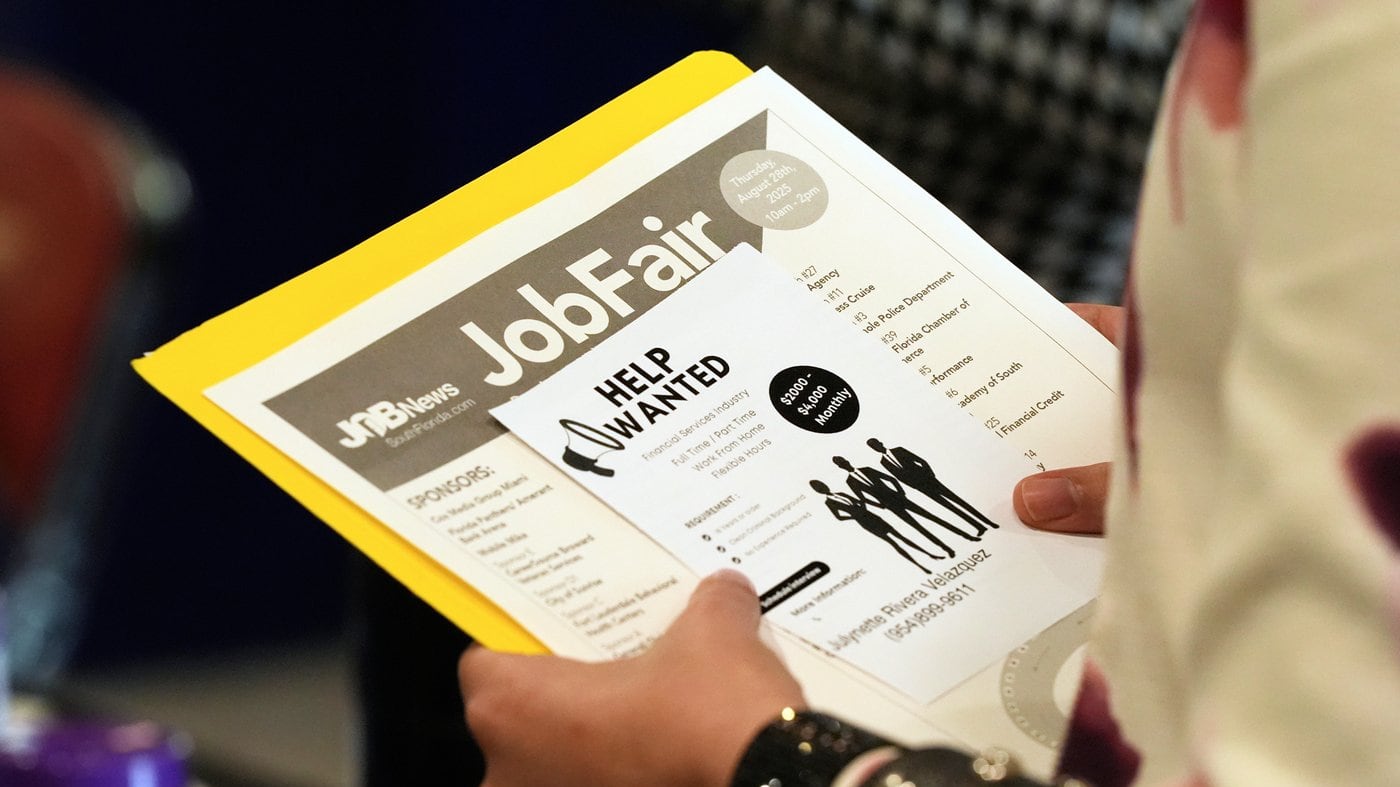
A job seeker waits to talk to a recruiter at a job fair Aug. 28, 2025, in Sunrise, Fla. (AP Photo/Marta Lavandier, File)

WASHINGTON — The U.S. job market rebounded in August as employers added a surprising 162,000 jobs. The unemployment rate stayed at a low 4.1 per cent.

The jobs report, issued by the Labor Department Friday, could be good news for U.S. President Donald Trump two months before midterm elections in which the health of the economy is weighing on voters’ minds.

Hiring far exceeded the 65,000 forecasters had expected, according to a poll by FactSet. Labor Department revisions also looked good, adding 55,000 to June and July payrolls. Employers created 21,000 jobs in July; the Labor Department had originally reported that they’d cut 23,000.

Restaurants and bars added 59,000 jobs last month, construction companies 22,000 and manufacturers 16,000. Factory jobs are up by 58,000 since hitting a recent low in December, the Labor Department noted.

So far this year, employers — companies, government agencies and nonprofits — have added an average of more than 80,000 jobs a month. That is up from a dismal 9,700 last year.

But hiring remains well below the 166,000 monthly jobs that were the norm in 2023 and 2024, let alone the 491,000 a month recorded during the 2021-2022 hiring boom that followed pandemic lockdowns.

And the U.S. labor force — the number of people working or looking for work — jumped by 683,000 last month after falling in June and July.

Yet many households are struggling with the high cost of living, and wage gains aren’t helping much. Average hourly wages rose 3.1 per cent last month from a year earlier, the weakest year-over-year increase since May 2021.

Friday’s report may increase the likelihood that the Federal Reserve will raise its key short-term interest rate when it next meets Sept. 15-16. Solid hiring sends a signlal that current borrowing costs aren’t necessarily high enough to restrain the economy and cool inflation.

Fed Chair Kevin Warsh said last week that inflation, at 3.7 per cent according to the Fed’s preferred measure, remains too far above the central bank’s 2 per cent target, and added that without further progress, they would have “work to do.”

With hiring seemingly healthy, the Fed’s focus will shift to a critical inflation report that is being released next week. On Thursday, Fed governor Christopher Waller said he is leaning toward keeping the Fed’s rate unchanged, but would support a hike if inflation comes in high.

Contributing to inflation is the struggle that U.S. employers have had dealing with a shortage of workers — the result of President Donald Trump’s immigration crackdown and the retirement of baby boomers. Some are responding by using technology for tasks that human beings used to do.

Employers have been reluctant to let go of the staff they have, so most Americans enjoy unusual job security and unemployment is low.

“It’s a very strange labor market,’’ David Kelly, chief global strategist at J.P. Morgan Asset Management, wrote in a commentary Monday.

The No. 1 puzzler: Hiring is weak, but layoffs are rare.

Employers haven’t been eager to take on new workers. The Labor Department reported Tuesday that gross hiring — before subtracting people who lost or left their jobs — fell 5 per cent to fewer than 5.1 million new jobs.

The United States doesn’t need as many jobs as it did until recently to keep the national unemployment rate from rising. Trump’s immigration crackdown and baby boomer retirements mean fewer people are available for work. More than 1.3 million people have dropped out of the U.S. labor force over the past year.

As a result, the “break-even’’ rate of monthly hiring, 155,000 in 2023-2024, has dropped, perhaps to nearly zero, according to a Federal Reserve study.

Instead of looking to hire from a diminished pool of available workers, “businesses are increasingly focused on boosting efficiency through technology and AI and increasingly seek to do more with their existing workforce,’’ EY-Parthenon economists Gregory Daco and Lydia Boussour wrote in a commentary this week.

Even if they aren’t hiring aggressively, companies are reluctant to let go of the staff they have. They retain memories of the unexpected labor shortages that followed the end of COVID-19 lockdowns.

So unemployment remains low. For the past year, the number of people applying each week for unemployment benefits - a proxy for layoffs - has stayed in a historically low range of around 200,000 to 230,000.

The result is what economists call a “no-hire, no-fire″ labor market in which those who have work enjoy job security, but times are tough for young workers trying to land entry-level jobs or unemployed people seeking to get back to work.

---

Paul Wiseman, The Associated Press
 World food prices at highest since 2022 as supply risks mount, FAO says


Published:

People shop at a grocery store, in Schaumburg, Ill., Thursday, April 2, 2026. (AP Photo/Nam Y. Huh)

PARIS — World food prices rose in August to their highest since late 2022, as adverse weather and war disruption in the Black Sea heightened concern over supply of staples, the United Nations’ Food and Agriculture Organization said on Friday.

Extreme heat and drought in Europe, the threat of a severe El Nino weather pattern and trade upheaval caused by the Ukraine and Iran wars have unsettled agricultural markets, pushing grain prices to three-year highs and sugar to a one-year peak.

The FAO Food Price Index, which tracks monthly changes in a basket of internationally traded food commodities, averaged 133.3 points in August, up from July’s revised reading of 130.8.

That was the highest score since November 2022, though nearly 17 per cent below a record peak from March 2022, after Russia’s full-scale invasion of Ukraine.

“August’s increase in global food prices is a warning that the risk premium is returning to food markets: climate shocks, geopolitical tensions and disrupted trade logistics are converging to tighten supply expectations,” FAO Chief Economist Maximo Torero said in a statement.

The FAO’s price benchmarks for cereals, vegetable oils, sugar, meat and dairy all rose in August.

The extreme weather in Europe affected prospects for the maize (corn) and sugar beet harvests as well as livestock output, while the anticipated El Nino phenomenon fueled concerns for palm oil and sugar output in Asia, it said.

Escalating attacks in the Black Sea have curtailed grain shipments from Russia and Ukraine in their 4-1/2-year-old war, while the U.S.-Iran conflict was straining flows of fertilizer for crops.

Among food categories, FAO’s cereals price index rose 2.2 per cent month-on-month to its highest since May 2024, and the vegetable oil index edged up 0.6 per cent to its highest since June 2022.

The agency’s sugar benchmark jumped 11.9 per cent to its highest since June 2025, with lower production in Brazil’s crucial center-south region adding to weather concerns in Europe and Asia.

In a separate report, the agency cut its 2026 global cereal production forecast by 3.4 million metric tons from a previous estimate in July to 2.980 billion tons, now 2.0 per cent below 2025 in the largest annual decline since 2018.

Projected output would still be the second-largest on record, however.

Forecast world cereal stocks at the close of 2026/2027 were revised down 1.1 per cent to 947.2 million tons, now only marginally above the previous season.

A reduced estimate of coarse grain stocks outweighed an upward revision for wheat that reflected an anticipated build-up in Russian and Ukrainian stocks due to shipping disruption, the FAO said.

(Reporting by Gus Trompiz;Editing by Alison Williams and Clarence Fernandez