Wednesday, December 09, 2020

Vivid portraits shine light on Tahiti's 'third gender'


Credit: Namsa Leuba
Written by Matthew Ponsford, CNN
Updated March 2020

On the Polynesian island of Tahiti, there is said to be something akin to a sixth sense -- one that belongs to neither men nor women. Instead, it is the sole domain of the "mahu," a community recognized as being outside the traditional male-female divide.

"Mahu have this other sense that men or women don't have," said Swiss-Guinean photographer Namsa Leuba, whose images from the island are showing at a new exhibition in London. "It is well known in (French Polynesia) that they have something special."

In Tahiti, mahu are considered a third or "liminal" gender, born biologically male but recognized by peers as distinct, often from early in their lives. Their gender identity has been accepted on the island since time immemorial, and mahu traditionally play key social and spiritual roles, as guardians of cultural rituals and dances, or providers of care for children and elders.










Namsa Leuba


Leuba's photo series, "Illusions: The Myth of the 'Vahine' through Gender Dysphoria," shows the diversity of gender identities in French Polynesia, where the photographer spends half her year.

In a telephone interview from Tahiti, Leuba said the additional power that the Mahu apparently possess is difficult to describe. It is, she explained, a mixture of empathy, intuition, generosity and creativity -- all words that might be applied to Leuba's wide-ranging photography.

Unseen identities
Since graduating from the Lausanne University of Art and Design (ECAL) in 2010, Leuba has developed an approach that mixes elements of documentary photography with the rich staging of fashion shoots. The result is something she calls "docu-fiction."


NAMSA LEUBA

Describing herself as African-European (her mother is Guinean and her father is Swiss), Leuba said she aims to reflect, through fiction, realities made invisible when viewed through a Western colonial lens.
In 2011, she traveled to the Guinean capital, Conakry, for a project that would set the tone for her later work. Exploring animist beliefs in the city, she brought portraits of regular people -- mostly strangers she met on the street -- to life with elaborate poses and backdrops.

Namsa Leuba

The project, along with later work across Africa, confronted the legacy of colonialism and considered how Western perceptions have impacted present-day societies. And Leuba developed these ideas further in Tahiti.

Images from the series went on show at an all-female London gallery, Boogie Wall, last year. The exhibition aimed to show the complex gender and sexual identities that exist in Tahiti, directly attacking stereotypes that rely on exoticism and the sexualization of Polynesian women.


Namsa Leuba

Mahu's traditional artistic roles have made them a subject of fascination for visiting artists including Paul Gauguin, whose 19th-century portraits of young Tahitians strongly influenced Western impressions of Polynesian culture while painting a controversial picture of an exotic and sexually permissive paradise.

Central to these stereotypes was the ideal of the "vahine." The term, which translates simply as "woman," came to be used in the West to mean submissive girls or young women, embodied in the sexualized poses in Gauguin's paintings (indeed, he would marry a girl in her early teens during a visit to the island in 1891).

Invisible genders

In "Illusions," Leuba tackles both the "vahine" myth and the influence of 19th-century Christian missionaries, who preached the Bible's binary view on gender and instituted laws that criminalized relationships with mahu.

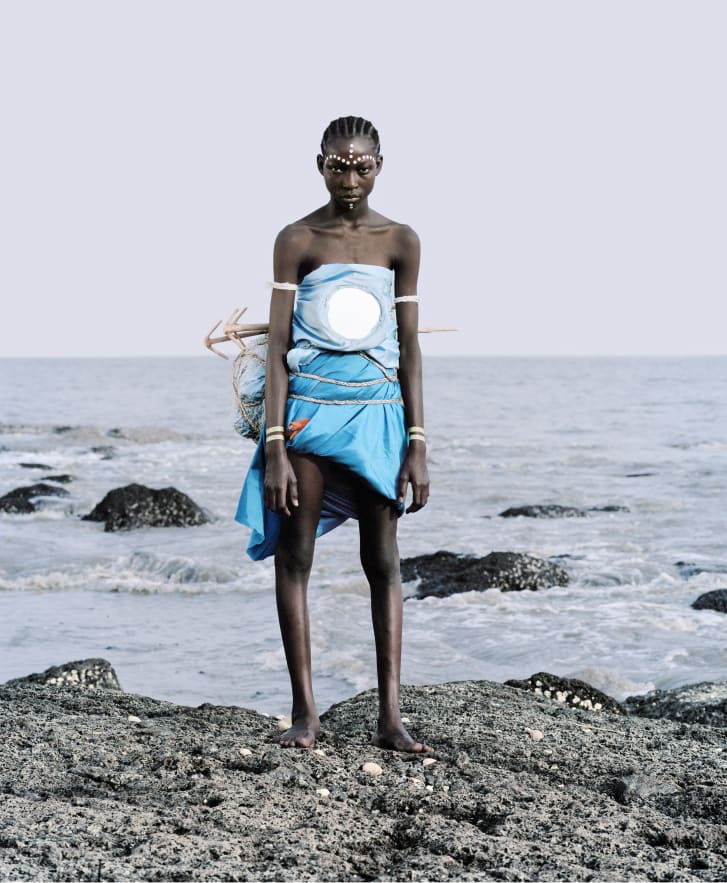
The portraits are often shot in everyday surroundings, but by using bright body paint and stylized costume, Leuba aims to reassert the individuality of her subjects. Her images also include people who identify as "rae-rae," trans women who, unlike many mahu, often pursue gender reassignment surgery.
"I already knew what I wanted to have," said Leuba. "For me, it was very important to see (the subject's) beauty and the power -- in my pictures, it's very strong look, a strong posture -- and to (allow them to) make themselves beautiful"


Namsa Leuba

Leuba interviews her subjects for hours before photographing them. While a few were cautious at first, having previously had uncomfortable experiences with voyeuristic photographers, she said, more began coming forward after the first images appeared in magazines in New York.

Through use of elaborate staging, Leuba avoids the rawness typical of documentary photography. Instead, she said her positive, glamorous approach allows eclectic stories to shine, including histories of homelessness and conflict, along with journeys of acceptance from families and culture.

"Sometimes I would hear some really (tough) stuff that has happened to them, and it was totally not sexy or glamorous. It was difficult. And others were well-accepted by their family and their community," Leuba said.

"All of the 'lifecycles' were totally different."

Tuesday, December 08, 2020

AMERICAN SCHADENFREUDE
CNN: Canada crushed the Covid-19 curve but complacency is fueling a deadly second wave


By Paula Newton, CNN
December 8, 2020

Canadian premier's impassioned plea: Stay home for the holidays 01:38

Ottawa (CNN)"At least we're not as bad as the States."

Those were the words uttered by so many Canadians during the first wave of coronavirus, perhaps without malice although with a good dose of smugness.
But that complacency may have helped fuel a deadly second wave in Canada that is now straining hospital capacity in nearly every region of the country as health officials impose more restrictions and lockdowns.

"What you're saying is we're better than the worst country in the world," says Amir Attaran, an American-raised Canadian professor of law and public health at the University of Ottawa during an interview with CNN.

For months, Attaran has been an unsparing critic, warning that by measuring itself against an American yardstick, Canada's Covid-19 response was bound to falter.
And falter it has

Canada's 'Atlantic bubble' has been a sanctuary. But it may be bursting soon 03:31

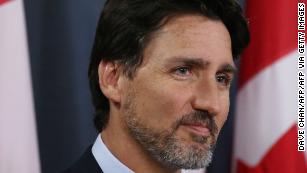
"Over the last few days, we've seen new records of Covid-19 cases in a number of provinces. Hospitalizations are rising, families are losing people and our most vulnerable are at risk. Just because we're getting closer to vaccines doesn't mean we can afford to become complacent," warned Canadian Prime Minister Justin Trudeau during a press conference Monday.

So, what went wrong?

"You need to drive community transmission to almost nothing or near nothing and then do the aggressive testing contact tracing and isolation which we never did," says Attaran.

During the first wave of Covid-19 Canadians were mostly compliant, cautious and serious about staying home, masking up and following orders issued by earnest public health officials. And the pandemic was rarely politicized.

But in early fall, Canadian public health officials warned that private, household gatherings were fueling a surge in cases and community transmission.

Then, Canadian Thanksgiving in early October seemed to seal the country's fate as infection rates surged for weeks afterwards.

Canada's numbers are heading in the wrong direction

Canada has logged record new cases and deaths from the coronavirus in the past month, according to Covid-19 tracking data from Johns Hopkins University.
The country has reported more than 425,000 cases of Covid-19 and nearly 12,800 deaths to date, according to Johns Hopkins.

New daily cases are now 10 times higher than they were in late summer with deaths averaging about 88 per day now, according to Canada's Public Health Agency.


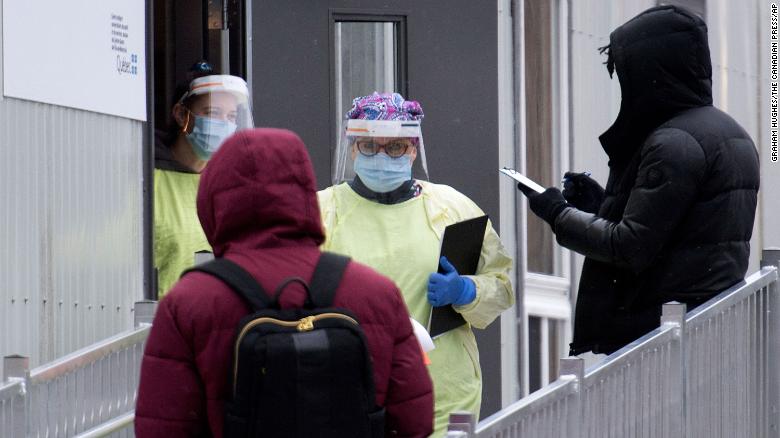
Health care workers talk to people waiting to BE tested for Covid-19 at a clinic in Montreal on Sunday, December 6.


For a few days in summer, Canadian government data reported no deaths from Covid-19.

By nearly every measure of Covid-19 tracking, Canada is still faring better than the US but Canadian officials have warned that hospital capacity is reaching its breaking point and community transmission must be reduced.

According to government data, Canada now has about 2,400 people with the virus being treated in hospitals. That's a few hundred less than Los Angeles County reported Monday even though Canada has nearly 4 times the population.

More than 14.9 million coronavirus cases have been reported in the US so far and more than 284,000 people have died. The US also is dealing with a surge in cases that health experts expect worsen, anticipating new waves from December holiday gatherings on top of a potential surge from Thanksgiving week.

But again, public health experts warn American comparisons should offer little comfort to Canadians.

Lack of adequate testing

For weeks now Canada's public health agency has reported that, on average, about 75,000 Canadians are being tested daily. That means Canada is testing at about half the rate, per capita, than the US.

Public health experts say Canada must be more aggressive with testing in order to bring down community transmission and detect asymptomatic spread.

According to a report released Monday by one of Canada's largest long-term care operators, that lack of testing has tragically allowed the virus to stalk and kill residents of nursing and retirement homes in Canada.

Canadian government data show that as of August 2020, nearly 80% of all Canadian coronavirus deaths were among residents of long-term care facilities. During a press conference in late October, Canada's Chief Public Health Officer Theresa Tam confirmed that figure did not change much in the fall although the national public health agency is awaiting data.

And yet lack of adequate testing in these facilities continues.

In a report released Monday by a government-owned long-term care operator, an expert advisory panel noted not just the testing failures of the first wave, but that inadequate testing continues.

"...although it was widely understood that long term care residents faced an extremely high risk of serious complications and death from Covid-19, and so had much to gain from testing, they and the staff who look after them, were not prioritized for testing within the system," according to the report titled "A Perfect Storm."

Vaccines are coming but timeline is an issue

Trudeau has said for weeks that Canada has secured "one of the most diverse" vaccine portfolios in the world and a CNN analysis of government purchase agreements shows Canada could easily have 4 to 5 times the vaccines needed to vaccinate its entire population of about 38 million people.

It's the timeline that's the problem.

"Vaccines are coming," announced Trudeau during a press conference in Ottawa Monday, saying Canada has an agreement with Pfizer to begin early delivery of up to 249,000 doses of its vaccine candidate.


But Canada's 2020 rollout of vaccine is largely symbolic as it represents just a fraction of the 20 million doses of the Pfizer vaccine that Canada says it has pre-purchased.

Trudeau himself said late last month that because Canada had very little capacity to manufacture vaccines, other counties like the US, UK and Germany would be able to vaccinate more their citizens on a faster timeline than Canada.

Addressing those prior comments, Trudeau said "we wanted not to get people's hopes up."

Health Canada is expected to approve the Pfizer vaccine candidate within days and is currently reviewing data for three other candidates, including those from Moderna, Astra-Zeneca and Johnson & Johnson.

The concern is that despite aggressive procurement, Canadians will still be vaccinated later than citizens in the US and Europe.

"It's a shock, I really did not expect that when I warned Canada would be late on this that I would be proved right. It's heartbreaking, it really is. It will be heartbreaking because it will cost lives," Attaran said.

Multi-week lockdowns don't seem to be working

In recent weeks the tone from public health officials around the country has been the same: They are pleading with Canadians to stay home, stay away from each other and wear masks.

That has been backed by various degrees of lockdowns and new restrictions in cities and towns throughout the country, including larger urban centers like Toronto, Montreal and Vancouver. But there is little evidence the lockdowns and restrictions are having a significant impact on the infection rate.

Canada's largest province is under a lockdown to slow a second wave of coronavirus cases.

In Toronto, now in its third week of a second lockdown, cases continue to surge with daily records broken in the last few days.

"The case counts are so high, that I can only call this a very, very serious situation," said Dr. Eileen de Villa, Toronto's medical officer of health during a press conference Monday.

She that the virus was spreading so aggressively in the city that she did not want to think about what the case load would be if Toronto had not entered a lockdown.
There is a similar story in the province of Alberta where restrictions that fall well short of a full lockdown have failed to stem the surge of community transmission.


Toronto begins a four-week lockdown -- its second of the pandemic -- as Covid-19 cases surge

Alberta now has one of the highest per capita rates of infection anywhere in Canada.

"I will be blunt, so far we are not bending the curve back down, we are still witnessing very high transmission of the virus which is putting enormous pressure on our hospitals, intensive care units and health care workers," said Dr. Deena Hinshaw, Alberta's chief medical officer of health, at a press conference Monday.
Attaran says Alberta and other Canadian regions failed to lock down early enough with strict enforcement believing they were sparing the economy.

"What Canada did wrong is what very many places in the world have done wrong and it's that their politicians have chosen to treat the virus like stakeholder that you can cut deals with," Attaran said, adding that the current half-measures will take much longer to bring the infection rate under control.


Government steps in to help out financially

From the very beginning of the pandemic Trudeau has tried to reassure Canadians that he "had their back." And he has made good on that promise with piles of cash handed out to tens of millions of Canadians.

A CNN review of nearly a dozen programs reveals a payout to residents and Canadian business during this pandemic of nearly $200 billion and counting.

Canada, struggling to control a second wave of coronavirus infections, announces billions more in stimulus

The programs range from a direct payment to individuals, through unemployment benefits and the Canadian Emergency Response Benefit (CERB) with about a third of all Canadian adults receiving $1,500 a month for several months.

Add to that a wage and rent subsidy program for business owners, payments to students and those with disabilities and special programs for fishers and farmers.
Trudeau says the programs and the money will keep coming until the pandemic subsides.

In fact the Canadian stimulus was so effective that Statistics Canada reported an increase of disposable household income of more than 7% in the last nine months, with government payouts bulking up personal savings.

It's unclear, however, what the long-term impact of the spending will have on the Canadian economy.

Across the border, political leaders in the United States are struggling to come to an agreement on another stimulus package as several key pandemic relief programs are set to expire at the end of the year.

COPS VS WHITE MILITIA
Seizing military weapons does not increase violent crime nor risk police safety

Date December 7, 2020
Contact: Jared Wadley jwadley@umich.edu

More local law enforcement agencies are using military equipment, such as tear gas, armored vehicles and rubber bullets, to handle social justice protests—calling into question police militarization.

But if police no longer used weapons and tactics previously connected to the military, there is little evidence that this would impact violent crime or officer safety, according to a new University of Michigan study.

In fact, previous data analyses supporting officers taking on the appearance and using weapons like soldiers as a crime-reduction method are unreliable, said U-M researcher and study author Kenneth Lowande. The data problems also impact studies that claim military equipment make police more violent.

In a report published today in Nature Human Behaviour, Lowande examined the substantial limitations of data used to analyze the effects of transferring surplus military equipment, or SME, to law enforcement.

Federal authorities have subsidized weapons and equipment acquisition, but limitations in record keeping about these transfers have rendered studies of their effects not credible, he said. The current study examined 3.8 million archived federal inventory records to gauge the reliability in these other studies.

During a typical three-month period, more than 15,000 controlled items vanish from agency inventories and more than 4,000 are received for transfer, the study indicated.

Lowande, U-M assistant professor of political science, compared this data to data collected when the Obama administration recalled SME in 2015, which resulted in a forced demilitarization of several hundred police departments. Proponents of SME transfers, as well as the Trump administration, say that demilitarization would lead to an increase in violent crime, but that’s now what Lowande found.

“When you examine crime and officer safety statistics in these demilitarized departments and compare them to similar departments that weren’t impacted, you find essentially no differences,” said Lowande, a faculty associate at the Center for Political Studies at U-M’s Institute for Social Research.

“I find little to no evidence that demilitarization had an impact on violent crime or officer safety. Put differently, contrary to the claims of those who support the transfer of equipment, these data do not support the conclusion that militarization saves lives—or that demilitarization risks them.”

More information:
Study: Police demilitarization and violent crime
Kenneth Lowande

UK
Labour should fight for proper sick pay to help get control of the virus

Richard Burgon @RichardBurgon is MP for Leeds East 
and secretary of the Socialist Campaign Group of MPs.

OPINION 8th December, 2020

After an incredibly bleak year, the coronavirus vaccines offer a ray of hope that 2021 can bring a return of something resembling normality. But it will be many months before the vaccines have been distributed widely. Until then, Labour needs to step up its opposition to force the government to adopt a new strategy. We can’t go on with months more of the government’s reckless approach. That has already led to tens of thousands of avoidable deaths and one of the deepest downturns of any major economy.

One figure above all underlines just how deep the government’s recent failures have been. In the three months since September 6th, there have been 19,700 UK Covid deaths. This second wave was caused by the government prematurely telling people to go out and spend, get back to school and to workplaces over the late summer.

Countries that instead followed a suppression strategy – known as zero Covid – have driven the virus and deaths down to very low levels. Their economies are doing better as a result. For example, in the past three months, Vietnam, Thailand, New Zealand, Singapore, Taiwan, South Korea and Australia have suffered a combined total of fewer than 400 deaths, despite their total population being four times larger than that of Britain.

Yet the Tory government simply refuses to learn the lessons. By taking its foot off the brake over the coming weeks, its tier system risks a third wave of the virus, while the other core element of its strategy is to rely on mass testing to get us through to a time when vaccines have been widely distributed.

So far its testing system has squandered billions of pounds and failed to reach anywhere near enough of the contacts of those infected. Over 500,000 close contacts have been missed by the system in the last month alone. That’s why Labour has been right to call for Serco and the other failing private contractors to be booted out of the Test and Trace system. The NHS and local public health experts must be put in charge.

But getting testing and tracing right is simply not enough. Test and trace is a means to an end, and not an end in itself. It is the first stage in getting infected people and their contacts to isolate. But if people can’t then afford to isolate, then they simply won’t.

This virus thrives on poverty and inequality. Without proper support, many people from disadvantaged groups – who could be the sole breadwinners in their families – may simply avoid these tests for fear of the economic impact of being found to be positive.

Nobody should have to decide whether to protect their health or put food on the table. But our current level of statutory sick pay forces many people to do just that. At just £96 per week, UK statutory sick pay is among the lowest in Europe.

The TUC estimates that it is equal to just one-fifth of the average worker’s weekly earnings. Moreover, nearly two million low-paid workers are entirely excluded from statutory sick pay because they earn less than the £120 a week threshold.

Under pressure, the government has introduced a one-off £500 support grant to some self-isolating. Yet not only is the level of support far too low, only one in eight workers qualify for it. Strict eligibility criteria mean that more than half of people applying for it are rejected in some coronavirus hotspots. Some local councils are reported to be turning people away because the government’s funding is on the verge of being exhausted.

The TUC is calling for statutory sick pay to be increased to real living wage levels and for the removal of the requirement that recipients earn over £120 per week. This demand should be at the heart of Labour’s response to Covid.

Last week I voted against the government’s measures both because they risk a deadly third wave and because they fail to give people the economic support needed. It would have been better to use the weeks to Christmas to extend the lockdown to get the virus down to much more manageable levels. That would give Test and Trace a fighting chance of succeeding.

I was especially disappointed during that vote that our party didn’t use its parliamentary weight to try to force concessions on sick pay. Had Labour threatened to vote against the package without proper sick pay, it could have won both public support and important extra support for those who need to isolate. Bold opposition to the government’s failing coronavirus strategy is certainly in the national interest – and the demand for proper sick pay should be at the core of our opposition over the coming months.

LABOURLIST


USA

Sanders Leads Senate Demand for $1,200 Stimulus Checks Over 'Get-Out-of-Jail Free Card' for Corporations

"The American people need help and they need help now."


 Published on Tuesday, December 08, 2020 
by
Sen. Bernie Sanders (I-Vt.) speaks at a protest at the U.S. Capitol on October 22, 2020 in Washington, D.C.

Sen. Bernie Sanders (I-Vt.) speaks at a protest at the U.S. Capitol on October 22, 2020 in Washington, D.C. (Photo: Jemal Countess/Getty Images for Care In Action)

Rejecting the bipartisan coronavirus relief plan currently under negotiation on Capitol Hill as "totally inadequate," Sen. Bernie Sanders and five Democratic senators circulated a letter Tuesday calling on their fellow lawmakers to join them in demanding the inclusion of another round of direct stimulus payments and the removal of all corporate-friendly poison pills.

"Simply stated, given the horrific extent of the current crisis and the desperation that working families all over this country are experiencing, this proposal does not go anywhere near far enough," reads the letter (pdf), which was coordinated by Sanders and backed by Sens. Elizabeth Warren (D-Mass.), Ed Markey (D-Mass.), Kirsten Gillibrand (D-N.Y.), Ron Wyden (D-Ore.), and Jeff Merkley (D-Ore.).

"Please join us in demanding that any new Covid relief proposal includes a $1,200 direct payment to adults and $500 to their children."
—Letter

Noting that the bipartisan plan only calls for $348 billion in new funding—a far cry from the $2.2 trillion CARES Act Congress approved in March—and includes a "get-out-of-jail free card to companies that put the lives of their workers and customers at risk," the senators warn it "would be unacceptable to take a major step backwards" as coronavirus cases, hospitalizations, and deaths surge nationwide and economic conditions continue to deteriorate.

"Unlike the CARES Act... this proposal only provides a $300 supplement for unemployed workers rather than $600 a week," the lawmakers note. "Further, unlike the $1,200 direct payment for every working class individual and $500 for each child, it provides absolutely no direct payment."

The White House is urging Senate Republicans to push for the inclusion of $600 stimulus checks in the relief bill, the Washington Post reported Tuesday.

"The American people need help and they need help now," the senators' letter continues. "We agree with President-elect Biden that a $1,200 direct payment should be included in this proposal. We also feel strongly that we should not provide immunity to corporations who endanger the health and lives of their employees. Please join us in demanding that any new Covid relief proposal includes a $1,200 direct payment to adults and $500 to their children. Further, please work with us to make certain that there is no language in this bill to give a liability shield to corporations."

Growing progressive criticism of the bipartisan stimulus proposal first unveiled last week comes as Senate Majority Leader Mitch McConnell's (R-Ky.) demand for a five-year liability shield for corporations—a top priority of many congressional Republicans—is threatening to completely derail ongoing relief talks.

If lawmakers don't pass a legislative fix before the end of the year, dozens of key federal programs—including unemployment insurance, paid sick and family leave, and an eviction moratorium—will expire, leaving millions of Americans in the lurch.

Lisa Gilbert, executive vice president at consumer advocacy group Public Citizen, said in a statement Tuesday that "unemployment insurance, aid for hospitals, and state and local assistance should not be held hostage to McConnell and the Senate Republicans' quest for corporate immunity."

"We are down to the wire as the opportunity to attach the stimulus to the end of year spending deal winds down," Gilbert added. "Lawmakers should continue to reject any package that includes this deadly corporate giveaway and move with haste to finish the negotiations."

Read the senators' full letter:

Dear Colleague:

As you know, the Covid-19 pandemic is surging throughout the country and is now causing more pain and havoc than at any time since it began. Last week, an average of almost 200,000 Americans a day were diagnosed with Covid-19 and, tragically, over 2,000 people are now dying every single day.

Further, as a result of the pandemic, we are now experiencing the worst economic crisis since the Great Depression. Over half of our workers are living paycheck to paycheck and one out of four workers are either unemployed or make less than $20,000 a year. In addition, 92 million Americans are uninsured or under-insured, tens of millions of people face eviction and hunger in America is exploding.

We very much appreciate the hard work that has gone into the current $908 billion proposal being drafted by a number of Democratic and Republican senators. But, simply stated, given the horrific extent of the current crisis and the desperation that working families all over this country are experiencing, this proposal does not go anywhere near far enough. In truth, rather than the $3.4 trillion which we Democrats called for in the HEROES Act, this bill only allocates $348 billion in new money according to one of the lead Republican negotiators. The remaining $560 billion are funds transferred from the CARES Act that have not yet been obligated.

Unlike the CARES Act, which we passed in March, this proposal only provides a $300 supplement for unemployed workers rather than $600 a week. Further, unlike the $1,200 direct payment for every working class individual and $500 for each child, it provides absolutely no direct payment.

Moreover, this proposal does nothing to address the healthcare crisis impacting tens of millions of Americans who cannot afford medical care and has totally inadequate financial assistance for the most vulnerable.

Further, despite long-time Democratic opposition, it is our understanding that this proposal may provide 100 percent legal immunity to corporations whose irresponsibility has led to the deaths of hundreds of workers. It would continue to provide a get-out-of-jail free card to companies that put the lives of their workers and customers at risk. In fact, the result of this proposal is that, through this liability provision, corporations will be encouraged to avoid implementing the common sense safety standards needed to protect workers and consumers—and make a bad situation worse.

We agree with the AFL-CIO and the 141 organizations who oppose providing this kind of immunity to corporations. According to a letter these groups sent to Senators on December 4th: "Granting immunity would make the country less safe at the exact moment when the Covid-19 pandemic is entering a new, dangerous phase."

Last March, with unanimous support in Congress, President Trump signed the $2 trillion CARES Act into law that provided a $600 a week supplement in unemployment benefits and a $1,200 direct payment to every working class adult, $500 per child and significant help for small businesses, states and cities. In October, as part of the negotiating process, the Trump administration and a bipartisan coalition in the House supported over $1.8 trillion in Covid relief that also included another $1,200 direct payment.

Given the enormity of the crisis today, it would be unacceptable to take a major step backwards from those previous efforts by passing legislation that only included $348 billion in new money.

The American people need help and they need help now. We agree with President-elect Biden that a $1,200 direct payment should be included in this proposal. We also feel strongly that we should not provide immunity to corporations who endanger the health and lives of their employees.

Please join us in demanding that any new Covid-relief proposal includes a $1,200 direct payment to adults and $500 to their children. Further, please work with us to make certain that there is no language in this bill to give a liability shield to corporations who threaten the health and safety of workers and customers.


Sumatran orangutan born at Belgium's Pairi Daiza animal park

By Jack Guy, CNN 8 hrs ago
© Pairi Daiza Mathaï was born on November 28.Sumatran orangutan born at Belgium's Pairi Daiza animal park


An animal park in Belgium has welcomed the arrival of a critically endangered Sumatran orangutan.

The male orangutan, named Mathaï, was born on November 28 at Pairi Daiza animal park, spokesman Mathieu Goedefroy told CNN in a statement Tuesday.

He was conceived and born naturally, joining his father Ujian, mother Sari and brother Berani.

Berani is the only other orangutan born at the park. The sibling is four years older and is "showing great and positive interest in the new baby," said Goedefroy.

The brothers can expect to live up to 45 years and Mathaï will live with his family until around the age of 10, when he reaches adulthood and will have to find a female partner, Goedefroy said.

At that point experts from the European Endangered Species Program will study Mathaï's DNA and that of available female orangutans from around the world to find the best match.

"That way, we ensure a healthy offspring with the best possible genetic qualities, and thus maximizing the odds of survival for the species," said Goedefroy.

Two other adult orangutans at the park, named Gempa and Sinta, are expecting their first child in 2021, according to Goedefroy, who said the park's orangutan program "is going extremely well."

Pairi Daiza is home to a growing group of Sumatran orangutans, and Goedefroy said the park also funds reforestation projects in their main natural habitat.

Orangutans are critically endangered, facing deforestation of their rainforest habitat on the islands of Sumatra and Borneo, in Indonesia.

In the last three decades around 80% of irreplaceable orangutan habitat has been lost, according to wildlife charity Born Free, which reports that there are around 14,000 Sumatran orangutans left.

Pairi Daiza said it funds a reforestation program in Indonesia which planted more than 11,000 trees last year.

Sumatran orangutans are one of three identified species of orangutan. An estimated 45,000-69,000 Bornean orangutans are left, according to Born Free, and fewer than 800 Tapanuli orangutans.

This makes the Tapanuli orangutan, which was only identified in 2017, the rarest great ape in the world, Born Free adds.
 
© Benoit Bouchez/Pairi Daiza Mathaï will live with his family until reaching adulthood around the age of 10.

In 'Huge Victory for Polar Bears and Our Climate,' Court Rejects Trump Approval of Offshore Drilling Project in Arctic

While welcoming the win, activists vowed to continue fighting against destructive oil and gas extraction in the region.


Monday, December 07, 2020
by
Polar bears stand on an ice floe in the Arctic Ocean. (Photo: Lev Fedoseyev/TASS via Getty Images)

Polar bears stand on an ice floe in the Arctic Ocean. (Photo: Lev Fedoseyev/TASS via Getty Images)

Climate action advocates and wildlife defenders celebrated Monday after the U.S. Court of Appeals for the 9th Circuit rejected the Trump administration's approval of Liberty, a proposed offshore oil-drilling project in federal Arctic waters that opponents warned would endanger local communities, animals, and the environment.

"In the face of a worsening climate crisis, the federal government should not be in the business of approving irresponsible offshore oil development in the Arctic."
—Jeremy Lieb, Earthjustice

"This is a huge victory for polar bears and our climate," declared Kristen Monsell, oceans legal director at the Center for Biological Diversity, in a statement. "This project was a disaster waiting to happen that should never have been approved. I'm thrilled the court saw through the Trump administration's attempt to push this project through without carefully studying its risks."

Marcie Keever, legal director at Friends of the Earth, similarly applauded the ruling (pdf), saying that "thankfully, the court put the health of our children and our planet over oil company profits."

Both groups joined with fellow advocacy organizations Defenders of Wildlife, Greenpeace, and Pacific Environment for a lawsuit challenging the Hilcorp Alaska project, which was approved in 2018. The energy company planned to construct an artificial island, wells, and a pipeline along the Alaska coast in the Beaufort Sea.

Jeremy Lieb, an attorney at the nonprofit law organization Earthjustice, which represented the advocacy groups, praised the court for rejecting the administration's "inaccurate and misleading analysis of this project's impact to the climate." The court determined that the administration hadn't properly considered Liberty's climate impacts as required by the National Environmental Policy Act, specifically taking issue with an economic model claiming the project would benefit the climate.

"In the face of a worsening climate crisis, the federal government should not be in the business of approving irresponsible offshore oil development in the Arctic," Lieb said. "The world cannot afford to develop new oil prospects anywhere, but especially in the Arctic where warming is already taking such a significant toll."

"If we are going to create a just, green, and peaceful future, it must start with rejecting destructive projects like Liberty."
—Tim Donaghy, Greenpeace

Research has shown that the Arctic is warming faster than the rest of the world, which has devastating effects on its human and animal inhabitants—including caribou, polar bears, reindeer, and walruses—and the planet more broadly. As one expert put it last year: "What happens in the Arctic does not stay in the Arctic."

Calling the court ruling "a victory for the planet and its people," Greenpeace senior research specialist Tim Donaghy said that it "affirms that the U.S. must take steps to transition off of oil and gas if we are to have any hope of halting the climate crisis."

"If we are going to create a just, green, and peaceful future, it must start with rejecting destructive projects like Liberty," he explained, before referencing President-elect Joe Biden's win over President Donald Trump. Ahead of the November election, climate advocates had rallied around Biden while pushing him to embrace bolder policies.

"Climate action must happen now and the Biden administration needs to keep its promise to halt any new oil and gas leasing on federal lands and waters," Donaghy said.

In addition to the climate finding, the court also determined that the U.S. Fish and Wildlife Service failed to sufficiently analyze Liberty's impact on polar bears, in violation of the Endangered Species Act—a decision that was welcomed by Nicole Whittington-Evans, Alaska program director at Defenders of Wildlife.

"Today's news is a victory for Alaska's imperiled polar bears that are threatened by oil and gas development throughout virtually all of their terrestrial denning critical habitat—in the Arctic National Wildlife Refuge, National Petroleum Reserve-Alaska, and in the nearshore marine environment as well," she said, vowing to "continue our fight against destructive oil and gas drilling and for the survival of polar bears in the Arctic."

Despite the win for the region's polar bears in terms of offshore drilling, the animals are still threatened by the Trump administration's ongoing effort to open up the Arctic National Wildlife Refuge to oil and gas extraction—despite opposition from local Indigenous people as well as environmentalists.

The administration on Monday proposed an "incidental harassment authorization" that would allow energy companies to disrupt polar bears while looking for oil and gas deposits. According to Reuters:

The Fish and Wildlife Service said that no polar bears are expected to be injured or killed during seismic operations, some of which are scheduled to take place next month, and expects disturbances to impact only a few bears.

But several veteran Arctic scientists and environmentalists in Alaska have warned against seismic operations—which can involve blasting to produce sonic images of underground formations. They argue the testing will upset wildlife and that the heavy machinery and activity involved in the work will damage tundra and speed up the thaw of permafrost.

As Monsell concluded: "The Trump administration seems determined to push polar bears further down the path to extinction before leaving office."

As World Teeters on Brink, Over 250 Scientists and Scholars Warn of Full-Fledged 'Societal Collapse'

"It is time to invite each other into difficult conversations, so we can reduce our complicity in the harm, and be creative to make the best of a turbulent future."

A woman looks at the destruction in Haulover in the Northern Caribbean Autonomous Region, Nicaragua, on November 28, 2020, days after the passage of Hurricane Iota. (Photo: Inti Ocon/AFP via Getty Images)

A woman looks at the destruction in Haulover in the Northern Caribbean Autonomous Region, Nicaragua, on November 28, 2020, days after the passage of Hurricane Iota. (Photo: Inti Ocon/AFP via Getty Images)

More than 250 scientists and scholars from 30 countries have issued an open letter calling on policymakers to "engage more with the growing risk of societal disruption and collapse due to damage to the climate and environment," arguing that only then "might communities and nations begin to prepare and so reduce its likelihood, speed, severity, harm to the most vulnerable, and to nature."

The letter, a version of which appeared in The Guardian Sunday, comes on the heels of a pair of United Nations reports warning of the dire direction in which the planet is headed. As U.N. Secretary-General António Guterres put it: "The state of the planet is broken. Humanity is waging war on nature. This is suicidal."

This weekend, world leaders will hold the Climate Ambition Summit 2020 to mark the fifth anniversary of the Paris climate agreement. After failing in the years since then to cut greenhouse gas emissions in line with that accord, the letter says, "we must now face the consequences."

While "some armed services already see collapse as an important scenario, requiring planning," the letter notes that "the topic is not well reported in the media, and mostly absent from civil society and politics," even though such collapse "is already the experience or memory of many communities in the Global South."

The U.K. arm of Extinction Rebellion shared pieces of the letter on Twitter with photos of climate activists around the world demanding urgent action:

Denouncing media coverage that "typically cites people who condemn discussion of the topic," the letter says that "ill-informed speculations, such as on foreign misinformation campaigns, or impacts on mental health and motivation, will not support serious discussion. Rather, such claims risk betraying the thousands of activists and community leaders whose anticipation of collapse is part of their motivation to push for change on climate, ecology, and social justice."

The letter continues:

People who care about environmental and humanitarian issues should not be discouraged from discussing the risks of societal disruption or collapse. That could risk agendas being driven by people with less commitment to such values.

Some of us believe that a transition to a new form of society may be possible. That will involve bold action to reduce damage to the climate, nature and other people, including preparations for major disruptions to everyday life. We are united in regarding efforts to suppress discussion of collapse as hindering the possibility of that transition.

"We have experienced how emotionally challenging it is to recognize the damage being done, along with the growing threat to our own way of life," the letter concludes. "We also know the great sense of fellowship that can arise. It is time to invite each other into difficult conversations, so we can reduce our complicity in the harm, and be creative to make the best of a turbulent future."

Signatories and supporters of the letter shared it on social media with the hashtag #scholarswarning, offering their summaries of what the letter calls for and detailing why they signed on to it.

"We're saying we must confront the real possibility of climate collapse so that we can do our utmost to avoid it," American climate scientist Peter Kalmus, a signatory to the letter, said in a tweet Sunday. "This is as far from 'doomerism' as you can get."

In a statement, University of Cumbria professor Jem Bendell, another signatory, explained that "we come from dozens of countries and subject disciplines and perceive a resistance by the establishment to serious engagement in adapting to the increasing disruptions to food, water, health, and the economy."

"It is time to listen to the scholarship," Bendell added, "and try to reduce harm from societal disruption and even collapse."

Our work is licensed under a Creative Commons Attribution-Share Alike 3.0 License. Feel free to republish and share widely.


AstraZeneca COVID vaccine shows positive results in Lancet study

Oxford University and AstraZeneca are the first vaccine makers to publish peer-reviewed results in a scientific journal. While they appear less promising than rival mRNA vaccines, it's a far cheaper and simpler serum.


The vaccine is seen as key to inoculating the developing world

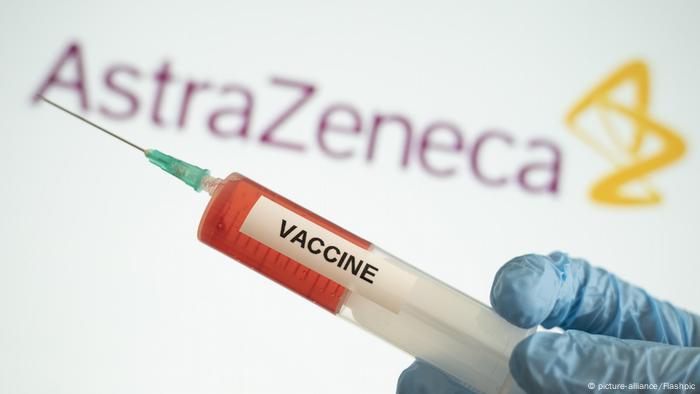
The AstraZeneca-Oxford University coronavirus vaccine cleared a key hurdle Tuesday, as trial results published in the Lancet medical journal suggests the vaccine is safe and effective in an average 70% of participants.

The late-stage clinical trials were carried out in the United Kingdom, Brazil and South Africa and assessed vaccine safety in 23,745 participants, and protection against coronavirus in over 11,600 participants.

Vaccine awaits approval from regulators


However, it remains unclear if the results will lead to a green light from regulators in the UK and elsewhere.

Mene Pangalos, a research and development head at AstraZeneca, said that the vaccine maker would submit requests for regulatory approval around the world.

"We hope that once the regulatory authorities review the data, we can get approval any time from the completion of the submission, which could be any time from the end of this year to early next year," he said, adding the "compelling" results "clearly show" the vaccine is effective and meets criteria for regulatory approval.

Watch video 02:00
COVID-19 vaccinations: Who could be prioritized?


Important questions remain


In late November, AstraZeneca and Oxford announced that the vaccine was up to 70% effective on average, and that up to 90% of people could be protected if a lower dose was administrated ahead of a full dose.

However, scientists had been waiting for more detailed information on the vaccine trial results.

The Lancet results did not provide answers as to why the vaccine was 62% effective for participants given two full doses, but 90% for a smaller sub-group given a half, then a full dose

The findings "will require further research as more data becomes available from the trial," the study said.

Watch video 02:43
How the new COVID-19 vaccine is delivered to the world


Additionally, less than 6% of the UK participants were given the lower dosage, and none of them were over 55 years old, suggesting more research will be needed to determine the vaccine's efficacy in older people.
Important for the developing world

The announcement comes after the UK provided its first coronavirus inoculations on Tuesday. A 90-year-old woman received a the first dose of a vaccine developed by BioNTech and Pfizer, which was granted emergency approval by UK regulators last week. This vaccine, like a rival one by Moderna, claims a far higher efficacy rate, north of 90%.

However, both these vaccines are something of scientific firsts, using groundbreaking DNA editing technology. That makes the production process expensive, and means that they must be stored at - 70 degrees Celsius (- 94 Fahrenheit) at almost all times, which could make them practically unusable for countries with poorly developed medical facilities and infrastructure.

The AstraZeneca vaccine, which is being manufactured by India's Serum Institute, is seen as vital to stopping coronavirus in the developing world, as it is cheaper and easier to distribute.

Andrew Pollard, director of the Oxford Vaccine Group, told a press briefing on Tuesday that a range of vaccines would be needed to end the pandemic.

"This really can't be a competition between developers, this has to be in competition against the virus," Pollard said.

With several promising vaccines being developed simultaneously in record time, open questions remain about them all, not least concerning how long-term any immunity they convey might be. More typical development phases, run over several years, tend to deliver a more complete picture of efficacy.

Watch video 00:36
Merkel stresses need for global cooperation to beat pandemic


wmr/msh (Reuters, AP, AFP)