Tuesday, June 21, 2022

OUTLAW ECOCIDE OUTLAW F1

Vettel Riles Politician at F1 Canadian Grand Prix for Hypocritical Stance on Fossil Fuels
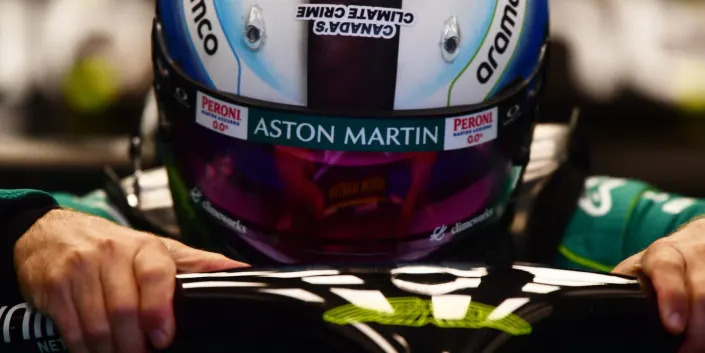
Photo credit: Mario Renzi - Formula 1 - Getty Images

Sebastian Vettel has raised awareness of local societal and environmental issues at Grands Prix this year in a sequence of T-shirts and helmet designs.

In Canada, it was the mining of tar sands in Alberta, which involves the destruction of forests in order to extract bitumen. That raised the attention of some politicians, including Alberta's minister of energy Sonya Savage, who on social media immediately pointed to Vettel’s hypocrisy, highlighting Aramco’s title sponsorship of Aston Martin.

“Yeah, it is right,” said Vettel. “But what you miss… I’m disappointed politicians jump on a personal level, it is not at all about me it is about the bigger picture. Yes, I am hypocrite doing what I do for a living, this is my passion, this is the way I paint my canvas, but there are solutions for the future to make it more sustainable and not rely on fossil fuels.

"It is disappointing we break it down to a personal level and miss the bigger picture – we need to make the switch and start to base our whole lifestyle on renewables. I think that’s the bigger picture stuff that I’m trying to address.”

Vettel, though, removed the design for the race itself and sported his usual scheme.

Could nuclear desalination plants beat water scarcity?


Chris Baraniuk - BBC
Technology of Business reporter
Mon, June 20, 2022

Water scarcity is likely to be a growing problem

There are communities on every continent running short of water, according to the United Nations.

Unfortunately, although our planet is swathed by oceans and seas, only a tiny fraction of Earth's water - about 2.5% - is fresh, and demand for drinking water is projected to exceed supply by trillions of cubic metres by 2030.

Desalination plants, which remove the salt from seawater, could help supply the fresh water needed.

However, these plants are considered among the most expensive ways of creating drinking water- as they pump large volumes across membranes at high pressure, which is an extremely energy intensive process.


One radical solution could be using floating vessels equipped with desalination systems.

Powered by nuclear reactors, these vessels could travel to islands, or coastlines, struck by drought, bringing with them both clean drinking water and power.

"You could have them moving around on an intermittent basis, filling up tanks," says Mikal Bøe, chief executive of Core Power, which has come up with design for this type of desalination plant.

It may sound far-fetched but the US Navy has provided desalination services during disasters in the past, with the help of its nuclear-powered ships, while Russia already has a floating nuclear power station designed to potentially power desalination facilities.

There are already around 20,000 desalination plants worldwide, almost all of which are onshore. The majority are located in Saudi Arabia, the United Arab Emirates and Kuwait, with others in countries including the UK, China, the US, Brazil, South Africa and Australia, to name a few.

But some engineers say it could be cheaper to position this desalination technology offshore, where the seawater can be more easily pumped aboard.

Core Power is developing offshore desalination plants running on nuclear power

For decades, engineers have dreamed of building floating, nuclear powered desalination systems.

Core Power want to use a vessel very much like a small container ship, but stack containers on board filled with desalination technology. The nuclear reactor would then lie at the heart of this vessel providing the huge amount of power needed.

The firm's floating nuclear desalination vessels could have varying levels of power output, from five megawatts, up to around 70, Mr Bøe adds. At five megawatts of nuclear power, it could pump out 35,000 cubic metres - or 14 Olympic swimming pools' worth - of freshwater every day.

To take the salt out of saltwater, desalination technology pushes treated seawater across a semi-permeable membrane at pressure. Osmosis, the movement of molecules in liquid across such membranes, removes the minerals, leaving freshwater and a separate, particularly salty water called brine.

There are different versions of this technology and it has become increasingly more efficient over the years. But floating desalination systems remain relatively rare.

Saudi Arabia, however, has just taken delivery of the first of three desalination barges, the largest ever built. So, can floating desalination plants take-off?

Floating plants could be cheaper than onshore plants which have to pump seawater significant distances

Oisann Engineering, which has developed a system called Waterfountain, hopes so.

The company has various designs, from large ships to small buoys, but they all work on the same principle, explains chief administrative officer, Kyle Hopkins.

However, the big difference is that instead of using nuclear power, they would all use what's called subsea desalination, a decades-old technology.

"[The technology] was never commercialised because you still need subsea pumps to facilitate taking the water to the surface," says Mr Hopkins. "We removed the pump."

He declines to elaborate as to how this works, beyond saying that the Waterfountain system as a whole takes advantage of the higher pressure on the seafloor to move water around, without incurring high energy costs.

He also mentions that the pipeline from the vessel to shore, where the freshwater must ultimately go, could be raised so that gravity can further assist the water's flow, too, cutting the need for extra power.

Mr Hopkins estimates that the technology could be, roughly, 30% more energy efficient than a traditional onshore desalination facility. The firm is currently building a miniature version of one of its designs and hopes to establish its first commercial installation in the Philippines in 2023.

Water Fountain plans offshore buoys that utilise high pressure on the sea bed

Ideas such as this, and Core Power's design are "promising", says Raya Al-Dadah, head of the Sustainable Energy Technology Laboratory at the University of Birmingham. However, floating desalination has both advantages and disadvantages, she says. There are still challenges in terms of pumping the desalinated water ashore and in finding a workforce with both offshore experience and desalination expertise.

Ultimately, humanity needs more water resources, says Dr Al-Dadah, not least because of the expected effects of climate change, should the world experience more than 1.5C of warming. "This will have a catastrophic impact on water," she says.

Amy Childress, at the University of Southern California, says that smaller, floating desalination systems could help reduce the environmental impact of the technology. The highly salty water left after desalination is toxic to marine life and today's desalination facilities produce huge quantities of it - more brine, in fact, than freshwater.

Mr Hopkins says that the byproduct expected from the Waterfountain system will not be salty enough to be classed as brine.

The most significant application of floating desalination systems could be in disaster relief, says Greg Pierce, co-director of the University of California Los Angeles Luskin Center for Innovation.

Currently "we're flying and trucking-in bottled water… it's the most inefficient thing possible," he explains, referring to the standard approach to relief efforts. "If floating desalination can address that, I'm all for that."

However, Dr Pierce questions whether it can be made cost-effective enough in other contexts - and notes that there are many other ways of securing clean water supplies. In California, for example, Dr Pierce estimates better water conservation measures could conserve about 30-40% of the water currently consumed in the state.

Communities will probably also turn to measures such as water recycling or treatment of rainwater. But should this still not suffice, desalination, no matter the expense, begins to look inevitable in some parts of the world, he adds.

For now, Core Power's design is merely that, a design. But Mr Bøe hopes that, within a decade, the firm could have a commercial system in operation. The need, he stresses, will be there.

UNINTENDED CONSEQUENCES
US Sanctions Helped China Supercharge Its Chipmaking Industry


Bloomberg News
Mon, June 20, 2022

(Bloomberg) -- China’s chip industry is growing faster than anywhere else in the world, after US sanctions on local champions from Huawei Technologies Co. to Hikvision spurred appetite for home-grown components.

Nineteen of the world’s 20 fastest-growing chip industry firms over the past four quarters, on average, hail from the world’s No. 2 economy, according to data compiled by Bloomberg. That compared with just 8 at the same point last year. Those China-based suppliers of design software, processors and gear vital to chipmaking are expanding revenue at several times the likes of global leaders Taiwan Semiconductor Manufacturing Co. or ASML Holding NV.

That supercharged growth underscores how tensions between Washington and Beijing are transforming the global $550 billion semiconductor industry -- a sector that plays an outsized role in everything from defense to the advent of future technologies like AI and autonomous cars. In 2020, the US began restricting sales of American technology to companies like Semiconductor Manufacturing International Corp. and Hangzhou Hikvision Digital Technology Co., successfully containing their growth -- but also fueling a boom in Chinese chip-making and supply.

While shares in the likes of Cambricon Technologies Corp. have more than doubled from lows this year, analysts say there may still be room to grow. Beijing is expected to orchestrate billions of dollars of investment in the sector under ambitious programs such as its “Little Giants” blueprint to endorse and bankroll national tech champions, and encourage “buy China” tactics to sidestep US sanctions. The rise of indigenous names has caught the attention of some of the pickiest clients: Apple Inc. was said to consider Yangtze Memory Technologies Co. as its latest supplier of iPhone flash memory.

“The biggest underlying trend is China’s quest for self-sufficiency in the supply chain, catalyzed by Covid-related lockdowns,” Morningstar analyst Phelix Lee wrote in an email responding to inquiries from Bloomberg News. “Amid lockdowns, Chinese customers who mostly use imported semiconductors need to source homegrown alternatives to ensure smooth operations.”

At the heart of Beijing’s ambitions is the impetus to wean itself off a geopolitical rival and more than $430 billion worth of imported chipsets in 2021. Orders for chip-manufacturing equipment from overseas suppliers rose 58% last year as local plants expanded capacity, data provided by industry body Semi show.

That in turn is driving local business. Total sales from Chinese-based chipmakers and designers jumped 18% in 2021 to a record of more than 1 trillion yuan ($150 billion), according to the China Semiconductor Industry Association.

A persistent chip shortage that’s curtailing output at the world’s largest makers of cars and consumer electronics is also working in local chipmakers’ favor, helping Chinese suppliers more easily access the international market -- sometimes with premiums tacked onto the best-selling products, such as auto and PC chips.

SMIC and Hua Hong Semiconductor Ltd., the biggest contract chip makers, have kept their Shanghai-based plants operating at almost full capacity even as the worst Covid-19 outbreak since 2020 paralyzes factories and logistics across China. With local authorities’ help, cargo flights from Japan delivered essential materials and gear to chip plants as the city went under lockdown. SMIC recently reported a 67% surge in quarterly sales, outpacing far larger rivals GlobalFoundries Inc. and TSMC.

Shanghai Fullhan Microelectronics Co.’s revenue grew 37% on average because of high demand for surveillance products. The video chip designer has pledged to expand into electric vehicles and AI after winning its “Little Giant” designation. And design tool developer Primarius Technologies Co. doubled sales on average over the past four quarters, saying it’s developed software that can be used in making 3-nanometer chips.

Putting aside long-term profitability concerns, Morningstar’s Lee said the aggressive capacity build-up from Chinese players will elevate their presence globally.

“There’s little doubt Chinese chipmakers can achieve revenue growth over the next few years from cars, consumer electronics and other devices,” he said.
Abrams tries to flip script on guns and crime in Georgia


This combination of 2022 and 2021 photos shows Georgia Gov. Brian Kemp, left, and gubernatorial Democratic candidate Stacey Abrams. As Republicans nationwide gear up to attack Democrats with tough-on-crime platforms in the fall of 2022, Democrat Abrams is making guns a central focus of her race for governor, seeking to turn crime into a liability for incumbent Republican Kemp's reelection bid. (AP Photo/Brynn Anderson) 

JEFF AMY and RUSS BYNUM
Mon, June 20, 2022

ATLANTA (AP) — As Republicans nationwide gear up to attack Democrats with tough-on-crime platforms this fall, Georgia Democrat Stacey Abrams is making guns a central focus of her race for governor, seeking to turn crime into a liability for incumbent Republican Gov. Brian Kemp's reelection bid.

Abrams made tightening Georgia's gun laws a big part of a public safety plan she released Thursday, proposing to reverse multiple laws that Georgia Republicans have enacted since 2014 loosening restrictions on who can carry a gun and where.

The Democrat is also trying to exploit divides on how government should fight crime, arguing Kemp and Republicans have reverted to a failed lock-'em-up approach, abandoning a previous bipartisan push to focus on less punitive approaches.

Republican Attorney General Chris Carr, one of Kemp's closest allies, said it is “absolutely false” that Republicans have abandoned reform efforts, saying the GOP pushed through a mental health bill this year, supports diverting nonviolent offenders and wants to do more on drug addiction.

But he said Democrats are wrong to reject a Kemp strategy that has focused on cracking down on gangs, giving bonuses to police officers and creating a special state unit that focuses on crime and street racing in urban areas.

Carr said Democrats “fundamentally are more interested in protecting violent criminals than they are vulnerable communities.”

Strengthening gun restrictions is an issue that resonates with Democratic voters and could sway suburban white women and other swing voters at a time when the country is still in shock from mass shootings at an upstate New York supermarket and Texas school. Those and other shootings have added fresh urgency to a seemingly stalemated national debate over guns, with some congressional Republicans signaling a willingness for at least small compromises.

Democrats are betting that voters are “at a breaking point," as Georgia Democratic state Rep. Shea Roberts puts it, over Republicans' decisions to expand access to guns.

In 2014, Georgia lawmakers decreed people could carry guns into additional places, including bars, churches and even up to the security checkpoint at the airport. In 2017, they added college campuses to the list. And Kemp this year pushed through a law that abolished the requirement for people to have permits to carry concealed weapons in public. That fulfilled a pledge Kemp had made when he ran for governor in 2018 with provocative ads, including one where he pointed a gun at an actor playing a suitor to one of Kemp's daughters.

Roberts unseated a Republican lawmaker in an affluent Atlanta district in 2020, saying she was motivated to run after her daughter described an active shooter drill at school two weeks before the 2018 school massacre in Parkland, Florida.

“Things have only gotten worse since then,” Roberts said.

Abrams wants universal background checks for private gun sales, red flag legislation to let guns be taken away from those who pose a danger to themselves and others, and to block someone who has had a gun removed under a protective order from buying another one.

Polling showed even many Republican-leaning voters felt Kemp and GOP state lawmakers went too far in making it legal to carry concealed guns without a permit, said University of Georgia political scientist Charles Bullock.

“It was not a tremendously popular idea even among Republican voters,” Bullock said. “Arguably the legislature was listening only to the hardest of hardcore Republicans, and not where the average Republicans were on some of those issues.”

But even if Abrams wins, she’s likely to face Republican majorities resistant to her proposals in Georgia’s legislature. Those majorities are backed by vocal groups opposed to any compromise.

“The people who really believe in their rights are going to believe in their rights, regardless,” said Jerry Henry, executive director of the Georgia gun rights group GA2A.

Henry said he doubts Republicans would be willing to tighten Georgia's laws. Such proposals would be viable only if Abrams "drags a whole bunch of Democrats into the General Assembly with her,” Henry said. “And I’m not even sure all the Democrats will go along with her.”

Carr says Abrams and his opponent for attorney general, Democrat Jen Jordan, have misread how Georgians feel about guns and protecting themselves from crime.

“They are out of touch with where Georgians are," Carr said. "It is a fundamental human need to be safe and secure.”

Abrams wants to reconstitute a criminal justice reform council that authored multiple reforms when Republican Nathan Deal was governor. Sara Totonchi, policy director for the Abrams campaign, said Abrams would direct the group to “take a hard look at violent crime, why it happens and what we can do to address it at the source.”

Abrams proposes intervening in schools and with families to prevent violence and expanding job training and opportunities. She wants to convert some low-level traffic and drug crimes into civil offenses. And she wants a “clean slate” law that would automatically clear criminal records if someone doesn't reoffend in a set period of time.

Republican National Committee spokesperson Garrison Douglas derided the clean slate proposal as “felony-b-gone," saying it was further proof that Abrams is soft on crime. Republicans have already been attacking Abrams for being a board member of the Seattle-based Marguerite Casey Foundation, saying the group is in favor of defunding or abolishing the police.

Kemp, in turn, is under Democratic attack for taking $50,000 in campaign contributions from Daniel Defense, the Georgia-based company that made the rifle used in the Uvalde, Texas, school attack.


Abrams' crime plan is the third in a series of aggressive moves aimed at turning the tables on issues Kemp has championed. After Kemp extended a temporary gas tax holiday into July, Abrams called on Kemp to extend it for the rest of the year. Kemp delivered on a signature $5,000 pay raise for teachers; Abrams responded by calling for an additional $11,000 average raise for teachers.

The question, Bullock said, is whether guns and other social issues will motivate voters in a campaign where Republicans will likely focus on the economy, with Kemp taking credit for economic development projects while the GOP hammers Democrats over inflation.

Because Kemp is now an incumbent in his electoral rematch with Abrams, “she arguably has a more challenging task this time than she did four years ago,” Bullock said. “So she’s got to try to neutralize with issues that might overcome the economic message the governor’s going to be pushing.”

___

Bynum reported from Savannah, Georgia.

___
Civil society group flays diamond watchdog over Russia stalemate


A 20,69-carat yellow diamond is pictured during an official presentation by diamond producer Alrosa in Moscow

Mon, June 20, 2022

(Reuters) - The Kimberley Process Civil Society Coalition on Monday sharply criticised the global diamond watchdog for resisting efforts to discuss Russia's invasion of Ukraine, at this week's international conflict diamond meeting began in Botswana.

A rift has emerged within the Kimberley Process (KP) -- a coalition of governments, the diamond industry and the umbrella coalition representing civil society -- created to prevent the use of gems to fund conflict, over top producer Russia's invasion of Ukraine.

"Indeed, the silence of the KP over the Ukraine crisis confirms that we are right to challenge the claim that conflict diamonds represent less than 1% of all diamonds in circulation," said Michel Yoboué, coordinator of the Kimberley Process Civil Society Coalition.

In the run-up to this week's meeting, Ukraine, the European Union, Australia, Britain, Canada, the United States and civil society groups were pushing to place Russia on the agenda, as well as to broaden the KP's definition of conflict diamonds to include state actors using the stones to fund acts of aggression.

The United States and Britain have imposed sanctions on Russia's Alrosa, the world's largest producer of rough diamonds, which accounted for around 30% of global output last year, and is partly state-owned.

Russia, backed by Belarus, Mali, Central African Republic (CAR) and Kyrgyzstan, objected to the proposals, dashing any hopes of action by the KP, which makes decisions by consensus.

"The fact that the KP is unable to even discuss whether it should continue certifying Russian diamonds as conflict-free, reaffirms what we have been denouncing for years: That the world's conflict diamond scheme is no longer fit for purpose," Yoboué said in his speech at the gathering.


The meeting ran into the night after a lengthy adjournment as delegates wrangled over the agenda.

During his address earlier in the day, host Botswana's mines minister Lefoko Moagi had encouraged the meeting to discuss "even the most uncomfortable KP issues."


California eyes banning loitering for prostitution arrests


California state Sen. Scott Wiener, D-San Francisco, speaks on a measure at the Capitol in Sacramento, Calif., on March 31, 2022. Nine months after it passed the Legislature, California lawmakers are finally sending Gov. Gavin Newsom a bill that would bar police from making arrests on a charge of loitering for prostitution. Sen. Wiener took the unusual step of holding his bill until Monday, June 20, 2022. It passed the Assembly in September with no votes to spare. 
(AP Photo/Rich Pedroncelli, File) (ASSOCIATED PRESS)More


DON THOMPSON
Mon, June 20, 2022

SACRAMENTO, Calif. (AP) — California lawmakers on Monday finally sent Gov. Gavin Newsom a hot potato of a bill that would bar police from making arrests on a charge of loitering for prostitution, nine months after the measure passed the Legislature.

Democratic Sen. Scott Wiener and other supporters said arrests for loitering with the intent to engage in prostitution often rely on police officers’ perceptions and disproportionately target transgender, Black and Latino women.

Critics see it as a further erosion of criminal penalties that tie the hands of police on quality-of-life issues like shoplifting and car burglaries. Greg Burt, a spokesman for the California Family Council, and other opponents fear it’s part of an eventual effort to decriminalize prostitution.

“This bill seems to be perfect if you want sex trafficking to even increase in California,” he said. “This bill is really going to affect poor neighborhoods — it’s not going to affect neighborhoods where these legislators live.”

The bill would not decriminalize soliciting or engaging in sex work. It would allow those who were previously convicted or are currently serving loitering sentences to ask a court to dismiss and seal the record of the conviction.

The measure has passed both legislative chambers, but Wiener took the unusual step of stopping the bill from going to Newsom after the Assembly approved the measure in September with no votes to spare. More than two dozen of his fellow Democrats in the Assembly and Senate either voted no or declined to vote.

He wanted time, Wiener said then, “to make the case about why this civil rights bill is good policy ... and why this discriminatory loitering crime goes against California values."

The Senate finally sent the bill to Newsom on Monday.

But in the nine months since lawmakers acted, concerns about crime, homelessness and the perception that major California cities are becoming more unsafe have become more acute, providing fodder for political campaigns heading into the November election.

Among the bill's supporters is San Francisco District Attorney Chesa Boudin, who voters just recalled from office in mid-term after critics mounted a campaign labeling him as soft on criminals.

Newsom, a Democrat running for reelection after easily beating back a recall last year, has said more needs to be done to address homelessness and shoplifting. Newsom’s spokespeople did not immediately comment on Wiener's bill.

Burt believes lawmakers waited to send it to Newsom until after the governor defeated the recall and safely made it through the June 7 primary election.

The bill is sponsored in part by groups supporting gay and transgender rights, and Wiener said he waited to send the measure to Newsom until Pride Month, which celebrates the LGTBQ community.

“It is more important than ever to get rid of a law that targets our community,” said Wiener, who is gay. “Pride isn’t just about rainbow flags and parades. It’s about protecting the most marginalized in our community.”

The Los Angeles County Sheriff's Department, the nation's largest such agency, and the 75,000-member Peace Officers Research Association of California are among the opponents. Both say repealing it will hinder the prosecution of those who commit crimes related to prostitution and human trafficking and make it harder to identify and assist those being victimized.

In a statement to lawmakers, the sheriff's department said the law is “often used to keep prostitutes from hanging around public places, business and residential communities, which can breed crime and drug use.”

While the intent is good, the unintended consequences will be to benefit sex buyers, the department said.

But Wiener said the loitering law “essentially allows law enforcement to target and arrest people if they are wearing tight clothes or a lot of makeup.” Similar legislation became law in New York last year, and Wiener cast his bill as part of a larger movement to end discrimination against and violence toward sex workers.

The debate split sex workers and advocates, with the American Civil Liberties Union of California supporting it and the nonpartisan National Center on Sexual Exploitation opposing it.

Once it formally reaches his desk, Newsom will have 12 days to sign or veto the measure.

Two other related measures already are law.

A bill passed in 2016 bars arresting minors for prostitution, with the intent that they instead be treated as victims. A 2019 bill bars arresting sex workers if they are reporting various crimes as a victim or witness. The same law bans using possession of condoms as reason for an arrest.
WAR IS ECOCIDE
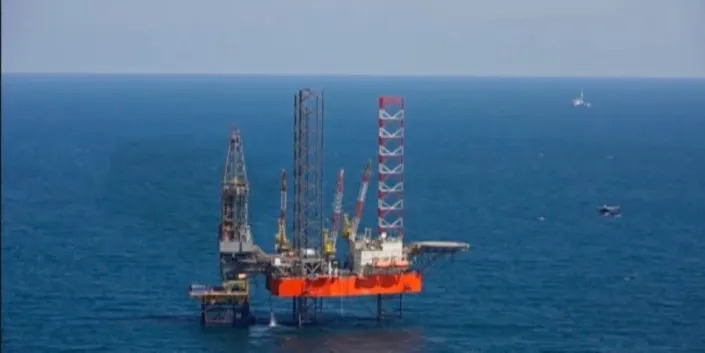
Ukraine strikes at offshore Black Sea gas rigs
Mon, June 20, 2022

Ukraine attacked Russian-occupied gas rigs in Black Sea

“Our missile units caused a little accident at Boyko’s towers,” said Honcharenko.

Read also: Russia refuses to recognize death of 27 crew members of sunken cruiser Moskva, says Ukrainian intelligence

“A (Ukrainian) missile strike has somewhat impeded Russian (natural) gas extraction in Ukraine’s Black Sea waters.”

Read also: Ukraine responds to Lavrov’s naval blockade proposals

The attack was confirmed by the so-called “leader” of Russia-occupied Crimea, Sergey Aksyonov, via Telegram.

According to Aksyonov, five people were rescued from the rigs, including three injured. Search and rescue operations are ongoing.

Read also: Fighting continues at Ukraine's strategic Zmiinyi Island, says UK intelligence

Ukraine purchased these natural gas offshore drilling platforms in 2011-2012. The deal was widely criticized, as the cost was double of their market price. The rigs became known as the notorious “Boyko’s towers,” after then-Energy Minister Yuriy Boyko, an ally of the fugitive former president Viktor Yanukovych.

During the annexation of Crimea in 2014, Russia seized these offshore facilities. They were later used for reconnaissance, besides natural gas extraction.
Exclusive: Trump’s Team Setting Up Eastman to Take Blame for Jan. 6

Asawin Suebsaeng and Adam Rawnsley
ROLLING STONE
Mon, June 20, 2022, 

John Eastman Lawsuit - Credit: Andy Cross/MediaNews Group/Getty Images

With the Justice Department and Jan. 6 committee taking a close look at Donald Trump’s efforts to overturn the 2020 election, he and his cronies could certainly use a fall guy, and it looks like they’ve found their patsy: right-wing lawyer John Eastman.

Eastman worked for Trump as the attorney devised legal strategies to overturn the election to keep the outgoing president in power. But, in recent weeks, Trump has confided to those close to him that he sees no reason to publicly defend Eastman, two people familiar with the matter tell Rolling Stone. The ex-president is also deeply annoyed with Eastman and all the negative “attention” and media coverage that the lawyer’s work has brought Trump and his inner sanctum, including during the ongoing Jan. 6 hearings on Capitol Hill.


Furthermore, to those who’ve spoken Trump about Eastman in recent months, the ex-president has repeated an excuse he often uses when backed into a corner, as investigators confront him with an associates’ misdeeds: He has privately insisted he “hardly” or “barely” knows Eastman, despite the fact that he counseled Trump on taking a string of extra-legal measures in a bid to stay in power and wrote the so-called “coup memo,” which laid out the facsimile of a legal argument for reversing Trump’s election defeat.

Behind closed doors, Trump will occasionally ask questions about Eastman’s fortunes, including bluntly inquiring: “Is [John] going to jail?” according to a source who has heard the former president say this. But publicly, Trump has stayed silent. Over the past several months, Trump has been strongly advised by lawyers and several associates not to openly discuss Eastman or his work — and to personally avoid the man altogether, according to three sources familiar with the matter. At this time, Trump, his legal advisers, and various political counselors would prefer to cut ties with Eastman and keep their distance, in a perhaps vain attempt to build a firewall between the lawyer who enthusiastically pitched strategies for delegitimizing the 2020 election outcome and the ex-president who repeatedly sought his help.

“It has been repeatedly communicated to the [former] president that he should not even bring up Johnny Eastman’s name because he is maybe the most radioactive person [involved in this] when it comes to…any so-called criminal exposure,” a source with direct knowledge of the matter says. “Johnny does not have many friends in [the upper crust of] Trumpworld left, and most people loyal to the [former] president are fine with him being left out on his own, to deal with whatever consequences he may or may not face.”

Indeed, the infamously garrulous Trump has publicly kept his mouth shut about Eastman, a lawyer whose work became integral to the scandalous efforts to nullify President Biden’s 2020 victory. (Trump even considered Eastman as counsel for his post-insurrection impeachment.)

Nowadays, in the top ranks of MAGAland, there’s a clear attitude towards Eastman (“Johnny,” as some Trump advisers derisively call him): He might be going down. So be it, as long as he doesn’t take anyone else down with him.

Eastman and a Trump spokesperson did not respond to requests for comment from Rolling Stone.

Eastman has become an increasing focus for the January 6th committee for his role in spearheading many of the Trump campaign’s efforts to overturn the election. Exhibits posted by the committee last week included excerpts of a deposition by Trump White House attorney Eric Herschmann in which he described a heated confrontation with Eastman the day after the insurrection where he told Eastman to “get a great fucking criminal defense lawyer” because “you’re going to need it.”

Shortly afterward, Eastman emailed fellow Trump lawyer Rudy Giuliani to say: “I’ve decided that I should be on the pardon list, if that is still in the works.”

“Any time you give legal advice and then feel compelled to ask for a pardon, it probably wasn’t good legal advice,” says Steven Groves, formerly a lawyer and then a spokesman in Trump’s White House.

In a nod to growing calls by the January 6 committee for a criminal investigation of Trump’s actions around the election, Trump released a 12-page statement, which The New York Times reported contains the seeds of a potential defense against criminal allegations that the former president attempted to thwart the transfer of power while knowing he had legitimately lost the election. The document cites a range of wild-eyed theories, including 14 references to the bogus election fraud conspiracy documentary 2,000 Mules, but it does not mention Eastman or his work that the former president relied on to make the case that his efforts to overthrow the election were within the law.

Eastman, a former clerk for Supreme Court Justice Clarence Thomas turned conservative constitutional law professor, was first welcomed into Trump’s orbit during the penultimate year of Trump’s term in office. Trump, enamored of Eastman’s skepticism of the birthright citizenship afforded by the constitution, increasingly came to rely on the attorney’s crackpot views of election law as the the odds of overturning Biden’s 2020 election victory grew longer. On behalf of Trump, Eastman authored briefs for the Supreme Court to intervene in the election in Trump’s favor — both ultimately discarded by the justices.

When the Supreme Court ultimately shut the door on Trump’s attempts to leverage the courts to stop the democratic transfer of power, Eastman took up the mantle of cobbling together a legal rationale for why, in blatant violation of the constitution, Vice President Mike Pence somehow had the authority to stop the counting of electoral votes on January 6.

But the idea that Eastman is becoming something of a fall guy for Trump and various Republicans’ efforts in 2020 and early 2021 is now so prevalent in influential conservative circles that it’s now being acknowledged by some of the former president’s favorite right-wing media stars.

“How many lawyers did Trump have? He had several…And John Eastman has turned into the fall guy,” Mark Levin, a Fox News and radio host, said on-air last week. “He’s a lawyer, he’s an advocate for the [former] president. Whether you agree with his legal judgment, his legal findings, or not, it’s what lawyers do.” (According to a New York Times report last year, Levin is indirectly responsible for landing Eastman in then-President Trump’s inner orbit — simply due to the fact that Trump had seen the attorney on a 2019 episode of Levin’s program.)

On Trump’s social media forum, Truth Social, the former president has remained silent about Eastman — even as he’s come to the defense of other aides and supporters now under scrutiny for their efforts to wage a coup against Joe Biden. In fact, Trump has “Truthed” about Elon Musk’s spat with Twitter, the Johnny Depp and Amber Heard trial, and the PGA tour — but hasn’t posted even a fleeting defense of Eastman.

When the FBI arrested Trump’s former trade advisor Peter Navarro for defying a subpoena from the committee, the former president thundered with outrage that “our great trade genius, Professor Peter Navarro, was just handcuffed, shackled, and put in jail.” Ginni Thomas, whose efforts to overthrow Biden’s victory in Arizona, received similar encouragement from Trump when The Washington Post uncovered her emails urging legislators there to ignore the voters’ will and proclaim Trump the state’s victor. Thomas, Trump wrote after the Post story, is a “Great American Patriot, the wonderful wife of Justice Clarence Thomas” who “fought for Voter Integrity in the Great State of Arizona.”

On Trump’s personal website, where the former president hosted written statements after his ouster from Twitter and before the launch of Truth Social, he’s been similarly mum. Eastman’s name appears on the site only twice, in hosted copies of the Supreme Court election briefs he authored in 2020.

Despite multiple stories about the January 6th committee’s interest in Eastman, however, Trump’s thumbs have remained unmoved on the subject of his onetime attorney’s fate. On Truth Social, where the former game-show host has offered a running commentary on the committee’s hearings, Trump has not once mentioned Eastman who, as president, he had once hailed on Twitter as a “Brilliant Constitutional Lawyer.”

Trump aides have remained similarly quiet on the subject of Eastman. His spokeswoman Liz Harrington has not mentioned the campaign lawyer since a tweet on January 6, when she hailed his speech at the rally on the mall “explain the rigged voting machine system that corrupt politicians kept in place for the GA runoffs.”

Mexican migrant advocates demand end to deportations, detention

By Lizbeth Diaz

MEXICO CITY (Reuters) - Mexican human rights organizations marked World Refugee Day on Monday by speaking out against the government's response to migrants entering the country, as record refugee claims are met with mass arrests and deportations.

"We feel like we're enemies of the government, especially when we raise our voices in the face of violations," said Magda Renteria, director of the Network for Documentation of Migrant Defense Organizations (REDODEM), noting the difficult conditions that detained migrants face.

"Suddenly Mexico is not the kind space to find rest," added the activist, who represents 23 migrant advocacy organizations.

Between January and May, 48,981 people from more than 100 nations arrived in Mexico requesting refuge, 8,245 more than during the same period in 2021, according to the Mexican Commission for Refugee Assistance (COMAR).

Human rights organizations have criticized Mexico for its migratory containment policies, highlighting that this has increased abuses against migrants, including minors.

In another event on Monday, National Defense Secretary Luis Cresencio Sandoval said 28,463 members of security forces are currently enforcing "four containment lines" on migration, and 518,668 migrants have been "rescued" during the administration of President Andres Manuel Lopez Obrador.

Every year tens of thousands of migrants fleeing violence and poverty arrive in Mexico en route to the United States, straining institutions like COMAR.

"We have refugee applicants from all continents and from all latitudes of the world and this requires timely and concrete responses," said Alejandro Encinas, Undersecretary for Human Rights of the Mexican Interior Ministry, during the same event to commemorate World Refugee Day.

"Faced with this reality, our country has to adapt," he said.

A TASTE OF WHAT ABORTION CLINICS FACE DAILY

Protesters with fake blood, baby dolls and shackles picket Supreme Court justice’s home


Namita Singh
Mon, June 20, 2022

Pro-choice activists protested outside Supreme Court justice Amy Coney Barrett’s Virginia home on Saturday ahead of the apex court’s decision on a landmark case constitutionally protecting a woman’s right to safe abortion.

The activists, part of a group called Rise Up 4 Abortion Rights, donned clothes soaked in fake blood, held baby dolls and carried signs with slogans such as “Abortion on demand and without apology”.

One of the participants, protesting with her hands tied together and holding a doll, said: “This is what a lot of women are going through. People are actually dying and bleeding out because they can’t get safe abortion.

“This is a terrifying visual of what America is going to look like,” added another. “It is a terrifying visual that children are giving birth to children. They are being forced to against their will.”


The US Supreme Court is expected to issue a ruling in a Mississippi case challenging a state law banning most abortions after 15 weeks of pregnancy, presenting a major challenge to the landmark precedent established in the 1973 ruling in Roe v Wade, which enshrined constitutional protections for the procedure.

A leak of a draft opinion in the case suggests that justices are prepared to overturn Roe v Wade, potentially eliminating abortion access across more than half the US, forcing many pregnant women to carry their pregnancies to term unless they can travel to a handful of states with abortion protections in place.

The group, which carried other slogans including “forced motherhood = female enslavement,” tweeted saying “we aren’t incubators!”

“We aren’t protesting to change the minds of women-hating fascists,” but rather “calling on the pro-choice majority” to protest on the street and prevent the Supreme Court from “overturning Roe”.

The bombshell leak – the first ever in the court’s history – has sparked protests nationwide, including demonstrations outside the homes of the six conservative justices.

The run-up to the final Supreme Court ruling has put the nation on edge with the Department of Justice ramping up security for each of the justices. This comes as justice Brett Kavanaugh found himself to be a target of an assassination attempt on 8 June, with 26-year-old Nicholas Roske allegedly confessing to plotting to murder him ahead of the ruling.

The plot was foiled after he called 911 from outside the property, confessing his intentions, as he sought “psychiatric help”. He was taken into custody at the scene and charged with an attempt to murder a Supreme Court justice.