IMPERIALISM, TOO
Proposed US-Led Tech Hub In The Philippines Will Secure Supply Chains, Create Jobs – Analysis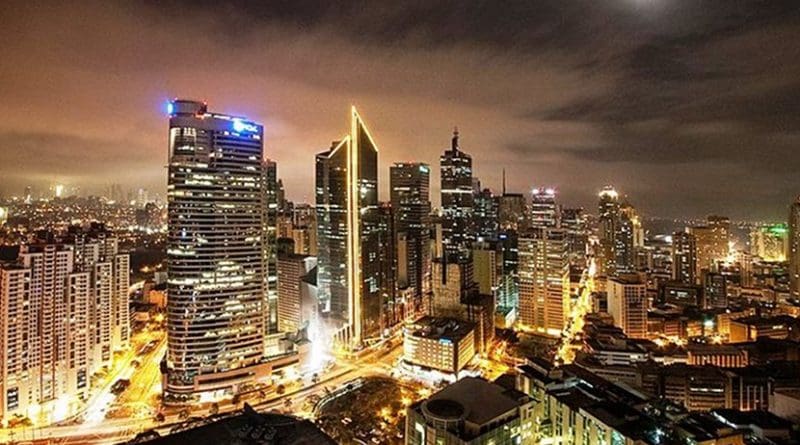
Manila, Philippines. Photo by Alvin js5, Wikimedia Commons.
August 19, 2026
RFA
By Jason Gutierrez
Key Takeaways:
The U.S. plans to build a major critical technology hub under the Pax Silica initiative in New Clark City, Philippines—on land that was part of the former Clark Air Base—focusing on semiconductors, AI, and rare earths.
Supporters highlight massive economic benefits (up to 200,000 jobs and $70 billion in investment) and stronger U.S.-Philippine alliance, while critics warn of sovereignty risks, environmental harm, and potential Chinese retaliation.
Philippine President Marcos frames participation as purely practical and economic, open to beneficial deals from any partner, while analysts see it as part of Washington’s “friend-shoring” strategy to secure supply chains against Chinese influence.
A U.S. plan to build a critical technology hub in the Philippines is a symbolic return to the site of one of its largest overseas former bases, experts in the country told Radio Free Asia.
The hub will be part of the U.S.-led Pax Silica initiative, aimed at shoring up supply chains for semiconductors, AI and rare earth elements. It will be built in New Clark City, north of Manila, on land that was part of a U.S. military reservation complex that included Clark Air Base, until the Philippines voted to take control of it in 1991.
Supporters of the plan tout its potential economic benefits – the project will create around 200,000 jobs and up to US$70 billion in investment – but critics say that the plan is cedes too much control to Washington, and could be potentially harmful to the environment.
Either way, the historical significance of a major U.S. project on the grounds of the former base is not lost on observers.
“I see the symbolic value of the U.S. returning to Clark,” Chester Cabalza, founder of the Manila-based think tank International Development and Security Cooperation, told RFA. “It centers on an historic reversal of geopolitical fortunes, transforming a symbol of post-Cold War retreat into a modern monument of the ironclad U.S.-Philippine alliance.”
The battlefield has evolved since the Cold War era, but just as Clark Air Base was a key cog in the U.S.’ Asian containment strategy of that era, the Pax Silica hub is intended to secure technology supply chains for Washington and its allies, even as China has launched its own global AI framework.
Chinese President Xi Jinping in July launched the Shanghai-based World Artificial Intelligence Cooperation Organization, or WAICO, promoting a Beijing-led AI ecosystem and analysts say that Washington may soon ask countries to choose Pax Silica over Xi’s group.
‘Purely Practical’
Though analysts see a global tug of war between Beijing and Washington spilling over into the technology arena, Philippine President Ferdinand Marcos Jr., while addressing a forum of the Foreign Correspondents Association of the Philippines Friday said that the Philippines’ involvement in the plan is economic in nature and is “purely practical” rather than political.
The Philippines has territorial disputes with China in the South China Sea, which Beijing claims in its entirety, but which Manila claims in part. Marcos acknowledged the dispute, but said the Philippines’ Pax Silica plans were more about fostering an economic partnership.
“All of these…conflicting claims in the West Philippine Sea simply did not enter into that discussion,” he said, referring to the part of the sea that lies within Manila’s exclusive economic zone. “And so, the idea that we are somehow distancing ourselves from China is quite the contrary.”
Manila, he said, was open to investment opportunities from anyone interested “as long as it is to the mutual benefit of all parties involved” and will grab the opportunity “no matter where it comes from.”
“As long as we are able to move the economy forward and to better the lives of our people, then that is something that we will certainly examine,” Marcos stressed. “And if it turns out that this is a beneficial agreement or arrangement, then certainly we will become part of it.”
Though the tech hub will create jobs, it will facilitate the entry into the Philippines of U.S. military personnel and compromise its sovereignty, Teddy Casino, leader of the nationalist Bayan group that has been protesting Pax Silica, told RFA.
“The promise of economic development under U.S. patronage is the same deception that U.S. imperialism has been peddling in the past 128 years of its colonial and neocolonial rule in the Philippines,” he said. “Under Pax Silica, Filipinos are once again being told the lie that surrendering greater economic and strategic space to the US is synonymous with development.”
Raffy Tulfo of the Philippines Senate, who heads the committee on the environment has filed a resolution seeking to investigate the project to determine its economic, environmental, social, technological, and national security implications.
Tulfo said there were many legitimate concerns about the project, despite its touted benefits.
“While such investments may contribute significantly to economic growth, technology transfer, innovation, and job creation, they have likewise generated public concerns and policy questions,” he said in his resolution.
Among the concerns raised in the resolution are land use and urban planning, water consumption, resource allocation, and environmental sustainability, as well as the project’s potential impact on the rights, welfare, cultural integrity, and ancestral domains of indigenous peoples and local communities.
But the benefits outweigh the risks, Cabalza said.
“This strategic investment, when wisely planned, will bring an influx of financing infrastructure and economic defense in the digital supply chain,” he said,
But he acknowledged that the Philippines’ participation in Pax Silica could provoke China to retaliate with economic pressure.
“For China, with the advent of the US-led AI investment through the Pax Silica, the more they will tighten their economic and security grip in the Philippines,” he said, pointing out that one of the measures Beijing may employ is restricting Philippine agricultural and raw materials exports.
Defense vs. malign influence
More than anything, the Washington-designed Pax Silica is seen as a defense against malign Chinese influence, Vincent Kyle Parada, a defense analyst at the De La Salle-College of Saint Benilde in Manila, told RFA.
“Dealing with Chinese firms is simply too big of a risk for Manila. Beijing’s reach extends far,” he said. “That’s really why the US introduced Pax Silica to begin with. The distinction between economics and security is fast disintegrating, and Washington needs to secure its supply chains from any form of malign interference.”
The proposed Philippines Pax Silica hub is part of Washington’s “friend-shoring” strategy – transferring production to “friendly” countries in order to mitigate risks, he said.
“Manila is Washington’s only treaty ally in Southeast Asia. It is not a part of the China-led WAICO and is, therefore, not as deeply embedded into China’s AI and semiconductor supply chain compared to its neighbors,” Parada said. “That makes it the perfect candidate for Pax Silica, while at the same time, benefitting Manila by providing Washington more skin in the game in its continued commitment to the US-Philippine alliance.”
The Philippines participation is an expression of its own strategic autonomy, Arnaud Leveau, president of the Paris-based Asia Center, told RFA.
He said that while the Philippines needed to diversify some of its dependencies, including in areas such as semiconductors, “it should not mean exchanging dependence on China for excessive dependence on another external partner.”
“The central issue, in my view, is whether the Philippines can use this initiative to strengthen its own technological and industrial sovereignty rather than simply becoming a geographical platform within somebody else’s supply chain,” said Leveau, who also teaches at the Paris Dauphine University.
But he warned that a complete technological or economic disengagement from China would be extremely difficult and probably undesirable.
“China is not simply a geopolitical competitor. It is also one of the world’s major industrial and technological ecosystems,” Leveau stressed. “Chinese companies are increasingly important in AI, batteries, electric vehicles, telecommunications, renewable energy and advanced manufacturing.”
About RFA
Radio Free Asia’s mission is to provide accurate and timely news and information to Asian countries whose governments prohibit access to a free press. Content used with the permission of Radio Free Asia, 2025 M St. NW, Suite 300, Washington DC 20036.
View all posts by RFA →
More than anything, the Washington-designed Pax Silica is seen as a defense against malign Chinese influence, Vincent Kyle Parada, a defense analyst at the De La Salle-College of Saint Benilde in Manila, told RFA.
“Dealing with Chinese firms is simply too big of a risk for Manila. Beijing’s reach extends far,” he said. “That’s really why the US introduced Pax Silica to begin with. The distinction between economics and security is fast disintegrating, and Washington needs to secure its supply chains from any form of malign interference.”
The proposed Philippines Pax Silica hub is part of Washington’s “friend-shoring” strategy – transferring production to “friendly” countries in order to mitigate risks, he said.
“Manila is Washington’s only treaty ally in Southeast Asia. It is not a part of the China-led WAICO and is, therefore, not as deeply embedded into China’s AI and semiconductor supply chain compared to its neighbors,” Parada said. “That makes it the perfect candidate for Pax Silica, while at the same time, benefitting Manila by providing Washington more skin in the game in its continued commitment to the US-Philippine alliance.”
The Philippines participation is an expression of its own strategic autonomy, Arnaud Leveau, president of the Paris-based Asia Center, told RFA.
He said that while the Philippines needed to diversify some of its dependencies, including in areas such as semiconductors, “it should not mean exchanging dependence on China for excessive dependence on another external partner.”
“The central issue, in my view, is whether the Philippines can use this initiative to strengthen its own technological and industrial sovereignty rather than simply becoming a geographical platform within somebody else’s supply chain,” said Leveau, who also teaches at the Paris Dauphine University.
But he warned that a complete technological or economic disengagement from China would be extremely difficult and probably undesirable.
“China is not simply a geopolitical competitor. It is also one of the world’s major industrial and technological ecosystems,” Leveau stressed. “Chinese companies are increasingly important in AI, batteries, electric vehicles, telecommunications, renewable energy and advanced manufacturing.”
About RFA
Radio Free Asia’s mission is to provide accurate and timely news and information to Asian countries whose governments prohibit access to a free press. Content used with the permission of Radio Free Asia, 2025 M St. NW, Suite 300, Washington DC 20036.
View all posts by RFA →

No comments:
Post a Comment