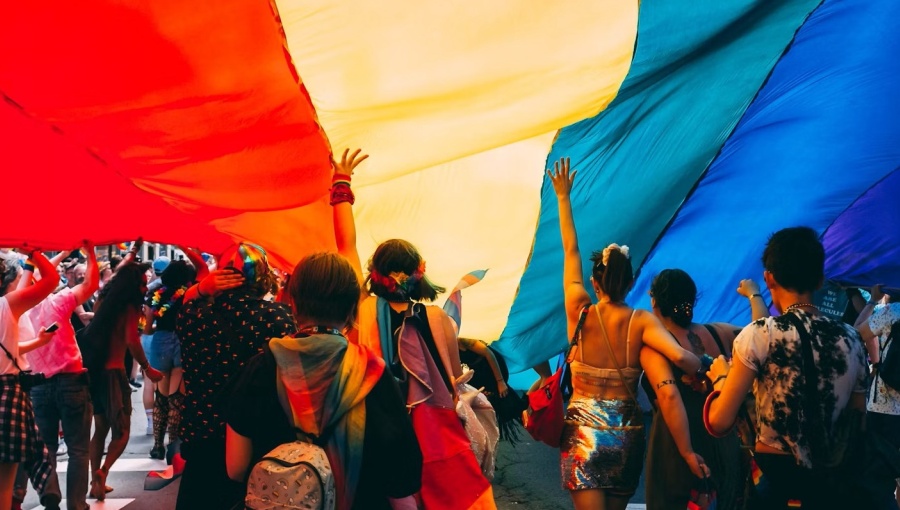
A small administrative directive hidden deep within an Indonesian national defence regulation has reignited a nationwide controversy over identity, civil liberties, and the legal limits of state power. Signed in October 2025, Presidential Regulation No. 111/2025 on the General National Defence Policy formally categorised the "spread of LGBTQ culture" as a non-military threat to national security, Sindo News reports.
Tucked away in an appendix alongside severe global and domestic hazards such as international terrorism, illicit trafficking, environmental plunder, and radicalism, the provision went largely unnoticed for over eight months. However, a recent sequence of public altercations has dragged the obscure directive into mainstream socio-political discourse, forcing the state to defend its ideological boundaries while civil rights advocates warn of a dangerous precedent.
The legal instrument itself—a presidential decree published in the official State Gazette—is an executive document that carries legally binding force, primarily designed to formulate national defence strategies. Because technical policies of this nature rarely cross into public scrutiny, the initial publication caused little immediate ripple.
As reported by CNA, the catalyst for the current national debate emerged around mid-June, sparked by a Pride Month tribute posted online by Suara Mahasiswa, a student-led publication at the University of Indonesia. The post sparked fierce online backlash, with critics asserting that celebrating sexual diversity directly violated Indonesia’s foundational state ideology, Pancasila—specifically its core principles of belief in a singular God and unified national morality. The resulting public outcry compelled university authorities to disavow the student publication and initiate internal administrative proceedings.
Escalating tensions
The momentum gathered pace when religious authorities intervened. The Indonesian Ulema Council (MUI) is drafting an academic paper and legislative proposal for Parliament's National Legislation Programme aimed at criminalising LGBTQ activities, the religious body announced in late June, according to CNA.
MUI Deputy Chairman Muhammad Cholil Nafis argued that moral persuasion alone was insufficient to curb the public display of non-normative sexual orientations. He asserted that formal statutory penalties were essential to prevent the normalisation of what the council considers social deviance.
As public debate intensified, legal scholars and news outlets including Antara, Kumparan, and Tempo began auditing existing legal frameworks, in the process dragging the overlooked October directive back into the spotlight.
The sudden escalation in state and religious rhetoric has heightened fears of vigilante justice across the archipelago. A proliferation of hostile statements by prominent figures has fuelled widespread anxiety amongst marginalised communities, particularly following a surge of online videos depicting public harassment and extrajudicial violence against individuals suspected of belonging to sexual minorities. Rights observers note that public vilification by state officials often serves as an informal licence for vigilante groups to target vulnerable individuals under the guise of public morality.
This hostility contrasts with Indonesia’s cultural history. As BBC Indonesia highlighted, indigenous traditions across the archipelago have long embraced fluid gender concepts. South Sulawesi's Bugis people have recognised five distinct gender roles since before the 16th century: makkunrai (feminine woman), calabai (feminine man), calalai (masculine woman), oroané (masculine man) and bissu (transgender spiritual priests). This suggests modern pushback against gender diversity is a political construct rather than a traditional value.
Legal scholars emphasise that the current regulation marks a fundamental shift in how the state addresses sexual orientation. Human rights attorney Asfinawati said to CNA that while the 2008 Pornography Law previously referenced "lesbian" and "homosexual" conduct within its explanatory notes to define prohibited material, Presidential Regulation No. 111/2025 goes significantly further. It disconnects the issue from specific explicit acts, framing the mere identity and cultural dissemination of LGBTQ individuals as an inherent security risk.
Security analysts argue that this framework stems from Indonesia’s expansive defence doctrine, which categorises state threats into military, non-military, and hybrid vectors. Security studies lecturer Tangguh Chairil explained to CNA that because the non-military category is defined so broadly, non-traditional issues are frequently "securitised", allowing the state to divert administrative focus and public resources towards social engineering under the banner of national resilience. Coordinating Minister for Legal Affairs Yusril Ihza Mahendra defended the executive stance, arguing that the regulation focuses on curbing political campaigns and propaganda aimed at altering the nation’s socio-cultural morality, rather than encouraging the persecution of individual citizens.
Impacts on human rights
Despite state assurances that fundamental human rights regarding education, healthcare, and employment remain legally protected, human rights organisations report a very different reality on the ground. Nearly 150 members of the queer community have suffered physical or emotional harm over a two-year stretch starting in 2024, based on figures logged by advocacy body Arus Pelangi.
Human Rights Watch monitor Andreas Harsono cautioned that branding any minority an enemy of the state merely feeds ingrained bias and provides cover for unfair treatment. This heavy-handed approach is increasingly creeping onto university campuses, with around a dozen public institutions stepping in to censor student journalists reporting on queer issues.
This surge in abuse underscores how exposed sexual minorities remain in a country where the legal system fails to offer clear safeguards. Apart from in Aceh province in North Sumatra, where Islamic religious codes apply, adult same-sex relationships carry no explicit criminal penalties under standard national statutes, yet the lack of statutory rights leaves citizens completely unprotected against harassment from authorities, officers, and local mobs.
Legal commentators stress that central government decrees, such as Presidential Regulation 111/2025, are thus escalating the danger by giving regional leaders a green light to intervene. Local councils in areas such as Solo and Malang have already started rolling out local rules and school initiatives intended to wipe out queer representation altogether.
As political scientists point out, converting identity into a state security risk reinforces an unequal system of citizenship, institutionalising marginalisation while abdicating the state's responsibility to protect all citizens equally.


No comments:
Post a Comment