Spain ignores EU and prepares urgent transfer of 500 migrant girls from Ceuta to mainland
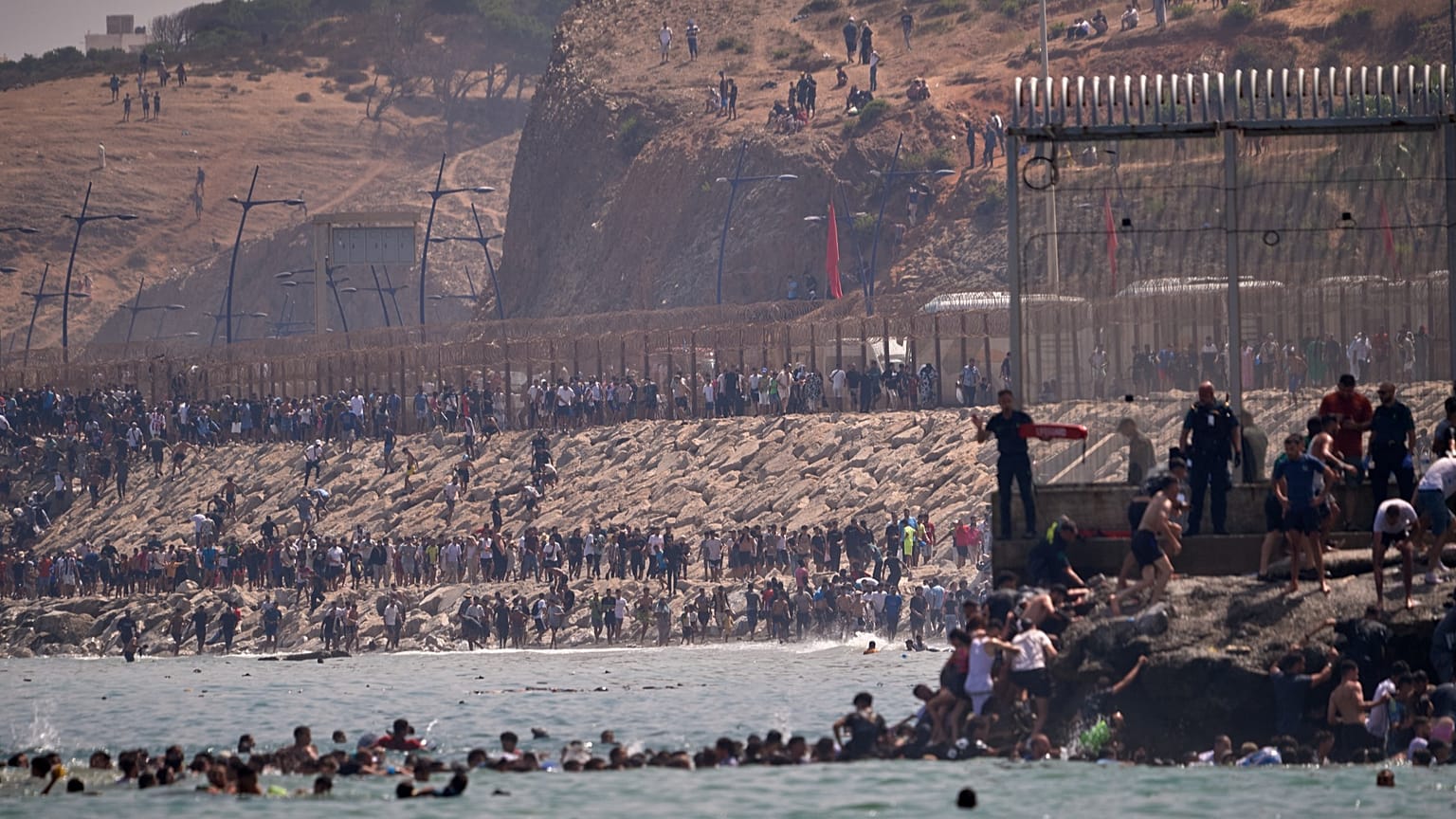
Pedro Sánchez's government is planning the urgent transfer to mainland Spain of 500 migrant girls who arrived in Ceuta, while the EU supports sending the unaccompanied minors back to Morocco.
According to Spain's Ministry for Youth and Children, work is under way on the urgent transfer to mainland Spain of 500 migrant girls who arrived in Ceuta during the mass migrant influx between 30-31 July.
Sources at the ministry explain that "this plan includes the royal decree-law providing for compulsory, solidarity-based reception by all the autonomous communities, or family placement, as well as other mechanisms to speed up reception."
Among the options being considered is a route that would allow child-protection organisations to manage the reception and care of the most vulnerable cases, including the girls, in tailored facilities on the mainland, without the need to transfer guardianship to the autonomous communities.
Several autonomous communities have already said they will not take in unaccompanied minors who arrived in the Ceuta mass crossing. The central government has criticised what it calls a lack of "solidarity" shown by these regions. For its part, Morocco last week asked the Spanish government to return the Moroccan citizens still remaining in the enclave.
Protecting the best interests of the child
Elma Saiz, Minister for Inclusion, Social Security and Migration, told the public broadcaster RNE that the issue is being addressed by Ceuta together with the Department for Children and the autonomous communities. She preferred not to give further details, but insisted on the need to "protect the best interests of the child."
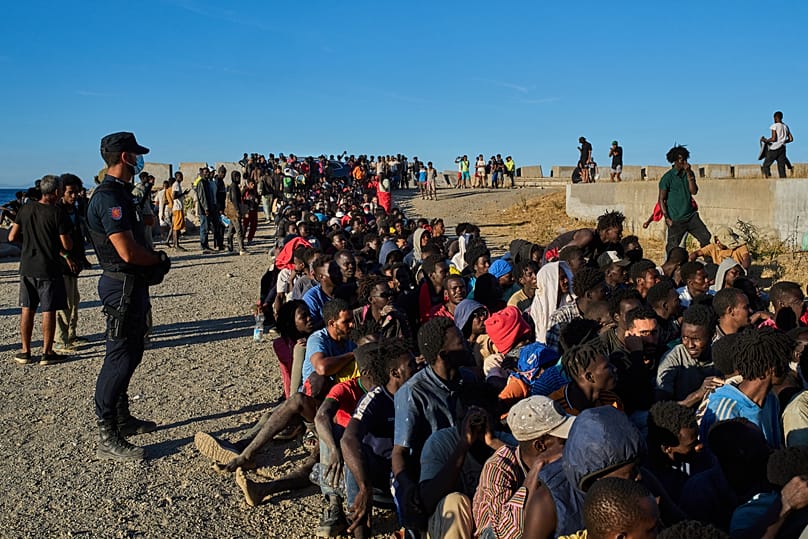
The Socialist politician stressed that "these are girls who are on their own." She said the minors have been grouped together in safe spaces in Ceuta to prevent cases of sexual violence, after numerous rapes reported in recent days which are already in the hands of the courts.
The Social Security minister underlined the need to respect the law and said the government has given Ceuta €25 million to help deal with this situation.
The National Police had identified and handed over to the Ceuta government 2,168 minors by Tuesday 18 August.
Brussels supports sending all migrants back to Morocco
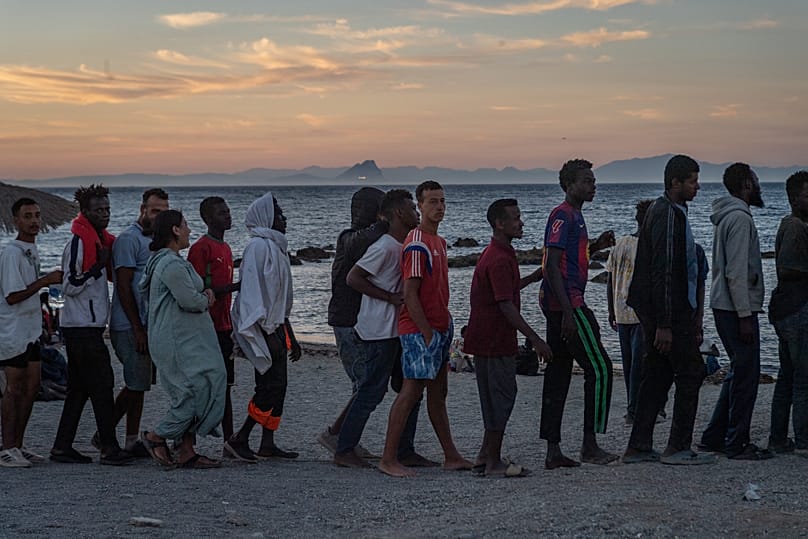
Meanwhile, the European Union is backing the return of unaccompanied minors from Ceuta to the African country.
"The priority now is for the Spanish and Moroccan authorities to keep the situation under control and guarantee the swift return of all those who remain irregularly in Ceuta," European Commission spokesperson Markus Lammert said at a press conference on Tuesday.
Lammert stressed that the returns are covered by EU law, adding that they are regulated by "the Return Directive" and, in future, by "the EU Return Regulation."
Humanitarian Tents Planned For Ceuta As Spain Tackles Migrant Influx

Ceuta the autonomous city of Spain on the North African coast, bordered by Morocco. Photo by Víctor Fernández Salinas, Wikipedia Commons.
Key Takeaways:
- Spain is setting up temporary humanitarian tents in Ceuta to shelter at least 1,500 migrants as a short-term response to the ongoing crisis.
- Official estimates of remaining migrants range from 5,000 (Interior Ministry) to around 10,000 (local authorities and police), including over 2,000 registered minors, while hospitals and security forces report severe strain.
- The opposition People’s Party is demanding mass deportations to Morocco and rejection of asylum claims, while the local mayor threatens legal action against the central government for inadequate support.
(EurActiv) — The Spanish government will set up temporary humanitarian tents in Ceuta to host 1,500 people as a stopgap measure to address the migrant crisis the city has faced over the past two weeks.
Speaking to radio network Cadena Ser, Migration Minister Elma Saiz said that the tents could accommodate more people than initially anticipated.
“Once the facilities are up and running, there will be more. I don’t want to set a limit,” she said on Tuesday.
Neither Saiz nor other ministers have clarified what will happen to the migrants still in the city or how long the situation will last. Spanish authorities claim that most of the 80,000 migrants who entered the tiny Spanish city in North Africa in late July have returned voluntarily.
Yet the interior ministry has increased its estimate of those remaining to up to 5,000, while Ceuta Mayor Juan Jesús Vivas maintains that around 10,000 remain on the streets of the city, which has just 84,000 inhabitants.
Security forces confirmed to Euractiv that the number of migrants remains closer to the 10,000 estimate, with many migrants camped along the beach.
An interior ministry spokesperson confirmed the police had registered 2,168 minors in Ceuta, and specific facilities to house children are at maximum capacity.
The main opposition People’s Party (PP) has strongly condemned the handling of the crisis by socialist Prime Minister Pedro Sánchez’s government, urging it to reject all asylum claims and deport all remaining migrants back to Morocco.
“European legislation – which is national law – establishes that Morocco is a safe country and that, therefore, those who come from Morocco have no right to asylum in Spain… in that regard, the course of action must be deportation,” said PP heavyweight Cuca Gamarra from Ceuta on Tuesday.
However, among the migrants are large groups of Sub-Saharan Africans and even Afghani and Palestinian nationals, who, under international law, could be eligible for asylum.
A day earlier, Vivas, who also belongs to the centre-right PP, said the city remained at “extreme risk” and threatened to take legal action against the central government over its “failure to fulfil its duties” and to urgently resolve the crisis.
Medical associations in Ceuta have warned of a “collapse” in hospital services amid the mass influx of people, while police unions alerted to an increase in violence and insecurity in the city, citing a lack of personnel and resources to address the crisis.
INTERVIEW

Thousands of migrants are still in and around Spain's North African enclave of Ceuta weeks after a mass border crossing from Morocco, according to aid groups and Spanish authorities. AP Photo/STR - STR
Issued on: 17/08/2026 - RFI
At the end of July, between 70,000 and 80,000 people crossed into the enclave from neighbouring Morocco. Most have since left, but Jimenez said thousands remain in Ceuta, including large numbers of children.
Many of those still stranded are asylum seekers from countries including Sudan, Yemen, Chad, Mali and Egypt. Some migrants have told aid workers they would rather die than return to Morocco.
Spanish authorities have sent additional police to Ceuta amid rumours of possible new arrivals, while on Sunday hundreds of migrants gathered on a beach to demand asylum and oppose any return to Morocco.
Jimenez spoke to RFI about the migrants still in the enclave, their living conditions and the response from Spain.
RFI: Madrid has given different figures for the number of migrants still in Ceuta. The interior minister puts the figure at 5,000, while the Ceuta's regional leader says at least 8,000. What are your estimates?
Maria Jimenez: It is difficult to get official figures because the authorities are not counting the number of people in Ceuta, which is a problem. They have estimates, but we NGOs work on the ground and part of our work is registering people – their names, countries of origin, ages and so on, especially minors.
People living in the surrounding countryside also help us. We estimate there are around 4,000 minors in the enclave, mainly around the city of Ceuta, in areas such as El Principe and Los Rosales. Local residents are feeding these children.
They have also taken over a football pitch so that women and young girls do not have to sleep on the streets because neither the municipality nor the government is doing anything on the ground, more than two weeks after the events.
They are not providing anywhere for people to sleep or even one meal a day. Police have registered 300 unaccompanied girls.
RFI: What do we know about the adults who remain in Ceuta?
MJ: There are many asylum seekers from countries such as Sudan, Yemen, Chad, Mali and Egypt. We estimate there are around 3,500. That figure comes from the Spanish Red Cross, whose volunteers go to the beach every evening to provide one meal a day to each person. We're able to estimate the number of people from the number of meals distributed.
Overall, we have counted around 7,000 migrants in Ceuta, not including those hiding in the woods or elsewhere.
It is important to understand that many of them are asylum seekers. Since arriving in Ceuta, they have been telling us: "I would rather die here than go back to Morocco. My life is in danger if I go back to Morocco."
Some have fled countries in conflict, such as Sudan or Palestine, and it has taken them months, even years, to get here.
We really need to distinguish between people who crossed the border from Morocco and can return to their country, and those who have suffered for years to reach the enclave. It is very important to protect these lives by following all the legal procedures and looking at each case individually.
RFI: You say the authorities are not doing enough for these migrants. Why do you think that is?
MJ: This is only my analysis, but doing nothing is a way of telling people who want to come to Ceuta: "Don't come. There is no advantage to staying here. Your future will not be any better."
But the situation cannot continue like this indefinitely – without shelter, food or medical assistance, and without knowing what will happen to these people. The government must act urgently because this situation has now lasted for more than two weeks and tensions are beginning to emerge.
If the government wants to send more police officers, fine. But it also needs to deal with the situation. The Interior Ministry says it wants to remove the migrants, but that is not possible without a series of safeguards, not only for minors but also for asylum seekers.
Legal procedures need to be put in place: registration by the police, support for minors, access to the asylum process and the necessary assistance, including translators. In the meantime, people must be able to live in decent conditions.
RFI: There has been anger and some people have accused migrants of violence. How are Ceuta's residents reacting to what has happened?
MJ: In the first few days, they were afraid. Ceuta covers 20 square kilometres on the border with Morocco and has a population of around 80,000. Imagine 70,000 people entering the city in a single day. It is frightening, and that is understandable. People felt abandoned by the authorities.
Since then, some residents – especially around the city of Ceuta – have shown real solidarity. As for violence, there has been some, but it is not the main story. When you have to fight for a meal or a shower, that can create conflict. Violence can emerge because living conditions are unbearable.
This interview has been adapted from the original version in French by Murielle Paradon and edited for clarity
CEUTA, Spain – FRANCE 24 spent an evening with unaccompanied minors who are sleeping rough in Ceuta but refusing to return home. Amid the fear, the cold and the long wait for help, these young Moroccan migrants shared their stories.
Issued on: 19/08/2026 - FRANCE24
By: Hamza HABHOUB

It’s 2am local time and a heavy silence hangs over the Tarajal industrial zone in Ceuta. The darkness is pierced by the flashing lights of police cars while waves crash against the shores of this Spanish enclave in North Africa, where many have attempted to cross into Europe but failed.
Not far from the beach, Moroccan minors sleep as they await a new day, not knowing what it will bring.
The open metal gates of the industrial zone give way to a space that, from the outside, looks like an auto repair shop. Hundreds of migrants gather here, including many minors left to fend for themselves. Some sleep on mattresses, others lie directly on the floor, and there are only a few blankets – which they take turns sharing – to protect them from the cold of the night or the heat of the day.
‘In search of a better future’
The figures reveal the scale of the crisis. The Spanish government estimates that around 2,500 minors remain on the streets of Ceuta following the wave of mass arrivals on July 30-31, when more than 70,000 migrants crossed the border from Morocco. The vast majority voluntarily chose to return home in the following days. But among those who remain in Ceuta, nearly 4,000 are minors, according to local NGOs. International NGO Save the Children estimates that only about 1,500 of them are currently being cared for by child protection services.
Ceuta appeals for aid as child migrant crisis becomes 'unsustainable'
Reda, 17, says he came to Ceuta in search of a brighter future. He was supposed to sit for his high school graduation exams this year and had just earned a diploma in French. He was also scheduled to try out for a football team.
But the precarious circumstances in which he lived drove him to leave. “We are here in search of a better future,” he says.
Returning to Morocco is not an option, he insists. “We won’t go back; we have no desire to go back,” Reda says, despite his difficult living conditions. He notes that the kids here on the streets of Ceuta remain hopeful that Europe will not abandon them.

‘My friend was killed right before my eyes’
After a perilous sea crossing to get to Ceuta, reaching dry land did not mean safety for many of these young migrants.
Khaled recounts how he and his friends were attacked by a group of youths from El Principe, a working-class neighbourhood in the southern part of the enclave. Their assailants brandished guns and tried to rob them, he says, and several of his companions were wounded and taken to hospital.
Reda says another friend was killed during an attack in the same neighbourhood. The two of them tried to flee, but his friend had leg injuries and was not quick enough to escape their attackers. He was then fatally wounded in the neck.
“My friend was killed right before my eyes; I will never forget that scene for the rest of my life. His dream vanished in an instant. Instead of starting a new life, he left this world,” Reda says.

Manal’s ‘nightmare’
A few steps away from Reda and Khaled, Manal, a 16-year-old Moroccan girl, tells another story of loss and fear. She explains that she left the northern Moroccan city of Tangier for Tetouan on foot, along with a group of migrants from sub-Saharan Africa, before entering Ceuta during the latest wave of crossings.
They then encountered a group of armed youths, she says. “We hid in the sewers, and they shot at us. If I hadn’t hidden, I’d be dead by now,” she says. The nightmare of that incident still haunts her.
Life has not been easy for Manal, who says her father never acknowledged paternity of her and that she lived with her grandmother before leaving for Ceuta. “I feel like life has closed its doors on me. I have neither ambition nor a future,” she says.

But Manal does have a modest dream: to improve her financial situation and lift her mother out of poverty.
Shortly after she arrived in Ceuta, Manal says the police transferred her to a centre for migrant minors. But she explains that the violence at the centre drove her to leave, and she now prefers to spend the nights outdoors.
Vulnerable minors
During our interview with Manal, a young man emerges from a reed tent set up nearby. It’s clear that our conversation has woken Mohammed, who is also 16 years old. He sighs and describes yet another difficulty for the migrants living in the Tarajal warehouses.
“We don’t have any toilets,” explains the young man from Larache, a city in northwestern Morocco. “So we’re forced to relieve ourselves near the sea. And even to wash ourselves, we have to use seawater.”
The kids rely on food provided by the Ceuta-based NGO Luna Blanca. But the meals are only distributed once a day.
Many children still bear the marks of injuries sustained during their crossing to Ceuta almost three weeks ago. Poor hygiene and lack of access to medication have caused some wounds to fester and get infected. Many migrants are also suffering from scabies, and desperately seek medication to relieve the itching and pain.
Two minors collapsed in the industrial zone in the afternoon of August 12. One of them, weakened by a lack of food and water, could not withstand the intense August heat. The second boy was suffering from tonsillitis that had worsened due to a lack of treatment, leaving him unable to swallow. As the two boys lay on the ground, other migrants rushed to the scene, shouting for help and demanding an ambulance, which was slow to arrive.
Raul Arnaiz, programme director for Save the Children in Spain, describes the situation in the Tarajal warehouses as “a tragedy of extreme poverty”.
These unaccompanied minors are at risk of sexual assault and exploitation, given the lack of nighttime surveillance in a virtually deserted industrial zone, he warns.
Uncertain fate
In the early hours of dawn, a new journey begins. At 5am, hundreds of minors gather in front of the Ceuta police station, hoping to register themselves and enter the protection system. But the lines are long as Spanish authorities try to cope with the sheer volume of requests. Around 1,400 minors have been registered so far, according to Spanish Minister for Territorial Policy Angel Victor Torres.
Moroccan and Spanish authorities want to prioritise family reunification and repatriate the minors back to Morocco. But it’s not a simple procedure. Spanish law prohibits any collective repatriation of unaccompanied minors, and each case must be assessed individually.
Since minors are not subject to the same procedures as adults, they cannot be repatriated automatically, explains Basem Salem, an immigration lawyer specialising in asylum cases. The identity of the minors must first be established, their situation examined, and their family circumstances verified – all while respecting legal safeguards and the best interests of the child.
Moroccan Justice Minister Abdellatif Wahbi says helping these children is a priority and that Rabat, through its consulates, has helped facilitate the process.
Spain’s Ministry of Youth and Children is set to hold a conference in late August to examine how to distribute resources and responsibilities between the central government and local authorities in Ceuta. Madrid has already allocated €25 million to help Ceuta cope with the crisis.
Torn between the hope of being transferred to reception centres in Spain and the fear of being sent back to Morocco, these young migrants remain in limbo, waiting to learn their fate. Meanwhile, the humanitarian crisis continues.
As night falls and the bustle of the day subsides, these minors return to the warehouses, the streets, the mountains, or the beach to try to get some sleep. Between the shores of two continents, separated by a few metres, these minors now find themselves caught between a dream they do not want to give up, a reality they cannot escape, and a future they cannot yet imagine.
This is a translation of an original article in Arabic.

No comments:
Post a Comment