Meta collects three times more user data than Microsoft or Apple
New research shows Meta's apps collect an average of 25 out of 35 possible data types, more than any other tech giant.
Meta could be collecting the most user data among Big Tech companies, according to new research by Surfshark, which analysed 171 Apple App Store apps made by Google, Microsoft, Apple, Amazon and Meta.
Surfshark analysed apps based on 35 unique data categories, including browsing history, precise location, purchase data and more.
The study highlighted that Meta was collecting the highest average number of data types, at 25 out of a possible 35. This was more than three times as much user data on average than other tech companies such as Microsoft and Apple.
Seven of the most intrusive apps, including Facebook, Messenger and Meta AI were also all owned by the company. Others included Meta Horizon, Meta Ads Manager, Meta Business Suite and Forum.
In contrast, Google collected 17 types of data, while Amazon collected 12 and Microsoft 8. Apple also collected 7 types of data.
Google owns the most data-hungry apps
Google owned the largest number of data-hungry apps, at 29 out of 40, compared to only 2 from Amazon and 9 from Meta.
Although on average, Google's apps collected fewer data types than Meta, the scale of its data collection and its widespread app ecosystem still poses significant data security concerns to users.
Similarly, despite approximate location being enough for most features, browsing history is collected by 9 Meta apps, 11 Amazon apps and 8 Google apps.
Amazon Alexa was the most data-hungry app outside the Meta collection, gathering 28 data types.
Apple and Microsoft were consistently the least data-hungry companies across various categories. Apple's 13 Utilities apps only gathered 6 data types on average, compared with 17 for Google's Utilities apps.
Everything you need to know about Meta's biggest legal battle yet
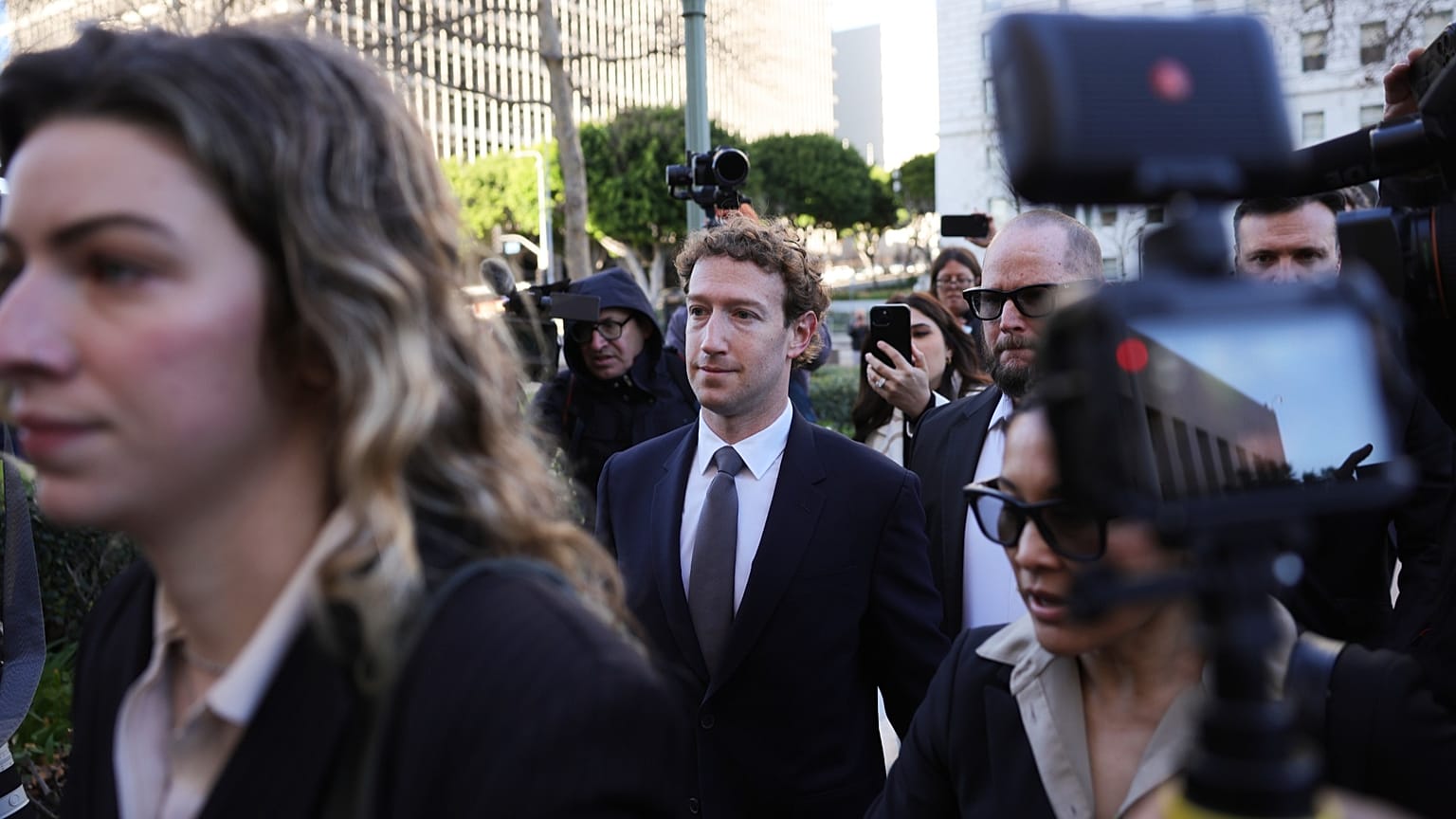
A landmark trial in California could force Meta to overhaul Facebook and Instagram after four states accused the company of designing its platforms to hook young users and hiding what it knew about the harm.
A landmark trial against Meta opened on Tuesday in federal court in Oakland, California, in what Kentucky's attorney general has called the largest consumer protection lawsuit in American history.
The case could reshape how Facebook and Instagram operate and how social media is experienced more broadly.
Who is suing Meta, and why
The trial is being litigated by four states — California, Colorado, Kentucky and New Jersey — representing a wider coalition of 29 states that first filed the lawsuit in 2023, following a multi-state investigation into Meta's safety practices. The four states were selected to argue the case at trial as a bellwether for the broader coalition.
The states accuse Meta of intentionally designing Facebook and Instagram to be addictive for young users and of concealing what it knew about the resulting harm to their mental health.
"Meta designed Facebook and Instagram to keep kids on the platforms longer and longer — to the point of physical and mental harm. Exploiting our most vulnerable residents to boost corporate profits is not only morally wrong, it's also illegal," said California Attorney General Rob Bonta.
Kentucky Attorney General Russell Coleman drew a comparison to previous industry-wide legal battles. "AGs are in the perfect position to get this done. We did it with the Tobacco Settlement in the 1990s. We did it with the companies behind the opioid crisis. We'll do it again with Meta," he said.
Meta has denied the allegations. A spokesperson said the states have offered no proof that anyone was misled or harmed and accused them of "chasing an outlandish payout" rather than sticking to the facts.
How much money is at stake
Meta says the states are seeking as much as $1.4 trillion (€1.21tn) in penalties, a figure that would rival the company's market value.
However, the states have told the court that a more realistic damages scenario, if Meta is found liable, would be closer to $200 billion (€173bn).
How the trial will work
The case is being heard by Judge Yvonne Gonzalez Rogers in the US District Court for the Northern District of California.
An eight-person advisory jury has been selected, but the final ruling rests with the judge rather than the jury alone.
The trial is expected to last four to six weeks.
Key witnesses expected to testify include Meta CEO Mark Zuckerberg, Instagram head Adam Mosseri, and Arturo Béjar, a former Meta engineering director turned whistleblower who has testified against the company in previous cases.
What changes are the states demanding
The states want sweeping changes to how Instagram and Facebook operate, including the removal of infinite scroll and public "like" counts.
Infinite scroll, along with other dopamine-driving features, has been linked to severe mental health issues among younger users, including increased anxiety, depression, suicidal thoughts and low self-worth.
Like counts and other engagement metrics have also been linked to young people creating multiple fake accounts to boost engagement with their own posts, which can in turn contribute to depression and a heightened need for social validation.
Other demanded changes include parental verification processes for teenage users, the removal of appearance-altering image filters, an end to video autoplay, and measures to prevent multiple account creation.
The states also want an end to disappearing content such as Instagram Stories, and changes to the recommendation algorithms they accuse of manipulating users' dopamine responses.
These features are core to how Meta keeps users, particularly children and teenagers, engaged for as long as possible.
Constant notifications can make it harder for users to set boundaries around their own usage, even when they want to, while peer pressure and fear of missing out can make it difficult for those who temporarily delete their accounts to stay away.
Meta's track record in court
This is not Meta's first courtroom loss over these claims.
In March, a Los Angeles jury found Meta and Google liable for $6 million (€5.2mn) in damages after a young woman said she became addicted to social media as a child.
Separately, in New Mexico, a jury found in March that Meta had committed 75,000 violations of the state's consumer protection law, resulting in a $375 million (€324mn) penalty.
In August, Judge Bryan Biedscheid ordered a further $567 million (€490mn) penalty in the same case, bringing Meta's total New Mexico exposure to $942 million (€814mn).
That ruling also ordered a series of product changes, including hiding "like" counts by default for under-18s, limiting push notifications to certain hours, imposing monthly usage caps, and barring adults from messaging or being recommended accounts belonging to minors.
Meta has said it will appeal.

No comments:
Post a Comment