Thursday, November 03, 2022

Ethiopia fractured and fragile after two years of war

Aymeric VINCENOT
Thu, November 3, 2022 
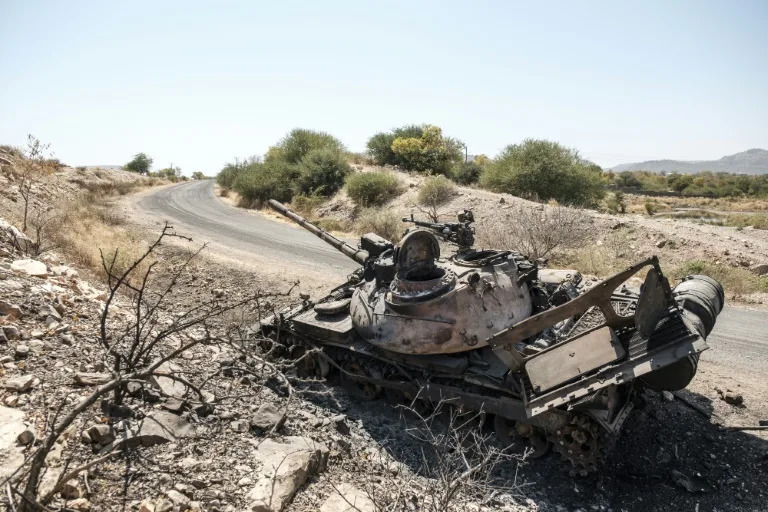

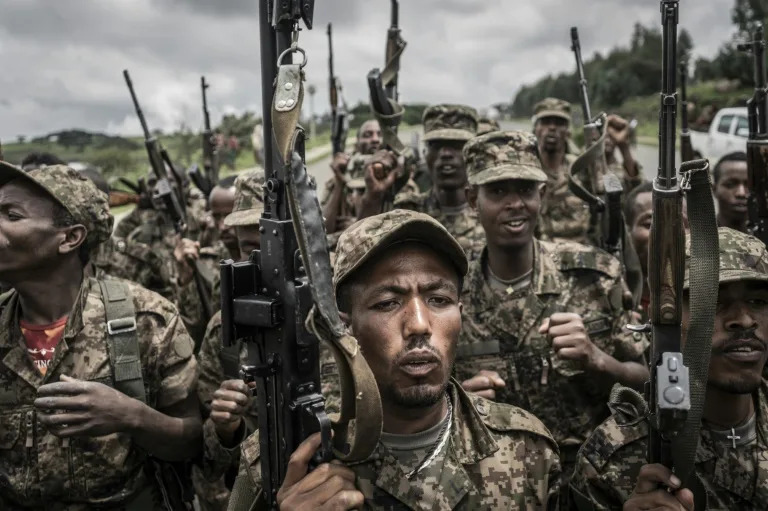
Two years after war broke out in northern Ethiopia between federal forces and Tigrayan rebels, the country remains in deep crisis, with its once-vibrant economy in ruins and a humanitarian disaster roiling Tigray.

A breakthrough agreement announced Wednesday between the federal government and Tigrayan regional authorities to cease hostilities has been hailed as "a welcome first step" by UN chief Antonio Guterres but crucial details remain unclear, with no mention of Eritrea, a key player in the conflict.

- 'Half a million dead' -


The war's toll is unknown, but the US envoy to the UN, Linda Thomas-Greenfield, recently said that the devastation and deaths "rival what we're seeing in Ukraine".

"Over two years of conflict, as many as half a million... people have died, and the United States is deeply concerned about the potential for further mass atrocities."

The war erupted on November 4, 2020, following tensions between the federal government and the Tigray People's Liberation Front (TPLF), which dominated Ethiopian politics for nearly three decades until the election of Prime Minister Abiy Ahmed in 2018.

The violence has drawn in regional militias from Amhara and Afar in northern Ethiopia as well as forces from Eritrea, whose leader Isaias Afwerki has a longstanding enmity with the TPLF.

Tigray has faced severe shortages of food and medicines and limited access to electricity, banking and communications, with UN warnings that hundreds of thousands of people were on the brink of famine.

UN investigators have accused Abiy's government of crimes against humanity in Tigray, including the use of starvation as a weapon -- claims rejected by the authorities.
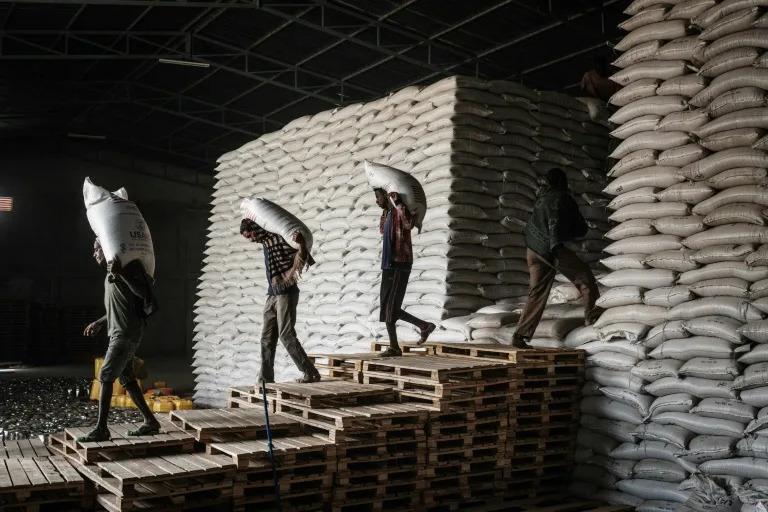

The region of six million people has been largely closed off to the outside world for well over a year, making it very difficult to assess conditions on the ground.

"We will never know the real toll," said Patrick Ferras, a geopolitical researcher and president of Strategies Africaines, who told AFP that at least 300,000 people had likely lost their lives in the conflict.

A military source who spoke to AFP on condition of anonymity said it was impossible to count the fighters involved but analysts believe the number extends into several hundred thousand.

- A fractured country -

The war has exposed underlying fissures within Africa's second most populous nation, with both sides accused of abuses against civilians based on their ethnicity.

A mosaic of more than 80 ethno-linguistic communities, Ethiopia has long struggled to manage the diversity within its borders, with its most populated region Oromia witnessing constant clashes even as the war in Tigray dominates headlines.

Abiy, who was awarded the Nobel Peace Prize for engineering a rapprochement with Eritrea, now presides over a country fractured along ethnic lines.

The non-profit ACLED, which focuses on conflict, has pointed to "rising levels of violence in many areas throughout Ethiopia", singling out the regions of Oromia, Gambella and Benishangul-Gumuz.

With federal forces focused on northern Ethiopia, the risk of violence elsewhere flaring into prolonged instability poses yet another threat to the country of 120 million people.
- An economy in ruins -

When Abiy took the reins in 2018, Ethiopia's economy was growing at breakneck speed, expanding annually by nearly 10 percent from 2010 onwards.

Since then, the economy has encountered several roadblocks, including the war and the Covid pandemic, to name two.

This year GDP is projected to grow less than four percent, according to the International Monetary Fund.

"The economic situation is disastrous," said Ferras.

Annual inflation, which already averaged 13.5 percent between 2010 and 2018, exploded to around 33 percent this year, driven by rising food prices.

"This is largely due to the setbacks of Ethiopian agriculture," a diplomat told AFP on condition of anonymity, referring to a locust invasion, flooding and drought.

The situation will likely worsen as the war in Ukraine drags on, with the Ethiopian currency's value plummeting against the US dollar and the import-dependent nation's foreign exchange reserves drying up.

The IMF estimates that Ethiopia only has enough reserves to pay for about three weeks of imports as it struggles with a shortfall in development aid given by foreign nations.

"Since the beginning of the conflict, Ethiopia has lost half of its official development assistance," the diplomat said

- Faint hopes for peace -

Even as peace talks opened in South Africa last week, observers were pessimistic, with fighting showing no signs of letting up after a resumption of combat in August shattered a five-month truce.

In recent weeks, federal forces -- backed by Eritrean soldiers -- captured a string of towns in Tigray, piling pressure on the TPLF.

Wednesday's surprise announcement of a deal to end hostilities was greeted with cautious hope, with the United States calling it an "important step towards peace".

But there are "too many unknowns" surrounding the agreement, said Benjamin Petrini, a research fellow at the International Institute for Strategic Studies in Washington.

It is unclear how the implementation of the deal will be monitored and crucially, no mention has been made of a withdrawal by Eritrean troops, who have been accused of gruesome abuses against Tigrayan civilians.

"If someone wants to be sceptical you would say that solving it all in eight days of negotiations is not a serious effort," Petrini told AFP.

"You may have only scratched the surface."

ayv/amu/txw
Zero-Covid China's iPhone factory lockdown shows risks of manufacturing dependence

wionnewsweb@gmail.com (Wion Web Team) - 

The lockdown of Foxconn's Zhengzhou facility, which makes the majority of the world's iPhones, has brought to light some of the dangers associated with relying solely on China's manufacturing industry, analysts told AFP.


The primary subcontractor for Apple, Foxconn, has experienced an increase in Covid-19 cases at its Zhengzhou location, prompting the company to lock down the enormous complex in an effort to contain the virus.

Following reports of bad working conditions at the factory, which employs hundreds of thousands of people, images of terrified employees running away from the scene on foot appeared.

Over a million people are employed by Foxconn, the largest private employer in China, at its thirty factories and research facilities spread out over the nation.

The Taiwanese giant's gem, though, is Zhengzhou, which produces iPhones in unprecedented amounts.

"In a normal situation, almost all the iPhone production is happening in Zhengzhou," said Ivan Lam, an analyst with specialist firm Counterpoint.

China, one of Apple's most significant markets, is where more than 90% of its goods are made.

According to Dezan Shira & Associates, a consultancy organisation, experts claim that the company's substantial reliance on China "brings potential risks, especially when the US-China trade war shows no signs of de-escalating."

Up to 300,000 people work at the Zhengzhou facility, which opened in 2010, and they all year round reside there, resulting in the enormous "iPhone city" tech hub.

Analyst Lam thinks that "10 to 30 per cent" of the site's output was lost as a result of the partial shutdown, but he also noted that some manufacturing had temporarily shifted to other Foxconn facilities in China.

As the final major economy to commit to a zero-Covid strategy, China continues to implement sudden lockdowns, extensive testing, and protracted quarantines in an effort to contain spreading epidemics.

(with inputs from agencies)
Paris to Dakar on a bike: One man's journey to highlight migrant dangers

Issued on: 03/11/2022 - 
 
01:55
Video by: Sam BRADPIECE

Bamba Ndiaye is riding all the way from Paris to Dakar, Senegal, by bicycle, a journey of nearly 7,000km, in an effort to raise awareness of the extreme dangers faced by young Senegalese migrants who make the perilous journey to Europe. France 24's Sam Bradpiece caught up with him as he neared his final destination.


'Our houses are crumbling': Closed uranium mine leaves Niger workers out in cold

Neglected and forgotten...In the town of Arlit, in northern Niger, former employees of Cominak – a uranium mining company - have been complaining about their living conditions. Since the Akouta uranium mine closed in March 2021, 600 workers have remained idle. They've now taken their plight to the mining company, a subsidiary of French multinational Orano.

ZIONIST ETHNIC CLEANSING
4 Palestinians killed in flare-up as Israel counts votes

By JALAL BWAITEL and TIA GOLDENBERG

1 of 7
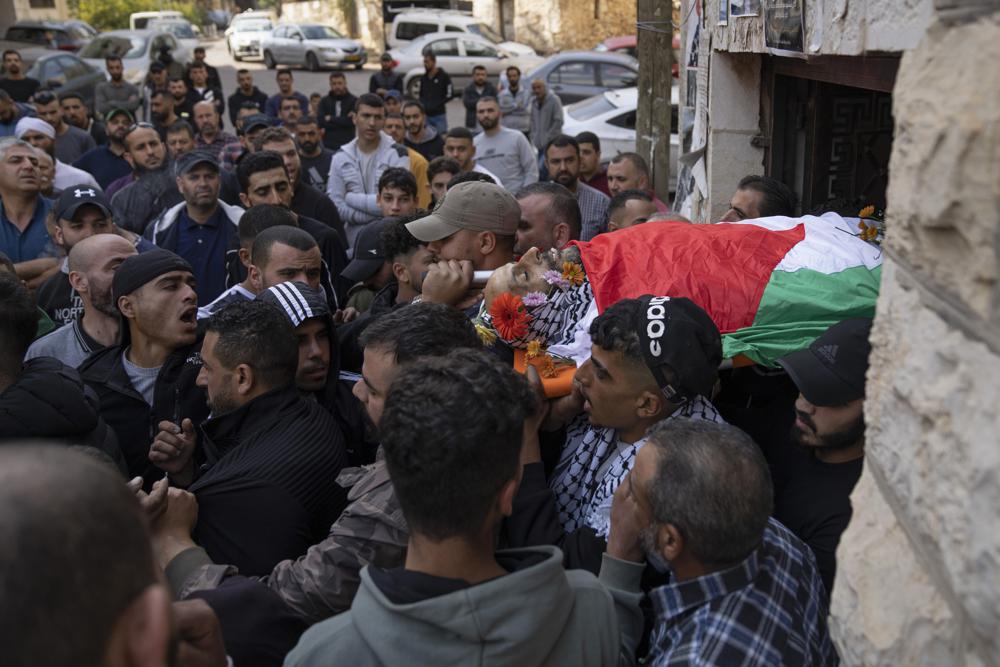
Palestinian mourners carry the body of Daoud Mahmoud Khalil Rayan, 42, during his funeral in the West Bank village of Beit Duqqu, southwest of Ramallah, Thursday, Nov. 3, 2022. The Palestinian Health Ministry said that Rayan was killed by Israeli fire in the occupied West Bank. Israeli police said it happened during a raid in the territory and alleged the man threw a firebomb at the forces. 
(AP Photo/Nasser Nasser)


RAMALLAH, West Bank (AP) — Israeli forces killed at least four Palestinians in separate incidents on Thursday, including one who had stabbed a police officer in east Jerusalem and three others in Israeli raids in the occupied West Bank.

The violence flared as Israel tallied the final votes in national elections held this week, with former Prime Minister Benjamin Netanyahu expected to lead a comfortable majority backed by far-right allies.

Israeli troops operating in the Jenin refugee camp in the West Bank, a militant stronghold, killed at least two Palestinians, according to the Palestinian Health Ministry.

The Palestinian militant group Islamic Jihad said one of those killed was a local commander. Residents said he was killed while at the butcher, where he was preparing meat ahead of his wedding this weekend.

The army said the militant, Farouk Salameh, was wanted in a number of shooting attacks on Israeli security forces, including the killing of a police officer last May. It said Salameh was killed after opening fire at soldiers, fleeing the scene and pulling out a gun.

Earlier Thursday, the Palestinian Health Ministry said a Palestinian man was killed by Israeli fire in the occupied West Bank. Israeli police said it happened during a raid in the territory and alleged the man threw a firebomb at the forces.

In a separate incident Thursday, a Palestinian stabbed a police officer in Jerusalem’s Old City, police said, and officers opened fire on the attacker, killing him. The officer was lightly wounded.

The violence came as a political shift is underway in Israel after national elections, with former Prime Minister Benjamin Netanyahu set to return to power in a coalition government made up of far-right allies, including the extremist lawmaker Itamar Ben-Gvir, who in response to the incidents said Israel would soon take a tougher approach to attackers.

“The time has come to restore security to the streets,” he tweeted. “The time has come for a terrorist who goes out to carry out an attack to be taken out!”

The violence was the latest in a wave of Israeli-Palestinian fighting in the West Bank and east Jerusalem that has killed more than 130 Palestinians this year, making 2022 the deadliest since the U.N. started tracking fatalities in 2005.

The violence intensified in the spring, after a wave of Palestinian attacks against Israelis killed 19 people, prompting Israel to launch a months-long operation in the West Bank it says is meant to dismantle militant networks. The raids have been met in recent weeks by a rise in attacks against Israelis, killing at least three.

Israel says most of those killed have been militants. But youths protesting the incursions and people uninvolved in the fighting have also been killed.

Also on Thursday, Israel said it was removing checkpoints in and out of the city of Nablus. Israel had imposed the restrictions weeks ago, clamping down on the city in response to a new militant group known as the Lions’ Den. The military has conducted repeated operations in the city in recent weeks, killing or arresting the group’s top commanders.

Israel captured the West Bank in the 1967 Mideast war, and has since maintained a military occupation over the territory and settled more than 500,000 people there. The Palestinians want the territory, along with the West Bank and east Jerusalem, for their hoped-for independent state.

___

Goldenberg reported from Tel Aviv, Israel.

UN calls on nations to 'urgently' boost climate funds


Kelly Macnamara and Amelie Bottollier-Depois in New York
Thu, 3 November 2022 


Climate change impacts battering vulnerable countries threaten to outstrip efforts to adapt to global warming, the UN warned Thursday, with a "significant" amount of international funding help recycled from other purposes.

Many emerging economies, which are least to blame for the fossil-fuel gases that stoke global warming, are among the most exposed to climate impacts, such as worsening drought, floods and cyclones.

Funding to help them adapt to accelerating impacts and curb emissions is one of the thorniest issues at UN climate negotiations, which begin their latest round in Egypt on Sunday.

Wealthy nations have failed to provide a pledged $100 billion a year to developing nations, reaching just $83 billion in 2020.

Only a part of that -- $29 billion -- was for adaptation.

That leaves a "yawning gap to be filled" said United Nations Environment Programme (UNEP) chief Inger Andersen, adding that the actual needs were around five to 10 times greater than finance provided in 2020.

While countries have committed to providing new funding for climate-vulnerable nations, richer nations have been accused of relabelling other types of funding, like humanitarian aid, as climate funding.

"Some of that money -- and we don't know how much, but certainly a significant proportion -- is not actually adaptation or mitigation, it's repurposed," Henry Neufeldt, author of the UNEP report, told a press conference on Thursday.

But as the world warms, climate change impacts increase and so too do the costs of preparing for them.

- 'Unacceptable' -

UNEP revised up its adaptation estimates from a year earlier, saying countries will now need $160 billion to $340 billion annually by 2030 to strengthen their resilience, rising to $315 billion and $565 billion by 2050.

Last week the UN warned the world was nowhere near the Paris Agreement target of capping warming at 1.5 degrees Celsius above pre-industrial levels.

"We must quickly reduce greenhouse gas emissions and strive for net-zero. But people, ecosystems and economies are already suffering," said Anderson, calling for the international community to "urgently increase efforts to adapt to climate change".

In February, in a report dubbed an "atlas of human suffering", the UN's climate experts warned that global warming is outpacing our preparations for a climate-addled world.

The poorest are often the hardest hit and the least able to protect themselves.

"This is unacceptable," said UN chief Antonio Guterres.

"We need a global surge in adaptation investment to save millions of lives from climate carnage," he added, announcing a new tool to try to help fill this gap.

At the last UN climate talks in Glasgow, countries agreed to double their adaptation finance from 2019 levels by 2025, reaching $40 billion.

But even that target is under question after the increase from 2019 to 2020 was just four percent, the UN said.

- 'Broken' -


"The current model for delivering adaptation support, quite frankly, is broken," a senior UN official told AFP.

While financing has always been a key sticking point in the UN climate negotiations, the issue is taking on greater urgency at this year's meeting.

A series of weather extremes across the planet have further intensified calls for funding to help with climate impacts already being felt, known as "loss and damage".

Pakistan, for example, is reeling from a crop-withering heatwave, followed within weeks by catastrophic inundations -- both intensified by climate change -- that killed over 1,700 people and swamped a third of its territory.

The floods caused over $30 billion in damages and economic losses, said Anderson.

But currently, the aftermath of this type of disaster is not covered by climate funds.

Harjeet Singh, head of global political strategy at the Climate Action Network, said that wealthy countries' willingness to put loss and damage funding on the agenda would be a "real test" of the UN climate meeting.

It will "either send a message of hope or despair to people already facing the climate crisis," he said, but added that as temperatures rise, finance for adaptation, loss and damage and curbing emissions are no longer in the billions:

 "We need trillions."

Third of glaciers to vanish by 2050

 One-third of glaciers at World Heritage Sites will disappear by 2050, including some of the most famous in places like the Dolomites in Italy, the Yosemite and Yellowstone parks in the United States and Mount Kilimanjaro in Tanzania, according to a new report by UNESCO, which said global warming will melt the giant ice sheets whatever the temperature rise scenario.

Lula's team travels to Brazil's capital to start transition

By Carla Bridi, The Associated Press

BRASILIA, Brazil (AP) — President-elect Luiz Inácio Lula da Silva’s team arrived in Brazil’s capital Thursday to begin the process of transfering power amid dwindling protests by supporters of incumbent Jair Bolsonaro.

Vice President-elect Geraldo Alckmin arrived at Congress accompanied by the coordinator of da Silva’s campaign and several lawmakers from the leftist Worker’s Party, including its leader. They began by meeting with the senator responsible for the government’s 2023 budget proposal.

In the afternoon, Alckmin was scheduled to meet with Bolsonaro’s chief of staff, Ciro Nogueira, and then visit the federal accounting watchdog.

The meetings kick off the process that will culminate with da Silva’s Jan. 1 inauguration. But they also aim to ensure governability with a potentially contentious Congress and provide reassurance that the administration of the far-right Bolsonaro will be cooperative.

There had been widespread concern Bolsonaro might present claims of fraud and challenge the results of Sunday’s election, following the roadmap of former U.S. President Donald Trump. While Bolsonaro declined to publicly concede defeat in his first public comments Tuesday, Nogueira then told reporters he had received authorization to begin the transition process.

There have been questions about the ease with which da Silva will be able to govern, partly because conservative lawmakers from Bolsonaro’s party and others did well in the first round of the election, on Oct. 2, and are expected to present fierce opposition. In addition, the “Big Center” bloc of politicians known for exchanging support for positions and pork has been supporting Bolsonaro to date.

An opening came Sunday when Chamber of Deputies Speaker Arthur Lira became the first prominent Bolsonaro ally to recognize the election results. Lira oversees what has become commonly referred to as the “secret budget,” which directs billions to lawmakers for pet projects.

The mechanism was adopted during Bolsonaro’s government, enabling Congress and the executive branch to bypass a budget ceiling. During the campaign, da Silva criticized the program, saying it depleted funds for key social needs and promised to put an end to it. Many lawmakers already expect to receive funds for spending in their states.

Congress has until Dec. 17 to approve a 2023 spending bill with input from the new administration.

Da Silva’s team met with Sen. Marcelo Castro, who is responsible for the budget bill.

“We have a tight schedule, and it’s complicated,” Castro told reporters before the meeting with Alckmin. “It is easier if the new government proposes something.”

In a video posted to social media Wednesday, Bolsonaro addressed his supporters, calling for them to end their nationwide protests. They had blocked hundreds of roads, with some people calling for military intervention to overturn the election results.

In the narrowest presidential election since Brazil’s return to democracy in 1985, da Silva beat Bolsonaro by about 2 million votes.

“I know you’re upset. I’m just as sad and upset as you are. But we have to keep our heads straight,” Bolsonaro said. “Closing roads in Brazil jeopardizes people’s right to come and go.”

By Thursday morning, more than 850 protests had broken up, leaving 73 partial or full blockages of roads, the federal highway police said. Of the 13 full blockages, most were in the southern state of Santa Catarina.

Carla Bridi, The Associated Press

Thousands rally in Spanish capital for pay hikes as costs soar


By AFP
Published November 3, 2022

Thousands of people packed Madrid's landmark Plaza Mayor to demand higher pay - 
Copyright AFP PHILL MAGAKOE

Thousands of people took to the streets of Spain’s capital on Thursday to demand higher pay to cope with soaring inflation and energy costs.

Protestors waved red union flags and banged drums as they made their way to the Spanish capital’s landmark Plaza Mayor square behind a large banner that read: “Salary or Conflict”.

Police estimate some 25,000 people took part in the demonstration, which was called by Spain’s two main unions, the CCOO and UGT.

“Either there is a rise in salaries or work conflicts will increase exponentially in our country over the next year,” CCOO secretary general Unai Sordo told reporters at the protest.

Like other countries, Spain has been struggling with soaring inflation as a result of the fallout from the war in Ukraine and the reopening of the economy after pandemic-related lockdowns.

Inflation in Spain peaked this summer at 10.8 percent in July, its highest level in 38 years, before moderately slowing to 7.3 percent in October — still well above normal levels.

“Salaries are still super low” while the cost of “essentials” has soared, Maria Luisa Ortega, a 57-year-old service sector worker, told AFP at the protest.

She said salary raises must match the rise in inflation.

The protest comes as Spain’s leftist government is negotiating with unions and business groups a new increase in the minimum wage, which is currently set at 1,000 euros ($987) a month.

Far-left party Podemos, the junior partner in Socialist Prime Minister Pedro Sanchez’s coalition government, is calling for a 10 percent increase in the minimum wage.

But Spain’s main business association CEOE has ruled out pay hikes in line with inflation, arguing they will hurt firms, especially smaller ones, although it is open to discuss more modest increases.

The government has vowed to lift the minimum wage to 60 percent of Spain’s average salary by the end of its term in office in December 2023, bringing it in line with the level of its European neighbours.

Read more: https://www.digitaljournal.com/world/thousands-rally-in-spanish-capital-for-pay-hikes-as-costs-soar/article#ixzz7jb83YuwC
Clashes with police erupt near Iran's capital as protests continue

NEWS WIRES
Thu, 3 November 2022 

© AFP

Iranian protesters clashed with police in a town near the capital on Thursday, reportedly killing or wounding a number of members of the security forces, who at one point dropped stun grenades on the demonstrators from helicopters.

It was the latest in a wave of demonstrations that have convulsed Iran for more than six weeks and mark one of the biggest challenges to the country's clerical rulers since they seized power in the 1979 Islamic Revolution.

The protesters had gathered in Karaj, just outside Tehran, to mark the 40th day since the shooting death of Hadis Najafi, 22, one of several young women to have been killed during the protests. The demonstrations were ignited by the death of another woman held by the country's morality police.

The 40th day after someone's death has great symbolism in Shiite Islam and is marked by public mourning. Commemorating protester deaths has given momentum to the ongoing demonstrations, just as it did during the 1979 revolution that overthrew a Western-backed monarchy.

Videos circulated online showed thousands of protesters in Karaj and clashes with police. In one of them, a helicopter flies over the protesters and drops flash grenades in an attempt to disperse them before landing in the middle of a highway. Government supporters on social media said the helicopter was sent to aid wounded policemen.

The state-run IRNA news agency tweeted that police were attacked in the area and posted a video showing a police pickup truck that had crashed into a concrete barrier on a highway.

(AP)


Iran: Clashes near Tehran amid outrage over killed protester

Several police officers were reportedly injured or killed amid clashes with demonstrators near the capital. The protesters are mourning the death of Hadis Najafi, another young woman who died earlier in the unrest.


Iranians took to the streets in a town near the capital, Tehran, on Thursday amid anger over the death of Hadis Najafi, a young woman who was killed earlier in the demonstrations.
What do we know so far?

The demonstrators convened in Karaj, 40 days after 22-year-old Najafi was reportedly killed by security forces on September 21. The 40-day mourning period has strong significance in Shiite Islam, the majority religion of the Iranian population.

Crowds of people gathered at Najafi's burial site and chanted anti-government slogans.

The demonstrators clashed with security forces, as authorities attempted to crack down on the unrest. At one point, security forces reportedly began dropping stun grenades on the protesters from helicopters.

Several members of the police were injured or killed as a result of clashes with demonstrators in Karaj, according to state media.

The semi-official Tasmim News Agency reported that three officers were seriously injured in the clashes. Another semi-official news outlet, Fars, reported that a member of the security forces was stabbed to death in Karaj.

A similar mourning event occurred near the city of Isfahan, in central Iran, according to Norway-based organization Iran Human Rights. The 40-day mourning ritual, known as "chehelom," could spark a chain reaction of civil unrest if more protesters are killed by the government.

Iran protests: Revolutionary Guard deployed

Protesters pose significant threat to clerical regime

The ongoing demonstrations may pose the most formidable threat to the country's conservative regime since its ascension to power in 1979.

A group of Iranian human rights lawyers both inside the country and abroad condemned Iran's religious rulers in a statement sent to Reuters news agency, saying the crackdown by the regime ultimately lead to its downfall.

"The government is still drowning in illusions and believes it can repress, arrest and kill to silence," the statement said. "But the flood of people will ultimately remove a government because the divine will side with the people. The voice of the people is the voice of God."

The unrest was originally sparked by the death of Jina Mahsa Amini, a 22-year-old Iranian Kurdish woman who died in police custody on September 16 for allegedly violating the country's mandatory headscarf policy.

Iran has claimed the demonstrations are being orchestrated by outside forces, such as the US, with the West imposing new sanctions on Tehran amid the crackdown.

wd/sms (AP, AFP, Reuters)
Shirin Alizadeh: Iranian woman killed filming crackdown


Driving back home from a holiday, Shirin Alizadeh found herself in the middle of a violent crackdown on a protest in northeastern Iran.


Shirin Alizadeh was in the car with her husband driving when she was shot dead© Handout

"I hope that they don't shoot towards the car," she says as shots resound around the vehicle in the town of Salmanshahr in Mazandaran province on the Caspian Sea, while she films the events on her mobile phone.

Alizadeh, her husband who was driving the car, and two other travel companions saw people being shot dead in the street as they sought to drive back to their home city of Isfahan through the throng of protesters on September 21.

"Film it!" she urges one of the travel companions on the rear seat as a woman appears to lie killed on the roadside.

A ripping sound is then heard, the frame spins around and the footage abruptly stops.

According to Amnesty International, one of the bullets entered the rear window of the car and hit 36-year-old Shirin in the neck and in the head. She died in hospital.

Amnesty has posted the video on its Twitter feed for Iran, while it has already been verified by AFP.

The traditional mourning ceremony that takes place 40-days after the death of a person in Iran should take place on Friday in Isfahan.

But Amnesty says the authorities are now subjecting her family to "harassment and intimidation" in a bid to stop the ceremony from taking place.

The authorities fear it could become a rallying point for the protests that have shaken Iran for the past six weeks since the death of Mahsa Amini who was arrested by the Tehran morality police.

- 'Documenting the violence' -

"The last words you hear her saying are 'film it!'. She (Shirin Alizadeh) cared about documenting the violence," Amnesty's Iran researcher Raha Bahreini told AFP.

"The burial certificate confirmed that she was shot by a bullet," she added.

Bahreini said that night in the city, forces of the Basij paramilitary force were shooting "randomly" from a building at the side of the road on what was the deadliest day so far in the six-week protest wave, except for the bloodletting on September 30 in the southeastern city of Zahedan.

Her husband, who was driving the car, was overcome by trauma that night and has been suffering seizure since. Their seven-year-old son, who was not with them, is traumatised and showing signs of "severe depression", said Bahreini.

She said pressure on the family had begun even in the immediate aftermath of the killing.

"To return the body, the authorities asked the family to sign an undertaking not to speak to the media," said Bahreini.

In the run-up to the 40-day ceremony, the husband and the father have been targeted by threatening telephone calls from the authorities demanding the event be cancelled.

Such events have over the last days become flashpoints of new protests, including the 40-day ceremony for Amini herself.

"The family are very concerned that as they are not cooperating they could fire on the mourners," Bahreini said.

sjw/dv