Tuesday, November 22, 2022

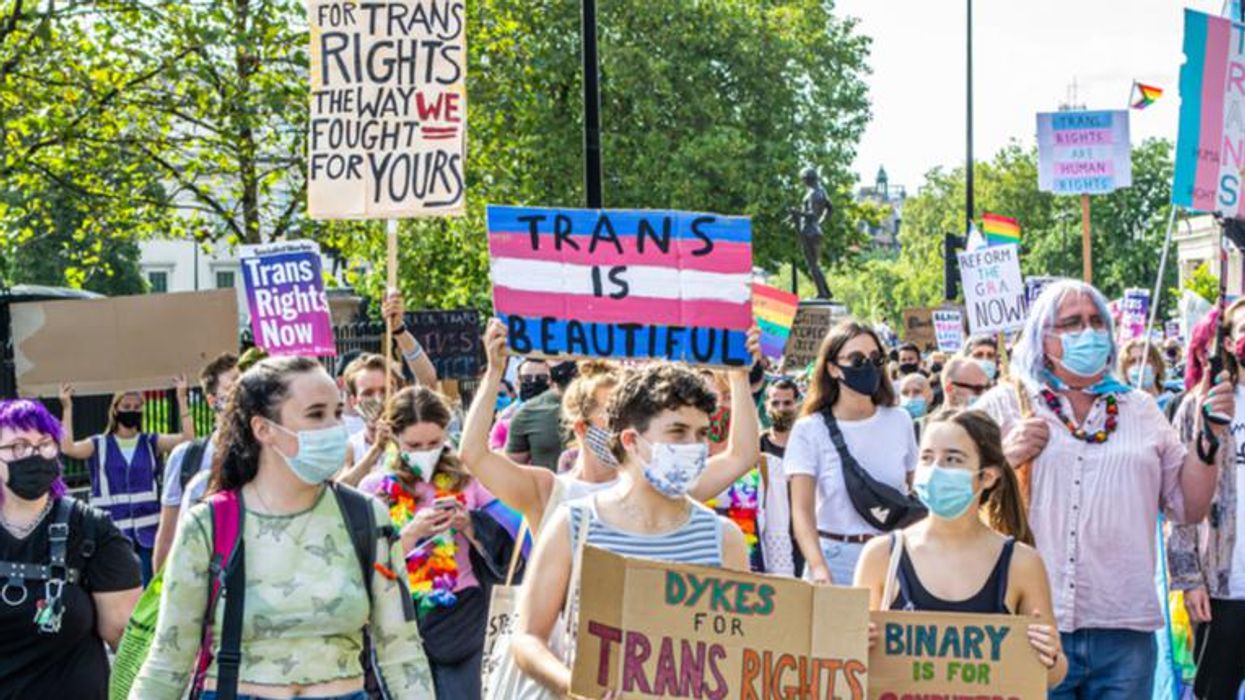
Saying 'trans people deserve to be alive' is political

Image via Shutterstock.
John Stoehr November 22, 2022

Ben Collins is a reporter for NBC News. He’s known for covering the “dystopian beat.” On MSNBC this morning, Collins talked about the Colorado mass shooting over the weekend. A 22-year-old white man had entered an LGBT-plus bar, killed five and wounded 25. Anderson Aldrich was indicted Monday on charges of murder and hate crimes.

Collins was clearly moved by the incident. After reading a long series of headlines, about the threats to America’s LGBT-plus community by the Republicans, rightwing demagogues and redhat propagandists (those are my words), he asked:

What could I have done different?

Seriously. As reporters, what can we do different? Because there are five dead people in a strip mall. That’s the only place they felt safe as gay or trans people in Colorado Springs. …

I think we have to have a come to Jesus moment as reporters. Are we more afraid of being on Breitbart for saying trans people deserve to be alive? Or are we more afraid of the dead people?

Collins’ point is well taken. Journalists must have the courage to say what needs saying – that trans people have a right to life, liberty and happiness like everyone else. Journalists also need the backing of their employers. Sadly, because employers often share the opinions of Republicans, reporters often get thrown under the bus.

READ MORE: NBC reporter urges 'come to Jesus moment' for media in wake of Colorado Springs anti-LGBTQ mass shooting

So far, Collins is lucky.

And I disagree.

Courage is good, politics is better

The problem isn’t about courage or lack of it. It’s more fundamental. If we don’t understand the fundamental – especially if journalists don’t understand it – we can hardly come up with a good solution.

READ MORE: 'Very dark': Reporter nails Fox News for going right back to hate speech that sparked Colorado massacre

What’s the problem? An underlying assumption.

What assumption?

That journalists’ choices are made in a vacuum.

They are not. They are choices made among other choices made that altogether constitute what our society considers to be “normal.” These choices are political on account of having been made by and among other human beings who are themselves making choices according to their values, prejudices, preferences and interests.

Journalists who are employed by right-leaning employers are deathly afraid of accusations of bias. But accusations of bias assume that the status quo (“the way things are”) is politically neutral. The status quo is never politically neutral. This claim is evidenced by those who accuse reporters of bias. Their accusations protect the status quo.

Journalists’ choices are made among other choices made. The question isn’t about bias, because the entire concept of bias is made meaningless when seen in an always already political context.

The question isn’t about the choices reporters make and whether they are “politically neutral.” (That’s make-believe.) The question is about the nature, character and purpose of the politics in question.

“Trans people deserve to be alive,” Collins said.

His point about courage is good.

But his politics is better.

“Fleeing a displeasing truth”

Reporters shouldn’t fear being on Breitbart or other rightwing media, Collins said, “for saying that trans people deserve to be alive.” They shouldn’t fear, because there’s nothing political about saying it.

Seems like commonsense, doesn’t it?

It isn’t.

It’s denial.

Saying “trans people deserve to be alive” is totally political on account of rightwing politics believing it to be. Neither Collins nor anyone is going to stop rightwing politics from being what it is. Separating “good people” who deserve reward from “bad people” who deserve punishment, well, that’s the point of rightwing politics.

Collins means well, I have no doubt.

But saying “trans people deserve to be alive” is a choice. Choices are the product of politics. This choice refuses to see “a displeasing truth,” philosopher Lewis Gordon once said. It hopes to avoid confrontation by make-believing that it’s not confrontational.

Without meaning to, Collin contributes to the “bad faith” that’s central to the rightwing project and that ultimately constitutes the “edifice of how oppression is constructed,” Professor Gordon said.

“Bad faith is a flight into a pleasing falsehood in order to avoid a displeasing truth,” he said. “That avoidance – that evasion – actually plays a role in maintaining those systems of oppression.”

Insisting that politics isn’t political affirms the claim that the status quo is politically neutral. That, in turn, empowers the accusers of bias. That protects a status quo that produced five dead people.

Collins is right in that journalists must have courage.

But it’s courage to face “a displeasing truth.”

'Crystallizing into a kind of quasi-fascist politics': How postliberalism made inroads with disenchanted leftists

Victor Orbán in 2012, Wikimedia Commons
Kathryn Joyce and
Salon November 22, 2022

LONG READ

On a Friday night in early October, in a downtrodden city in eastern Ohio, a speaker laid out a grim vision. At the height of 2020's first, most terrifying wave of COVID-19, an employee at a Chinese slaughterhouse led his coworkers on a walkout. For years, the state-owned company had abused its staff with continual video surveillance, punishing production quotas and demerits for bathroom breaks. Now it was casually disregarding their safety during a once-in-a-century pandemic. Following the walkout, the employee was fired, and then vilified through a PR campaign that denounced his protest as immoral and possibly illegal.

After a pause came the reveal: That hadn't happened in China, but in New York City's Staten Island; the hero wasn't a Chinese meatpacker, but a young warehouse worker named Chris Smalls; the villain wasn't the Chinese government but Amazon.com. The speaker went on, quoting from Karl Marx about "masters and workmen" and the "spirit of revolutionary change" before clearing his throat to deliver another correction: Apologies, that was actually Pope Leo XIII.

Both jokes were preface to a larger punchline, one that's particularly relevant after the 2022 midterm elections: This wasn't happening at a Bernie Sanders rally or a Democratic Socialists of America meetup, but a decidedly conservative conference at Ohio's Franciscan University of Steubenville, a center of U.S. right-wing Catholic thought. The speaker (and conference organizer) was Sohrab Ahmari, a Catholic writer best known for his 2019 polemic against conservatives insufficiently committed to the culture wars. The conference, "Restoring a Nation: The Common Good in the American Tradition," was a showcase for the modestly-sized but well-connected Catholic integralist movement, part of the broader current of conservative thought known as postliberalism.

Over the two-day conference, 20 speakers, including then-Ohio Senate candidate J.D. Vance, hammered home the argument that the same faith used to justify abortion bans and curtail LGBTQ rights also demanded a different approach to the economy, one that might plausibly be called socialist. Laissez-faire capitalism, speakers said, wasn't the organic force conservatives have long claimed but the product of state intervention; ever-expanding markets hadn't brought universal freedom but wage-slavery and despair; Franklin D. Roosevelt's New Deal — demonized on the right for generations — was in fact a "triumph for Catholic social thought"; social welfare programs were good.

All that might be striking enough. But the conference also served as something of a rebuttal to another gathering of right-wing intellectuals that had taken place a few weeks before: the third major National Conservatism conference, held this September in Miami. The two conferences — one in a hollowed-out former steel town, the other in a $400-per-night golf resort — represented two sides of what some partisans recently called a "fraught postliberal crack-up." Broadly speaking, these are ideological kin: members of the Trump-era intellectual "new right" who see themselves as rebels fighting an elite "Conservative, Inc." But it's a family in the midst of a feud, and the public split signified by the two meetings comes after months of less visible infighting over questions only hinted at in headline Republican politics.

Earlier this month, after the midterms failed to deliver a promised "red wave," those fights spilled into the headlines, as Republicans' disappointed hopes led to some of the first open shots in what's been a cold civil war over the party's future. Partly that fight revolves around whether Donald Trump or Florida Gov. Ron DeSantis will lead the GOP into the 2024 presidential election. But it goes much deeper than that, and the fight also has implications that go well beyond the right.

The midterms gave conservatives of all stripes something to claim, or to denounce. Activists who spent the last two years sniffing for "critical race theory" and "gender ideology" in public schools cheered DeSantis' re-election as proof that maximalist culture war is the key to Republican success. Anti-Trump conservatives pointed to culture warriors' widespread losses elsewhere as proof the GOP needs to come "home to liberal democracy." In a New York Times op-ed, Ahmari chastised conservatives who'd spent the run-up to the election mocking an overworked Starbucks barista as one likely reason that "the red wave didn't materialize." Vance's victory in Ohio was simultaneously touted as proof that right-wing populism remains viable and that "the culture war still wins."

Others called on Republicans to actualize their claim to be the new party of the "multiracial working class." The ecumenical religious right journal First Things exhorted conservatives to join picket lines. The conservative policy think tank American Compass unveiled a comprehensive "New Direction" economic agenda, repurposing lyrics from the Clash to propose things like realigning financial markets with the common good. In schmaltzier fashion, Trump strode into a Mar-a-Lago ballroom to announce his 2024 presidential candidacy to the "Les Misérables" anthem "Do You Hear the People Sing?"

And after days of lambasting "Washington Republicanism" for offering little of substance for the working class, Sen. Josh Hawley, R-Mo., issued a proclamation: "The old party is dead. Time to bury it. Build something new."

* * *


The right-wing populist wave that elected Donald Trump in 2016, like the U.K.'s Brexit vote a few months earlier, is typically described as a watershed moment for conservatism. But the fact of the Trump revolution arrived before the theory. Something had clearly changed in the political order, but Trump's impulsiveness and lack of coherent ideology or policy agenda created a vacuum that needed to be filled, retroactively, by intellectuals on the right.

A variety of themes emerged from those efforts. One was an "America First"-inspired rehabilitation of nationalism, long tarnished by its association with authoritarian movements in pre-World War II Europe. Another was heard in Steve Bannon's call to dismantle the "administrative state" of unelected bureaucrats who might stand in Trump's way. A third was the conviction that classical liberalism — in the historical Adam Smith sense of that word, which prioritizes individual rights, pluralism and free trade and which guided both parties for generations — had been a catastrophe, replacing traditional norms with a destructive free-for-all.

As postliberals like Notre Dame political theorist Patrick Deneen, author of the influential 2018 book, "Why Liberalism Failed," argue, classical liberalism promised peace and prosperity but instead delivered an era of haves and have-nots, swapping good jobs for dehumanizing gig work, empowering corporations to enforce a homogeneous global monoculture and promoting social policies that led people — particularly working-class people — away from traditionalist values like church, marriage and parenthood. In that light, conservative regions' higher rates of divorce, teen pregnancy and opioid deaths weren't evidence of red-state hypocrisy but rather an unrecognized form of class warfare.

The right's retconned Trumpist ideology also made a meta-argument: that the conservative "fusion" that had defined the Republican Party since the 1960s — uniting religious traditionalists, Cold Warriors and free marketeers in opposition to communism — had ultimately failed.

In 2019, Ahmari and a cadre of mostly conservative Catholic intellectuals gave voice to that argument through a group manifesto, "Against the Dead Consensus," which declared (several years before Josh Hawley) that the old conservative coalition was over and something new must take its place. Two months later, Ahmari wrote a follow-up, declaring never-Trump National Review writer David French the poster boy of that dead consensus, for being the sort of conservative who would defend Drag Queen Story Hours on the grounds of free expression. There was no polite, pluralist way to fight such an abomination, Ahmari argued, only a zero-sum approach to fighting the culture war "with the aim of defeating the enemy and enjoying the spoils in the form of a public square re-ordered to the common good and ultimately the Highest Good."

Language like "the Highest Good" was a hat-tip to integralism, a right-wing faction of Catholicism that aspires to effectively re-found America as a Catholic "confessional state," where state power is subordinate to the church and government is devoted to fostering public virtue and the "common good." Part of that project aims to replace the longstanding conservative legal ideology of constitutional originalism (as championed by the late Supreme Court Justice Antonin Scalia and his followers on the current court) with "common good constitutionalism" (primarily theorized by Harvard Law professor and former Scalia clerk Adrian Vermeule), wherein the law works as "a teacher" to instruct, and enforce, public morality. In other words, if the actual public doesn't want to live by conservative Christian ideology, a new governing class should impose it.

That premise has led other Catholics (conservative and liberal alike) to condemn integralism as reactionary and authoritarian. When integralists weren't being intentionally vague about their plans, critics charged — in a widely-discussed 2020 Atlantic essay, Vermeule declined to specify what common good constitutionalism would mean in practical terms — those plans are frightening, as in one integralist text that suggests limiting citizenship and the vote to members of the faith.

James Patterson, a political science professor at Ave Maria University, has written about integralism's troubled lineage going back to pre-World War II European fascist or authoritarian movements, including the Spanish Falangists that supported dictator Francisco Franco or the antisemitic Action Française that grew out of France's Dreyfus Affair. On Twitter recently, a Catholic parody account posted a satirical book jacket for an "updated and honest" edition of Vermeule's latest book with images of combat boots and a tank and an invented blurb from Ahmari: "Finally we can stop pretending what we're really talking about."

But the postliberal critique resonated beyond the cloistered world of right-wing Catholic discourse, intersecting with another post-Trump project: the rapidly-growing national conservatism movement. Led by Israeli philosopher Yoram Hazony, author of the 2018 book "The Virtue of Nationalism," the NatCons also see classical liberalism as fatally flawed — its central premise of a neutral public square, where no religion or culture reigns over any other, is nonsense, because liberalism is both a competing worldview and a slippery slope, inevitably leading to cultural revolution. As Hazony often argues, within two generations of the Supreme Court's ban on religious instruction in public schools, marriage rates and religious observance had plummeted and "woke neo-Marxism" took their place.

Since its first conference in 2019, NatCon has come to represent a series of positions: hostility to transnational bodies like the EU and UN; a quasi-isolationist skepticism of foreign entanglements; sharp reductions or a complete moratorium on immigration; realigning the free market with national interests (variously described); and, most importantly, replacing the illusion of a neutral public square with the conviction that, "Where a Christian majority exists, public life should be rooted in Christianity and its moral vision," as a recent NatCon statement of principles holds.

From the get-go, there were important differences between the integralists and NatCons. Catholicism makes a fundamental claim to universality (and some integralists speak wistfully of empire), which fits uneasily with NatCons' nation-centric vision. Integralists have far more ambitious economic plans than most NatCons would support.

But there were important commonalities too: a mutual opposition toward mainstream conservatism, a largely shared rejection of liberalism, a common desire to return Christianity to the center of American public life. Both camps swooned for Hungarian Prime Minister Viktor Orbán and saw his avowedly "illiberal" "Christian democracy" — with its expanded government power, sharp restrictions on immigration, repression of LGBTQ rights and pronatalist family subsidies — as the primary model to emulate. Both sides also benefited, to one degree or another, from the largesse of right-wing donors who are funding numerous projects (and candidates) on the "new right."

"If anti-communism bound together the old conservative consensus," said Jerome Copulsky, a research fellow at the Berkley Center for Religion, Peace and World Affairs, the new right's coalition "is animated by antiliberalism and a belief that a high degree of religious and cultural uniformity is necessary for social cohesion and political legitimacy."

But there are problems with building alliances on the basis of shared enemies, Copulsky warned. "The coalition-building is about the Venn diagram of who they don't like: liberals, 'woke' multiculturalists, non-traditional sexuality and gender roles. But as they move forward, their different understandings of what they want to put into place will bring out the tensions and contradictions of their alliance. The 'enemy of my enemy is my friend' attitude only goes so far."

* * *

Over the last year, that exact problem has played out through quarrels fought on social media, in new right publications and on conference stages. It was even visible in the difference between this year's NatCon conference in Miami and the one held a year before.

In November 2021, multiple new right camps converged in Orlando for NatCon 2. The heart of the conference was an evening panel featuring the nationalist Hazony and integralist Ahmari, as well as "anti-Marxist classical liberal" Dave Rubin and British neocon Douglas Murray, all discussing whether a new alliance could be forged. Hazony, an Orthodox Jew, had a surprising suggestion: Bible instruction must be restored in public school, as a crucial first step toward reasserting America's identity as a Christian nation and a "conservative democracy."

There were tensions, most notably around the fact that Rubin and Murray are both gay: would there be room, Rubin asked, for him and his family in this new right? But after reaching apparent agreement that the problem wasn't gay people per se but rather expanded trans rights or LGBTQ representation in schools, the session closed as it had begun, with the PA system playing "We Are Family."

That unity was short-lived. This September, when NatCon reconvened in Miami, the only panelist who returned was Hazony himself, reflecting a number of upheavals in the preceding months.

One seeming result was that this year's NatCon — the movement's largest to date — reflected a marked increase in hostility toward not just "gender ideology" but LGBTQ rights in general. In one plenary address, a seminary president declared that in order for conservatives to resist "the fantasy and folly" of transgenderism, they must also reject same-sex marriage: "He who says 'LGB' must say 'TQ+.'" Another speaker argued that the failure of any major U.S. institutions to denounce "the LGBT agenda" proved that America has become "basically anti-American." NatCon's own statement of principles, released just months after asking two gay men to help build the new right, defines marriage as only between a man and a woman.

In part, this shift reflected some conservatives' belief that NatCons' tent had gotten "a little too big." One right-wing website used a photo of the 2021 panel to warn about "the quiet rise of LGBTQ influence in Christian and conservative circles." Rubin had also become the center of a conservative firestorm, after he announced that he and his husband were expecting the birth of two babies being carried by surrogate mothers — news that sparked not congratulations but widespread denunciations of both Rubin and any conservative who stood by him.

But the altered mood also reflected something else, Hazony told Salon: The Supreme Court's June decision overturning Roe v. Wade had opened a new world of conservative possibilities, and the sense that it might be "possible to restore an earlier constitutional order." Post-Dobbs, conservatives giddily discussed which Supreme Court precedents they might topple next, and the 2015 Obergefell decision that had legalized same-sex marriage nationwide was high on the list. To Hazony, it suggested a rapid revival of the desire to reassert biblical values in the political sphere. Conservatives wanted to go for it all.

In his own conference address, Hazony called on conservatives to commit to being "fully Christian in public," arguing, "The only thing that is strong enough to stop the religion of woke neo-Marxism is the religion of biblical Christianity." For the politicians in attendance — including DeSantis, Hawley and Florida's two Republican senators, Marco Rubio and Rick Scott — that meant not just mouthing platitudes about God-given rights, but insisting that American freedom comes from the Bible. Less than an hour later, Hawley happily obliged, declaring, "Without the Bible, there is no America," with a fervor matched by other speakers eagerly reclaiming the label "Christian nationalist" as a battle cry.

Perhaps even more conspicuous were the missing Catholic integralists, who in 2021 had provided much of NatCon's intellectual framework. This year, their absence prompted so many subtle, and less subtle, asides throughout the conference that one confused audience member raised his hand to request an explanation.

A British priest who said he'd been invited to affirm that, contra some people, Catholicism and national conservatism go together just fine, suggested that the integralists' seeming boycott amounted to useless theological squabbling: Who cared "how many integralists can dance on the head of a pin"? In a breakout session, another Catholic panelist suggested it was "cringe" for integralists to believe they'd ever set the moral framework for a "basically Protestant nation."

The biggest rebuke came from Kevin Roberts, the recently-appointed president of the Heritage Foundation, the great white whale of institutional conservatism, which has been shaping Republican priorities since the first years of Ronald Reagan's presidency. Roberts' presence at the conference was itself a coup. Two years earlier, Hazony said, Heritage had attacked him for "importing nationalism" into the U.S. Now the foundation had underwritten much of this year's conference, had met with NatCon leaders to discuss their statement of principles and had published a 20-page booklet recounting a conversation between Roberts and Hazony on "Nationalism and Religious Revival." In a line widely quoted after the conference, Roberts declared, "I come not to invite national conservatives to join our conservative movement, but to acknowledge the plain truth that Heritage is already part of yours."

Roberts, who describes himself as a Catholic populist, also admonished his missing coreligionists ("Integralists, heal thyselves!"), accusing them of rejecting "conventional constitutional" politics and seeking to "subordinate the state to an institutional church" in ways that would discredit both. Alluding to the fact that many prominent integralists are recent Catholic converts, Roberts continued that, while he shared many of their frustrations, "and I certainly rejoice in their religious conversion," their zeal had "led them into error."

The integralists fired back. At the start of the Miami conference, Ahmari tweeted that he was "emphatically not a 'NatCon.'" The movement's academic Substack published a long theological rebuttal to Roberts' claim that integralists wanted to establish a theocracy. Another writer asked whether NatCon's big tent still had room for integralists. When Gladden Pappin, cofounder of the conservative journal American Affairs and a professor at the University of Dallas, repeated the question on Twitter, Hazony responded with exasperation: Pappin could answer that question himself, since he'd spoken at a NatCon event several months earlier.

"In my view, conditions of ongoing animosity and hostility between NatCon and the five or six of you would be a colossal waste of time," Hazony wrote. "However, if you decide that a strategy of hostility, boycott or insults is the way to go — I can assure you that a wiser Catholic intellectual leadership will arise to take your place."

* * *

"There is clearly some kind of break," Hazony told Salon, but he saw it arising primarily from the integralists' side. Several had been invited to sign NatCon's statement of principles in June, but all had refused. Ideological differences that were "soft-pedaled a year or two ago" were suddenly getting "a high-octane emphasis."

For Hazony, the primary issue was about how conservatives understand China, the rising superpower that NatCons see as America's No. 1 rival. Their conference had banned all speakers who are "pro-Xi, pro-Putin, racists or antisemites," although that standard seems malleable at times. (As Political Research Associates' Ben Lorber reported, this year's NatCon included a meditation on the viciously xenophobic French novel "Camp of the Saints," approving mention of antisemitic Action Française leader Charles Maurras and an address by a former Trump speechwriter fired for alleged ties to white nationalists.) But some integralists, Hazony charged, had "always had a soft spot for dictatorship, for imperialism and for China," and in recent months that had become impossible to ignore, as members of the movement wrote articles praising China's government or culture.

Then there was Compact Magazine, the hybrid "radical American journal" Ahmari co-founded last March with fellow Catholic Matthew Schmitz and Marxist populist Edwin Aponte. Its professed agenda was to wage "a two-front war on the left and the right" and promote "a strong social-democratic state that defends community — local and national, familial and religious — against a libertine left and a libertarian right."

Although Compact has declined to specify who funds the magazine, a source familiar with its operations told Salon that it was launched with significant support from right-wing tech billionaire Peter Thiel — who has funded numerous other "new right" projects, from NatCon conferences to the political campaigns of J.D. Vance, Blake Masters and Josh Hawley — and Claremont Institute chair Tom Klingenstein (another top NatCon donor). Klingenstein did not respond to requests for comment. A source close to Thiel denied that Thiel has directly funded Compact, but couldn't rule out the possibility that an entity Thiel funds has in turn donated to the magazine. In a statement, Ahmari said, "Compact is an independent, for-profit publication supported by our subscribers. A group of investors helped us jump-start it. We respect their privacy and decline to name them."

Both Thiel and Klingenstein spoke at NatCon this year, and a handful of other NatCon speakers attended the integralist conference too. But on the whole, Hazony said, Compact was a bridge too far for most NatCons. While many in the movement were open to "rethinking the commitment to the free market as an absolute principle," and might even support targeted business regulations, he said, there was "no appetite, no capacity among nationalist conservatives to accept the ideal of social democracy as an alternative to the market mechanism."

Integralists had their own complaints. Some also involved foreign policy questions, like whether NatCons' enthusiastic defense of Ukraine amounted to a creeping neoconservative revival, or whether their strident hostility to China reflected warmed-over Cold War politics. But their main concern was more fundamental: NatCons, they charged, were abandoning the populist promise of Trumpism for a seat at the establishment table.

To be sure, NatCon 3 featured critiques of big business, but, with limited exceptions, most amounted to dragging "woke corporations." Ron DeSantis (introduced in Miami as "the future president") spoke dutifully about how free enterprise should be seen as a tool to help "our own people" rather than an end in itself. But his real firepower was saved for war stories: his battle with Disney over Florida's "Don't Say Gay" law, his resolution banning state pension funds from weighing environmental or social justice concerns in investment decisions, a promised law to help Floridians sue tech companies that commit "viewpoint discrimination."

Other speakers called for blacklisting banks that disinvest in fossil fuels; seizing universities' endowments; and making it illegal for employers to ask if applicants attended college, in order to disincentivize young people from entering the "inherently liberalizing environment" of higher education. (In a more recent example, after contrarian billionaire Elon Musk bought Twitter and numerous companies stopped advertising on the platform, Republicans suggested that congressional hearings into "leftist corporate extortion" might be in order.)

To Ahmari, this amounted to "fake GOP populism." "This may sound strange coming from me," he said — that is, the guy who made his name by denouncing "David Frenchism" — "but it's just culture war." He was increasingly convinced that whipping up Twitter wars over corporate gestures towards progressive politics was the kind of conservatism "designed to ensure" that nothing important ever changed. "It's easier to pick a fight over Disney than to take on corporate power as such."

"There is this emerging sense on our side," Ahmari continued, "that the old Reaganite establishment is reconsolidating itself under the banner of NatCon or populism, but the agenda and personnel haven't changed." For instance, he said, the Heritage Foundation's Kevin Roberts calls himself a populist, but this summer tweeted the Reaganesque claim that "Government is not the solution, but the obstacle, to our flourishing." If the new right wanted to "get in bed with Heritage," Ahmari wrote this summer in an essay lambasting "Fusionism 2.0," that was fine. But then it didn't get to call itself populist; he refused to be such "a cheap date."

Integralists also expressed a worry shared by radical movements since time immemorial: Their language and ideas were being co-opted and neutralized by either establishment Republicans or elements of the new right all too eager to go mainstream.

Now that postliberals had made certain policy ideas "trendy," said Gladden Pappin, who's written extensively about replicating Hungarian social policies in the U.S., others on the right were "trying to fill them with concepts that bring it back down to classical liberal conservatism." You'd see people suggesting, he explained, that the foundation of conservative family policy should be religious liberty and right-to-work laws, or libertarians saying, "You know what supports the common good? Radical free markets."

Postliberals weren't the only ones drawing that conclusion. When Roberts told NatCon that Heritage was part of their movement, supporters celebrated it as "the moment they went mainstream." But other attendees remarked that they were increasingly unsure of how NatCon actually differed from regular "con." New York Times columnist Ross Douthat warned that the movement risked being "reabsorbed into the GOP mainstream without achieving its revolution," so that a hypothetical President DeSantis might call himself a national conservative while pushing through more tax cuts for the rich. New York Magazine described this year's conference as having "the flavor of a party convention," albeit one headed toward a "middle ground between Reagan and Mussolini."

Perhaps this evolution was both natural and inevitable. If national conservatives originally intended to build a new right, James Patterson wrote recently, its current, apparent reconciliation with fusionism reflects changed political realities. In 2019, when NatCon held its first conference, the Trump presidency was in full swing and the movement sought to fill the ranks with true believers. By their next meeting in 2021, Republicans were newly out of power and eager to forge alliances to win it back. This year, Patterson noted, the Dobbs decision demonstrated that there might be life in the "dead consensus" yet, since a Supreme Court dominated by old-line originalists — not their "common good" critics — had just delivered the right's biggest victory in decades.

"They're learning the lessons of why the last fusion collapsed," said Jerome Copulsky: Different factions of the right can work together easily enough until their movement begins to gain power. Then they come to realize "that someone's policies will be implemented, that there will be winners and losers in this coalition."

The NatCons feel pretty sure which of those things they are. At one point during this year's conference, Hazony recalled, Southern Baptist Theological Seminary president Albert Mohler — perhaps the preeminent voice of the evangelical right — excitedly told him, "This is what it was like in the 1980s when the Moral Majority was first getting organized." In a midterm postmortem with British outlet The Spectator, Hazony sidestepped the question of whether Trump or DeSantis would win the right's civil war. NatCons would rally around Trump, or someone else, he said; either way, their ideology would lead.

* * *

In response, integralists vowed to build a coalition of their own. "NatCon is trying to put the constellation of right-wing organizations back together," said Pappin, "whereas I'm trying to articulate a political vision that could be successful at governing and also oriented towards the common good."

Considering various constituencies that have swung right in recent years — like law-and-order Latinos in Texas or the Midwestern white working class — Pappin said he was more interested in finding ways to keep them in the fold. That could happen through "something that a lot of Republicans would call left-wing economics," he suggested. "Can Republicans articulate a vision that might be more traditional morally, but also favor a supportive state?" Compared to efforts to reassemble the old right-wing fusion, Pappin asked, which was real coalition building?

"U.S. conservatism has so long been associated with pro-capitalist policies that we sometimes forget that conservative movements in other countries can look extremely different," said University of Michigan political scientist Matthew McManus, a progressive who's written extensively about the modern right. Postliberals' favored models in Hungary and Poland demonstrate that, he said, with expansive social welfare programs tied to "socially conservative and exclusionary practices."

It's not unthinkable that such a political gumbo might also work in the U.S., said University of Oregon professor Joseph Lowndes, co-author of "Producers, Parasites, Patriots." A clear lineage can be traced, he said, from the populist presidential campaigns of paleoconservative Patrick Buchanan in 1992 and 1996 through the Tea Party to Trumpism to projects like Compact today. "Not to put it in crude Marxist terms, but when you're under the material conditions of a second Gilded Age, when you have real gaps in wealth and neoliberalism becomes less and less credible," Lowndes said, "it opens up space for something that could wed the cultural politics of conservatism to a social order that seems more humane."

To that end, Patrick Deneen's forthcoming book, "Regime Change: Toward a Postliberal Future," calls for replacing "the self-serving liberal elite" with a "new elite devoted to a 'pre-postmodern conservatism'" that's aligned with the working class. Compact's own hybrid politics, said Ahmari, represents a similar attempt to forge a "positive vision" that is "liberated from the dogmas of the establishment right" and thus creates space for alliances with the left.

In practice, that has meant that Compact publishes essays on unions or trust-busting from conservatives and lefties who agree to disagree about cultural questions like abortion and same-sex marriage. Ahmari — who's undergone his own political odyssey, from socialist to neocon to postliberal, and increasingly these days, something like post-conservative — says he hasn't changed any of his positions on social issues but believes that building economic alliances can "lower the temperature" of those disagreements. "If you just have less corporate power," he proposed, "then whatever the corporate agenda is, wokeism or whatever, it doesn't bear down on ordinary people so much."

As for conservatives who dismiss their vision as a pipe-dream, Ahmari said there are "far fewer Americans than these folks think who favor the idea that the government is always an obstacle" and far more who might be mobilized by the resurrection of a mid-century conservatism at peace with the New Deal. After all, he said, "the last time Catholics voted as a united bloc was for the New Deal coalition."

That's not quite the whole story, argues James Patterson, recalling substantial Catholic infighting over FDR's agenda. But beyond historical quibbling, he says, the postliberal conviction that there is an untapped reserve of fiscally liberal, socially conservative voters waiting for something like integralism ignores the fact that most people who fit that demographic aren't the proverbial white working class but rather immigrants and people of color likely to be suspicious of a movement that "cites the Francisco Franco right." (Not coincidentally, Lowndes notes that Pat Buchanan's father was a legendary Franco fan and Buchanan himself called the dictator a "Catholic savior" and "soldier-patriot.") In an earlier critique of the new right's courtship of the working class, the left-wing journal Jacobin argued that right-wing populism is only viable in the context of "historic levels of demobilization and disorganization for the working class."

Perhaps, Patterson said, the integralists were setting their hopes on J.D. Vance (as of this month a senator-elect), and the possibility that their movement might influence, or even staff, his Capitol Hill office. After all, a sub-tenet of integralism is the contention that the movement doesn't need a majority, if enough believers can place themselves inside "the shell of the liberal order" to effect "integralism from within."

That's one answer, said Copulsky, to the question of how either side of the new right expects to "shape a culture when the majority of the public doesn't agree with you anymore." Neither the NatCons nor the integralists represent a majority position, "so they either have to go convert a bunch of people or use the coercive power of the state to make people follow their rules."

"People are always like, 'Who cares about the integralists? No one's going to vote for this,'" added Patterson. "But what if they don't know they're voting for it? What if J.D. Vance doesn't even fully know what he's getting himself into?"

* * *

Over the course of the new right feud, both sides have accused the other of betraying the cause. Integralists accused NatCons of being closet liberals and channeling populist anger towards safe external enemies. A NatCon speaker dedicated a podcast episode to arguing that "Catholic Integralism Is an Op," intended to "collect and discharge" Trumpist energies in ways "that are ultimately harmless." In short order, the allegations became as tangled as leftist infighting that dates back to the Russian Revolution. (Online, it became inscrutably meta, as when one "crypto-fascist" "anti-leftist Marxist" launched a Substack series charging that all dissident publications serve as an "exhaust valve for middle-class discontent.")

Shortly after Compact launched last spring, journalist John Ganz called the magazine an "unholy alliance" that recalled previous efforts to combine "socialism + family, Church, nation." Specifically, Ganz wrote, it sounded like a 19th-century proto-fascist French movement that synthesized left and right positions and whose adherents often called themselves "national socialists" — a term, Ganz notes, "that once sounded fresh and innovative."

Other observers pointed to a more recent analogue: the New York critical theory journal Telos, founded in the late 1960s by New Left devotees of Herbert Marcuse, but which by the 2010s was better known for its association with far-right thinkers who inspired the alt-right.

Telos' metamorphosis, explains Joseph Lowndes, who watched some of it happen, wasn't a simplistic example of "horseshoe theory" but rather the result of the people behind the project, frustrated by their search for an effective form of dissent, accepting "easy, far-right answers to complicated social and political questions." After Trump's election, Lowndes wrote about Telos' strange history as a warning: At this precarious moment in history, he argued, there were "two off ramps" from the vast inequalities of neoliberalism. One led to a very dark place.

Overall, Ganz views the postliberal movement as a "boutique intellectual project," a "tiny sect arguing with other intellectuals." But the possible inroads it might make with a disillusioned "post-left" were worrisome, he told Salon: "There's this broader thing going on where disenchanted leftists, who view their leftism as cultural revolt against liberalism, are becoming actually, substantially conservative. And they're crystallizing into a kind of quasi-fascist politics."

Beyond publishing articles about how the GOP might reconcile with unions, Compact has also published work by monarchist "neoreactionary" Curtis Yarvin as well as a number of leftists, or "post-leftists," who generally agree with the right on social issues: anti-immigration social democrats, anti-"gender ideology" radical feminists, leftists who see "wokeism" as "capital's latest legitimating ideology" (e.g., union-busting companies that fly Pride flags or post about Black Lives Matter). In September, the magazine published an essay exploring, with cautious sympathy, a hashtag movement called #MAGACommunism, which calls on leftists to abandon "toxic" social progressivism in favor of "the only mass working-class and anti-establishment movement that currently exists in America."

"[N]ot quite what I was going for," tweeted Compact cofounder Edwin Aponte in response. By then, Compact's resident Marxist had been gone from the project for several months, after disagreements over the leaked Dobbs decision forced him to conclude that his politics were irreconcilable with those of his colleagues and ultimately led to the dissolution of their partnership.

Aponte told Salon that when he first joined the project, as a Bernie Sanders leftist disillusioned with the collapse of that movement, he and his co-founders agreed to avoid issues like abortion "because, per them, they weren't interested in relitigating settled issues. But the second the Dobbs decision dropped, it was no longer a settled issue." When Compact published what Aponte saw as a "weirdly triumphalist article" proposing that Republicans respond to the fall of Roe by creating Hungary-style family subsidies, he had something of an epiphany.

"It revealed what they really cared about, and it was something highly specific and normative: that you can have a generous and materially comfortable state, as long as all these moral and cultural conditions are met," said Aponte. "On the surface, we wanted the same things. But the motivations behind it were different." It wasn't that he doubted their sincerity, he said, so much as that "the engine behind it is what goes unsaid, and is what actually matters more." For his right-wing partners, he said, "those material politics are a means to an end, rather than an end. And the end they have in mind is not something I think is good or just."

Exactly what that end is, Aponte doesn't feel sure, but he saw some troubling signs.

In late September, Compact held its first public event in an arthouse theater in downtown Manhattan: several dozen 20-somethings gathered in a basement screening room to listen as Anna Khachiyan, co-host of the quasi-socialist podcast Red Scare, introduced "heterodox economist" Michael Lind for an academic lecture about models of social organization.

It was one version of the weird, politically amorphous downtown scene where, as journalist James Pogue described in Vanity Fair last April, "New Right-ish" politics and converting to Catholicism "are in," and where Peter Thiel may or may not be "funding a network of New Right podcasters and cool-kid culture figures as a sort of cultural vanguard." (Earlier that month, the New York Times reported that a new Thiel network is channeling millions towards media projects, including journalism and "influencer programs.")

It's a scene suffused with a sense of ironic transgression, Ganz says, giving a "performance quality" to everything, "like part of this cultural revolt is about making yourself into a spectacle." For example: in recent weeks Khachiyan has promoted a "based literary journal" that includes an extended interview with her alongside a celebration of Kyle Rittenhouse and an exploration of whether the blood libel — the centuries-old conspiracy theory that Jews ritually murder Christian children — might actually be true.

"I don't think that white working-class voters who are even a little bit Trumpy are interested in this ideology," said Ganz. "It's a hipster thing trying to pass as working-class stuff, so it's kind of fake, but kind of scary. I don't really know where to situate it."

Throughout history, Aponte said, "Authoritarian reactionary movements have gained support and energy from such incoherence and contradictions." This movement seemed to have sufficient gravitational pull, he said, that "everyone starts falling in and gradually being converted. I've seen it happen with people I thought were really good leftists, who, next thing I knew, had turned into racists, transphobes and homophobes."

"Everyone's kind of on board, the specifics are blurry, but the direction is titled one way, whether anybody wants to acknowledge it or not," Aponte continued. "That's something we haven't seen in a long time. It's a vibe, and the kids love it, because the kids are not happy — justifiably so. It's a really spooky and dangerous time, and I feel foolish for participating. I feel bad."

In the end, what unites the right's various factions will likely hold more weight than what divides them. Generally speaking, said McManus, the right is better than the left at putting aside its internal differences to unite against a common foe. In J.D. Vance's speech in Steubenville, he called for a ceasefire in the new right's civil war. "We can't be so mean to one another," he told the audience, noting that all conservatives who challenge GOP orthodoxies are taking risks. They were right to be on guard against "Fusionism 2.0," Vance acknowledged, but perhaps the best way to prevent that was "being charitable to one another's ideas." After all, they had real enemies to fight, like transgender health care.

"We need to do more on the political left to inoculate people against the temptation to move in these radically right directions that can masquerade as a genuine critique of the status quo," said McManus. "Some people are being very foolish in toying around with these movements," perhaps because they don't take new right fulminations against trans rights or its idolization of Viktor Orbán seriously, believing "they won't actually go that far." In fact, McManus said, "There's a very large wing within these movements that wants to go exactly that far. Some of them want to go even further."

On Twitter, Aponte tried such an inoculation, addressing warnings to "all my heterodox former-leftist friends" that he'd "seen what lies behind the curtain." "[B]e careful with whom you ally," he wrote. "Their enemies might be your enemies for a just reason, but the devil is in their programmatic details."

CATHOLIC POLITICAL ECONOMY

Thanksgiving food for thought: Immigrants are not 'invading' the United States

Image via Shutterstock.
Mia Brett November 22, 2022


White Christian men are really scared of immigrants. Or at least they’re scared of immigrants who are “undesirable.”

They’re just terrified that new people are going to come into their country and make them eat weird food or hear weird languages.

They’re so fragile they have to cast poor people and children just trying to survive as “invading.” Texas Governor Greg Abbott is now so scared he’s begging President Biden to invoke the invasion clause of the US Constitution to protect Texans from refugees and migrant workers.

READ MORE: 'Too pro-Christmas': Fox News brutally mocked for claiming Biden is 'jumping the gun on Christmas'

The US has a decidedly weird relationship with immigration. It’s unique in its need for immigrants to “settle” the country (indigenous Native Americans don’t count). So immigration and naturalization have an outsized importance in the nation’s history. However, despite this need, nativism sprang up with a vengeance as soon as “undesirable” immigrants began arriving in the 19th century.

The narrative that immigrants were an “invading” force began with Samuel Morse’s Foreign Conspiracy Against the Liberties of the United States published in 1836. He said every American citizen who values his birthright should attempt to repel “this insidious invasion of the country” of “illiterate” Catholic immigrants. Chinese immigration was cast as an invasion in the 1870s in such a way that directly led to the Chinese Exclusion Act. Such rhetoric, and comparisons to an invasion of locusts, was applied to immigrants from Eastern Europe. The “invasion” moved on to Mexican immigrants in the 1920s and has remained focused on immigrants from South and Central America, even sometimes being described as a “Wetback Invasion.”

Immigrants are not invading the US.


They are not trying to conquer us, or take land, or forcibly convert us, or steal resources, or do anything else that invading armies have done (or that Americans have historically done to indigenous people).

READ MORE: The good priest who called greed 'venomous'

Current immigrants are coming to the US for the same reasons immigrants came historically. Undocumented immigrants are coming for the same reason documented immigrants are. Everyone just wants safety and economic opportunities. But casting immigrants as “invading” is a purposeful conscious choice to make vulnerable people doing no harm seem threatening and violent.

And now Abbot isn’t just accusing immigrants of invading rhetorically. He’s actually trying to get the president to treat poor people without weapons or power as a military invasion!

On November 16, a day after tweeting it publicly, Abbot wrote a letter to President Biden informing him that he has not lived up to the promise of Article IV, § 4, that the federal government “shall protect each of them against Invasion.”

Since, according to Abbott, the federal government isn’t treating poor immigrants like an invading army, Abbott will now invoke Article I, § 10, Clause 3 of the US Constitution, which allows states to “engage in War” when they are “actually invaded, or in such imminent Danger as will not admit of delay.”

Oh, and just to make it extra scary, Abbot specifies that the invasion is by “Mexican drug cartels.” You’d think we would have heard about drug cartels invading large swaths of Texas.

As far as I can tell the Invasion Clause has rarely been invoked in US history. The one example I could find was in 1914 when the Colorado governor asked Woodrow Wilson to invoke the clause during the Colorado Coalfield War, a bloody labor dispute, not an invasion.

Abbot’s strategy has been regularly rejected by the courts. In New Jersey v. United States, the Third Circuit Court of Appeals rejected New Jersey’s claim that the US had violated its obligation to protect states from invasion by not controlling immigration through international borders better.

In Chiles v. Florida, the plaintiffs, Florida, claimed that the "government breaches its duty when its failure to protect against invasion of illegal aliens imposes coercive pressure on the state and local political processes.” The Southern District of Florida rejected this argument and said the plaintiffs were making a political argument, not a legal one.

Abbott seems to be trying to enforce war powers which, along with immigration enforcement, is the purview of the federal government.

Therefore, he’s clearly trying to unlawfully invoke the threat of invasion to justify rounding up asylum seekers. Last year, Texas passed Operation Lone Star, which already further militarizes the border by giving Abbot authority to deploy the national guard.

Of course, this was also justified through complaining that President Biden wasn’t doing his job. This latest ploy invoking invasion is likely in response to a Texas court ruling that the arrests under Operation Lone Star violated established law that immigration enforcement was the sole purview of the federal government.

For Article I Section 10 to be invoked, invasions must be armed invasions that are “too formidable for the civil power to overcome.”

New Jersey v. US, as well as Padavan v. US and State of California v. US in the 1990s all confirm this definition. Asylum seekers and poor immigrants are not armed and they are certainly not too formidable for civil powers to deal with. Even if we include the threat of cartels who might be armed, there is nothing to suggest that threat amounts to a formidable invasion.

Like previous courts have said, invoking the Invasion Clause is a political ploy not a legal strategy.

We never know how courts will react anymore but it’s likely Abbott’s actions would be rejected if he did take steps to further militarize immigration enforcement and take jurisdiction away from the federal government.

Unfortunately, harm can be done in the meantime, and immigrants can be unlawfully arrested. Not to mention the political narrative itself is insidious and harmful to any reasonable response to immigration. Asylum seekers are often traumatized. They don’t need to be met with a response as if they are trying to invade.

It might be something we all want to think about the week of Thanksgiving.
Missouri newspaper editorial board shreds GOP for pushing discredited Reagan-era economic theory

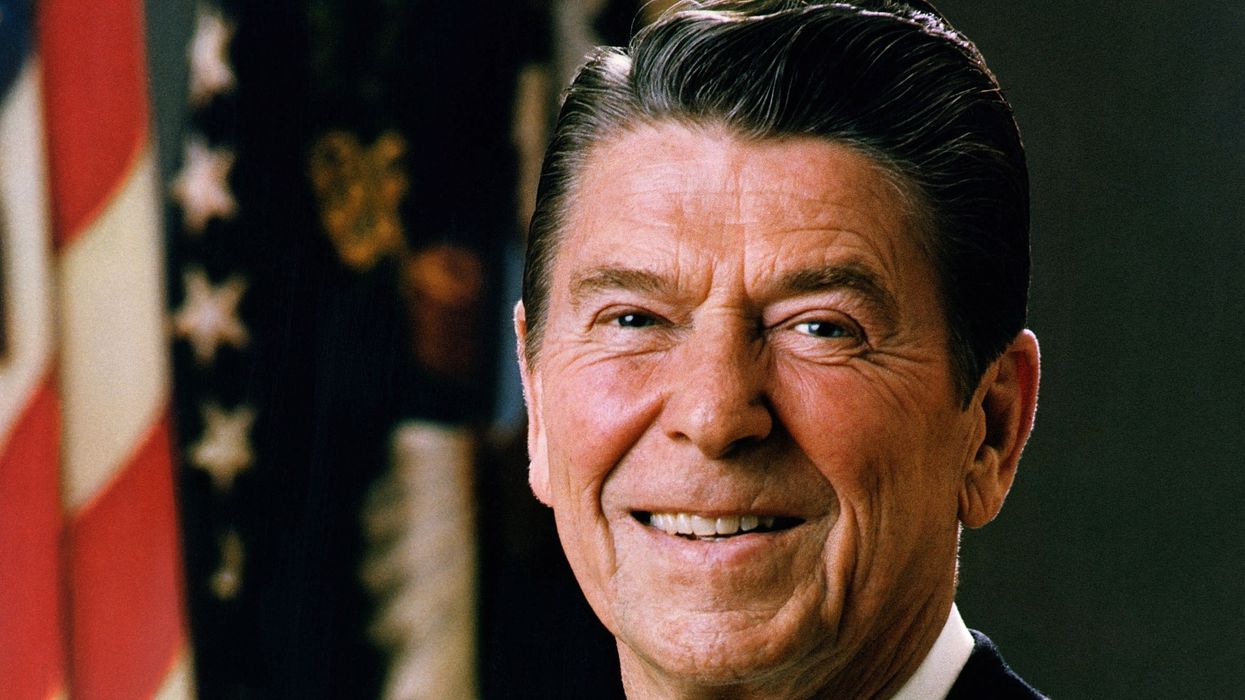
Official Portrait of President Ronald Reagan

Matthew Chapman and
Raw Story November 22, 2022


On Tuesday, the St. Louis Post-Dispatch editorial board shredded Republicans for clinging to a pro-tax cut political theory of economics pushed by former President Ronald Reagan decades ago — despite it having repeatedly failed.

The "Laffer curve," famously first scrawled on the back of a napkin at a restaurant by right-wing economist and GOP adviser Arthur Laffer, is the notion that tax cuts actually raise revenue for the government because the investment spurred by more money in the hands of businesses and millionaires grows the tax base more than the marginal revenue lost.


The ideology has a kernel of truth to it in that taxation generally reduces economic activity; however, there has never been any evidence U.S. taxes were high enough to begin with to depress economic activity beyond the returns to government revenue.

"Today’s stubborn Republican mythology that treats tax cuts as a magical economic elixir is largely traceable to Laffer’s theory, which arose in the late 1970s," wrote the board. "His famous 'Laffer curve' presumes to prove that tax cuts for the rich will spur economic investment, causing such strong economic growth that the government’s tax revenue would actually rise instead of falling. Even 1980 Republican presidential candidate George H.W. Bush derided the notion as 'voodoo economics.' That is, until he became vice president to Ronald Reagan, who embraced it."

"And how did Laffer’s theory, recast as 'Reaganomics,' turn out in practice?" wrote the board. "Yes, the economy was robust in the 1980s after Reagan’s historic tax cuts. But that’s also when the era of big budget deficits began, to the point that Reagan himself had to implement a series of later tax hikes to address it. Republicans today always seem to forget that part of the story. They certainly forgot it in Kansas in 2012, when they went full-Laffer with massive tax cuts. This deliberate test of Laffer’s theory, known as 'The Kansas Experiment,' was a debacle. The state’s economy didn’t skyrocket, but the deficit did, forcing deep cuts to education before the legislature finally acknowledged defeat and reversed the tax cuts."

Republicans then went on to try the same thing at a national scale under Donald Trump, noted the board, passing enormous tax cuts for corporations in 2017 — which did not deliver the sweeping economic growth Republicans promised. In fact, some experts believe, those tax cuts made the post-COVID inflation spell worse than it would have been otherwise. But still, House Republicans want to use their new majority to force President Joe Biden to do another round of tax cuts — when what is really needed to reduce inflation is targeted tax increases.

"You’d think after blaming the Biden administration (with some justification) for making inflation worse by pumping more money into the economy, they would at least see the irony of what they’re proposing, if not its damning precedent," concluded the board.
FDA lays out plan to combat bacterial contamination of baby formula

Story by Brenda Goodman • CNN

The US Food and Drug Administration is charting a plan to enhance its surveillance of infant formula for Cronobacter bacteria.

CNN anchor presses FDA chief on baby formula shortage. See his response

The agency said in a statement Tuesday that it would like to see Cronobacter infections added to the US Centers for Disease Control and Prevention’s list of national notifiable diseases, which would mean doctors would be required to report cases to public health officials.

Cronobacter infections are rare, but they can be serious and even fatal, especially in newborns. Cronobacter lives in the environment, but when these infections are diagnosed in infants, they are often linked to powdered formula.

Only one state, Minnesota, now requires doctors to report Cronobacter infections to the state health department. Because of this requirement, Minnesota was the first state to alert federal regulators to a potential problem with powdered baby formula last year.

Ultimately, the FDA received four reports of Cronobacter infections in babies last year, including two deaths. The infants had all consumed powdered formula manufactured at an Abbott Nutrition production facility in Sturgis, Michigan.

A lengthy FDA inspection of the plant and subsequent recall of products manufactured there exacerbated a nationwide infant formula shortage that only got worse when Abbott shut down the plant to make needed repairs. Census data shows that families are still struggling to find baby formula months after the facility restarted.

Ulitmately, although the FDA detected Cronobacter bacteria in the plant, genetic testing couldn’t link that bacteria to the sick infants.

In a written statement to CNN, Abbott said “Since our voluntary recall in February, investigations conducted by the FDA, the Centers for Disease Control and Prevention (CDC) and Abbott, including genetic sequencing, retained product samples and available product from the four complaints, did not find any definitive link between the company’s products and illnesses in children. No retained samples of recalled product tested positive for Cronobacter. And, in all four cases, unopened containers of formula in the infant homes tested negative for Cronobacter sakazakii.”

Although the FDA’s statement adds important weight to the push to add Cronobacter to the list of notifiable diseases, ultimately, the decision is made by a different group: the nonprofit Council of State and Territorial Epidemiologists.

“If FDA supports it and calls for it, I think that provides a lot of support to move the issue forward with the State and Territorial Epidemiologists,” said Mitzi Baum, chief executive officer of Stop Foodborne Illness, a nonprofit group that advocates on behalf of the victims of food poisoning.

Stop Foodborne Illness wrote a letter to the FDA and the CDC in March, urging them to move the ball forward to get Cronobacter added to the list.

Baum said there are several interesting ideas in the FDA’s outline, but because there’s no timeline attached to the plan, it strikes her as only a half measure.

“It lacks a sense of urgency associated with this issue, which is really focused on the most vulnerable population,” she said. “It’s just not a strong enough step. But it is a step.”

The FDA said Tuesday that it is also considering other actions including:
Creating a dedicated team of food inspectors that would focus on infant formula
Providing additional education and training for staff who inspect infant formula production facilities
Reviewing and updating guidance and rules for infant formula production facilities
Re-evaluating testing requirements to enhance safety of finished infant formula products
Developing and improving consumer education on how to safely prepare and store infant formula
Conducting and supporting more research to fill in gaps in the scientific knowledge of Cronobacter

The agency says it will meet with stakeholders and continue to refine its plans over the next few months.

The FDA has released similar action plans for other foods that have a history of certain types of contamination. In September, the agency released plans to prevent salmonella infections caused by contaminated bulb onions and listeria and salmonella infections linked to wood ear mushrooms.

For more CNN news and newsletters create an account at CNN.com
YUKON/NWT
Deal protects some key Tłı̨chǫ areas from development

The Tłı̨chǫ Government says it has reached an agreement with Explor Silica to protect some culturally and ecologically significant areas from mineral exploration.

The agreement, announced on Wednesday, means Explor will relinquish four mineral claims in a region known as the Dınàgà Wek’èhodì candidate protected area.

That area covers the lake, shoreline and islands near the top end of Great Slave Lake's North Arm.

Explor is interested in drilling for silica sand, a product used in the process of fracking.

The Husky mining company first proposed drilling for silica sand in the area, but backed out in 2015 after the Tłı̨chǫ Government, Yellowknives Dene First Nation and North Slave Métis Alliance each expressed concern that K’ıchıì – or Whitebeach Point, a culturally significant area – could be affected.

Explor bought Husky's claims but met with similar resistance.

Now, the Tłı̨chǫ Government says an agreement has been reached in which Explor relinquishes four claims, including in the region of K’ıchıì, to allow evaluation of potential development at its remaining claims.

In Wednesday's press release, Explor president Allan Châtenay said he knew, going into the project, that building a partnership with the Tłı̨chǫ Government would be an essential part of the deal.

"We are thrilled to be working closely with the Tłı̨chǫ Government to move forward with the development of this world-class and strategically important resource," stated Châtenay.

Tłı̨chǫ Grand Chief Jackson Lafferty stated: “By relinquishing the four claims around Whitebeach Point, Explor has shown its willingness to work with the Tłı̨chǫ Government in a good and respectful way that acknowledges the longstanding wishes of Tłı̨chǫ Elders and leadership.

"This gives us the foundation to begin exploring the next steps for a successful future together.”

Caitrin Pilkington, Local Journalism Initiative Reporter, Cabin Radio
GREEN CAPITALI$M
Bankers bet billions on new wave of debt-for-nature deals

Story by By Clare Baldwin, Marc Jones and Simon Jessop • Thursday, Nov 17,2022

FILE PHOTO: A hammerhead shark swims close to Wolf Island at Galapagos Marine Reserve© Thomson Reuters

SHARM EL-SHEIKH, Egypt (Reuters) - The Galapagos Islands, whose thousands of unique species inspired Darwin's theory of evolution, have incalculable ecological value. But what are they worth?

Perhaps around $800 million, judging by the size of a "debt-for-nature" swap deal that could see Ecuador's debts cut in exchange for protecting its offshore territory's fragile ecosystem, according to people with knowledge of the talks.


Sea lions swim near San Cristobal at Galapagos Marine Reserve© Thomson Reuters

These kind of agreements are part of efforts to address an intractable quandary facing world leaders at the U.N. COP27 summit underway in Egypt: who will pay the bill for the global fight against biodiversity loss and climate change?

"There's now a big push to get nature into sovereign debt markets," said Simon Zadek, executive director at NatureFinance, which advises governments on debt-for-nature swaps and other types of climate-focused finance.

"The tragedy of debt distress offers a real opportunity," he added, pointing to nature-rich countries who look like ideal debt swap candidates following big drops in their bond prices this year.

Ecuador isn't among the world's richer nations. It's a serial defaulter and its sovereign bonds are again trading at "distressed" levels, or a deep discount to their face value. But it does have a wealth of biodiversity that it could leverage in a wider region where much of the wildlife has been wiped out.

The country is holding talks with banks and a nonprofit group in an attempt to reach a deal that would see about $800 million of its debt refinanced more cheaply, freeing up the savings for conservation efforts, according to the three people with knowledge of the deal, who declined to be named as the discussions are confidential.

At that level, it would be the biggest debt-for-nature swap struck to date. Yet it could eventually be trumped by others, including Sri Lanka, which has been discussing a deal of up to $1 billion according to people familiar with those talks.

Cape Verde, an archipelago nation off West Africa, is meanwhile close to a nature swap that could be worth up to $200 million, said Jean-Paul Adam, a former Seychelles government official who now works for the U.N. Economic Commission for Africa (UNECA), providing financing advice to governments.

The Ecuadorian, Sri Lankan and Cape Verde governments didn't respond to requests for comment for this story, although Ecuadorian President Guillermo Lasso said in an local newspaper on Oct. 12 that its Galapagos swap deal could be wrapped up in four or five weeks.

Graphic: Debt-for-nature swaps 

VANISHING ANIMALS


The potential deals for Ecuador, Sri Lanka and Cape Verde, reported here in detail for the first time, point to a jump in interest for this form of financial alchemy, which was conceived decades ago but has remained something of a niche area until recently.

Only three of over 140 or so swaps struck over the past 35 years - the first in 1987 - had a value of more than a quarter of a billion dollars, according to global data published by the African Development Bank. The average size was $26.6 million.

The combined value of swap deals to date is $3.7 billion, according to the data. That's a fraction of the $400 billion of emerging market sovereign debt analysts at Capital Economics recently estimated had fallen to distressed levels.

Advocates say that those current debt problems, combined with the growing political will and the recent successful swap deals in the Seychelles, Belize and Barbados, mean a swathe of other countries are now exploring the model.

Indeed, Adam at UNECA said four African countries were now exploring potential swaps. He declined to name them, saying he wasn't sure if they were ready to go public.

Patricia Scotland, secretary-general of the Commonwealth of 56 countries, told Reuters: "Lots of my members are looking at it and we're looking at it with them".
]

The ecological stakes could barely be higher.


The global populations of mammals, birds, fish, reptiles and amphibians have declined by almost 70% on average since 1970, while Latin America has seen a drop of more than 90%, according to this year's Living Planet Index compiled by the World Wide Fund For Nature (WWF) and the Zoological Society of London.


CULTIVATING PORTFOLIOS

Such swaps are often compromises.

Should a country default, its bondholders lose money or at least have to wait a lot longer to recoup it.

Debt-for-nature deals can help as they can produce so-called green, or blue bonds in the case of those that focus on ocean conservation, which appeal to a rapidly growing number of investors who want to meet ESG and net-zero goals.

Veteran debt crisis fund manager Carl Ross at GMO said Belize's pledge to protect its sprawling barrier reef - the largest in the western hemisphere - helped get its restructuring "over the hump" last year in a deal he was involved with.

At their simplest, these deals see expensive bonds or loans written down and replaced with cheaper financing, usually with the help of a credit guarantee from a multilateral development bank.

Ecuador, for example, is in talks with the Pew Charitable Trusts plus the Inter-American Development Bank and U.S. International Development Finance Corporation, two of the people with knowledge of the planned deal said.

Pew and the banks declined to comment.


Securing the buy-in of development banks is usually key for the economics of a deal. But as the banks must closely guard their capital and credit ratings to preserve their ability to borrow cheaply, that hurdle has long restricted the growth of swaps.

The World Bank's managing director of operations, Axel van Trotsenburg, told Reuters on the sidelines of COP27 that it supports debt-for-nature swaps, as did African Development Bank President Akinwumi Adesina, who said his bank would "absolutely" start providing credit guarantees.

G7 governments and Barbados Prime Minister Mia Mottley's "Bridgetown initiative" have all demanded the World Bank and International Monetary Fund ramp up climate-focused funding.

IMF chief Kristalina Georgieva spoke at COP27, saying swaps were a worthwhile part of the toolkit albeit no "silver bullet" in global efforts to fund conservation.

BELIZE'S $550 MLN DEAL

Indeed, debt-for-nature deals are dwarfed by the scale of the funding challenge: developing countries will need to secure $1 trillion a year in external financing by the end of the decade to take effective climate action and restore nature, a report released at COP27 said.

Nonetheless, those involved in such swaps say they are having an impact.

Belize's $553 million swap last year provided money to protect the world's second-largest coral reef and reduced its debt level by more than 10% of GDP, the government estimates.

The Seychelles' 2015 deal, which created the world's first blue bond after eight years of talks, saw the government commit to protect 30% of its waters - an area the size of Germany - from overfishing and development and bought back $22 million of its debt on favourable terms, former environment minister Ronny Jumeau said.

Swap proponents are pushing for the dozen or so major development banks to come together with expanded and standardized support to drive widespread use of the instruments.

"That's the limiting factor that keeps us from just scaling this to trillions of dollars," added Kevin Bender at The Nature Conservancy, who leads the NGO's sovereign debt teams and worked on the Belize swap.

Esteban Brenes, the WWF's U.S. director of conservation finance, said improvements were also needed in how wildlife pledges are monitored and verified so that creditors are satisfied that countries are meeting their commitments.

Monitoring can be creative
.

The WWF has projects in Central and South America where they are monitoring deforestation by tracking jaguars, said Brenes, who has worked on debt-for-nature swaps for the last 25 years.

The big cats need around 50 square kilometers of good forest to hunt and reproduce, so are a good indicator of forest health. More data showing swaps work should encourage international institutions to become involved, Brenes added.

"No planet, no business - that is what we need the IMFs of this world to understand," he said.

Graphic: Spreading the pain


(Reporting by Simon Jessop in Sharm el-Sheikh, Clare Baldwin in Hong Kong and Marc Jones in London; Additional reporting by Uditha Jayasinghe in Colombo, Sergio Goncalves in Lisbon and Alexandra Valencia in Quito; Graphics by Sumanta Sen; Editing by Katy Daigle and Pravin Char)
THIRD WORLD U$A
Home births in US during early pandemic times rise to highest level in 30 years: CDC

Home births in the United States reached the highest level in three decades during the first two years of the COVID-19 pandemic, according to a new report released Thursday by the Centers for Disease Control and Prevention's National Center for Health Statistics.

The report's findings show the nationwide number of pregnant people giving birth at home rose from 1.26% in 2020 to 1.41% in 2021 -- an increase of 12% and the highest level since at least 1990. That followed a 22% increase from 2019 to 2020.

Nevertheless, the vast majority of U.S. births still happen at a hospital or birthing center, with fewer than 2% of people giving birth at home. Prior to the pandemic, the country's rate of home births hovered around 1%.MORE: US birth and fertility rates drop to record lows in 2020, CDC says

The report noted that interest in home births increased due to COVID-19 and "concerns about giving birth in a hospital." The uptick in home births is likely tied to surges of COVID-19 infections. The increase was highest during the first year of the pandemic and less sharp during the second year. The percentage peaked in January 2021 at 1.51%, corresponding to the first major surge in COVID-19 cases, driven by the alpha variant.


© Tami Chappell/Reuters, FILE

The rise in U.S. home births from 2020 to 2021 was sharpest among Black women, with an increase of 21%. That followed a 36% increase from 2019 to 2020, according to the report.

Kids around the world describe the highs and lows of the COVID-19 pandemic
Duration 3:43  View on Watch

For Hispanic women, home births increased 15% from 2020 to 2021, following a 30% increase from 2019 to 2020. For white women, home births increased 10% from 2020 to 2021, following a 21% increase from 2019 to 2020, according to the report.MORE: US life expectancy drops 1 year in first half of 2020 amid coronavirus pandemic, CDC says

From 2020 to 2021, the percentage of home births was on the rise in 30 U.S. states, with increases ranging from 8% for Florida to 49% for West Virginia. That followed increases in home births in 40 states from 2019 to 2020, the report said.

Medical associations like the American College of Obstetricians and Gynecologists assert that every individual should have the right and opportunity to choose how they want to give birth. But they also say that hospitals and birthing centers are the safest places to give birth because trained professionals can intervene quickly if something goes wrong.

Jade Godbolt, 31, of Dallas, Texas, told The Associated Press that she had her second child at a birthing center in 2021, partly to avoid hospital risks of COVID-19 and to experience a more natural environment. She and her husband then chose a home birth for their third child, born last month. She said there were no complications and that both she and her newborn son are doing well.

"I believed that my body could do what it was made to do and I wanted to be in the comfort of my home to do that,'' Godbolt told the AP.
Angela Álvarez makes history at age 95 with Latin Grammy tie win for best new artist

Story by Marysabel Huston-Crespo •  Nov 18,2022 -CNN

Angela Álvarez made Latin Grammy history on Thursday by winning the award for best new artist at age 95.

The singer tied in the category with musician and songwriter Silvana Estrada, but she had already set a record going into the event with her nomination as the oldest musician ever nominated in the category.

“I want to dedicate this award to God and to my beloved country, Cuba, which I will never be able to forget,” Álvarez said accepting her award on stage at the Latin Grammys in Las Vegas.

The Cuban-native’s passion for music began in her youth. She was discouraged from pursuing a career in music by her father but found joy performing for her family. The mother of four, grandmother of nine and the great-grandmother of 15 immigrated to the United States in the 1960s, according to Billboard.
 
Over the years, she sang for her family about her life and developed a collection of songs she composed. At the encouragement and support of her grandson, she eventually recorded and released collection of her songs in 2021.

The Latin Grammy nomination came as a surprise to her, Álvarez told CNN en Español last month.

“I felt very, very proud to be able to tell my story, to touch people who have probably gone through the same or more than what I have gone through. There are people who give up, but I did not give up. I always fought,” she said.

Álvarez concluded her speech on Thursday with words of inspiration.

“To those who have not fulfilled their dream, although life is difficult, there is always a way out and with faith and love you can achieve it, I promise you,” Álvarez said. “It’s never too late.”