Tuesday, July 01, 2025

VULTURE CAPITALI$M

US judge orders Argentina to sell 51% stake in oil firm YPF


By AFP
June 30, 2025


Argentina has been ordered by a US judge to sell its majority stake in oil firm YPF, a move immediately criticized by the South American country's President Javier Milei - Copyright AFP/File LUIS ROBAYO

A federal judge in New York ordered Argentina on Monday to sell its majority stake in oil firm YPF, the latest blow to Buenos Aires in a decade-long international legal saga.

Argentine President Javier Milei, who is on a campaign to stabilize his country’s struggling economy, promptly vowed to appeal.

The case revolves around the 2012 renationalization of YPF from the control of Spanish giant Repsol.

Two minority shareholders, Petersen Energia and Eton Park Capital, filed suit in 2015 seeking damages for allegedly not receiving proper compensation in the sale.

US District Judge Loretta Preska ruled in favor of the plaintiffs, and in September 2023 ordered Argentina to pay over $16 billion to the firms.

To partially satisfy the outstanding sum, Preska on Monday ordered Argentina to transfer its 51 percent stake of YPF to an intermediary, with instructions that the shares then be handed over to the plaintiffs.

“We will appeal this decision in all appropriate courts to defend national interests,” Milei posted on X shortly after the judgment was published.

He pointed the finger at Axel Kicillof, who was the South American country’s economy minister in 2012 under then-president Cristina Kirchner and considered a potential 2027 presidential candidate.

YPF, a century-old and iconic Argentine company with more than 22,000 employees, was privatized in the 1990s and gradually came under the control of Repsol.

It was renationalized in 2012 under Kirchner, which at the time raised questions about the security of investments in South America’s third-largest economy.

In 2014, after months of dispute, Repsol reached an agreement with Argentina for compensation of around $5 billion.

The Petersen Group and Eton Park Capital — which together held 25.4 percent of YPF’s capital — filed suit in 2015, alleging that the country had not submitted a takeover bid as provided by law.

Preska has ordered Argentina to pay $7.5 billion in damages and $6.85 billion in interest to Petersen Energia.

She also ordered Argentina to pay about $1.7 billion, between damages and interest, to Eton Park Capital.


Indian capital bans fuel for old cars in anti-pollution bid


By  AFP
July 1, 2025


New Delhi banned the sale of fuel for cars older than 15 years and diesel vehicles older than 10 years, in a bif to curb pollution - Copyright AFP Arun SANKAR

India’s capital banned fuel sales to ageing vehicles on Tuesday as authorities try to tackle the sprawling megacity’s hazardous air pollution.

The city is regularly ranked one of the most polluted capitals globally with acrid smog blanketing its skyline every winter.

At the peak of the smog, levels of PM2.5 pollutants — dangerous cancer-causing microparticles small enough to enter the bloodstream through the lungs — surge to more than 60 times the World Health Organization’s recommended daily maximum.

Petrol cars older than 15 years, and diesel vehicles older than 10, were already banned from operating on New Delhi’s roads by a 2018 Supreme Court ruling.

But millions flout the rules.

According to official figures, over six million such vehicles are plying the city’s streets.

The ban that came into force on Tuesday seeks to keep them off the roads by barring them from refuelling.

Police and municipal workers were deployed at fuel stations across Delhi, where number plate-recognising cameras and loudspeakers were installed.

“We have been instructed to call in scrap car dealers if such vehicles come in,” said a traffic policeman posted at a fuelling station in the city.

From November, the ban will be extended to satellite cities around the capital, an area home to more than 32 million people.

A study in the Lancet medical journal attributed 1.67 million premature deaths in India to air pollution in 2019.

Each winter, vehicle and factory emissions couple with farm fires from surrounding states to wrap the city in a dystopian haze.

Cooler temperatures and slow-moving winds worsen the situation by trapping deadly pollutants.

Piecemeal government initiatives, such as partial restrictions on fossil fuel-powered transport and water trucks spraying mist to clear particulate matter from the air, have failed to make a noticeable impact.
Bangladeshis cling to protest dreams a year after revolution


By AFP
June 30, 2025


Bangladesh protests began on July 1, 2024, with university students calling for reforms to a quota system for public sector jobs - Copyright AFP Munir UZ ZAMAN
Rasheek MUJIB

The memory of Bangladeshi police with shotguns twice blasting the young protester beside him still haunts Hibzur Rahman Prince, one year after a revolution that has left the country mired in turmoil.

That killing, along with up to 1,400 others as Sheikh Hasina tried to cling to power last year, overshadows Bangladesh as political parties jostle for power.

Prince shuddered as he recalled how the student’s bleeding body collapsed at his feet.

“His body was lacerated,” said Prince, who helped carry him to hospital.

Medics told him that “400 pellets were taken from his dead body”.

Protests began on July 1, 2024 with university students calling for reforms to a quota system for public sector jobs.

Initially their demands seemed niche.

Many in the country of around 170 million people were worn down by the tough grind of economic woes.

Student ambitions to topple Hasina’s iron-fisted rule seemed a fantasy, just months after she won her fourth consecutive election in a vote without genuine opposition.

One week into the demonstrations she said the students were “wasting their time”.


– ‘Too many bodies’ –


But protests gathered pace.

Thousands launched daily blockades of roads and railways nationwide, with the gridlock bringing the demonstrations to wider attention.

A fuse was lit when police launched a deadly crackdown on July 16.

It became the catalyst for the airing of wider grievances.

Prince, now 23, a business student in the capital Dhaka, said he witnessed killings when police sought to stem protests on July 18.

As well as carrying the student’s body, he helped several wounded protesters reach the hospital.

“I saw too many unidentified dead bodies in the morgue that day,” said Prince, who has been diagnosed with post-traumatic stress disorder and suffers flashbacks and mood swings.

“After that day the fight turned more personal,” he said. “It was for the country.”

On August 5 thousands of protesters stormed Hasina’s palace as she escaped by helicopter to her old ally India.


– ‘The rage’ –


Syeda Farhana Hossain, 49, a mother of two teenage girls, took part in the protests with them.

“This new generation proved that in times of need, they can and are willing to sacrifice their lives for the greater good,” she said, describing how her daughters helped paint anti-government slogans on their school walls.

“I didn’t realise before the rage my children felt,” she said. “It seemed like they just grew up in an instant.”

But the idealism of protests has been tempered by the stark reality of the challenges Bangladesh faces.

Hasina’s rule saw widespread human rights abuses and her government was accused of politicising courts and the civil service, as well as staging lopsided elections.

Caretaker leader Muhammad Yunus has said he inherited a “completely broken down” system of public administration that requires a comprehensive overhaul to prevent a return to authoritarian rule.

The Nobel Peace Prize winner scheduled elections for April 2026 but has said pushing those polls back by a few months would give more time for reforms.

“We are not on the right track yet,” Hossain said.

“Whenever I see injustice or unfairness these days, I wonder: Did the students that die, die in vain?”


– ‘Against injustice’ –


Tea seller Mohammad Aminul Haque, 50, said people were exhausted by intensely partisan politics that have defined Bangladesh since independence in 1971.

“The ongoing cycle of one party after another, fueling hate against each other — we don’t want this anymore,” Haque said.

“What we want to see is everyone coming together for the greater good.”

Yunus’s government has warned that political power struggles risk jeopardising the gains that have been made.

Mohiuddin Hannan, 50, a teacher at an Islamic school, has certainly seen improvements since the last administration, which crushed Islamist parties.

“Under this government, murder, kidnapping, abductions and enforced disappearances are not happening anymore,” he said.

But Hannan said there is far to go.

“It seems only the hands of power have shifted,” he said.

As political parties vie for power, Prince clings to the optimism that drove the protests.

“People are more politically aware now, they raise their voice against injustice,” he said.

“Whoever comes to power next will be held accountable by the public.”
Online memorial for children dead in Hiroshima, Nagasaki


By AFP
June 30, 2025


Some 38,000 children died in the US atomic bombings of Hiroshima and Nagasaki in August 1945 - Copyright AFP Richard A. Brooks

A Nobel Prize-winning anti-nuclear group launched an online memorial Tuesday for the 38,000 children who died in the US atomic bombings of Hiroshima and Nagasaki, ahead of the 80th anniversary next month.

It features more than 400 profiles with details of the children’s lives, “their agonising deaths and the grief of surviving family members,” said the International Campaign to Abolish Nuclear Weapons (ICAN) in a statement.

“By sharing their heart-wrenching stories, we hope to honour their memories and spur action for the total abolition of nuclear weapons — an increasingly urgent task given rising global tensions,” it said.

The United States dropped an atomic bomb on each Japanese city on August 6 and 9, 1945 — the only times nuclear weapons have been used in warfare. Japan surrendered days later.

Around 140,000 people died in Hiroshima and around 74,000 others in Nagasaki including many who survived the explosions but died later from radiation exposure.

Out of around 210,000 victims, around 38,000 were children, said the ICAN, citing Hiroshima and Nagasaki officials.

Washington has never apologised for the bombings.

Clicking a crane icon, visitors to the online platform can read the children’s profiles, with photos of 132 children out of 426, ranging in age from infants to teenagers.

Among them is Tadako Tameno, who died in agony aged 13 in the arms of her mother two days after the Hiroshima atomic bombing.

Six children in the Mizumachi family were killed in the Nagasaki atomic bombing. Only one girl, Sachiko, 14, survived.

The initiative comes after US President Donald Trump last week likened Washington’s strike on Iran’s nuclear facilities to the Hiroshima and Nagasaki bombs.

“Actually, if you look at Hiroshima, if you look at Nagasaki, you know that ended a war too,” Trump said in The Hague.

This prompted anger from survivors and a small demonstration in Hiroshima. The city’s assembly passed a motion condemning remarks that justify the use of atomic bombs.

Israel’s ambassador to Japan, Gilad Cohen, will attend this year’s ceremony in Nagasaki, local media reported.

Cohen, together with the envoys of several Western nations including the United States, boycotted last year’s event after comments by the city’s mayor about Gaza.

Russia’s ambassador will attend the Nagasaki ceremony, the first time its representative has been invited since the invasion of Ukraine in 2022, NHK reported.

However, Nikolay Nozdrev will not attend the 80th anniversary event three days earlier on August 6, the broadcaster said, citing the Russian embassy.

ICAN won the Nobel Peace Prize in 2017. Last year, it was awarded to Nihon Hidankyo, a grassroots movement of Hiroshima and Nagasaki survivors.
Russia ramps up drone strikes on Ukraine in June: AFP analysis


By AFP
July 1, 2025


Russia has escalated its aerial bombardments even as it attends peace talks with Ukraine - Copyright AFP Oleksandr GIMANOV

Russia ramped up drone attacks on Ukraine dramatically in June, an AFP analysis published Tuesday showed, pressuring the war-torn country’s stretched air defence systems and exhausted civilian population.

Ukraine says it is adapting to the escalating bombardments and has vowed to respond, but the mounting attacks come at a critical moment of the Russian invasion, which is grinding through its fourth year.

Kyiv is appealing to the United States and European allies for more air defence systems to defend its critical infrastructure as talks spearheaded by Washington to secure a ceasefire falter.

The AFP analysis of Ukrainian air force data showed that Russia fired 5,438 long-range drones at Ukraine in June — more than in any month since Moscow launched its invasion in February 2022.

That figure was up 37 percent from the total in May, when Russia launched 3,974 drones, according to the Ukrainian air force.

Moscow’s army also fired 239 missiles in overnight attacks, almost twice as many as a month before, the data showed.

The attacks, which trigger air raid sirens in towns and cities across the country and spur civilians to spend sleepless nights in shelters, occurred every night in June.

Russian President Vladimir Putin underscored last month that drones are an increasingly integral part of his country’s military might.


– ‘Hellish’ night –


During a televised meeting on armaments convened by the Kremlin, he touted Russian drone units’ attacks on armoured vehicles, fortified positions, and personnel.

Putin claimed that up to 50 percent of all attacks that “destroyed and damaged equipment and facilities” in Ukraine were launched by Russian drone units.

“Their effectiveness is constantly growing,” he said, noting the military was creating a separate drone forces branch.

But Ukraine, which has been forced to adapt its defences to fend off Russia’s larger army, is also changing how it deals with increasing Russian drone attacks.

“Ukraine is introducing new developments — interceptor drones — as well as other tools that are deliberately not disclosed,” defence minister Rustem Umerov told journalists, including from AFP last week.

“All work on counter-drone systems is a continuous cycle of innovation and improvement.”

Ukrainian air defence units destroyed 81 percent of all drones and missiles launched by Russia in May.

Even as attacks escalated over June, Kyiv’s intercept rate of drones and missiles increased to 86 percent.

Assessing the impact of the larger Russian drone attacks is complicated in part because Ukraine is secretive about what, if anything, was targeted by Russia or hit.

In June, however, the capital Kyiv was subjected to at least four fatal attacks from drones and missiles that left at least 41 dead, according to emergency services.

That was up from two killed in Russian bombardments of Kyiv in May.

The Kremlin’s spokesman Dmitry Peskov called on Kyiv to give into Moscow’s hardline demands for peace if it wanted the attacks to stop.

“Kyiv knows perfectly well what needs to be done to end the fighting,” Peskov said in response to a question from AFP about the increased drone attacks.

Kyiv says Moscow’s ceasefire requirements — to cede territory and renounce Western military support — amount to capitulation.

Alina Shtompel, a 20-year student in Kyiv, said on June 17 that the night she had survived was “hellish”.

That country-wide attack from 440 drones and 32 missiles ripped open an apartment building in Kyiv, where at least 28 people were killed.

“It is indescribably painful that our people are going through this right now,” Shtompel added
UK

Doctors’ union responds to Labour’s proposed mental health care reforms


By  Dr. Tim Sandle
June 30, 2025
DIGITAL JOURNAL


Britain's Prime Minister Keir Starmer is looking to deepen ties with the EU - Copyright AFP WANG Zhao

The UK government, amidst opposition from its own MPs, is seeking to introduce a controversial welfare bill and to reform areas like disability assessments and mental health diagnoses.

The government also has recently unveiled a 10-year health plan which aims to achieve three shifts in NHS services towards more community-based care, prevention of ill health and use of digital technology.

The British Medical Association (BMA) has spoken out strongly against the intentions of Kier Starmer’s government. The BMA is a professional association and trade union representing and negotiating on behalf of all doctors in the UK.

Responding to the government’s announcement of plans to boost mental health care in the NHS, BMA mental health policy lead Dr Andrew Molodynski says: “The BMA has long warned that the NHS mental health care system is broken, so it is welcome that the government are acknowledging the need to improve mental health support and access in the Ten-Year Health Plan.”

Molodynski focuses on staff shortages and related areas like training: “While recruitment efforts are ongoing, the voices of doctors on the front line report a system that is still struggling to cope as the lack of skilled and trained staff means patients are routinely failed as demand for mental health care far outstrips current capacity.”

Specialist mental health widens the divide between physical and mental health care

Starmer’s administration is seekibng to plug gaps by promoting a digital first strategy, however Molodynski is concerned about the lack of human contact: “Improving access to mental health support via the app and AI, while possibly helping some people to maintain their wellbeing, is no substitute for in-person evidence-based care for those who have more complex mental health needs and for those who need more immediate care or support. Patients are already able to self-refer to the NHS’s main talking therapies programme in England, so we look forward to seeing how these plans result in tangible benefits to patients.”

There are various reasons why skilled medical practitioners are needed: “A highly skilled workforce must be in place to meet such an increase in demand and we know that the NHS is currently unable to meet existing demand. There are concerns that the use of specialist mental health A&Es could widen the divide between physical and mental health care and risk diverting resource and staff away from acute hospitals and community mental health teams. Rigorous evaluation in the form of funded clinical trials should accompany these changes and be used in longer term decision making.”

Molodynski concludes, calling on the government to rethink: “It is crucial that Government commits to funding levels that reflect the true scale of mental health needs for both children and adults – without that these latest reforms risk falling short of delivering the changes that patients and staff desperately need.”
EPA employees accuse Trump administration of ‘ignoring’ science


By AFP
June 30, 2025


The letter accused Environmental Protection Agency head Lee Zeldin of eroding public trust and betraying the organization's core mission - Copyright POOL/AFP Kevin Lamarque

US President Donald Trump’s administration is “ignoring the scientific consensus to benefit polluters,” hundreds of Environmental Protection Agency employees said in a letter of dissent Monday, accusing the government of undermining the EPA’s core mission.

The scathing letter, signed by more than 200 current and former officials and their supporters, accused EPA chief Lee Zeldin of enacting policies dangerous to both humans and the environment.

“The decisions of the current administration frequently contradict the peer-reviewed research and recommendations of Agency experts,” said the letter.

“Make no mistake: your actions endanger public health and erode scientific progress — not only in America — but around the world.”

Under Zeldin, the EPA has worked to deliver Trump’s campaign promises of lifting environmental regulations, boosting fossil fuel production and cutting clean energy spending.

The letter identifies five main areas of concern, including the increasing politicization of the agency, the reversing of programs aimed at marginalized communities and the “dismantling” of the agency’s Office of Research and Development.

It described the agency’s communications under Zeldin as being used “to promote misinformation and overtly partisan rhetoric.”

“This politicized messaging distracts from EPA’s core responsibility: to protect human health and the environment through objective, science-based policy.”

As an example, the letter cited official communications that likened “climate science to a religion.”

Zeldin has repeatedly stated that he sees the EPA’s role as supporting US economic growth, and under his guidance the agency has set in motion a full-scale reversal of several environmental standards and greenhouse gas regulations.

Unveiling a set of policy initiatives in March, Zeldin hailed the move as “the greatest day of deregulation our nation has seen.”

“We are driving a dagger straight into the heart of the climate change religion to drive down cost of living for American families, unleash American energy, bring auto jobs back to the US and more,” said the administrator of the federal agency charged with protecting the environment.

The letter came weeks after the publication of a similar text signed by dozens of employees of the National Institutes of Health over the Trump administration’s “harmful” policies.

The EPA letter had more than 170 “anonymous signers,” with the text stating the administration had promoted “a culture of fear” at the agency.
World Social Media Day: 

London named among Britain’s social media capitals in a nationwide study


By Dr. Tim Sandle
June 29, 2025
DIGITAL JOURNAL


Image: - © GETTY IMAGES NORTH AMERICA/AFP SPENCER PLATT

Monday, June 30th is ‘World Social Media Day‘. This day serves as a reminder of the power of social media and its transformational impact on communication, connectivity, and information sharing that brings together individuals, businesses, and communities around the world. Although quite why and by whom remains uncertain.

To make this global ‘celebration’, a new survey has revealed the British cities most addicted to social media, and London has come in sixth place.

To draw this out, the website development agency ProfileTree crunched search volume data for a list of 515 Internet keywords across British cities to pinpoint where residents can’t get enough of social media and their favourite platforms.


Britain’s Most Social Media-Obsessed Cities

RankCitySearches per 100,000
1Oxford312,033
2Birmingham274,624
3Glasgow274,588
4Leeds246,151
5Manchester245,730
6London228,056
7Newcastle upon Tyne225,610
8Edinburgh223,180
9Bristol220,258
10Coventry217,896
From the above data table, Oxford has topped the ranking for most social media-obsessed city in Britain, accumulating 312,033 searches for various social media platforms and topics per 100,000 people. The city’s favourite platforms are Facebook, Twitter and Instagram. Oxford residents search for Instagram, Linkedin and Reddit more than any other city in the country.

Birmingham and Glasgow sit practically neck-and-neck for second place in the rankings. Brummies clocked 274,624 searches per 100,000 residents. Glaswegians managed 274,588 per 100,000 people. The tiny gap of just 36 searches makes it almost impossible to separate these major cities in their online habits. They also share the same go-to platforms, which are Facebook, Twitter and Instagram; however, Glasgow searches for Twitter more than any other city in the UK.

Leeds took fourth place, with 246,151 searches per 100,000 people, while Manchester wasn’t far behind in fifth place with 245,730. Both cities follow the same trend as others, with their top three social media platforms being Facebook, Twitter and Instagram.

Interestingly, Northern cities feature heavily in the top spots, with Newcastle upon Tyne also making the top ten, securing seventh place after recording 225,610 searches per 100,000 residents.

London only managed a surprising sixth place with 228,056 searches per 100,000 residents despite being home to nearly 9 million people. The capital’s unexpected ranking suggests bigger populations don’t automatically mean bigger social media appetites, although Londoners show the most interest in Pinterest out of all British cities.

Two Scottish cities made the top ten list, with Edinburgh joining Glasgow in the rankings. The Scottish capital recorded 223,180 searches per 100,000 residents, placing it eighth and showing Scots can’t help themselves from scrolling on social media too.

Bristol secured its place in the top ten with 220,258 searches per 100,000 people, and Coventry’s searches tallied up to 217,896 per 100,000 people. These results put the West Country and Midlands cities ninth and tenth, completing the top ten.

Facebook smashes the competition across all locations, becoming the top social media platform in every city in the UK. The platform has racked up 10,579,982 monthly searches nationwide, more than tripling the nearest rival Twitter, with 3,496,416. Instagram has taken third spot with 2,639,191 monthly searches, cementing the clear pecking order in Britain’s favourite social platforms.

Cambridge has produced a baffling result in the study, finishing dead last among all 78 cities examined. The prestigious university city recorded only 25,325 social media-related searches per 100,000 residents, a shocking 12 times fewer than academic rival Oxford.

Ciaran Connolly, Founder of ProfileTree, tells Digital Journal: “These results paint a fascinating picture of social media engagement across UK cities. The contrast between Oxford and Cambridge, both prestigious university cities, is particularly striking and challenges assumptions about where digital engagement is highest.

Connolly adds: “Social media usage rarely matches what you’d expect based on a city’s reputation. This creates major challenges for businesses targeting audiences through social channels, but these findings can give some insight. 82.8% of Brits use social media, which is a whopping 56.2 million users. Ofcom even reports that 82% of young people in the UK use social media as their primary news source, just proving how much influence these platforms really have.”
REST IN POWER

Bill Moyers Was a Truth-Teller, Not a Stenographer for the Powerful

He showed a generation of journalists, scholars, and public intellectuals what it means to speak truth to power.
PublishedJune 27, 2025

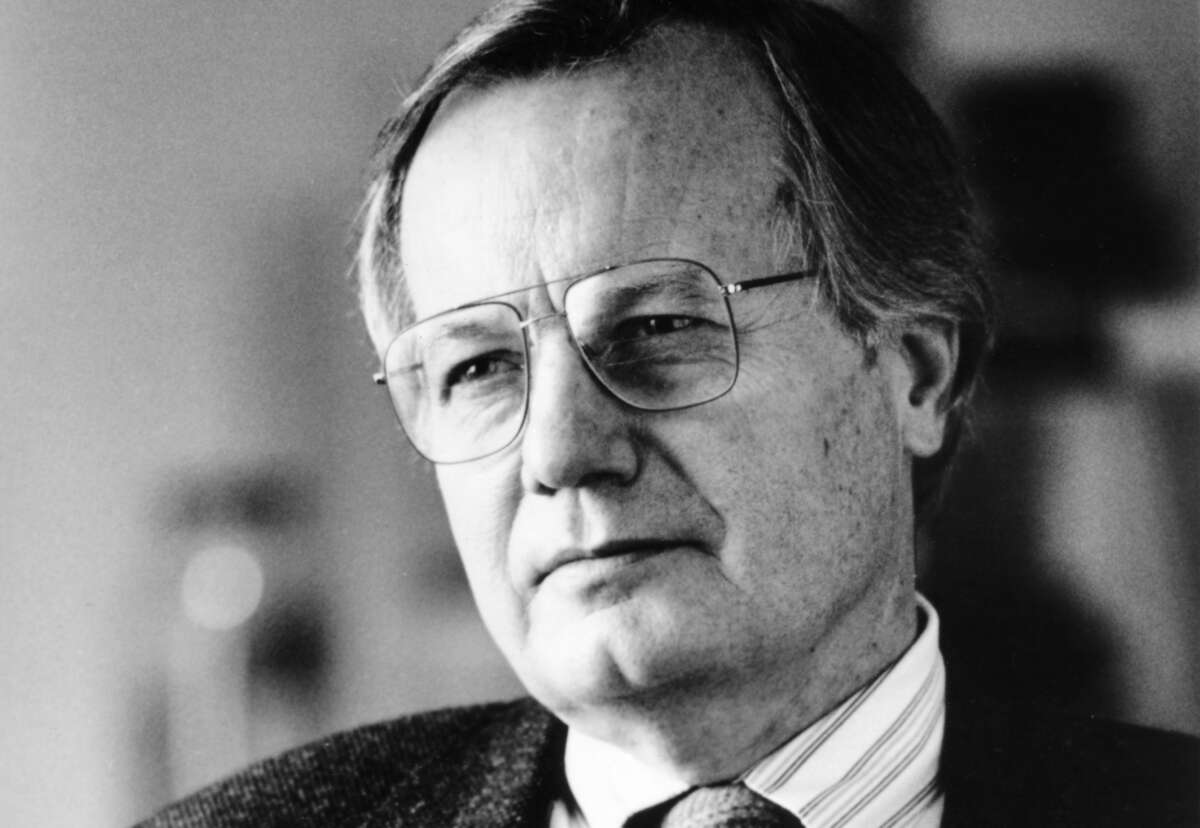
Bill Moyers, journalist and White House press secretary for President Lyndon Johnson, pictured in the 1980's.
Universal History Archive / Universal Images Group via Getty Images


My dear friend, Bill Moyers, died yesterday.

He was the finest interviewer I’ve ever worked with, probing, fearless, and profoundly attuned to both the fragility and the enduring promise of democracy. With a rare combination of moral clarity and intellectual generosity, Bill devoted his life to illuminating the dangers that threatened the democratic imagination and nurturing its most humane possibilities. His work was never about spectacle or self-regard; it was about awakening the American conscience.

Bill began his journey into the public eye as a young press secretary for President Lyndon B. Johnson, where he was thrust into the center of political history. In that role, he became a quiet but relentless force behind the scenes, shaping key moments in U.S. governance. His time in the White House only deepened his understanding of the importance of truth in politics and the role of the media in safeguarding democracy. It was this commitment to truth-telling that would later define his extraordinary career in journalism. Through the power of his two landmark television programs, including “Bill Moyers Journal” and “Moyers & Company,” Bill gave space to the underrepresented, held power to account, and invited audiences into the most critical conversations of our time. These shows, which spanned decades, were more than just broadcasts; they were lifelines of intellectual rigor and moral clarity in a media landscape often dominated by spectacle and shallow soundbites. With each episode, Bill didn’t just inform — he awakened the public conscience, reminding us all of our collective responsibility to protect the fragile promise of democracy.

After reading one of my essays on Truthout, Bill would often write to me with words of encouragement far more generous than I deserved. His praise was never performative; it came from a place of humility and grace, grounded in a deep and abiding belief in the power of truth-telling. Every note he wrote carried with it a quiet but fierce sense of solidarity. He made you feel that your work mattered, that it was part of a larger struggle for justice and dignity.

As the years went on, Bill grew increasingly troubled by the authoritarian currents rising in the United States, the erosion of truth, the takeover of the media by financial elites, and the transformation of journalists into little more than stenographers for the powerful. Yet even in his despair, he remained committed to naming what was wrong with stunning precision and passion.

Related Story
Interview |
Moving Toward Plutocracy: Bill Moyers Talks to Ben Fountain About the Trump Age
Ben Fountain’s “Beautiful Country Burn Again” is a bold, brave book about the state of politics in the era of Trump.
By Bill Moyers , Moyers&CompanyOctober 18, 2018


Bill Moyers was no ordinary commentator; he was a giant. He saw the wider issue in all of its complexity with unmatched brilliance and clarity. Though he was always quick to praise others for their courage, it was he who modeled what moral and political courage looked like. He mentored a generation of journalists, scholars, and public intellectuals — not through grand declarations but by showing, day after day, what it means to speak truth to power with grace and conviction.

The best interview of my life was with him in 2013. Bill came to it as he came to everything: with deep preparation, fierce intellect, and compassion that never wavered. That conversation remains, for me, a testament to who he was.

His passing is a profound loss. In a time when so much of the media has surrendered to banality, historical amnesia, and cowardice, Bill’s legacy stands as a luminous reminder of what journalism can be: fierce, principled, and devoted to democracy’s highest ideals and the promise of a more just, equal, and radically democratic future. In these dark and dangerous times, the urgency of his example could not be clearer. The work he championed must live on. We owe him that, and so much more.

Bill Moyers was more than a mentor, teacher, inspiration, and friend; he was a symbol of hope, whose courage inspired so many of us through the murk of such dark times. His absence leaves a profound silence, a space where hope for the future appears in retreat. But even with this painful loss, there is a call to action, an echo of his enduring commitment to truth, democracy, and the common good. The shadow of giants like Bill Moyers is not a place of despair, but of inspiration, urging us to carry forward the work he began, to give voice to the voiceless, and to never let go of the fragile but precious ideals he cherished.

I will miss you, rest in peace, my friend.
As Extreme Heat Bakes US, 160+ Global Groups Demand 'Real' Climate Action

"Reject false solutions, such as natural gas, mega-dams, geoengineering, bioenergy, forest offsets, carbon trading schemes, nuclear energy, biodiversity credits, and carbon capture and storage."


People try to stay cool in New York City, as temperatures hit the high 90s with a heat index o over 100ºF, on June 23, 2025.
(Photo: Spencer Platt/Getty Images)

Jessica Corbett
Jun 23, 2025
COMMON DREAMS

As about 265 million people across the United States face advisories for this week's "climate change-driven heatwave," over 160 groups from 45 countries on Monday collectively called for "real" and urgent action to "keep global warming below 1.5ºC to preserve a healthy and livable planet for ourselves and future generations."

The "call to action" was released as United Nations climate meetings are wrapping up in Bonn, Germany, and in anticipation of the next U.N. Climate Change Conference (COP30), set to be held in Belém, Brazil in November.

The joint call was published on the first day of the virtual Global Women's Assembly for Climate Justice: Path to COP30 and Beyond, organized by the Women's Earth and Climate Action Network (WECAN) International.

"For too long, science-based climate solutions have been sacrificed on the altar of capitalism."

"The climate crisis is not just an environmental crisis—it is a crisis of justice, of society, and of humanity itself. How we respond, and who is centered in that response, matters profoundly," said WECAN founder and executive director Osprey Orielle Lake in a statement. "We are calling for systemic transformation—one that delivers climate, social, and economic justice for all generations."

"While governments and corporations push us deeper into climate chaos, movements around the world are rising," she noted. "From every corner of the Earth, women leaders are coming together with solutions and strategies to defend our planet and our communities. We call on governments and financial institutions to heed their voices and ensure effective and equitable policies—from Bonn to Belém and beyond. We must rise boldly, because climate change is not waiting for politics. Our movements are not bending. We are not breaking. We are defining and building a healthy and just future for all."

The new call to action points out that "last year, the world breached this threshold with global average temperatures exceeding 1.5ºC above preindustrial levels. This alarming milestone is not yet a permanent breach of the Paris agreement guardrail, which refers to long-term warming, although scientists predict that 2024 will be the first of a 20-year period reaching 1.5ºC warming."

"Although the pathway is drastically narrowing, the International Energy Agency affirms that the goal of the Paris agreement is still attainable," the publication continues. "Scientists assert that limiting global warming to 1.5ºC will require significant and urgent action from governments and financial institutions."

Specifically, the coalition outlined 10 broad actions for governments and financial institutions, beginning with urging both the public and private sectors to end fossil fuel expansion and extraction, and to "reject false solutions, such as natural gas, mega-dams, geoengineering, bioenergy, forest offsets, carbon trading schemes, nuclear energy, biodiversity credits, and carbon capture and storage."

The collective also called for accelerating a just transition, promoting women's leadership and gender equity, protecting the rights of Indigenous peoples, safeguarding forests and biodiversity, preserving oceans and freshwater, advancing food security and sovereignty, implementing the Rights of Nature, providing robust climate finance, and cutting off financial institutions' support for "harmful projects and redirecting resources into climate solutions."


In addition to WECAN, signatories include Amazon Watch, Journalists for Human Rights, MADRE, MoveOn.org, Public Citizen, Rainforest Action Network, Turtle Island Restoration Network, Urgewald, and over 100 other organizations.

"For too long, science-based climate solutions have been sacrificed on the altar of capitalism," said Zukiswa White, a project specialist and social justice consultant, and speaker at the WECAN assembly. "Corporations, financial institutions, and governments have criminalized and penalized those fighting to defend life, protect the integrity of the planet, and fight for climate action. All this, while the wealthy elite profit off of extracting and burning our planet's resources."

"If we are to prevent the worst of climate change—a crisis that is already impacting most people on the planet—we demand that we insist on a different path," White continued. "Choosing to keep the status quo is neither a coincidence nor is it our inevitable destiny. Rather, it is a political choice. So too is upholding systems that violate planetary boundaries. To counter this, we must center the work of frontline leaders and experts around the world—move into implementation of policies that not only halt climate devastation, but also champion democratic, gender transformative, and community-based solutions."