Friday, May 08, 2026


ANALYSIS

How Africa helped forge French billionaire Vincent Bolloré's empire of influence


Vincent Bolloré built his fortune through ports, railways and logistics networks across Africa. Decades later – despite corruption allegations and an upcoming criminal trial in Paris – the French billionaire remains one of the country’s most powerful business figures, not only through industry, but through growing influence over media and public debate.


Issued on: 08/05/2026 - RFI

Businessman Vincent Bolloré before a parliamentary hearing at the National Assembly in Paris on 13 March 2024. © Alain Jocard / AFP

By: Jan van der Made


Heir to a family fortune built in paper manufacturing, Bolloré steadily transformed the business into a sprawling network of commercial and political influence.

First expanding through transport and commodity interests, more recently he has strengthened his position through television, radio, newspapers and publishing, reshaping parts of the French media landscape in the process.

Africa was central to that expansion. Through ports, concessions, warehouses and freight operations, Bolloré built a dominant position in transport and logistics across parts of West and Central Africa, where access to ports is critical to national economies.

African networks

For years, Bolloré Africa Logistics (BAL) was one of the most important private companies in the sector. Before it changed ownership in 2022 and later became Africa Global Logistics, BAL controlled 16 container terminals, 2,700 km of railways and logistics hubs across more than 40 African countries.

In 2021, the company generated €2.3 billion in annual revenue through concessions including Lomé in Togo, Conakry in Guinea, Abidjan and San Pedro in Côte d'Ivoire, Tema in Ghana and Dakar in Senegal. Bolloré-owned rail lines connected several of the ports to inland regions.

History of the Bolloré group

The Bolloré group started out as a paper manufacturing business in Brittany. Over time, the company expanded into transport and logistics, giving Vincent Bolloré the opportunity to move into Africa on a large scale when he took over in 1981. He also oversaw acquisitions in the energy and media sectors, notably of the Vivendi entertainment conglomerate.

The company sold Bolloré Africa Logistics to shipping giant MSC in 2022, and then its entire transport and logistics division in 2024 to the French group CMA CGM.

The group then oversaw the break-up of Vivendi at the end of 2024. Since then, it has directly held 30.4 percent of each of the new entities created: media group Canal+; the Louis Hachette Group, France's largest publisher, which controls several magazines, newspapers and radio stations; advertising agency Havas, and a much smaller company that has kept the name Vivendi.

Vincent Bolloré officially gave up the chairmanship in 2022, with his son Cyrille Bolloré taking over as CEO, but remains influential within the group.

But Bolloré's relentless expansion drew scrutiny.

In 2013, French investigators started examining allegations that the group used political influence to help secure business deals in several African countries.

It was suspected of providing the services of its political consulting subsidiary, Euro RSCG (now Havas), at a discount to help presidents Faure Gnassingbé and Alpha Condé mount 2010 election campaigns in Togo and Guinea in exchange for port concessions. Both leaders went on to win.

Bolloré was formally placed under investigation in 2018. He denies any wrongdoing.


The third container terminal at the port of Lomé in Togo, pictured in April 2015. © ISSOUF SANOGO / AFP


In 2021, the Bolloré group paid a €12 million fine to settle charges against the company.

Meanwhile Bolloré and two of his executives, Gilles Alix et Jean-Philippe Dorent, sought to avoid personal prosecution by agreeing to fines of €375,000 each.

“When you put this against the presumed fortune of Vincent Bolloré, it was a fairly light fine,” says Emma Taillefer, president of French anti-corruption campaign group Anticor, which joined the proceedings as a civil party in 2022.

“We did not want negotiated justice,” she says.


Emma Taillefer, president of Anticor, in Paris on 6 May 2026. © RFI/Jan van der Made


A Paris judge eventually rejected the plea deal on the grounds that the allegations were too serious to resolve without a public hearing.

In March, the financial prosecutor's office announced that Bolloré is set to stand trial at the Paris criminal court from 7 to 17 December 2026, on charges of bribery of a foreign public official in Togo and complicity in breach of trust in Togo and Guinea.

Alix and Dorent will also be tried.

French business tycoon Vincent Bolloré retires, but unlikely to let go


Pivot to media

In 2022, the Bolloré group sold its logistics operations in Africa to shipping giant MSC for €5.7 billion.

According to West Africa analyst Jenny Ouedraogo of left-wing German think tank the Rosa Luxemburg Foundation, Bolloré “had become a liability” on the continent as a result of the corruption allegations. However, she points out that “the exit from port logistics coincided with a major expansion in media”.

Starting in 2020, the Canal+ media group – which Bolloré controls through his majority stake in the Vivendi conglomerate – began buying shares in MultiChoice, Africa's largest subscription TV service. It acquired it fully in 2025.

“Withdrawing from port logistics was not a retreat from Africa. It was a repositioning within it,” Ouedraogo writes.

The logo of French media group Canal+ outside a company building in Issy-les-Moulineaux near Paris, France. @ REUTERS - SARAH MEYSSONNIER


“This is not a fundamentally different kind of power,” says Toussaint Nothias, a researcher at New York University who specialises in media and journalism in Africa.

“In a way, Bolloré represents a distinctive crossover between an older, post-colonial model of power rooted in control over ports and physical infrastructure, and the newer logic of global media conglomerates.”
'Economic imperialism'

Taillefer agrees that Bolloré's business interests in Africa represent a continuation of European influence on the continent.

“We are still in a form of imperialism, economic imperialism that is now led by private actors and less and less by public actors,” she says.

She notes that civil society often leads the scrutiny of business deals between African governments and Western companies.

In March 2025, a coalition of 11 NGOs from six African countries, the Restitution for Africa Collective (RAF), filed a civil suit in France accusing the Bolloré group of profiting from unlawful operations by its BAL logistics business.

Their objective: to recover all or part of the €5.7 billion obtained by Bolloré from the sale of its African activities in 2022, and redistribute the funds to communities in Africa.


A Bolloré Logistics hub at Charles de Gaulle airport in Paris, pictured in April 2019. © AFP - ERIC PIERMONT


In France, Taillefer accuses Bolloré of using his media assets to help him avoid scrutiny.

“The media empire that he has built along the years allows him today to cover and control information and it enables him to be much less exposed than he should be in a democracy,” she says.

The media that he controls rarely report the allegations against him, she claims, and when they do, coverage focuses on the economic angle rather than the political or legal implications.

'French Rupert Murdoch'

Via Vivendi and related holdings, Bolloré has amassed a media empire that includes right-wing TV news channel CNews, the Europe 1 radio station and conservative Sunday newspaper the Journal du Dimanche.

Since coming under Bolloré's control, staff at several outlets have complained of seeing their institutions gradually reshaped from within – a pattern French commentators dubbed “Bollorisation”.

Employees report pressure to shift editorial priorities and privilege different ideological emphases, intervention in hiring decisions, and tighter managerial control.

The Grasset affair is the latest example. In April, some 170 authors left the Bolloré-controlled publishing house after its longtime chief editor was forced to leave.

French media mogul Bolloré defiant as authors quit his publisher en masse

A bookshop run by Grasset publishing house in Paris. @ AFP - BEHROUZ MEHRI


In an opinion piece in his Journal du Dimanche, Bolloré pointed to poor financial results and a disagreement over the timing of a forthcoming publication.

But in an open letter announcing their exit, prominent authors denounced it as "an unacceptable attack on the editorial independence” of Grasset.

The episode raises the question what happens when a powerful industrial group takes control of institutions that are supposed to protect editorial freedom.

In its 2026 index of press freedom, a year from presidential elections in France, Reporters Without Borders sounded the alarm over the concentration of privately owned French media “in the hands of a few businessmen”.

Press freedom at lowest level in 25 years, warns Reporters Without Borders

Today, the French media landscape is largely controlled by Bolloré and three other business moguls: luxury tycoon Bernard Arnault, who owns Les Echos and Le Parisien; his son-in-law and fellow billionaire Xavier Niel, who now controls Le Monde, and logistics magnate Rodolphe Saadé, who owns the news broadcaster BFMTV.

Bolloré is often described as the “French Rupert Murdoch”, notes media expert Nothias, who says the conservative Catholic billionaire has played “a significant role in shifting parts of the French media landscape toward the far right”.

"This matters because media institutions do more than report events: they shape public agendas – what issues are seen as important, which voices are amplified, and which are marginalised,” he says.

“In media studies, this is referred to as 'agenda-setting power': the media influence not necessarily what people think, but what they think about.”

 

Iraq announces huge oil find near Saudi border as Hormuz crisis bites

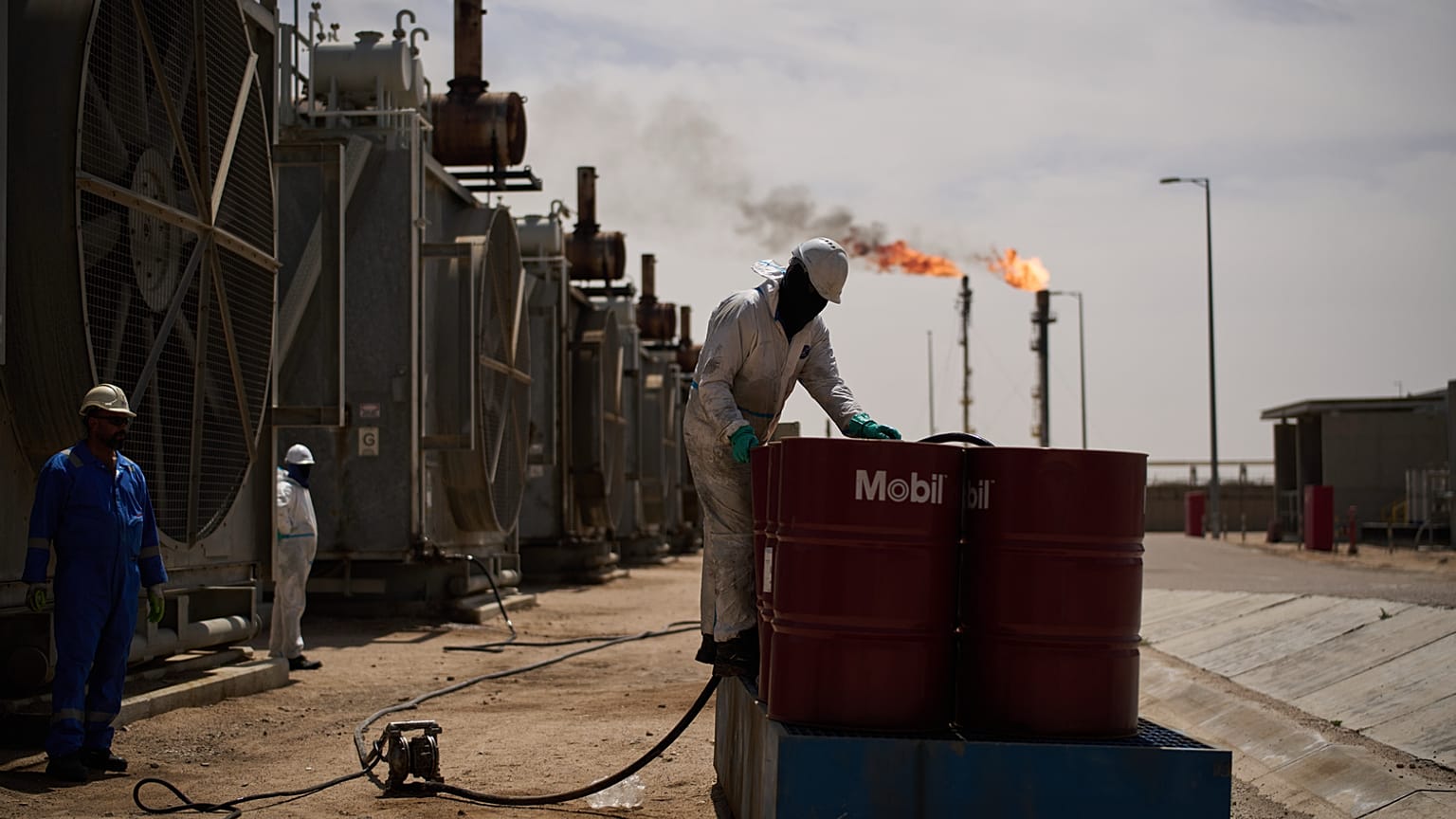
A labourer collects engine oil while working at the degassing station in the Zubair oil field
Copyright Leo Correa/Copyright 2026 The AP. All rights reserved.

By Chaima Chihi & وكالات
Published on 

Iraq has the fifth largest proven oil reserves in the world, estimated at 145 billion barrels, representing about 17% of total Middle Eastern reserves and around 9% of global reserves, according to the US Energy Information Administration (EIA).

The Iraqi Ministry of Oil has announced the discovery of a large oil field in the southern province of Najaf, near the border with Saudi Arabia.

The discovery is considered one of the most important in the Iraqi energy sector in recent years, as initial estimates indicate that one of the exploration patches contains reserves exceeding 8.8 billion barrels of crude oil.

The Qurnain block is located in southwestern Iraq in Najaf province, about 180 kilometres from Baghdad, along the Iraqi-Saudi border. It is one of the most promising areas for oil exploration, covering an area of 8,773 square kilometres. The contract to develop, explore and produce oil from it was signed on 17 October 2024.

According to data announced by the Ministry, drilling operations at the Shams-11 exploration well showed the presence of light crude oil, with an initial production capacity of 3,248 barrels per day.

The announcement was made during an official meeting between Iraqi Oil Minister Hayan Abdul Ghani and representatives from China's ZhenHua Oil, during which they reviewed progress at the Qurnain site and discussed advanced drilling techniques to increase the efficiency of exploration and production operations and accelerate development.

ZhenHua, through its subsidiary Qurnain Petroleum Limited, is the main operator of exploratory drilling and seismic survey operations in partnership with the Iraqi side.

A Chinese bet on the Iraqi desert

The Chinese company has submitted a rapid investment plan aimed at accelerating the development of the field and moving it to commercial production as soon as possible, the oil ministry said.

Baghdad is working to accelerate a strategic project to build a pipeline linking Basra province in the south with the city of Haditha in Anbar province near the Syrian border, with a planned export capacity of 2.5 million barrels per day.

Meanwhile, Iraq is facing pressure on its oil exports as a result of the war in the Middle East and disruptions in the Strait of Hormuz, a vital corridor for Iraqi energy shipments to global markets.

Before the escalation of regional tensions, Iraq produced about 4.5 million barrels of oil per day, making it the third largest producer in the Organisation of Petroleum Exporting Countries (OPEC), and exported about 3.5 million barrels per day, around 90 per cent of which passed through the Strait of Hormuz.

According to official data issued by the Ministry of Oil, Iraq's oil exports fell to 18.6 million barrels in March, generating revenues of $1.96 billion (€1.77bn) — a decline of around 71 per cent in revenue terms compared to February, when Iraq exported more than 99 million barrels and earned $6.81 billion (€6.15bn).

WAIT, WHAT?!

False and unverified images link Leipzig attack suspect to Antifa and AfD

Rescue workers stand next to a damaged car that has crashed into several people in Leipzig, Germany, Monday, May 4, 2026.
Copyright AP Photo

By Tamsin Paternoster & Noa Schumann
Published on 

Doctored images and videos of unrelated protests have circulated online after a deadly car attack in Leipzig, falsely suggesting the suspect was linked to Antifa or the AfD.

A slew of false and unverified images have spread online after a deadly car attack in Leipzig, with several suggesting that the suspect was linked to the left-wing anti-fascist Antifa movement and Germany's far-right Alternative for Germany (AfD) party.

The perpetrator, named in German media as Jeffrey K, drove a car into a crowd, killing two people and seriously injuring several others.

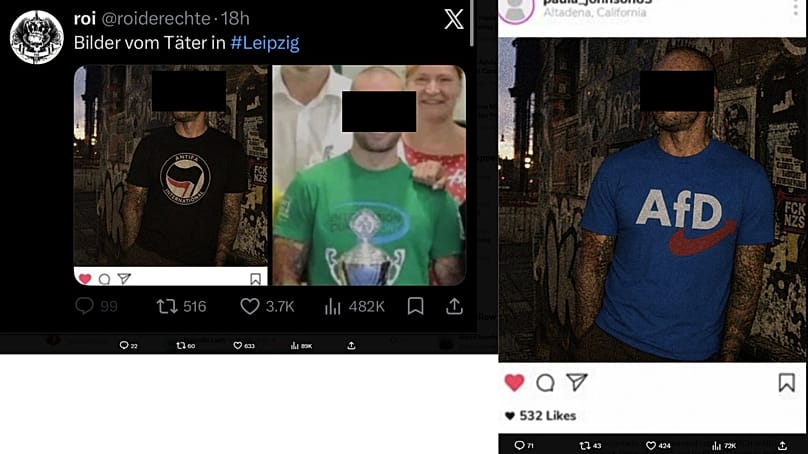
In the aftermath of the attack, one widely shared image claims the suspect was wearing a T-shirt with the logo "Antifa International".

The Cube, Euronews' fact-checking team, was not able to independently verify where the original image was taken or its online origin.

German fact-checkers traced one of its earliest uploads to an account that posted what appeared to be a genuine photo of the suspect wearing a green shirt alongside the picture of him wearing the "Antifa International" shirt.

Images claiming to show suspect are unverified or doctored.
Images claiming to show suspect are unverified or doctored. @roiderechte

When asked, the account's uploader said he had found the image on a niche website "Pr0gramm" — although searches of the website show no evidence of the image.

The screenshot of the image shows an account that posted the photograph was located in California, and taken from a template used to illustrate an Instagram display, suggesting that the image could be doctored.

Another account that amplified the picture later clarified that it was fake, despite Grok, an AI chatbot developed by Elon Musk's xAI, originally deeming it authentic.

At the same time, a doctored photo of the same image showing the man wearing a T-shirt with the logo of the AfD party spread online. Analysis of this image against the other one clearly shows it has been digitally manipulated.

Some of the posts sharing the image of the alleged suspect wearing the AfD shirt did so to show evidence of how easily a photo could be altered. However, several posts, some with thousands of views, held captions alleging the suspect was an AfD voter based on the manipulated image.

Despite these false images linking the alleged perpetrator to both Antifa and the AfD, authorities say there is currently no evidence to suggest the perpetrator had a political or religious motive.

Only limited information on the suspect has been released, with authorities confirming that he is a 33-year-old man, a resident of Leipzig and born in Germany.

They added he had come to the attention of authorities previously for "threats and defamatory offences in his social circle" and was admitted and treated in a psychiatric hospital.

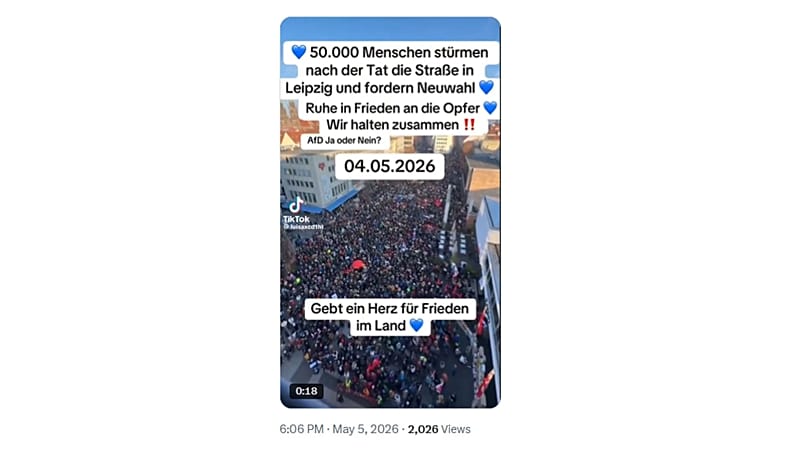
In the aftermath of the incident, several videos circulating on TikTok and X claimed to show thousands of people gathering in support of new elections and the AfD following the attack.

Videos claiming to show protesters in Leipzig pushing for new elections are not current and use unrelated footage.
Videos claiming to show protesters in Leipzig pushing for new elections are not current and use unrelated footage. @WWietje

These videos spread on TikTok and X, with one garnering tens of thousands of views.

But this footage is not current and unrelated to the incident. A reverse image search shows it is from a protest in February 2025 in Nuremberg.

At the time, at least 20,000 demonstrated for democracy in the city's Kornmarkt square, according to German news agency DPA.


Potato futures soar 700% in less than a month on Iran war speculation

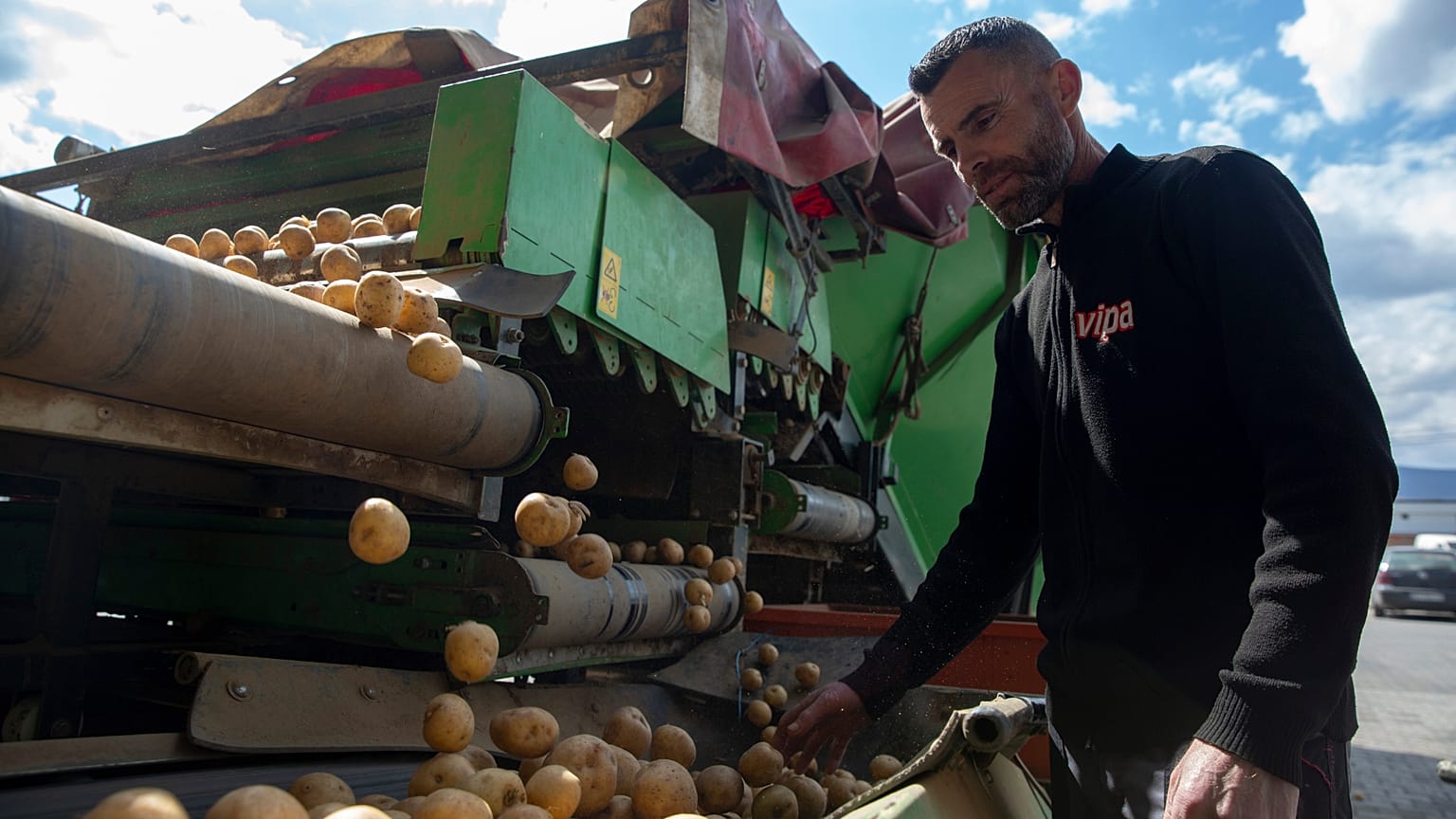
A worker inspects the potatoes in the village of Pestove, Kosovo, 26 March 2026
Copyright AP Photo/Visar Kryeziu


By Quirino Mealha
Published on 

Potato-linked financial contracts have risen over 700% in a few weeks, despite a current oversupply in Europe, due to speculative trading surrounding the volatile environment caused by the Iran war.

Potato contracts for difference (CFDs), which track the benchmark market for the commodity, have seen prices soar roughly 705% in less than a month.

Since 21 April, the cost per hundred kilograms has risen from approximately €2.11 to a staggering €18.50.

However, this price is in fact still very low compared to where the potato market was in the last two years. This is due to the underlying physical market in Europe currently suffering from a major oversupply.

After shortages and strong prices in previous seasons, farmers in countries including Belgium, Netherlands, France and Germany expanded planting areas significantly.

Favorable weather conditions then produced exceptionally large harvests, creating a substantial surplus across the European market. As a result, processors and exporters have struggled to absorb the supply, pushing farmgate prices sharply downward.

Reportedly some lower-quality potatoes intended for animal feed or industrial use have traded at extremely low or even negative prices. In those cases, growers may effectively pay transport or disposal costs to move excess stock off their farms.

The cited €18.50 benchmark generally refers to “free-buy” potatoes sold on the open market rather than potatoes already covered by fixed-price contracts between growers and processors.

Although this price is above the negative values seen in secondary markets, many producers still consider it financially unsustainable because production costs, including fuel, fertiliser, storage and electricity, have risen substantially.

The contrast between weak physical prices and sharp movements in financial benchmarks reflects the difference between commodity trading markets and the real agricultural supply chain.

Financial markets can react strongly to volatility, expectations about future harvests, weather risks, export demand or potential supply corrections, even while current physical inventories remain excessive.

In other words, the large percentage increase seen in potato-linked financial instruments does not mean potatoes have suddenly become expensive in Europe, instead, it reflects volatility in a market attempting to price future conditions linked to the current instability.

Negative effects of the Iran war

The conflict in the Middle East has severely hindered the export of essential chemicals and minerals required for industrial farming, leading to widespread fears regarding global food security.

As potatoes are a nutrient-intensive crop, the sudden lack of affordable fertiliser has direct implications for future yields and current market valuations.

To make matters worse, the regional instability has made primary shipping lanes increasingly hazardous, complicating the logistics of agricultural trade.

According to the UN, roughly a third of the world's fertilisers such as urea, potash, ammonia and phosphates normally pass through the currently blocked Strait of Hormuz.

In response to these rising costs and uncertainty, traders are seemingly repricing futures contracts and no longer prioritising the current reality of oversupply.

While for European consumers, this does not presently translate to a massive increase in the cost of a basic dietary staple, the move in potato CFDs highlights an anxious market attempting to price the several and encompassing economic effects of the Iran war.


‘EU legislation cannot be dictated by social media threats,’ says MEP trade chief

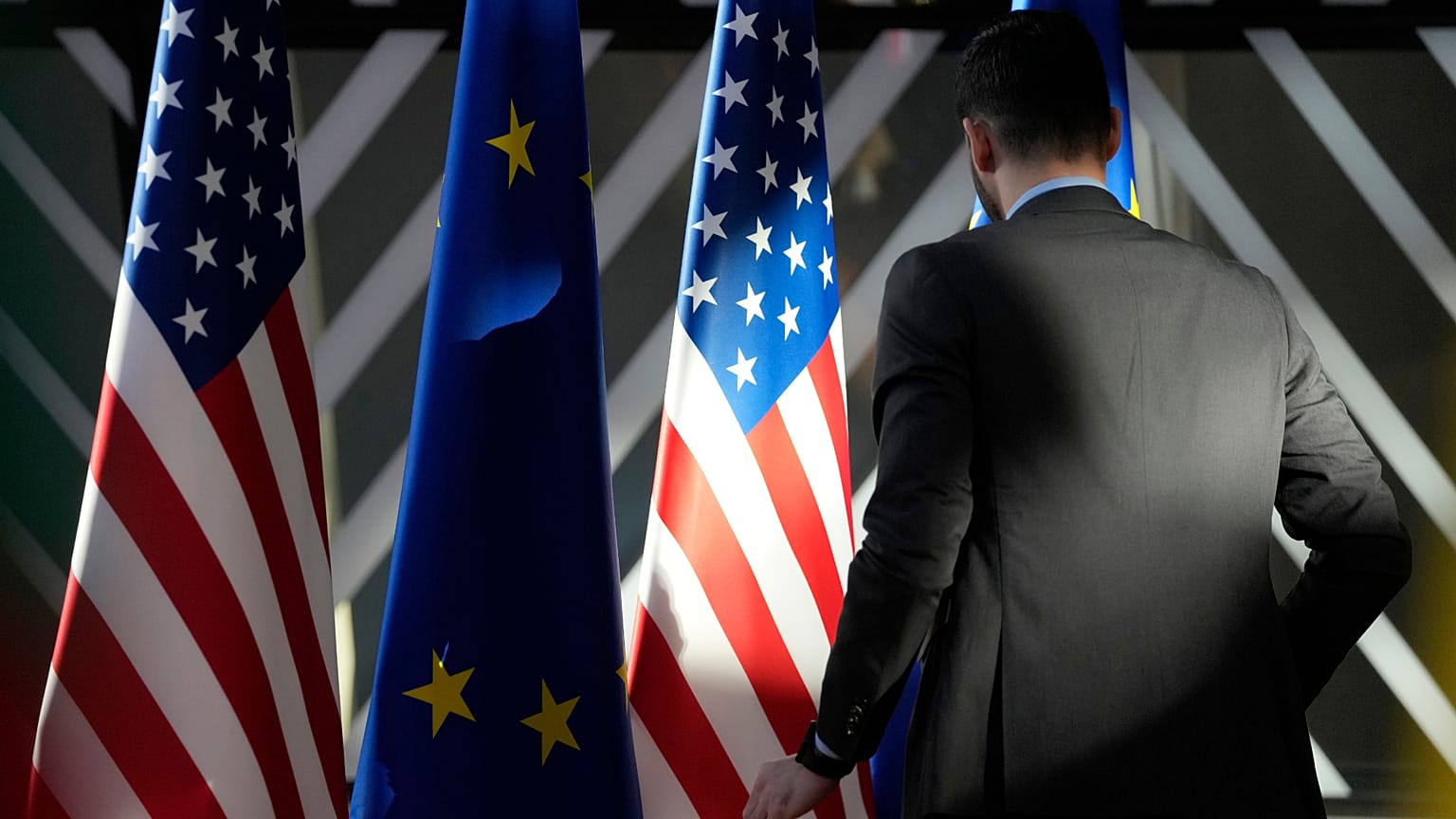
The EU and the US concluded a trade deal in July 2025 which still needs to be enforced.
Copyright AP Photo

By Peggy Corlin
Published on 

Bernd Lange, the MEP lead on the EU-US trade deal, has rejected pressure from Washington to fast-track implementation, insisting the bloc’s democratic procedures cannot be dictated by tariff threats from President Donald Trump.

German MEP Bernd Lange (S&D), the European Parliament’s lead negotiator on the EU-US trade deal, defended on Friday the EU legislative process aimed at implementing the agreement, pushing back against US criticism that Europe is moving too slowly.

The comments came after US President Donald Trump gave the EU until 4 July to cut tariffs on US goods to zero, as agreed under the deal signed last year in Turnberry with European Commission President Ursula von der Leyen, warning otherwise of new tariffs on European products.

Washington has stepped up pressure on Brussels to fast-track the legislation needed to enforce the agreement. But negotiations between the EU’s co-legislators failed Wednesday night to produce a deal.

“European legislation cannot be dictated by threatening social media posts from Washington,” Lange said in a statement, adding: “Our democratic procedures are not negotiable. Even in stormy weather, we stay firmly on course.”

Last week, Trump had already threatened to impose 25% tariffs on EU cars if the bloc failed to implement its side of the agreement — far above the 15% cap agreed in Turnberry.

The latest threats did not alter negotiations between MEPs and member states, which stalled over the safeguards Parliament wants attached to the agreement.

US courts' rulings

Since the deal was struck, MEPs have been among its fiercest critics, denouncing what lawmakers see as a lopsided arrangement under which the EU faces 15% tariffs and commits to major investments in the US while reducing its own duties to zero.

MEPs suspended the deal earlier this year after Trump threatened tariffs against Europe in his push to acquire Greenland. Parliament later added conditions to the agreement, including a “sunset clause” ending the deal in March 2028 and a suspension mechanism in case of new threats from Washington, market distortions linked to US imports or economic coercion.

Lange said the safeguards must also shield the agreement from growing legal uncertainty in the US, coming from recent court rulings including a decision Thursday by the US Court of International Trade blocking tariffs affecting two plaintiff companies, as well as a February Supreme Court ruling declaring the 2025 tariffs illegal.

“All of this underlines how important a stable European safety net is,” the MEP said.

“Europe must remain capable of acting. We need to uphold the agreement while also being able to react quickly if the US position shifts again. Anything else would be reckless and short-sighted.”

Lange confirmed a new round of negotiations between EU lawmakers and member states would take place on 19 May, both sides hoping to secure a deal that could be rubber-stamped by Parliament in June, ahead of Trump’s latest deadline.


This historic Oxford cinema could be lost to film lovers soon if its lease is not renewed

The facade of the Ultimate Picture Palace cinema in east Oxford.
Copyright Ultimate Picture Palace

By Indrabati Lahiri
Published on 

The Ultimate Picture Palace in Oxford, UK, requires a lease extension past 2037 to be able to carry out key renovations and make the most of grants for energy efficiency and accessibility.

Film lovers could be at risk of losing one of the UK’s oldest independent cinemas, due to lease renewable issues.

East Oxford’s Ultimate Picture Palace first opened in 1911 and has since been a beloved cultural hub for generations of residents and students alike.

With a capacity of 106, it boasts a charming and nostalgic vibe with a manually opened curtain and an old-timey box office. The UPP has also hosted the likes of Oscar-winning director Sam Mendes.

However, the cinema is now facing an uncertain future, as its landlord, the University of Oxford’s Oriel College, is unwilling to extend the Grade II-listed building’s lease to undergo much-needed renovations.

Although the UPP is now a community-owned business, its long-term future depends on the Oriel College extending the lease past 2037.

This would allow the UPP to make critical renovations and take advantage of grants that would enhance accessibility and energy efficiency. The cinema has seen a surge of 25% in its operating costs in the last four years and continues to deal with financial concerns.

“This lease was agreed recently in 2022 with a new registered society. We have no plans to amend the lease at this early stage in the tenancy… We continue to be in dialogue with the new managers about how to ensure the cinema remains open to the wider public,” a spokesperson for Oriel College said, as reported by The Guardian.

Oriel College also owns several other east Oxford properties and has plans to expand.

This highlights the worsening “studentification” trend, which shrinks independent third spaces for locals and puts a number of popular and historic spots at risk.

Back in March, a petition and campaign to save the UPP was launched, which amassed 22,000 signatures.

Why a weakened Starmer will worry the EU

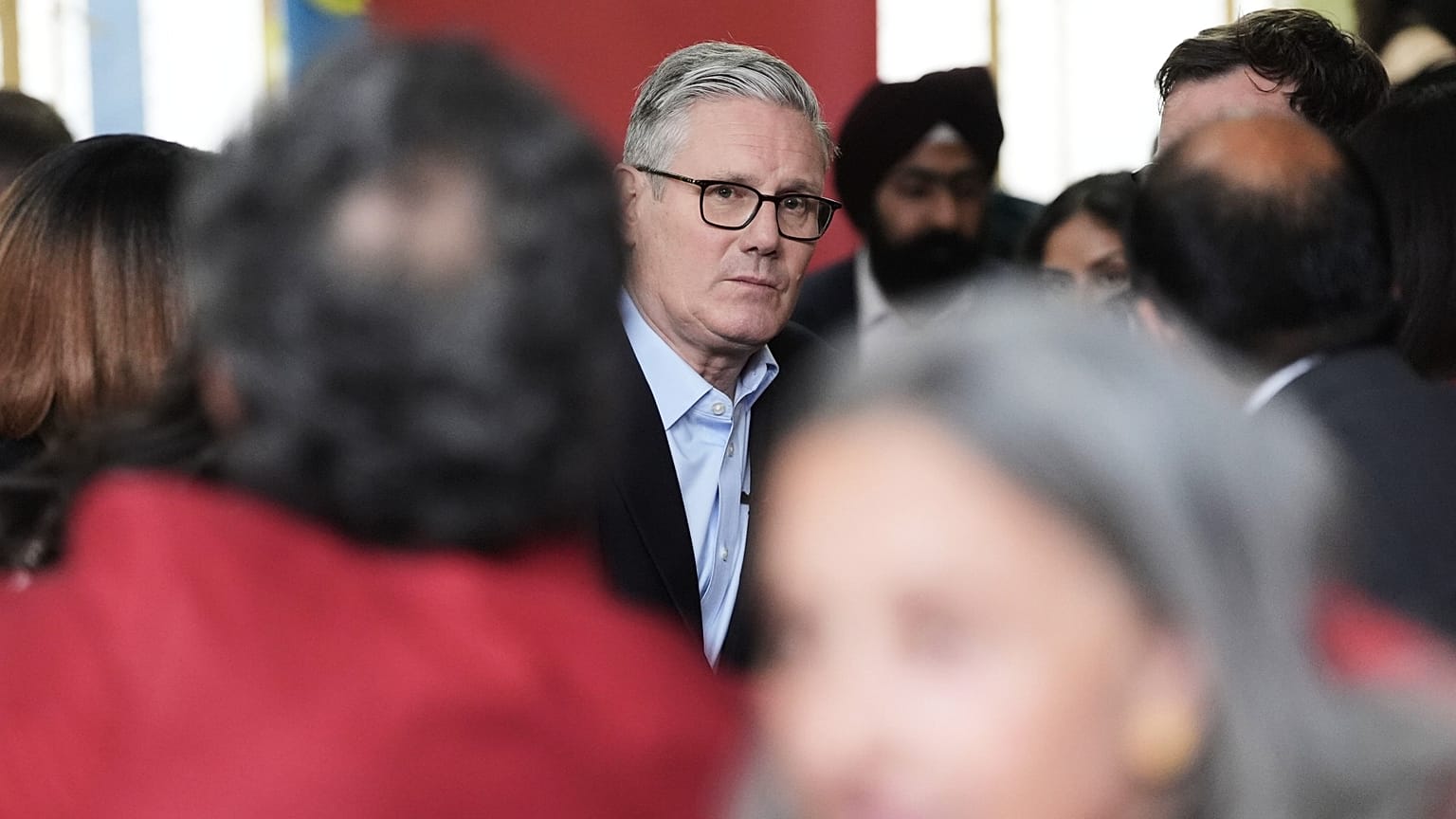
Britain's Prime Minister Sir Keir Starmer meets Labour Party members at Kingsdown Methodist Church Hall, in Ealing, west London, Friday May 8, 2026, a day after the local elec
Copyright AP Photo

By Leo CENDROWICZ
Published on 

After bruising local election losses, Sir Keir Starmer is preparing a renewed push for closer ties with the European Union — but Brussels worries that his political weakness could stall or derail any meaningful post-Brexit reset.

"I'm not going to walk away and plunge the country into chaos," British Prime Minister Sir Keir Starmer said on Friday after local election results showed millions of voters had abandoned his Labour Party.

It is a far cry from the general election less than two years ago that saw Labour win one of the largest majorities in British parliamentary history.

Starmer admitted that the elections — which saw hundreds of Labour councillors lose seats amid massive gains for Nigel Farage’s Reform UK party — were painful. “The results are tough, they are very tough, and there's no sugarcoating it,” he said.

He is already planning a reboot of his premiership, starting on Monday, with a major speech that is expected to promise closer ties with the European Union.

That ties in with the political mood. Almost ten years on from the Brexit referendum, voters see the decision to leave the EU as a mistake by a two-to-one margin.

Brussels sees opportunity — and danger

In Brussels, officials will welcome improved relations, after a decade defined by Britain’s rancorous divorce from the EU. Global events, from the war in Ukraine to the re-election of Donald Trump, have already brought the UK and EU closer, particularly on defence issues.

Starmer has played a vital role in rallying the so-called coalition of the willing behind Ukraine, which last year pledged strengthened support as the US pulled back its aid for Kyiv. He has also aligned with the EU’s cautionary tone on the war in Iran, calling for restraint despite fierce criticism from US President Donald Trump for not joining the conflict.

However, the EU will be wary too.

Starmer is historically weak. National polls show Labour support hovering under 20%, sometimes behind both the Conservatives and the Green party. They are well behind Reform, at around 25%.

Starmer’s personal ratings are catastrophic: polls show just 19% of voters approve of his leadership, and his net approval is minus 45%. Betting markets now have his exit as an effective coin-toss before the end of June.

Rivals within the Labour are circling. Rumours abound in Westminster about potential challenges from the likes of former Deputy Prime Minister Angela Rayner, Health Secretary Wes Streeting and Mayor of Manchester Andy Burnham.

That matters in Brussels, where there is little appetite for reopening difficult negotiations only to see a weakened UK government retreat under domestic pressure or be overtaken by events. “Anything that comes up would still need to be negotiated — and we’ll be careful about going all in with Starmer if he’s out in a few months,” said one EU diplomat.

And what about the longer term? Reform UK has been leading the polls since early 2025, and bookmakers have them odds-on to win the next general election, which must take place by 2029.

Even if voters have warmed to the EU, the likeliest next prime minister is Nigel Farage, who also led Reform’s previous incarnation, the Brexit Party. He has pledged a harder approach to the EU, including a renegotiation of the post-Brexit trade deal to strip EU citizens of benefit rights.

“Ever since Brexit, there has been a concern in Brussels about Britain making commitments that it cannot fulfil, especially if they could be reversed by a Farage government,” says Fabian Zuleeg, chief executive of the European Policy Centre.

Slow reset, lingering suspicion

But even beyond political questions about the fate of Starmer and Labour, the EU has found it hard to measure the UK’s engagement. Despite Starmer’s much-vaunted “reset” after entering Downing Street, progress has been slow and heavily constrained by Labour’s own red lines: no return to the Single Market, customs union or freedom of movement.

Negotiations have advanced in some areas, notably on defence cooperation, energy links and a veterinary agreement aimed at reducing post-Brexit trade friction. Yet many of the headline ambitions remain bogged down in technical disputes over funding, regulatory alignment and youth mobility schemes.

Talks on UK participation in the EU’s €150 billion SAFE defence fund have already run into arguments over financial contributions, while negotiations on student fees and mobility caps have become politically toxic in London.

In Brussels, there is also frustration that Britain still appears uncertain about what kind of long-term relationship it actually wants.

EU officials increasingly argue that London cannot simultaneously demand deeper access to parts of the Single Market while rejecting many of the obligations that come with it. The old Brexit-era suspicion of British “cherry-picking” has never fully disappeared.

For now, European leaders still see Starmer as serious, pragmatic and infinitely preferable to the chaos of Boris Johnson, one of his predecessors.

But privately, officials worry that his weakening political position could make even modest agreements harder to deliver.

Few in Brussels want to spend political capital negotiating sensitive deals with a British prime minister who may not survive long enough to implement them — or whose successor could unravel them all over again.


English elections see Labour Party punished and gains for populist Reform

Partial results from local elections held yesterday in England show big losses for the governing Labour Party and gains for the anti-immigration Reform UK, fuelling doubts over Prime Minister Keir Starmer's future just two years after he was elected in a landslide victory.


Issued on: 08/05/2026 - RFI

Reform UK leader Nigel Farage celebrates "historic" change in British politics after his party won more than 300 seats in England. AP - Yui Mo


Thursday's elections for 136 local councils in England, alongside those to elect devolved parliaments in Scotland and Wales, are the most significant ‌test of public opinion in the United Kingdom before the next general election due in 2029.

Most of the results from England – as well as all the seats in the Scottish and Welsh elections – are due to be ​declared later on Friday.

Partial results from England show Labour lost 247 seats, including in some traditional strongholds in former industrial regions in central and northern parts of the country, along with some parts of London.

The main beneficiary was the right-wing, anti-immigration Reform party of Brexit campaigner Nigel ‌Farage, which gained 335 council seats in early results in England.

It could also form the main opposition in Scotland and Wales to the respective pro-independence parties, the Scottish ⁠National Party and Plaid Cymru.

Starmer said he took "responsibility" for his party's poor results. "They are very tough, and there's no sugarcoating it," he told reporters on Friday.


'Historic change'

The Conservative Party has lost 127 seats, while Labour has been wiped out in some of the most closely watched early results.

The party lost control of the council of Tameside ​in Greater Manchester for the first time in almost 50 years, after Reform picked up all 14 seats it was defending.

In nearby Wigan, a former mining community Labour has also controlled for more than 50 years, it lost every one of the 20 seats it was defending to Reform. In Salford, the party held just three of the 16 ​seats it was defending.

The results were "soul-destroying", said Rebecca Long-Bailey, a Labour member of parliament for Salford.

Reform won hundreds of local council seats in working-class areas in England’s north that were once solid Labour turf, and also made gains from the Conservatives in areas such as Havering in east London.

Farage said the results marked “a historic change in British politics".


Starmer's future in balance

The elections are widely viewed as an unofficial referendum on Starmer, whose popularity has plummeted since he was elected less than two years ago, with voters growing impatient for the economic growth and dramatic change promised following 14 years of Conservative rule.

Some Labour MPs have said that if the party performs poorly in Scotland, loses power ⁠in Wales and fails to hold many of the roughly 2,500 council seats it is defending in England, Starmer will face renewed pressure to quit – or at least set out a timetable for his departure.

However, Starmer's allies have said it's not the time to move against ​him.

Defence Minister John Healey said the last thing voters wanted was "the potential chaos of a leadership election".

(with newswires)