WAR IS ECOCIDE
Oman’s Turtle Coast Hit by Oil Leaking From the Tanker Caroline Bezengi
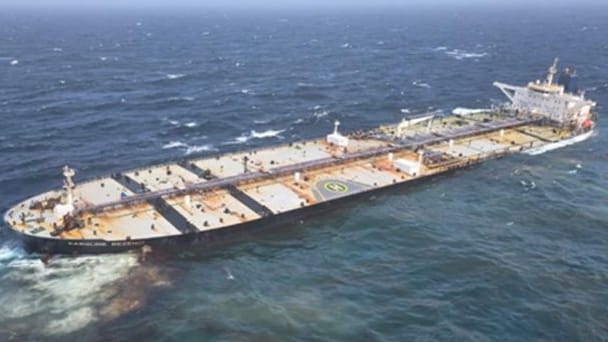
The environmental catastrophe predicted when salvage surveyors inspected the Russian dark fleet Supermax, the Cameroon-flagged Caroline Bezengi (159,168 dwt), beached on rocks off an Omani island, is beginning to unfold.
The Caroline Bezengi was hit by an explosion on June 8 while off the coast of Oman. The tanker had completed a transit of the Suez Canal on May 30 and left the Maritime Security Transit Corridor when the explosion occurred. The crew was taken off without injury some four days later, and the tanker subsequently was driven onto the rocks on the southwest tip of Jazirat Al Qibliyyah, one of the Hallaniyat Islands off the coast of Dhofar in the southwest of Oman. The tanker was laden with oil taken on board at Novorossiysk and was destined for Gujarat. The tanker has a past association with Russian state ship-owner Sovcomflot, and had been sanctioned by the EU, UK, and US (OFAC).
The position of the ship is particularly difficult, and is exposed to heavy seas normal in this Khareef monsoon season. While the ship appears to be grounded on rocks forward, there are outcrops off the port side that could also catch the ship if it shifted. There are also exposed rocks 500 yards off the stern of the ship.
The Omani maritime authorities conducted an onboard survey of the ship on July 12, and noted considerable deterioration in comparison with an aerial survey conducted the prior week, with the ship lower in the water, with a more pronounced list, and liable to break up in heavy weather. The tanker was fully laden except for one tank – this empty tank being the only one apparently not breached, with the remaining tanks all full, showing signs of seawater contamination. Crude leakage into ballast was noted during the on-board inspection, and also into the double hull spacing, the fumes from which were identified as potentially explosive. The survey also identified a feasible plan for off-loading the Caroline Bezengi’s cargo, worth probably over $100 million, via a 1000-yard pipeline to a receiving tanker anchored in safer waters in the lee of the island. The tanker potentially could be refloated as it was lightened, but with all the risks of on-board explosions and the ship breaking up further as the operation progresses.
Local newspapers reported on July 23 that the Omani Ministry of Transport, Communications and Information Technology has issued an urgent 24-hour directive for the owners to remove the vessel. It is not clear if the Ministry received a response from the Chinese registered owners, Rentoor Ship Management, based in Huangpu Qu, Shanghai. But it appears unlikely, as the address appears to be a dead-letter box in a residential block of flats in downtown Shanghai, a typical set-up in the registration particulars of Russian dark fleet tankers.
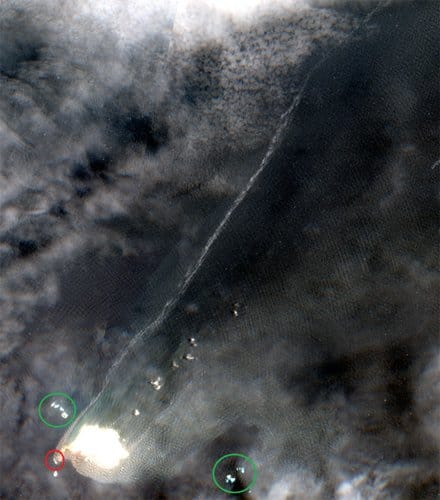
Jazirat Al Qibliyyah and the Caroline Bezengi (red) on August 2 with possible salvor vessels (green) (Sentinel-2/CJRC)
From satellite imagery of Jazirat Al Qibliyyah on August 2, there are indications of several small vessels standing off the wreck in two groups, 1nm to the north and 5nm to the east of the wreck of the Caroline Bezengi. But no unloading operation appears to be underway, and a strong plume of oil can be seen drifting around the island from the wreck and way off towards the north-east. This plume continues in a consistent direction and broadens, such that it would hit the Omani coast between Sharbithat and Ras Madrakah. This is a particularly isolated area, the sea fringed by cliffs and small widths of inaccessible beach, which makes it a perfect coastline for turtles to come ashore and lay eggs without human interference. The sea area offshore is a marine reserve for a number of endangered species, including petrels and the rare Arabian Sea humpback whale. It is not clear if the Omani authorities have yet got a salvage operation underway, and neither the ministry nor the marine salvage firm best equipped to take on the task have responded to enquiries.
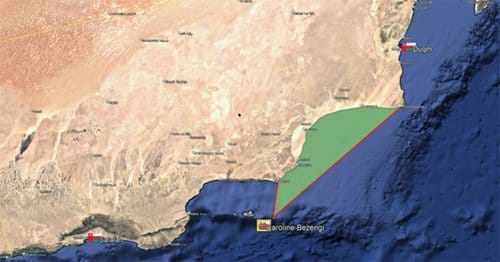
The spread of the oil plume from the Caroline Bezengi, affecting a protected marine reserve and landing on the Omani coast between Sharbithal and Ras Madrakah (Google Earth/CJRC)
The Caroline Bezengi appears to have been a victim of a limpet mine attack, likely orchestrated by Ukraine. Unless the Ukrainians have acquired a long-range naval capability, a limpet mine would most likely have been placed on the ship since leaving Novorossiysk, and when it was at anchor. Ships customarily anchor while waiting to enter the Suez Canal, but also often do so in the As Suways Anchorage on exit as well, to complete procedures. The timing of the explosion, on a predictable course, may have been a warning not to register Russian-owned dark fleet tankers; 39 such vessels currently fly the Omani flag, out of a total ship registry of 43 vessels.
Oil Slicks and a Burning Ship Show the Toll of the Hormuz Crisis
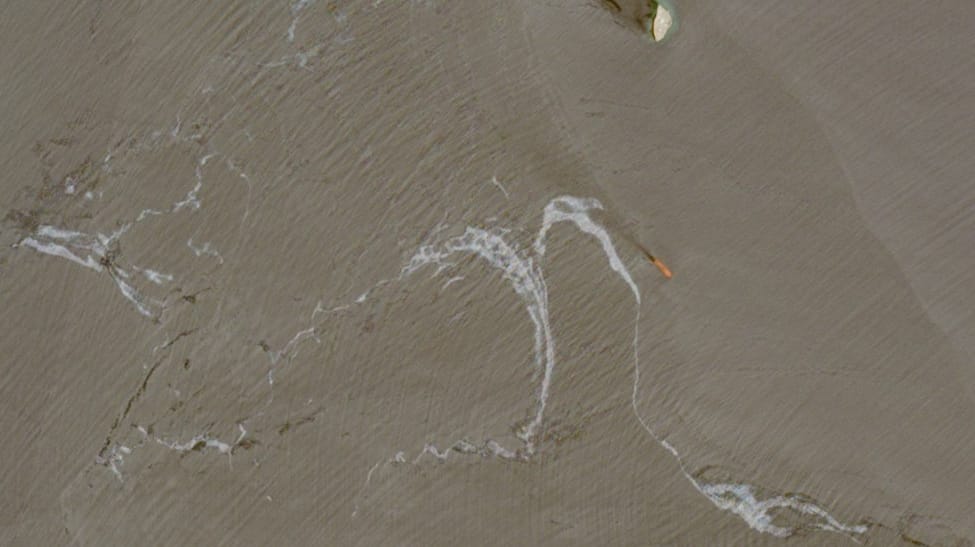
Sentinel-2c satellite imagery taken on August 5 off the northern tip of Oman’s Musandam Peninsula shows the extent of damage inflicted on shipping and Oman’s coastline as a consequence of Iranian IRGC drone and anti-shipping cruise missile attacks.
Clearly identifiable both from its length and its color is the 225m container ship, the Liberian-flagged Minoan Pioneer (IMO 9471630). The Minoan Pioneer was attacked on August 3, and her third engineer remains missing. Yesterday this vessel was appearing as a hot spot on NASA FIRMS fire detection satellite imagery. The ship is no longer burning to a degree which shows a red heat signature in FIRMS, but in today’s Sentinel imagery black smoke appears to be still coming off the bow of the ship.
The Minoan Pioneer does not appear to be leaking bunker fuel, and the source is unclear; though the resolution of Sentinel-2 imagery has limits, it is possible that there may be two additional, smaller vessels linked to some of the visible oil plumes (circled in green and yellow).
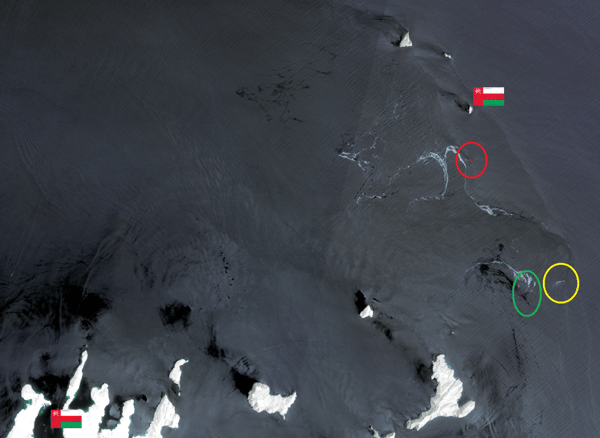
Royal Navy of Oman locations on Goat Island (left) and Didamar (right), the Minoan Pioneer (red) and two possible small 85m (yellow) and 55m (green) vessels plus oil spills (Sentinel-2c/CJRC)
Tidal flow in the Strait is heavier than within the Gulf, and tends to flow inwards through the north of the Strait and outwards in the southern section. Salinity is lower in the Gulf of Oman than within the Arabian Gulf, but tidal mixing forces are vigorous, quickly evening out the salinity, a tidal mechanism which should help with the dispersal of oil.
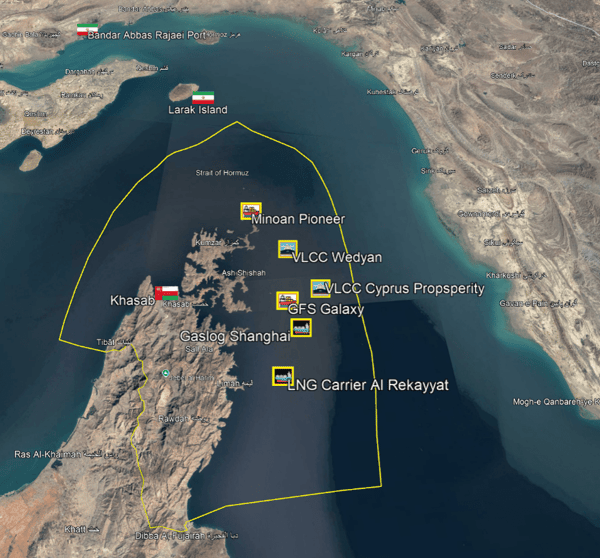
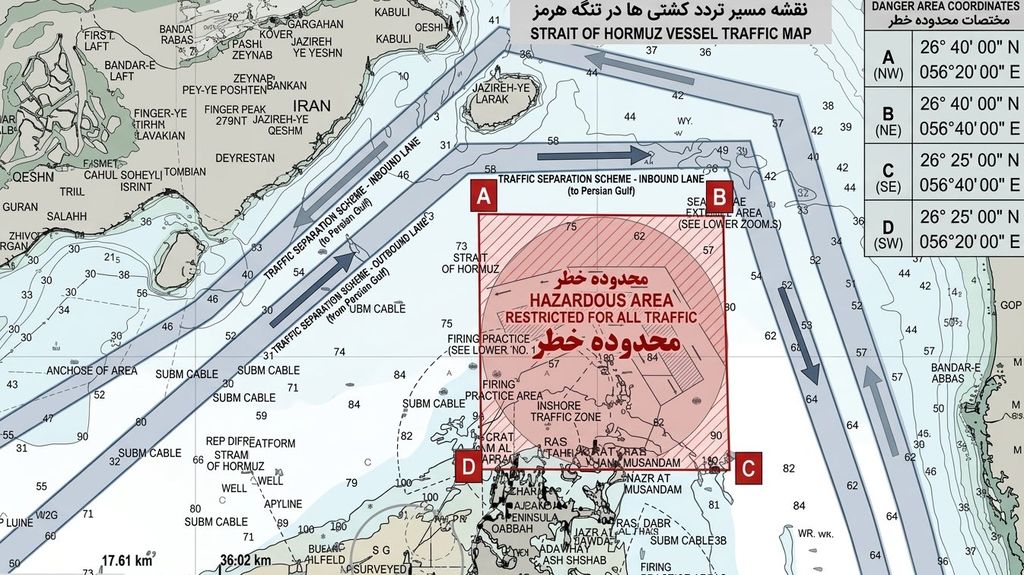
Locations where vessels are known to have been struck within Omani territorial waters while transiting the Omani coastal route (Google Earth/CJRC)
There is no evidence in the imagery of any salvage or cleanup activity underway, presumably because any such activity could be vulnerable to IRGC drone or missile attack. At the single point in time of imaging, no warships were identifiable, nor were any ships spotted using the Omani coastal route to either enter or exit the Gulf.
Any cleanup activity undertaken once the military situation permits will be difficult and complex, because the Musandam Peninsula’s fjord-like coastline is both difficult to navigate and typically has no accessible shoreline, its cliffs falling directly into the sea. Given the mountainous terrain, many of the remote fishing communities scattered around the northern and eastern coast are only accessible by sea.
War Risk Insurance Pays $11M for Loss of Mayuree Naree
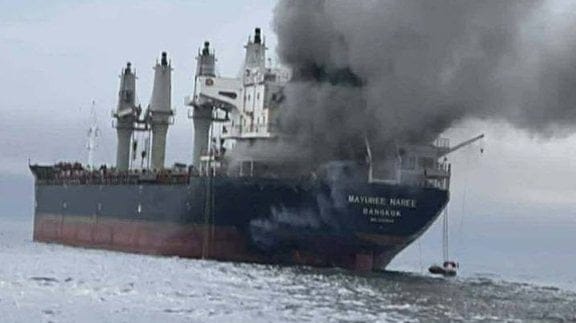
The Thai shipping company Precious Shipping reports it has received a payment of $10.98 million on the war risk insurance related to the bulker Mayuree Naree, which was destroyed during an attack in the Strait of Hormuz. The vessel, which later grounded in Iran, was declared a constructive total loss.
The 30,193-dwt bulker, which was built in 2008, was struck on March 11 by two projectiles. The company said the vessel had been following the safety advisories and was attempting to transit the Strait of Hormuz when it was struck at approximately 08:15 local time.
The attack caused a fire on the vessel in the engine room and flooding. A total of 20 of the 23 crew aboard were able to escape the ship and were rescued by the Royal Navy of Oman. They returned to Thailand on March 16.
Three seafarers were missing after the attack. The company had reported at the end of March that a specialized team searched the ship despite difficult conditions, including residual smoke, the fire damage in the engine room and surrounding compartments, and flooding. They were unable to locate the remains of the missing crew, but a second search days later located the crewmembers. The bodies were returned to Thailand at the beginning of July.
After the ship was abandoned, it continued to drift in the Strait. Iranian officials reported the ship had grounded in late March on the other side of the Strait. It was reported on the southern coast of Qeshm Island, north of Larak Island, under the control of the Iranians.
“The group received $10.98 million in war risk insurance proceeds relating to the vessel loss and statutory crew compensation,” the company said in its mid-year financial reports. It said that it had incurred an expense of $1.26 million from the incident, but that there were no cargo claims as the ship was sailing in ballast.
Three of the surviving crewmembers, however, have sued the company in the Labour Court in Thailand. The company acknowledges the suit, which was filed in early July with allegations that the company was not adequately providing for the survivors. The company said it had provided medical examinations, counseling, and psychological support while meeting its contractual obligations. Precious Shipping reports that 17 of the survivors have now returned to work.
The company, however, has a second ship still stuck in the Persian Gulf. It said in March a charter ended for the Hatthaya Naree (39,000 dwt). The Singapore-flagged vessel, which was built in 2015, was fixed on a new time charter on June 24, 2026. However, due to the continuing security situation in the Strait of Hormuz, the vessel remains in the region pending safe onward transit. Precious Shipping reports it has a total of 41 vessels after the loss of the Mayuree Naree.
The International Maritime Organization (IMO) listed the Mayuree Naree as one of a total of 64 confirmed incidents in the Strait of Hormuz and the Middle East since March. It calculates that 17 fatalities have been confirmed. There is no confirmed count on how many seafarers remain trapped in the region.
As Hormuz Talks Inch Towards Finish Line, Conflict Heats Up in Yemen
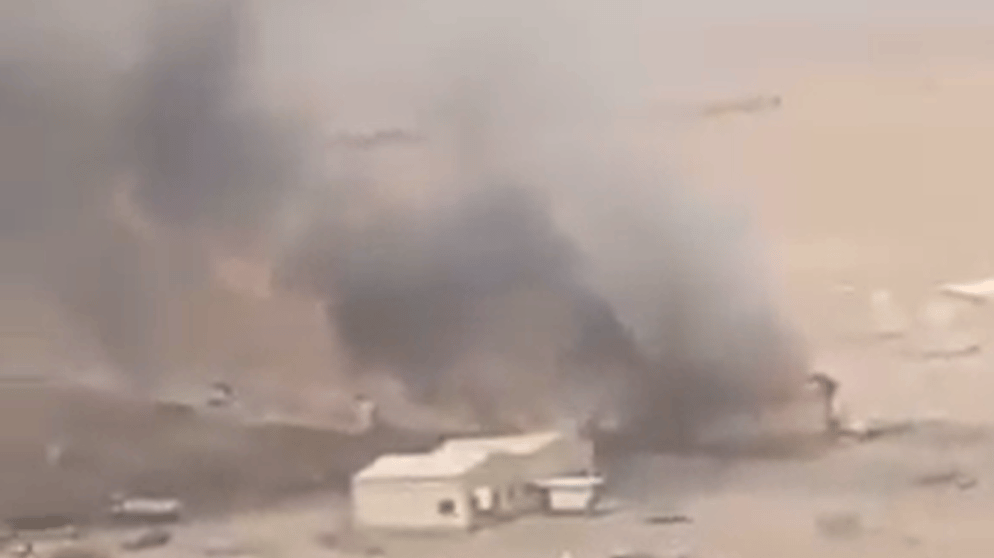
On Thursday, Iranian-backed Houthi forces launched attacks on the Saudi border city of Najran and the Yemeni government stronghold at Marib, part of a broader pattern of regional escalation. Saudi intelligence suggests that preparations are under way by Iran-backed militias to launch new strikes on Gulf infrastructure and seaports. The new hostilities could complicate delicate plans to negotiate a truce between Iran, its GCC neighbors and the United States.
Najran is a small oasis city just north of the Yemeni border, and Houthi forces have repeatedly targeted its airport, claiming that the site is being used to launch surveillance drones over Houthi territory. 11 civilians were wounded in the strike on Thursday, Saudi forces said. The area has strategic relevance: In the civil war period, the Najran region was a launchpad for Saudi incursions across the border, and it was the location of a significant Saudi defeat at the hands of Houthi forces in 2019.
The Marib area is about 80 miles inland from the Houthi capital at Sanaa, and is a gateway to Yemen's oilfields. The strikes on government bases in Marib and nearby regions killed more than 30 government soldiers, Yemeni sources told Al Jazeera - the most significant attacks since the Yemeni ceasefire deal was signed in 2022. The numbers are expected to rise.
Saudi military sources have also reported signs of a possible pending Iranian-backed attack by Houthi groups and Iraqi militias, which possess drone capabilities for long-range strikes on Saudi infrastructure.
"I think they want to coordinate attacks from both north and south," a Saudi official told CNN, "mostly civilian and economic installations" like seaports and energy facilities - targets which the Houthis have hit before.
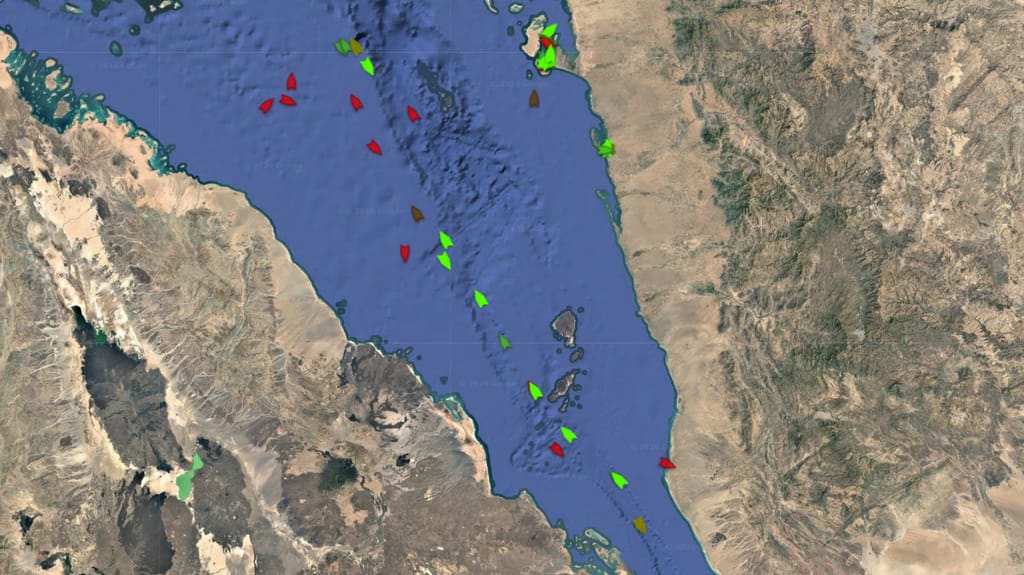
Just yesterday, Houthi spokesman Yahya Saree said that the group would be intensifying its effort to blockade Saudi ports in the Red Sea, and he pledged to counteract Saudi efforts to ship crude northwards through the Suez Canal - where energy logistics would be out of reach of Houthi targeting.
COMMENT: Iran and the UAE are working together to outlast Trump
A "truce" between the UAE and Iran, agreed after direct contacts between senior officials in mid-June, is helping both countries manage the fallout of the wider Gulf war and undermining Washington's strategy of economic pressure, Esfandyar Batmanghelidj, founder of the Bourse & Bazaar Foundation, wrote in a note published August 7.
The de-escalation has spared Emirati cities and critical infrastructure from the direct attacks Iran has continued to level at other Gulf states, Batmanghelidj notes, citing a Financial Times report on the truce. The UAE exported more crude through the Strait of Hormuz than any other Gulf producer in July, with supertankers loading from secondary terminals at Zirku and Das islands and smaller vessels conducting ship-to-ship transfers off Fujairah before crossing the strait - a sign, he writes, that the FT's characterisation of the truce as a "bold gamble" is paying off.
Emirati officials deny making direct financial transfers to Iran, and Batmanghelidj is sceptical of reports the UAE paid Tehran "billions of dollars" to halt attacks, arguing any such inflow would show up immediately in Iran's foreign-exchange markets. What Iran needed, he argues, was not cash but the logistical and financial channels to procure goods.
Over 50 container ships crossed between the UAE and Iran in July, according to shipping-data provider Kpler, approaching pre-war levels - feeder services between the Iranian ports of Bandar Lengeh and Bandar Abbas and the Emirati ports of Port Rashid and Jebel Ali, carrying fruit and vegetables out and industrial intermediate goods back. At least eight bulk carriers crossed the strait in the past week to call at Bandar Imam Khomeini, delivering grain and animal feed to a country reliant on imports to cover its food-consumption shortfall; Iranian importers regained the dollar liquidity needed to pay for those cargoes through the UAE's financial system, reversing a block Emirati authorities imposed in early March after the first wave of Iranian strikes on Dubai and Abu Dhabi.
Not appeasement, but interdependence
Batmanghelidj pushes back on Western commentary that frames the UAE's continued economic engagement as a form of appeasement.
"It is a reflection of the deep and long-standing interdependence between the two countries," he writes. "As the war dragged on, Emirati officials needed to mitigate harm to key parts of the economy, ranging from the oil industry to the tourism sector. Likewise, Iranian officials needed to restore critical supply chains, sustaining manufacturing output and safeguarding food security to maintain stability during the war."
He argues the dynamic also explains why a reported Israeli push for a "land blockade" of Iran - convincing regional states to shut border crossings and ports to Tehran - has gone nowhere: neighbouring states' own economic engagement with Iran is what lets them manage the instability created, in his telling, by the Trump administration's oscillation between offering a deal and threatening further strikes.
"Six months on, it is clear that the war has no military solution, only a diplomatic one," Batmanghelidj concludes, framing the UAE's restored trade with Iran as evidence that regional actors, not Washington, are setting the terms of how the conflict actually winds down.