CU
Codelco’s El Teniente two-year setback deepens copper fears

Suspended development of the Andes Norte section at Codelco’s flagship El Teniente mine could last as long as two years, according to a union leader, compounding production challenges at the world’s largest underground copper mine and tightening an already strained global copper market.

The expansion pause follows new geological studies showing greater seismic risks than previously understood. The Chilean copper giant said the decision was made to protect workers after six months of analysis identified an emerging seismic phenomenon associated with the greater depth of the Andes Norte project.
“The available evidence is consistent with the possible existence of an emerging risk associated with the greater depth of the Andes Norte project,” the company said. “These analyses have identified the existence of an emerging seismic phenomenon with characteristics different from the risks that have historically been known and managed in the operation.”
The project is adjacent to the Andesita and Teniente 7 mining areas, where a rockburst on July 31, 2025, killed six workers and halted production across parts of El Teniente. The collapse, equivalent to a magnitude-4.2 earthquake, remains under criminal, regulatory and technical investigation.
Supply squeeze
The latest setback comes as Codelco is already struggling to restore production after output fell to a 25-year low. El Teniente’s copper production was about 27% lower year over year in the first five months of the year, while the company’s new chairman has acknowledged its goal of returning to 1.7 million tonnes of annual copper production by 2030 is no longer achievable.
The disruption adds to mounting concerns over global copper supply. Miners worldwide are pushing deeper underground as ageing operations become depleted, increasing exposure to geotechnical risks similar to those emerging at El Teniente, a century-old mine with more than 4,500 km of tunnels beneath the Andes.
At the same time, physical copper markets are tightening. CRU’s latest Copper Monitor warned of a growing risk of a near-term squeeze on the London Metal Exchange, citing low on-warrant inventories, dwindling visible Chinese stocks and heavy US imports ahead of a possible tariff decision. The report also noted that one participant now controls between 50% and 79.99% of live LME copper warrants, while nearby futures positions are concentrated among a handful of long investors.
The tightening supply outlook helped lift Comex September copper to an intraday record of $6.7045 per pound ($14,781 per tonne), surpassing the previous high set in May.
The contract later traded at $6.683 per pound, up 0.6% on the day, 7.3% over the past month and more than 50% from a year earlier. Chile, meanwhile, has just reported its weakest second-quarter copper production in almost two decades.
Copper markets are increasingly being driven by supply risks rather than demand, with Codelco’s prolonged disruption adding fresh uncertainty as inventories remain historically tight and traders continue to shift metal into the US ahead of potential import tariffs.
Codelco halts El Teniente mine expansion over seismic risk
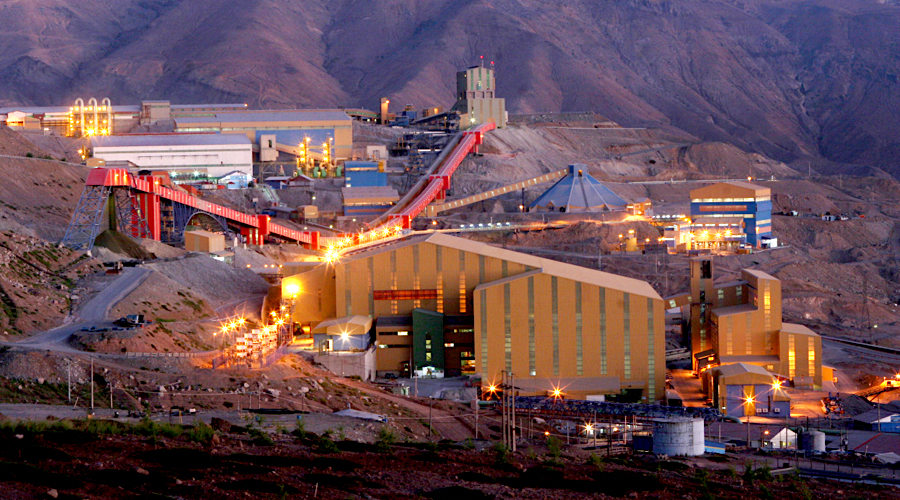 El Teniente operation. Photo by Codelco.
Chile’s state-run copper miner Codelco has paused one of its expansion projects at its flagship El Teniente mine a year after a deadly collapse, saying recent studies show greater seismic risk than initially thought.
An accident on July 31, 2025, killed six workers and forced Codelco to halt production throughout various sections of El Teniente, the world’s biggest underground copper mine, just as it was grappling with lifting production from quarter-century lows.
Codelco said it opted to put expansion works within the Andes Norte section of the mine on hold to ensure worker safety, citing analyses over the past six months that point to seismic risks related to the depth of the deposit, different from those that had been previously identified and monitored.
“The available evidence is consistent with the possible existence of an emerging risk associated with the greater depth of the Andes Norte project,” Codelco said in a statement, adding that it would continue to study the issue.
“These analyses have identified the existence of an emerging seismic phenomenon with characteristics different from the risks that have historically been known and managed in the operation,” it said.
Andes Norte sits near the Andesita and Teniente 7 sections that were most affected by the collapse, which packed an impact equivalent to a 4.2-magnitude earthquake. Codelco faces criminal, regulatory and technical investigations and is still investigating the precise cause of the disaster.
Mining companies worldwide are increasingly turning to very deep underground operations in an attempt to boost output, in some cases compensating for aging, depleted mines.
El Teniente, which is more than a century old, spans more than 4,500 kilometers (2,800 miles) of tunnels and underground galleries in the Andes mountains. It sits about 75 kilometers (47 miles) southeast of Chile’s capital Santiago.
(Reporting by Daina Beth Solomon in Mexico City and Fabian Cambero in Santiago, Editing by Iñigo Alexander and Lisa Shumaker)
Chile’s state-run copper miner Codelco has paused one of its expansion projects at its flagship El Teniente mine a year after a deadly collapse, saying recent studies show greater seismic risk than initially thought.
An accident on July 31, 2025, killed six workers and forced Codelco to halt production throughout various sections of El Teniente, the world’s biggest underground copper mine, just as it was grappling with lifting production from quarter-century lows.
Codelco said it opted to put expansion works within the Andes Norte section of the mine on hold to ensure worker safety, citing analyses over the past six months that point to seismic risks related to the depth of the deposit, different from those that had been previously identified and monitored.
“The available evidence is consistent with the possible existence of an emerging risk associated with the greater depth of the Andes Norte project,” Codelco said in a statement, adding that it would continue to study the issue.
“These analyses have identified the existence of an emerging seismic phenomenon with characteristics different from the risks that have historically been known and managed in the operation,” it said.
Andes Norte sits near the Andesita and Teniente 7 sections that were most affected by the collapse, which packed an impact equivalent to a 4.2-magnitude earthquake. Codelco faces criminal, regulatory and technical investigations and is still investigating the precise cause of the disaster.
Mining companies worldwide are increasingly turning to very deep underground operations in an attempt to boost output, in some cases compensating for aging, depleted mines.
El Teniente, which is more than a century old, spans more than 4,500 kilometers (2,800 miles) of tunnels and underground galleries in the Andes mountains. It sits about 75 kilometers (47 miles) southeast of Chile’s capital Santiago.
(Reporting by Daina Beth Solomon in Mexico City and Fabian Cambero in Santiago, Editing by Iñigo Alexander and Lisa Shumaker)
Copper market crunch brews as US and China compete for metal
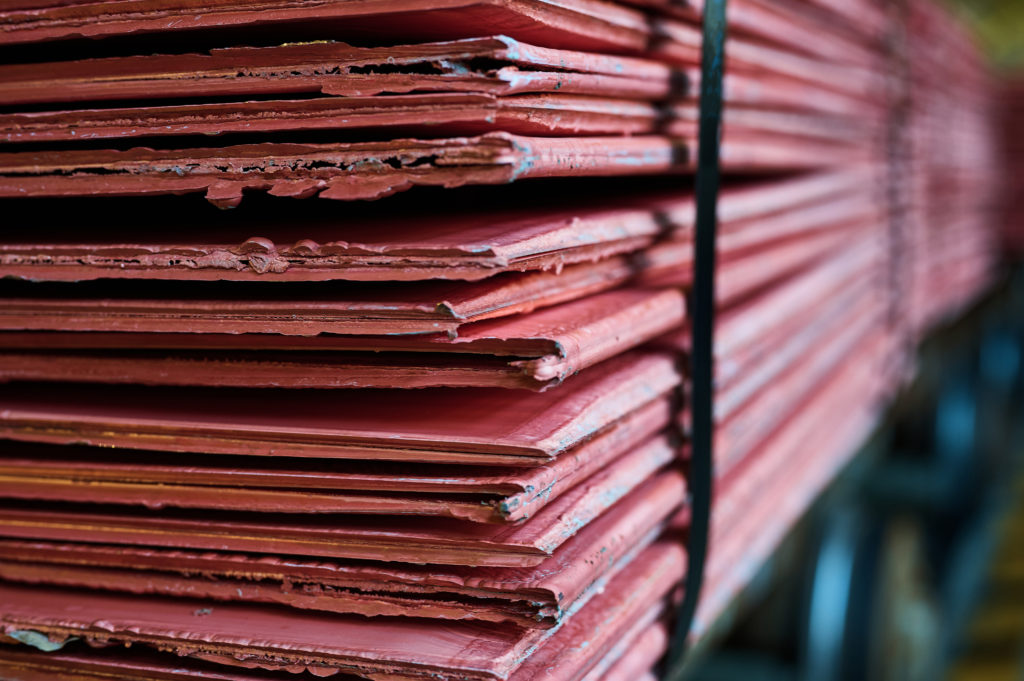
The copper market is tightening fast, with a surge in shipments to the US and rising orders in China setting the stage for a rally that could take global benchmark prices to all-time highs.
Futures in London this week pushed past $14,000 a ton, a ceiling that had only been breached on a handful of days this year, and many traders see prices soon surging past the record $14,500-plus level reached briefly during a bout of speculative buying in China at the end of January.
This time around, the upswing has more to do with trade dislocations caused by the gravitational pull of the world’s two largest economies. While an unprecedented hoarding of copper on US shores has sped up in anticipation of a tariff decision, traders have been stepping up shipments to China to alleviate tightness there.
The flows to China come on top of an arbitrage trade that’s encouraging cargoes to the US and drove futures on New York’s Comex to a record on Wednesday. That has been going on since last year but has accelerated to the fastest pace in at least 12 years as traders await a White House decision on whether to extend duties on semi-finished copper products to raw metal.
There’s been no indication when or whether US President Donald Trump plans to announce a decision on tariffs, which have been a core policy tool in his effort to shore up industrial supply chains.
The president will be holding a meeting with mining executives on Friday in Washington, in a bid to showcase efforts to help spur critical minerals development and processing, with plans to unveil a handful of a deals and memoranda of understanding.
(By Julian Luk)
China’s copper smelting grip worries veteran metallurgist

China has built a commanding grip on global copper processing that could take the West decades and billions of dollars to challenge, veteran metallurgist Phillip Mackey has warned.
China now smelts about 60% of the world’s copper and refines a similar share after a 25-year expansion that has left Western miners shipping concentrate to the very country their governments are trying to rely on less.
Mackey, a copper smelting specialist with more than five decades in the industry and a past president of the Metallurgy and Materials Society of the CIM, said China produces about 12 million to 13 million tonnes of refined copper annually, compared with roughly 26 million tonnes worldwide, using about 45 smelters, several among the largest ever built. Chile, the world’s largest copper producer, now operates four after closing capacity.
“They’re the Saudi Arabia of copper smelting, if you like,” Mackey said on The Northern Miner Podcast. “They control the market.”
China mines only about 8% of global copper but processes well over half of it, importing concentrate from Chile, Peru and other producers to feed a smelting industry that now dictates processing economics across the sector. The imbalance underscores how Western governments remain dependent on Chinese refining even as they push to secure domestic critical mineral supply chains.
Decades-long build
Mackey said China’s dominance was built steadily beginning around 2000 by combining proven smelting technology with state-backed financing and massive industrial scale rather than technological breakthroughs. During the same period, the US reduced its copper smelting fleet from about a dozen facilities to just two as environmental permitting, soaring capital costs and decade-long construction timelines discouraged investment.
The result has been a collapse in treatment and refining charges as Chinese smelting capacity outpaced concentrate supply. Those fees, which miners pay smelters to process concentrate, have fallen to near zero and at times below zero, leaving Chinese overcapacity—not Western competition—to determine pricing. Mackey said the economics are unlikely to remain sustainable indefinitely, but they continue to reinforce China’s market power.
Slow rebuild
Mackey said rebuilding Western smelting capacity is achievable but would require long-term political commitment and substantial financial support.
“We’re mining the copper and then shipping it to China to be smelted and refined and then bringing it back,” he said. “It doesn’t make sense in the long term.”
A modern copper smelter costs several billion dollars and typically requires close to a decade to permit, build and commission. While governments have introduced critical minerals initiatives and supply-chain policies, Mackey said they have yet to match those ambitions with the funding and permitting reforms needed to support large-scale domestic smelting projects.
He compared the situation with rare earths, arguing that although copper remains abundant and widely traded, the strategic vulnerability is similar because Western countries continue exporting raw materials while importing higher-value refined products. He identified copper recycling as one area where North America and Europe retain an advantage because scrap can be processed at smaller scale and lower cost than building new smelters, although recycling alone cannot eliminate the processing gap.
Demand for copper continues to rise as electrification, renewable energy and data centres expand, making new refining capacity increasingly important. Mackey said the technology and concentrate supply already exist, but governments and industry must decide whether they are prepared to invest the time and capital needed to compete with China’s established dominance.
“It’s going to take, I think, an effort by governments and industry to move it along,” Mackey said. “There’s a lot of interest, but interest and doing are two different things.”
Zambia miners eye election with hopes for support for copper expansion
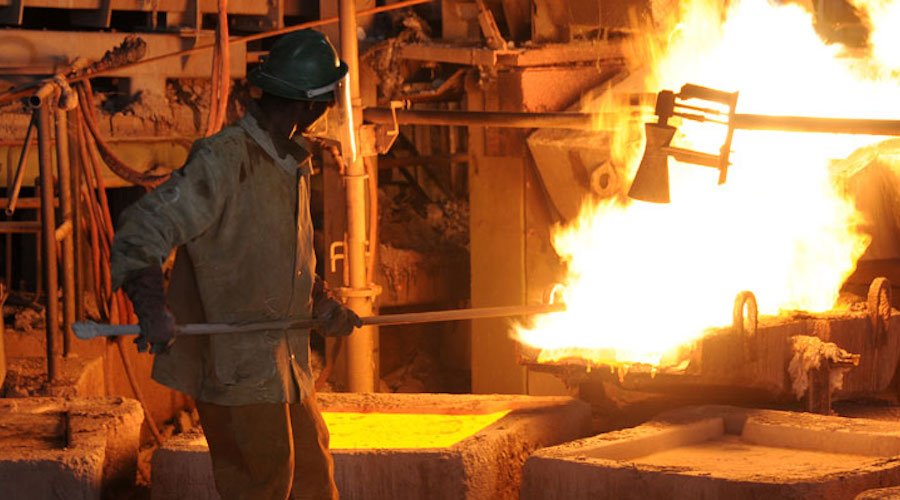 Konkola Copper Mines smelter. (Photo: Vedanta)
For mining firms in Zambia, priorities for next week’s elections include stronger incentives for processing minerals, reviving exploration and expanding power generation, measures they say are needed to deliver the country’s goal of tripling copper output.
Africa’s second-largest copper producer is targeting annual output of 3 million metric tons, nearly triple current levels, as it seeks to capitalize on growing demand for the metal used in EV, power networks and construction.
That demand has spurred a more than 40% jump in benchmark copper future prices in the past year to $14,000 a ton.
“The ambition to triple copper production will require stronger incentives for exploration, local manufacturing and value addition, alongside major infrastructure investments,” said Ayo Sopitan, chief executive of mid-tier miner Metalex Commodities.
Sopitan said Zambia also needed stronger rule of law and dispute-resolution mechanisms, while export duties on concentrates continued to weigh on producers without refining capacity.
Anthony Malenga, president of Zambia’s Chamber of Mines said high investor confidence through tax reforms and closer engagement with miners has helped attract more than $10 billion in investment since the 2021 election.
He said policy discussions between government and miners are helping address most outstanding issues on competitiveness, but Zambia’s growth ambitions now depend on maintaining a robust exploration pipeline.
“The mining industry needs real growth and this can only happen with increased spending on greenfield exploration,” Malenga said, adding that licensing reforms should ensure exploration permits are held by companies with the capacity to develop projects.
For mining firms in Zambia, priorities for next week’s elections include stronger incentives for processing minerals, reviving exploration and expanding power generation, measures they say are needed to deliver the country’s goal of tripling copper output.
Africa’s second-largest copper producer is targeting annual output of 3 million metric tons, nearly triple current levels, as it seeks to capitalize on growing demand for the metal used in EV, power networks and construction.
That demand has spurred a more than 40% jump in benchmark copper future prices in the past year to $14,000 a ton.
“The ambition to triple copper production will require stronger incentives for exploration, local manufacturing and value addition, alongside major infrastructure investments,” said Ayo Sopitan, chief executive of mid-tier miner Metalex Commodities.
Sopitan said Zambia also needed stronger rule of law and dispute-resolution mechanisms, while export duties on concentrates continued to weigh on producers without refining capacity.
Anthony Malenga, president of Zambia’s Chamber of Mines said high investor confidence through tax reforms and closer engagement with miners has helped attract more than $10 billion in investment since the 2021 election.
He said policy discussions between government and miners are helping address most outstanding issues on competitiveness, but Zambia’s growth ambitions now depend on maintaining a robust exploration pipeline.
“The mining industry needs real growth and this can only happen with increased spending on greenfield exploration,” Malenga said, adding that licensing reforms should ensure exploration permits are held by companies with the capacity to develop projects.
Over 8 million Zambians to vote
Mining is the backbone of Zambia’s economy, contributing about 9% of GDP, generating 72% of export earnings and accounting for nearly half of government revenue.
More than 8 million Zambians are registered to vote on August 13 to elect a president, lawmakers and local government representatives.
Analysts expect President Hakainde Hichilema to secure re-election in a peaceful poll, pointing to broad policy continuity for investors.
A senior industry source said Zambia had introduced several significant reforms over the last four years, including currency regulations, local-content rules and fuel-cost measures.
While investors expect limited changes to the fiscal regime after the election, Menzi Ndhlovu, lead analyst at Signal Risk, said power shortages and labour pressures pose the biggest threats to Zambia’s copper growth ambitions.
Power generating capacity may be inadequate to support major mining expansion without significant new investment while labour unions could seek wage increases amid rising mining activity, Ndhlovu said.
Zambia’s mines ministry did not respond to a Reuters request for immediate comment.
Industry executives estimate Zambia needs at least 2,000 megawatts of additional capacity to support its production targets, though recent investments should ease supply pressures.
(By Chris Mfula and Maxwell Akalaare Adombila; Editing by Jason Neely)
Mining is the backbone of Zambia’s economy, contributing about 9% of GDP, generating 72% of export earnings and accounting for nearly half of government revenue.
More than 8 million Zambians are registered to vote on August 13 to elect a president, lawmakers and local government representatives.
Analysts expect President Hakainde Hichilema to secure re-election in a peaceful poll, pointing to broad policy continuity for investors.
A senior industry source said Zambia had introduced several significant reforms over the last four years, including currency regulations, local-content rules and fuel-cost measures.
While investors expect limited changes to the fiscal regime after the election, Menzi Ndhlovu, lead analyst at Signal Risk, said power shortages and labour pressures pose the biggest threats to Zambia’s copper growth ambitions.
Power generating capacity may be inadequate to support major mining expansion without significant new investment while labour unions could seek wage increases amid rising mining activity, Ndhlovu said.
Zambia’s mines ministry did not respond to a Reuters request for immediate comment.
Industry executives estimate Zambia needs at least 2,000 megawatts of additional capacity to support its production targets, though recent investments should ease supply pressures.
(By Chris Mfula and Maxwell Akalaare Adombila; Editing by Jason Neely)

No comments:
Post a Comment