Judge Orders US Defense Department to Resume Review of Wind Energy Projects
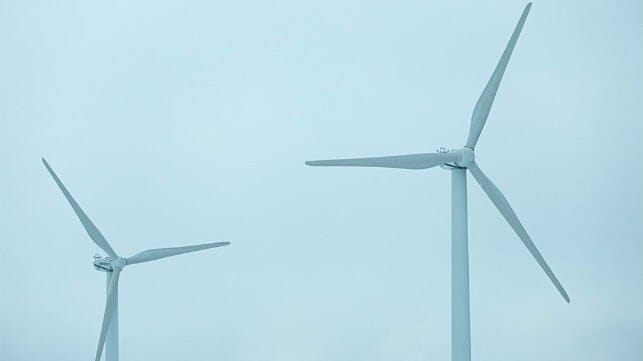
For the second time during the current Trump administration, a federal court judge has found the administration is violating U.S. administrative law in its efforts to stop the wind energy sector. On Thursday, August 6, Judge Karin Immergut of the U.S. District Court for the District of Oregon issued a preliminary injunction and instructed the Pentagon to resume its reviews of wind energy project applications.
Earlier in the week, after a hearing, the judge had said she was inclined to issue the order to restart the reviews. Lawyers for the Defense Department reportedly said the reviews were proceeding, but when she asked for a specific example, they did not name a single project. While the decision largely impacts onshore wind energy projects, it is the second time this year that a judge has said the administration cannot arbitrarily suspend the review of wind energy projects.
Shortly after returning to the White House in January 2025, Donald Trump signed an executive order directing a review of the entire process for permitting wind energy projects. He refers to them as “wind mills” and insists they are not economically sound projects, as well as objecting to them as “ugly.”
The administration has systematically taken steps to stop the development of wind energy projects, and now is buying back leases after having failed in the courts. The executive order directing the review was rejected by the courts, which said it was a violation of administrative regulations. The Trump administration also issued stop-work orders on the under-construction offshore projects, citing national security concerns. Five separate courts issued preliminary injunctions letting the projects continue work.
In May 2026, a coalition of environmental groups and others filed suit in Oregon challenging the Department of Defense’s reported suspension of all reviews. Judge Immergut found for these groups and on Thursday, August 6, issued a preliminary injunction ordering the Defense Department to resume the reviews. It was further ordered that it must supply updates every 30 days on the progress.
The suit highlighted a 2011 act of Congress that stipulates the review process for energy projects contained in the Ike Skelton National Defense Authorization Act. The Federal Aviation Administration and the Department of Defense are given oversight to review the proposed construction of a structure over 200 feet above ground level, which includes utility-scale wind turbines. They have 75 days under the law to conduct a preliminary review and render an opinion. If a risk is identified, they must start mitigation discussions, and those can continue for an additional 90 days.
According to the court, before August 2025, DoD evaluated wind energy project applications in accordance with the statutes and regulations and adhered to a predictable timeline for its review. It then slowed the process, eventually canceling scheduled mitigation discussions, and by May 2026, the court found the incremental slowdown had reached a standstill. DoD issued interim guidance to reassess its internal review process for energy projects that it said were “causing impactful Doppler interference.”
Defense officials claimed the pause was required because the growing use of drones in overseas conflicts had revealed new threats. They asked the court to dismiss the complaint, saying it was outweighed by national security concerns.
The judge told the Justice Department lawyers that if DoD wanted to alter the statutory requirements, it could go to Congress and ask for the change. However, the court found that DoD was not following the Congressionally mandated requirements and ordered it to resume the reviews following the prescribed requirements.
Another judge earlier this year issued a similar ruling after the administration broadly stopped reviews, saying the process for permitting was being accessed. In that case, as in this case, the judge found the federal administrative regulations did not give the administration the ability to have an open-ended review. They said applicants were entitled under the law to timely reviews.
Reports said the DoD delay was impacting more than 155 onshore wind projects that have filed for permits.
Trump Administration to Pay RWE $1.22B in Fifth Deal to End Offshore Wind
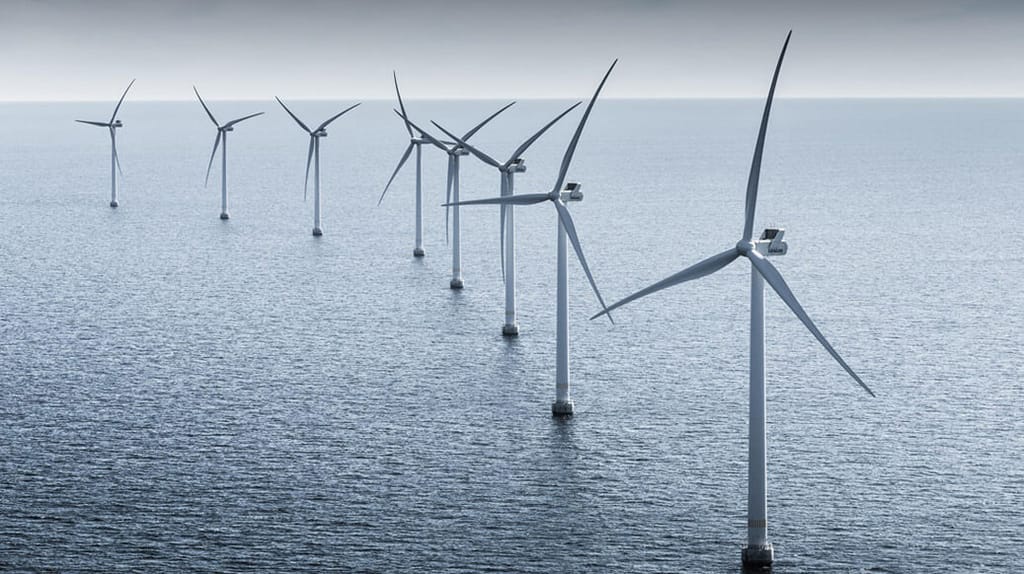
Germany’s energy giant RWE and the Trump administration have reached a settlement agreement that calls for the Department of the Interior to pay RWE $1.22 billion to relinquish three U.S. offshore wind leases and instead invest in LNG energy projects. It is the fifth deal the Department of the Interior has made with wind energy developers, committing to reimburse more than $3.9 billion, although states are suing to stop the deals.
The buyback policy is the latest effort by the Trump administration in its efforts to stop offshore wind energy and other renewable energy projects in favor of fossil fuel development. The administration has lost court cases where it attempted to suspend work on under-construction offshore wind energy projects, and just this week, a federal judge in Oregon said she was inclined to order the Pentagon to resume reviewing applications for offshore wind projects. The Trump administration imposed a moratorium on reviewing all wind energy projects, which has already been overturned by a court, while the Pentagon has made claims about “national security” issues and interference from wind turbines.
“Americans deserve an energy system built on common sense, not one dependent on costly subsidies or technologies that can't meet our country’s current demand,” said Interior Secretary Doug Burgum after RWE announced today’s agreement. “We welcome RWE’s agreement and voluntary investment in projects that strengthen our nation's energy security.”
RWE held three offshore leases in the United States, including one in the New York Bight, which had set a record for the largest offshore wind auction when the Biden administration offered six leases. RWE, through a joint venture Bight Wind, bid $1.1 billion in 2022 for a lease area that could support approximately 3 GW of capacity. In October 2023, RWE’s Community Offshore Wind, a joint venture with National Grid Ventures, was provisionally awarded a 1.3-gigawatt (GW) offtake contract as part of New York’s third solicitation for offshore wind.
The other two lease areas included a project off the northern coast of California called Canopy Offshore Wind, for which it paid $157.7 million in 2023. It proposed a 1.6-gigawatt commercial-scale floating offshore wind project off the coast of Humboldt County. The company in 2023 also paid $5.6 million for the Lake Charles Lease Area, 44 miles off Louisiana, which it said could potentially generate 1.24 GW.
“After careful consideration, it was determined there is no path forward to permit these projects in the U.S. for the foreseeable future,” said RWE. “The settlement resolves RWE U.S. Offshore’s legal claims and provides $1.22 billion in settlement funds. The company determined that this resolution best serves the interests of its stakeholders and allows it to direct resources toward energy projects that can be advanced with certainty.”
RWE said it, however, remains focused on growing its offshore wind energy portfolio globally. It already has 18 offshore wind farms in operation with four more under construction. It noted that it has additional projects in development and recently secured 6.9 GW of capacity in the UK’s most recent offshore wind auction.
The company said it had invested more than $1 billion in the development and planning for the U.S. projects. The agreement will resolve RWE’s claims against the U.S. government. In exchange, it has agreed to a financial investment of $900 million to acquire a 16 percent stake in the Louisiana LNG project, signed a $300 million turbine reservation agreement, and announced plans to invest approximately $19.6 billion in the U.S. over the next six years. The company said it will grow its U.S. generating capacity from approximately 13 GW across 27 states to 22 GW by 2031. It said it has a pipeline of 15 natural gas peaking projects in the U.S.
The Environmental Defense Fund issued a statement calling today’s deals the “Trump administration’s latest wasteful buyout.” Katelyn Roedner Sutter, California Senior Director at Environmental Defense Fund, said, "Paying companies to shut down massive sources of clean, reliable power while our state's electricity needs keep growing is a recipe for higher costs. Californians did not sign up for these wasteful payouts that mean higher bills, more pollution, and less jobs.”
The administration had previously struck deals with TotalEnergies, Duke Energy, and Ocean Winds (a joint venture between EDP Renewables and ENGINE) to pay a total of approximately $2.7 billion to buy back leases on both coasts. The Environmental Defense Fund highlights that the administration is buying back three of the five awarded leases on the California coast, which is in addition to another large project in the New York Bight and one planned for the coast of North Carolina.
Congressional members have questioned where the money is coming from to pay for the agreements and criticized the strategy. Seven states, including New York and Massachusetts, formed a coalition and sued to block the approximately $1 billion deal with TotalEnergies. California has also filed notice of its intent to sue over the two previous deals to buy back leases off its coast.
The states are arguing that they have invested in developing these projects and that they are critical to meeting their energy needs. In the case of California, it further highlighted that the investments are being redirected to other areas of the country and do not address the West Coast’s energy needs.
Denmark Completes Successful Offshore Wind Farm Tender Using New Approach
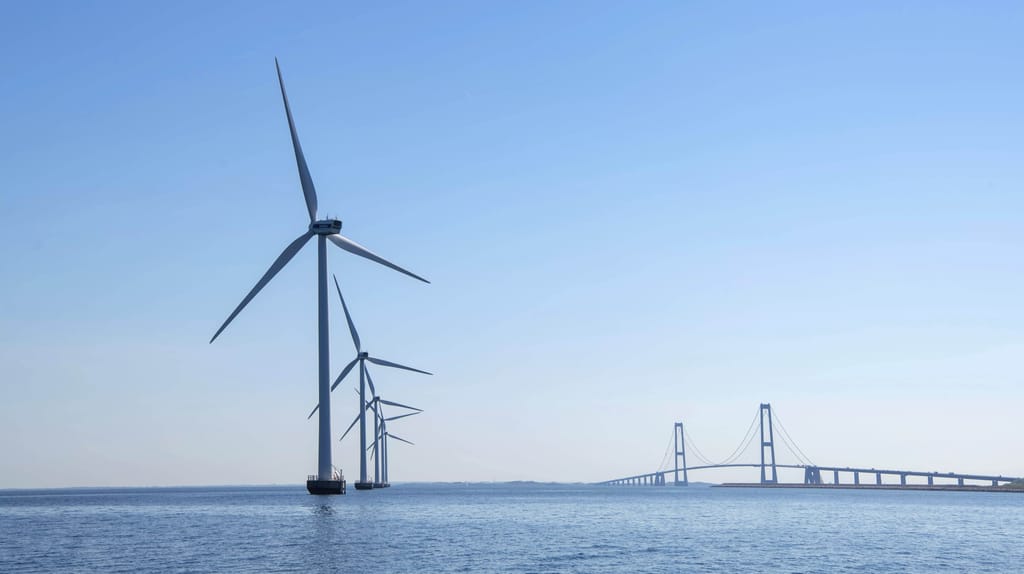
The Danish Energy Agency awarded two new contracts for offshore wind farms to Vattenfall, marking a critical success after it reworked its contracts. It is the first time in two years that Denmark has successfully completed tenders after winning government approval for a revised approach to encourage greater industry participation.
The last tender, which was launched in 2024 for six areas, failed to attract bids. The Danish Energy Agency was forced to cancel the tender, as it reported that, as the deadline approached for the first three sites, it had not received bids. It launched a political debate that resulted in two agreements in 2025 and the adoption of the Contract for Difference (CfD) approach, where the state guaranteed a fixed price for the electricity. If the price falls below the contract, the government will provide a subsidy, and if it exceeds the price, the operator reimburses Denmark.
The approach has worked successfully in the UK, and more countries were encouraged to adopt it to address the challenges in the offshore wind energy sector. When the Danes relaunched the tender in November 2025, they said the CfD, along with other changes, provided greater flexibility for developers and reduced the risks to increase the likelihood of bids.
"The Danish Energy Agency has conducted an extensive market dialogue and tender process on the construction of two new offshore wind farms in the North Sea and Kattegat. It is very pleasing that we have now reached an important milestone with a positive result, where we can announce the winners of the tenders," says Deputy Director General of the Danish Energy Agency, Stig Uffe Pedersen.
The agency reported on August 4 that it had received two bids for Hesselo, an 800 MW site in the Kattegat. Nordsøen Midt, a site in the North Sea that can support 1 GW, received five bids. The government is offering 20-year leases from completion and requiring the projects to be completed by the end of 2032.
Hesselo will be located approximately 19 miles from the coast. Nordsøen Midt will be located approximately 12.5 miles offshore.
Vattenfall was selected as the winner for both projects. For Nordsøen Midt, it bid 504 kroner per MWh ($77.75), and for Hesselo it bid 542 kroner ($83.60). These were the lowest of the bids for each location. In addition, the bids required sustainability and social responsibility components, including a requirement to recycle turbine blades. Hesselo must also establish a so-called nature-inclusive design
Vattenfall said the projects would strengthen its offshore portfolio. The company currently operates five offshore wind farms in Denmark, generating around 6.5 TWh of electricity annually. It reports that the grid connections have been reserved for the two new projects, saying the consent will be granted for 30 years with an option to extend it by a further 10 years.
Denmark has a long history with wind energy, and it was the first country to host an offshore wind farm, which was commissioned in 1991. Currently, it has a total installed capacity of 2.7 GW of offshore wind power, with one additional wind farm under construction to add another 1 GW in 2027. As part of this current tender, it also offered a third site, Nordsøen Syd, which will have a capacity for a minimum of 1 GW, and it has a bid deadline of October 2028.


No comments:
Post a Comment