Friday, September 04, 2026


World’s Largest Far Right Paramilitary Rallied in NYC. It Should Alarm Everyone.

Five thousand people attended a rally in New York City led by the right-wing Rashtriya Swayamsevak Sangh.
September 1, 2026

New Yorkers rally outside of Madison Square Garden to condemn Mohan Bhagwat and the RSS on August 29, 2026.Samantha Agarwal

On February 20, 1939, the Madison Square Garden arena in New York City hosted a chilling spectacle. A portrait of George Washington hung at the center of the arena, flanked by U.S. flags and swastikas. Over 20,000 people packed the stands to hear Fritz Kuhn, leader of the German American Bund — one of the most prominent U.S.-based organizations aligned with the Third Reich — project his vision of a “white, Gentile-ruled United States.” Outside, 100,000 anti-Nazi protesters clashed with police on Eighth Avenue, determined to stop the legitimization of European fascism on U.S. soil.

Eighty-seven years later, global leaders in ethno-fascism and their sympathizers returned to Madison Square Garden.

On August 29, 2026, 5,000 people gathered at Madison Square Garden to hear Mohan Bhagwat, the sarsanghchalak (Supreme Leader) of the Rashtriya Swayamsevak Sangh (RSS). As the ideological parent of India’s ruling Bharatiya Janata Party (BJP), the RSS is the world’s largest far right paramilitary organization, with an estimated 4 million members spread over 73,117 branches across India. Just as the Bund attempted to leverage the image of George Washington to legitimize Nazism in their rally of 1939, the RSS used this invite-only event — apparently attended by 180 religious leaders from 30 countries — to sanitize a century-old project of Hindu fascism. Obscuring its extremist agenda, the RSS cloaked the gathering in the rhetoric of liberal multiculturalism, branding it with the theme “Universal Oneness.”

In his 42-minute keynote, the septuagenarian Bhagwat played the part of a playful but discerning uncle, dispensing meandering aphorisms about an “innate, eternal oneness” that connects humanity and nature. Rooting these concepts in the Atman (soul) and India’s civilizational values, Bhagwat painted a picture of a nation that champions “unity in diversity.” In a jarring contrast to his movement’s actual record, he claimed that India chooses to tolerate its enemies rather than subjugate them — elevating the country as a global exemplar of enlightened governance.

While Bhagwat spoke inside, an interfaith and anti-caste coalition protested outside. It consisted of groups like SALAM (South Asian Left), Hindus for Human Rights, and the Indian American Muslim Council, along with members of some of the 66 organizations that signed on to a statement earlier this week condemning Bhagwat’s visit. Their speeches exposed the hypocrisy of Bhagwat’s claim to “unity in diversity,” demonstrating how the RSS and its massive network of Hindu supremacist partners — including nearly a thousand nonprofit organizations, cultural organizations, paramilitary groups, unions, and political parties, collectively known as the Sangh Parivar (or the Family of the Sangh) — routinely practice the exact opposite of what Bhagwat preaches.
Here’s How the Hindu Supremacist Movement Is Infiltrating US Politics
As the 100-year-old movement in India celebrates a key victory, a new report reveals its ties with the US far right. By Samantha Agarwal , Truthout February 2, 2024


Speakers pointed out how the RSS’s notion of unity is, in fact, exclusively reserved for Hindus — and only for those who are wealthy and upper-caste. Shree Baphna from SALAM talked about how Hindutva (or the Hindu supremacist movement) attempts to divert mass anger “away from those in power and towards those communities who are exploited and oppressed.”

Baphna added:


When a Dalit [lower caste person] demands land, dignity and the annihilation of caste, Hindutva says, ‘forget caste – you are Hindu. When an Adivasi [Indigenous person] defends jal, jungle, zameen [water, forests and land] against mines, dams and corporations – Hindutva says, ‘forget your history – you are a vanvasi – a child of the Hindu nation.’ Shame!

Ritu Gupta from the nonprofit Hindus for Human Rights, noted that Mohan Bhagwat is here “pretending to spread the message of oneness.” But this is not the message Bhagwat’s supporters spread in India, Gupta retorted. “In India they say, ‘Hindus only – everybody else, get out!’ These Hindus who support the message of purging India of its minorities do not represent all Hindus. There could be no bigger hypocrisy than this!”

Demonstrators display signs reading, “RSS Out of NYC.”
646onrecord

Others, including a spokesperson for the Palestinian organization Pal Awda, extended the critique of Bhagwat’s rhetorical “oneness” to India’s role as a regional colonizer in Kashmir and partner to genocidal Israel. “We have a responsibility to stand against genocide whenever, and wherever,” the Pal Awda representative, who requested anonymity, said. “The RSS has deep ties to Zionism and has worked to create an Israel-like vision for India based on [an] ethnonationalist state and subjugation of minorities.” Moreover, the “Hindutva-Zionism relationship is not merely ideological,” the spokesperson added, explaining that the relationship is constructed through diplomatic links, military cooperation, and corporate capital flows.

As one striking example of this strategic alliance, in 2022 the Adani Group owned by Indian billionaire Gautam Adani, a personal friend to Modi, purchased 70 percent of the Haifa port. Today, the Indian flag flies next to the Israeli flag in Israel’s second largest port. The Indian and Israeli governments also cooperate heavily on military equipment, counterterrorism, and surveillance technology, including software partnerships. Another speaker on August 29 added, “The Hindutva politics that normalizes repression in Kashmir is a mirror image of the Zionist state — carrying out the same occupation and dispossession in Palestine.”

Mayor Zohran Mamdani and a number of New York City council members have also publicly opposed the RSS rally. Additionally, the U.S. Commission on International Religious Freedom urged the U.S. government to sanction the RSS due to its violent attacks on religious minorities.
Hindu Supremacy’s Enduring Ties to European Fascism

To fully understand the significance of Bhagwat holding court at Madison Square Garden — and the intensity of the counter-protests — one must grasp the bloodline that binds his organization to the very regime the German American Bund was celebrating in 1939. The founders of the RSS, which was created in 1925, met with and drew direct lessons from the European fascists.

In 1931 BS Moonje, a Hindu nationalist and mentor to the first Supreme Leader of the RSS, Keshav Baliram Hedgewar, traveled to Italy to meet with Benito Mussolini and tour various military academies and militant youth organizations such as the Opera Nazionale Balilla and the Avanguardisti. Moonje wrote in his diary that he was inspired by these fascist organizations and intended to reshape the RSS along these organizational lines. It is said that under Hedgewar the RSS adopted many of their core features — such as their targeted recruitment of young boys (beginning at age 5), use of paramilitary training, and the total subordination of the organization to a supreme, lifetime leader — from Moonje’s accounts of the Italian Balilla.

Further, in 1939 M.S. Golwalkar — the RSS’s second Supreme Leader, whose portrait Bhagwat still routinely garlands — wrote in his manifesto, We, or Our Nationhood Defined, that Germany’s ethnic cleansing of the Jewish people was a model for India “to learn and profit by.” In that same text, he characterizes Muslims as historical “despoilers” and “murdering hordes” who destroyed Hindu kingdoms, arguing that they should either be forced to assimilate to Hinduism. If they refuse, he argues, they should be “wholly subordinated to the Hindu Nation, claiming nothing, deserving no privileges.”

Today, under Bhagwat’s leadership and Prime Minister Narendra Modi’s 12-year reign, Golwarkar’s 1939 blueprint has become de facto state policy. In 2019, the RSS-backed Modi regime passed a slate of controversial laws effectively dismantling what was left of India’s secularism, tying citizenship to religion, explicitly excluding Muslims. This legal subordination works in tandem with extralegal vigilante violence committed by partners of the RSS like the Bajrang Dal.

Lynchings and mob attacks on individuals or small groups of people constitute a kind of slow-burning structural violence that has led Brown University political scientists Ashutosh Varshney and Connor Staggs to compare Hindu nationalism to America’s Jim Crow South. There has been a steady rise in such incidents since 2014, disproportionately in BJP-ruled states. In just the first year of Modi’s third term (2024-2025), the Association for Protection of Civil Rights recorded 602 such hate crimes. Of these, 173 involved physical violence against minorities, resulting in 25 deaths — every one of them Muslim.

Punitive home demolitions and evictions are also surging. According to the Housing and Land Rights Network, evictions across India climbed from 107,625 in 2019 to 222,686 in 2022, before reaching 515,752 in 2023 — a 379 percent increase over five years. The network’s data also reveals that Muslims are vastly overrepresented among those whose homes are destroyed.

Waging sustained opposition to the regime on any of these counts has become nearly impossible. Critics — including peaceful activists, academics, media, and dissident politicians — are routinely persecuted under draconian laws like the Unlawful Activities Prevention Act, which eliminate standard burdens of proof to permit the indefinite pretrial detention of political opponents. This systematic criminalization of dissent has led the prestigious V-Dem Institute to classify India as an electoral autocracy, dropping the country’s democratic freedom ranking from 65th in 2016 to 106th in 2026 — the bottom 20 percent globally. Even more alarming, Genocide Watch has repeatedly warned of an impending genocide against India’s 250 million Muslims, and the United States Holocaust Memorial Museum ranks India at the “second-highest risk of a new mass killing.”

Yet, despite this grim record, the highest leader of this fascistic movement was handed one of the world’s most coveted stages — welcomed to preach and court donors in the heart of the U.S.’s financial capital.
Bhagwat’s Event Was the Culmination of a Decades-Long Strategy to Influence U.S. Politics

Just as the German American Bund sought to build a fifth column in the U.S., the RSS has for five decades worked to build material power in the diaspora. To organize its Madison Square Garden rally, the RSS drew on sophisticated, multi-layered clandestine networks, the mechanics of which were exposed in a new, multi-part investigative series on the RSS’s “Vishwa Vibhag” or “Overseas Department” by Savera, a U.S.-based coalition against supremacy.

In this series Savera tracked the shell organizations facilitating the RSS’s U.S. activities. Bhagwat’s event was formally hosted by the innocuous-sounding American Hindus for Engagement and Dialogue (also known as “AHEAD Forum”), which poses as an independent diaspora group.

The Savera series shows that this is a bald-faced lie. AHEAD Forum was, in fact, incorporated in California in May 2025 by Khanderao Kand, a long-time RSS operative and founder-president of the Foundation for India and Indian Diaspora Studies. Kand’s deep ties to the RSS and the BJP were exposed when the Foundation for India and Indian Diaspora Studies was implicated in a potentially illegal lobbying effort to influence the U.S. Congress. When Kand became a public relations liability, his name was quietly scrubbed from AHEAD Forum’s paperwork and replaced by a colleague. AHEAD Forum’s other directors are similarly embedded in the “American Sangh,” the network of U.S.-based RSS affiliates.

At the top of this hierarchy sits Saumitra Gokhale. Gokhale is listed on tax forms for the Hindu Swayamsevak Sangh — the U.S. wing of the RSS — as a yoga instructor earning $36,000 a year, according to Savera. But researchers found no record of Gokhale teaching yoga. In reality he is a senior RSS pracharak (full-time missionary) and the global coordinator of the Vishwa Vibhag.

The Savera series reveal how the Vishwa Vibhag — or the “largest far right network in the world”— operates across 1,600 branches in 55 countries, utilizing organizations like the Hindu Swayamsevak Sangh and the Vishwa Hindu Parishad of America to weave a dense web of “transnational entanglements.” Contrary to claims that they operate independently of the RSS, the series shows how they in fact are so closely intertwined that Hindu Swayamsevak Sangh leaders are made to attend regular RSS training camps in India. They employ the same terminology (“shakhas”) to refer to branches, borrow from RSS’s prayers and paraphernalia, and pay obeisance to portraits of RSS leaders, including none other than Golwalkar himself. Sewa International is the main fundraising arm of the Vishwa Vibhag — and rakes in millions of dollars of revenue each year.

Ideologically, the American Sangh appropriates the language of Western multiculturalism, global peace, and even decolonizationto shield its majoritarian, proto-fascist project. This was on full display at the Madison Square Garden event. At the same time, it openly allies itself with white nationalists and Zionists — as seen in Trump’s 2019 “Howdy Modi” mega rally in Houston or in the Republican Hindu Coalition formerly chaired by Steve Bannon.

These two faces of the Sangh are not solely fixated on India; they actively intervene in U.S. politics. For example, they have waged aggressive, well-funded campaigns to rewrite California school textbooks to reflect right-wing nationalist histories. They recently spearheaded a successful push to kill a civil rights bills aimed at banning caste-based discrimination — culminating in an infamous veto by Democratic Governor Gavin Newsom). Taking a page from the Zionist Anti-Defamation League’s playbook, they weaponize U.S. civil rights rhetoric framing any criticism of the RSS or the BJP’s human rights record as “Hinduphobia” to intimidate lawmakers and silence academics.

The Hindu right wields this outsized political and lobbying muscle despite the fact that only a minority of Indian Americans actually support the BJP. Affiliates like the Hindu American Political Action Committee and Hindu American Foundation have spent years embedding themselves within Washington and local municipalities. Federal Election Commission reports show them donating handsomely across the aisle to Democrats such as Raja Krishnamoorthi and Shri Thanedar alongside Republicans such as Tulsi Gabbard, Vivek Ramaswamy, and many more.

Typically, the use of front organizations has worked to hedge against accusations of operating on behalf of a foreign agent. However, recently, for reasons that are still unclear, the RSS has also sought to deepen its directinfluence over U.S. politicians. In late 2025, an investigation by the U.S.-based news outlet Prism revealed that the RSS had hired Squire Patton Boggs — one of Washington’s most powerful lobbying firms — to influence U.S. lawmakers. The firm was paid $330,000 during the first three quarters of 2025.

Bringing RSS on as a domestic client rather than registering it under FARA was likely in violation of federal transparency norms. After the Prism report was published, thus, Squire Patton Boggs hastily amended its congressional disclosures, scrubbing the RSS from the paperwork and claiming that its “ultimate client” was actually Vivek Sharma, a Massachusetts-based pharmaceutical executive.

It is perhaps no coincidence that the RSS’s shadowy lobbying initiative and Bhagwat’s visit come at a moment when the Modi regime is facing an unprecedented crisis. Economic stagnation, recurring labor unrest, Hindu temple scandals, and mass student protests have mired Modi’s third term and substantially weakened his domestic standing. Bhagwat’s liberal-sounding message thus appears aimed at restoring a more palatable “brand” for the Sangh Parivar, laying the groundwork for global cooperation under a future leader. This is also a stark reminder of who, in fact, controls the levers of power — the parent RSS — no matter the ultimate fate of Modi or even the BJP.

But if the RSS believes it can quietly secure its legacy, the communities resisting it tell a very different story. Outside the venue, Safa Ahmed of the Indian American Muslim Council spoke directly to Bhagwat’s underlying anxiety, saying:


Islam and Muslims have been in India for 1,400 years, and they will [remain] here after another 1,400 years and even beyond that. So long as we exist, we will never be erased from India. But you — Mohan Bhagwat, and your fascist … fan pals — the masks are off for you. You are being mocked by the youth of India. You are being mocked by New York City. You are afraid of losing it all … And it’s you who will be remembered as a sad, insecure group of people who could only take pride in your identity via the erasure of another — that is, if you are remembered at all

!
Protesters hang garlands of shoes around effigies of Narendra Modi (left) and
Mohan Bhagwat (right)Samantha Agarwal

Ahmed’s prophecy will ultimately bear out, but we cannot afford to passively wait for it. We cannot leave our Muslim, Adivasi, Dalit, and left comrades on the front lines in India to fight this battle alone. Rallies, social media mockery, and the construction of broad, intersectional coalitions like we saw on Saturday are a strong start. But sooner than later we need to go beyond symbolic protest to challenge the Sangh at its root.

This will require disrupting Hindutva diasporic organizations wherever they operate, ruthlessly exposing these “cultural organizations” as fronts for the spread of fascism. It means cautioning the public about the bad-faith weaponization of “Hinduphobia” — which the Hindu right uses to shield itself from criticism — and impeding the Sangh’s ties to global right-wing players like MAGA and Israel. It means educating the nascent Democratic Socialists of America (DSA) movement on the violent reality of the Sangh, so it compels DSA-elected officials to act. Finally, just as global movements boycotted the Nazis, the apartheid-era Afrikaners, and now Israel — the left needs to develop creative strategies to choke off the Sangh from its financial lifelines in the U.S. A first step would be to scrutinize its various alliances with big capital, including in the tech and defense sectors, and examine how these partnerships enable funds to flow into India via charitable fronts like Sewa International, IDRF, and Ekal Vidyalaya.

The 1939 Bund rally is remembered today as a sinister moment in U.S. history — a time when New York allowed the most violent political current in the globe to claim a major stage in our financial capital. Mohan Bhagwat’s 2026 visit must be recognized as its modern equivalent. To avoid repeating the horrors of interwar fascism, we must urgently build a transnational, intersectional bloc capable of defeating the American Sangh.


This article is licensed under Creative Commons (CC BY-NC-ND 4.0)
, and you are free to share and republish under the terms of the license.


Samantha Agarwal
Samantha Agarwal is an Assistant Professor at School of Labor and Urban Studies at City University of New York. Her writing and research focus on neoliberalism, social movements in India, and the rise of authoritarian ethnonationalism globally.
Op-Ed

Big Tech’s Debate Over “Open” and “Safe” AI Leaves Corporate Power Unquestioned


Two seemingly contradictory letters emerging from the AI industry point toward the same future.
September 1, 2026

Anthropic CEO Dario Amodei looks on during a meeting with France's President Emmanuel Macron on the sidelines of the AI Impact Summit in New Delhi, India, on February 19, 2026.Ludovic MARIN / AFP via Getty Images

On July 24, 2026, an initial coalition of 25 technology companies and organizations, including NVIDIA, Microsoft, and Meta, released the Open Weights and American AI Leadership letter, calling for wider adoption of AI models that institutions can download and modify. By August 3, more than 270 companies and organizations had signed, spanning Big Tech, venture capital, investment management, and the defense and security industries. Four days after Open Weights’ release, another letter, Pacing the Frontier, organized by employees of frontier AI companies with support from two AI-policy nonprofits, drew more than 1,300 signatures. It warned that leading companies may be close to automating AI research, accelerating development beyond society’s ability to understand or control the resulting AI systems.

The letters seem to argue for opposite futures. One presents wider access and fewer restrictions as the route to security and prosperity. The other asks the U.S. government to support an international effort to slow frontier development before competitive pressures make coordinated restraint impossible.

But they address different levels of the industry. Open Weights seeks to deepen AI’s already pervasive presence by making customizable models easier to embed throughout the economy and public life. Pacing the Frontier proposes government-backed management of frontier AI, the industry’s term for its most advanced and broadly capable models. That framework could make the small circle of companies building these systems indispensable to defining the dangers and writing the rules meant to restrain them.

Read together, the letters point toward a two-tier arrangement. AI becomes entrenched across society while ownership of its most powerful systems, infrastructure, and governance remains concentrated at the top. Their connection requires no secret agreement. It lies in what both take for granted: AI development will continue, public institutions will finance and adopt it, and private ownership and corporate power will remain intact.

The letters leave out harder questions: Who will own AI and decide its direction? How will it be used in surveillance and war, and how will it reshape work and deepen inequality? Whose lives and futures will be valued, and does the public have any right to limit or refuse a technology presented as inevitable? Beneath the language of openness and safety lie deeper a general agreement over corporate power, military dominance, elite rule, and the authoritarian currents shaping Silicon Valley’s vision of the future.


Open Weights Are Not Open Source

An AI model is the underlying system that generates answers, predictions, images, or other outputs. Its “weights” are the billions of numerical settings developed from patterns in training data. Releasing those weights allows organizations with computing power and expertise to download, run, and modify the model rather than use it only through a company-controlled service such as ChatGPT, Gemini, or Claude.

Researchers can examine these models, test their weaknesses, and build specialized tools, while organizations can run them locally rather than send sensitive information to a commercial service. Yet proprietary, company-controlled services such as ChatGPT, Gemini, and Claude are not inherently safer: their operators can keep flaws from public scrutiny, monitor how people use them, impose restrictions, raise prices, or withdraw access.

But releasing a model’s weights does not by itself make the AI system open source. Under the Open Source Initiative’s definition, open-source AI must provide the necessary materials and the legal freedom to use, study, modify, and share the system for any purpose. Those materials include the model’s parameters, the complete code used to train and run it, and detailed information about its training data and methods. Most open-weight releases, by contrast, provide the finished numerical settings and enough supporting files to run or adapt the model, but not the complete training code or the required details about its training data and methods. The training data itself and much of the development process often remain proprietary or unavailable. Beyond the definition’s formal requirements, the labor arrangements and corporate decisions behind these systems also remain undisclosed. Users of open-weight models can therefore operate and adapt them without gaining a full account of how they were built.

The Open Weights letter borrows the democratic reputation of open source to present open-weight access as a path to competition, independence, and shared prosperity. Yet an open-weight release gives the public access to a corporate product without transferring ownership or giving workers, affected communities, and the broader public meaningful power to govern the data, computing infrastructure, labor conditions, and deployment decisions behind it. A genuinely open-source release would provide broader materials and legal freedoms, but even that would not place the resources, infrastructure, or institutional uses of AI under public, community, or worker governance. In either case, access remains unequal. Individuals may run smaller models, but corporations and agencies possess the data centers, private datasets, institutional records, and specialists needed to customize them, connect them to institutional data systems, and deploy them at scale. An open-weight model that supports independent research can therefore also expand institutional surveillance and coercion by enabling governments and corporations to monitor and classify people, inform or automate consequential decisions, and control access to services.

That unequal distribution of power is only one danger. Open weights also create an irreversible loss-of-control problem. Once copied, a model cannot be fully retrieved, monitored, or patched across all distributed copies, nor can its safeguards be guaranteed to remain intact. Those with sufficient technical expertise and computing resources can modify open-weight models, remove their refusal mechanisms, introduce discriminatory behavior or hidden backdoors, and redistribute the results. Modified models could facilitate cyberattacks, fraud, impersonation, targeted disinformation, nonconsensual sexual imagery, harassment, or guidance involving weapons, abuse, and self-harm. Connected to institutional records, they could expose private information, intensify surveillance, discriminate, restrict services, or help target communities. Responsibility then fragments as developers, vendors, and institutions blame one another.

Even as the weights circulate and open the door to still more harmful uses, the infrastructure remains firmly closed. AI depends on specialized chips, enormous data centers, electricity, water, and cloud platforms. Open weights may reduce an institution’s dependence on a particular model provider, but training, adapting, and deploying AI at scale still depend on highly concentrated infrastructure markets, led by NVIDIA in advanced AI accelerators and by Amazon Web Services, Microsoft Azure, and Google Cloud in cloud computing. All four companies now appear among the letter’s signatories. The model may be downloadable, but control over the infrastructure surrounding it remains concentrated in a small group of corporations.

For researchers and organizations in the Global South, open weights may provide some genuine independence from closed commercial services and make it easier to adapt models to local languages and needs. But that limited autonomy does not alter the global labor system through which AI is produced, requiring a vast workforce largely across the Global South that gathers, labels, cleans, translates, moderates, and evaluates data and model outputs. These workers are often monitored and managed algorithmically, bound by nondisclosure agreements, and required to endure prolonged exposure to traumatic material. Releasing a model’s weights reveals none of these labor conditions and gives the workers neither an ownership stake nor decision-making power over the systems their labor helped create.

Open Weights asks policymakers to expand computing access, fund datasets and testing tools, avoid restrictions that might slow development, and spread AI throughout the economy. This is a familiar Big Tech strategy: use public resources to build markets for privately controlled technology and make everyday life dependent on products the public neither owns nor governs. The costs are distributed across workers and the public, while private companies retain control over much of the infrastructure, intellectual property, and resulting wealth.
Pacing the Frontier — But Under Whose Authority?

Building frontier AI requires extraordinary amounts of computing power, energy, data, and capital, largely confining its development to a small number of Big Tech corporations, heavily financed AI laboratories, and state-backed institutions. Pacing the Frontier warns that if AI systems begin automating the research and engineering needed to create more powerful successors, development could outpace researchers’ and governments’ ability to test, understand, or control them. These systems could facilitate cyberattacks, weapons development or deployment, mass manipulation, and other catastrophic harms before effective safeguards are in place. Because no company or country wants to surrender its competitive position while others continue racing ahead, the statement calls on the U.S. government to support an international effort to develop technical and governance mechanisms for deliberately pacing frontier development.

Many of the letter’s signatories may sincerely seek to prevent catastrophe, and coordinated restraint may indeed be necessary. Yet the letter calls for no immediate pause and leaves the decisive questions unanswered: Who decides when development must slow? What capability threshold or kind of security breach would trigger intervention? Who oversees the companies, and what prevents the largest laboratories from shaping rules that entrench their dominance by imposing barriers smaller competitors cannot meet?

Many of the signatories work for companies that would be subject to any resulting rules, yet these same companies possess enormous power to shape those rules. These firms are private centers of power and rank among the world’s wealthiest and most politically connected institutions. Collectively, they own or control much of the frontier-model, cloud, and data-center infrastructure, as well as the proprietary information and technical expertise on which regulators depend. Their wealth funds lobbying, research partnerships, political access, and policy campaigns. Through search engines, social platforms, AI assistants, media partnerships, and sponsored research, they also shape public perceptions of AI: what it promises, which harms receive attention, and which alternatives appear possible.

Yet this power is subject to little democratic accountability. Major decisions are made without public scrutiny, while the people and communities affected by these systems have little power to inspect them, challenge their decisions, or refuse their use. The companies can help define what constitutes a danger, which responses are acceptable, and which restrictions remain outside serious debate. Those creating the risks thereby become indispensable government partners and coauthors of the rules meant to restrain them.

The emphasis on future catastrophe can push present harms out of view. AI is already intensifying racist systems of mass surveillance, policing, detention, and deportation; supporting military targeting and the rapid development of increasingly autonomous weapons systems; automating work and displacing workers; deepening data extraction; and accelerating environmental destruction. A Brennan Center report details racial disparities in facial recognition and notes that Black people account for at least 8 of 10 known wrongful arrests based on faulty matches. The Department of Homeland Security AI inventory documents ICE’s use of facial recognition. An ACLU investigation traces Palantir’s role in ICE’s detention and deportation infrastructure. A Government Accountability Office review describes the Pentagon’s Maven program using machine learning to identify potential targets from geospatial imagery. The AI Now Institute’s 2025 Landscape Report documents AI’s energy and water demands, worker displacement and exploitation, workplace surveillance, deepening inequality, and risks to critical infrastructure and national security. Debate over hypothetical loss of control can obscure the harms already imposed on people by systems functioning as designed.

Pacing the Frontier does little to challenge the structures producing these harms. Its limits are especially clear on labor. A genuine slowdown could reduce the pace of worker displacement, resource extraction, and demand for exploitative or psychologically harmful data work, but it would not by itself change the ownership structures, working conditions, or power relations governing AI production. The letter does not include these present harms in its case for restraint. It defines danger primarily through frontier capabilities, geopolitical competition, and possible future catastrophe, not through low wages, algorithmic management, psychological injury, labor displacement, or the transnational contracting chains already sustaining AI development.

That narrow conception of danger also shapes the safety framework envisioned by Pacing the Frontier. Evaluating and stress-testing models, reviewing content, and monitoring systems after deployment would still require human labor. Given the tech industry’s entrenched labor practices, this framework would almost certainly continue to rely on workers who toil in the shadows. The letter calls for none of the protections or decision-making power these workers would need: labor standards, transparency about who performs the work and under what conditions, collective bargaining rights, protections against workplace surveillance, or a meaningful role for data workers in determining what their labor is used to produce.

The concentration of authority in laboratories and government experts can fortify the companies already at the top. Frontier regulation may reduce genuine dangers, but expensive testing, security, and reporting requirements can exclude universities, public-interest researchers, and smaller developers while the largest firms absorb the costs. Because governments depend on corporate expertise, oversight can become a wall shielding Big Tech from public accountability and leaving the labor regime on which it depends untouched.

On labor, then, the letters are less opposed than they appear. Open Weights would diffuse models whose dependence on human labor remains concealed; Pacing the Frontier would subject the most powerful models to expert oversight without democratizing the labor relations or restructuring the supply chains behind them.
The Ideology Behind the Two-Tier System

Both letters treat AI’s advance as inevitable, leaving the public to adapt and government to manage its deployment. That technological determinism merges with Silicon Valley solutionism: questions about ownership, labor, surveillance, military power, and the right to refuse AI shrink into matters of design and oversight. Within that shared premise, Open Weights gives institutions greater freedom to deploy AI, while Pacing the Frontier places corporate laboratories, experts, and officials at the center of determining whether and when AI development poses an unacceptable danger. The public remains a population to manage rather than a political force empowered to decide whether and how the technology should be developed and used.

The division between the letters is not ideological alone. It also corresponds, although imperfectly, to different positions and material interests within the AI economy. The largely industry-based coalition behind Open Weights spans chipmakers, cloud providers, model developers, software companies, security and military contractors, and venture capital firms. Pacing the Frontier emerges from a different institutional position. It was signed in individual capacities by employees, researchers, and executives of frontier AI companies, including some of the industry’s most influential figures, rather than formally endorsed by the companies themselves. Their concerns cannot simply be reduced to their employers’ economic interests. Yet their place within the industry matters: they work inside the small group of elite laboratories where computing power, investment, proprietary knowledge, and technical authority are most heavily concentrated.

The letters, however, should not be treated as expressions of completely separate blocs of capital. Google, Meta, OpenAI, and other companies appear in the Open Weights coalition, while employees and executives of the same firms signed Pacing the Frontier. A single corporation can benefit from broad diffusion across the AI market and concentrated control at the frontier: it can encourage widespread adoption, sell the infrastructure and services that adoption requires, and retain control over its most advanced systems. What appears to be a conflict among different sections of AI capital can therefore also reflect competing strategies within the same corporations and investment networks. This is primarily a dispute within AI’s corporate and technical elite over the terms of expansion, not a challenge to corporate ownership or concentrated control.

Open Weights echoes themes found in Marc Andreessen’s Techno-Optimist Manifesto, effective accelerationism, and techno-libertarianism. These currents treat technological expansion as a social good, private markets as engines of progress, and regulation as an obstacle. Pacing the Frontier departs from techno-libertarianism’s hostility to government restraint, but it does not overturn the distribution of power that techno-libertarianism legitimates. Frontier systems remain privately owned, development remains organized through corporate competition, and technical and corporate elites retain a privileged role in defining danger. The letter therefore represents less a rejection of techno-libertarianism than a technocratic effort to contain the dangers created by unrestrained corporate competition while leaving its underlying structures of ownership and control intact. At the same time, its emphasis on possible future catastrophe and expert-led restraint more closely resembles longtermism, which can assign greater moral importance to hypothetical future populations than to people suffering now, and singularitarianism, which anticipates that superhuman AI will transform society beyond recognition. These currents overlap with transhumanism, which envisions using technology to enhance selected human capacities and ultimately create supposedly superior “posthuman” forms of life.

Despite their differences, these ideological currents converge around the pursuit of ever-more-powerful AI. Accelerationists seek more computing power, faster deployment, and fewer restraints, convinced that technological growth will produce abundance and solve social problems. Longtermist safety frameworks may urge greater control over the pace of development, but they often leave that underlying project and its private corporate ownership and direction unquestioned. In the framework developed by Timnit Gebru and Émile P. Torres, these visions share a tendency to centralize power, elevate technical elites as humanity’s guardians, and invoke “safety” or universal benefit while pushing out of view the exploitation, discrimination, and environmental destruction already affecting dispossessed peoples.

They trace transhumanism, singularitarianism, longtermism, and related ideologies to Anglo-American eugenics. In their account, transhumanism recast improving the “human stock” as creating enhanced or “posthuman” beings. The language shifted from compulsory breeding to innovation and personal choice, but the sorting logic endured: ideas about race, intelligence, productivity, able-bodiedness, and capacity for enhancement continue to shape whose lives and futures are valued. Eugenics has not disappeared. It has been updated for an age in which powerful elites imagine redesigning humanity through technologies that reproduce existing hierarchies.

Techno-optimism turns this hierarchy into a story of liberation, presenting corporate technologies as neutral instruments of progress while concealing who owns them and who bears their costs. At its authoritarian edge, it overlaps with neo-reactionary or “Dark Enlightenment” thought, which rejects egalitarian democracy and imagines society governed like a corporation by CEOs or technocratic elites. Such an order need not announce itself as a dictatorship. It can emerge through privately owned systems that monitor, classify, restrict, and punish people without meaningful consent or appeal.

Silicon Valley’s supposed hostility to the federal government is selective. The industry resists the state as regulator while embracing it as investor, customer, military partner, police force, and border authority. It does not necessarily seek a smaller state, but one that protects a techno-capitalist oligarchy, suppresses resistance, and uses privately developed systems to govern.

That bargain has entered the machinery of the Trump administration. Reuters reported that technology executives and companies gave more than $300 million to support Trump’s 2024 campaign and an allied political committee. Elon Musk spent more than a quarter-billion dollars, while David Sacks and figures from Marc Andreessen’s network entered or advised the administration. Whether driven by ideology, profit, or access, this alliance advances domestic authoritarian priorities (including ideological policing, mass surveillance, and deportation) and an imperial project of military dominance and worldwide dependence on American technology. The state gains private infrastructure and expertise. The companies receive deregulation, subsidies, contracts, and support for global expansion.

The administration’s America’s AI Action Plan turns that bargain into policy through accelerated adoption, fewer regulatory barriers, rapid data center construction, and global export of American chips, models, software, and standards. A related executive order on “Preventing Woke AI” directs agencies to buy models conforming to the administration’s definitions of truth and neutrality while casting systemic racism, intersectionality, and what it calls “transgenderism” as ideological threats. The state is not removing politics from AI. It is using public purchasing power to present its own politics as neutral truth.

None of this means every signer or developer endorses the Trump administration or shares the ideological commitments described here. The point is structural: both letters operate within a political order built around private infrastructure, concentrated wealth, U.S. geopolitical dominance, and interstate competition for AI-enabled military and technological superiority. The race (especially between the United States and China) to develop AI for weapons, intelligence, surveillance, cyberwarfare, logistics, and military planning turns continued expansion into a national-security imperative and makes restraint appear to be strategic surrender. Open weights accelerate diffusion, frontier-safety governance can legitimize control by insiders, and public institutions supply the money, data, infrastructure, legitimacy, and users. AI spreads throughout society, but ownership, power, and wealth remain concentrated.


This article is licensed under Creative Commons (CC BY-NC-ND 4.0), and you are free to share and republish under the terms of the license.

Tim Scott is an Associate Professor of Social Work at Central Connecticut State University, a tech industry researcher, and the author of the book, Schooling for Silicon Valley.
Faith Leaders Speak Out After DHS Sent Undercover Agents to Spy on MN Churches

People should not have to wonder if “standing with their neighbors will put them in a federal file,” one minister said.
Published
September 3, 2026

People prepare food packages for immigrants at the Dios Habla Hoy church, which became a center for locals opposing immigration raids in Minneapolis, Minnesota, on January 2026. Pastor Sergio Amezcua started the food aid program in early December to support undocumented migrants who were reluctant to do their shopping for fear of encountering immigration agents.
Roberto Schmidt / AFP

Minnesota faith leaders are sounding the alarm regarding the Department of Homeland Security’s (DHS) surveillance of churches during and after Operation Metro Surge, President Donald Trump’s violent immigration crackdown in the state earlier this year.

A motion filed in federal court on August 13 revealed that DHS agents surveilled multiple churches in the Twin Cities — as well as schools, libraries, and restaurants — following the launch of Operation Metro Surge in December 2025. The surveillance operation in the Twin Cities lasted through the spring of 2026, and culminated in the prosecution of the Minnesota 15, a group of activists facing federal conspiracy charges after organizing protests against Trump’s deportation campaign.

The months-long surveillance operation included sending undercover agents inside University Baptist Church and Prince of Peace Church, both churches in Minneapolis. Federal agents recorded meetings in the churches and wrote up lists of attendees. They also took down license plate numbers of attendees, and used their license plate information to find their names, then searched for their images on social media.

“It is deeply disturbing that churches can become targets of government surveillance,” particularly when they “care for their neighbors, provide safe places for people to gather, and work together for justice,” Reverend Cody J. Sanders, interim pastor at the University Baptist Church, said in a statement.

Sanders learned that an undercover agent had worn a wire to a self-defense class in his church in May.

Sanders told Truthout that “it was a shock” to find out that his church had been surveilled, but that it “made sense.”

“Intimidation and fear tactics became commonplace during the ICE occupation of the Twin Cities last winter,” he said. “It was infuriating that the government had violated the sacredness of our churches by sending agents to spy on activities taking place here.”

On September 4, a federal court is scheduled to determine whether DHS violated an action protecting houses of worship from immigration enforcement activity in the Twin Cities. The injunction, issued in February, involves churches and other places of worship across the country and forbids DHS and its agencies — including Immigration and Customs Enforcement (ICE) and Customs and Border Protection (CBP) — from conducting arrests, interrogations, or investigations at any of the involved sites. In August, an alliance of churches filed a motion ordering the U.S. government to explain why it should not be held in contempt for violating the injunction in the Twin Cities.

“Both the injunction and pending contempt hearing arose from the efforts of multiple religious groups coming together with legal support to protect religious freedom,” Sanders told Truthout.

Other faith leaders have also decried the effects of the surveillance, saying it has only compounded the trauma of Operation Metro Surge, in which federal immigration agents killed protesters Renee Good and Alex Pretti and detained over 3,500 people.

“In the Twin Cities, we experienced Operation Metro Surge as a violent paramilitary occupation, one from which our communities are still recovering,” said Reverend Susie Hayward in a statement. “To learn that federal agents entered our holy spaces against our expressed will, for the purpose of surveillance connected to religious practices grounded in love of neighbor, compounds that trauma.”

“Faith communities here in Minnesota — and religious leaders across the country — are now watching closely to see whether the courts will uphold the protections they have already ordered.”

Faith leaders are also warning that surveillance can result in a chilling effect, leaving community members afraid to speak openly, organize, or even attend their places of worship.

“This winter, Minnesotans of faith responded to extraordinary federal violence with prayer, song, nonviolent action… for the federal government to respond by surveilling churches and the people gathering inside them is not only an attack on religious freedom, it is an attempt to intimidate people out of exercising their most basic constitutional rights,” Minister JaNaé Bates Imari, who is also based in the Twin Cities, said in a statement.

“The church does not exist by permission of the government, and our sacred spaces cannot become places where people must wonder whether practicing their faith or standing with their neighbors will put them in a federal file,” she added.

“Government surveillance inside houses of worship and places of prayer is unfortunately not new,” Sanders noted. “Many of our Muslim friends and neighbors have experienced this reality far more pervasively than Christian communities like ours.”

An amicus brief filed by free speech groups in August said that surveillance by the Trump administration and DHS in Minnesota represents an “assault on free expression that has not been seen since the Second Red Scare.”

Though the September 4 hearing is an attempt to force the Trump administration to respect places of worship, the court case is part of a larger battle. Regardless of Trump’s attacks and surveillance, Sanders told Truthout, “We will continue to serve our community and engage in our ministries of peace and justice. We cannot afford to let fear and paranoia distract us from our mission. And the best antidote to fear is to strengthen the bonds of community and solidarity.”
RFK Jr. and Pete Hegseth plant Army doctor at HHS to chase a COVID vaccine theory: report

Bennito L. Kelty
September 3, 2026
RAW STORY


U.S. Health and Human Services Secretary Robert F. Kennedy Jr. attends a dinner hosted by U.S. President Trump in the Rose Garden at the White House in Washington, D.C., U.S., September 2, 2026. REUTERS/Evelyn Hockstein

Health and Human Services Secretary Robert F. Kennedy Jr. has an Army doctor in his department investigating whether COVID vaccines killed troops.

According to a Thursday Politico article, Army physician Theresa Long testified in a federal court in Virginia that she is now working alongside Kennedy and Defense Secretary Pete Hegseth to examine whether service members died from COVID shots that were mandated under President Joe Biden in 2021.

Hegseth assigned her to serve as Kennedy's senior medical military adviser, a role at the HHS that had not surfaced publicly until now, according to Politico.

Long said in an August 14 deposition that she is reviewing whether 2,544 deaths among troops, figures reported to a federal vaccine-injury database but never verified, can be tied to the shot, Politico reported. She told the court she hoped to wrap up her research within roughly a year.

Kennedy, a longtime skeptic of vaccine safety, has repeatedly attacked the COVID vaccines, once branding them the "most deadly vaccines in history," Politico noted. Public health experts have said his characterization is false and warn it has pushed some Americans away from shots that can blunt the disease.

Much of Long's task centers on claims that the mRNA formulas from Pfizer and Moderna raise the risk of heart inflammation, according to Politico. However, a 2026 Pentagon report cited by Politico found that while myocarditis and pericarditis cases ticked up soon after vaccination, the effect was "not sustained over a 1-year period." The Pentagon report noted no deaths.

Long testified that she remained doubtful of the military's own data, which at one point appeared to show the vaccine performing extraordinarily well, according to Politico. She claimed that officials inflated the numbers until it "made it look like the vaccine had, like, cured everything," according to a transcript of her testimony reviewed by Politico.

She added that she knew of 28 people who died because of the COVID vaccine but was barred from saying more, Politico reported.
‘Outrageous’: Pentagon Secretly Working to Divert Billions From National Institutes of Health

“These funds were provided for lifesaving medical research, not as extra money for the Department of Defense,” said Rep. Rosa DeLauro.


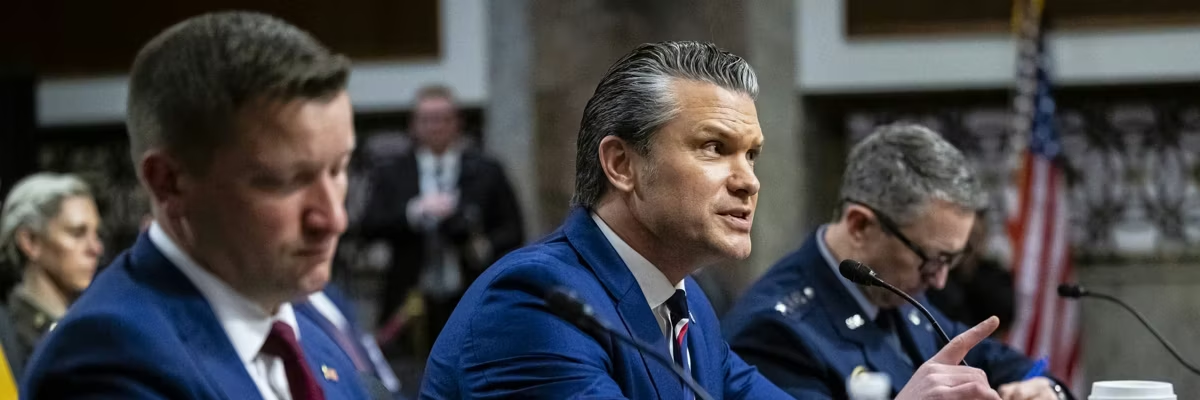
Pentagon Secretary Pete Hegseth testifies during a Senate Armed Services Committee hearing on April 30, 2026.
(Photo by Graeme Sloan/Getty Images)

Jake Johnson
Sep 04, 2026
COMMON DREAMS

US President Donald Trump’s Department of Defense is reportedly working to divert billions of dollars in federal funding from the National Institutes of Health to bolster the Pentagon’s budget as the administration wages a costly, destructive, and open-ended war on Iran.

Rep. Rosa DeLauro (D-Conn.), the top House Democratic appropriator, revealed late Thursday that the Pentagon—without notifying lawmakers or the public—signed an interagency agreement that could give the Defense Department “access to billions of dollars that Congress provided to NIH for critical biomedical research.”

Under the deal, which the Trump administration disclosed to Congress under pressure from Democrats on the House Appropriations Committee, the Pentagon would pull funds from the National Institute of Allergy and Infectious Diseases, whose annual budget is around $7 billion. It is unclear whether NIH has signed the agreement.

“This secretive attempt to siphon research funds away from NIH is outrageous. The interagency agreement needs to be terminated immediately,” DeLauro said in a statement. “These funds were provided for lifesaving medical research, not as extra money for the Department of Defense. It is no secret that the Department of Defense is facing enormous financial pressure because of President Trump’s war of choice with Iran. But the Trump administration cannot make American patients, families, and scientists pay the price.”

“Circumventing Congress to divert money intended to help Americans who are exposed to HIV, influenza, tuberculosis, and other deadly diseases—and directing those funds to the Department of Defense—is beyond the pale,” DeLauro added. “DoD already has programs, funded by Congress, to research and develop medical countermeasures to chemical, biological, and nuclear threats, and does not need NIH funding to do so. The administration must provide Congress with a full accounting of how this interagency agreement was developed and exactly how much taxpayer money it is trying to transfer to DoD.”

Military spending accounts for roughly half of the federal discretionary budget, but the Pentagon in recent months has said it is facing a cash shortfall in large part due to the illegal war on Iran. The Pentagon has said publicly that the Iran war has cost the US around $37.5 billion so far, though the agency—which has never passed an independent audit—has not released a full accounting of the conflict, and experts say the figure is likely a gross undercount.

On top of pursuing an annual military budget exceeding $1.1 trillion, the Trump administration is pushing lawmakers to approve a $67 billion supplemental funding package to cover some of the Iran war’s costs.

“Trump chose to start a costly war with Iran after giving billionaires and big corporations trillions of dollars in tax breaks—and now wants American patients to unknowingly foot the Defense Department’s bills,” Leslie Dach, chair of the advocacy group Protect Our Care, said in a statement Thursday. “Not a single dollar Congress appropriated for life-saving disease research should go into the bumbling hands of Defense Secretary Pete Hegseth for any claimed purpose.”

A Trump administration spokesperson told The Hill that the Pentagon-NIH deal would “enable nimble multi-agency resources to collaboratively respond to public health emergencies, such as the recent Ebola outbreak.”

Dach argued that no one should take the Trump administration “at its word about the military research they supposedly plan to fund with taxpayer money that was meant to find cures for diseases here at home.”

“Given Secretary Hegseth’s history of lying through his teeth about our national security and the fact this budgetary sleight of hand was reluctantly revealed to Congress, would anyone be surprised if these raided NIH funds were actually intended to buy more bombs?” Dach asked. “This backroom deal at the expense of public health needs to be revoked immediately, followed by a serious congressional investigation into the extent of and motives behind the Trump administration’s taxpayer money shell game.”

Sen. Patty Murray (D-Wash.), Senate Democrats’ top appropriator, also called for the immediate termination of the agreement.

“As if canceling lifesaving medical research and clinical trials and firing cancer researchers en masse were not bad enough, the Trump administration is now trying to rob NIH of billions of dollars that Congress provided for medical research so that it can pad the Pentagon’s budget,” said Murray. “We cannot allow this administration to shred patients’ hopes of new, lifesaving cures and treatments so that President Trump and Secretary Hegseth can secretively fund their own priorities in defiance of Congress.”

'Beyond the pale': Pentagon caught trying to raid billions from disease research

Bennito L. Kelty
September 3, 2026  
RAW STORY


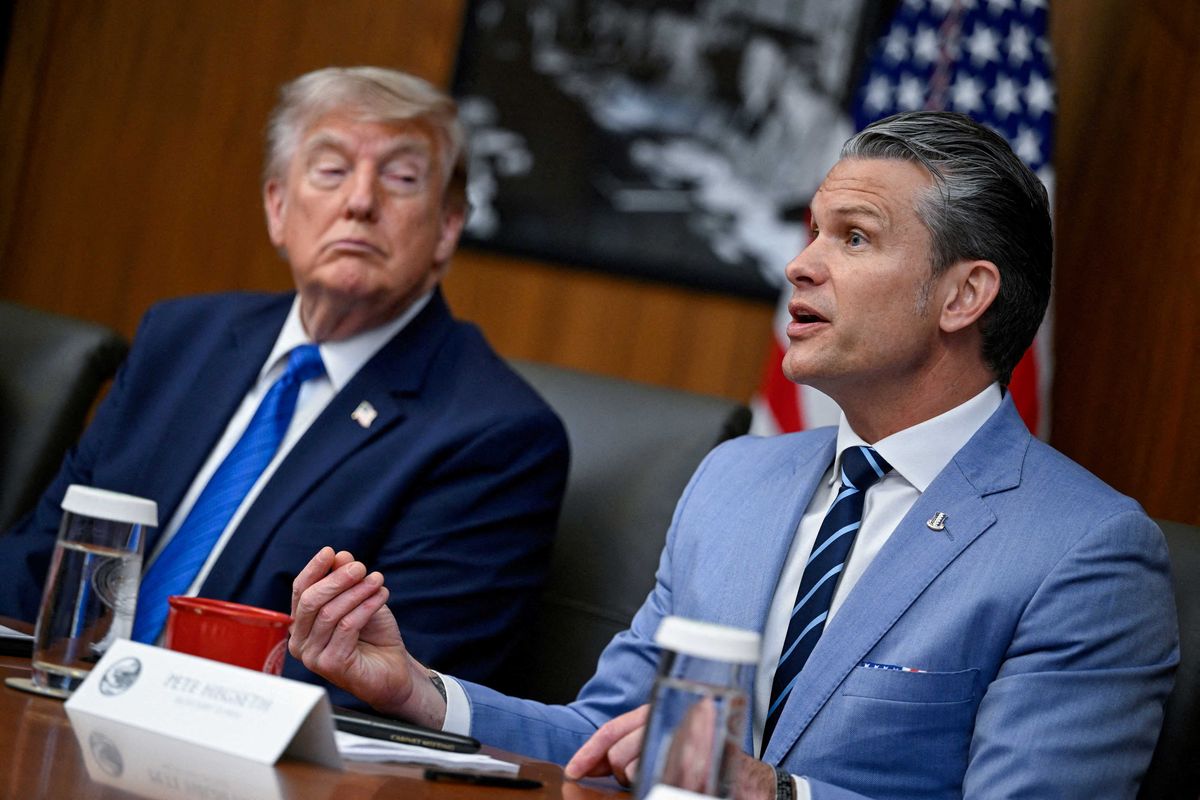
FILE PHOTO: U.S. President Donald Trump listens as Secretary of Defense Pete Hegseth speaks during a cabinet meeting at Camp David in Thurmont, Maryland, U.S., July 31, 2026. REUTERS/Daniel Heuer/File Photo

The Pentagon was caught attempting to divert funding for infectious-disease research to cover its own money woes, sparking outcry from a Democratic lawmaker.

According to reporting by Punchbowl News, Rep. Rosa DeLauro (D-CT) sounded the alarm on Thursday by revealing that the Department of Defense is trying to divert billions of dollars from the National Institutes of Health.

DeLauro, the top Democrat on the House Appropriations Committee, said that the Pentagon is trying to "siphon" money through an interagency agreement with the NIH. She warned the agreement could give the Pentagon access to billions that Congress appropriated to the NIH's institute for infectious disease research.

"This secretive attempt to siphon research funds away from NIH is outrageous," DeLauro wrote in a statement. "The interagency agreement needs to be terminated immediately."

She also noted the Pentagon's money troubles, writing, "It is no secret that the Department of Defense is facing enormous financial pressure because of President Trump's war of choice with Iran." Punchbowl News reported that President Donald Trump is asking for $1.5 trillion in funding for the Pentagon, but the request "seems as murky as ever."

According to DeLauro, the Pentagon is trying to pull money from the NIH's leading institute for infectious-disease research, the National Institute of Allergy and Infectious Diseases.

"Circumventing Congress to divert money intended to help Americans who are exposed to HIV, influenza, tuberculosis, and other deadly diseases—and directing those funds to the Department of Defense—is beyond the pale," DeLauro wrote. "The administration must provide Congress with a full accounting of how this interagency agreement was developed and exactly how much taxpayer money it is trying to transfer to DoD."

The total budget for NIAID is about $6.6 billion, according to Punchbowl News. The interagency agreement between the Pentagon and the NIH doesn't specify exactly how much money the Pentagon can pull from that budget, a source told Punchbowl News.

The Pentagon didn't respond to Punchbowl News' request for comment.


Exposed: Trump's 'secretive' scheme to pilfer medical research funds


U.S. President Donald Trump looks on during a meeting with travel executives in the Oval Office at the White House in Washington, D.C., U.S., September 2, 2026. REUTERS/Evelyn Hockstein

September 03, 2026
ALTERNET

On Thursday, Democrats on the House Appropriations Committee revealed that the Department of Defense is attempting to divert billions of dollars from the National Institutes of Health to supplement the Pentagon budget issues caused by President Donald Trump's war with Iran. This is according to a report in which ranking member Rep. Rosa DeLauro (D-CT) revealed the effort, which has been undertaken "without notifying Congress."

According to the report, "DoD has signed an interagency agreement that could give the Department access to billions of dollars that Congress provided to NIH for critical biomedical research. These funds were provided to support research to develop treatments or cures for infectious diseases such as influenza, malaria, tuberculosis, HIV, Ebola, and other dangerous pathogens." Trump-appointed officials at NIH disclosed the scheme only after being pressed for information by House Appropriations Committee Democrats.

“This secretive attempt to siphon research funds away from NIH is outrageous. The interagency agreement needs to be terminated immediately,” said DeLauro. “These funds were provided for lifesaving medical research, not as extra money for the Department of Defense. It is no secret that the Department of Defense is facing enormous financial pressure because of President Trump’s war of choice with Iran. But the Trump administration cannot make American patients, families, and scientists pay the price. Circumventing Congress to divert money intended to help Americans who are exposed to HIV, influenza, tuberculosis, and other deadly diseases — and directing those funds to the Department of Defense — is beyond the pale. DoD already has programs, funded by Congress, to research and develop medical countermeasures to chemical, biological, and nuclear threats, and does not need NIH funding to do so. The administration must provide Congress with a full accounting of how this interagency agreement was developed and exactly how much taxpayer money it is trying to transfer to DoD.”

As DeLauro suggested, it's been public knowledge that the Pentagon is running out of money for daily operations since reporting revealed the problem in July. The Defense budget has been strained by the war in Iran, which has resulted in the delay of base repairs, the reduction of training exercises, and other cuts. While Defense Secretary Pete Hegseth has requested $67 billion in supplemental funds, Congress has yet to approve it, though it did just pass a stopgap bill that will fund essential security and defense programs through December 11. In the meantime, DeLauro's bombshell report suggests that the Pentagon is desperate to find money elsewhere.

According to Punchbowl News reporter Samantha Handler, "This is the kind of thing Approps Dems will surely be investigating/going after if Dems take the majority next Congress."

DINO

John Fetterman blew off paralyzed vets and children's hospital amid rightward drift: WSJ

Bennito L. Kelty
September 3, 2026 
RAW STORY


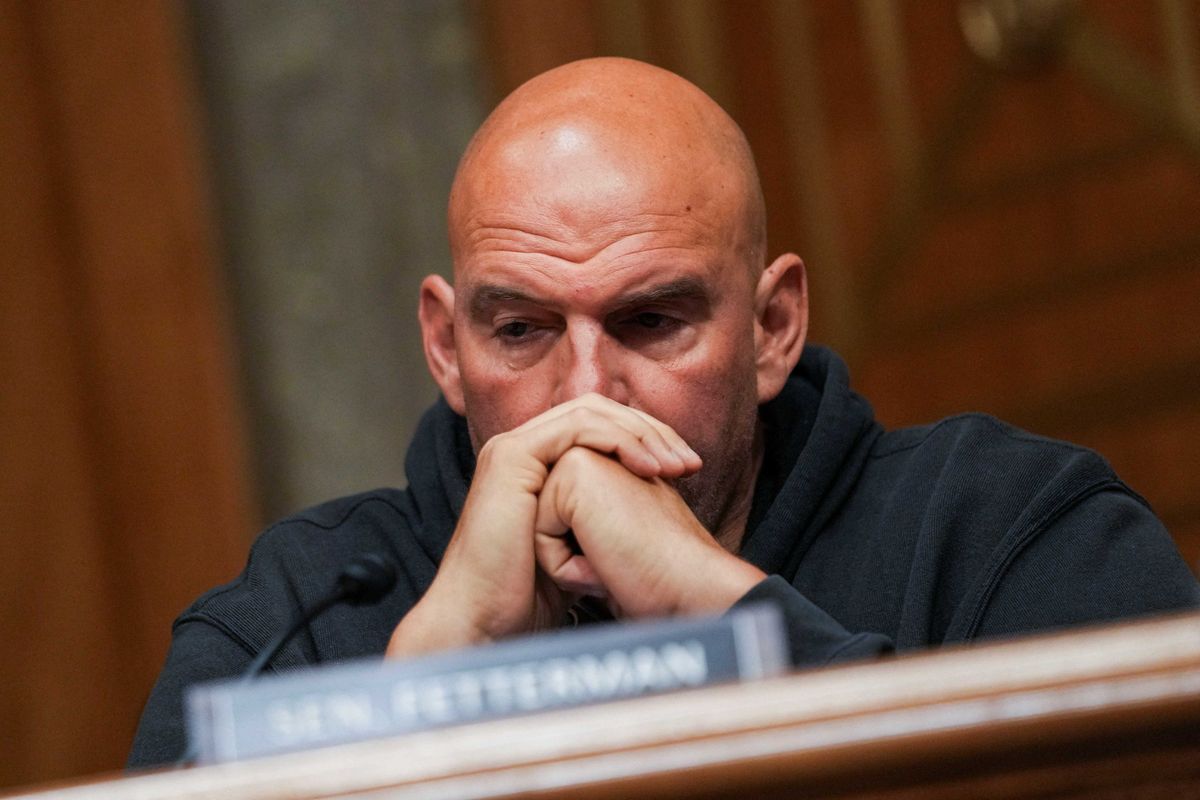
U.S. Senator John Fetterman (D-PA) looks on as U.S. Senate Homeland Security and Governmental Affairs Committee Chairman Rand Paul (R-KY) presides over a vote whether to hold Anthony Fauci, the former director of the National Institute of Allergy and Infectious Diseases (NIAID), in contempt for having invoked the Fifth Amendment in response to questions about the government's COVID-19 pandemic response during a July 29 hearing, on Capitol Hill in Washington, D.C., U.S., August 6, 2026. REUTERS/Nathan Howard


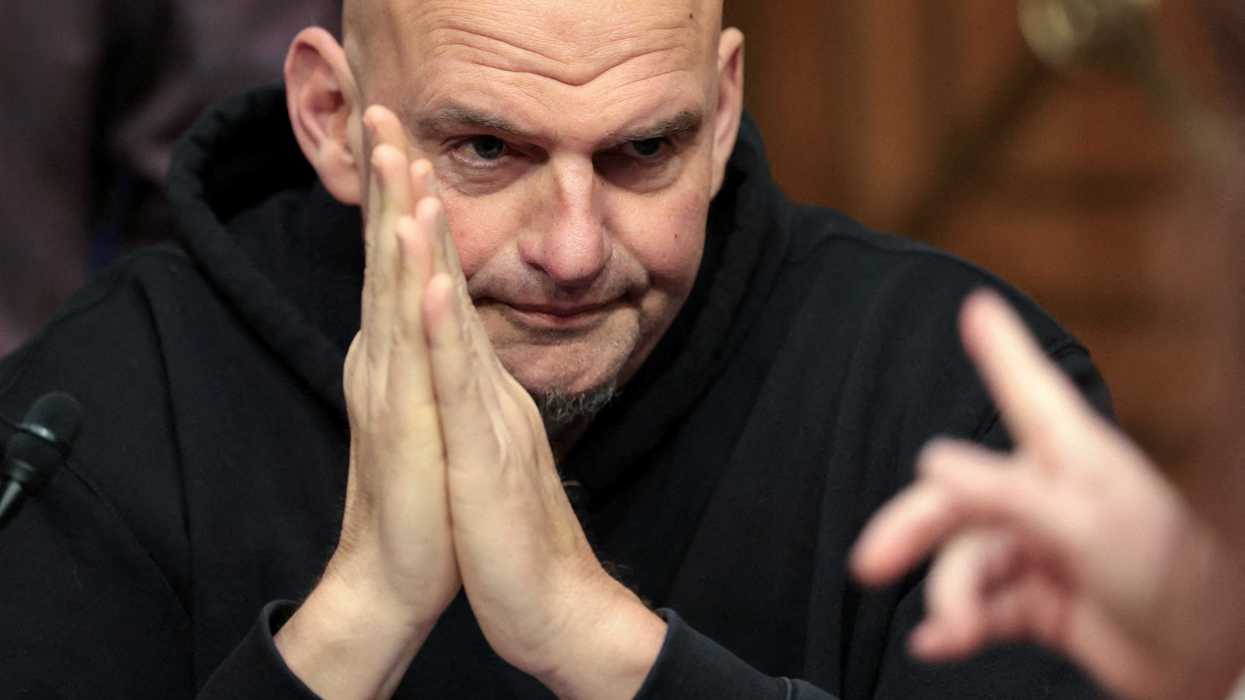
Sen. John Fetterman (D-PA) brushed off paralyzed veterans and a children's hospital while cash from a prominent conservative donor came in amid his rightward drift.

According to a Thursday report by the Wall Street Journal, Fetterman canceled on three paralyzed military veterans who traveled from rural Pennsylvania in June to discuss legislation on their care. He told staff he might have eaten something bad, The Journal reported.

Less than an hour after aides met the veterans in his place, Fetterman reportedly walked in looking fine and headed to Fox News to talk about Israel.

The Journal's reporting drew from more than a dozen former staffers and lawmakers, plus internal text messages. "Behind closed doors, the first-term senator shows little interest in doing the job beyond cultivating relationships with conservative media figures and advocating for Israel," The Journal wrote.

When an aide told him last September that officials from the Children's Hospital of Philadelphia wanted to meet over Medicaid cuts, Fetterman texted back, "Well I'm not," according to messages reviewed by The Journal, which added that he was "convinced they just want free trips to DC."

The Journal described how Fetterman was once the mayor of the town of Braddock and a disciple of Bernie Sanders. He's increasingly aligned himself with Republicans, The Journal noted. He now polls better with GOP voters than Pennsylvania's Republican senator, Dave McCormick, per New York Times polling cited by The Journal. The drift has fueled speculation that he could switch parties, The Journal noted.

In July, filings showed that he took money from a prominent conservative donor, according to The Journal. When he was asked in March about a call Senate Democratic leadership was arranging, Fetterman texted, "I truly don't care," The Journal reported.

Fetterman didn't respond to The Journal's interview requests and walked away from a reporter at an Erie event last month. At the event, he defended his record by saying, "We have to work together."


Fetterman snubbed veterans and constituents to hang with Fox: report


U.S. Senator John Fetterman (D-PA) on Capitol Hill in Washington, D.C., 
U.S., March 19, 2026. REUTERS/Jonathan Ernst
September 03, 2026
ALTERNET

A new report reveals that Sen. John Fetterman (D-PA) snubbed disabled veterans and poor people, so he could instead pander to Republicans, right-wing media and pro-Israel groups.

"One morning in June, three paralyzed military veterans in wheelchairs from rural Pennsylvania arrived at the office of Sen. John Fetterman for a long-awaited meeting to discuss legislation that would improve their care," reported The Wall Street Journal's Will Hobson and Siobhan Hughes on Thursday. "Fetterman’s staff greeted them with bad news: The Pennsylvania Democrat had to cancel. He’d told his staff he may have eaten something bad and wasn’t feeling well, according to people familiar with the matter."

The Journal added, "Less than an hour after his staffers met with the veterans in his place, Fetterman walked into his office, showing no signs of illness. He had an appointment he didn’t want to miss, he told staff: an interview on Fox News to discuss Israel and the war in Iran."


This, said WSJ, was not the only notable Fetterman snub.

"In April 2025, veteran Pennsylvania state lawmaker Anthony Hardy Williams brought a busload of constituents to Washington from Eastwick, a poorer, flood-prone neighborhood in Philadelphia, to meet with their representatives in Congress and discuss Trump administration cuts to a grant program that had helped the area," Hobson and Hughes reported.


They continued, "Fetterman was the only one who refused to meet with them, Williams said in an interview. At one point, they saw Fetterman walking the halls and yelled, but he didn’t acknowledge them, according to Williams."

The Pennsylvania Democrat has repeatedly played footsie with Republicans, from accepting money from right-wing donors to vowing that he would not campaign against the Pennsylvania Republican who also represents his state in the Senate, Dave McCormick. He has also fixated on Israel as one of his main issues, vowing to leave the Democratic Party if it becomes "anti-Israel" and prioritizing concerns related to that nation's interests more than most other matters that come across his Senate desk.

Fetterman's pro-Israel positioning comes at a time when hate toward both Jews and Muslims is peaking in America. As The New Republic reported in July, “President Trump posted a captionless video of graduating kindergarteners on Truth Social on Monday, goading his supporters into verbally attacking little children simply for being Muslim,. The clip is from Gateway STEM Academy, a majority-Black K-8 public charter school in St. Paul, Minnesota. It shows about 21 children in caps and gowns on stage singing a song together. Most of the girls are wearing hijabs.” Similarly hate crimes toward Jews have been on the rise over the past few years.


Although Fetterman has equated criticizing Israel's government with hating all Jews or all Israelis, Brandeis University historian Jonathan Sarna told AlterNet in March that it is wrong for so many Americans to blame all Jews for the actions of Israel's government, observing that "if you wouldn't equate criticism of the President with hating America, there is no reason — and indeed it is wrong and wicked — to do so with regard to Israel.”

Trump triggers "frightening sign" as billions in gold flee New York vaults: expert

Bennito L. Kelty
September 3, 2026 
RAW STORY


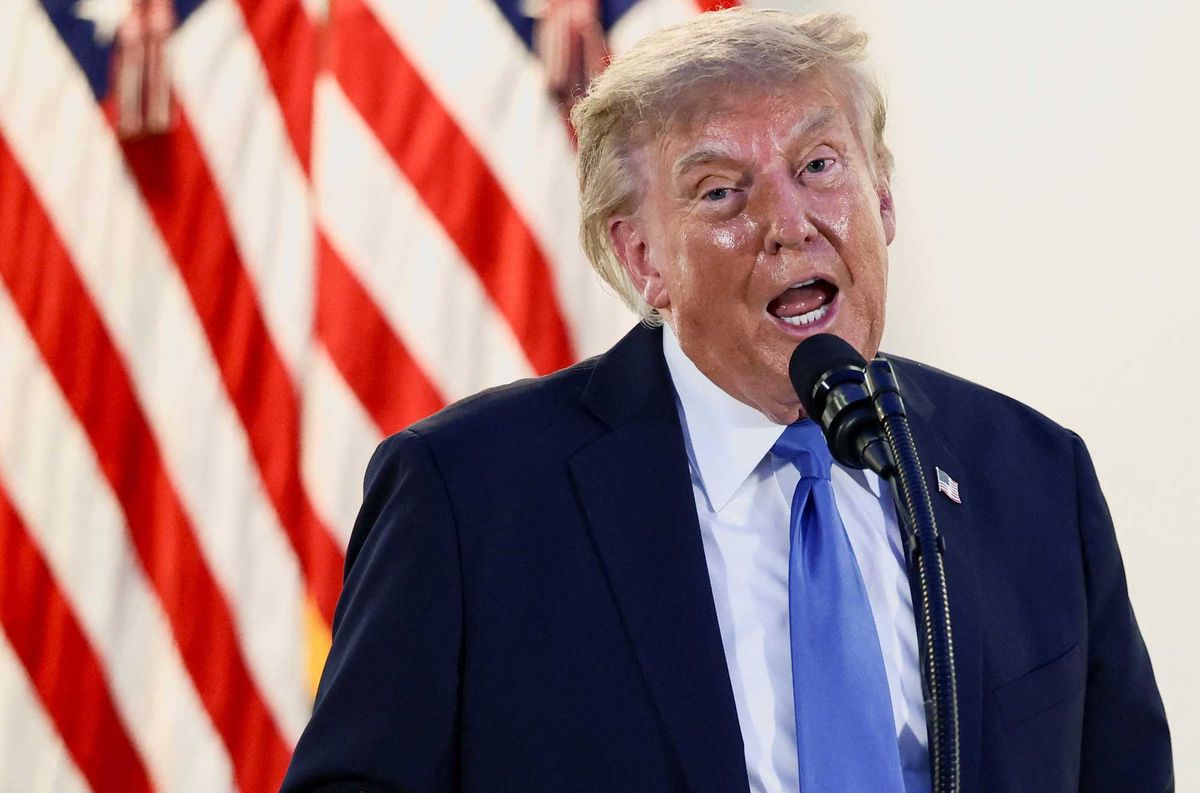
U.S. President Donald Trump speaks while hosting a dinner in the Rose Garden at the White House in Washington, D.C., U.S., September 2, 2026. REUTERS/Evelyn Hockstein

Fears that President Donald Trump could freeze foreign assets are driving billions in gold out of New York's vaults, an economics journalist warned.

In a Thursday article for The Bulwark, economics editor and columnist Catherine Rampell described the gold retreat as a signal of how far U.S. relationships, in particular with its European allies, have deteriorated.

"In a frightening sign of just how much trust has been lost between the United States and its erstwhile allies, billions of dollars of gold reserves are being repatriated or otherwise moved out of Trump's reach," Rampell wrote.

The Dutch central bank announced on Wednesday that it had moved roughly $12 billion in gold, most of it held in New York, to vaults in London, Rampell noted. France's central bank recently sold about $15 billion in bullion stored in New York and replaced it with bars kept in Paris. Germany and Italy, which are the second- and third-largest holders of gold reserves behind the U.S., have spent the past year weighing whether to bring theirs home too, Rampell added.

The concern is less that Trump would seize the gold than that he might freeze it, Rampell explained. Washington and its allies did the same with Russia's reserves after the invasion of Ukraine, she pointed out.

A German member of the European Parliament, Markus Ferber, warned that the risk is impossible to dismiss, she noted.

"Trump is erratic, and one cannot rule out that someday he will come up with creative ideas how to treat foreign gold reserves," Ferber said, per Rampell.

Rampell admitted the scale of the fear caught her off guard.

"It hadn't really occurred to me that investors might be diversifying away from U.S. dollar-denominated assets because they also feared losing access to them," she wrote.

The nervousness has built during a string of Trump moves, including his "Liberation Day" tariffs, his threats to annex Greenland, his push to take "golden share" stakes in private companies, and his stated wish to personally inspect Fort Knox, according to Rampell.

Because gold sits inside the Federal Reserve Bank of New York, Trump's campaign to control the Federal Reserve feeds fears that foreign reserves could be next, Rampell wrote. A representative of Germany's Taxpayers Federation put it bluntly, she noted.

"It's our money," the representative said. "It should be brought back."
'I am not the Lorax': Judge unloads on Trump golf plan in bizarre hearing

Matthew Chapman
September 3, 2026 
RAW STORY


U.S. President Donald Trump holds a golf ball at Trump Turnberry resort in Turnberry, Scotland, Britain, July 27, 2025. REUTERS/Phil Noble

A hearing in a lawsuit over President Donald Trump's renovations to the East Potomac Golf Links went off the rails almost immediately on Thursday.

According to Politico legal affairs analyst Kyle Cheney, U.S. District Judge Ana C. Reyes "[made] clear she's not 'parks and rec' and doesn't want to police the administration's management of trees at East Potomac golf course," adding, "I am not the Lorax, I do not speak for the trees."

Reyes, an appointee of former President Joe Biden, also made references to Alanis Morissette, "a random caller demanding her removal from the bench," and the apocryphal legend of first president George Washington cutting down a cherry tree in his youth, Cheney remarked.

Historic preservation groups sued the Trump administration for the renovations to the site intended to turn it into a championship course, citing problems including the chopping down of trees on the property. The Trump administration "says the recently chopped trees were dead, invasive or hazardous," according to Cheney.

Experts have flagged an unusual legal strategy from Trump's team, where they are essentially trying to argue that any issues with the project are "speculative" and therefore invalid grounds for a lawsuit, right up until the project is actually complete and any suit would be a moot point.

The project has already run into a number of logistical challenges, including land subsidence and water issues.

Trump’s golf course takeover runs into major new roadblock


President Donald Trump on his Bedminster, New Jersey golf course on July 28, 2022 (Image: Shutterstock)

August 31, 2026 
ALTERNET

President Donald Trump's plan to take over a Washington D.C., golf course has run into a major new roadblock, with NOTUS reporting that locals have staged new protests to bring attention to the situation.

Over the weekend, according to the report, "Cyclists, anglers, joggers and bird-watchers" took to the East Potomac Park to stage a protest against Trump's planned makeover of the park's Golf Links on Hains Point, part of his broader effort to reshape D.C. to his own liking. The proposed work is reportedly set to begin on September 1, with local park attendees and preservationists claiming that several trees have already been removed.

"Wearing shirts with slogans like 'Save Hains Point' and holding signs with phrases such as 'Fore the People, Not the President,' dozens of people represented the activities — and communities — that could be at stake if Trump’s plans move forward," NOTUS explained. "The rally was organized by the Washington Area Bicycle Association and Save East Po, a grassroots coalition aimed at protecting the area. It took place at the park’s southernmost tip, not far from where a tree-removal crew was working Saturday. At least six trees around the golf course were removed by National Park Service employees. Several dozen others had been taken out in the days before the rally, alarming activists and preservationists."

The report continued: "The Interior Department, which oversees the National Park Service, said in a statement that arborists are doing routine maintenance, 'with selective removal of hazard trees, non-native invasive trees, and declining and dying trees that cannot be brought back to good health through any degree of intervention.' But WABA Executive Director Elizabeth Kiker said she’s concerned that the three-day removal operation was 'the beginning of them tearing this entire space out and building it to be something that is not for the public.' Kiker said she and some other attendees watched a few of the trees being cut down."

"Maybe they were ailing, but boy they sure didn’t look like it," Kiker told NOTUS.

A lawsuit attempting to halt Trump's plan for the public golf course is currently "stalled" in court. The specific construction plans and a tree removal list have not been disclosed by the administration. Kiker said that the National Park Service disclosed to them that construction is not moving forward on Tuesday, but added that, "We are still watching very carefully."

“We want to see the trees that they’re planning on cutting down — they won’t release that,” Save East Po founder Alex Rosen told NOTUS. “There’s renderings of what the future golf course is going to look like, but they won’t release that. There’s clearly plans that exist right now, but this administration is acting without any semblance of transparency, and that’s the problem.”