Saturday, September 05, 2026

Hiring burst of 162,000 jobs in August puts the focus squarely back on inflation in the U.S.


Updated: , 2026 
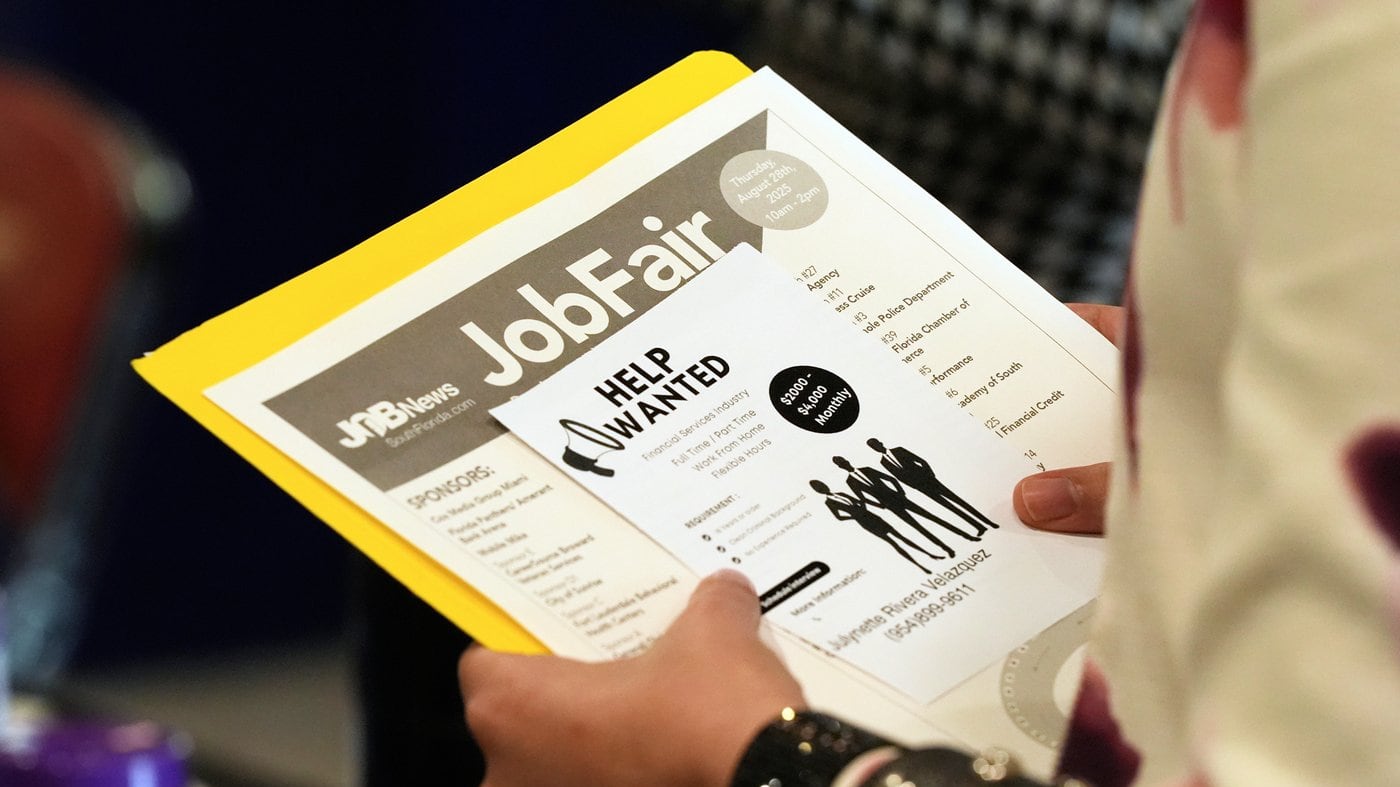

A job seeker waits to talk to a recruiter at a job fair Aug. 28, 2025, in Sunrise, Fla. (AP Photo/Marta Lavandier, File)

WASHINGTON — The U.S. job market rebounded in August as employers added a surprising 162,000 jobs. The unemployment rate stayed at a low 4.1 per cent.

The jobs report, issued by the Labor Department Friday, could be good news for U.S. President Donald Trump two months before midterm elections in which the health of the economy is weighing on voters’ minds.

Hiring far exceeded the 65,000 forecasters had expected, according to a poll by FactSet. Labor Department revisions also looked good, adding 55,000 to June and July payrolls. Employers created 21,000 jobs in July; the Labor Department had originally reported that they’d cut 23,000.

Restaurants and bars added 59,000 jobs last month, construction companies 22,000 and manufacturers 16,000. Factory jobs are up by 58,000 since hitting a recent low in December, the Labor Department noted.

So far this year, employers — companies, government agencies and nonprofits — have added an average of more than 80,000 jobs a month. That is up from a dismal 9,700 last year.

But hiring remains well below the 166,000 monthly jobs that were the norm in 2023 and 2024, let alone the 491,000 a month recorded during the 2021-2022 hiring boom that followed pandemic lockdowns.

And the U.S. labor force — the number of people working or looking for work — jumped by 683,000 last month after falling in June and July.

Yet many households are struggling with the high cost of living, and wage gains aren’t helping much. Average hourly wages rose 3.1 per cent last month from a year earlier, the weakest year-over-year increase since May 2021.

Friday’s report may increase the likelihood that the Federal Reserve will raise its key short-term interest rate when it next meets Sept. 15-16. Solid hiring sends a signlal that current borrowing costs aren’t necessarily high enough to restrain the economy and cool inflation.

Fed Chair Kevin Warsh said last week that inflation, at 3.7 per cent according to the Fed’s preferred measure, remains too far above the central bank’s 2 per cent target, and added that without further progress, they would have “work to do.”

With hiring seemingly healthy, the Fed’s focus will shift to a critical inflation report that is being released next week. On Thursday, Fed governor Christopher Waller said he is leaning toward keeping the Fed’s rate unchanged, but would support a hike if inflation comes in high.

Contributing to inflation is the struggle that U.S. employers have had dealing with a shortage of workers — the result of President Donald Trump’s immigration crackdown and the retirement of baby boomers. Some are responding by using technology for tasks that human beings used to do.

Employers have been reluctant to let go of the staff they have, so most Americans enjoy unusual job security and unemployment is low.

“It’s a very strange labor market,’’ David Kelly, chief global strategist at J.P. Morgan Asset Management, wrote in a commentary Monday.

The No. 1 puzzler: Hiring is weak, but layoffs are rare.

Employers haven’t been eager to take on new workers. The Labor Department reported Tuesday that gross hiring — before subtracting people who lost or left their jobs — fell 5 per cent to fewer than 5.1 million new jobs.

The United States doesn’t need as many jobs as it did until recently to keep the national unemployment rate from rising. Trump’s immigration crackdown and baby boomer retirements mean fewer people are available for work. More than 1.3 million people have dropped out of the U.S. labor force over the past year.

As a result, the “break-even’’ rate of monthly hiring, 155,000 in 2023-2024, has dropped, perhaps to nearly zero, according to a Federal Reserve study.

Instead of looking to hire from a diminished pool of available workers, “businesses are increasingly focused on boosting efficiency through technology and AI and increasingly seek to do more with their existing workforce,’’ EY-Parthenon economists Gregory Daco and Lydia Boussour wrote in a commentary this week.

Even if they aren’t hiring aggressively, companies are reluctant to let go of the staff they have. They retain memories of the unexpected labor shortages that followed the end of COVID-19 lockdowns.

So unemployment remains low. For the past year, the number of people applying each week for unemployment benefits - a proxy for layoffs - has stayed in a historically low range of around 200,000 to 230,000.

The result is what economists call a “no-hire, no-fire″ labor market in which those who have work enjoy job security, but times are tough for young workers trying to land entry-level jobs or unemployed people seeking to get back to work.

---

Paul Wiseman, The Associated Press

 World food prices at highest since 2022 as supply risks mount, FAO says


Published:

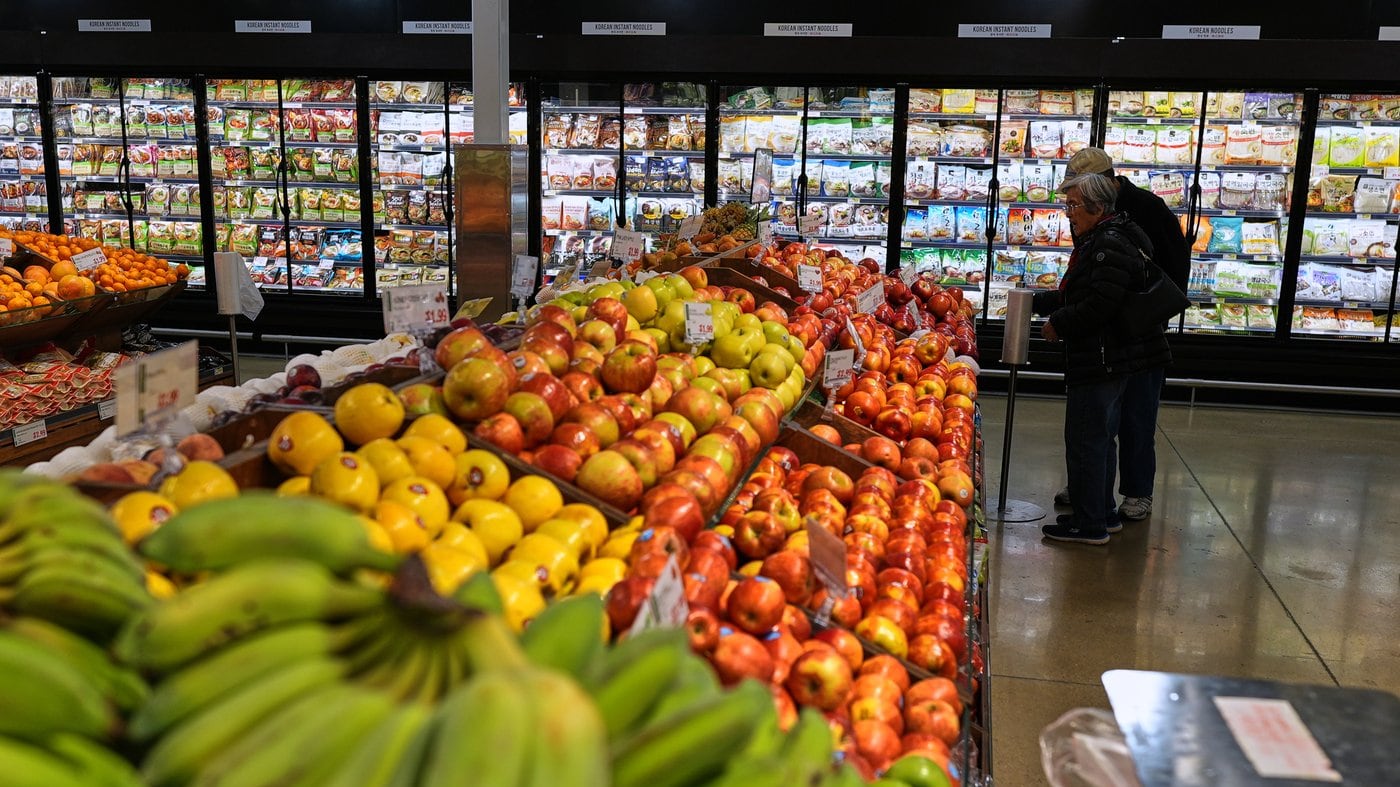
People shop at a grocery store, in Schaumburg, Ill., Thursday, April 2, 2026. (AP Photo/Nam Y. Huh)

PARIS — World food prices rose in August to their highest since late 2022, as adverse weather and war disruption in the Black Sea heightened concern over supply of staples, the United Nations’ Food and Agriculture Organization said on Friday.

Extreme heat and drought in Europe, the threat of a severe El Nino weather pattern and trade upheaval caused by the Ukraine and Iran wars have unsettled agricultural markets, pushing grain prices to three-year highs and sugar to a one-year peak.

The FAO Food Price Index, which tracks monthly changes in a basket of internationally traded food commodities, averaged 133.3 points in August, up from July’s revised reading of 130.8.

That was the highest score since November 2022, though nearly 17 per cent below a record peak from March 2022, after Russia’s full-scale invasion of Ukraine.

“August’s increase in global food prices is a warning that the risk premium is returning to food markets: climate shocks, geopolitical tensions and disrupted trade logistics are converging to tighten supply expectations,” FAO Chief Economist Maximo Torero said in a statement.

The FAO’s price benchmarks for cereals, vegetable oils, sugar, meat and dairy all rose in August.

The extreme weather in Europe affected prospects for the maize (corn) and sugar beet harvests as well as livestock output, while the anticipated El Nino phenomenon fueled concerns for palm oil and sugar output in Asia, it said.

Escalating attacks in the Black Sea have curtailed grain shipments from Russia and Ukraine in their 4-1/2-year-old war, while the U.S.-Iran conflict was straining flows of fertilizer for crops.

Among food categories, FAO’s cereals price index rose 2.2 per cent month-on-month to its highest since May 2024, and the vegetable oil index edged up 0.6 per cent to its highest since June 2022.

The agency’s sugar benchmark jumped 11.9 per cent to its highest since June 2025, with lower production in Brazil’s crucial center-south region adding to weather concerns in Europe and Asia.

In a separate report, the agency cut its 2026 global cereal production forecast by 3.4 million metric tons from a previous estimate in July to 2.980 billion tons, now 2.0 per cent below 2025 in the largest annual decline since 2018.

Projected output would still be the second-largest on record, however.

Forecast world cereal stocks at the close of 2026/2027 were revised down 1.1 per cent to 947.2 million tons, now only marginally above the previous season.

A reduced estimate of coarse grain stocks outweighed an upward revision for wheat that reflected an anticipated build-up in Russian and Ukrainian stocks due to shipping disruption, the FAO said.

(Reporting by Gus Trompiz;Editing by Alison Williams and Clarence Fernandez

Norway’s US$2 trillion sovereign fund proposes deep cuts to U.S. Treasury holdings


The headquarters of the Norges Bank, Norway's central bank, in Oslo, Norway, on Tuesday, Jan. 30, 2024.

The manager of Norway’s US$2.3 trillion sovereign wealth fund has proposed significantly cutting its exposure to U.S. Treasuries as part of a wider shake-up of its bond investments to improve returns, according to a letter published this week.

Norges Bank Investment Management has recommended reducing its weighting to government bonds within its benchmark bond index to 50 per cent from 70 per cent, with U.S. Treasuries, the biggest holding, getting the biggest cut, according to the letter.

The changes would mean cutting nearly US$80 billion from the fund’s current holdings of about US$215 billion of U.S. Treasuries as of the end of June, according to Reuters calculations.

Government bond markets have been in turmoil recently, with long-term borrowing costs soaring as rising inflation and government debt levels spooked investors.

Norway’s sovereign wealth fund, the world’s largest, owns on average 1.5 per cent of all listed companies globally. Its scale means that portfolio decisions can influence broader market flows.

Any changes would be done gradually, Norges IM says

The fund’s proposals were made in response to questions from Norway’s finance ministry about the wealth fund’s investment strategy for bonds.

Norges Bank IM said it would await the ministry’s response, and any changes would be done gradually to limit market impact and transaction costs.

“We recommend that the government subindex of the bond index be reduced from 70 per cent to 50 per cent,” Ida Wolden Bache, governor of Norges Bank, and Norges Bank IM CEO Nicolai Tangen wrote in the letter.

“A government share of 50 per cent will be sufficient to cover the liquidity needs, including in periods of turbulence in financial markets.”

The fund also proposed considering an increase in investments in unlisted assets in a separate letter, in part as a way to reduce concentration risks that have grown in its equity portfolio amid the boom in the share prices of a handful of U.S. tech companies.

Under its current mandate the fund can own unlisted real estate and renewable energy assets, but it has a lower share of unlisted investments than comparable funds.

U.S. Treasuries reduction

Norges Bank IM said the biggest change to its bond index would be investing in more non-government debt, including mortgage-backed securities, to give it better diversification and exposure to risk premiums.

Under the proposals, the bond index weighting to U.S. government bonds would reduce from 34.1 per cent to 21.9 per cent, according to the letter, with the allocation to euro area debt falling more modestly from 16.8 per cent to 14.1 per cent.

The allocation to Japanese government bonds would increase from 4.6 per cent to 7.4 per cent, while the U.K. allocation would remain unchanged at 4.2 per cent. The fund said the changes would align the index more closely with the broader market weightings.

While U.S. Treasuries exposure would fall, the proposed allocation to U.S. non-government debt would jump from 16.2 per cent to 27.6 per cent, meaning that the overall bond index’s weighting to the U.S. dollar would fall only slightly, from 52.9 per cent to 52.5 per cent.

Reporting by Iain Withers and Tommy Reggiori Wilkes; Editing by Jan Harvey


Muskoka chair maker's tariff woes highlight challenges for mom-and-pop manufacturers


Published:

A Canadian Muskoka chair maker hit hard by U.S. tariffs is considering moving the bulk of its manufacturing to the United States.

DFC Woodworks Inc. has been making outdoor wooden patio furniture including Muskoka chairs — also called Adirondack chairs — since 1955.

The Kemptville, Ont., company exports about 70 per cent of its furniture to the United States, but those goods are now subject to a steep 50 per cent U.S. duty.

DFC Woodworks president François Bruneau says the family-run business is now saddled with a hefty tariff bill and a looming decision over whether to keep absorbing the costs, raise prices and risk seeing U.S. sales fall to zero, or move the majority of its manufacturing south of the border.

Fen Hampson, an international affairs professor at Carleton University, says the Muskoka chair maker’s dilemma illustrates the challenges facing many Canadian small and medium-sized enterprises.

He says mom-and-pop manufacturers may lack the financial resources, diversified markets and specialized trade expertise that allow larger corporations to weather a trade war.

This report by The Canadian Press was first published Sept. 4, 2026.

Brett Bundale, The Canadian Press