Saturday, September 05, 2026


Israeli defence tech XTEND to begin trading on NYSE following $1.5bn merger

Israeli defence tech XTEND to begin trading on NYSE following $1.5bn merger
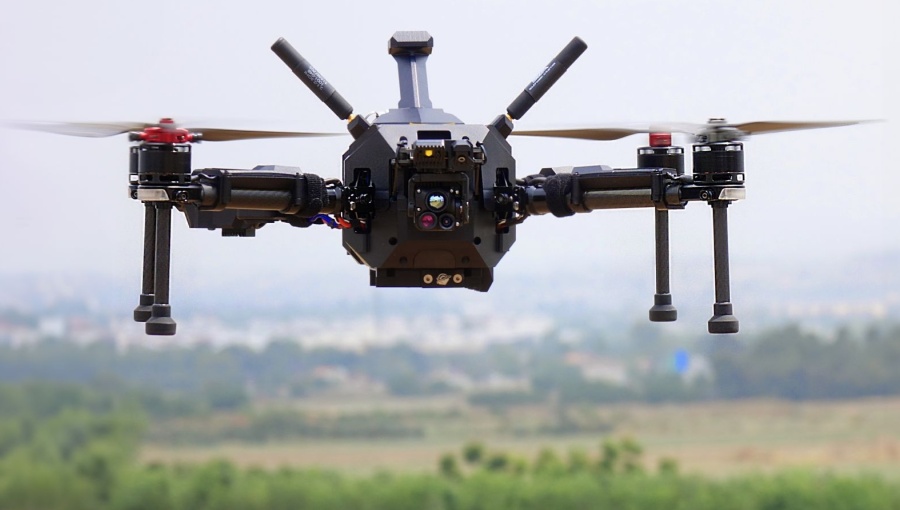
XTEND's Honey Badger drone. / CC: XTENDFacebook
By IntelliNews Tel Aviv bureau September 3, 2026

Israeli defence-tech company XTEND is set to begin trading on the New York Stock Exchange on 4 September, a day after completing a $1.5bn business combination with real estate developer JFB Construction Holdings. The combined entity will be renamed XTEND AI Robotics, Inc. and will trade as NYSE: XTND, according to a press release.

Notably, the listing marks a switch in venue: JFB (Nasdaq: JFB) is itself Nasdaq-listed, and when the deal was announced in February, it was billed as creating a Nasdaq-listed defence leader. The companies have since opted for the NYSE, subject to the exchange's listing approval.

Originally a gaming venture built on drone operating-system technology, XTEND pivoted to developing AI-driven autonomous defence systems after its co-founders, Aviv Shapira, Matteo Shapira, Rubi Liani and Adir Tubi, noticed how incendiary balloon attacks against Israeli communities from Gaza intensified in the lead-up to the Hamas attacks of 7 October 2023.

Demand for such technology accelerated with the emergence of fibre-optic drones deployed by Hezbollah in Lebanon following the outbreak of the Iran war. In response to the immediate threat, several Israeli companies have sought to develop anti-drone measures, including Esh-Tech Systems, which has developed a portable laser system capable of intercepting fibre-optic FPV drones.

XTEND has already capitalised on rising international demand, reporting 12,500 systems deployed across 30 countries. The firm recently secured a multi-year framework agreement worth up to $15mn with a European NATO member state's defence ministry, of which roughly $4.5mn is committed for the first year, alongside a reported $12mn agreement with the US Department of Defense.

Its financial results, however, remain modest by public-company standards: XTEND generated $5.8mn in revenue in the first quarter of 2026, up 234% y/y, while its net loss more than doubled to $11.5mn.

In a company press release, JFB acknowledged that the $1.5bn deal grants XTEND access to the public markets without a conventional IPO. The reverse-merger structure fits XTEND's existing funding model: the company is not raising capital from public-market investors, with funding coming instead through a private investment agreement originally set at $152mn and subsequently reduced to $100mn.

Of that sum, $42mn was transferred as a SAFE when the merger agreement was signed in early 2026, with the remaining $60mn expected in the coming days. The investor group includes American Ventures, in which Eric Trump is a prominent investor, alongside Aliya Capital and US drone manufacturer Unusual Machines (NYSE: UMAC). Existing shareholders include Israeli defence-tech fund Protego, founded by Lital Leshem and Lee Moser, which led the previous round, as well as Union Tech, Chartered Group, Len Blavatnik and TAU Ventures.

The combined entity will be headquartered in Tampa, Florida, with an accompanying production facility, a structure designed to position XTEND as a domestic US supplier rather than a foreign vendor, a distinction that carries material weight in Pentagon procurement.

"What drew us to XTEND is the strength and scalability of its AI-driven operating system," JFB CEO Joseph F. Basile III said.

XTEND CEO and co-founder Aviv Shapira said in the release that "the demand for systems that keep operators out of harm's way is surging as the global security environment grows more volatile, and this represents one of the largest market opportunities in defence technology today."

The reverse-merger route was chosen to compress timelines and capture current investor appetite for defence technology and autonomous systems. Shapira has pointed to the performance of Ondas, an active acquirer of Israeli defence companies that has recruited former senior figures from Israel's security establishment, including ex-Mossad chief Dadi Barnea, and whose stock has appreciated 750% over two years.


Argentina escalates Falklands dispute as Trump leaves UK support in doubt

Argentina escalates Falklands dispute as Trump leaves UK support in doubt
“The Falkland Islands are Argentinian, historically and legally. There is no debate,” Milei stated. / CC/Gage Skidmore
By bnl editorial staff September 4, 2026

Days after Donald Trump declined to rule out changing Washington's stance on the Falkland Islands, President Javier Milei used a televised address late on September 3 to harden Argentina's decades-old sovereignty claim over the territory, threatening sanctions on oil companies drilling nearby and promising new funds for a naval base in Tierra del Fuego.

Speaking from the Casa Rosada, the presidential palace in Buenos Aires, Milei said the Falklands, which Argentina calls the Malvinas, were "Argentinian, historically and legally" and that there was "no debate" over the matter. He said Argentina would not "stand idly by" and needed to "recover" the islands. Britain has held the territory since 1833, and the two nations went to war over it in 1982.

The Argentine leader singled out Sea Lion, an offshore development roughly 220km north of the Falklands led jointly by London-listed Rockhopper Exploration and Navitas Petroleum, headquartered in Israel, describing it as a "concrete and urgent danger" to national sovereignty. "If we do not act firmly and swiftly today, in a few months they will have the material capacity to seize the oil reserves that lie under our sea," he said.

Trump's remarks came in a GB News interview broadcast on September 3. Pressed on whether the US would support Britain militarily should the Falklands dispute turn violent again, he gave no assurance, instead repeating his complaint that London had offered little help for the US and Israeli-led bombing campaign against Iran. Earlier in the week, the US president had told reporters in the Oval Office that he was open to reconsidering "every position," including on the Falklands, although US officials have since maintained that Washington's neutral stance is unchanged.

Ed Miliband, the UK's foreign secretary, dismissed Milei's claim, calling Britain's commitment to the islands "unwavering" and arguing that international law guaranteed the islanders a say over their own future. Wes Streeting, the UK defence secretary, said Milei's statement "tells us more about domestic politics in Argentina than it does about the Falkland Islands," adding that the islands "are British because Falkland Islanders choose to be British."

Milei rejected that argument, saying the remote archipelago’s population, as residents of what he called "usurped territory," did not have "a legitimate right to self-determination" and that a 2013 referendum, in which 99.8% of islanders voted to remain British, was "invalid."

The libertarian leader also unveiled a decree requiring state agencies to flag suspected legal breaches in the islands directly to the foreign ministry, which would then have the power to penalise the companies and suppliers involved in oil and gas work there. Separately, he said his government would put a National Sovereignty Defence Bill before Congress, tightening existing sanctions law and setting up a new National Security Council. He also said he would sign an emergency decree to increase defence ministry funding for an integrated naval base in Tierra del Fuego, a project begun in 2022, which he said would become the "most important logistics hub in the South Atlantic."

Rockhopper and Navitas played down the impact of the threatened measures. In a joint statement, the companies said the episode was "not expected to have any material effect" on the Sea Lion timeline and that their licences, granted by the Falklands' local government, remained valid with the "full and continuous support" of the UK government.

Pablo Quirno, Argentina's foreign minister, said the presence of an Israeli company in the project would not damage relations with the Jewish state, one of Argentina's closest allies under Milei, adding that Navitas was already subject to Argentine sanctions. He said the measures announced on September 3 had been in preparation for six months. Milei declared himself "the most Zionist president in the world" earlier this year and takes pride in being a close ally of Israeli Prime Minister Benjamin Netanyahu.

Sea Lion, which lies at a depth of 450 metres, is targeting first oil in early 2028 with initial output of 55,000 barrels a day, against Argentina's national production of about 915,000 bpd. According to a public filing by Rockhopper reviewed by consultancy Netherland, Sewell & Associates, the project could generate between $2.85bn and $8.8bn for the Falklands government over roughly 40 years, based on a 9% royalty rate and 25% income tax.

The 1982 war between Britain and Argentina over the islands claimed the lives of 649 Argentine and 255 British service personnel. The dispute resurfaced in July when Argentina's football team displayed a banner reading "the Malvinas are Argentine" after eliminating England from the World Cup semi-finals.

Facing corruption allegations within his government and rising unemployment and poverty despite successfully curbing inflation, Milei is seeking re-election next year, and some analysts see his sudden prominence on the Falklands question as a way of shifting attention elsewhere. The president has long professed admiration for Margaret Thatcher, the UK Conservative prime minister who led Britain through the 1982 war, and only revived Argentina's sovereignty claim publicly in recent months, after word emerged that the White House might be rethinking its stance.

Milei cast Trump's openness to reviewing the US position as vindication of his close ideological alliance with the Trump administration. "The United States is considering this change in position because it knows that in Argentina, it has a reliable partner, one aligned with Western values, in a position of strategic importance," he said.

Anak Krakatau erupts in Indonesia

Anak Krakatau erupts in Indonesia
/ Bureau of Meteorology - AustraliaFacebook
By IntelliNews - Surabaya Bureau September 5, 2026

Signalling heightened volcanic activity across the Sunda Strait maritime corridor, Mount Anak Krakatau in Indonesia experienced a series of explosive eruptions spanning from late Friday, September 4 into the early weekend hours of September 5, CNN Indonesia reports. According to official monitoring bulletins issued by Magma Indonesia, under the Centre for Volcanology and Geological Hazard Mitigation (PVMBG) and the Ministry of Energy and Mineral Resources (ESDM), Mount Anak Krakatau erupted again at 00:01 local time. The midnight eruption followed multiple eruptive pulses recorded throughout the day before on September 4.

According to official seismographic logs, the eruptive sequence began on September 4, at 04:28 local time with a maximum seismograph amplitude of 70 mm and a duration of 31 seconds. A second primary eruption occurred at 05:46 local time, generating a dense black ash column that reached approximately 300 metres above the peak (~457 metres above sea level), drifting west and northwest. Volcanic activity intensified after 22:00 local time on September 4, culminating in the continuous eruption recorded through to September 5.

PVMBG authorities have issued an official safety advisory instructing tourists, fishermen, hikers, and local residents to maintain a strict 3-kilometre safety radius from the active crater. The exclusion zone aims to protect maritime traffic and coastal communities along the Banten and Lampung coastlines from potential ash fall, incandescent rock ejecta, and volcanic hazards.

To safeguard regional maritime traffic and coastal communities, volcanological monitoring agencies route real-time seismic data directly into public hazard advisories. At this time, the local government continues to track seismic amplitude changes and ash plume directions, allowing PVMBG to provide timely updates to regional authorities in Banten and Lampung.

Coordinating between the Coast Guard (KPLP), Navy, and local harbour masters ensures commercial shipping and ferry routes maintain a safe distance from the volcano. Providing clear public safety updates helps prevent panic while ensuring local disaster management agencies (BPBD) remain prepared for potential ash fall, the report adds.

There have been a total of six volcanic eruptions from Indonesian volcanoes recorded in 2026 alone, Jakarta Globe reports. PVMBG said that there’s no evidence that a single geological event triggered all the activity.

Oligarchy and Redistribution: A Reply to Paul Krugman


 September 4, 2026

Photograph by Nathaniel St. Clair

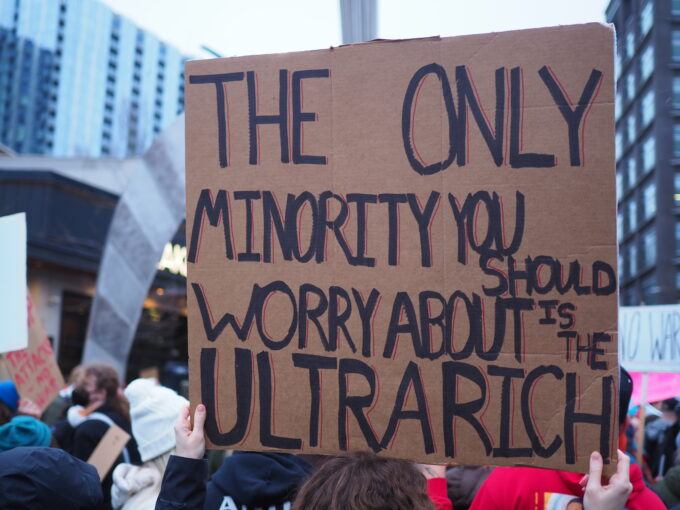
The Nobel Prize-winning economist Paul Krugman continues his “series on the rise of American oligarchy” this week by discussing “the decades-long dismantling of the system of progressive taxation.” Krugman defines oligarchy “as the extreme concentration of wealth and political power in the hands of a small number of people—not the 1 percent, but the .01 percent or even the .0001 percent, the 300 billionaires who made 19 percent of all reported federal political donations in the 2024 election.” He argues that widespread tax avoidance, and accordingly the plummeting of effective tax rates, is largely responsible for giving us a system of oligarchy.

Krugman admits that where he once saw the absurd inequalities of the present day as primarily the consequences of technological change and the market economy, “looking into the math” changed his mind, and it became clear to him that “much of the rise of the modern American oligarchy has been driven by deliberate policy.” The math Krugman is focused on is the tax gap and thus the effective tax rate. The problem for Krugman’s hypothesis is that the United States was already firmly an oligarchy when the tax gap was much smaller and the effective tax rate much higher. Oligarchy is not first and foremost a product of the system of taxation, and it never has been. It is rather a product of the pre-distribution of wealth through state-created special economic privileges.

Though the American “free market” is riddled with these political privileges, they are not well understood or formally quantified. Indeed, they are all but ignored by the economics profession and popular commentary. If we’re trying to address inequalities of both wealth and power—inseparable in practice—through more progressive taxation, then we have already conceded the game, leaving the pervasive legal privileges that create the problem untouched. The mainstream conversation on politics and economics (which some of us prefer to discuss as political economy, precisely because the two are historically and materially inseparable) should work to reestablish careful distinctions between redistribution and pre-distribution.

What economists must begin is the project of formalizing the study of state-granted privilege and quantifying these special giveaways to corporations and the ultra-rich—not only tax credits and other favorable tax treatment, but intellectual property rights, land transfers and eminent domain, professional licensure and barriers to market, arbitrary limitations on civil and criminal liability, and the countless other features of corporate capitalism that have nothing to do with “market forces” or economic freedom in itself. If we began to quantify these in a serious and rigorous way, we would quickly see that capitalism is a system rife with welfare for the infinitesimal billionaire ruling class. It is a system that shifts enormous quantities of wealth upward by systematically restricting opportunities for the popular masses as it creates special prerogatives for our corporate overlords.

Today’s U.S. government is a system of arbitrary administrative rule under the permanent control of interlocking elites in the major corporations and government agencies; this system of discretion under “expert” rule-making is much easier for oligarchs to manipulate than the one contemplated by the Constitution’s three-part structure, under which the people’s representatives are charged with making law. If elected officials don’t actually make the rules or shape public policy toward a level playing field, the common good, and equality of rights under the law, then it matters little or at all who wins any given election. Oligarchy is much easier to create and maintain when it is thus insulated from popular political pressure.

Capitalism is not a free market economy with some minor noise and deviations; regarding the math—the massive gaps of wealth and income and the actual, observable relations of domination and exploitation—capitalism is a continuation of feudalism and mercantilism in a different form, one under which there is intense competition between workers, but strong anti-competitive protections for capital. There is a reason that no liberal of the nineteenth century saw their philosophy as a defense of the capitalist or the capitalist system. Free trade and equal rights were once understood explicitly as a blow against elite, organized, government-aligned economic interests.

Properly understanding and quantifying the pre-distribution of wealth would require that we shift our analytical paradigm: rather than looking only at after-the-fact inequalities of income and wealth, we should also examine the structural rents built into our political and economic system before any taxes are taken. Pre-distribution in this context could be measured by the difference between inequality (and the various inputs, for example, wages, prices, profit margins, revenues, and capital accumulation processes more generally) under current conditions as opposed to a counter-factual situation of actually-competitive markets without special privilege and with widely distributed property.

In the final analysis, Krugman is correct about at least one thing, that what we are witnessing today is the consequence of public policy choices, not any supposedly neutral market forces or technological changes. Even the notion of a natural or pre-political economic system is a profound misunderstanding of historical and social realities. Instead of focusing on the system of taxes and redistribution, what happens after the benefits to capital have already done their job, we desperately need to start seriously examining the structure of the political and legal system that aggrandizes and protects capital at the expense of society at large.

Global Empire as Domestic Policy

by | Sep 4, 2026

While many mainstream commentators blanch at the characterization of the United States as an empire, the hard data show that it is today impossible to seriously dispute. The U.S. military operates between 750 and 800 bases around the world, located in around 80 foreign countries and territories. Because there is no fixed or standard definition of “base” for these purposes, there is no accepted number, and some estimates place the figure at closer to 900. The U.S. is also known to operate dozens of secret military bases and black sites, further complicating attempts to settle upon an exact and definitive number.

Just as the number of military bases is disputed, experts have continued longstanding disagreements about how best to tally up total military spending. As the Peter G. Peterson Foundation observed earlier this year, “The United States continues to lead the world in defense spending by a wide margin. In 2025, defense spending by the United States accounted for 33 percent of all military expenditures by countries around the world,” with its nearly trillion-dollar outlay that year exceeding the combined spending of the other six biggest military spenders. This number is down from 2025’s value of nine to six largely because several other countries dramatically increased their military spending (Germany, for example, upped its spending by 24 percent). Breaking Defense reports, “The Pentagon is betting big on a $1.15 trillion discretionary budget request with a further $350 billion coming from the reconciliation process — together adding up to a historic $1.5 trillion defense budget.” The Trump administration’s discretionary funding request of $1.15 trillion marks the first time in history that a discretionary defense request has exceeded $1 trillion on its own. In the previous budget, for FY 2026, the total number hit the $1 trillion mark with a combination of  $848 billion in discretionary spending and $113.3 billion in mandatory reconciliation spending.

The Project on Government Oversight (POGO) notes that many “obvious examples of programs many would consider ‘military spending’” under commonsense definitions are not a part of the Pentagon budget, including spending for veteran benefits, the Coast Guard, and even nuclear weapons. Looking at five different methodologies, a POGO report published in June points out that all five share at least one conclusion: “Military spending in the United States has long been radically underestimated.” (Not unrelated to this slippery accounting is that fact that the Pentagon hasn’t passed an audit in years, failing its eighth in a row at the end of last year.) This recent POGO report finds that “the true total military budget for the last fiscal year (FY 2025) was significantly higher than $1 trillion: It was likely between $1.5 trillion and $1.8 trillion.” If we count interest payments associated with debts for military spending, then “the range is between $1.7 trillion and $2.3 trillion.”

We rarely consider the domestic political implications of Washington’s globe-spanning empire, yet government spending on war and empire functions as the de facto national industrial policy of the United States, largely determining which cutting-edge technologies receive the most investment, which companies will enjoy massive state-guaranteed markets, and which physical objects will be the focus of the country’s industrial production capacity. Through the military empire, the state becomes both the architect of and primary consumer for a huge industrial sector. And while it has grabbed more headlines this year due to the parlous speculative bubble surrounding AI, the political consequences of the connection between the global military empire and the private sector tech industry remain woefully under-discussed in the mainstream discourse. The federal government is funneling billions to AI companies willing to work directly with the military, overpowering objections from employees and the investor market.

Just this week it was reported that “Palantir’s Maven Smart System, an artificial intelligence-powered military platform, is now an official program of record for the Pentagon.” The executive and strategic leadership of major technology companies also increasingly connects and overlaps with the military and national security establishment, often through the Pentagon’s Defense Innovation Unit and liaisons dedicated to recruiting talent and procuring products from the tech sector. As we have already witnessed for decades, cutting-edge technologies developed for the war and empire inevitably end up being deployed domestically against Americans inside the country. Now more than 50 years ago, the Senator Frank Church Committee showed that the intelligence agencies used programs originally designed for foreign surveillance to monitor Americans here at home without warrants. We still have not seriously reckoned with this connection between the policies and technologies of the empire and the ways our own government sees us and governs us.

Since classical antiquity, astute observers have understood that this kind of worldwide military empire is fundamentally incompatible with the rule of law, constitutional government, and even the thinnest definitions of democracy. The administration of such an empire demands secret and centralized forms of decision-making and thus necessarily precludes transparency, accountability, and popular sovereignty. Contemporary political language has managed to disguise what is patently a system of permanent war and empire in the terminology of a liberal and rules-based order of international law and free trade. We have consigned terms like imperialism and colonialism to the history books even as we continue these systems in different forms today. Even the liberal side of our mainstream discourse no longer seriously questions the political system of war and empire that actually governs the country. We will not understand the form of domestic politics we have in the U.S. today until we stop trying to separate it from the imperatives of empire.

Reprinted with permission from CounterPunch.

David S. D’Amato is an attorney, businessman, and independent researcher. He is a Policy Advisor to the Future of Freedom Foundation and a regular opinion contributor to The Hill. His writing has appeared in Forbes, Newsweek, Investor’s Business Daily, RealClearPolitics, The Washington Examiner, and many other publications, both popular and scholarly. His work has been cited by the ACLU and Human Rights Watch, among others.

After a catastrophic summer, rebuilding hope in Palestine

Saturday 5 September 2026, by  Ã‰douard Soulier


In Gaza as in th West Bank, the situation has been catastrophic throughout the summer. As elections begin in Israel and Palestine, the challenge remains for us to relaunch mobilization and international solidarity.

In Gaza, the scorching heat in tents has further aggravated the suffering. The lack of basic necessities and electricity is making life hellish: hospitals can no longer provide real care, water cannot be properly pumped or filtered. According to a report published on 13 August by the IPC (Integrated Food Security Phase Classification), the world’s main body for monitoring famine, acute food insecurity remains widespread throughout the Gaza Strip.

Famine, bombings, colonial violence

Nearly 1.2 million people are in a food “crisis” situation (phase 3 out of 5) and more than 200,000 in “emergency” (phase 4). According to the IPC, nearly two million Gazans may soon face high levels of food insecurity. The report also estimates that 74,200 children under the age of five will need treatment for acute malnutrition by April 2027, including more than 11,400 for severe malnutrition, as well as 24,600 pregnant or breastfeeding women. After months of genocide and blockade, the health consequences will be felt for years to come.

Yet the bombing continued, maintaining a horrific level of death in Gaza. Israel went so far as to call the balloons and kites launched into the enclave a “threat,” warning that it would intensify its strikes and evacuate areas used as “launch sites.” The kites with which children play are thus presented as acts of war. One more pretext to bomb and displace the population.

In the West Bank, the situation is increasingly critical. Settler attacks, with the complicity of the army, have reached an unprecedented level: cattle theft, destruction of equipment and physical assaults, several times a day. Attempts at self-defence are immediately described as “terrorist” and repressed in blood, often collectively, in a reversal of the now systematic reversal of guilt.

There is no significant change to be expected for Palestinians in the first Israeli elections in four years, which will be held at the end of October. Massacre, genocide and colonial expansion have produced broad national unity: in the campaign, candidates are competing in radicalism against Palestinians. Neither the creation of a Palestinian state, nor the end of the occupation, nor even an end to the genocide are really defended. A large part of Israeli society seems to have internalized the idea of solving the “Palestinian problem” by violence.

Elections in the midst of genocide

In a grotesque mirror game, the Palestinian Authority also announced elections at the end of November. If they are not cancelled as in 2021, they will be the first since 2006. About 64% of Palestinians in the West Bank and Gaza are under 30 years old, so most have never voted. Under international pressure, the Palestinian Authority, despite being ultra-collaborative, is being asked to reform or risk losing part of its funding, particularly from Europe.

Following talks in Cairo, a coalition was formed around Hamas, the Palestinian Islamic Jihad and, more particularly, historical opponents or former members of Fatah. Left-wing groups are expected to announce soon whether they will join it. Such an alliance could threaten Abbas and his camp, so discredited is the Palestinian Authority. Unable to protect the inhabitants from the settlers, it has mainly worked over the past three years to neutralize Palestinian armed groups in the West Bank, to the point of appearing as a proxy force for the occupation.

However, it seems difficult to imagine that the elections will take place serenely in the midst of genocide, while the occupier targets, arrests or assassinates opponents who may run. Nearly 10,000 Palestinians are currently imprisoned, particularly for their political opposition. The precedent of 2006 also remains in the memory: Hamas’ electoral victory was not recognized by either Israel or the Western powers, paving the way for the blockade of Gaza.

However, these elections can provide Palestinians with the opportunity to rebuild national unity, to relaunch a hopeful political struggle and to renew mass opposition to genocide and occupation. The Israeli noose must still be loosened. After a catastrophic summer, the urgency is therefore to relaunch the mobilization to end impunity and to strengthen international solidarity.

28 August 23026

Translated by International Viewpoint from l’Anticapitaliste.