Monday, September 07, 2026


UN rights chief urges 'accountability' after 23 die in US immigration custody in 2026

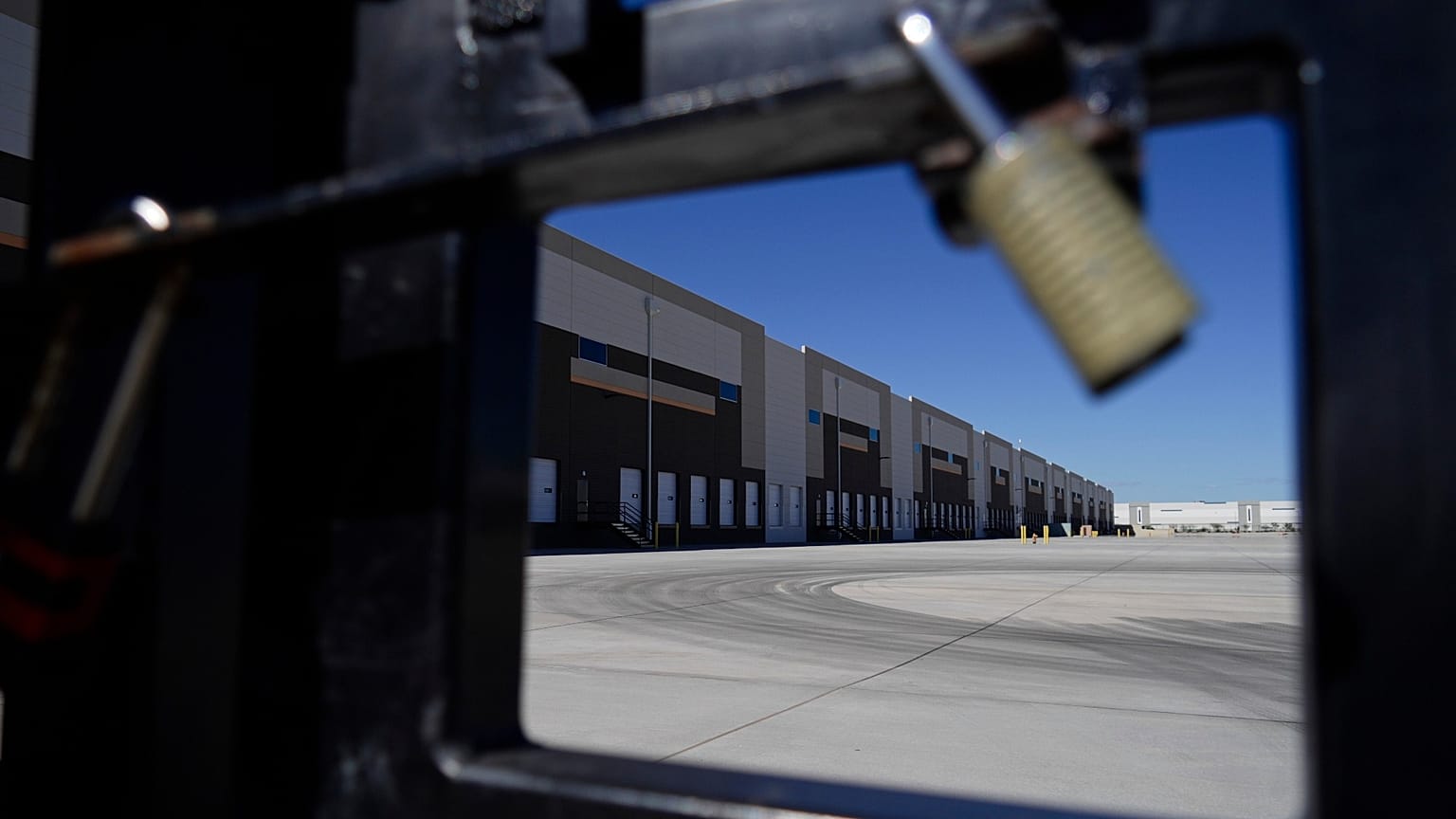
A warehouse purchased by U.S. Immigration and Customs Enforcement in Surprise, 14 February, 2026
Copyright AP Photo


By Gavin Blackburn
Published on

A joint report by Human Rights Watch and Physicians for Human Rights in June said that the rate of people dying in ICE custody has reached its highest level in over a decade amid Trump's crackdown.

The United Nations human rights chief demanded accountability for swelling numbers of deaths in US immigration custody on Monday, urging Washington to halt deportations to places where people face "irreparable harm."

Speaking before the UN Human Rights Council, Volker Türk highlighted that "four more people have died in US immigration custody since my last update to this council" in June.

That meant there had been "a total of 23 deaths in 2026 alone," he said, insisting that "there needs to be accountability for these deaths."

US President Donald Trump has made combating illegal immigration a top priority of his second term, with authorities rounding up thousands of people and expanding detention centres.

A joint report by Human Rights Watch and Physicians for Human Rights in June said that the rate of people dying in ICE custody has reached its highest level in over a decade amid Trump's crackdown.

People hold signs during an anti-ICE protest in Biddeford, 17 July, 2026
People hold signs during an anti-ICE protest in Biddeford, 17 July, 2026 AP Photo

The UN rights chief also called out a range of other US immigration enforcement practices, including forcing migrant returns to dangerous places and to countries they had no connection to.

"I urge the United States to halt the return of people to places where they could suffer irreparable harm, including Haiti, and to ensure due process for all removals to third countries," he told the council.

Türk also voiced alarm at the US Immigration and Customs Enforcement (ICE) agency's reported plans to "equip immigration agents with electric shock gloves" warning this would "increase the violence associated with their operations."

The plan to purchase the shock gloves, which was first reported by the Associated Press news agency, calls for the Department of Homeland Security (DHS), the ICE parent agency, to spend between $10-20 million (€8-17 million) on what are described as "distraction and de-escalation" devices.

ICE has come in for criticism for a series of fatal shootings during enforcement operations, including those of two American citizens in Minnesota in January who were involved in anti-ICE protests.

Critics have focused on the forceful tactics used by ICE agents in rounding up migrants and on an alleged lowering of the standards of training for new recruits.


Monoskop.org

https://monoskop.org/images/9/95/Hardt_Michael_Negri_Antonio_Empire.pdf

4.3 The Multitude against Empire. 393. Notes. 415. Index. 473. Page 11. PREFACE. Empire is materializing before our very eyes. Over the past several decades, as ...

Rebels-library.org

http://rebels-library.org/files/multitude.pdf

Page 1. MULTITUDE. WAR AND DEMOCRACY. IN THE AGE OF EMPIRE. MICHAEL HARDT ... Empire calls on war for its legitimation, the multitude calls on democracy as its ...


Newleftreview.org

https://newleftreview.org/issues/ii120/articles/empire-twenty-years-on.pdf

Just as today's. Empire was formed in response to the insurgencies of the multitudes from below, so too, potentially, it could fall to them, as long as those.


Shanghai Cooperation Organization summit comes up short on achievements

Shanghai Cooperation Organization summit comes up short on achievements
Chinese leader Xi Jinping (centre), his Tajik counterpart Emomali Rahmon (right) and Chinese foreign minister Wang Yi talk informally during the SCO summit. Despite a multitude of bilateral and multilateral meetings, the summit produced no big announcements or viral moments. / president.tj
By Alexander Thompson for Eurasianet September 3, 2026

It was a relatively subdued Shanghai Cooperation Organization (SCO) summit for Chinese leader Xi Jinping. He departed the host city Bishkek having made few attention-grabbing headlines. 

There were no big announcements or the viral moments unlike at 2025’s SCO summit on Xi’s home turf in the Chinese city of Tianjin. In Bishkek, there were no photos of Xi, Russian leader Vladimir Putin and Indian Prime Minister Narendra Modi cutting up together sans interpreters, nor Putin and Xi caught on hot mics discussing how to live for 150 years, nor a visit from North Korean leader Kim Jong Un the day after.

“Nothing special happened this time [in Bishkek],” said Jildiz Nicharapova, a professor of international relations at the American University of Central Asia in Bishkek.

Hundreds of journalists, starved of anything to report, and parked in a tent several walls and fences from the action, took to interviewing some of the women providing traditional beverages in national costume. Perhaps the most interesting thing that happened on the jumbo-screens beaming the summit’s proceedings to the press was when a delegation staff member took to spinning around in one of the leaders’ extra-plush swivel chairs during the lunch break.

But boredom was perhaps the point. The optics and the contrast they drew might have been the most significant outcome of the summit. Xi seemed intent on crafting an image for China as a steady guardian of global stability, juxtaposing Beijing as a reliable alternative to US foreign-policy fickleness.

The West’s cohesion seems to be fraying: the United States is involved in a trade war with Canada, has cut short military drills with South Korea, and has stoked tensions with European allies over a variety of issues, including the Iran war and US efforts to acquire Greenland.

“Everything that Trump does these days, it essentially, ultimately benefits China," said Eva Seiwert, a senior analyst at the Mercator Institute for China Studies in Berlin who has written a book about the SCO. "His whole erratic behaviour, his unpredictability in world politics, that’s something that’s really easy for China to present itself as the more responsible and credible global player.”

At the SCO gathering, some of the world’s leading autocrats and illiberals, as well as a smattering of more democratically minded leaders, hailed, at least rhetorically, international norms while lamenting the decline of the of the organisation charged with guaranteeing those norms, the United Nations. Their stance was intended to offer a sharp contrast to what they portray as the erratic nature of the Trump administration’s conduct, especially his on-again, off-again war against Iran.

In addition, all sides in Bishkek seemed eager to show they’re smoothing out their rough edges. 

Putin and Xi met the day before, where Xi said the future prospects for bilateral relations are “even brighter.” Armenian Prime Minister Nikol Pashinyan sat next to Azerbaijan’s President Ilham Aliyev at the Shanghai Cooperation Organization-Plus meeting, underscoring their ongoing efforts to forge a lasting peace in the South Caucasus. And Modi entreated Putin to stop the war in Ukraine during a bilateral meeting.

China’s power both to shape global narratives and to quietly prop up its friends and allies of convenience was on display at the summit. 

Given China’s economic dominance, smaller states seized on any opportunity to be “in the picture” with Xi, even if they didn’t get a bilateral meeting, Seiwert told Eurasianet.

China’s purchases of Russian oil and gas have played a big role in keeping the Russian economy afloat. And with Ukrainian drone attacks on Russian refineries jeopardising Russian petroleum supplies to Central Asian states, China has stepped in to help plug the supply gap. Kyrgyzstan’s first imports of Chinese fuel oil arrived in July, and Tajikistan has also said it is in talks with Xi’s government. 

As the summit’s host, Kyrgyz President Sadyr Japarov gave Xi and his Central Asian counterparts their turn to deliver statements. They all sounded similar notes, showing just how closely the region is in tune with Beijing. In a bilateral meeting with Xi, Uzbek President Shavkat Mirzoyoyev hailed “Chinese-style modernisation.”

The summit brought more attention to Kyrgyzstan and Central Asia, which are already basking in it thanks rising global interest in the region’s reserves of critical minerals, as well as Kyrgyzstan’s selection for a two-year term on the UN Security Council. But the gathering produced few tangible gains.

Japarov touted a new SCO anti-organised crime centre to be based in Bishkek — mirroring the anti-terror centre in Tashkent and the anti-drug trafficking center in Dushanbe — and lauded progress on the creation of a SCO development bank. 

But the bank has not actually become operational, and the organised crime centre’s main responsibility is data collection, Nicharapova pointed out. “The Bishkek summit was useful for countries’ leaders to speak to each other informally in such an uncertain time,” she told Eurasianet.

Despite the smiles and warm words, deep divides are evident. Pashinyan and Putin, for example, had a tense bilateral meeting, their first since Armenia’s June elections. And none of the powers offered much in the way of substantive relief for Iran, the subject of growing economic pressure from the West. 

“Many of those countries that are part of the SCO still have very close relations to the United States or are dependent on the United States, so I think many of them try to be as low key or low profile as possible,” Seiwert said.

For some, their mere presence at the summit was enough to send a message. “Russia and Iran for example, they can of course use it primarily to show they are much less isolated than, for example, European leaders often say or think,” Seiwert said.

But the relative silence on conflicts at the centre of global affairs, including Iran and Gaza, gave rise to a least a hint of discontent over the SCO’s restrained posture among some summit participants. After a fiery denunciation of the United States, Iranian President Masoud Pezeshkian argued that increasing multipolarity via a more robust SCO posture in global affairs could lead a greater respect for state sovereignty.

 “The countries of the Shanghai Cooperation Organization-Plus format possess significant political, economic, demographic and geographic potential and can play an important role in the formation a such a world,” he said.

But it was Belarusian President Alexandr Lukashenko who highlighted what Pezeshkian had left hanging. The SCO isn’t doing as much as it could to exert influence over global affairs, said Lukashenko, the only SCO leader other than Pezeshkian to say the word “Iran” out loud at the summit.

“[We] say we’ve got this spirit and all the like, but that’s not enough. People expect some concrete actions from us regarding multipolarity,” Lukashenko said, as UN Secretary General Antonio Guterres listened on. 

“After all, we’ve got to acknowledge that we’ve got here three of the mightiest countries, the People’s Republic of China, India, the Russian Federation,” he said. “Above all we’re expecting initiatives from them. But so far there aren’t any.”

Alexander Thompson is a journalist based in Bishkek, Kyrgyzstan, reporting on current events across Central Asia. He previously worked for American newspapers, including the Charleston, S.C., Post and Courier and The Boston Globe.

This article first appeared on Eurasianet here.
 

Volkswagen restructuring puts Audi’s Hungarian plant at risk

Volkswagen restructuring puts Audi’s Hungarian plant at risk
/ Facebook/AudiFacebook
By bne IntelliNews September 7, 2026

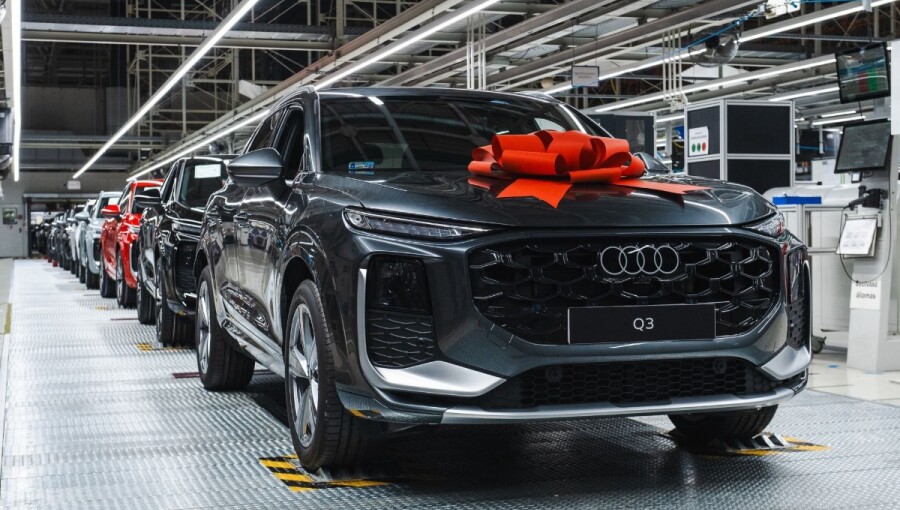
Volkswagen’s planned restructuring could put Audi’s vehicle production in Hungary at risk, although no decision has been made to close the plant, according to German investigative outlet Correctiv.

Volkswagen’s supervisory board has unanimously approved a restructuring programme through 2030 that envisages major capacity reductions and the elimination of around 50,000 jobs, in addition to a previously announced 70,000 job cuts. Four German plants in Emden, Hannover, Neckarsulm and Zwickau had already been identified as being at risk of closure.

Correctiv said internal plans could involve an even deeper restructuring, with five plants potentially being closed and 60,000 additional jobs eliminated. This would bring total job losses across the group to around 130,000 by 2030, or roughly 20% of its current workforce of around 650,000.

According to three sources familiar with the plans, the fifth European plant under consideration could be Audi’s vehicle plant in Gyor, western Hungary. A senior Volkswagen executive reportedly told Correctiv that the Hungarian production site could be affected, although the company has not commented on the report.

Audi established its Hungarian operation in 1993 and began vehicle production in 1998. It became a full-scale automotive manufacturing site in 2013 and is home to the Volkswagen Group’s largest engine plant.

With more than 12,000 employees, Audi Hungaria is the largest employer in the region. The company produced a record 200,000 vehicles last year, driven by successful models such as the Audi Q3 and Cupra Terramar. However, its traditional engine production business is facing increasing pressure as the industry transitions towards electric vehicles.

Audi Hungaria CEO Michael Breme told Telex.hu in July that management was demanding maximum adaptability from the workforce to navigate the transition to e-mobility.

"The new reality in the automotive industry is that job security is no longer a given; rather, it must be earned through concessions from employees," he was quoted as saying.

Long-serving engine production workers are increasingly being moved to areas where staff is needed, including electric motor production and vehicle assembly, the latter of which involves more physically demanding work.

Although Audi Hungaria has stopped short of large-scale job cuts, the company has been reducing staff in administrative positions and has announced a hiring freeze in early 2026, leaving vacancies unfilled. Unions accepted management’s proposal of a wage freeze for this year and a 3.2% rise next year, alongside a one-off gross payment of HUF1mn (€2,800). Wages at the Audi plant remain well above the Hungarian average, with experienced assembly workers earning around HUF1.25mn (€3,485) gross per month.

The German news site reported that Gyor is being considered amid significant excess production capacity in Europe, with Volkswagen expecting global annual vehicle sales of around 9mn, roughly 2mn fewer than several years ago. The group is also facing high production costs in Germany, growing competition from Chinese manufacturers and the costly transition to electric and software-based vehicles.

Volkswagen’s restructuring plans include reducing its model range from around 150 to 75 models, cutting procurement costs and substantially reducing production capacity. Management has reportedly warned internally that without major changes, the group could become loss-making from 2030.


Baltic Sea security risks grow as Russia targets critical infrastructure, OSW says

Baltic Sea security risks grow as Russia targets critical infrastructure, OSW says
/ Photo by Piotr Majcher on UnsplashFacebook
By bne IntelliNews September 7, 2026

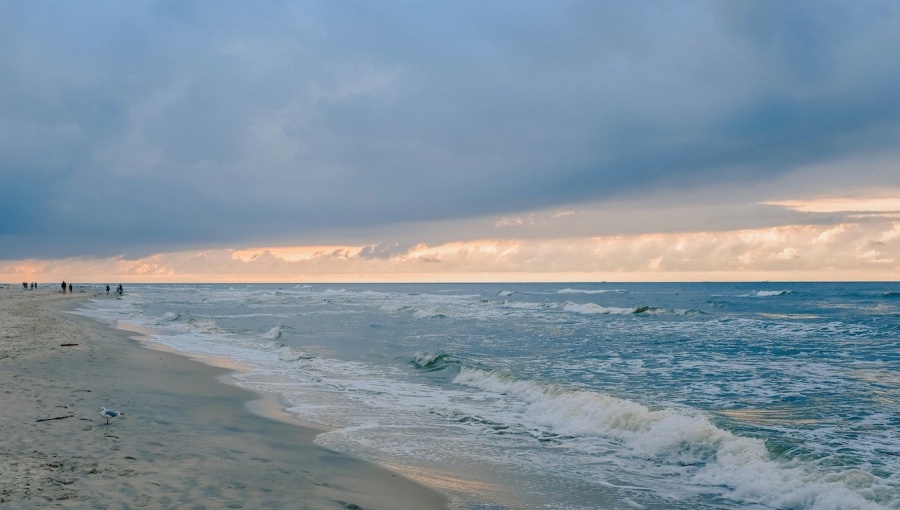
The Baltic Sea is becoming increasingly important to the security and economies of Poland and its northern European neighbours, but growing Russian hybrid activity is exposing energy infrastructure, ports, shipping and air navigation to new risks, Poland's Centre for Eastern Studies (OSW) said.

The sea has become a critical corridor for energy, trade and military logistics for Nato and European Union members including Poland, the Baltic states, Finland and Sweden, while Denmark and Germany also have growing strategic interests in the region, the Warsaw-based think tank said in a report.

“[T]he task of securing energy and telecommunications infrastructure, safeguarding freedom of maritime and air navigation as well as building resilience to Russian hybrid activity is becoming one of the foremost challenges for the states of the Baltic Sea region," OSW said.

For Poland, the Baltic has become particularly important to energy security. The Baltic Pipe gas link and liquefied natural gas terminal at Swinoujscie together provide import capacity approaching Poland's annual gas consumption, while the Naftoport oil terminal in Gdansk handles all crude oil supplies to the country's refineries.

Offshore wind could eventually provide up to one-third of Poland's domestic electricity demand, further increasing the strategic importance of infrastructure in the Baltic, OSW said.

The Polish ports of Gdansk, Gdynia and Szczecin-Swinoujscie also account for more than 40% of the value of Poland's foreign trade and are important military logistics hubs on Nato's northeastern flank, according to the report.

OSW said physical damage to undersea infrastructure was the biggest immediate risk, citing both deliberate attacks and accidents. Between 2023 and 2025, numerous incidents involved vessels dragging anchors across the seabed and damaging energy and telecommunications cables.

Cyber-attacks and interference with satellite navigation systems are additional threats, while disruptions to Global Navigation Satellite System (GNSS) signals are already imposing costs on offshore energy developers.

"The growing number of hybrid incidents, cyberattacks and GNSS disruptions is generating tangible costs for operators and developers of energy and telecommunications infrastructure," OSW said.

Nato has increased its presence in the Baltic under Baltic Sentry, while regional states agreed a 2025 memorandum on the security of critical undersea infrastructure providing for information-sharing and a network of contact points.

OSW called for wider use of unmanned systems by maritime police and border guards and faster repair capabilities for damaged infrastructure. It also said the Council of the Baltic Sea States could play a coordinating role.

Ports face a separate threat from espionage and cyber-attacks. OSW said traffic by Russian-linked vessels, including research, fishing and hydrographic ships, had increased, while photographing ports and unauthorised drone flights over ports and fuel terminals had also become more common since Russia's invasion of Ukraine.

Baltic ports face cyber-attacks "on a large scale, even daily", targeting operational systems, including those run by terminal operators, the report said.

The EU's Ports Strategy, published in March, envisages greater exchange of security practices and revised guidelines, as well as new rules on foreign investment in ports with civil and military significance.

OSW also warned about the growing risks associated with Russia's "shadow fleet", which transports sanctioned oil and other commodities using vessels operating at the margins of maritime rules.

Such ships use tactics including manipulation of automatic identification systems, ship-to-ship transfers and inexperienced crews, while some are suspected of conducting espionage or hybrid operations against critical infrastructure.

"Incidents in the Baltic’s narrow shipping corridors could paralyse navigation, cause collisions and inflict costly environmental damage," OSW said.

The think tank said Western sanctions had limited the ability of Russia's shadow fleet to access European services but warned that coastal states were reluctant to impose stronger controls without Nato military backing because of the risk of Russian retaliation.

It recommended greater pressure on flag states and jurisdictions hosting companies that charter shadow-fleet vessels, as well as discussions on a Baltic maritime convention that could permit vessels to be detained in exclusive economic zones for failing to meet environmental standards.

Air traffic is also increasingly affected. Russia's jamming of satellite navigation signals has become a persistent feature of the region's security environment, OSW said. Around 122,000 flights reported GNSS interference between January and April 2025 alone.

Russian military aircraft flying without transponders or flight plans add to the risks, while forcing Nato to scramble fighter aircraft to identify them.

The report said countries should build air-navigation systems capable of operating safely without satellite signals, pointing to Poland's "PNT Shield" as an example of an architecture combining satellite, terrestrial and inertial technologies.

"The priority is not only to detect the sources of interference, but also to create a resilient air traffic management system capable of operating safely even during prolonged degradation or loss of the satellite signal," OSW said.

The Baltic's security challenges are compounded by the large quantity of unexploded ordnance and chemical weapons left on its seabed from the two world wars. OSW said these materials represented risks to navigation and the marine environment and could potentially be exploited for sabotage.

The report called for deeper cooperation between maritime administrations, ports, rescue services and navies, with the Council of the Baltic Sea States potentially serving as a platform for coordinating efforts.

Overall, OSW said the region needed to combine national investment with stronger Nato and EU cooperation rather than treating individual incidents in isolation.

"The states of the region should give priority to full transposition of the EU CER and NIS2 Directives into their domestic legal orders," it said, referring to EU rules covering critical infrastructure resilience and cybersecurity.

It also stressed the need to develop regional systems for sharing information about threats and incidents.

"The use of ‘shadow fleet’ vessels to conduct activities that threaten the security of critical infrastructure in the Baltic Sea provides an important reason for coastal states to persist in efforts to limit the navigation of these vessels and increase maritime security," OSW said.


Thousands gather in Belgrade for funeral of convicted war criminal Mladic

Thousands gather in Belgrade for funeral of convicted war criminal Mladic
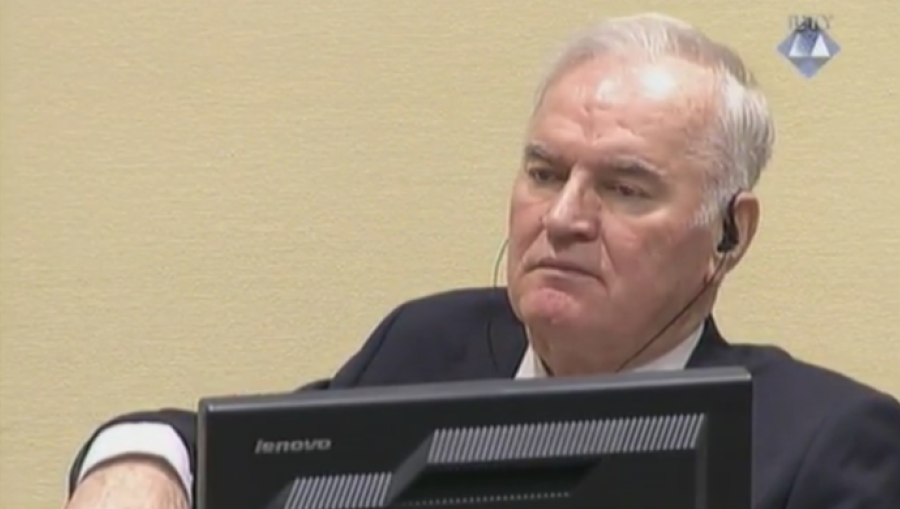
Mladic died on August 27 aged 84 while serving a life sentence in The Hague.Facebook
By Tatyana Kekic in Belgrade September 7, 2026

Thousands of people gathered in Belgrade early on September 7 to pay their respects to former Bosnian Serb military commander Ratko Mladic, a convicted war criminal whose death and funeral have reignited divisions over Serbia's wartime past and strained ties with the European Union.

Mladic, who died on August 27 aged 84 while serving a life sentence in The Hague, was convicted of genocide for the 1995 Srebrenica massacre, as well as crimes against humanity and war crimes committed during Bosnia's 1992-95 war. His convictions were upheld on appeal in 2021.

His coffin was displayed from early morning at the Serbian Orthodox Church of St. Luke in Belgrade's Vidikovac district, where long queues formed as mourners waited to enter. Veterans of the Bosnian Serb army and supporters from Republika Srpska, the Serb entity in Bosnia & Herzegovina, were among those gathered.

Many supporters regard Mladic as a hero who defended Bosnian Serbs during the war. The Serbian Orthodox Church described Mladic as an "Orthodox Christian and Serbian soldier". 

Mladic is widely regarded internationally as one of the principal military figures responsible for atrocities during the Bosnian war. He was found guilty of genocide over the killing of more than 8,000 Bosniak men and boys at Srebrenica, as well as for the siege of Sarajevo and other crimes.

The funeral is due to take place later on September 7 at Belgrade's Topcider Cemetery, where Mladic will be buried beside his daughter Ana, who died in 1994. It will be officiated by Patriarch Porfirije, head of the Serbian Orthodox Church.

President Aleksandar Vucic has said he will not attend, citing a previously scheduled visit by Uzbek President Shavkat Mirziyoyev. Serbian authorities have deployed extensive security measures around the funeral, with officials expecting that tens of thousands could attend.

Divisive legacy

The funeral follows a week of public tributes that have highlighted the deep divisions in Serbia over Mladic's legacy.

At Sunday’s Red Star Belgrade-Partizan Belgrade football derby, supporters of both clubs chanted Mladic's name before the match, while fans displayed a large banner bearing his image and the words "Direction of Potocari" - a reference to the Srebrenica area where thousands of Bosniaks were killed in 1995.

Murals dedicated to Mladic have also appeared in Belgrade and elsewhere in Serbia since his death.

"This kind of reception and glorification of a war criminal is a great shame for Serbia and the Serbs," journalist Safeta Bisevac told broadcaster N1, saying the events damaged efforts at reconciliation in the region.

EU tensions

Mladic's funeral has also created friction between Serbia and Brussels. EU Enlargement Commissioner Marta Kos cancelled a planned visit to Belgrade, saying the public glorification surrounding Mladic's death was incompatible with the values underpinning Serbia's path towards EU membership.

Vucic dismissed her criticism as "stupid", questioning whether authorities were expected to prevent people from attending a funeral.

Serbia has been an EU candidate since 2012, but its accession process has made limited progress in recent years. The dispute over Mladic adds to existing tensions between Belgrade and Brussels over the rule of law, foreign policy alignment and Serbia's handling of its wartime past.

The Council of Europe's commissioner for human rights, Michael O'Flaherty, has also condemned the public glorification of Mladic and called on Serbian authorities to oppose it.

In Republika Srpska, many Serbs have mourned Mladic as a wartime commander who defended their community, while political figures and victims' groups in the mainly Bosniak-Croat Federation have condemned the tributes.

Mladic's return to Serbia was itself controversial. His remains were flown from the Netherlands on a Serbian government plane on September 3, with his coffin draped in Serbian and Republika Srpska flags and carried by Serbian soldiers. Supporters gathered along the route, some displaying banners calling him a hero.

The government has said it is responsible for ensuring security around the funeral, while Mladic's family has called for a dignified farewell without provocations.

For Serbia, the funeral has brought renewed scrutiny of how the country confronts the legacy of the wars of the 1990s - and whether its political leadership is prepared to distance itself from the nationalist narratives surrounding one of the conflict's most notorious figures.

Turkey seeks Black Sea shipping deal as attacks threaten grain trade


Issued on: 06/09/2026 - RFI


Turkey is racing to restore safe passage for cargo ships in the Black Sea as attacks on shipping disrupt grain exports and push up prices. Russia and Ukraine are major global wheat exporters, but Black Sea trade has been severely disrupted as both sides step up attacks on shipping and port infrastructure.

Commercial shipping in the Black Sea has been disrupted by growing attacks on vessels and ports, raising concerns over grain exports and prices. AP

Turkish Foreign Minister Hakan Fidan announced this week that Turkey was working on a plan to ensure safe passage in the Black Sea for commercial shipping and said he was in touch with both Ukraine and Russia.

Turkish President Recep Tayyip Erdogan confirmed that he raised the issue with his Russian counterpart, Vladimir Putin, on the sidelines of a gathering of regional leaders in Kyrgyzstan.

The Turkish move comes as Ukraine and Russia have ramped up their attacks on shipping and ports in and around the Black Sea. In 2022, Turkey and the United Nations brokered a deal between Ukraine and Russia to ensure safe passage for Ukrainian grain exports through the Black Sea.

The agreement lasted a year.

While Turkey has maintained good ties with both sides, reaching another agreement will be much harder, warned international relations professor Huseyin Bagci of Ankara’s Middle East Technical University.

“The tension is increasing more than ever before,” Bagci said. “It's not enough to have good relations, because the two sides – the Ukrainians and Russians – should sit down and talk about a common solution to this problem. Turkey cannot solve this problem alone.”

Growing attacks

In August Ukraine offered a ceasefire on commercial shipping, but the offer was rejected by Moscow, which said it wanted a broader deal. Ukrainian drones continue to strike Russian shipping, while Russia has continued missile attacks on Ukrainian ports and ships.

This surge in attacks comes as both nations rush to export their grain harvests.

Grain prices have risen sharply, by as much as 30 percent, international grain broker Can Atbasoglu said, even as both sides scramble to find new routes for their exports.

“Russia will do their best to export as much as they can, both from Russian Baltic ports and EU Baltic ports like Latvia and Lithuania; they're also exporting,” Atbasoglu said.

“Ukraine will also export as much as they can from Romania as well and through the Danube ports. But the export pace will be definitely lower. So it will definitely stay bullish for the markets. Prices are definitely going to stay like this or can have a further increase.”


Ships staying put

At one of Istanbul's many shipyards, the docks are crowded with ships that once braved the Black Sea. One vessel bears the scars of a drone attack and is under repair. Others undergo routine maintenance as shipowners hesitate to risk new journeys into dangerous waters.

The superintendent of one ship, speaking anonymously, says repairs are nearly finished, but uncertainty clouds the future.

“We wanted to take the ship out to the Black Sea before entering the shipyard, but because of that risk, we didn’t enter the Black Sea and didn’t take on any cargo. We’ve been in the shipyard for 50 days for repairs, but we don’t know what will happen once the repairs are finished,” the superintendent said.

Turkish shipowners warn that many are on the brink of bankruptcy, as idle ships rack up costs of up to 50,000 euros a month in mooring and crew expenses.

Ziya Ustel, CEO of Turkish shipping company VI-ZA STAR, says high freight rates are being offered for Black Sea routes, but the risks are too great.

“They are offering high freight rates, etc,” Ustel said.

Without a diplomatic solution, few shipowners will be prepared to risk their vessels, Ustel warned.

“The main thing is to find out a real solution,” Ustel added. “Otherwise, no one will try anything anymore.”
Turkish diplomacy

Ankara is expected to step up its efforts to find a solution.

Grain brokers say hopes of a diplomatic breakthrough may be one reason prices have so far remained below the record highs seen at the start of the war.

But if Turkish efforts fail and attacks on Black Sea shipping continue, higher grain prices could have a considerable impact, especially on the world’s poorest nations, many of which depend on Russian and Ukrainian grain.

By:Dorian Jones