Monday, September 07, 2026


Popular Egyptian TV presenter Sarah Khalifa faces appeal battle after death sentence

Egyptian TV presenter Sarah Khalifa
Copyright Sara Khalifa/Instagram / Ahmed Kassem Photography

By Mohamed Elashi
Published on

Khalifa and 11 others face death sentences in a major synthetic drug trafficking case, with appeals and further legal challenges expected.

An Egyptian television presenter faces execution after a Cairo court sentenced her to death for financing and coordinating a synthetic drug network, but her lawyer says they will appeal, and legal experts say the case is far from over.

Sarah Khalifa, known for hosting the crime programme Mission Impossible on private channel Al-Mehwar and for her events business, was sentenced on Saturday alongside 11 others in a major synthetic drug manufacturing and trafficking case.

Nine defendants received life sentences and seven were acquitted. Those sentenced to death were also fined 500,000 Egyptian pounds (€8,000).

Khalifa's brother Mohamed was among those sentenced to death, on charges of manufacturing and testing drugs.

Khalifa's lawyer Mohamed El-Gendy said the defence would appeal and pursue all available legal avenues.

A higher criminal court can reconsider the evidence and each defendant's role, upholding, reducing, or overturning sentences. A further challenge before Egypt's Court of Cassation is also possible.

Before Saturday's ruling, the court had referred Khalifa and 12 other defendants to Egypt's Grand Mufti — a procedural requirement before a criminal court can impose the death penalty. The Mufti's opinion is advisory and not binding.

Twelve of those 13 defendants ultimately received death sentences.

More than ordinary hashish

Egyptian media initially described the case as involving synthetic hashish, but forensic evidence presented during the trial identified the substances as synthetic cannabinoids, laboratory-made chemicals that mimic some of the effects of cannabis on the brain but can be significantly more potent and unpredictable.

The United Nations Office on Drugs and Crime describes MDMB-4en-PINACA as a potent synthetic cannabinoid placed under international control in 2021 following a World Health Organization recommendation citing severe adverse effects and deaths.

Synthetic cannabinoids can cause psychosis, seizures, heart and kidney problems, and in severe cases, death.

The committee said the substance was not specifically listed on Egypt's controlled narcotics schedule, but concluded it fell under Egyptian law because its chemical structure and effects were similar to already-listed substances.

The defence challenged that interpretation and the court accepted the committee's findings.

The case began in April 2025 when Egypt's anti-narcotics authorities said they had uncovered a network importing raw materials used to manufacture synthetic drugs.

Police initially raided two Cairo apartments and recovered around 200 kilograms of drugs, raw materials and equipment.

As the investigation widened, prosecutors said the total seized exceeded 750 kilograms. The investigation lasted some 40 days before prosecutors obtained arrest warrants.

Al-Masry Al-Youm newspaper, citing judicial and security sources, reported that investigators alleged raw materials were sourced abroad, concealed inside cosmetics containers and luggage on flights.

The prosecution said members had specialised roles covering procurement, manufacturing, storage and distribution. The case against 28 defendants relied on testimony from 20 witnesses and digital evidence including messages, photographs and videos.

Khalifa's alleged role

Prosecutors said Khalifa financed parts of the operation, travelled abroad to meet senior members of the network and acted as a link between them and other members inside Egypt.

According to investigation records reported by the Egyptian press, two defendants living outside Egypt bought batches of materials used to manufacture the drugs from China and obtained instructions on how to produce them.

Investigators said other members mixed the chemicals according to formulas supplied by senior figures in the network before testing newly manufactured batches on drug users to assess their effects, and then weighing, packaging and distributing them.

Khalifa's brother, Mohamed Khalifa, was identified by prosecutors as one of those involved in manufacturing and testing the drugs and was also among those sentenced to death.

Prosecutors also relied on digital evidence recovered from Khalifa's phone.

According to prosecution documents shared with domestic media, investigators found WhatsApp exchanges containing videos of substances resembling those seized in the case, as well as communications with other alleged members of the network.

A handwriting examination also concluded that Khalifa had written entries in a seized notebook containing names, figures and amounts that prosecutors said related to spending on the drug operation.

Khalifa consistently denied involvement in the network.

Saturday also brought a second conviction against Khalifa in a separate case.

A Cairo court sentenced her to three years in prison for assault after investigators found video footage on her phone showing a young man identified as her driver being stripped, assaulted and filmed naked inside her home.

Two other defendants in that case received seven years each and a fourth received five years.

Egypt retains the death penalty for serious drug trafficking offences. Amnesty International recorded 23 executions in Egypt in 2025, up from 13 the year before, and has criticised the country's use of capital punishment for offences that do not involve intentional killing.


Egyptian TV presenter Sarah Khalifa sentenced to death

Sarah Khalifa poses in front of the Louvre Museum.
Copyright Sarah Khalifa / Instragram

By Burcu Basaran
Published on

In Egypt, a court sentenced 12 people, including popular TV presenter Sarah Khalifa, to death in a major drug manufacturing and trafficking case.

In Egypt, well-known television presenter Sarah Khalifa has been sentenced to death along with 11 others in a major case involving drug manufacture and trafficking.

According to reports carried in the state-run press on Saturday, the 39-year-old Khalifa was known for her programme Mission Impossible, which covered security and crime issues.

State-affiliated newspaper Al-Ahram reported that a court in Cairo convicted Khalifa and the 11 other defendants of offences including "forming an organised criminal group to procure substances used in drug manufacture for the purpose of trafficking, and possessing and transporting unlicensed firearms and ammunition", and handed them death sentences.

The verdict was announced after consultation with Egypt's Grand Mufti for a religious opinion, in line with the procedures laid down in Egyptian law for capital cases. The court's ruling can be appealed.

State media outlet Akhbar El-Yom said that Khalifa, who also owns a cosmetic clinic and an events company, and the other defendants were accused of "importing raw materials used in production from abroad to manufacture synthetic drugs and trade in them".

El-Ahram said law enforcement officers seized more than 750 kilogrammes of drugs and raw materials during the raids, as well as two flats used as laboratories and numerous unlicensed firearms and rounds of ammunition.

The court also sentenced Khalifa and some of the defendants to five years in prison each in a separate case over the abduction and assault of a young man.

In Egypt, the death penalty is applied in cases of premeditated murder, terrorism, certain sexual assault offences and drug trafficking. According to figures from the Egyptian Rights and Freedoms Commission, 541 death sentences were handed down in the country in 2025.


 

Health warnings could reduce youth’s hours spent on social media

The messages that worked the best were those that warned about mental health harms, such as depression and anxiety, except the addiction warning.
Copyright Canva


By Giedre Peseckyte
Published on

Pop-up messages that warn of the harms of social media could help reduce youth’s social media use, a new study found.

Alcohol and tobacco products have health warnings about the negative impacts. Researchers say that social media could benefit from similar warnings too, such as “Using social media causes sleep problems. This is bad for your health,” and “Social media is associated with significant mental health harms for children and young adults.”

Exactly such pop-up messages showed up in a study published on JAMA Health Forum. The messages informed about the harmful impact of social media — such as depression, anxiety, worsened body image and sleep disruption. Researchers hope this could be yet another tool in the toolbox aimed at managing youth’s social media time more healthily.

“With substances like tobacco and alcohol, we find, on average, that well-designed warning labels change behavior,” lead study author Anna Grummon, assistant professor of paediatrics, said. As social media is a completely different product compared to cigarettes or alcohol, “where you just put the warning on the product and it lives there,” these warnings have to be “basically pop-ups,” Grummon said.

Researchers saw that over 1,000 youth aged 13 to 29-years increased their understanding of social media risks to their mental well-being after being exposed to 14 warnings on six health topics while scrolling. The warnings covered social media addiction, negative body image, sleep disruption, depression, anxiety, overall mental health harms and the fact that social media has not been proven safe for young people.

Participants consistently reported that the warning messages would reduce their social media use, authors said.

Youth rated each message in response to two questions: “How much does this message discourage you from wanting to use social media?” and “How much does this message increase your awareness of the harms of using social media?”

The messages that worked the best were those that warned about mental health harms, such as depression and anxiety, except the addiction warning.

While the data does not show why those messages performed best, “if I were to speculate, I would say that these are harms that resonate with people,” Grummon said. “People may think, ‘That’s right, I can see that happening to my friends or to me,’ and these are outcomes people care about.”

Breast milk shows benefit against antibiotic resistance

A woman breastfeeds her baby during a march marking International Women's Day in Mexico City on 8 March 2018.
Copyright Foto AP/Marco Ugarte
By Christina Thykjaer
Published on

A CSIC-led study finds that certain components of breast milk are linked to fewer antibiotic-resistance genes in babies' gut microbiota.

Breast milk may offer babies a new health benefit: helping to limit the presence of antibiotic resistance genes in their gut. That is the conclusion of an international study led by Spain's National Research Council (CSIC), which has examined how certain components of human milk influence the bacteria that colonise the gut during the first months of life.

The study, published in "Cell Reports Medicine (source in Spanish)", finds that exclusive breastfeeding is associated with a lower abundance and diversity of antimicrobial resistance genes in babies' intestines.

"Promoting breastfeeding appears to be an effective strategy for reducing antimicrobial resistance genes present in intestinal bacterial communities during a critical stage in the development of the microbiota", explains M. Carmen Collado, a CSIC researcher at the Institute of Agrochemistry and Food Technology (IATA).

How does breast milk influence antibiotic resistance?

One of the keys lies in human milk oligosaccharides (HMOs), molecules that occur naturally in breast milk which babies do not digest directly, but which serve as food for certain beneficial gut bacteria and help maintain a balanced microbiota.

The researchers have found that some of these components are associated with a lower presence of certain genes conferring resistance to antibiotics.

"HMOs act as ecological modulators of the gut microbiota: they promote the growth of microorganisms capable of using them and may limit the spread of bacteria carrying specific resistance genes", says Collado.

To reach these conclusions, the researchers analysed faecal samples from 57 one-month-old babies in Valencia, along with milk samples from their mothers. The results were later validated with data from another 199 breastfed babies in the Netherlands.

Mode of delivery also plays a role

The study notes that both the mode of delivery and feeding are decisive factors in the composition of the intestinal resistome, that is, the collection of antimicrobial resistance genes present in gut bacteria.

The researchers found differences in the diversity of these genes between babies born by caesarean section and those born by vaginal delivery, while exclusive breastfeeding was associated with a lower abundance and diversity of resistance genes.

"The first months of life represent a critical window in which the gut microbiota is being established and in which different environmental factors, such as mode of delivery or feeding, can leave a lasting imprint", explains Anna Samarra, a researcher trained at IATA-CSIC and now a postdoctoral researcher at the University of California, San Diego.


‘You Can See Everything’: Top secret Elizabeth Holmes documentary unveiled

Secret Elizabeth Holmes documentary unveiled
Copyright AP Photo

By David Mouriquand
Published on

Shrouded in secrecy for years, the documentary following disgraced entrepreneur Elizabeth Holmes premiered at a secret screening yesterday at the Telluride Film Festival. A24 has released a trailer and announced that the film will hit cinemas next month.

It’s a rare thing when a film studio manages to pull off a genuine surprise drop, especially considering the amount of marketing and buzz surrounding new releases. But A24 has managed to do just that with the new documentary You Can See Everything.

Co-directed by Nathan Fielder and Lance Oppenheim, the project started shooting in 2023 in top secrecy and premiered at a secret screening yesterday at the Telluride Film Festival.

It follows disgraced businesswoman Elizabeth Holmes, the founder of health technology company Theranos, who was convicted of defrauding investors and sentenced to more than 11 years in 2022. She reported to federal prison in May 2023.

According to the film's synopsis, Holmes invites Fielder and Oppenheim to document her life for 34 days before she goes to prison, and the filmmakers continue following Holmes over the course of three years.

“What begins as an intimate portrait of an enigmatic felon becomes a mind-bending three-year journey into the abyss.”

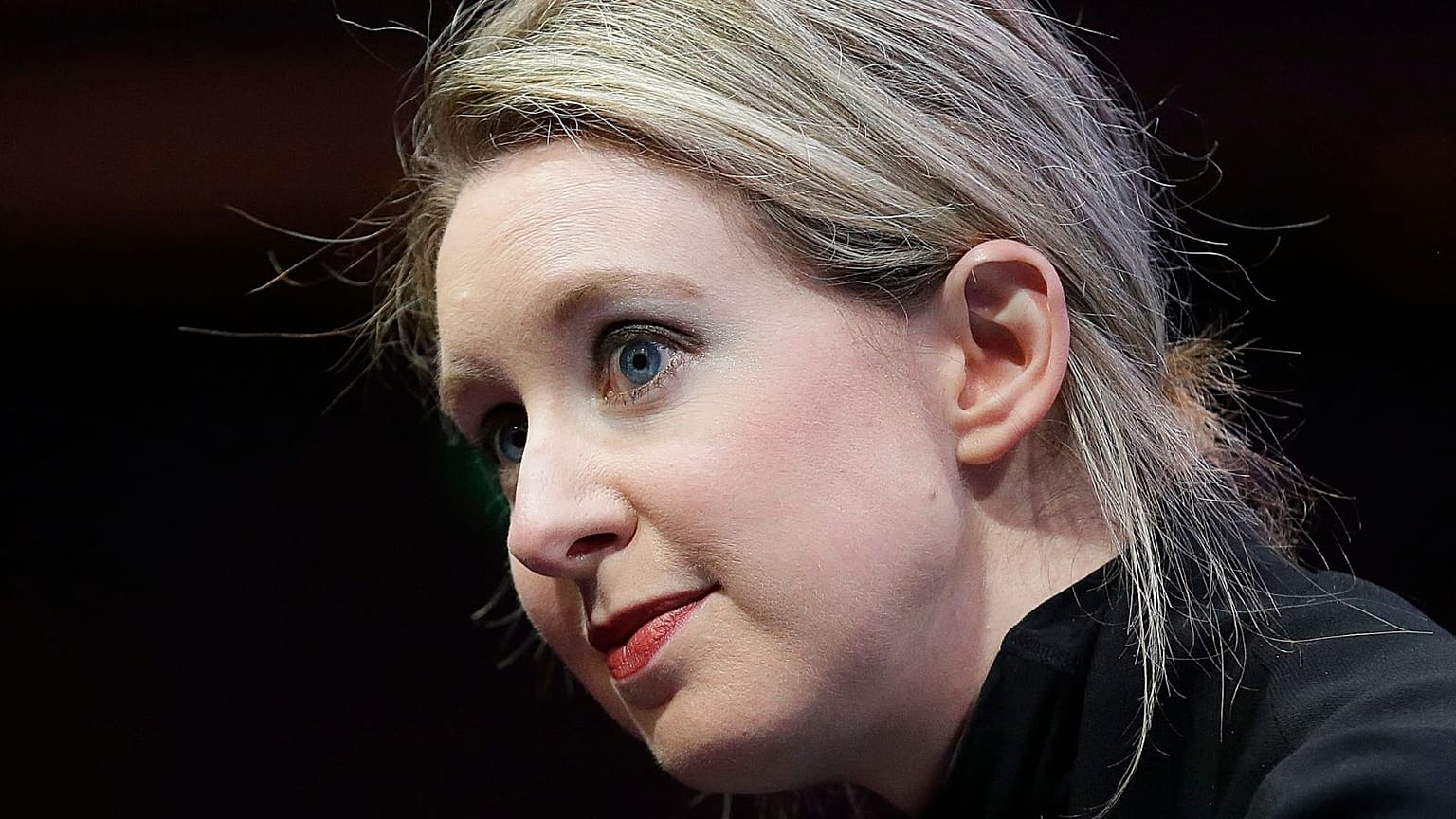
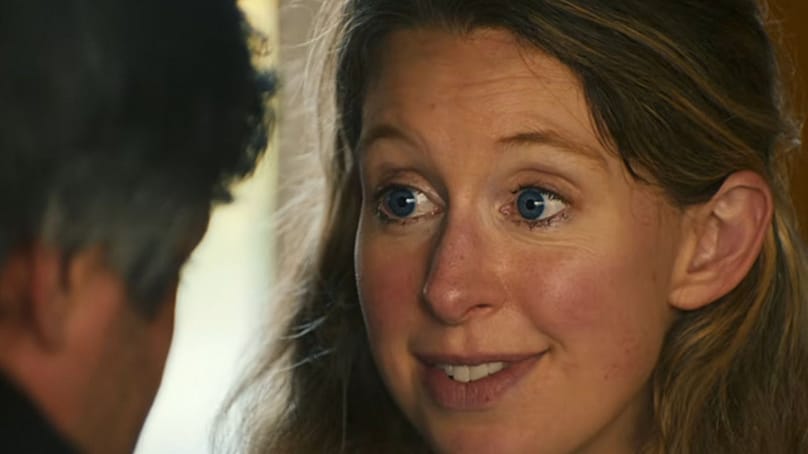
On the same day as its premiere, A24 released a trailer and poster for the documentary, and both are chilling. The teaser trailer in particular borders on sinister, as the camera focuses on Holmes and her signature (and very unnerving) wide-eyed stare, as she affirms that she is not deceiving anyone.

“Why would I do that?” she asks, before a skeptical Fielder asks: “You’re being real right now?”

“I’m always being real,” Holmes replies.

The camera then pulls back to reveal Holmes has been rocking her young baby the whole time.

Check out the trailer below:

You Can See Everything marks the feature directorial debut of Canadian comedian Fielder and it's the second directorial work from Oppenheim to premiere in the last few days, after the Venice debut of his Robert Pattinson-led Primetime.

Vanity Fair confirmed that Fielder actually lived with Holmes and her husband Billy Evans while making the documentary. The publication described the film as being “full of unexpected twists and turns and shocking reveals.”

If the trailer hasn't already given you the chills, check out the unsettling poster:

You Can See Everything A24

Elizabeth Holmes supposedly dropped out of Stanford University at the age of 19 to run Theranos. As the CEO, she attracted a high-profile board, including former US senators and two ex-secretaries of state. In 2015, Forbes named Holmes the youngest and wealthiest self-made female billionaire in the US on the basis of a $9-billion valuation of her company

Holmes raised $945 million from powerful investors including Rupert Murdoch and Larry Ellison, before it was revealed that the company's revolutionary method of conducting blood tests never existed. She was eventually convicted of fraud and sentenced to 11 years and three months in prison.

The spectacular rise and fall of the disgraced entrepreneur has become a Silicon Valley cautionary tale - one which has been adapted into numerous podcasts and books, as well as an HBO documentary by Alex Gibney titled The Inventor: Out for Blood in Silicon Valley and the minieries The Dropout, for which Amanda Seyfried won an Emmy for playing Holmes.

After being convicted, Holmes attempted to flee the US, and pushed for a new trial. She is scheduled to be released from prison on 16 August 2032.

Screenshot You Can See Everything A24

You Can See Everything will be in US theatres next month, although A24 hasn’t announced an exact release date. There is no news so far regarding a European release date.


'The Last Days of Vacation': Reimagining Poland's coal capital Silesia through art and animals

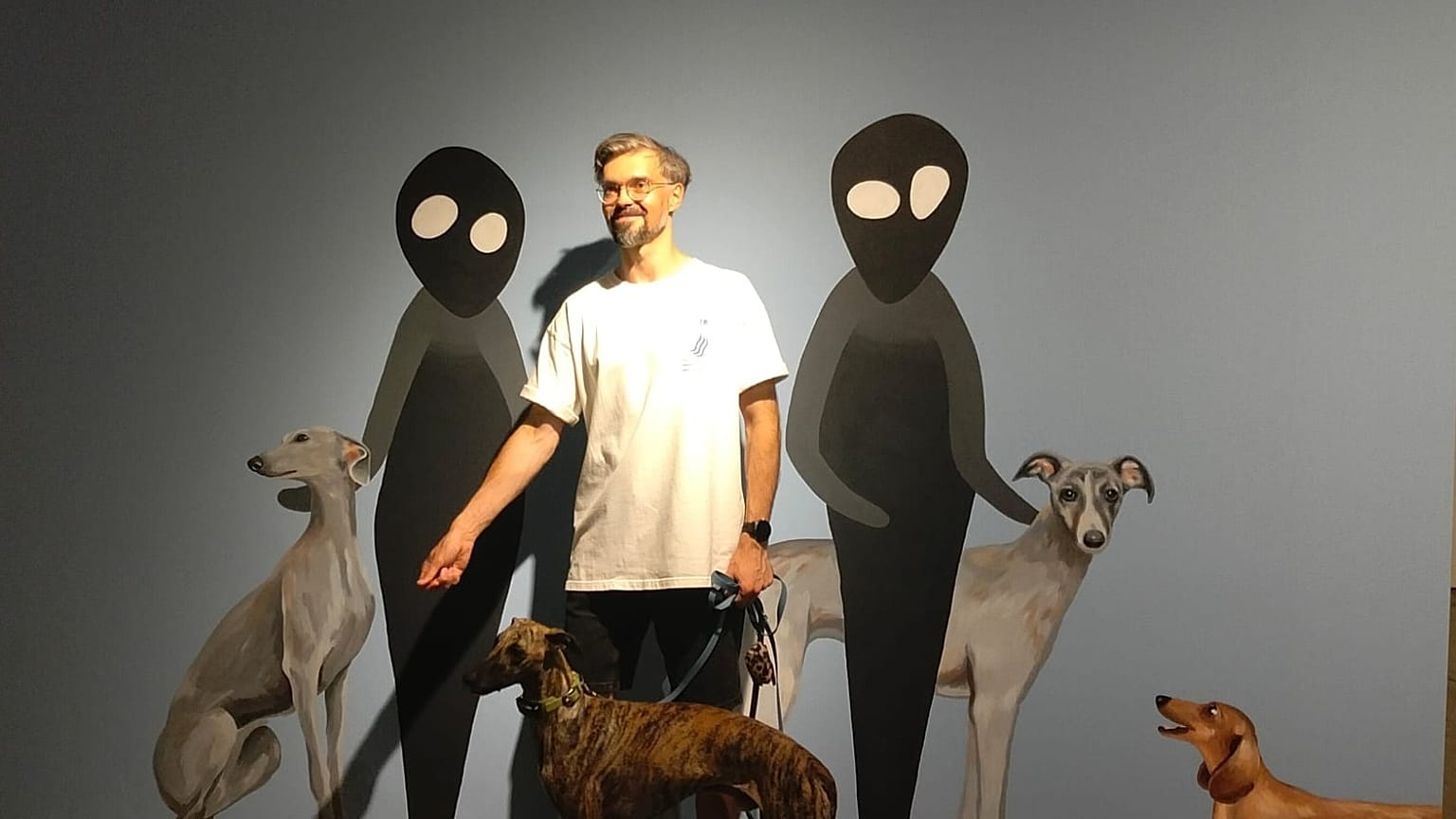
Michał Prażmo at the opening of the "Kurier Wakacyjny" exhibition, 6 August 2026, Katowice
Copyright fot. Katarzyna Kubacka


By Katarzyna Kubacka
Published on


Silesia as a holiday resort? A collection of artists have come together to portray the Polish coal capital in many ways. In a new exhibition Michał Prażmo portrays the region as a quirky venue for dogs and aliens, while others fill it with symbols, faith and ties across generations.

Picture this. Stories told during the summer silly season and illustrations for a fictional newspaper describing dogs' extraordinary encounters with aliens. A plague of dogs arguing in the Japanese Garden and a hint of surrealism hanging over a city on a sweltering summer's day.

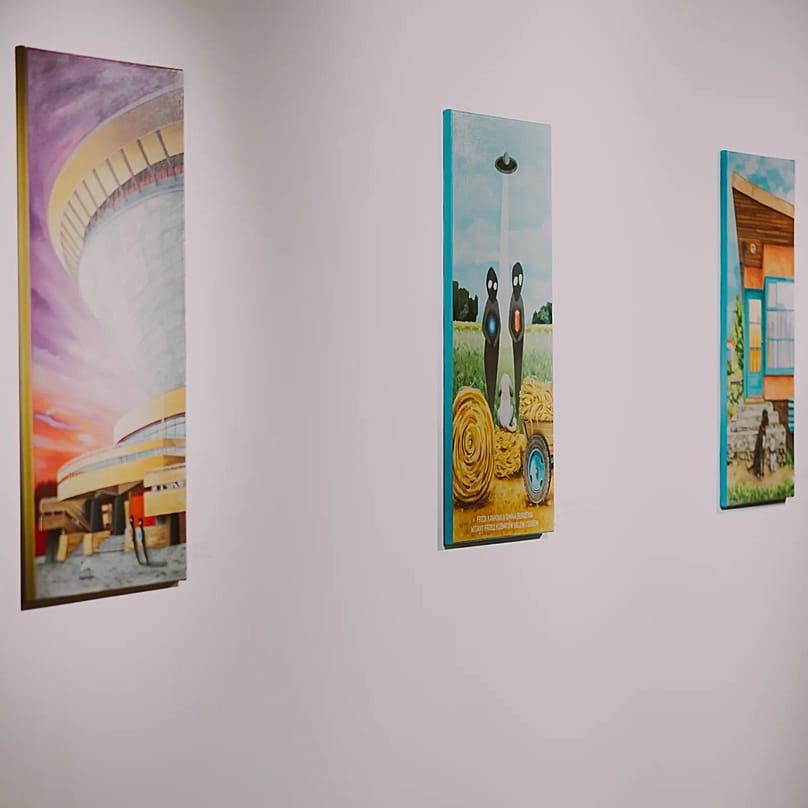
"Holiday Courier" by Michał Prażmo is a series of works inspired by summer, with the Polish coal capital Silesia as a backdrop. It's part of an exhibition entitled "The Last Days of Vacation". The idea of showing Silesia as a holiday resort was conceived by the show's curator, Adrian Chorębała, who wanted someone from outside the region to highlight what usually goes unnoticed. So, what does Silesia look like in Prażmo's paintings, and how do artists from the region see it? Do these perspectives differ significantly? And what is young Silesian art like today?

Postcards from the holidays

"Holiday Courier" and "The Last Days of Vacation" were meant to be – as MichaÅ‚ Prażmo puts it – a break after his previous series of paintings, "The Breakdown Treats", a reflection on mental crises, loneliness and attempts to escape reality.

"Painting that sort of thing is exhausting too and it affects me, so I wanted to do something by way of contrast, something more relaxed, more nostalgic," he says.

"I wanted to give myself a bit of a breather, but I also had a large collection of photos from my own travels, showing beautiful places that lent themselves to painting and could be a source of inspiration. I often work by putting together mood boards, using my own photos, cutting and combining them. I already had a folder, my own collection of favourite photographs, so I decided to use it to create this series."

Exhibition of works by Michał Prażmo at Rondo Sztuki in Katowice Credit: Marcin Kurasz


Mood is the key word for the exhibition at Rondo Sztuki. The perspective of someone from another part of Poland was meant to bring lightness to the stereotypical image of Silesia. As the artist admits, his idea of the region, shaped back when he lived in northern Poland, was based mainly on stories he had heard. Travelling around Silesia, however, turned out to be full of surprises. What intrigued him most was the architecture and the natural surroundings.

"I wanted to avoid those clichéd associations. I started with Spodek, because it is a symbol and has to appear somewhere, but after that I didn't want to tick off any more icons. What caught my eye most was Silesian Park, with its striking architecture and vast open space. After all, it's the largest urban park in Europe."

'A brawl in the Japanese Garden' by Michał Prażmo Credit: Michał Prażmo


Prażmo wanted the Poland he depicts to be nostalgic, and the paintings – as he puts it – postcard-like and idyllic, showing Poland to be a little nostalgic and rooted in memory, but with a story that comes with a twist.

A dog's life

Dogs are the main characters in Michał Prażmo's paintings. Canines and other animals feature in the work of many others including Doma Suszczyńska, who combines inspirations from Impressionism with everyday life. They also appear strongly in work by Zuzanna (Zu) Jankowska, who contrasts the symmetry of drawing with pop art.

"The story in "Holiday Courier" is that a UFO lands and tries to make contact, but chooses dogs, in order to win over someone more friendly first, because I'm afraid that if it were people, it could play out very differently. But even among the dogs there is a split," says Prażmo.

"There's the painting 'A brawl in the Japanese Garden', where there is a confrontation between greyhounds, who are friendly towards the aliens, and various mongrels, who are against it. At the end there is the painting 'Who Opened the Gates', so perhaps those aliens didn't have bad intentions at all and just wanted to contribute to a good cause. I leave that open to interpretation."

The presence of dogs is also something the exhibition's curator, Adrian Chorębała, picks up on.

"I'm a great fan of Silesian Park myself and I often go there for walks with my dog. It turned out that my two dogs also ended up in the painting that promotes the exhibition on the poster, 'A brawl in the Japanese Garden'."

Chorębała believes that lightness and humour make it easier for some audiences to warm to art.

"I believe art should reach out to people. People often feel like going to a gallery, mixed perhaps with a bit of anxiety, but, for instance, they don't know that they can do it for free."

Silesia beyond heavy industry: young art in the coal capital

According to Adrian Chorębała, Silesia is depicted in art today in a completely different way than it was just a dozen or so years ago. Some younger artists are still influenced by the traditions associated with the Janówska Group, and many also draw on the experience of multigenerational mining families.

Mysticism, references to mythology and questions of identity are the main themes explored in the work of Paweł Sobczak. Milan Zientara, in turn, references the Janówska Group and Silesia's mining past. Abstract figures, fluid boundaries of form and mysticism are the hallmarks of the painting of Ksawery Sajdak, of whom Chorębała says:

"He has created a very interesting world of his own. Using characters and symbols, he presents an imaginary realm which, on the one hand, is very Silesian, and on the other is very contemporary, because it is rooted in gaming."

According to ChorÄ™baÅ‚a's, young artists talk about Silesia in a completely different way from their predecessors. The traditional motifs associated with the region – miners, familoki workers' tenements or characteristic shutters – have not disappeared, but they are no longer the main subject, becoming instead just one part of a broader story about contemporary Silesia.

"You can talk about a Katowice school of graphic art, which focused precisely on that Silesian-ness – the shutters, the miners, the familoki. Now we are moving slightly in the opposite direction. What used to be a classic Silesian landscape is becoming one element in a larger whole."

He stresses that the way the region is perceived is also changing. Katowice is now building its image above all through culture, and Silesia is increasingly seen as a tourist attraction.

"The rest of Poland sees us as a pleasant place to visit, because we have our own regional idiom. It is not only the language, but also the cuisine and a particular way of being. People from outside always think of Silesia as a very hospitable land," he adds.

"The Last Days of Vacation" is on at the Rondo Sztuki in Katowice until 15 September.


IFA 2026: Xiaomi wants its smart-home cars on European roads by 2027


By Sonja Issel & Donogh McCabe
Published on


Xiaomi is done being just a phone brand. At IFA 2026, it laid out plans to launch electric cars in Europe by 2027, all wired into a smart-home ecosystem it calls Human x Car x Home.

Xiaomi may still be best known for its smartphones. But at IFA 2026, the Chinese technology company presented plans for a future that no longer fits inside people's pockets.

Home appliances and connected devices have become an increasingly important part of its business. Now, Xiaomi is putting greater emphasis on four wheels — and the shift is hard to miss at IFA.

Inside the company's exhibition space in Berlin, one of the first things visitors encounter is a futuristic-looking car carrying the familiar Xiaomi logo, but on a very different scale.

Xiaomi cars are already a familiar sight for consumers in China. Now the company wants to bring them to European roads too.

In that spirit, Xiaomi announced at IFA 2026 that it plans to launch its electric vehicles in Europe in 2027, marking the next stage of its expansion beyond smartphones and consumer electronics.

Xiaomi has also expanded its range of home appliances and connected devices. Euronews

But simply selling cars is not the company's ultimate goal. Like many of the technology companies exhibiting in Berlin, Xiaomi is increasingly focused on connecting different parts of everyday life.

It calls its approach "Human x Car x Home", an ecosystem designed to link personal devices, the car and technology around the home. In practice, the idea is to let you steer your home from behind the wheel of your car.

Euronews took a closer look at Xiaomi's vision at IFA 2026 to see how that ecosystem is supposed to work.

'Human x Car x Home': The vision

Rather than treating the car as a separate product, Xiaomi wants to integrate it into the same connected system that already links devices around the home. The aim is for users to move between different environments while staying connected to the devices they rely on every day.

Euronews At IFA, Xiaomi presented its "Human × Car × Home" ecosystem, connecting cars, smartphones and home devices.

At IFA, Xiaomi demonstrated what that could look like in practice. From inside the car, users could control devices back at home, including opening and closing connected curtains and switching the air conditioning on or off.

This means the car could effectively become another control point for the smart home. Someone leaving work, for example, could adjust the air conditioning before arriving home, while other connected devices could be controlled directly from the vehicle.

Xiaomi says AI and its HyperOS operating system are intended to provide the technological link between these devices. Its longer-term vision goes beyond users manually controlling individual appliances, with AI eventually using contextual information to coordinate devices across the car, smartphone and home.

For Xiaomi, the car is therefore not only a new product category, but another part of a wider connected ecosystem — extending its technology beyond smartphones and the home and onto the road.

Alongside its more concrete plans, Xiaomi has also left room for imagination, exploring what could become possible further down the road.

Xiaomi's Vision Gran Turismo Euronews


Among the concepts presented at IFA is the Xiaomi Vision Gran Turismo. The electric hypercar concept was developed for the Gran Turismo racing game series and explores ideas around design, aerodynamics and digital interaction.

For now, however, this vehicle remains firmly a concept rather than a preview of a production model expected to hit the road any time soon.

Local partners

But despite leaving room for experimentation, Xiaomi also made clear that its European ambitions go beyond concepts. At its IFA press conference on 3 September, the company took concrete steps towards its planned market entry.

During a signing ceremony, the company signed letters of intent with eight German automotive retail groups: Emil Frey Germany, the Ernst Dello Group, Autohaus Dinnebier, Hahn Automobile, the LUEG Mobility Group, Fett & Wirtz, SPT Avior and Penske-Jacobs.

Germany, however, is only intended to be the starting point, with Xiaomi planning similar partnerships in other European markets.

"Europe is a key market for our global strategy," Xiaomi Chief Marketing Officer Xu Fei said during the press conference.

The company is also planning significant investment to support this broader strategy. Between 2026 and 2030, Xiaomi says it intends to invest more than €24 billion globally in research and development, with a focus on areas including AI, operating systems, semiconductors, intelligent vehicles, robotics and smart manufacturing.