Monday, September 07, 2026

Russia, Norway, And A Ship Seizure At The Heart Of The Arctic’s Growing Divide – Analysis


Russia's Professor Molchanov oceanographic research vessel at Barentsburg in Svalbard, Norway. Phhoto Credit: Alastair Rae, Wikipedia Commons


On 2 September the Svalbard governor, acting on a Nord-Troms court order of 31 August, seized the Russian research ship Professor Molchanov in Barentsburg so Ukraine’s Naftogaz can chase a $4.22 billion Hague award for Crimea assets. Oslo and Governor Fause call it ordinary civil enforcement, not a political strike.

The ship is a 43-year-old Roshydromet oceanographic vessel that also ran the Murmansk–Barentsburg passenger/cargo link after Norway cut tourist visas; Svalbard sits outside Schengen under the 1920 treaty. Moscow called the arrest “piracy” and part of a squeeze on Russia’s last treaty foothold; Russian voices skipped the award’s merits.

The case exists because of Crimea 2014 and lands in a post-2022 Arctic: Finland and Sweden in NATO, more High North commands, Norway’s last Svalbard mine closed in 2025. Expect rhetoric, science-diplomacy and court appeals, not a fight over a research ship—but another stress test of Norwegian sovereignty plus open treaty access.


The Arctic has been sliding toward confrontation for several years now, and the drift has picked up momentum since Russia’s full-scale invasion of Ukraine in 2022. Finland and Sweden gave up decades of ‘military non-alignment’ and joined NATO. Norway expanded its Arctic brigade, Denmark sent conscripts to Greenland for the first time in living memory, and allied militaries built new command structures in the High North, from the air operations centre at Bodø to the Arctic Sentry framework linking existing exercises together. Russia, for its part, has leaned harder on its Northern Fleet, its Kola Peninsula nuclear assets, and its partnership with China, while accusing NATO of militarising a region that used to run on a softer, more cooperative logic. Both sides now treat the Arctic as a contested ground, and almost every fresh dispute up there gets read through that lens.

Svalbard is at the centre of this move, and on 2 September 2026 it produced the latest flashpoint. The Governor of Svalbard arrested a Russian research vessel, the Professor Molchanov, at its berth in Barentsburg. The order came from a Norwegian court, acting on a request from Naftogaz, Ukraine’s state energy company, which is trying to collect on a $4.22 billion arbitration award linked to the loss of its assets in Crimea after 2014. On paper, this is a debt-collection case that happens to have landed on a Russian ship in a Norwegian territory. In practice, it lands directly inside one of the most delicate legal and political arrangements left over from the twentieth century, at a moment when almost everything around Svalbard is already tense.
What actually happened

The Nord-Troms and Senja District Court ruled on 31 August that Naftogaz could seize the vessel to satisfy the Hague arbitration award, which compensates the company for property Russia took over in Crimea. The award has already been recognised as enforceable in Norway and in the Netherlands, so Naftogaz has been hunting for Russian assets it can actually reach, and a ship docked at a Norwegian-administered port turned out to be reachable.

The Professor Molchanov is not a warship or a spy vessel by any reasonable description. It is a 43-year-old oceanographic research ship, built in Finland, run by Roshydromet’s Northern Directorate for Hydrometeorology and Environmental Monitoring, and used in recent years to carry students and researchers from the Northern (Arctic) Federal University in Arkhangelsk. Since June 2025 it has also run a direct passenger and cargo route between Murmansk and Barentsburg, and that detail matters. Norway stopped issuing tourist visas to Russians, so getting to Svalbard through Tromsø or Oslo became difficult. Because Svalbard sits outside the Schengen zone, and because the 1920 treaty gives citizens of member states the right to travel there without a normal Schengen visa, the direct sea route from Murmansk became the practical way for Russians to keep visiting Barentsburg. The Molchanov, in other words, had become the physical link keeping that access alive.

Governor Lars Fause was quick to describe his own role narrowly. He said he was acting purely as an enforcement officer carrying out a court decision, not as a political actor, and that neither he nor the Norwegian government is a party to the underlying dispute between Naftogaz and Russia. The Ministry of Justice took the identical line, saying Norway learned about the case only after the arrest had already been decided. That is legally accurate and also politically convenient, since it lets Oslo present the episode as routine civil enforcement rather than a decision it made about Russia.

Russia’s reaction

Moscow did not accept that framing for a moment. Foreign Ministry spokeswoman Maria Zakharova, speaking at the Eastern Economic Forum in Vladivostok, called the arrest “real piracy” and rejected the word “detention” outright, arguing there was no legitimate legal basis for it. She went further, arguing that Western states were abandoning the elaborate legal order that has governed maritime affairs for generations and replacing it with political improvisation, a shift she called a degradation of the international maritime order and, memorably, likened to “Jack Sparrow” lawlessness rather than anything resembling Cold War conduct.

Military analyst Alexander Stepanov of RANEPA offered a more geopolitical reading, arguing that the seizure was really about pushing Russia out of Spitsbergen altogether, and describing the ship’s purpose as scientific and humanitarian rather than anything that could justify what he called a pirate-style seizure aimed at Russian maritime logistics in the Baltic and the north. Konstantin Zaykov of the Northern (Arctic) Federal University added an academic voice to the same theme, calling the move outrageous and calling it as evidence that the Arctic is becoming another front in what he described as a Western strategy of containing Russia, with Norway an active participant in that strategy.

None of these responses treated the case as a narrow commercial dispute. All of them folded it into a narrative about Western pressure on Russia in the north, which tells us something about how Moscow intends to use the episode, whatever the court’s actual reasoning was.

Legal dispute or geopolitical flashpoint

Both readings have some truth to them, and that is precisely what makes the case awkward. Strictly, this is a private commercial claim working its way through an ordinary Norwegian court, following an arbitration process Russia itself lost through non-participation and delay rather than through any direct Norwegian initiative. Nothing in the court record suggests Oslo instructed anyone to target a Russian vessel; Naftogaz picked its target and the court applied the law.

However, the setting turns an ordinary legal action into something else. Barentsburg is one of the last places where Russia maintains a continuous physical presence under treaty rights that go back over a century, and a Russian vessel being immobilised there, even briefly, touches questions of sovereignty, access and symbolism that a debt case decided in, say, Rotterdam never would. Russia’s own commentary confirms this reading: none of the Russian voices quoted above discuss the arbitration award’s merits in any detail. They discuss Norwegian intentions toward Svalbard. That gap between the legal basis of the case and the political meaning attached to it by Moscow is the real story here, and it suggests the episode will function as a geopolitical irritant regardless of how the court case itself concludes.

How Russia is likely to respond

Russia has limited practical options. It cannot easily challenge Norwegian jurisdiction over Svalbard itself, since the 1920 treaty gives Norway full sovereignty while granting other signatories only economic and residency rights, not any claim to co-administer the territory. What Russia can do, and has already begun doing through its diplomatic statements, is treat the case as proof of Western hostility, using it to justify further moves it might have wanted to make anyway: expanding its own institutional track at Barentsburg and Pyramiden, expanding the proposed international Arctic science centre involving China, India, Iran and the UAE, and continuing to display symbols of continuity such as Soviet-era flags at its settlements. Deputy Prime Minister Yury Trutnev’s 2024 comments about protecting “the rights of Russia and Russians” in Svalbard point toward this plan: rhetorical assertiveness backed by continued civilian and scientific presence rather than anything resembling military escalation.

Russia may also press the case through diplomatic channels or seek to have the arrest reversed through Norwegian courts, since the vessel and crew’s safety is not disputed by either side. But the more durable Russian response will probably be to keep citing the episode as evidence for a narrative it was already building well before September: that NATO states are using legal, regulatory and administrative tools to squeeze Russia out of Arctic spaces where it has historic and treaty-based rights.
Why Ukraine sits underneath all of this

The case exists only because of Ukraine. Without Russia’s 2014 seizure of assets in Crimea, there would be no arbitration award, no $4.22 billion claim, and no reason for Naftogaz to be hunting Russian property anywhere in the world. The full-scale invasion of 2022 then transformed the Arctic environment in ways that made an episode like this far more consequential than it would have been a decade ago. Finland and Sweden abandoned decades of non-alignment and joined NATO, allied military coordination in the High North intensified through structures such as the Bodø air operations centre and the Arctic Sentry framework, and Norway itself expanded its Arctic brigade while Denmark sent conscripts to Greenland for the first time in living memory. Russia’s own Foreign Minister, Sergei Lavrov, has argued publicly that this NATO buildup threatens Russian security and risks armed confrontation, though commentary on his remarks points out that he reverses cause and effect: it was Russia’s invasion that triggered the Finnish and Swedish accessions and the subsequent NATO planning, not the other way round.


The Molchanov case, then, is not directly related to the Ukraine war but it could not have happened without it, and it lands in an Arctic environment the war has already changed. Every actor involved reads the seizure through that lens, which is why a comparatively small legal dispute is generating statements at the level of foreign ministries and state television.
The history behind Svalbard tensions

Svalbard’s peculiar status goes back to the 1920 treaty, which gave Norway sovereignty while allowing signatory states, the Soviet Union joined in 1935, to reside and conduct business there on equal terms. That balance worked reasonably well for most of the twentieth century, largely because Cold War tensions rarely touched the archipelago directly, and because coal mining gave both Norwegian and Soviet, later Russian, settlements an economic reason to coexist. That coal economy is now largely gone; Norway closed its last Svalbard mine in 2025, and Russian mining at Barentsburg has long been more symbolic than profitable. With coal disappearing, both sides have shifted toward other means of maintaining relevance: Norway through tightened administrative and educational control, designating the University Centre in Svalbard as the sole authorised higher-education body and proposing a Svalbard Science Office to oversee international research; Russia through science diplomacy, proposing an international Arctic centre at Pyramiden involving BRICS partners, and through periodic assertions of treaty rights.

Norway has also grown wary of outside interest more broadly, restricting the sale of the last privately owned land parcel on the islands in 2024 partly out of concern about possible Chinese buyers, and objecting to Chinese symbols and student access at the Ny-Ålesund research settlement. Article 9 of the 1920 treaty bars the use of Svalbard for “warlike purposes,” a phrase that has aged awkwardly in an era of satellites and dual-use technology; Russia has previously questioned whether Norway’s SvalSat satellite facility complies with that provision, without escalating the dispute further.
Threat perception, Norway’s position and NATO’s shadow

For Russia, Svalbard’s importance is inseparable from its geography. The archipelago is close to the Kola Peninsula, home to Russia’s Northern Fleet, its nuclear-armed submarines and much of its “bastion” defence concept, which depends on keeping the surrounding seas relatively free of hostile surveillance. Any expansion of NATO presence or infrastructure near Svalbard, even civilian in appearance, tends to be read in Moscow as a potential threat to that bastion, which is why Russian officials repeatedly connect ordinary Norwegian regulatory decisions to a larger narrative of encirclement.


Norway’s position is more defensive. Oslo is not trying to push Russia out of Svalbard entirely; it is trying to tighten the rules under which everyone, including Russia and increasingly China, operates there, while making clear that Norwegian sovereignty, and by extension NATO’s collective defence commitments, ultimately covers the archipelago. That last point matters most. Because Svalbard is Norwegian territory, it falls within NATO’s Article 5 framework in principle, even though NATO has avoided placing permanent military infrastructure there specifically to keep the treaty’s demilitarised spirit intact. Russian leaders nonetheless treat any hardening of Norwegian control, judicial, administrative or otherwise, as circumstantial evidence of NATO’s northern expansion, folding the Molchanov case into the same story as Finnish and Swedish accession, the Bodø command structure and American interest in Greenland.
Where this leaves things

The Professor Molchanov will most likely be released once the underlying legal questions around the vessel’s status are resolved, and the case itself is unlikely to trigger anything resembling military confrontation. Russia has shown no appetite for that, and the risks of testing Article 5 over a research ship would be absurd. But the episode will not simply fade once the ship sails again. It has given Moscow another point for a narrative it was already constructing, given Norway another reason to tighten oversight of Russian activity on Svalbard, and reminded everyone how easily an ordinary commercial dispute can be absorbed into the standoff between Russia and NATO in the Arctic. The archipelago’s old formula, Norwegian sovereignty combined with open access for treaty states, is not collapsing, but it is being tested from several directions at once, and the Molchanov case is simply the latest test to surface.


About K.M. Seethi
K.M. Seethi is Director, Inter University Centre for Social Science Research and Extension (IUCSSRE), Mahatma Gandhi University (MGU), Kerala. He also served as ICSSR Senior Fellow, Senior Professor of International Relations and Dean of Social Sciences at MGU. One of his latest works is "ENDURING DILEMMA Flashpoints in Kashmir and India-Pakistan Relations."
View all posts by K.M.

 

EU races to rethink Arctic policy as the global power grab continues

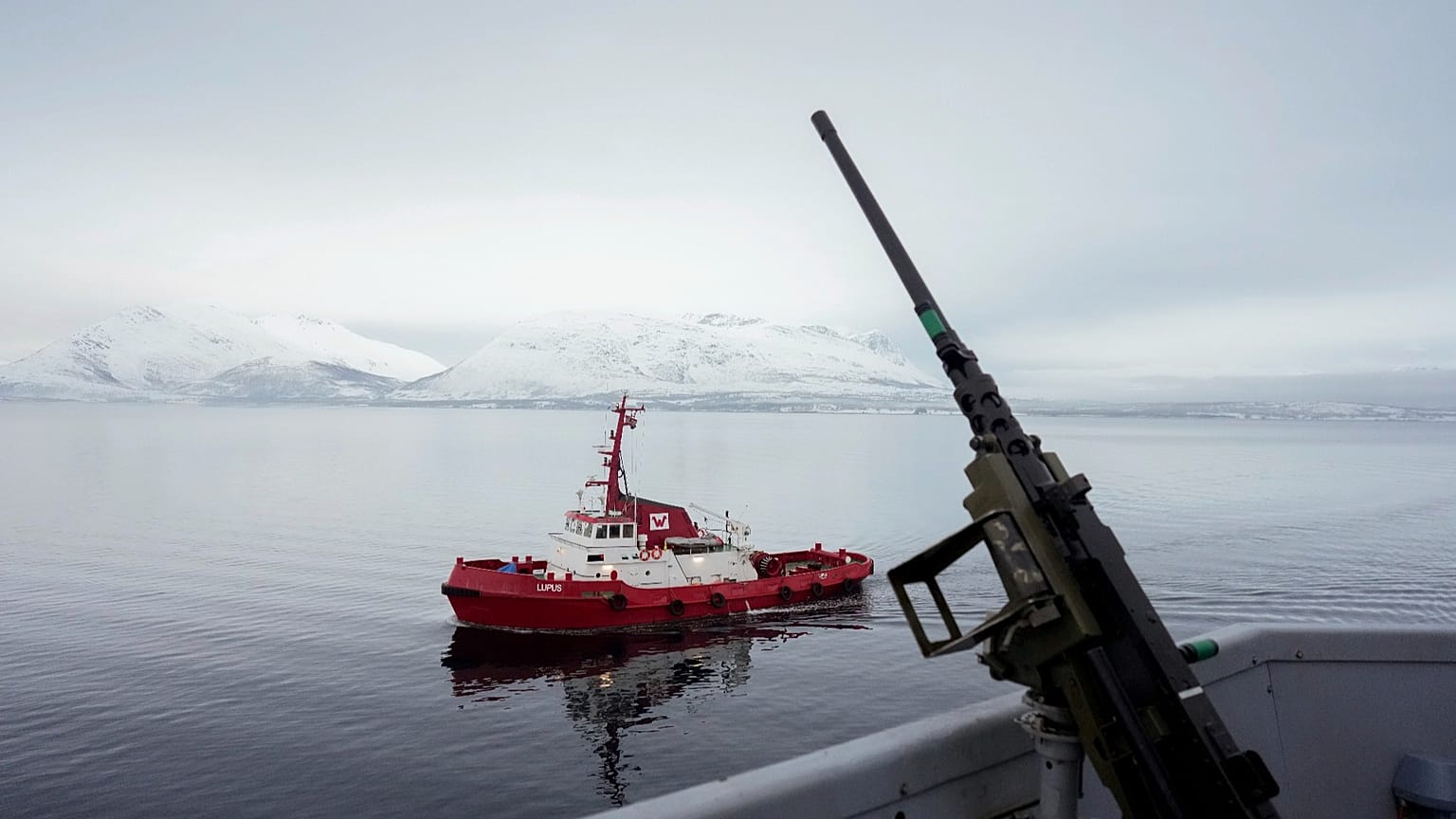
A tugboat sails alongside the French navy frigate Normandie before it docks during a patrol in a Norwegian fjord, north of the Arctic circle, Friday 8 March 2024.
Copyright AP

By Angela Skujins
Published on

European Commission President Ursula von der Leyen is in Greenland to discuss the Arctic's growing importance among allies. The visit comes as Brussels is busy preparing a reviewed Arctic policy, with experts warning it must have security and defence at its core.

European Commission President Ursula von der Leyen is completing her two-day whistlestop tour of the Greenlandic capital, Nuuk, on Monday to further European Union-Arctic relations — and gather intelligence as the European Union maps out a new Arctic Policy.

When the policy's first iteration was published in 2021, it made little reference to growing security threats. Instead, the then-EU foreign policy chief Josep Borrell emphasised climate change, raw materials and geostrategic influence as central to the document.

But in the years since, the European Commission has admitted the policy needs an urgent revamp to address the changing security and defence environment in the region — a more militarised Russia, for one thing, as well as China's effort to expand its economic footprint as melting ice opens new Arctic Sea routes.

A European Commission spokesperson told Euronews that the updated document will aim to promote “peace, stability, and sustainable development in the region”, and that Brussels is committed to playing a constructive role in the territory.

They said the Arctic had gained “significant global attention” due to its unique environment and role in international dynamics.

“This update is necessary to maintain that the policy is relevant and effective in addressing the evolving challenges and opportunities in the Arctic region,” they said.

However, various people involved have told Euronews the publication of the policy has been “delayed”, and the Commission spokesperson was unable to provide a date.

As the wait continues, experts have warned Euronews there is much at stake if the EU executive does not get this new version right — particularly when it comes to security and defence.

Who is in the Arctic?

Russia and China have become increasingly active in the resource-rich High North. The United States and Canada are also present in the area, as are three EU member states: Finland, Sweden and Denmark.

“If you look at the Arctic, this is the place where all the superpowers meet,” Estonian MEP Urmas Paet told Euronews. Paet has drafted several high-profile reports regarding EU foreign policy, including one on the Arctic.

In a 2025 report, he strongly urged the European Commission to update its Arctic strategy, stressing that Russia’s militarisation and China’s Polar Silk Road have transformed the region into a major geopolitical flashpoint.

If the new strategy does not rise to the moment, he said, Europe will be “more and more” marginalised in the Arctic, with other superpowers potentially gaining the upper hand.

“The Americans, Chinese, and Russians will be more and more active, and well, Europe, less and less relevant,” he said.

Paet has urged Europe to work more closely with Greenlandic partners when it comes to critical raw materials and energy, and has called for the EU’s next long-term budget to earmark funds for a range of economic activities in the region, such as fishing, icebreakers, and infrastructure investments.

“The important point for this new strategy is that it clearly reflects adequately what is ongoing, and also shows the way how the European Union, also through its budget should react to all those changes we have witnessed."

The major issue now, Paet said, is publication. “They are very delayed,” he said.

What do these foreign powers want?

Arctic warmingis nearly four times the global average, with more than 10,000 cubic kilometres of sea ice lost in the region over the last 40 years. This continued warming has accelerated glacier melt, making the region increasingly attractive to countries by opening up new shipping routes in previously inaccessible areas.

In 2018, Chinese President Xi Jinping articulated his Polar Silk Road initiative. This is Beijing’s official vision to establish shipping infrastructure through the Arctic Ocean to link Europe and Asia.

In August, Russian Foreign Minister Sergey Lavrov trumpeted the news that a container ship from China had arrived at the Russian city of Murmansk via a once-impassable Arctic route. He celebrated the development while outlining Russia’s plans to develop other international cooperation in the region.

Meanwhile, the EU’s foreign policy chief Kaja Kallas said in February that given US President Donald Trump’s annexationist rhetoric toward Greenland, and these other geopolitical issues, the Arctic can no longer be considered a quiet corner of the map.

“It is the front line of the global power competition,” she said, while attending an Arctic-oriented conference in Tromsø, Norway.

Kallas warned that hybrid threats are growing in intensity and frequency in the region and are tied to Russia’s “enduring military build-up” in the High North.

“In response, European allies are stepping up on Arctic security, and the European Union is ready to do its part,” she said.

How do you secure the Arctic?

North Atlantic Treaty Organisation (NATO) Secretary-General Mark Rutte cautioned that in the face of China's growing interest in the High North and Russia's increased military activity, "it was crucial that we do more,” he said.

As a result, NATO launched Arctic Sentry in February. The multi-domain activity aims to strengthen the Alliance’s posture in the area by bringing together allies under one overarching operational strategy. A senior NATO official told Euronews the criteria for success would depend on how Russia and China respond to NATO’s increased footprint in the region.

Linda Solstrand Dahlberg, a senior representative of the Arctic University of Norway, told Euronews that the policy could incorporate a blueprint for greater EU and NATO coordination regarding the Arctic. This would safeguard subsea cables connecting Norway to mainland Europe, as well as coordination against the growing militarisation by foreign powers, such as Russia.

“A secure Arctic is inextricably linked with European security,” she said.

Dahlberg also suggested the document should explore the possibility of greater defence industry cooperation, which could benefit European countries looking for weather-tested capabilities.

“We've got competence and expertise in this area of the world, and we have stress testing capabilities for cold climates."

European Policy Centre defence analyst Maria Martisiute said the major shortcoming of the 2021 policy is that it does not mention military defence. She reiterated that the EU's geopolitical agenda has clearly changed since then, with Russa’s full-scale invasion of Ukraine.

But there have been developments outside of this, with Europe developing Security and Defence Partnerships with Canada, Iceland, Norway and the UK.

“These partnerships have to also be reflected in the new EU Arctic strategy,” Martisiute said.

Together, Martisiute and Dahlberg published a paper with dozens of recommendations for the EU's forthcoming policy. The most important thing that the European Commission must consider when finalising the document, according to them, is that they are cognisant that Arctic defence impacts European defence.

“The Arctic doesn’t exist in a vacuum,” Martisiute said. “It’s very closely integrated into the wider security landscape.”

BRAZIL

Pantanal: Tackling Climate Change Depends On Five Other Biomes


Pantanal, Mato Grosso, Brasil. Photo Credit: Filipefrazao, Wikimedia Common

ABr
By Fabiola Sinimbu


Key Takeaways:

The Pantanal is drying because it lives off its neighbors. Fed by the Cerrado, Amazon, Atlantic Forest, Chaco, and Bosque Chiquitano, it is the world’s largest floodplain—and highly exposed when those biomes change. MapBiomas: by 2025 the flooded savanna had lost more than 1 million hectares since 1985 (84% of what was recorded), much of it turning to drier savanna or grassland; channels (vazantes) and rivers are silting and shrinking.

Local restoration is treated as climate work, not only conservation. Claudinei Terena (Limão Verde, Aquidauana) restored 3.3 hectares of Cerrado headwaters with agroforestry and traditional plant knowledge. In the Santa Tereza quilombo, Adauto Cândido Pereira and the Flores do Cerrado Network (31 collectors) sell seed under a 30% leave-on-the-tree rule to restore riverbanks statewide.

WWF-Brazil’s line: fix the Cerrado springs that feed the wetland, limit reckless land use and small hydropower that fragment rivers and hurt fish and tourism, prefer solar, fight fires, and keep jaguar corridors. Traditional knowledge is framed as part of the strategy, not a footnote.


Small in size but vast in its capacity to sustain life, the Pantanal is the biome most influenced by neighboring ecosystems and borders the Cerrado, the Amazon, and the Atlantic Forest in Brazil, as well as the Chaco and Bosque Chiquitano in Bolivia and Paraguay.

This characteristic makes the Pantanal a vast reservoir of water and life, with water flowing long distances to reach the world’s largest floodplain. The diversity created by the convergence of these waters gives the region its natural beauty, but also makes it more vulnerable to the impacts of climate change.


“It is a plain that depends on what happens in other biomes and is affected by the changes taking place across the region, especially as climate change also impacts the surrounding areas,” says Cyntia Santos, a conservation analyst at WWF-Brazil.

According to data from the latest land use and land cover map released by MapBiomas, the Pantanal’s flooded savanna had lost more than 1 million hectares by 2025 compared with the beginning of the historical record in 1985.

The area lost represents 84 percent of the wetland savanna that once existed in the biome,with the majority – 833,000 hectares – having been converted to other types of vegetation, such as savanna or grassland. In practice, this means that the Pantanal is drying out.

“Parts of rivers have already disappeared, silted up… Some channels we call ‘vazantes’ – areas that fill and drain with the river – no longer exist, and the rivers are now very shallow,” says forest engineer and botanist Claudinei Terena.


Born in the Limão Verde indigenous territory, in the municipality of Aquidauana, Mato Grosso do Sul state, Terena recalls a time when abundant water enriched the soil and made the region ideal for growing everything they needed.

“These are things I learned as a child: ‘Let’s build a house here. This wood, this species, is good for that.’ Let’s look for some medicinal plants. This tree here is used for that – the bark, the fruit, the leaves, and the roots. Each serves a specific purpose,” he explains.

Drawing on traditional knowledge, Terena worked on a project to restore 3.3 hectares of headwater areas within the indigenous territory. The goal was to ensure that the water flowing into the Pantanal would also help keep that part of the Cerrado productive.

“One of the examples we highlight here within the community is our farming system. We’ve always practiced agroforestry without even realizing it. We’ve always planted different crops together,” he explains.
Network

A little farther from the Pantanal, seed collector Adauto Cândido Pereira lives in the Santa Tereza quilombo community in Figueirão, Mato Grosso do Sul. As a member of the Flores do Cerrado Network, he also sees restoring springs as a way to revitalize rivers.

Through the responsible collection and sale of seeds, efforts to restore riverbanks extend far beyond the community’s own territory. “We collect seeds to support other projects across the state. There are 31 of us collectors – 16 women and 15 men – and we follow basic collection rules, such as leaving 30 percent of the seeds on the tree. You don’t just go in and take everything. We take care of the tree and the environment,” explains Pereira.

Restoration

According to Cyntia Santos, the two projects are part of WWF-Brazil’s efforts to restore river headwaters in the Cerrado and curb land-use changes that cause springs to silt up and impede the flow of tributaries that drain into the Pantanal.

“It’s a consequence of economic activities that are often carried out haphazardly, without the necessary expertise. There’s a lack of technical support and incentives,” says Cyntia Santos.

According to WWF-Brazil Executive Director Maurício Voivodic, the organization has worked in Brazil for 30 years, 22 of which have involved more intensive efforts in the Pantanal.

“We work in these areas, in collaboration with partners, always seeking to create local impact while also generating learning, collecting data, and building knowledge that will enable us to influence public policy,” Voivodic explains.
Energy

To restore river flows to the Pantanal, projects are also being developed to raise awareness about other uses of water resources, such as the installation of small hydroelectric plants.

According to Cyntia Santos, in addition to fragmenting rivers, this type of investment affects aquatic biodiversity and the regional economy, which relies heavily on tourism.

“Electricity must come from other sources, such as solar energy, which is one of the most suitable options for the region, since small hydroelectric plants in this area do not generate economic benefits for either the government or local communities,” she says.

Within the Pantanal, efforts to combat forest fires and promote connectivity between areas of native vegetation – through corridors linking existing conservation areas – help strengthen populations of species such as the jaguar, an indicator of the health and integrity of local biodiversity.

According to Santos, the traditional knowledge of the people who inhabit the biome is a fundamental part of efforts to address these challenges. “This allows us to leverage information, work together, optimize strategies, and move forward as a team,” she concludes.


About ABr
Agência Brasil (ABr) is the national public news agency, run by the Brazilian government. It is a part of the public media corporation Empresa Brasil de Comunicação (EBC), created in 2007 to unite two government media enterprises Radiobrás and TVE (Televisão Educativa).
View all posts by ABr →
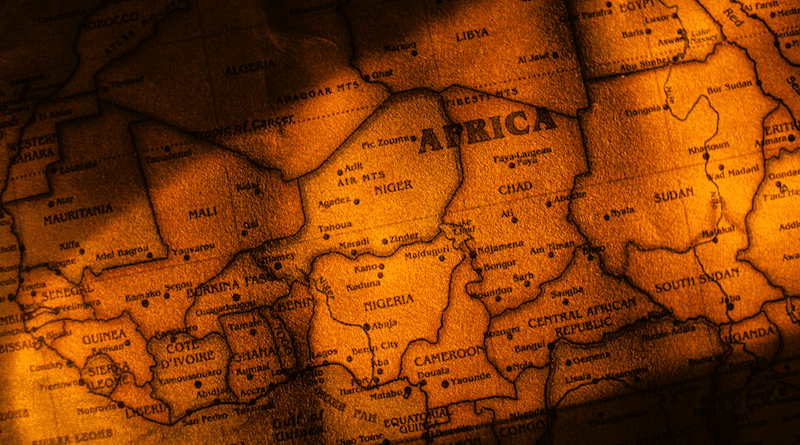
Sahel Gold Mines Fuel Terror Groups


By Africa Defense Forum


Key Takeaways:

Sahel jihadist groups JNIM and ISSP rarely storm the pits themselves. ACLED’s Héni Nsaibia: they take nearby towns and roads in Burkina Faso, Mali, and Niger, then tax or extort miners and traders—often in gold that can be stored and laundered. Raids have found large gold stocks in JNIM bases.

Burkina Faso is the center of the violence: 75% of mining-related attacks in an ACLED look at 44 AES-country sites; most happen within 10 km of a mine. Inata, first hit in 2018, was shut by the junta in 2024 and, as of June, is described as under JNIM. Liptako-Gourma (Essakane, Samira) is a JNIM–ISSP contest zone; Kayes (Mali–Senegal) and the Burkina–Ghana border feed the same economy.

The risk is moving south. Nsaibia warns JNIM’s push toward Senegal, Guinea, Côte d’Ivoire, and Ghana—and both groups’ footprint in northwest and north-central Nigeria—could export the same pattern. Mines, he argues, now mark who controls people, routes, and money, not just ore.


Sahel terrorists are targeting gold mines and surrounding communities in search of revenue, recruits and weaponry such as explosives. In some cases, the terrorists have built bases nearby.

Rather than attack mines directly, Jama’at Nusrat al-Islam wal-Muslimin (JNIM) and Islamic State Sahel Province (ISSP) have staked their claims to nearby communities in different parts of Burkina Faso, Mali and Niger, along with the roads that connect mining areas to each other and to the outside world.

The groups target industrial and artisanal mining areas.

“As militant groups expand into new areas, they rarely focus on mines alone,” Héni Nsaibia, West African senior analyst for the Armed Conflict Location and Event Data (ACLED) project wrote recently. “Instead, they interact with the miners, traders, transport routes, and surrounding communities that sustain mining activity and depend on it for their livelihoods.”

The goal, ultimately, is to exert control over the communities, their resources and the support infrastructure they provide, according to Nsaibia.

Burkina Faso has become the focal point for most mining-related violence, with 75% of all violent events happening within its borders. ACLED examined 44 mining sites across the three countries in the Alliance of Sahelian States (AES). It found that most terrorism happens within 10 kilometers of mines, not within the mines themselves.

Burkina Faso’s northern Inata mine, near the border with Mali, became the first mine terrorists targeted in 2018. The ruling junta closed the mine in 2024. As of June, the mine and the surrounding region are under JNIM’s control, according to ACLED.

“The way JNIM and ISSP are extracting value from the mining sector is indirect. People have to do the mining first,” Lucia Bird Ruiz-Benitez de Lugo, director of the West Africa Observatory at the Global Initiative Against Transnational Organized Crime, said during a recent International Land Coalition (ILC) webinar.


JNIM and ISSP then extract payments, either as taxes or extortion, from miners and other community members, often in gold, which can be stored and laundered later to make quick cash.

“We’ve seen through raids on bases, particularly of JNIM, that groups can sometimes have really quite significant volumes of gold in these bases,” Ruiz-Benitez de Lugo said.

Many mining communities lie along border regions, such as Mali’s western Kayes region with Senegal, where 80% of its gold is mined. Burkina Faso’s southern boundary with Ghana also has become a source of revenue for JNIM as Ghanaian miners send their gold into Burkina Faso for processing, according to Ruiz-Benitez de Lugo.

The Liptako-Gourma region, where Burkina Faso, Mali, and Niger meet, has long been a hot spot for competition between JNIM and ISSP. It’s also home to Burkina Faso’s largest gold mine, Essakane. Some of Niger’s most important gold mines, including the Samira mine, lie just across the border.

As JNIM and ISSP seek to expand their regional footprint , mining-related violence is likely to expand beyond AES countries, according to Nsaibia.

“JNIM’s expansion toward the borders with Senegal, Guinea, Côte d’Ivoire, and Ghana raises the risk that patterns already observed in the central Sahel will spread farther south to coastal West Africa,” Nsaibia wrote in a report for ACLED and the ILC.

Mining communities in northwest and north-central Nigeria also are likely targets for JNIM and ISSP, both of which already have a footprint in those regions, he added.

“Mining areas are now more than just sites of resource extraction,” Nsaibia wrote. “They increasingly serve as indicators of broader conflict dynamics, showing how governments assert control over mineral resources, and how localized violence can spread and disrupt vital economic activities.”


About Africa Defense Forum
The Africa Defense Forum (ADF) magazine is a security affairs journal that focuses on all issues affecting peace, stability, and good governance in Africa. ADF is published by the U.S. Africa Command.
From Gaza To Hormuz: Geopolitical Stalemate And The New Middle East – OpEd


September 6, 2026
IFIMES
By Dr. J. Scott Younger


Key Takeaways:

The piece reads late-summer geopolitics as a strained order: Europe’s heat and drought as a climate reminder; a new Turkey–Saudi Arabia–Pakistan defence-style pact as regional powers “standing up”; and Oman–Iran talks on reopening the Strait of Hormuz, which the author says angered Trump as the Iran fight restarted after a brief lull.

Gaza and the West Bank are the article’s main indictment. It calls Netanyahu’s coalition the most far-right in Israel’s history, says settlement expansion and IDF control of large parts of Gaza are killing the two-state idea, and argues Europe’s protests mean little without sanctions while U.S. backing stays strong. Trump’s “Board of Peace” is described as weak; Israeli elections (the author says October) could matter more.

The next months are framed as risky: U.S. mid-terms in November, no clear winner after months of war with Iran, a CIA director’s unannounced Moscow visit, and Russian threats toward Britain. The author’s conclusion: U.S. influence is contested, alliances are shifting, and drift on Gaza and Hormuz is turning regional fights into global ones.


The recent summer has been marked by record-high temperatures across parts of Europe and widespread drought conditions, once again bringing the issue of climate change to the forefront of public and political attention.

Perhaps the most interesting recent geopolitical development concerns three countries that signed an agreement a few days ago resembling a NATO-style defensive alliance. Turkey, Saudi Arabia and Pakistan have apparently recognised that longer-term peace and stability may require them to “stand up and be counted”. All three are among the stronger and more strategically significant countries in the wider Middle East and its surrounding region. Indeed, Friedmann (2009) considered Turkey, with its position on the eastern boundary of the EU and its long and complex history, to be one of the key countries of the twenty-first century.

Another important development concerns discussions between Oman and Iran, which lie on opposite sides of the Strait of Hormuz, a waterway central to regional and global energy security. The objective is to find a satisfactory solution that would restore the Strait to normal operation. This has not pleased the US President, who has reportedly threatened Oman and warned it against intervening. This may reflect President Trump’s growing frustration, as the conflict with Iran appears to have just restarted after a month of relative peace, albeit the blockade has continued.

The conflict has certainly not developed in the manner that Israeli Prime Minister Benjamin Netanyahu reportedly anticipated, with the war expected by some to be concluded within weeks and regime change achieved in Iran. The past six months instead appear to demonstrate that there is no clear winner and that the conflict has reached a stalemate. President Trump will therefore have to explain to the American people the enormous costs of the conflict without a clear strategic outcome.

With the US mid-term elections approaching in November, the coming weeks will be particularly significant. If President Trump continues to lose public support for his foreign-policy ventures and his political opponents perform strongly in the mid-terms, his ability to pursue his agenda during the final two years of his term could become significantly constrained.

Another major issue that continues to dominate the international agenda is the question of land and how it will ultimately be divided between Israelis and Palestinians — an issue that has remained unresolved for many decades.
Israel’s Far-Right Government and the Erosion of the Two-State Solution

The Israeli government under Prime Minister Netanyahu is arguably the most right-wing government in the country’s history. Ministers Bezalel Smotrich and Itamar Ben-Gvir have both actively supported policies encouraging Israeli settlers to expand their presence in the West Bank, raising serious concerns over the future of the Palestinian population and the possibility of further displacement.

These developments have recently prompted strong protests from several European governments, including Germany, Italy and the United Kingdom, which have described continued settlement activity as illegal. However, unless stronger measures, including effective sanctions, are introduced, the Israeli government may continue to disregard such criticism. Israeli policymakers appear to believe, with some justification, that they continue to enjoy strong political backing from the United States.

Meanwhile, the Israeli government has shown reluctance towards allowing the United States to advance President Trump’s proposed Board of Peace plan for Gaza, despite Hamas having stated that it is prepared to disarm. The plan has now been outlined, but there remains a profound lack of trust on the Israeli side. This may also serve the political interests of Prime Minister Netanyahu and his government.


There appears to be little prospect of meaningful progress on this important issue as long as the US position towards the Israeli government remains as weak as it currently appears and the proposed Board of Peace lacks sufficient authority to take effective action. Israeli elections are expected to take place in October, with current political projections suggesting that Netanyahu and his supporters could face significant losses. Such an outcome could potentially bring about a major change in Israel’s domestic and foreign policy.

The Israeli Prime Minister understands President Trump’s personality and political instincts well and appears to have used this knowledge to his advantage. This is not the first occasion on which Netanyahu has challenged or defied Trump.

When the Peace Plan was first presented, Israeli forces — the IDF — withdrew only to positions that allowed them to retain control over approximately half of the Gaza Strip. This position was not effectively challenged, and in recent weeks the IDF has continued military operations, officially targeting Hamas but with extensive civilian casualties, while expanding its control over additional areas of the territory.

If the far-right Israeli government is allowed to continue these policies without meaningful international consequences, it could ultimately achieve its objective of bringing the entire territory under Israeli control, further undermining the prospects for a viable two-state solution. This must not be allowed to happen. It is time for the international community, particularly those governments that oppose these policies, to make their voices heard more clearly and forcefully.

The broader problem is that President Trump rarely appears willing to give serious consideration to alternative views, including those of NATO allies. He also continues to demonstrate an unusually strong personal and political interest in Russian President Vladimir Putin, a relationship that continues to influence his approach to international affairs.

The unexpected arrival of the CIA Director in Moscow for talks with Russian officials, apparently without prior notification to some European allies, was particularly noteworthy. No doubt more will be revealed in due course.

The next two to three months are therefore likely to be difficult and potentially ominous. Putin’s Russia is increasingly making threatening statements towards Britain, while the wider international system appears to be entering a period of heightened uncertainty.

The developments from Gaza to the Strait of Hormuz illustrate a broader geopolitical reality: the established international order is under increasing strain, traditional alliances are being reassessed, and the absence of decisive diplomatic solutions is allowing regional conflicts to acquire increasingly global consequences.

The Middle East is entering a new geopolitical phase in which traditional alliances are being reshaped, US influence is increasingly contested, and the absence of a political settlement in Gaza and the wider region is creating new risks for global security.


References

Friedmann, G. (2009). The Next 100 Years: A Forecast for the 21st Century. Doubleday, New York.

Younger, J. S., & Cook, J. R. (2026). Sustainable Development: Challenges & Assessment in Civil Engineering. CRC Press, Oxon, UK.


About the author: 

Dr. J. Scott Younger, OBE, is a professional civil engineer with more than four decades of international experience, including 42 years working across the Far East. He has undertaken assignments in ten countries for the World Bank (WB), the Asian Development Bank (ADB), and the United Nations Development Programme (UNDP). He has published extensively and has served as a columnist for Forbes Indonesia and GlobeAsia. He has also served on the boards of the British and European Chambers of Commerce and was Vice Chair of the International Business Chamber for 17 years.


About IFIMES

IFIMES – International Institute for Middle-East and Balkan studies, based in Ljubljana, Slovenia, has special consultative status with the Economic and Social Council ECOSOC/UN since 2018. IFIMES is also the publisher of the biannual international scientific journal European Perspectives. IFIMES gathers and selects various information and sources on key conflict areas in the world. The Institute analyses mutual relations among parties with an aim to promote the importance of reconciliation, early prevention/preventive diplomacy and disarmament/ confidence building measures in the regional or global conflict resolution of the existing conflicts and the role of preventive actions against new global disputes.
View all posts by IFIMES →
The Real Elites Vs. The Ruling Elites – OpEd


September 6, 2026
 MISES
By Ryan McMaken


Key Takeaways:

The essay’s core claim: every state is run by elites who control coercion—“rule by the people” is a myth. Following Pareto, “elite” here means skill at organizing power, not virtue. Monarchs inherit violence that worked; democratic politicians excel at voters, coalitions, and using the state against rivals.

It splits economic elites by regime. In a mostly free market they rise by serving customers. Under heavy intervention they rise by partnering with the state—bailouts, monopolies, easy money. 2008 is the exhibit: Citicorp, AIG, JPMorgan, and Fed mortgage-bond buys, plus contractors such as Musk and Thiel, are cast as politically sheltered, not market-proven.

The conclusion: intervention fuses money and politics. Both sides tell stories (mandate of heaven, “will of the people,” “the market loves us”). Real elites, the author says, earn voluntary support in markets, families, and churches; those who rise by force and tax-and-spend are “counterfeit.”


Always and everywhere, political institutions are controlled by elites. It doesn’t matter if the regime type is democratic or monarchical. It doesn’t matter if there is a written constitution or not. All political institutions—and certainly every sovereign state—are run by a group of elites who control the means of coercion.The myth of “rule by the people” is precisely that: a myth.

But this leaves a big question open: who are the elites? Wilfredo Pareto, that pioneer of Italian elite theory, convincingly suggests that elites are simply those people who are most skilled in their respective fields. Being skilled does not suggest any sort of virtue or beauty, of course, and we cannot assume that any member of the elite will be more moral or refined than any, say, middle-class mechanic.

In the case of political elites, to be “elite” simply means to be the most effective at organizing and commanding political action. This can be done toward both virtuous ends or evil ends. The political elites excel at the gaining and wielding of political power. Nothing more. In hereditary monarchies, for example, the monarch is a monarch because his ancestors were more effective at using violence—and at stealing and killing—than were their competitors. Their descendants are able to remain in the elite through effective political scheming to maintain their positions. In democracies, those who gain and maintain power are effective at deceiving the voting public and at currying favor with the ruling coalitions of various interest groups. They’re not “the elite” because they are especially virtuous or well educated. They simply excel at cultivating the knowledge necessary to wield the power of the state against their enemies and against potential rivals.


Economic Elites vs. Political Elites


There is, however, often confusion as to the difference between economic elites and political elites. One could say that economic elites are those who are most skilled at the management of property. Yet, the nature of the economic elites depends largely on what type of regime exists within society. In a society that has a mostly market system, the economic elites are those who are most productive in the free marketplace. These are the people who are skilled at entrepreneurship, sales, logistics, investing, and all other aspects of a freely functioning market. In a mostly free society, the economic elites are free to spend most of their time on their activities in the marketplace, and they are thus rewarded for spending their efforts in improving their own productivity. Moreover, all of society benefits from these sorts of economic elites. This is because rewards in the marketplace stem from delivering more goods and services to more people at a price that a growing number of people can afford.


Things are different in a society where the economy is dominated by the state—and thus by the political elite. In such a society, the economic elites are those who are most skilled at using the power of the state to achieve success in the state-regulated marketplace. In this case, the economic elites are those who are able to partner with the regime to obtain policies that benefit the elites through the manipulation and regulation of the market. These policies include bailouts, state-backed monopolies, and an easy-money-fueled financial system. In this system, the economic elites are able to maintain and enhance their positions and their wealth through effective political action, and by serving the political elites instead of customers in the marketplace.

When this happens, we cannot assume that the economic elites are there because they add value to society. Rather, the economic elites in this latter system are parasitical. They rely on the exploitation of others to maintain their positions and to expand their market share. One of the most dramatic examples of this can be seen in the response to the financial crisis that began in 2008.

Had the marketplace been allowed to function, many large banks and other firms would have been bankrupted, and their property repurposed by other, more efficient owners and managers. Those new owners could have become a new economic elite. But thanks to the intervention of the incumbent political elites, failing firms were saved through the redistribution of wealth from the productive classes to hand-picked, politically connected incumbent firms and owners. Thus, firms like Citicorp and AIG were bailed out, new regulations imposed, and firms like JP Morgan greatly expanded their market share. The Federal Reserve’s mass purchasing of mortgage-backed securities rescued a large portion of the financial sector from insolvency. As a result, most of the economic “elite” we find in the financial sector owe their positions to political action rather than any actual skill in the marketplace. Sure, these people are fond of telling themselves that they are rich because “the market” values them so highly. In reality, they are successful because lobbyists have succeeded in propping up their firms and ensuring, through constant monetary inflation, growth in their portfolios.


But this is just one example. In any society where the political elites are prolific spenders, or engage in widespread regulation of the economy, the economy is continually distorted in a way as to favor the politically well connected at the expense of everyone else. For example, the economic “elites” who rely heavily on government contracts—e.g., Elon Musk, Peter Thiel, the founder of Flock Safety, et al—are not in the elite because they are especially productive in a free market. They are in the elite because they are adept at seizing the property of taxpayers through the tax-and-spend mechanism.

Note that in this interventionist system, the real economic elites—the people who would have risen to the top of an actually free economy—are crowded out and kept down by government action that favors certain firms. Who are these would-be elites? We’ll never know, and instead we are left with our counterfeit billionaire class which is “elite” only in their skill at exploiting people who do real work in the private sector.

Conclusion

Thus we have a merging of the economic and the political elite. Both types of elites generally rely on some sort of deception to buttress their claims.

The political elite, for example, claim their positions by virtue of some sort of mandate from heaven, or moral virtue, or because they allegedly reflect the “will of the people.” These are all lies, of course, but have nonetheless worked to fool and pacify the public for many centuries.

Under a regime of economic interventionism, the economic elites rely on lies as well. They claim they are elites because they are efficient or hard-working, or “serve the customer.” These are lies as well since, in the absence of a free—or even mostly free—market, the elites are, in fact, in their positions due to political maneuvering. They are, in effect, merely an extension of the political elite. The more interventionist the regime is, the more this is true.

The real elites have always been those who receive the voluntary and free support of others through the private sector, or through other non-violent means of interaction: through families, religious institutions, and other institutions of the private sector. On the other hand, those who become “elites” through the initiation of violence, and through the looting of others, have always been frauds and imposters. 


About the author: Ryan McMaken (@ryanmcmaken) is editor in chief at the Mises Institute, a former economist for the State of Colorado, and the author of two books: Breaking Away: The Case of Secession, Radical Decentralization, and Smaller Polities and Commie Cowboys: The Bourgeoisie and the Nation-State in the Western Genre. He is also the editor of The Struggle for Liberty: A Libertarian History of Political Thought. Ryan has a bachelor’s degree in economics and a master’s degree in public policy, finance, and international relations from the University of Colorado. 


Source: This article was published by the Mises Institute


About MISES
The Mises Institute, founded in 1982, teaches the scholarship of Austrian economics, freedom, and peace. The liberal intellectual tradition of Ludwig von Mises (1881-1973) and Murray N. Rothbard (1926-1995) guides us. Accordingly, the Mises Institute seeks a profound and radical shift in the intellectual climate: away from statism and toward a private property order. The Mises Institute encourages critical historical research, and stands against political correctness.
View all posts by MISES →

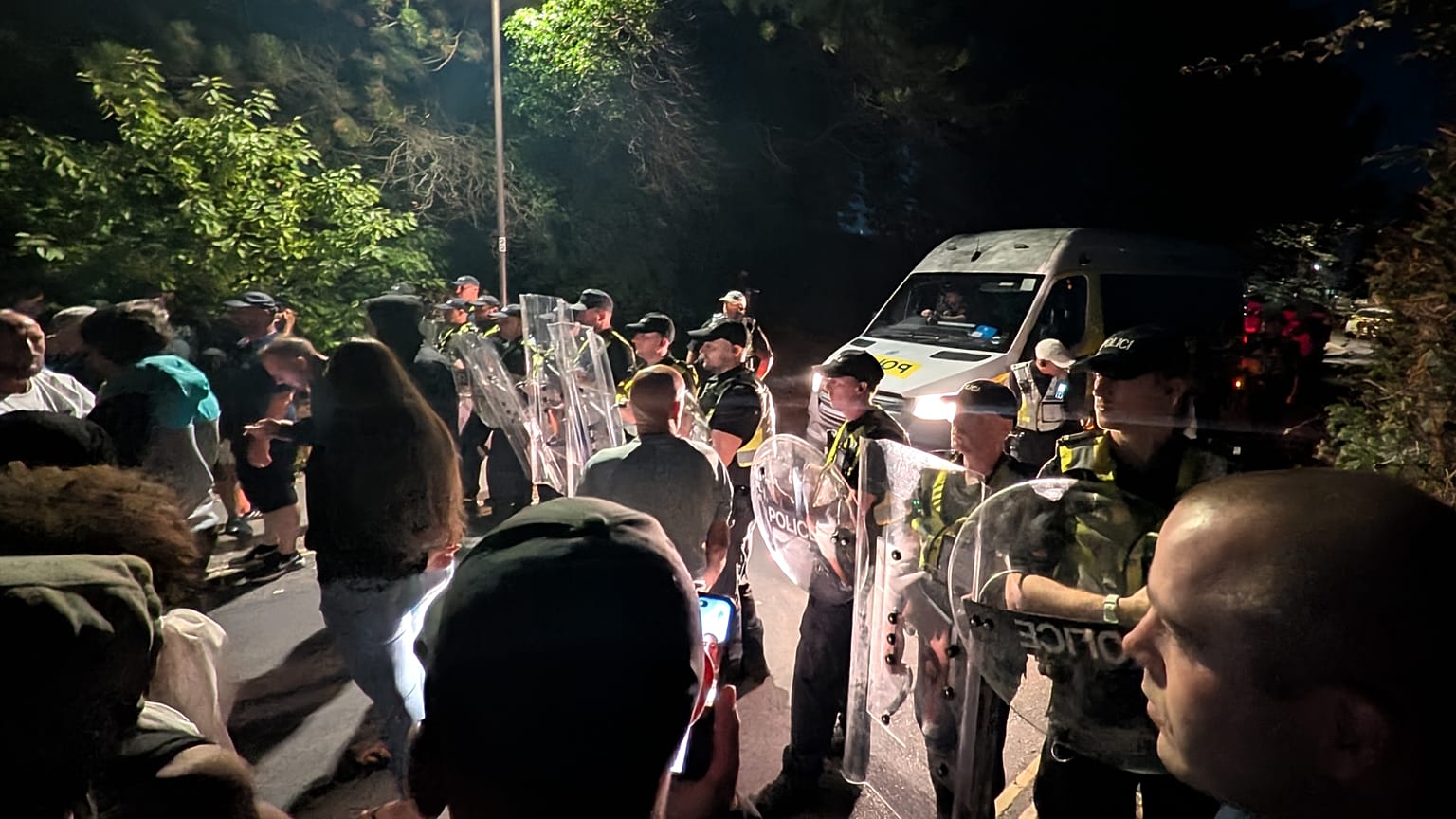
Anti-migrant protests are 'wake-up call' for UK government, says police commissioner

Protestors blocked a road preventing asylum seekers being transported to a processing centre.
Copyright AP Photo


By Simon Ormiston
Published on

A weekend of protests in Portsmouth and Dover has exposed deepening tensions over Britain's Channel crossings, even as the government insists arrival numbers are falling.

The UK government branded hundreds of demonstrators as "thuggish" after they blocked roads in an attempt to prevent asylum seekers leaving Portsmouth on Sunday.

The protest came after around 140 migrants arrived by small boat, as tensions over Channel crossings continue to mount.

"We condemn the intimidating and thuggish behaviour we saw in Portsmouth last night," a spokesperson for the UK's Home Office, said in a statement.

"The right to peaceful protest is fundamental to our democracy but it must never cross a line into disorder."

Footage showed demonstrators, many dressed in black with their faces covered, confronting police officers holding riot shields as they formed a cordon around buses carrying the migrants to a processing centre.

Officials said the transfer was ultimately completed successfully.

Hampshire Police and Crime Commissioner Donna Jones told the BBC it was a "wake up call" for the UK government.

Jones said that "people have a right to peaceful protest" and that was "largely" the case last night but "there were crimes committed and they will now be investigated and I would not be surprised if there are arrests that come off the back of the footage that was captured as evidence".

The Conservative MP said "hundreds" were acting lawfully and warned it was a "wake-up call to the government... that the British people are fed up with the lack of control of our borders".

Sunday's protest followed a similar demonstration on Saturday, when masked crowds blocked access to the Port of Dover.

French authorities said the vessel carrying the 140 migrants had departed from the Baie de Seine in Normandy — an unusually long and riskier route compared with the boats that typically depart from closer to Calais and land near Dover.

Arrivals in the county of Hampshire, where Portsmouth is located, remain extremely rare.

Another local Conservative MP Joe Robertson called the development "extremely concerning," questioning whether smugglers were opening new routes for larger vessels.

The unrest comes despite recent data suggesting crossings are slowing. The Home Office said Channel arrivals in August fell to their lowest level since records began in 2018, with migrant numbers at their lowest since 2020.

The average number of passengers per boat has been rising in recent months. Some 16,513 migrants have crossed the Channel by small boat so far this year.

It is a small fraction of overall arrivals in Britain which total over 800,000 - most of which come through legal routes on student or work visas.

The issue continues to fuel support for the Reform UK party, underscoring how migration remains one of the most volatile political issues across Europe.


Monoskop.org

https://monoskop.org/images/9/95/Hardt_Michael_Negri_Antonio_Empire.pdf

4.3 The Multitude against Empire. 393. Notes. 415. Index. 473. Page 11. PREFACE. Empire is materializing before our very eyes. Over the past several decades, as ...

Rebels-library.org

http://rebels-library.org/files/multitude.pdf

Page 1. MULTITUDE. WAR AND DEMOCRACY. IN THE AGE OF EMPIRE. MICHAEL HARDT ... Empire calls on war for its legitimation, the multitude calls on democracy as its ...


Newleftreview.org

https://newleftreview.org/issues/ii120/articles/empire-twenty-years-on.pdf

Just as today's. Empire was formed in response to the insurgencies of the multitudes from below, so too, potentially, it could fall to them, as long as those.