Monday, September 07, 2026

BRAZIL

Pantanal: Tackling Climate Change Depends On Five Other Biomes


Pantanal, Mato Grosso, Brasil. Photo Credit: Filipefrazao, Wikimedia Common

ABr
By Fabiola Sinimbu


Key Takeaways:

The Pantanal is drying because it lives off its neighbors. Fed by the Cerrado, Amazon, Atlantic Forest, Chaco, and Bosque Chiquitano, it is the world’s largest floodplain—and highly exposed when those biomes change. MapBiomas: by 2025 the flooded savanna had lost more than 1 million hectares since 1985 (84% of what was recorded), much of it turning to drier savanna or grassland; channels (vazantes) and rivers are silting and shrinking.

Local restoration is treated as climate work, not only conservation. Claudinei Terena (Limão Verde, Aquidauana) restored 3.3 hectares of Cerrado headwaters with agroforestry and traditional plant knowledge. In the Santa Tereza quilombo, Adauto Cândido Pereira and the Flores do Cerrado Network (31 collectors) sell seed under a 30% leave-on-the-tree rule to restore riverbanks statewide.

WWF-Brazil’s line: fix the Cerrado springs that feed the wetland, limit reckless land use and small hydropower that fragment rivers and hurt fish and tourism, prefer solar, fight fires, and keep jaguar corridors. Traditional knowledge is framed as part of the strategy, not a footnote.


Small in size but vast in its capacity to sustain life, the Pantanal is the biome most influenced by neighboring ecosystems and borders the Cerrado, the Amazon, and the Atlantic Forest in Brazil, as well as the Chaco and Bosque Chiquitano in Bolivia and Paraguay.

This characteristic makes the Pantanal a vast reservoir of water and life, with water flowing long distances to reach the world’s largest floodplain. The diversity created by the convergence of these waters gives the region its natural beauty, but also makes it more vulnerable to the impacts of climate change.


“It is a plain that depends on what happens in other biomes and is affected by the changes taking place across the region, especially as climate change also impacts the surrounding areas,” says Cyntia Santos, a conservation analyst at WWF-Brazil.

According to data from the latest land use and land cover map released by MapBiomas, the Pantanal’s flooded savanna had lost more than 1 million hectares by 2025 compared with the beginning of the historical record in 1985.

The area lost represents 84 percent of the wetland savanna that once existed in the biome,with the majority – 833,000 hectares – having been converted to other types of vegetation, such as savanna or grassland. In practice, this means that the Pantanal is drying out.

“Parts of rivers have already disappeared, silted up… Some channels we call ‘vazantes’ – areas that fill and drain with the river – no longer exist, and the rivers are now very shallow,” says forest engineer and botanist Claudinei Terena.


Born in the Limão Verde indigenous territory, in the municipality of Aquidauana, Mato Grosso do Sul state, Terena recalls a time when abundant water enriched the soil and made the region ideal for growing everything they needed.

“These are things I learned as a child: ‘Let’s build a house here. This wood, this species, is good for that.’ Let’s look for some medicinal plants. This tree here is used for that – the bark, the fruit, the leaves, and the roots. Each serves a specific purpose,” he explains.

Drawing on traditional knowledge, Terena worked on a project to restore 3.3 hectares of headwater areas within the indigenous territory. The goal was to ensure that the water flowing into the Pantanal would also help keep that part of the Cerrado productive.

“One of the examples we highlight here within the community is our farming system. We’ve always practiced agroforestry without even realizing it. We’ve always planted different crops together,” he explains.
Network

A little farther from the Pantanal, seed collector Adauto Cândido Pereira lives in the Santa Tereza quilombo community in Figueirão, Mato Grosso do Sul. As a member of the Flores do Cerrado Network, he also sees restoring springs as a way to revitalize rivers.

Through the responsible collection and sale of seeds, efforts to restore riverbanks extend far beyond the community’s own territory. “We collect seeds to support other projects across the state. There are 31 of us collectors – 16 women and 15 men – and we follow basic collection rules, such as leaving 30 percent of the seeds on the tree. You don’t just go in and take everything. We take care of the tree and the environment,” explains Pereira.

Restoration

According to Cyntia Santos, the two projects are part of WWF-Brazil’s efforts to restore river headwaters in the Cerrado and curb land-use changes that cause springs to silt up and impede the flow of tributaries that drain into the Pantanal.

“It’s a consequence of economic activities that are often carried out haphazardly, without the necessary expertise. There’s a lack of technical support and incentives,” says Cyntia Santos.

According to WWF-Brazil Executive Director Maurício Voivodic, the organization has worked in Brazil for 30 years, 22 of which have involved more intensive efforts in the Pantanal.

“We work in these areas, in collaboration with partners, always seeking to create local impact while also generating learning, collecting data, and building knowledge that will enable us to influence public policy,” Voivodic explains.
Energy

To restore river flows to the Pantanal, projects are also being developed to raise awareness about other uses of water resources, such as the installation of small hydroelectric plants.

According to Cyntia Santos, in addition to fragmenting rivers, this type of investment affects aquatic biodiversity and the regional economy, which relies heavily on tourism.

“Electricity must come from other sources, such as solar energy, which is one of the most suitable options for the region, since small hydroelectric plants in this area do not generate economic benefits for either the government or local communities,” she says.

Within the Pantanal, efforts to combat forest fires and promote connectivity between areas of native vegetation – through corridors linking existing conservation areas – help strengthen populations of species such as the jaguar, an indicator of the health and integrity of local biodiversity.

According to Santos, the traditional knowledge of the people who inhabit the biome is a fundamental part of efforts to address these challenges. “This allows us to leverage information, work together, optimize strategies, and move forward as a team,” she concludes.


About ABr
Agência Brasil (ABr) is the national public news agency, run by the Brazilian government. It is a part of the public media corporation Empresa Brasil de Comunicação (EBC), created in 2007 to unite two government media enterprises Radiobrás and TVE (Televisão Educativa).
View all posts by ABr →
Sahel Gold Mines Fuel Terror Groups


By Africa Defense Forum


Key Takeaways:

Sahel jihadist groups JNIM and ISSP rarely storm the pits themselves. ACLED’s Héni Nsaibia: they take nearby towns and roads in Burkina Faso, Mali, and Niger, then tax or extort miners and traders—often in gold that can be stored and laundered. Raids have found large gold stocks in JNIM bases.

Burkina Faso is the center of the violence: 75% of mining-related attacks in an ACLED look at 44 AES-country sites; most happen within 10 km of a mine. Inata, first hit in 2018, was shut by the junta in 2024 and, as of June, is described as under JNIM. Liptako-Gourma (Essakane, Samira) is a JNIM–ISSP contest zone; Kayes (Mali–Senegal) and the Burkina–Ghana border feed the same economy.

The risk is moving south. Nsaibia warns JNIM’s push toward Senegal, Guinea, Côte d’Ivoire, and Ghana—and both groups’ footprint in northwest and north-central Nigeria—could export the same pattern. Mines, he argues, now mark who controls people, routes, and money, not just ore.


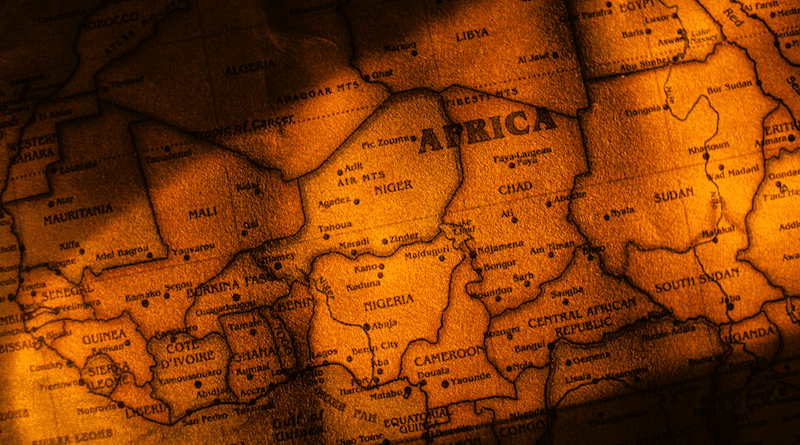
Sahel terrorists are targeting gold mines and surrounding communities in search of revenue, recruits and weaponry such as explosives. In some cases, the terrorists have built bases nearby.

Rather than attack mines directly, Jama’at Nusrat al-Islam wal-Muslimin (JNIM) and Islamic State Sahel Province (ISSP) have staked their claims to nearby communities in different parts of Burkina Faso, Mali and Niger, along with the roads that connect mining areas to each other and to the outside world.

The groups target industrial and artisanal mining areas.

“As militant groups expand into new areas, they rarely focus on mines alone,” Héni Nsaibia, West African senior analyst for the Armed Conflict Location and Event Data (ACLED) project wrote recently. “Instead, they interact with the miners, traders, transport routes, and surrounding communities that sustain mining activity and depend on it for their livelihoods.”

The goal, ultimately, is to exert control over the communities, their resources and the support infrastructure they provide, according to Nsaibia.

Burkina Faso has become the focal point for most mining-related violence, with 75% of all violent events happening within its borders. ACLED examined 44 mining sites across the three countries in the Alliance of Sahelian States (AES). It found that most terrorism happens within 10 kilometers of mines, not within the mines themselves.

Burkina Faso’s northern Inata mine, near the border with Mali, became the first mine terrorists targeted in 2018. The ruling junta closed the mine in 2024. As of June, the mine and the surrounding region are under JNIM’s control, according to ACLED.

“The way JNIM and ISSP are extracting value from the mining sector is indirect. People have to do the mining first,” Lucia Bird Ruiz-Benitez de Lugo, director of the West Africa Observatory at the Global Initiative Against Transnational Organized Crime, said during a recent International Land Coalition (ILC) webinar.


JNIM and ISSP then extract payments, either as taxes or extortion, from miners and other community members, often in gold, which can be stored and laundered later to make quick cash.

“We’ve seen through raids on bases, particularly of JNIM, that groups can sometimes have really quite significant volumes of gold in these bases,” Ruiz-Benitez de Lugo said.

Many mining communities lie along border regions, such as Mali’s western Kayes region with Senegal, where 80% of its gold is mined. Burkina Faso’s southern boundary with Ghana also has become a source of revenue for JNIM as Ghanaian miners send their gold into Burkina Faso for processing, according to Ruiz-Benitez de Lugo.

The Liptako-Gourma region, where Burkina Faso, Mali, and Niger meet, has long been a hot spot for competition between JNIM and ISSP. It’s also home to Burkina Faso’s largest gold mine, Essakane. Some of Niger’s most important gold mines, including the Samira mine, lie just across the border.

As JNIM and ISSP seek to expand their regional footprint , mining-related violence is likely to expand beyond AES countries, according to Nsaibia.

“JNIM’s expansion toward the borders with Senegal, Guinea, Côte d’Ivoire, and Ghana raises the risk that patterns already observed in the central Sahel will spread farther south to coastal West Africa,” Nsaibia wrote in a report for ACLED and the ILC.

Mining communities in northwest and north-central Nigeria also are likely targets for JNIM and ISSP, both of which already have a footprint in those regions, he added.

“Mining areas are now more than just sites of resource extraction,” Nsaibia wrote. “They increasingly serve as indicators of broader conflict dynamics, showing how governments assert control over mineral resources, and how localized violence can spread and disrupt vital economic activities.”


About Africa Defense Forum
The Africa Defense Forum (ADF) magazine is a security affairs journal that focuses on all issues affecting peace, stability, and good governance in Africa. ADF is published by the U.S. Africa Command.
From Gaza To Hormuz: Geopolitical Stalemate And The New Middle East – OpEd


September 6, 2026
IFIMES
By Dr. J. Scott Younger


Key Takeaways:

The piece reads late-summer geopolitics as a strained order: Europe’s heat and drought as a climate reminder; a new Turkey–Saudi Arabia–Pakistan defence-style pact as regional powers “standing up”; and Oman–Iran talks on reopening the Strait of Hormuz, which the author says angered Trump as the Iran fight restarted after a brief lull.

Gaza and the West Bank are the article’s main indictment. It calls Netanyahu’s coalition the most far-right in Israel’s history, says settlement expansion and IDF control of large parts of Gaza are killing the two-state idea, and argues Europe’s protests mean little without sanctions while U.S. backing stays strong. Trump’s “Board of Peace” is described as weak; Israeli elections (the author says October) could matter more.

The next months are framed as risky: U.S. mid-terms in November, no clear winner after months of war with Iran, a CIA director’s unannounced Moscow visit, and Russian threats toward Britain. The author’s conclusion: U.S. influence is contested, alliances are shifting, and drift on Gaza and Hormuz is turning regional fights into global ones.


The recent summer has been marked by record-high temperatures across parts of Europe and widespread drought conditions, once again bringing the issue of climate change to the forefront of public and political attention.

Perhaps the most interesting recent geopolitical development concerns three countries that signed an agreement a few days ago resembling a NATO-style defensive alliance. Turkey, Saudi Arabia and Pakistan have apparently recognised that longer-term peace and stability may require them to “stand up and be counted”. All three are among the stronger and more strategically significant countries in the wider Middle East and its surrounding region. Indeed, Friedmann (2009) considered Turkey, with its position on the eastern boundary of the EU and its long and complex history, to be one of the key countries of the twenty-first century.

Another important development concerns discussions between Oman and Iran, which lie on opposite sides of the Strait of Hormuz, a waterway central to regional and global energy security. The objective is to find a satisfactory solution that would restore the Strait to normal operation. This has not pleased the US President, who has reportedly threatened Oman and warned it against intervening. This may reflect President Trump’s growing frustration, as the conflict with Iran appears to have just restarted after a month of relative peace, albeit the blockade has continued.

The conflict has certainly not developed in the manner that Israeli Prime Minister Benjamin Netanyahu reportedly anticipated, with the war expected by some to be concluded within weeks and regime change achieved in Iran. The past six months instead appear to demonstrate that there is no clear winner and that the conflict has reached a stalemate. President Trump will therefore have to explain to the American people the enormous costs of the conflict without a clear strategic outcome.

With the US mid-term elections approaching in November, the coming weeks will be particularly significant. If President Trump continues to lose public support for his foreign-policy ventures and his political opponents perform strongly in the mid-terms, his ability to pursue his agenda during the final two years of his term could become significantly constrained.

Another major issue that continues to dominate the international agenda is the question of land and how it will ultimately be divided between Israelis and Palestinians — an issue that has remained unresolved for many decades.
Israel’s Far-Right Government and the Erosion of the Two-State Solution

The Israeli government under Prime Minister Netanyahu is arguably the most right-wing government in the country’s history. Ministers Bezalel Smotrich and Itamar Ben-Gvir have both actively supported policies encouraging Israeli settlers to expand their presence in the West Bank, raising serious concerns over the future of the Palestinian population and the possibility of further displacement.

These developments have recently prompted strong protests from several European governments, including Germany, Italy and the United Kingdom, which have described continued settlement activity as illegal. However, unless stronger measures, including effective sanctions, are introduced, the Israeli government may continue to disregard such criticism. Israeli policymakers appear to believe, with some justification, that they continue to enjoy strong political backing from the United States.

Meanwhile, the Israeli government has shown reluctance towards allowing the United States to advance President Trump’s proposed Board of Peace plan for Gaza, despite Hamas having stated that it is prepared to disarm. The plan has now been outlined, but there remains a profound lack of trust on the Israeli side. This may also serve the political interests of Prime Minister Netanyahu and his government.


There appears to be little prospect of meaningful progress on this important issue as long as the US position towards the Israeli government remains as weak as it currently appears and the proposed Board of Peace lacks sufficient authority to take effective action. Israeli elections are expected to take place in October, with current political projections suggesting that Netanyahu and his supporters could face significant losses. Such an outcome could potentially bring about a major change in Israel’s domestic and foreign policy.

The Israeli Prime Minister understands President Trump’s personality and political instincts well and appears to have used this knowledge to his advantage. This is not the first occasion on which Netanyahu has challenged or defied Trump.

When the Peace Plan was first presented, Israeli forces — the IDF — withdrew only to positions that allowed them to retain control over approximately half of the Gaza Strip. This position was not effectively challenged, and in recent weeks the IDF has continued military operations, officially targeting Hamas but with extensive civilian casualties, while expanding its control over additional areas of the territory.

If the far-right Israeli government is allowed to continue these policies without meaningful international consequences, it could ultimately achieve its objective of bringing the entire territory under Israeli control, further undermining the prospects for a viable two-state solution. This must not be allowed to happen. It is time for the international community, particularly those governments that oppose these policies, to make their voices heard more clearly and forcefully.

The broader problem is that President Trump rarely appears willing to give serious consideration to alternative views, including those of NATO allies. He also continues to demonstrate an unusually strong personal and political interest in Russian President Vladimir Putin, a relationship that continues to influence his approach to international affairs.

The unexpected arrival of the CIA Director in Moscow for talks with Russian officials, apparently without prior notification to some European allies, was particularly noteworthy. No doubt more will be revealed in due course.

The next two to three months are therefore likely to be difficult and potentially ominous. Putin’s Russia is increasingly making threatening statements towards Britain, while the wider international system appears to be entering a period of heightened uncertainty.

The developments from Gaza to the Strait of Hormuz illustrate a broader geopolitical reality: the established international order is under increasing strain, traditional alliances are being reassessed, and the absence of decisive diplomatic solutions is allowing regional conflicts to acquire increasingly global consequences.

The Middle East is entering a new geopolitical phase in which traditional alliances are being reshaped, US influence is increasingly contested, and the absence of a political settlement in Gaza and the wider region is creating new risks for global security.


References

Friedmann, G. (2009). The Next 100 Years: A Forecast for the 21st Century. Doubleday, New York.

Younger, J. S., & Cook, J. R. (2026). Sustainable Development: Challenges & Assessment in Civil Engineering. CRC Press, Oxon, UK.


About the author: 

Dr. J. Scott Younger, OBE, is a professional civil engineer with more than four decades of international experience, including 42 years working across the Far East. He has undertaken assignments in ten countries for the World Bank (WB), the Asian Development Bank (ADB), and the United Nations Development Programme (UNDP). He has published extensively and has served as a columnist for Forbes Indonesia and GlobeAsia. He has also served on the boards of the British and European Chambers of Commerce and was Vice Chair of the International Business Chamber for 17 years.


About IFIMES

IFIMES – International Institute for Middle-East and Balkan studies, based in Ljubljana, Slovenia, has special consultative status with the Economic and Social Council ECOSOC/UN since 2018. IFIMES is also the publisher of the biannual international scientific journal European Perspectives. IFIMES gathers and selects various information and sources on key conflict areas in the world. The Institute analyses mutual relations among parties with an aim to promote the importance of reconciliation, early prevention/preventive diplomacy and disarmament/ confidence building measures in the regional or global conflict resolution of the existing conflicts and the role of preventive actions against new global disputes.
View all posts by IFIMES →
The Real Elites Vs. The Ruling Elites – OpEd


September 6, 2026
 MISES
By Ryan McMaken


Key Takeaways:

The essay’s core claim: every state is run by elites who control coercion—“rule by the people” is a myth. Following Pareto, “elite” here means skill at organizing power, not virtue. Monarchs inherit violence that worked; democratic politicians excel at voters, coalitions, and using the state against rivals.

It splits economic elites by regime. In a mostly free market they rise by serving customers. Under heavy intervention they rise by partnering with the state—bailouts, monopolies, easy money. 2008 is the exhibit: Citicorp, AIG, JPMorgan, and Fed mortgage-bond buys, plus contractors such as Musk and Thiel, are cast as politically sheltered, not market-proven.

The conclusion: intervention fuses money and politics. Both sides tell stories (mandate of heaven, “will of the people,” “the market loves us”). Real elites, the author says, earn voluntary support in markets, families, and churches; those who rise by force and tax-and-spend are “counterfeit.”


Always and everywhere, political institutions are controlled by elites. It doesn’t matter if the regime type is democratic or monarchical. It doesn’t matter if there is a written constitution or not. All political institutions—and certainly every sovereign state—are run by a group of elites who control the means of coercion.The myth of “rule by the people” is precisely that: a myth.

But this leaves a big question open: who are the elites? Wilfredo Pareto, that pioneer of Italian elite theory, convincingly suggests that elites are simply those people who are most skilled in their respective fields. Being skilled does not suggest any sort of virtue or beauty, of course, and we cannot assume that any member of the elite will be more moral or refined than any, say, middle-class mechanic.

In the case of political elites, to be “elite” simply means to be the most effective at organizing and commanding political action. This can be done toward both virtuous ends or evil ends. The political elites excel at the gaining and wielding of political power. Nothing more. In hereditary monarchies, for example, the monarch is a monarch because his ancestors were more effective at using violence—and at stealing and killing—than were their competitors. Their descendants are able to remain in the elite through effective political scheming to maintain their positions. In democracies, those who gain and maintain power are effective at deceiving the voting public and at currying favor with the ruling coalitions of various interest groups. They’re not “the elite” because they are especially virtuous or well educated. They simply excel at cultivating the knowledge necessary to wield the power of the state against their enemies and against potential rivals.


Economic Elites vs. Political Elites


There is, however, often confusion as to the difference between economic elites and political elites. One could say that economic elites are those who are most skilled at the management of property. Yet, the nature of the economic elites depends largely on what type of regime exists within society. In a society that has a mostly market system, the economic elites are those who are most productive in the free marketplace. These are the people who are skilled at entrepreneurship, sales, logistics, investing, and all other aspects of a freely functioning market. In a mostly free society, the economic elites are free to spend most of their time on their activities in the marketplace, and they are thus rewarded for spending their efforts in improving their own productivity. Moreover, all of society benefits from these sorts of economic elites. This is because rewards in the marketplace stem from delivering more goods and services to more people at a price that a growing number of people can afford.


Things are different in a society where the economy is dominated by the state—and thus by the political elite. In such a society, the economic elites are those who are most skilled at using the power of the state to achieve success in the state-regulated marketplace. In this case, the economic elites are those who are able to partner with the regime to obtain policies that benefit the elites through the manipulation and regulation of the market. These policies include bailouts, state-backed monopolies, and an easy-money-fueled financial system. In this system, the economic elites are able to maintain and enhance their positions and their wealth through effective political action, and by serving the political elites instead of customers in the marketplace.

When this happens, we cannot assume that the economic elites are there because they add value to society. Rather, the economic elites in this latter system are parasitical. They rely on the exploitation of others to maintain their positions and to expand their market share. One of the most dramatic examples of this can be seen in the response to the financial crisis that began in 2008.

Had the marketplace been allowed to function, many large banks and other firms would have been bankrupted, and their property repurposed by other, more efficient owners and managers. Those new owners could have become a new economic elite. But thanks to the intervention of the incumbent political elites, failing firms were saved through the redistribution of wealth from the productive classes to hand-picked, politically connected incumbent firms and owners. Thus, firms like Citicorp and AIG were bailed out, new regulations imposed, and firms like JP Morgan greatly expanded their market share. The Federal Reserve’s mass purchasing of mortgage-backed securities rescued a large portion of the financial sector from insolvency. As a result, most of the economic “elite” we find in the financial sector owe their positions to political action rather than any actual skill in the marketplace. Sure, these people are fond of telling themselves that they are rich because “the market” values them so highly. In reality, they are successful because lobbyists have succeeded in propping up their firms and ensuring, through constant monetary inflation, growth in their portfolios.


But this is just one example. In any society where the political elites are prolific spenders, or engage in widespread regulation of the economy, the economy is continually distorted in a way as to favor the politically well connected at the expense of everyone else. For example, the economic “elites” who rely heavily on government contracts—e.g., Elon Musk, Peter Thiel, the founder of Flock Safety, et al—are not in the elite because they are especially productive in a free market. They are in the elite because they are adept at seizing the property of taxpayers through the tax-and-spend mechanism.

Note that in this interventionist system, the real economic elites—the people who would have risen to the top of an actually free economy—are crowded out and kept down by government action that favors certain firms. Who are these would-be elites? We’ll never know, and instead we are left with our counterfeit billionaire class which is “elite” only in their skill at exploiting people who do real work in the private sector.

Conclusion

Thus we have a merging of the economic and the political elite. Both types of elites generally rely on some sort of deception to buttress their claims.

The political elite, for example, claim their positions by virtue of some sort of mandate from heaven, or moral virtue, or because they allegedly reflect the “will of the people.” These are all lies, of course, but have nonetheless worked to fool and pacify the public for many centuries.

Under a regime of economic interventionism, the economic elites rely on lies as well. They claim they are elites because they are efficient or hard-working, or “serve the customer.” These are lies as well since, in the absence of a free—or even mostly free—market, the elites are, in fact, in their positions due to political maneuvering. They are, in effect, merely an extension of the political elite. The more interventionist the regime is, the more this is true.

The real elites have always been those who receive the voluntary and free support of others through the private sector, or through other non-violent means of interaction: through families, religious institutions, and other institutions of the private sector. On the other hand, those who become “elites” through the initiation of violence, and through the looting of others, have always been frauds and imposters. 


About the author: Ryan McMaken (@ryanmcmaken) is editor in chief at the Mises Institute, a former economist for the State of Colorado, and the author of two books: Breaking Away: The Case of Secession, Radical Decentralization, and Smaller Polities and Commie Cowboys: The Bourgeoisie and the Nation-State in the Western Genre. He is also the editor of The Struggle for Liberty: A Libertarian History of Political Thought. Ryan has a bachelor’s degree in economics and a master’s degree in public policy, finance, and international relations from the University of Colorado. 


Source: This article was published by the Mises Institute


About MISES
The Mises Institute, founded in 1982, teaches the scholarship of Austrian economics, freedom, and peace. The liberal intellectual tradition of Ludwig von Mises (1881-1973) and Murray N. Rothbard (1926-1995) guides us. Accordingly, the Mises Institute seeks a profound and radical shift in the intellectual climate: away from statism and toward a private property order. The Mises Institute encourages critical historical research, and stands against political correctness.
View all posts by MISES →

Anti-migrant protests are 'wake-up call' for UK government, says police commissioner

Protestors blocked a road preventing asylum seekers being transported to a processing centre.
Copyright AP Photo


By Simon Ormiston
Published on

A weekend of protests in Portsmouth and Dover has exposed deepening tensions over Britain's Channel crossings, even as the government insists arrival numbers are falling.

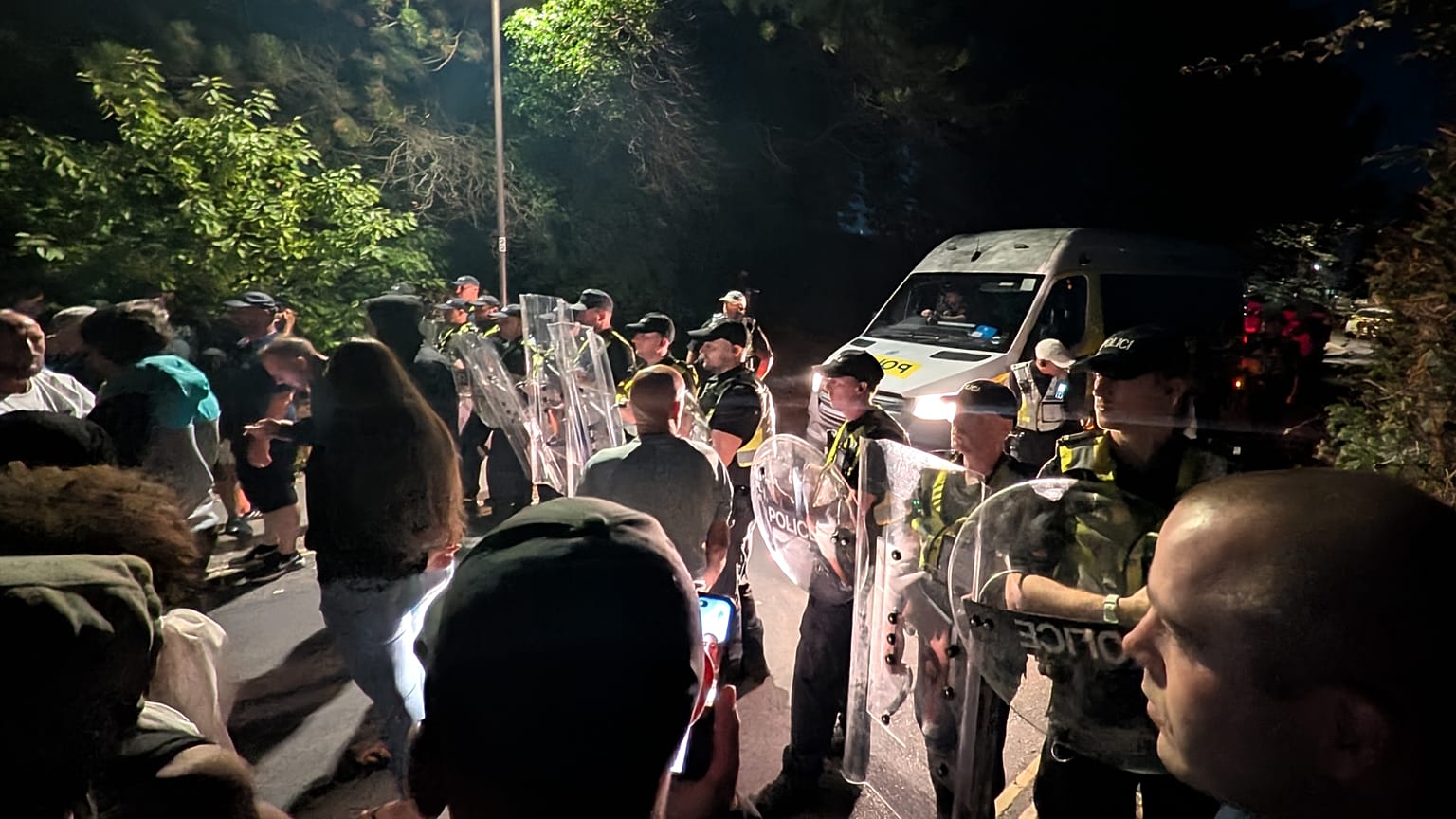
The UK government branded hundreds of demonstrators as "thuggish" after they blocked roads in an attempt to prevent asylum seekers leaving Portsmouth on Sunday.

The protest came after around 140 migrants arrived by small boat, as tensions over Channel crossings continue to mount.

"We condemn the intimidating and thuggish behaviour we saw in Portsmouth last night," a spokesperson for the UK's Home Office, said in a statement.

"The right to peaceful protest is fundamental to our democracy but it must never cross a line into disorder."

Footage showed demonstrators, many dressed in black with their faces covered, confronting police officers holding riot shields as they formed a cordon around buses carrying the migrants to a processing centre.

Officials said the transfer was ultimately completed successfully.

Hampshire Police and Crime Commissioner Donna Jones told the BBC it was a "wake up call" for the UK government.

Jones said that "people have a right to peaceful protest" and that was "largely" the case last night but "there were crimes committed and they will now be investigated and I would not be surprised if there are arrests that come off the back of the footage that was captured as evidence".

The Conservative MP said "hundreds" were acting lawfully and warned it was a "wake-up call to the government... that the British people are fed up with the lack of control of our borders".

Sunday's protest followed a similar demonstration on Saturday, when masked crowds blocked access to the Port of Dover.

French authorities said the vessel carrying the 140 migrants had departed from the Baie de Seine in Normandy — an unusually long and riskier route compared with the boats that typically depart from closer to Calais and land near Dover.

Arrivals in the county of Hampshire, where Portsmouth is located, remain extremely rare.

Another local Conservative MP Joe Robertson called the development "extremely concerning," questioning whether smugglers were opening new routes for larger vessels.

The unrest comes despite recent data suggesting crossings are slowing. The Home Office said Channel arrivals in August fell to their lowest level since records began in 2018, with migrant numbers at their lowest since 2020.

The average number of passengers per boat has been rising in recent months. Some 16,513 migrants have crossed the Channel by small boat so far this year.

It is a small fraction of overall arrivals in Britain which total over 800,000 - most of which come through legal routes on student or work visas.

The issue continues to fuel support for the Reform UK party, underscoring how migration remains one of the most volatile political issues across Europe.


Monoskop.org

https://monoskop.org/images/9/95/Hardt_Michael_Negri_Antonio_Empire.pdf

4.3 The Multitude against Empire. 393. Notes. 415. Index. 473. Page 11. PREFACE. Empire is materializing before our very eyes. Over the past several decades, as ...

Rebels-library.org

http://rebels-library.org/files/multitude.pdf

Page 1. MULTITUDE. WAR AND DEMOCRACY. IN THE AGE OF EMPIRE. MICHAEL HARDT ... Empire calls on war for its legitimation, the multitude calls on democracy as its ...


Newleftreview.org

https://newleftreview.org/issues/ii120/articles/empire-twenty-years-on.pdf

Just as today's. Empire was formed in response to the insurgencies of the multitudes from below, so too, potentially, it could fall to them, as long as those.


Popular Egyptian TV presenter Sarah Khalifa faces appeal battle after death sentence

Egyptian TV presenter Sarah Khalifa
Copyright Sara Khalifa/Instagram / Ahmed Kassem Photography

By Mohamed Elashi
Published on

Khalifa and 11 others face death sentences in a major synthetic drug trafficking case, with appeals and further legal challenges expected.

An Egyptian television presenter faces execution after a Cairo court sentenced her to death for financing and coordinating a synthetic drug network, but her lawyer says they will appeal, and legal experts say the case is far from over.

Sarah Khalifa, known for hosting the crime programme Mission Impossible on private channel Al-Mehwar and for her events business, was sentenced on Saturday alongside 11 others in a major synthetic drug manufacturing and trafficking case.

Nine defendants received life sentences and seven were acquitted. Those sentenced to death were also fined 500,000 Egyptian pounds (€8,000).

Khalifa's brother Mohamed was among those sentenced to death, on charges of manufacturing and testing drugs.

Khalifa's lawyer Mohamed El-Gendy said the defence would appeal and pursue all available legal avenues.

A higher criminal court can reconsider the evidence and each defendant's role, upholding, reducing, or overturning sentences. A further challenge before Egypt's Court of Cassation is also possible.

Before Saturday's ruling, the court had referred Khalifa and 12 other defendants to Egypt's Grand Mufti — a procedural requirement before a criminal court can impose the death penalty. The Mufti's opinion is advisory and not binding.

Twelve of those 13 defendants ultimately received death sentences.

More than ordinary hashish

Egyptian media initially described the case as involving synthetic hashish, but forensic evidence presented during the trial identified the substances as synthetic cannabinoids, laboratory-made chemicals that mimic some of the effects of cannabis on the brain but can be significantly more potent and unpredictable.

The United Nations Office on Drugs and Crime describes MDMB-4en-PINACA as a potent synthetic cannabinoid placed under international control in 2021 following a World Health Organization recommendation citing severe adverse effects and deaths.

Synthetic cannabinoids can cause psychosis, seizures, heart and kidney problems, and in severe cases, death.

The committee said the substance was not specifically listed on Egypt's controlled narcotics schedule, but concluded it fell under Egyptian law because its chemical structure and effects were similar to already-listed substances.

The defence challenged that interpretation and the court accepted the committee's findings.

The case began in April 2025 when Egypt's anti-narcotics authorities said they had uncovered a network importing raw materials used to manufacture synthetic drugs.

Police initially raided two Cairo apartments and recovered around 200 kilograms of drugs, raw materials and equipment.

As the investigation widened, prosecutors said the total seized exceeded 750 kilograms. The investigation lasted some 40 days before prosecutors obtained arrest warrants.

Al-Masry Al-Youm newspaper, citing judicial and security sources, reported that investigators alleged raw materials were sourced abroad, concealed inside cosmetics containers and luggage on flights.

The prosecution said members had specialised roles covering procurement, manufacturing, storage and distribution. The case against 28 defendants relied on testimony from 20 witnesses and digital evidence including messages, photographs and videos.

Khalifa's alleged role

Prosecutors said Khalifa financed parts of the operation, travelled abroad to meet senior members of the network and acted as a link between them and other members inside Egypt.

According to investigation records reported by the Egyptian press, two defendants living outside Egypt bought batches of materials used to manufacture the drugs from China and obtained instructions on how to produce them.

Investigators said other members mixed the chemicals according to formulas supplied by senior figures in the network before testing newly manufactured batches on drug users to assess their effects, and then weighing, packaging and distributing them.

Khalifa's brother, Mohamed Khalifa, was identified by prosecutors as one of those involved in manufacturing and testing the drugs and was also among those sentenced to death.

Prosecutors also relied on digital evidence recovered from Khalifa's phone.

According to prosecution documents shared with domestic media, investigators found WhatsApp exchanges containing videos of substances resembling those seized in the case, as well as communications with other alleged members of the network.

A handwriting examination also concluded that Khalifa had written entries in a seized notebook containing names, figures and amounts that prosecutors said related to spending on the drug operation.

Khalifa consistently denied involvement in the network.

Saturday also brought a second conviction against Khalifa in a separate case.

A Cairo court sentenced her to three years in prison for assault after investigators found video footage on her phone showing a young man identified as her driver being stripped, assaulted and filmed naked inside her home.

Two other defendants in that case received seven years each and a fourth received five years.

Egypt retains the death penalty for serious drug trafficking offences. Amnesty International recorded 23 executions in Egypt in 2025, up from 13 the year before, and has criticised the country's use of capital punishment for offences that do not involve intentional killing.


Egyptian TV presenter Sarah Khalifa sentenced to death

Sarah Khalifa poses in front of the Louvre Museum.
Copyright Sarah Khalifa / Instragram

By Burcu Basaran
Published on

In Egypt, a court sentenced 12 people, including popular TV presenter Sarah Khalifa, to death in a major drug manufacturing and trafficking case.

In Egypt, well-known television presenter Sarah Khalifa has been sentenced to death along with 11 others in a major case involving drug manufacture and trafficking.

According to reports carried in the state-run press on Saturday, the 39-year-old Khalifa was known for her programme Mission Impossible, which covered security and crime issues.

State-affiliated newspaper Al-Ahram reported that a court in Cairo convicted Khalifa and the 11 other defendants of offences including "forming an organised criminal group to procure substances used in drug manufacture for the purpose of trafficking, and possessing and transporting unlicensed firearms and ammunition", and handed them death sentences.

The verdict was announced after consultation with Egypt's Grand Mufti for a religious opinion, in line with the procedures laid down in Egyptian law for capital cases. The court's ruling can be appealed.

State media outlet Akhbar El-Yom said that Khalifa, who also owns a cosmetic clinic and an events company, and the other defendants were accused of "importing raw materials used in production from abroad to manufacture synthetic drugs and trade in them".

El-Ahram said law enforcement officers seized more than 750 kilogrammes of drugs and raw materials during the raids, as well as two flats used as laboratories and numerous unlicensed firearms and rounds of ammunition.

The court also sentenced Khalifa and some of the defendants to five years in prison each in a separate case over the abduction and assault of a young man.

In Egypt, the death penalty is applied in cases of premeditated murder, terrorism, certain sexual assault offences and drug trafficking. According to figures from the Egyptian Rights and Freedoms Commission, 541 death sentences were handed down in the country in 2025.


Health warnings could reduce youth’s hours spent on social media

The messages that worked the best were those that warned about mental health harms, such as depression and anxiety, except the addiction warning.
Copyright Canva


By Giedre Peseckyte
Published on

Pop-up messages that warn of the harms of social media could help reduce youth’s social media use, a new study found.

Alcohol and tobacco products have health warnings about the negative impacts. Researchers say that social media could benefit from similar warnings too, such as “Using social media causes sleep problems. This is bad for your health,” and “Social media is associated with significant mental health harms for children and young adults.”

Exactly such pop-up messages showed up in a study published on JAMA Health Forum. The messages informed about the harmful impact of social media — such as depression, anxiety, worsened body image and sleep disruption. Researchers hope this could be yet another tool in the toolbox aimed at managing youth’s social media time more healthily.

“With substances like tobacco and alcohol, we find, on average, that well-designed warning labels change behavior,” lead study author Anna Grummon, assistant professor of paediatrics, said. As social media is a completely different product compared to cigarettes or alcohol, “where you just put the warning on the product and it lives there,” these warnings have to be “basically pop-ups,” Grummon said.

Researchers saw that over 1,000 youth aged 13 to 29-years increased their understanding of social media risks to their mental well-being after being exposed to 14 warnings on six health topics while scrolling. The warnings covered social media addiction, negative body image, sleep disruption, depression, anxiety, overall mental health harms and the fact that social media has not been proven safe for young people.

Participants consistently reported that the warning messages would reduce their social media use, authors said.

Youth rated each message in response to two questions: “How much does this message discourage you from wanting to use social media?” and “How much does this message increase your awareness of the harms of using social media?”

The messages that worked the best were those that warned about mental health harms, such as depression and anxiety, except the addiction warning.

While the data does not show why those messages performed best, “if I were to speculate, I would say that these are harms that resonate with people,” Grummon said. “People may think, ‘That’s right, I can see that happening to my friends or to me,’ and these are outcomes people care about.”