Showing posts sorted by date for query ARACHNOLOGY. Sort by relevance Show all posts

Thursday, July 02, 2026

ARACHNOLOGY

New venomous spider species found in Portugal

Chilean recluse spider discovered in Porto
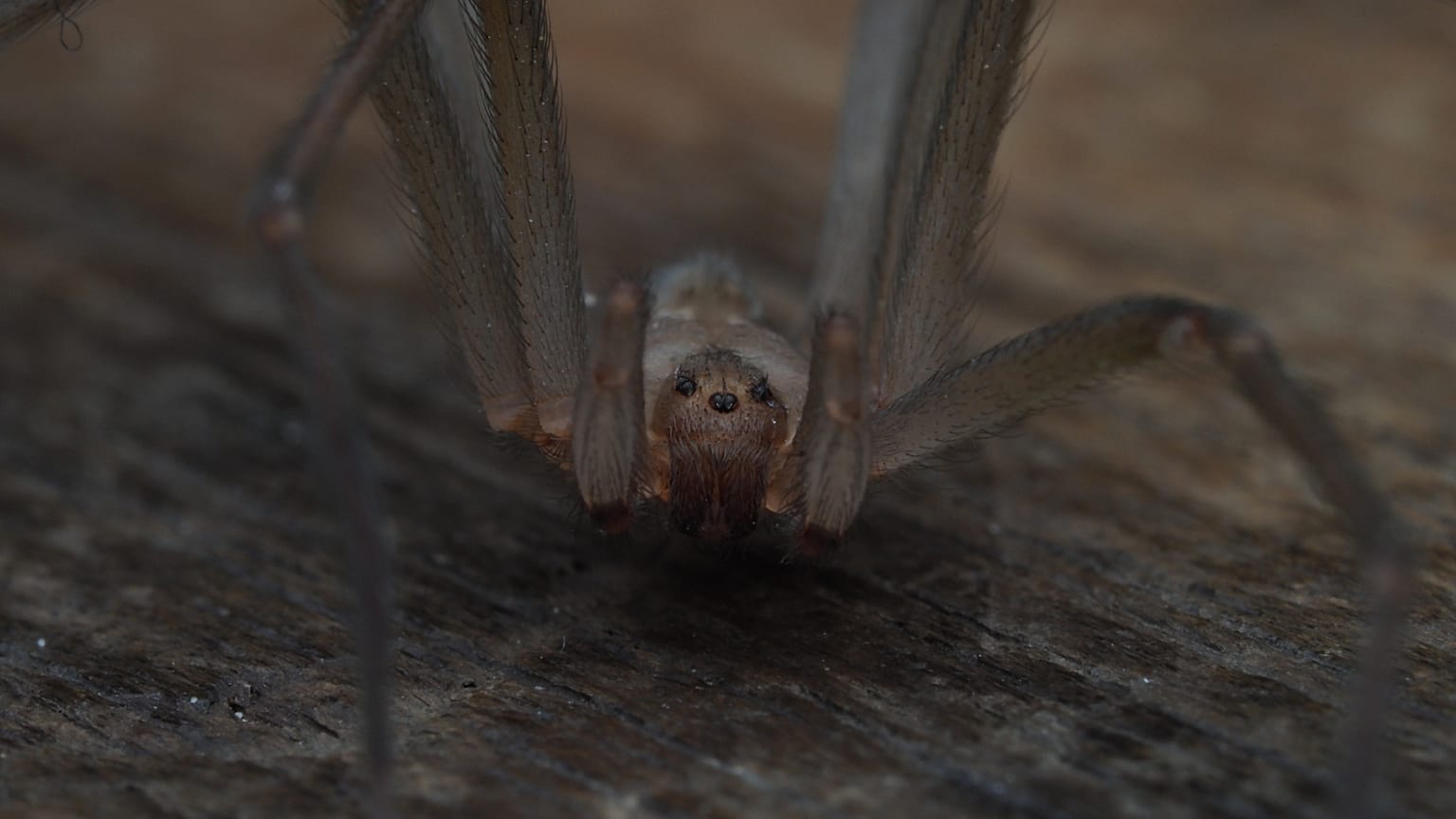
Copyright Francisco Gil / MHNC-U.Porto

By Ana Filipa Palma
Published on

The discovery of the Chilean recluse spider (Loxosceles laeta) in Porto is the first record of this venomous species in Iberia. Researchers say its discreet behaviour means the risk to the public is low.

A new species of venomous spider, the Chilean recluse spider, scientifically known as Loxosceles laeta, has been discovered in the city of Porto in northern Portugal.

Speaking to Euronews, one of the researchers behind the discovery, José Manuel Grosso-Silva, an entomologist at the Natural History and Science Museum of the University of Porto, stressed that, because of the species' shy behaviour and habits, there is no cause for alarm. "The likelihood of people coming across this species or being bitten by it is low," he says.

"It is a shy species, not inclined to bite, but its bite can cause significant damage to the skin, frequently resulting in necrotic skin lesions," the study (source in Portuguese) by biologists Francisco Gil and José Manuel Grosso-Silva on the first record of this species in the Iberian Peninsula explains.

The Chilean recluse spider, Loxosceles laeta, is native to the western region of South America and is usually found in countries such as Brazil and Argentina. However, it has managed to spread to regions far from its original habitat, driven by international trade.

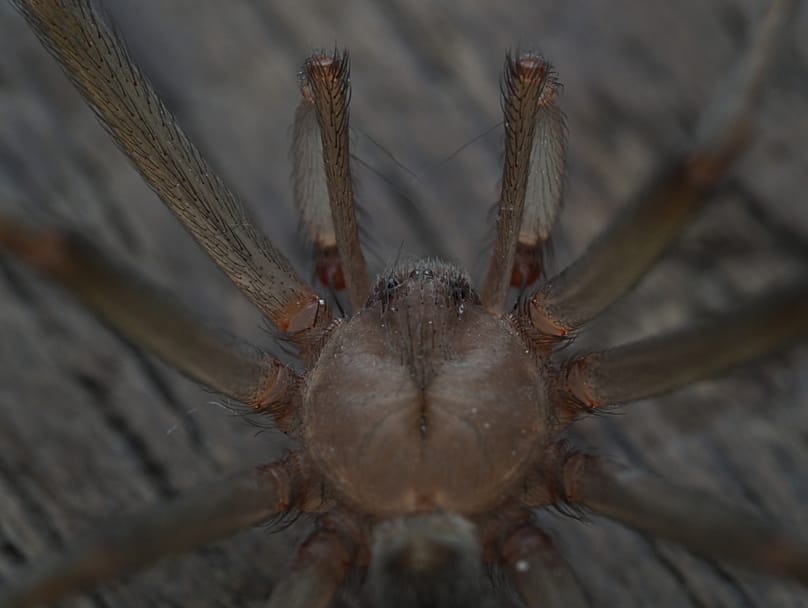
Chilean recluse spider observed by researchers in Porto Francisco Gil / MHNC-U.Porto

The first specimen was found by chance, the biologist recalls, on 10 September 2025, when a male was spotted on a wall in Campo dos Mártires da Pátria, in Porto. The second, also a male, was found on 10 January 2026; the specimen was collected dead from a sticky trap that had not been set for it.

Despite the discovery of this new species, another venomous spider from the same family has been living in Portugal for several decades and is widely distributed. This is Loxosceles rufescens, or the Mediterranean recluse spider, originally from North America and present in Europe for more than 200 years.

"We do not know whether this new species is confined to Porto or already more widespread. As the Chilean recluse spider can easily be mistaken for the Mediterranean recluse, it is possible that there are photographic records labelled as the latter which in fact show the newly identified species," the biologist notes.

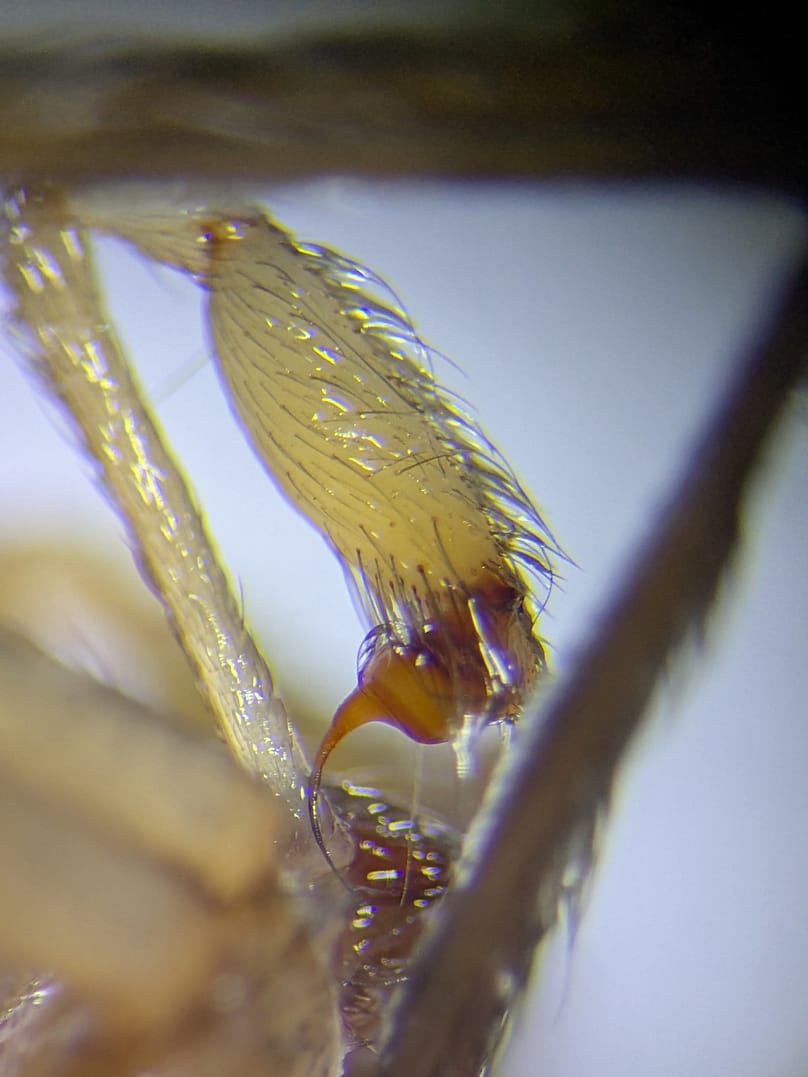
The main difference between the two species lies in the males' pedipalps, jointed appendages located at the front of male spiders' bodies, which have sensory and reproductive functions and are used to transfer sperm to the female during mating.

Pedipalp of a male Loxosceles laeta, whose anatomy allows the species to be reliably identified Francisco Gil / MHNC-U.Porto

In terms of morphology and behaviour, they are very similar. "They are uniformly brown, they do not have the colours that allow them to blend into vegetation, and they do not build the kind of webs we usually see on plants for catching insects. They construct webs on walls, in corners and in more hidden, darker places, and are more active at night," José Manuel Grosso-Silva explains.

There are different degrees of severity, from mild cases to severe ones, including some fatalities, as a result of bites by this type of spider. "There is a risk, but it seems low to me, so I try not to fuel panic or excessive alarm," the biologist stresses.

Bite causes necrosis

In 2023, Portugal recorded a case of loxoscelism, a syndrome caused by spider venom, triggered by the bite of Loxosceles rufescens, the Mediterranean recluse spider.

The journal SPMI Case Reports, the digital scientific publication of the Portuguese Society of Internal Medicine, reported the case of a 48-year-old woman who was bitten by this species while she was in an urban park.

After being bitten on the nape of the neck, the woman developed swelling without immediate pain. However, over the following 24 hours the symptoms worsened, with increasing headaches, malaise, feverishness, fatigue and the onset of necrosis with erythema at the site of the lesion. Subsequently, peeling of the skin was observed in other parts of the body, namely around the eyes, in the gluteal region, thighs, lips and oral mucosa.

The patient was discharged from hospital 16 days later with no remaining symptoms.

New species are increasingly common

In Portugal more than 300 species of insects from various regions of the world are now established, many of them introduced by humans through increased goods transport.

"We are increasingly changing the environment around us. We deliberately introduce many plants that often carry insects we did not intend to bring in," he explains.

The biologist recalls the case of the Asian hornet, introduced into Europe via France in a shipment of Chinese bonsais.

Also, "through urban development and monocultures such as eucalypts, which occupy vast areas, as well as extensive crops like maize, natural habitats have been reduced", which contributes to changes in ecosystems and favours the emergence of new species.

Rising temperatures on a global scale, with Europe warming at a particularly rapid pace, may favour the reproduction and spread of these exotic species.

"We do not know how it will evolve here in the Iberian Peninsula; this is a situation to be monitored over the coming years," says José Manuel Grosso-Silva.

Presence of the Chilean recluse spider in Europe

The first European record of this species dates back to 1972, in a building housing the Departments of Zoology and Genetics at the University of Helsinki in Finland.

It is thought that the species was transported by humans and settled inside the building to benefit from the higher temperatures, as it would hardly survive Finland's outdoor climate.

In 2025, Eberhard Karl University of Tübingen in Germany also identified a specimen of this species in the institution's basement.

There are also references to its possible presence in Italy. However, the website where this information was originally published is no longer available and that record therefore remains unconfirmed.

Monday, June 15, 2026

ARACHNOLOGY

Devoted dads and citizen science: the evolution of parental care in harvestmen is uncovered


The Linnean Society of London
Amazochroma (photo John Uribe) 

image: 

Amazochroma spider guarding eggs

view more 

Credit: John Uribe


Citizen science data from popular platform iNaturalist has helped uncover the evolution of parental guarding behaviour in harvestmen, as shown in research published in the Zoological Journal of the Linnean Society.  

Combining nearly three decades of fieldwork with data from iNaturalist, an international team of researchers led by a scientist from the University of São Paulo have more than doubled the number of documented cases of parental care in harvestmen. As a result, the evolution of maternal and paternal care in the superfamily Gonyleptoidea was reconstructed for the first time.  

The study has found that parental guarding behaviour has evolved, disappeared, and then re-emerged several times throughout the evolutionary history of harvestmen. By mapping this behaviour, researchers found that maternal care evolved only from no care, a pattern also seen in insects. However, paternal care was shown to evolve from either no care or from maternal care, suggesting different selection pressures were at play. The researchers theorised that when paternal care evolved from maternal care, it is likely evidence of a sexually selected behaviour; a hypothesis known as ‘enhanced fecundity’.  

With over 6900 species currently recognised, harvestmen represent one of the most diverse orders of arachnids in the world. Despite accounting for only 0.6% of arthropod diversity, they represent over half of the independent origins of paternal care, a rare trait in the animal kingdom. This offers a unique opportunity to study the evolutionary development of parental care on a broader scale.  

Lead author Glauco Machado explained: “It’s very rare in nature, paternal care, and this behaviour evolved many times independently. So, by looking at harvestmen we can explore questions related to the factors that led to the evolution of this behaviour. In many species where males care for the offspring alone, the caring activity is a sexually selected behaviour, which means that females prefer males that are caring for the eggs.” 

Citizen science allows anyone to lend their time and curiosity to projects around the world, without the need for specialist knowledge. From recording garden bird populations for the RSPB as part of their ‘Big Garden Bird Watch’, rediscovering a lost species of grasshopper in Australia and even uncovering an ancient writing system in cave art, citizen science data has proven to be an expanding resource in modern research.  

Inspired by a talk on utilising citizen science in bird research, Machado and his team made use of global citizen science database iNaturalist, where users can upload georeferenced observations of organisms found across the world, to expand their dataset. The rate of data collection from iNaturalist has proven to be much faster than traditional scientific work. Between 1936-2025, scientific literature documented parental guarding behaviour in 80 species of harvestmen; this study more than doubled this number, with 62 records coming from iNaturalist alone. Machado and his team were able to do this in only two days.  

The significance of iNaturalist reaches far beyond expanding datasets. Machado stresses that its true value lies in the accessibility of this resource to scientists worldwide.  

“It’s a tremendous source of information that can improve the velocity with which we accumulate biological information. I would never be able to do this by visiting museums around the world. It would be very expensive, very time consuming, but here we conducted the search in only one week.” 

By removing access costs and the need for timely and expensive fieldwork, citizen science platforms are transforming traditional research and opening opportunities for large scale research by scientists in the Global South.  

The study also highlights the importance of taxonomists in modern research. While citizen science platforms can amass huge amounts of data very quickly, Machado emphasises that taxonomic expertise is still necessary to correctly identify the species and recognize the sex of the caregiving individuals.  and distinguish between superficially similar behaviours such as parental care vs mate guarding. 

“I think taxonomists’ role in modern science is more important than ever. We cannot preserve a species that doesn't have a name. And names are provided by taxonomists. So, it's very important.” 

Though a remarkable breakthrough, the study doesn’t come without its limitations. Sampling bias remains a challenge in parental care studies, for the simple fact that it’s easier to record instances of parental care than of no care. Yet, the authors argue that studies such as this one are filling major gaps in our knowledge regarding the presence/absence of care. Given more than half of records in this study were new, Machado hopes that scientists continue to explore the use of citizen science platforms in future.  

“I think it's a very broad contribution for people that are working with insects, frogs, and all kinds of groups, animal groups, in which we have both maternal care and paternal care.” 

Deltilagus (photo Glauco Machado) 

Deltilagus spider guarding eggs

Credit

Glauco Machado


Quindina (photo John Uribe) 

Quindina spider guarding a nest

Credit

John Uribe)

Tuesday, May 19, 2026

ARACHNOLOGY

New “happy-face” spider species discovered in the Indian Himalayas


Pensoft Publishers
Theridion himalayana sp. nov. 

image: 

Theridion himalayana sp. nov.

view more 

Credit: Devi Priyadarshini and Ashirwad Tripathy


Vibrant, tiny, and sporting a bright red grin on its back, the Happy-Face spider is one of the most famous and recognisable arachnids in the world. For over a century, this cheerful-looking creature was thought to be a unique resident of the Hawaiian Islands, a biological curiosity found nowhere else on Earth. 

When researchers from the Forest Research Institute and the Regional Museum of Natural History discovered a new species of spider with the same unmistakable smile in the montane mountains of Uttarakhand, India, they knew exactly what to call it: Theridion himalayana, the Himalayan Happy-Face Spider. 

“The discovery was accidental because our survey was [originally] on ants”, said Devi Priyadarshini, a scientist at the Regional Museum of Natural History who co-authored the study. “But my co-author [Ashirwad Tripathy] kept sending me spiders from high altitude regions for identification. So, one fine day, when he shared this image from the underside of a Daphniphyllum leaf, I froze in shock because I had seen the Hawaiian spider during my master's programme itself, and I knew instantly we had a jackpot because of its striking resemblance. I asked him to send all morphs that he found, and that led to the discovery in the next few months, from October 2023 onwards.”

Priyadarshini added that she was always interested in exploring high-altitude spiders because the landscape and vegetation are so different there than in the plains. “This almost came across as a gateway to look at other polymorphic species from this region.” Ashirwad also said that we could find more variations in the species if the surveys could be done extensively.

The species name, himalayana, serves as a tribute to the mountain range where the spider was found at elevations of over 2,000 meters above sea level. “The name Himalayana was decided as the species name because we both wanted to pay our respects to the mighty Himalaya mountain ranges, which have been standing tall not just guarding our country but also holding a plethora of biodiversity within them”, Ashirwad said. “Since this spider was the first polymorphic from this region, we decided to make it an ode to the amazing mountain ranges.”

The research, published in the open-access journal Evolutionary Systematics, identified 32 different colour variations, or “morphs”, of the species collected from three locations in Uttarakhand: Makku, Tala, and Mandal. DNA analysis revealed a genetic variation of approximately 8.5% from the Hawaiian happy-face spider, confirming it as a separate lineage that evolved independently in Asia. 

While the smiling patterns are striking, their exact purpose remains a mystery. “The reason behind the expression of polymorphism is also very complex and unique”, Priyadarshini explained. “These patterns definitely help them survive better in the wild, which is understood prima facie, but why do they resort to such patterns on their back, and what functional role in their life cycle does it exactly serve is yet to be deciphered. This is definitely indicative of a deeper genetic mystery.” Ashirwad also mentioned that the spider species was surrounded by critters which had similar colour patterns on their body.

The study also noted that these spiders are frequently found on ginger plants (Hedychium species), mirroring the behaviour of their Hawaiian cousins. Since ginger is not native to Hawaii, the researchers are intrigued by the evolutionary connection. “How did the spiders choose an invasive species and ginger exactly?” Priyadarshini noted. “If T. himalayana is an elder cousin of T. grallator, although discovered 125 years later! Although this sounds like a tall claim now, it will be our further scope of work to establish any missing links, if at all, through Hedychium sps.”

Saturday, April 11, 2026

ARACHNOLOGY

Tarantulas may use learning and memory to search for food and locate their retreats


University of Turku
Cave-dwelling tarantula 

image: 

A blind cave-dwelling tarantula observed in Mexico.

view more 

Credit: Rick C. West


Researchers have documented several cases of spatial orientation in tarantulas living both in trees and in underground burrows. Spatial orientation refers to the ability of an animal to understand where it is in three-dimensional space and how to navigate purposefully within its environment. The observations suggest that tarantulas may remember and reuse information to improve their chances of catching prey or to locate their retreats, for example.

A new study by researcher Alireza Zamani from the University of Turku, Finland, and independent researcher Rick C. West reports on spatial orientation in tarantulas in their natural habitats across North and South America. The observations pertain to both tree-dwelling species as well as burrowing species. All the observed tarantula species showed behaviour that may indicate learning.

Some tree-dwelling individuals were observed leaving their retreats every night and travelling to prey-rich locations about one to two meters away, such as areas near artificial lights that attracted flying insects. After hunting, the spiders returned to the same retreats.

The researchers also reported unusual climbing behaviour in species that normally live in burrows. These tarantulas appeared to adapt to foraging in tree canopies rather than on the ground during the dry season.

Together, these observations suggest that tarantulas may remember and reuse information from previous experiences to improve their chances of catching prey. In addition, in lowland floodplain areas, ground-dwelling tarantulas were seen temporarily moving into shrubs or trees during the rainy season, likely to avoid flooding.

The observed behaviours differ from ontogenetic shifts, which are changes in an animal’s habitat, diet, or behaviour that occur at specific stages of development, typically when it grows from a juvenile to an adult. According to this research, a blind cave-dwelling tarantula from Mexico possibly shows such a shift in foraging behaviour: while juveniles appear to stay closer to fixed retreats, adults move more irregularly and seem less dependent on a permanent retreat. This might be because, as they grow, their energetic demands increase and they begin to hunt larger prey.

Behaviour combines internal signals with external cues

Tarantulas were also observed responding to disturbance by returning quickly and directly to their burrows without hesitation or signs of disorientation. What makes this one of the most important observations of the study is the fact that the blind cave-dwelling tarantula behaved similarly to the tarantulas with vision.

The researchers suggest that this behaviour is likely supported by the spiders’ ability to combine internal body signals related to movement, body position, and direction with environmental information, such as light, vibrations, and chemical cues.

“Previous studies have shown that tarantulas can learn to avoid unpleasant stimuli, navigate complex mazes, and remember spatial locations over time. These abilities suggest that their nervous systems support more flexible behaviour than traditionally assumed,” says the lead author of the study, researcher Alireza Zamani from the University of Turku.

However, the researchers note that the cognitive interpretation remains preliminary. Tarantulas are known to rely heavily on sensory information, particularly chemical and silk-based cues, which may also explain how they recognise retreats and choose foraging sites. Further experimental research will be needed to evaluate the relative roles of learning and sensory mechanisms.

“Overall, studies on spider learning are still relatively recent, especially for tarantulas. Observations from the field, combined with controlled experiments, will be important for understanding how sensory cues, memory, and experience interact to help these spiders navigate and search for prey,” notes Zamani.

The research article was published in the journal Ecology and Evolution.


Goliath birdeater 

A female Goliath birdeater, a species that normally lives in burrows, foraging in tree canopies.

Credit

Rick C. West