Venezuela seeks return of 31 tonnes of gold worth €4bn from Bank of England
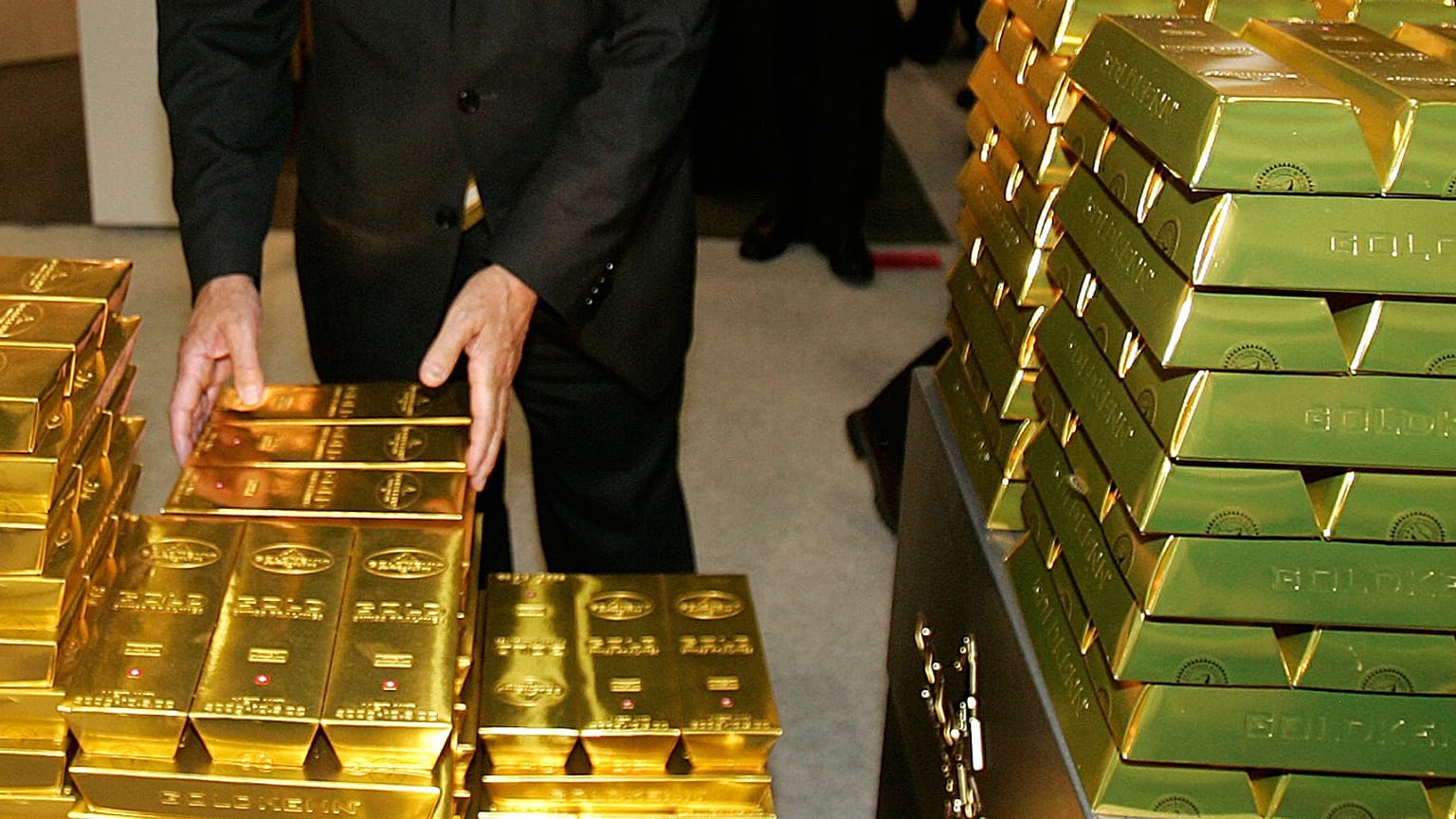
After two weeks of US-brokered talks, Venezuela's government and opposition agreed to jointly seek $4bn in gold held by the Bank of England since 2018, to fund reconstruction after June's earthquakes.
The government led by Delcy Rodríguez and sectors of the Venezuelan opposition have reached a rare consensus: to work together to recover the 31 tonnes of gold that Venezuela has kept in the vaults of the Bank of England for almost eight years.
The United Kingdom stopped recognising the Venezuelan government in 2018, which in practice blocked access to those assets, now tied up in a legal dispute that has yet to be resolved.
According to the joint statement released on Wednesday by both delegations, the funds are needed to support reconstruction after the 24 June earthquakes, which left more than 6,000 people dead according to the latest figures.
The MP Ramón López, a member of the 2015 National Assembly delegation taking part in the dialogue tables, told a national television channel that the release of those assets would be conditional on "all the necessary planning and control mechanisms", under a plan focused on housing, health centres and schools in the affected areas.
López added that the funds would be deposited in accounts of the US Treasury Department and subjected to audits by international firms as a condition for their disbursement.
The political leader stressed that the agreement does not involve a trade-off between the release of the gold and a reform of the Supreme Court of Justice, an issue that was also discussed at the technical meetings along with strengthening the judiciary and the electoral authority.
An economy battered by crisis and natural disaster
The Venezuelan economy, already weakened by years of mismanagement, corruption and US sanctions, continues to feel the impact of the earthquakes. The country's central bank reported that the disaster helped push monthly inflation up to 19.9% in July, from 13.8% in June, with annual inflation estimated by economists at around 575%.
Rodríguez had written to King Charles last month to request the release of the gold held in Threadneedle Street. An opposition source consulted by the 'Financial Times' said that "transparency mechanisms" will be put in place to prevent the funds "from ending up being stolen by the government", and acknowledged that "there is no naivety" about the nature of the interim administration.
For its part, the British Foreign Office made clear that the UK government is not a party to the court case that will determine control of the gold, and reiterated its support "for a democratic transition of power in Venezuela that reflects the will of the Venezuelan people". The Bank of England, which is waiting for a legal ruling before releasing the bars, declined to comment.
The context of the negotiations
The talks are taking place as the United States has suspended some sanctions on Venezuela and is working closely with Rodríguez, who served as Nicolás Maduro's vice president, to open up the country's natural resources to foreign investment.
The dialogue roundtables do not include María Corina Machado, the most popular opposition leader and winner of the Nobel Peace Prize, who has been living in Washington since late last year and was barred from returning to Venezuela after the earthquakes. The process has caused splits both within the opposition and among the hardest-line factions of the ruling party.
Since the capture of Maduro, Venezuela has gradually been regaining access to international funds, including 350 million dollars released in July from a tranche deposited at the IMF.
Rodríguez's government is also seeking access to 4.6 billion dollars in Special Drawing Rights, reserve assets of the IMF that member countries can exchange for other currencies, something the opposition had already agreed to in previous, abortive negotiations. It is estimated that the country's sovereign debt stands at around 240 billion dollars, which would make the restructuring under way the largest in history.
Venezuela's Bank of England gold to be routed through US Treasury accounts
.jpg)
Venezuela’s prized gold reserves held at the Bank of England would be channelled through accounts at the US Treasury Department under an agreement aimed at financing reconstruction after the June 24 earthquakes, according to National Assembly deputy Ramón López, El Nacional reported.
López, a member of the delegation representing the 2015 opposition-led National Assembly in the US-supervised talks with the government of interim President Delcy Rodríguez, said the assets would be released only after detailed planning and oversight mechanisms are established. Funds would be directed towards housing, health centres and schools in affected areas, with “a permanent audit plan for the expenditures” involving international firms.
The arrangement is intended to ensure “the gold is used properly and audited by international companies”, López said in an interview with Venevisión. He rejected suggestions that recovering the bullion was linked to reforms of Venezuela’s Supreme Court of Justice.
“Giving the gold for the Supreme Court is not an exchange, it’s not true (…) they are not linked,” López said, adding that safeguards had been designed “so that nothing is diverted from the purpose of the spending” during reconstruction.
The agreement was struck last week between representatives of the 2015 National Assembly — the last such body to enjoy wide international recognition — and Chavista leaders now headed by Rodríguez, who became interim president after Nicolas Maduro's capture by US forces in January. It calls for the recovery of Venezuelan assets held in England and establishes transparency, traceability and auditing mechanisms for their use. A separate working group is focused on “strengthening democracy”, including issues involving the judicial and electoral branches.
The US routing of gold reserves mirrors the arrangement already in place for Venezuela's key oil revenues, which have been managed by the US Treasury since Maduro's ouster and disbursed to Caracas at Washington's discretion.
The assets include a $120mn surplus from a gold swap between the Central Bank of Venezuela and Deutsche Bank that was terminated in 2019, as well as 31 metric tonnes of gold held at the Bank of England that could be worth about $4bn. Rodriguez asked the UK to release the gold in July, arguing it was sorely needed to speed up reconstruction, boost employment, revive economic activity and restore education services in the earthquake-hit areas.
The bullion has been tied up in a legal dispute since 2018, when the Bank of England declined a request to withdraw part of Venezuela’s reserves, citing anti-money-laundering requirements. The dispute intensified after the UK recognised Venezuela’s National Assembly president as the country’s president for legal purposes in early 2019 in the wake of the previous year's disputed election where Maduro claimed victory.
British courts subsequently ruled that an ad hoc central-bank board appointed by the acting president was authorised to represent the institution before the Bank of England. Later challenges by the Maduro government failed to overturn those decisions, which remain in effect.
Rodríguez said the dialogue agreement, which also crucially includes a pledge to overhaul the country's regime-controlled judiciary, would allow the sides to jointly recover the gold and use it to rebuild areas affected by the earthquakes. “Agreements were reached where we will work together to recover the gold that is in England, which belongs to all Venezuelans,” she said.

No comments:
Post a Comment