Saturday, November 11, 2023

How researchers, farmers and brewers want to safeguard beer against climate change

MELINA WALLING, AMANDA LOMAN and BROOKE HERBERT
Sat, November 11, 2023 

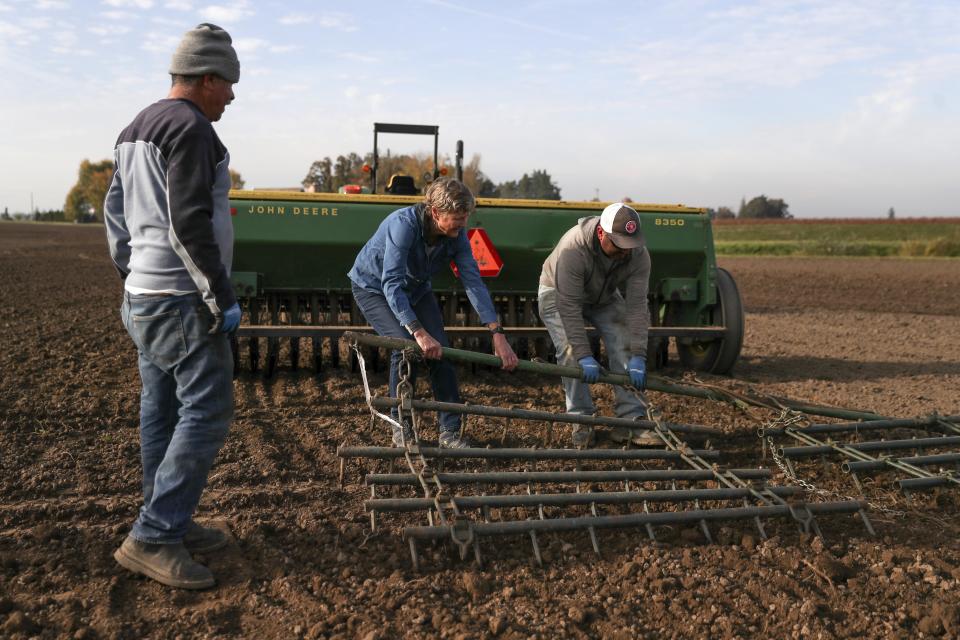
 Oct. 31, 2023. Fall is the off-season, but recently, her farming team has been adding winter barley, a relatively newer crop in the world of beer, to their rotation. In the face of climate change, Goschie will need all the new strategies the farm can get to sustain what they produce and provide to local and larger breweries alike. 
(AP Photo/Amanda Loman)

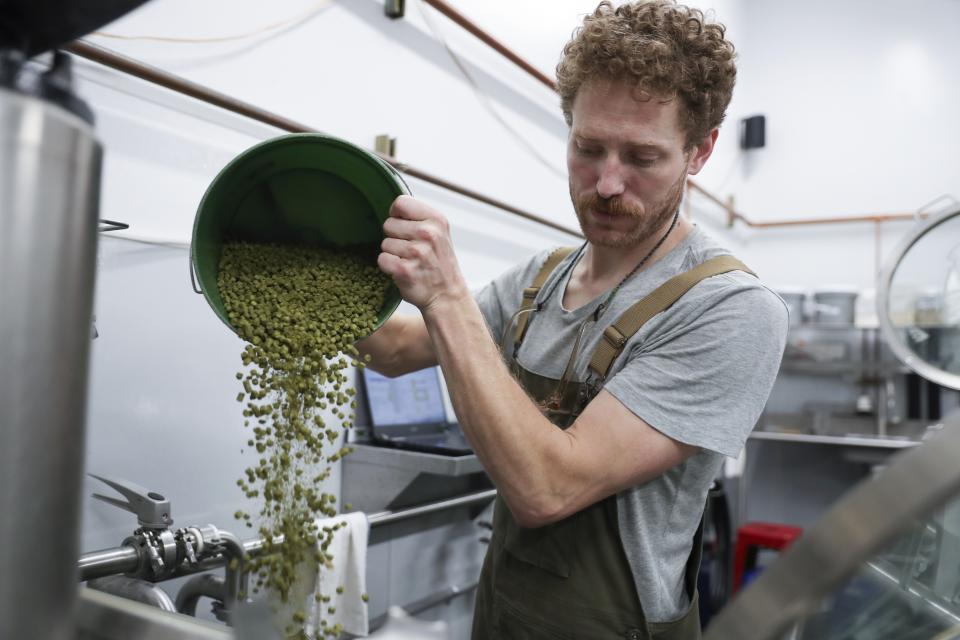
MOUNT ANGEL, Ore. (AP) — On a bright day this fall, tractors crisscrossed Gayle Goschie's farm about an hour outside Portland, Oregon. Goschie is in the beer business — a fourth-generation hops farmer. Fall is the off-season, when the trellises are bare, but recently, her farming team has been adding winter barley, a relatively newer crop in the world of beer, to their rotation, preparing barley seeds by the bucketful.

In the face of human-caused climate change impacting water access and weather patterns in the Willamette Valley — a region known for hops growing — Goschie will need all the new strategies the farm can get to sustain what they produce and provide to local and larger breweries alike.

All of a sudden, climate change "was not coming any longer," Goschie said, “it was here.”

Climate change is anticipated to only further the challenges producers are already seeing in two key beer crops, hops and barley. Some hops and barley growers in the U.S. say they’ve already seen their crops impacted by extreme heat, drought and unpredictable growing seasons. Researchers are working with growers to help counter the effects of more volatile weather systems with improved hop varieties that can withstand drought and by adding winter barley to the mix.

Researchers have known for a while that beer production will be affected by climate change, said Mirek Trnka, a professor at the Global Change Research Institute. He and his team recently authored a study modeling the effect of climate change on hops, out last month in Nature Communications, that projected that yields in Europe will decrease between four to 18% by 2050. His first study on hops 15 years ago issued a similar warning to his latest paper.

"If we don’t act, we’re just going to also lose things that we consider not to be, for example, sensitive or related to climate change. Like beer,” he said.

Climate change moves faster than we might realize – but still too slowly for many to notice, he said. The fact that researchers have started picking up on this means that there’s promise for adaptation and solutions in the form of farming changes, but Trnka still has his concerns.

Hops declines in Europe mean changes for American producers too. One craft brewery that gets some of their hops from Goschie said that the company is trying to replicate the flavors of German hops using new varieties grown in the U.S. because the ones they depend upon from Europe have been impacted by hot, dry summers over the last couple of years.

That’s why some researchers are working on varieties of hops that can better withstand summer heat, warmer winters, changing pests and diseases and less snowfall, which could mean less available irrigation, said Shaun Townsend, an associate professor and senior researcher at Oregon State University. Townsend is working on a project where he subjects hops to drought stress to eventually create more drought-tolerant varieties.

It’s no easy task, one that can take a decade, and one that also has to take into account brewers’ main considerations, taste and yield. But the possibility of running out of water is a reality that's on people's radars, he said.

Better hops might still be a technology that’s a work in progress, but the story of barley improvements is already well underway. Kevin Smith, professor of agronomy and plant genetics at the University of Minnesota, said that while spring barley is the dominant type for the U.S. beer industry, winter barley – which is planted in the fall and kept on fields during the coldest months of the year – may be more feasible now in the Midwest, where other barley types had been given up due to climate, plant disease and economic factors in favor of crops that are less risky.

Winter barley may also be desirable for craft breweries that have started emphasizing local ingredients and who want something grown close by. And it can also be grown as a cover crop, meaning that farmers can prevent erosion, improve their soil health and keep carbon stored in the ground by planting it during the off-season when fields are normally bare.

But there hasn’t always been complete consensus on the promise of winter barley. Smith told a story about his predecessor, who was a longtime spring barley breeder. Another scientist – Patrick Hayes, a professor at Oregon State University – was describing to him his hopes for the future of winter barley. Smith’s predecessor wrote on a business card, “it can’t be done,” referring to his firm belief that winter barley just wasn’t worth the trouble.

Hayes kept the card in his office, and has made it his life’s mission to work on improving winter barley.

There are now winter barley programs at nearly every state in the country, said Ashley McFarland, the vice president and technical director of the American Malting Barley Association. She doesn’t think winter barley will ever be the entirety of the crop in the U.S., but says that producers will need to diversify their risk in order to be more resilient to climate shocks.

Molson Coors and Anheuser Busch, the two biggest beer companies in the U.S., issue annual environmental reports that pledge commitments to sustainably sourcing hops and barley and reducing water usage, but neither company responded to an Associated Press request for comment on the specifics of those efforts.

Hops can be a finicky crop when it comes to their climate, and without water, you simply can't make beer, said Douglass Miller, senior lecturer at Cornell who teaches a class on beer. He added that the price of beer might rise due to climate impacts on the supply chain — but so will the price of everything else on the menu. “All beverage categories are being impacted by this,” he said.

No matter what farmers and companies do with hops and winter barley, climate change may affect what beer-lovers are able to buy in the future.

“It will be increasingly difficult for us as plant breeders to provide new varieties of barley and new varieties of hops that can meet, just, all of the terrors of the climate change process,” Hayes said. “And I say terrors because … it’s that volatility, which is so, so frightening.”


Climate Change Beer
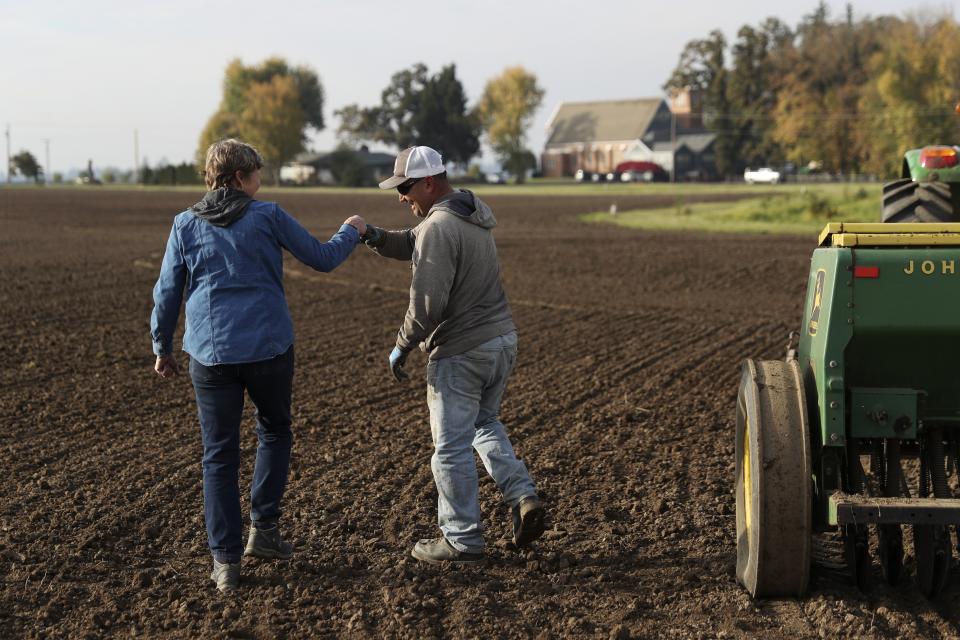
Gayle Goschie fist bumps Eloy Luevanos after setting up a harrow to be pulled behind a tractor and grain hopper in preparation for planting winter barley at Goschie Farms in Mount Angel, Ore., Tuesday,


___

Associated Press journalist Dee-Ann Durbin contributed from Detroit. Walling reported from Chicago.

___

Follow Melina Walling on X, formerly known as Twitter: @MelinaWalling

___

Read more of AP’s climate coverage at http://www.apnews.com/climate-and-environment

___

Associated Press climate and environmental coverage receives support from several private foundations. See more about AP’s climate initiative here. The AP is solely responsible for all content.


Drone footage uncovers disturbing scene at a dairy farm in Wisconsin: ‘It makes me very angry’

Jeremiah Budin
Thu, November 9, 2023 


Anti–animal cruelty nonprofit Mercy For Animals captured some disturbing drone footage of a Kewaunee County, Wisconsin, dairy farm that showed the massive open-air pits of animal waste sitting right next to a residential neighborhood. The group posted the footage to X, formerly known as Twitter.

Along with the drone footage, the group also spoke to neighboring Wisconsinites who say that the waste from the dairy farm contaminates their drinking water.

One resident, Arlin Karnopp, showed his well, which he says has been contaminated by manure, along with brownish, very dirty-looking water samples that he took from his sink.

“It makes me very angry that, for what we did to make our home a place for the family, it’s being destroyed,” Karnopp told PR Newswire. “When [our grandchildren] come, they brush their teeth with water that we buy and wash their face, and if there’s anything we cook, we cook with bottled water. … You spend so much money to build a house and work on it, and then you can’t drink the water.”

Karnopp had the water tested and found it contained nitrates and E. coli.

A 2021 study in Environmental Health Perspectives found that drinking water in Kewaunee County that was contaminated by cow feces was responsible for hundreds of cases of acute gastrointestinal illnesses.

The widespread environmental impacts of factory farms are well documented. According to the ASPCA, animal agriculture is responsible for 14.5% of all planet-overheating gas pollution, including massive amounts of methane and nitrous oxide, which are even more damaging to the atmosphere than carbon dioxide.

In addition, livestock farms (like the Wisconsin one in the video) produce 885 billion pounds of manure each year, which pollutes the surrounding air and water. And even worse, that output is not treated or regulated by any government agency.

The factory farming industry “has avoided any effective regulation and accountability for a long time,” Michele Merkel, a former EPA attorney who quit over the agency’s reluctance to punish polluting mega-farms and now works for an advocacy group that pushes for accountability, told PBS.

“You must be proud @WIDairyland @WisconsinCheese,” wrote a commenter on X.

New study makes alarming find about over 90% of world’s seafood supply: ‘Limited attention has been paid’

Jeremiah Budin
Thu, November 9, 2023 at 3:00 PM MST·2 min read
339


The effects of human-caused pollution represent a threat to all life on our planet, but time and time again, marine life has shown to be especially vulnerable. Now, a new study shows that an alarming 90% of the world’s seafood supply — a significant food source for billions of people worldwide — is at risk due to pollution.

What is happening?

The study, titled “Vulnerability of blue foods to human-induced environmental change,” was published recently in the Nature Sustainability journal. The term “blue food” refers to the more than 2,500 species of marine life that sustain 3.2 billion people across the globe.

According to the study’s authors, “Despite the growing concerns over their environmental impacts, limited attention has been paid to how blue food production is influenced by anthropogenic environmental changes … Over 90% of global blue food production faces substantial risks from environmental change, with the major producers in Asia and the United States facing the greatest threats.”

These environmental threats include rising sea levels, rising water temperatures, ocean acidification, algal blooms, and other pollution caused by fertilizers, waste, and other chemicals that find their way into water supplies.

Why is this concerning?

The study’s author went on to explain that the threats to blue foods include not only the quantity available but also the quality, i.e., food safety of the fish and other marine species that many people eat.

These issues include non-native bacteria introduced by humans, indigenous bacteria introduced by changing weather patterns, as well as things like mercury, persistent organic pollutants (POPs), pesticides, and antibiotics present in seafood in large quantities.

Pollution not only means that food will become more scarce, it also means that the food we do have will become more unhealthy and hazardous to consume.
What can be done about it?

According to Ling Cao, a professor at China’s Xiamen University, who co-authored the paper, countries need to take more responsibility for causing environmental harm to marine life — she pointed to a recent United Nations global high seas biodiversity pact as a step in the right direction.

Cao also pointed to ocean floor mining as a potentially very destructive practice, saying that countries planning it should reconsider based on the harm it can do. “Many scientists are now calling on governments to evaluate where they do ocean mining in order to minimize the impact,” she said.
In South America's Andes, a shrinking Lake Titicaca rings climate alarm bell

Fri, November 10, 2023 

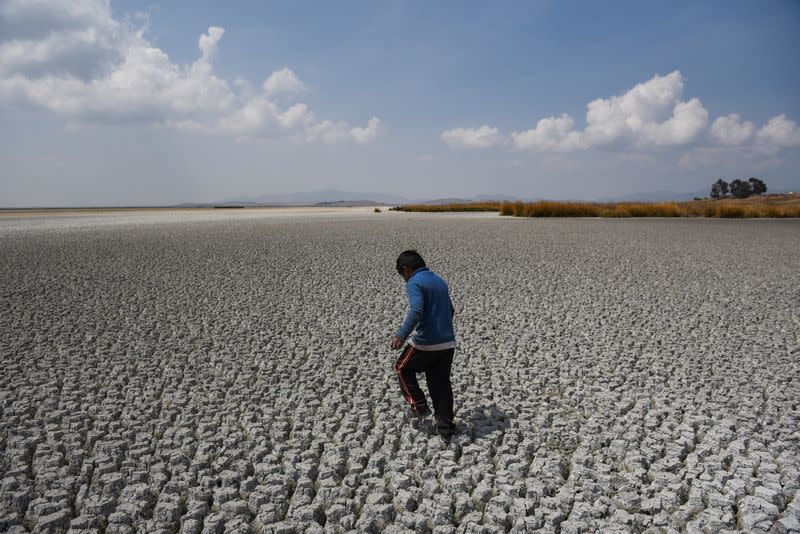
Lake Titicaca shrinks amid extreme drought, on Cojata Island

By Monica Machicao and Sergio Limachi

COJATA, Bolivia (Reuters) - The exposed cracked floors of parts of Lake Titicaca, South America's largest body of fresh water and the highest navigable lake in the world nestled amid the Andes mountains, are an alarming sight for local farmer Manuel Flores.

His crops are parched, nearby water wells have dried up amid a long spell of drought, and his livestock are struggling. Like many who live on or around the lake, he used to get around easily by boat. Now he walks across the dried-up lake bed.


The lake, once seen as a deity by the pre-Columbian people that lived on its shores, is an important ecosystem for wildlife and a water source for millions of people, including in the city of El Alto, some 40 kilometers (25 miles) to the east.

But its water levels are now reaching record lows, worsened by the El Nino weather phenomenon that means less rain in the area, compounding a long dry spell and rare high temperatures.

Scientists say such extreme weather is becoming increasingly common globally because of climate change, which also intensifies the effects of El Nino.

"I am 50 years old. Never before has Lake Titicaca dried up like it is now. This affects us, because there is no more food for our livestock and we cannot travel by boat," said farmer Flores. "Now we have to walk and our crops no longer exist because it hasn't rained since last year."

The drought is approaching critical levels for the region's agriculture, farmers and experts said. If it does not rain by early December there will be no planting of potatoes, one of the food staples for Bolivia's rural communities and cities.

Around the lake, especially in the smaller and shallower "Lago Menor," the waters have receded from the shoreline, partly due to the lack of rains, high temperatures and receding of the Andean glaciers, whose melt water normally feeds the lake.

Experts say many of the factors contributing to the shrinking of Lake Titicaca could be linked to climate change.

"Ninety-five percent of the water loss from the lake is due to evaporation, which shows that this is totally or almost totally caused by climate change," said Xavier Lazzaro, an aquatic systems specialist with French research institute IRD.

'GOING DOWN CENTIMETER BY CENTIMETER'

According to MapBiomas Agua, which has monitored changes in surface water bodies in the area for two decades, Bolivia overall has seen a 39% drop in its natural surface waters, such as rivers and lagoons, between 1985 and 2022.

The decline comes with global temperatures hitting record highs, which has impacted rivers, lakes and glaciers from the United States to Asia.

"There are many factors, many causes," said Rodney Camargo, an official at local NGO Friends of Nature Foundation (FAN).

"On one hand we have local causes that we know about: deforestation, fires, human activity, large dams, which have an effect. In global terms we have climate change, and phenomena such as El Nino and La Nina, which cause floods and droughts."

Back at Lake Titicaca, Fredy Aruquipa, the person in charge of monitoring the lake's water level, watches it decline daily.

"The water is going down centimeter by centimeter," he said.

(Reporting by Monica Machicao and Sergio Limachi; Writing by Isabel Woodford; Editing by Adam Jourdan and Andrea Ricci)


Climate change is burning the economy — with 13% of Americans reporting hardship from weather disasters in the last year, Treasury says. Here's how to prepare

Serah Louis
Fri, November 10, 2023 


Climate change has been burning through the economy, damaging homes and businesses and eating away at household budgets.

Between 2018 and 2022, the cost of weather and climate disasters surpassed $617 billion — a record high for any five-year increment, according to a Treasury report released Sept. 29. The report focuses on the impacts of climate change, from more frequent severe weather events to rising temperatures, on American household finances.

The cost of such disasters totaled over $176 billion in 2022 alone, and 13% of Americans reported economic hardship due to severe weather events and disasters within the past year.

Rising temperatures can also impact productivity.

“We’ve known for a very long time that human beings are very sensitive to temperature and that their performance declines dramatically when exposed to heat, but what we haven’t known until very recently is whether and how those lab responses meaningfully extrapolate to the real-world economy,” R. Jisung Park, an environmental and labor economist at the University of Pennsylvania, told The New York Times earlier this year.

“And what we are learning is that hotter temperatures appear to muck up the gears of the economy in many more ways than we would have expected.”

Climate change is impacting household finances

Weather and climate disasters like wildfires and floods can wreak destruction on buildings, roads and infrastructure — and impact your place of work.

Heat waves in particular can create unsafe working conditions for outdoor workers, such as those in construction or agriculture. But extreme heat can also affect workers in other industry settings with limited relief options, like restaurants, warehouses and delivery vehicles.

These workers often belong to low- and middle-income groups, and the Treasury has concerns they may contend with “compounding hardship” even from short-term disruptions to their earnings due to heat conditions.

On top of reduced working hours and lowered productivity, warmer temperatures can lead to workplace-related illnesses, increasing medical costs.

There are other climate-related problems that can affect everyday costs as well. For example, extreme weather events such as hurricanes can impede oil supplies and cost motorists more at the pump, damage roads and transportation infrastructure and restrict access to public transportation.

Climate change can even cut into your grocery budget, with supply chain disruptions potentially increasing prices on certain products or causing delays and shortages at stores. And you might see your energy bill go up, with heat waves leading households to use air conditioning more often.

Natural disasters can damage housing

Depending on where you live, your home could be more at risk of weather and climate disasters that can damage or destroy property, thereby reducing home values. Some folks are able to face displacement and contend with relocation expenses, while others may be forced to deal with major repair costs.

The Treasury report cites a study that found, in 2021, climate hazards affected 1 in 10 American homes, resulting in roughly $56.92 billion in property damage among impacted households.

While repair costs can eat up your budget, delayed and incomplete repairs can lead to more lasting problems that come with more costs over time. The damage can also significantly shrink the value of your property — a major issue considering Americans have long built wealth through home equity.

Some home insurance providers have responded by raising costs or reducing coverage, while others have even fled disaster-prone states such as Florida and California altogether.

What Americans can to do to prepare


If folks face disruptions to their income due to weather conditions, they may be less able to cover climate-related expenses as well.

“The impacts of climate change are projected to worsen in coming years, putting additional communities and households at risk of financial strain,” says the department in the report.

Nearly 4 in 10 Americans say they don’t have the funds to cover a $400 emergency expense, according to the Federal Reserve Board. However, it’s crucial that people put away some cash into an emergency fund if they’re able in order to manage these costs.

You can also consider making some energy-efficient improvements to your home, such as adding insulation, a heat pump and solar panels — and claim tax credits and rebates to lower your costs.

And don’t forget to look into your homeowners or renters insurance, so that you understand what’s covered and what’s not.

This article provides information only and should not be construed as advice. It is provided without warranty of any kind.


Hung Deal Leaves BMO, RBC-Led Group With Crescent Point Shares

Geoffrey Morgan
Fri, November 10, 2023 


(Bloomberg) -- Bank of Montreal, Royal Bank of Canada and others have been left holding millions of Crescent Point Energy Corp. shares after leading a C$500 million ($362 million) equity raise that failed to win widespread institutional investor support, according to people familiar with the matter.

Calgary-based oil and gas producer Crescent Point issued 48.5 million shares this week at a price of C$10.30 each to finance its C$2.6-billion acquisition of Hammerhead Resources. The banking syndicate led by BMO and RBC still holds about 25% of the shares offered, the people said, asking not to be identified as the information isn’t public.

That would imply the banks in the syndicate collectively are holding about 12.1 million shares in Crescent Point that they haven’t been able to sell this week, worth about C$118 million at current prices, according to Bloomberg calculations.

The acquisition and a concurrent drop in oil prices, caused Crescent Point shares to fall 9.9% on Tuesday. The stock is down 13% on the week and trading at $9.74 as of 3 p.m. in Toronto, below the price where the shares were offered.

The number of shares held by the banks could change and they could still find buyers for the remaining stock, the people said. BMO and RBC didn’t respond to requests for comment on the status of the shares they underwrote. Crescent Point didn’t respond to a request for comment.

Analysts on Wall Street and Toronto’s Bay Street remain restricted on the stock even though the equity raise closed Friday morning.

Crescent Point’s capital raise is widely seen as a victim of the week’s drop in oil prices.

“The reaction to the share price is bad timing as opposed to a bad deal,” Ninepoint Partners senior portfolio manager and partner Eric Nuttall said by phone, noting that oil prices fell by $2 a barrel as the deal was announced. Ninepoint is Crescent Point’s third-largest shareholder.

Nuttall expects the syndicate will ultimately be able to sell the Crescent Point shares as the merits of the deal are communicated to investors.

Most Read from Bloomberg Businessweek


DeSantis leads Republican states’ attacks against public sector unions

Michael Sainato
Fri, November 10, 2023 


Photograph: Cristóbal Herrera/EPA

Public sector unions in the US have been facing significant challenges from anti-union groups and Republicans at the federal and state levels in recent years, but have also mounted significant organizing campaigns to stave off membership and funding losses.

Some 33% of workers in the public sector were union members in 2022, over five times the union density of the private sector in America. At more than 7 million workers, public sector unions represent nearly half of the 14.3 million union members in the US.

Related: ‘A historic moment’: Oregon teachers launch first-ever strike

Florida’s rightwing governor, Ron DeSantis, has been one politician leading the charge against public sector unions. He signed a bill, SB 256, into law, that imposes new restrictions on public sector unions, in May.

Florida was already a “right-to-work” state where workers can opt out of union membership and pay union dues while still receiving representation under a collective bargaining agreement. Only 4.5% of workers in Florida were union members in 2022, one of the lowest union densities in the US.

Now the new legislation sets a new threshold for unions to avoid having to recertify through a new union election if dues-paying members fall below 60%. The bill also requires unions to undergo annual audits, prohibits automatic dues deductions from employee paychecks, and mandates universal language on union authorization cards that reaffirms Florida’s right to work status.

Unions have criticized the legislation as an anti-union bill aimed at dismantling public sector unions and threatening union contracts and the benefits they provide to workers.

The bill was strongly backed by the Freedom Foundation, a conservative thinktank, which sent out mailers to public employees in Florida about the law.

“When you look at this legislation that the Freedom Foundation wrote here in Florida, it’s clear their main target is the teachers’ unions in Florida. They want to make it so that teachers’ unions are decertified, so that teachers have no voice in the workplace and no contract in which they operate under,” said Andrew Spar, president of the Florida Education Association, which represents educators and has over 150,000 union members in Florida.

Unions have fought back in the state.

The Florida Educators Association attempted to obtain an emergency injunction to stop the effect of SB256 because it impugns union contracts already in existence, but lost that request, though the union still has a challenge to the legislation proceeding in federal court and is currently working on a state challenge. Spar also said the union was working on a challenge against a government-mandated union membership form that will not count dues-paying members unless they sign and submit the form.

“That’s what’s happening in Florida. The state of Florida is literally saying you’ve joined your union, you’re paying dues to your union, but we don’t count you as a union member. It makes no sense,” added Spar.

The recent legislation in Florida is part of broader anti-union efforts aimed at weakening public sector unions across the nation, but also of union action to fight back.

Many conservative stronghold states have passed right-to-work laws, with the majority of the 27 states with these laws passing legislation in the 1940s and 50s. The state laws allow workers to “free-ride”, working under a collectively bargained agreement by a union without paying dues for union membership.

In March 2023, Michigan became the first state to repeal a right-to-work law since Indiana in 1965 before Republicans restored it there in 2012.

The “right to work” movement was started and led by Vance Muse in the 1940s, a conservative activist, lobbyist and white supremacist from Texas who coined the phrase “right to work” and championed it in southern states with arguments to preserve Jim Crow-era laws.

In lock step with “right to work” efforts, Conservative and anti-union groups are currently pushing for the US supreme court to take on a case to expand the scope of the 2018 Janus v AFSCME decision that still permitted public sector unions to collect fees from non-members covered by collective bargaining agreements.

That 2018 Scotus decision overruled a 1977 decision that permitted labor unions representing public employees to collect some dues from workers who opted not to be union members, but still receive protection and benefits under a collective bargaining agreement, referred to as “free-riders”.


Union members picket a Republican fundraiser featuring Wisconsin’s then governor, Scott Walker, in 2018. Photograph: Jim West/Alamy


In August, a petition was filed to the supreme court in support of Alaska’s attorney general to try to claim under the Janus ruling that labor unions should have to acquire consent from employees every year for due deductions. The National Right to Work Legal Defense Foundation and the Freedom Foundation are among the anti-union groups that have written amicus briefs in support of the petition.

The effort in Alaska stems from the Republican governor, Mike Dunleavy, attempting to issue an executive order in 2018 that would require annual opt-ins for union membership as part of the interpretation of the Janus ruling by the state’s attorney general, Kevin Clarkson.

“What we see in Alaska, what we see in other conservative states where Republicans have control, the state legislature and governor’s office or both, is a proliferation of attempts to roll back the ability of the unions to collect dues and to sap their financial resources,” said Kent Wong, director of the UCLA Center for Labor Research and Education.

Wong added: “These are all orchestrated attempts to strip union strength at a time when overall union support is on the rise and union activism is on the rise, but also to undercut the impact of unions as we enter this critical 2024 political cycle.”

The Alaska supreme court ruled against Governor Dunleavy’s administration in June, ordering the state to pay $450,000 to the Alaska State Employees Association in damages, legal fees and interest, affirming lower court rulings.

In Kansas, anti-union groups have supported legislation opposed by unions to mandate public sector workers be required to annually receive notices that they can opt out of union membership and not pay dues.

In Wisconsin, labor unions are pushing to overturn Act 10, legislation signed by the Republican governor, Scott Walker, in 2011 that eliminated bargaining rights for most public employees, after liberals recently assumed a majority in the Wisconsin supreme court for the first time in 15 years.

In Iowa, Republicans took control of the state senate from Democrats in 2017 and with it passed a bill that took collective bargaining rights away from public employees, reducing the number of issues that unions could bargain over, with exemptions for police officers.

The legislation also made union dues collection more difficult and required public employee unions to recertify with new union elections before every contract expiration. In those elections, any worker who doesn’t vote is counted as a vote against the union. The bill was strongly lobbied for by Americans for Prosperity, a conservative group heavily funded and supported by the billionaire Koch brothers.

In a narrow 4-3 ruling in 2019, the Iowa supreme court upheld the law in a judgment on a case challenging the constitutionality of the legislation.

“It was not something that there was any input that anyone wanted from our side of things. They pretty much had a bill that was already prewritten,” said Charlie Wishman, president of the Iowa Federation of Labor, AFL-CIO.

UK
Hundreds of trade unionists blockade BAE Systems factory in Israel-Gaza protest

Lucas Cumiskey, PA
Fri, 10 November 2023 

Hundreds of trade unionists under the banner “Workers for a Free Palestine” have blockaded weapons manufacturer BAE Systems’ factory in Kent in protest over the Israel-Gaza war.

Activists descended on the site in Chatham, Rochester, at about 7am on Friday and blocked its two entrances as part of an international day of action called for by Palestinian trade unions to “end complicity in Israel’s war crimes”.

An organiser said that more than 400 trade unionists are involved in the action at the site, which they claim provides components for military aircraft being used in the bombardment of Gaza.

BAE Systems said it is “horrified by the situation in Israel and Gaza”, adding: “We operate under the tightest regulation and comply fully with all applicable defence export controls, which are subject to ongoing assessment.”

A protester hangs a banner on a fence outside weapons manufacturer BAE Systems in Rochester, Kent (Gareth Fuller/PA)

The blockade consists of health workers, teachers, hospitality workers, academics, artists and more who are members of trade unions such as Unite, Unison, GMB, the NEU, the BMA, the UCU, Bectu and the BFAWU.

Th activists are calling for “an end to the UK Government’s complicity in war crimes being committed in Palestine, by ending arms sales to Israel and supporting an immediate ceasefire”.

Some protesters are clutching Palestinian flags and signs which say “Free Palestine”, “UK is guilty”, “End the genocide” and “Stop arming Israel’s war machine”.

At one entrance, the group chanted slogans such as “1,2,3,4, occupation no more; 5,6,7,8, Israel is a terrorist state”, and: “BAE must be stopped, no more bombs must be dropped.”

Trade unionists and protesters form a blockade outside weapons manufacturer BAE Systems in Rochester, Kent (Gareth Fuller/PA)

They also chanted “From the river to the sea, Palestine will be free”, despite controversy around the slogan’s meaning.

Outside the factory, Harriet, 32, from east London, told the PA news agency: “I work in A&E and we got here very early, I think we got here about 6.20am or 6.30am this morning. Behind us is the BAE factory where some central components of the fighter jets that Israel is using to bomb Palestine are made and then they are shipped to Israel and become a part of the killer fighter planes.

“The more than 10,000 now Palestinian civilians that have been killed in the last couple of weeks are literally at the mercy of these weapons.

“So we’re trying to turn workers away who are coming to do their job which is assembling those weapons and we’re trying to stop deliveries getting in and out of the factory which so far has been successful. We’ve turned quite a few workers away.

“I think this has been a long month and it’s been a very long 75 years for Palestine. And I think people are getting rightly so angry and I think fatigued of the genocide but not of fighting it.

“I’m here because I’m a person. I’m also here because I’m a medic and we’ve seen hundreds of medical staff in Gaza killed, some still under the rubble.

“Just last night the Indonesian hospital in Gaza has been bombed again, al Ahli hospital has been bombed, al Shifa hospital, the biggest hospital in Gaza has been bombed. There’s absolutely no protection or sanctity for the medical facilities, if anything they’ve been targeting which is I think a testament to just how evil the plan of wiping Gaza off the map is.”


Trade unionists and protesters formed a blockade outside BAE Systems in Rochester, Kent (Gareth Fuller/PA)

Alexandra, a teacher and National Education Union member, said: “I’m joining the blockade today because as a teacher and trade unionist it’s impossible to stand by and watch as our government supports Israel’s genocidal assault on Gaza, including with arms from this very factory.

“As a teacher, seeing 185 schools and other educational institutions in Gaza bombed is utterly heartbreaking.”

A BAE Systems spokesperson said: “We’re horrified by the situation in Israel and Gaza and the devastating impact it’s having on civilians in the region and we hope it can be resolved as soon as possible.

“We respect everyone’s right to protest peacefully.”

The Israel-Hamas war started after a Hamas incursion into southern Israel on October 7 that killed 1,400 people.

The Hamas-run health ministry says that a month of retaliatory bombardment by Israel on Gaza has killed more than 10,500 Palestinians, two-thirds of them women and children.


Pro-Palestine activists shut down BAE factory


Chris Price
Fri, 10 November 2023 

Dozens of pro-Palestinian protesters have blocked entrances of a defence factory which supplies the Royal Air Force as they called for an end to arms sales to Israel.

A plant in Kent run by BAE Systems, Britain’s largest weapons maker, was targeted on Friday morning by around 50 people waving Palestinian flags and who held signs saying “Stop Arming Israel”.

The activists gathered outside the factory gates chanting slogans like “ceasefire now” and “How many kids have you killed today?”.

The protest comes ahead of a separate march planned in London on Armistice Day by Palestinian-supporting groups.

BAE Systems said does it not directly export equipment to Israel but the firm does supply the United States-made F-35 fighter jets – which are being used in the Gaza conflict.

A BAE spokesman said: “We’re horrified by the situation in Israel and Gaza and the devastating impact it’s having on civilians in the region and we hope it can be resolved as soon as possible.

“We respect everyone’s right to protest peacefully. We operate under the tightest regulation and comply fully with all applicable defence export controls, which are subject to ongoing assessment.”

Weapons for fighter planes have been developed and made at BAE’s Rochester factory for more than 60 years, starting with those for the Cold War-era Blackburn Buccaneer jet in 1958.

Protesters claimed as many 400 activists were blockading the BAE Systems factory in Rochester - Gareth Fuller/PA Wire

The factory, which employs 1,500 people, has developed helmet displays and joysticks for the newest F-35 Joint Strike Fighter.

The site also develops civilian technology, including displays for airline pilots.

Campaigners estimate the value of components supplied by Britain’s BAE Systems to Israel could be worth more than £300m since 2016. This figure has been contested by industry insiders.

The protests follow similar demonstrations outside Israeli-owned factories in Britain.

Two of Israel’s biggest defence firms, Elbit and Rafael, both have operations in the UK and their work includes producing missile defence systems for Israel’s Iron Dome network.

Last month, activists protested against the bombing of Gaza at the entrance of an Elbit-owned factory in Sandwich, Kent, blocking suppliers from reaching the plant which makes sensor equipment.

A string of protests also led to Elbit ditching a site near Manchester last year, as it responded to calls for it to be shut down.

Honda hikes production workers' pay 11% after UAW deals with Detroit Three

Reuters
Updated Fri, November 10, 2023

FILE PHOTO: The New York International Auto Show, in Manhattan, New York City

(Reuters) -Honda Motor said on Friday it was implementing an 11% pay hike for production workers at its U.S. facilities from January, days after the United Auto Workers (UAW) union and the Detroit Three automakers agreed to new contracts.

The company also said it would cut the time it takes for a worker to get to the top-wage tier to three years from six, confirming an earlier Wall Street Journal report.

Non-unionized automakers such as Honda have come under pressure to improve pay and benefits following record contracts the UAW won at the Detroit Three automakers.

U.S. President Joe Biden, who has backed UAW efforts to negotiate higher pay for its members, credited the union for Honda's decision.

"Union auto workers own this victory," Biden said in a Friday post on X.

In Illinois on Thursday, Biden backed the UAW's efforts to unionize carmakers Tesla and Toyota, saying all U.S. autoworkers deserve the same deal that the UAW negotiated with the Detroit Three automakers.

Honda, which began manufacturing in America in 1979, currently has 12 plants in the country which produce five million products annually.

The Japanese automaker has over 23,000 employees that help build its products in the United States.

Honda's pay hike comes after Toyota said last week it was raising the wages of its non-union U.S. factory workers.

General Motors, Ford Motor and Chrysler-parent Stellantis have all agreed to hike employee base wages by 25% and restore cost of living allowances (COLA) in deals with the UAW.

Union workers are now voting on contracts from each of Detroit's Big Three automakers.

The UAW has also signaled that the next step in its campaign was to capitalize on its gains in bargaining with the Detroit Three, by launching organizing drives at Toyota, Tesla and other non-union U.S. auto factories.

Honda had told Reuters it was evaluating the recent UAW deals with the Detroit Three automakers and would remain competitive.

(Reporting by Priyamvada C, Nathan Gomes and David Shepardson; Editing by Anil D'Silva, Krishna Chandra Eluri and Aurora Ellis)


Honda to increase pay for US autoworkers following UAW strike

Julia Shapero
Fri, November 10, 2023 


Honda plans to increase wages for workers at U.S. factories by 11 percent in January, after the United Auto Workers (UAW) union struck a deal for substantial pay raises and other benefits with three major automakers late last month.

The Japanese automaker will also decrease the time it takes workers to reach the top wage rate from six years to three years, matching similar commitments made by Ford, General Motors (GM) and Stellantis, the company confirmed Friday.

“Honda has been committed to maintaining an excellent employment experience for our production associates since we began manufacturing in America in 1979, including competitive wage and benefit packages and a work environment founded on teamwork, mutual respect, and open communication,” the automaker said in a statement.

The announcement comes less than two weeks after the UAW officially ended its strike against the trio of major U.S. car companies.

Ford, GM and Stellantis all agreed to a 25 percent general wage increase over the life of the 4 1/2-year contract, as well as cost-of-living adjustments and a three-year progression to the top wage rate.

Toyota followed suit just days after the strike concluded, announcing plans to raise wages for hourly manufacturing workers in the U.S. by about 9 percent starting Jan. 1. It will also cut the time it takes to reach the top wage rate to four years.

While addressing a crowd of UAW members in Illinois on Thursday, President Biden touted the wider impact of the union’s negotiations with GM, Stellantis and Ford, pointing to Toyota’s recent decision to raise wages.

“Look folks, these deals are game-changers,” Biden said. “Not only for UAW workers, but for all workers in America. Just ask the folks at Toyota, which last week announced it would significantly finally increase wages for their workers. They had no choice because of what you did. You helped everybody.”

Foreign automakers are also facing increased pressure, as the UAW turns its attention to organizing at nonunionized factories.

“One of our biggest goals coming out of this historic contract victory is to organize like we’ve never organized before,” UAW President Shawn Fain said last month. “When we return to the bargaining table in 2028, it won’t just be with the Big Three. It will be the Big Five or Big Six.”

Honda to boost production associates wage by 11% in January

Mark Williams, Columbus Dispatch
Updated Fri, November 10, 2023 

Honda associates Rick VanGundy (front left) and Mike Rausch applaud the new Accord made at the Marysville Auto Plant. Governor Mike DeWine (right) also attended the January, 2023, unveiling. Pulling the cover off the back of the car is (from left) Melanie Albert, Ken Smith, Zac Latimer and Malov Oza.

Honda production workers in Ohio and elsewhere in the U.S. will get an 11% raise on Jan. 1, the automaker said Friday.

"Honda has been committed to maintaining an excellent employment experience for our production associates since we began manufacturing in America in 1979, including competitive wage and benefit packages and a work environment founded on teamwork, mutual respect, and open communication," the company said in a statement it shared with workers.

More: Honda EV battery plant in Fayette County to seek employees for year-long training

"Honda greatly values all of our associates and the many contributions they make to our customers and our communities, and over the past two years we have made a number of changes to our benefits packages, which will continue with changes to compensation for production associates at our U.S. facilities, which will take effect in January 2024.”
Honda wage hikes follow UAW strike

The bump in wages comes just after the United Auto Workers ended a strike against Ford, General Motors and Stellantis that resulted in most workers receiving a 25% increase and cost-of-living adjustments over the life of the contract, which expires in April 2028.

The 11% increase for Honda workers matches the initial increase that UAW members will receive under their new contract.

UAW workers in the top wage will get more than $42 an hour, according to media reports. Honda did not say what the average hourly pay is for production workers.
How will EV transition impact workers?

The wage increase for Honda production associates comes as the automaker is transitioning to electric vehicles that may not require as many workers to produce.

A worker installs interior components into a Honda CR-V on the assembly line at the Honda manufacturing plant in Marysville in 2018.

Honda and LG Energy Solution are building a plant near Jeffersonville to make batteries for Honda EVs. Honda also is investing $700 million to retool the Marysville Auto Plant, the East Liberty Auto Plant and the Anna Engine Plant as part of a plan to establish an EV hub in Ohio that will produce battery-powered vehicles beginning in 2026.

Honda says it is not sharing anything further on workers' wage due to what it says is the "proprietary and personal nature of associate compensation."
Other benefit changes for Honda workers

Beyond wages, Honda says that since 2021 it has added more than 10 new benefits and programs, including childcare reimbursement and student loan repayment.

In addition, the wage progression for production associates will change from a six-year progression to a three-year progression, and associates will receive an increase at each step.

Honda has 17,000 associates at eight production sites in the U.S., including about 9,400 in its Marysville-area operations.

"We will continue to look for opportunities to ensure that we provide an excellent employment experience for Honda associates," the company said.

mawilliams@dispatch.com

@BizMarkWilliams

This article originally appeared on The Columbus Dispatch: Honda boosting pay, expanding other employee benefit programs


Honda is making a big step to protect against the threat from the UAW union

Moves are being made for workers at the Japanese auto maker amidst UAW resolutions.

James Ochoa
Nov 10, 2023

Following the tentative deals between Shawn Fein's United Auto Workers and the likes of Detroit's Big Three automakers, Ford (F) - Get Free Report, General Motors (GM) - Get Free Report and Stellantis (STLA) - Get Free Report, another non-union manufacturer has heard the bugle call for change from its workforce and is joining the pact.

As reported by Automotive News, Honda (HMC) - Get Free Report is increasing wages of its U.S.-based manufacturing workers by 11%.

According to a Honda spokesperson, these increases will go into effect in January 2024 and the wage progression timeline from base pay to top wage will be condensed from six years to three years.

The spokesperson did not tell AN if Honda’s decision was directly tied to the tentative agreements between the big three and the UAW, but they did say the Japanese manufacturer will “continue to look for opportunities to ensure [it] provides an excellent employment experience for Honda associates.”


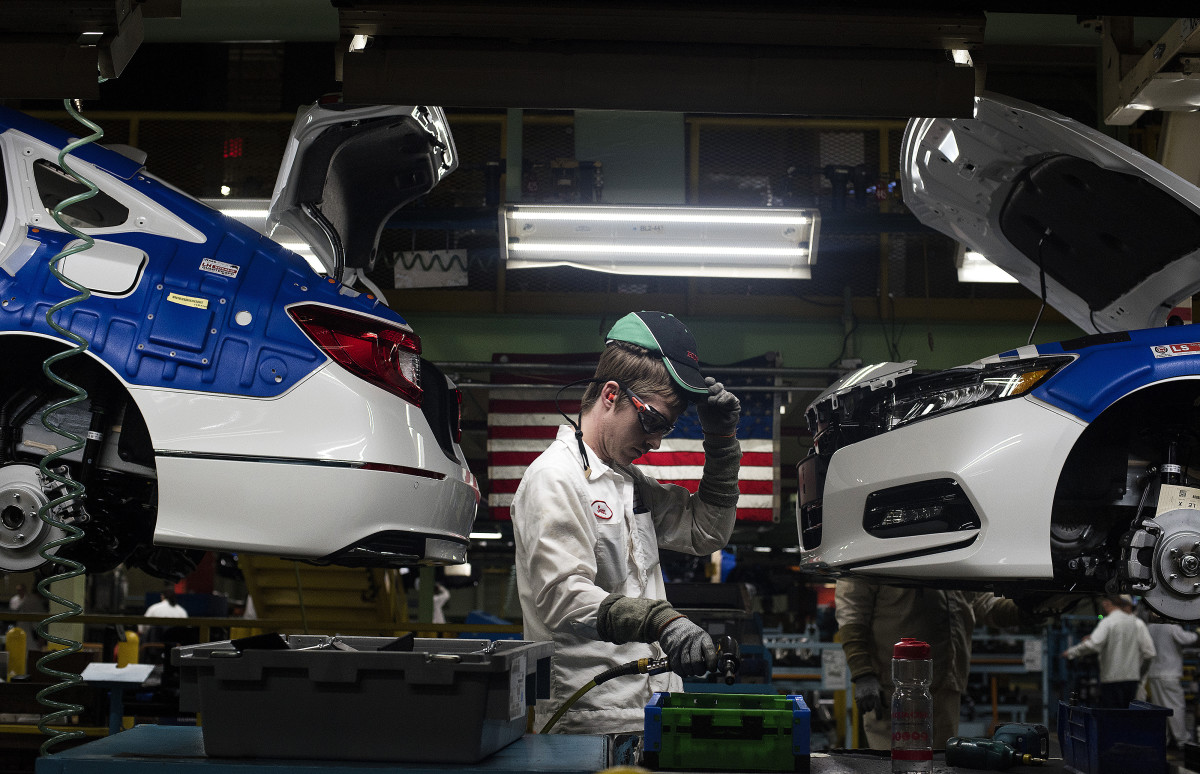
A production associate adjusts his hat while working between 2018 Honda Accord vehicles

Currently, Honda operates 12 manufacturing plants in the United States, including its Marysville Auto Plant in Marysville, Ohio, which became is the first stateside Japanese car plant in 1982.

The makers of the Civic and Accord are also spending $4.4 billion to retool the historic plant and other plants in the state to produce electric vehicles and its components. In addition, Honda is building a battery plant as a joint venture with LG Energy Solution to create an EV hub in Ohio that is slated to be operational by late 2024

According to a document shared to current and potential Honda employees, the manufacturer also offers a long list of benefits including child care reimbursement and student loan repayment to its manufacturing employees.

The announcement by Honda follows an earlier move by fellow Japanese automaker Toyota (TM) - Get Free Report, who raised wages for workers at its U.S. facilities in the wake of the UAW agreements.

Despite winning historical gains for workers for GM, Ford and Stellantis such as huge raises, cost-of-living adjustments (COLA) and a faster progression to a top wage of $42 per hour, the next move for the UAW is down to its membership. A Facebook post by a UAW chapter in Flint, Michigan showed that nearly 51% of members at the Flint assembly rejected the new contract.