Thursday, December 07, 2023

Archaeologists discover prehistoric ‘time capsule’ in mystery cave dwelling

Athena Stavrou
Wed, 6 December 2023 

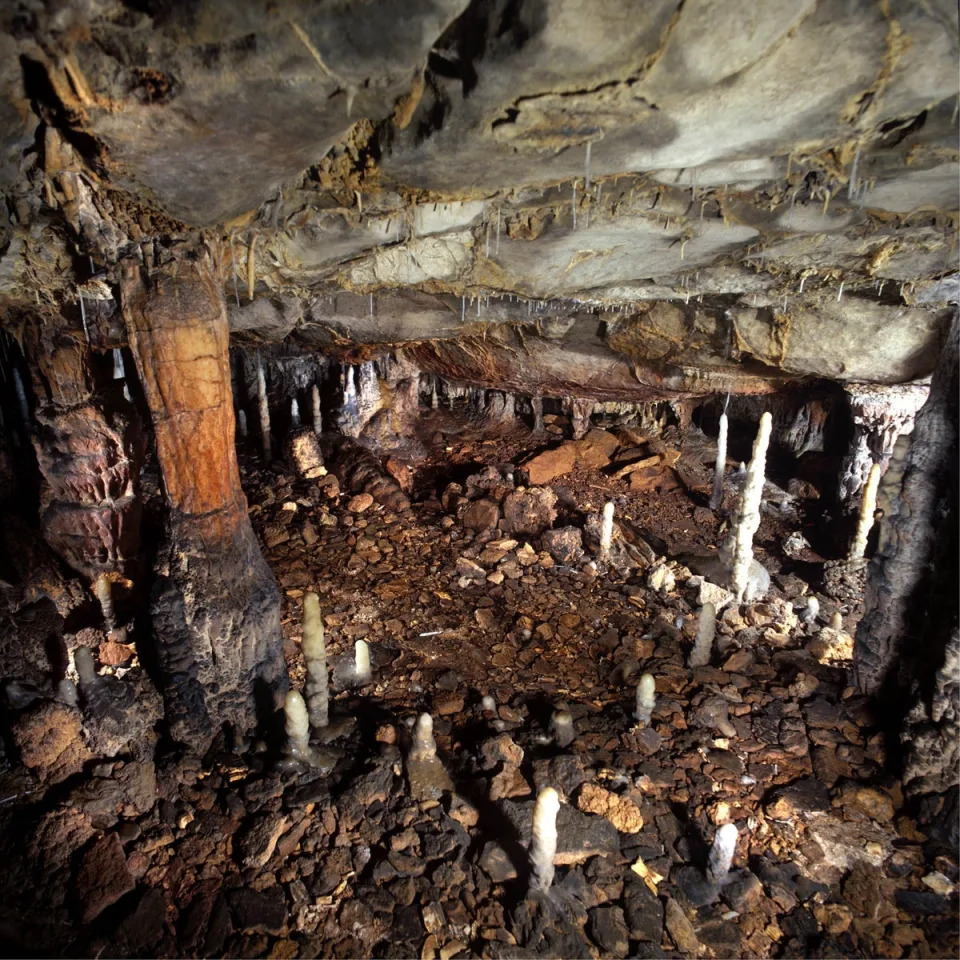
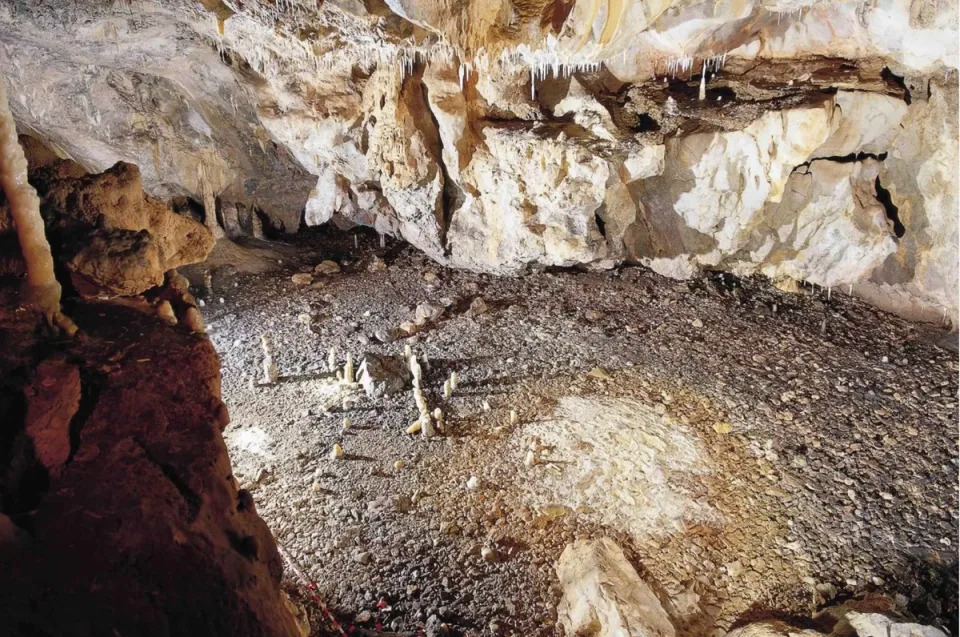
Archaeologists have discovered a pre-historic cave-dwelling, thought to have been constructed 16,800 years ago (University of Cantabria)

Archaeologists have found a pre-historic cave-dwelling, thought to have been constructed 16,800 years ago.

The discovery was made in the La Garma caves in Cantabria, Spain, which is famed for its artwork previously found on its walls.

The University of Cantabria, whose prehistoric research team led the project, said it was “one of the best preserved Paleolithic dwellings in the world”.


The home is described as an oval space of about five square metres with stone blocks and structures of “sticks and skins”.

Researchers believe there was a small bonfire in the centre of the space, in which a multitude of daily tasks would have taken place.

The dwelling at the time of discovery (Government of Cantabria)

They believe a group of Magdalenian hunters and gatherers shared the space and they have documented 6,614 objects from the dwelling including deer, horse and bison bones as well as 600 pieces of flint, needles and shells of marine molluscs.

Among the discoveries was a decorated bone and several pendants that researchers believe dwellers wore as jewellery.

The research took two years of continuous work by an interdisciplinary team using innovative methodology such as non-invasive techniques such as 3D mapping, soil analysis, and radiocarbon dating.

The documentation of the habitat required two years of continuous work and a reproduction of the structure is soon to be installed as an exhibition in the Rock Art Centre in nearby Puente Viesgo.

The La Garma caves have long been a point of arcaological interest. Five levels of the cave complex have been discovered so far, which preserves evidence of human activity spanning over 300,000 years.

It has been described as a “time capsule” by the local government as the original entrance to the cave was blocked by a landslide around 16,000 years ago, preserving the ancient remains inside.

The UNESCO world heritage site also houses thousands of fossils and a collection of rock art dating as far back as 35,000 years ago.
UK
What is conversion 'therapy' and why do people want it banned?


CATCHING UP TO CANADA

Ross McGuinness
Updated Tue, 5 December 2023 

There have been sustained calls for conversion 'therapy' to be banned in the UK. (Alamy) (Vuk Valcic)

MPs are reportedly set to introduce a bill this week that would ban so-called conversion "therapy".

Backbench MPs have drafted legislation to outlaw the controversial practice after the government - which has previously committed to banning the practice - did not include it in its legislative agenda in the King's Speech last month.

ITV News said the private members' bill (bills introduced by MPs and Lords who are not government ministers) would be aimed at banning all forms of conversion therapy and will be tabled in the House of Commons on Wednesday.

It has been drafted by Labour MP Lloyd Russell-Moyle and has the support of nine Conservative MPs, including Caroline Nokes, chair of the Women and Equalities Committee, and Alicia Kearns, chair of the Foreign Affairs Committee.

The legislation will not be subjected to a vote until March 2024 at the earliest, ITV News said.
Recommended reading

Government accused of ‘frightful negligence’ over lack of conversion 'therapy' ban (PA Media)


Government kicks conversion 'therapy' ban down the road (The Conversation)


Government slammed for ‘total moral failure’ over ‘conversion therapy’ ban (Attitude)

"Some of the biggest social reforms in this country have happened via private members' bills," Russell-Moyle told ITV News.

"I was overwhelmed with support from all sides of the House for this reform.

"Too many have suffered for too long; we have a responsibility to ensure no one else must suffer from this practice."

Yahoo News UK examines the controversial practice and what the government has promised in the past.
What is conversion 'therapy'?

According to the British Psychological Society (BPS), so-called conversion "therapy" refers to "attempts to change a person’s sexual orientation or gender identity, based on the assumption that being LGBT+ should be ‘cured’".

The practice isn't considered to be an actual "therapy" by health professionals.

A number of organisations, including the BPS, NHS England and the Royal College of Psychiatrists, have signed the 2017 Memorandum of Understanding on Conversion Therapy in the UK.

It reads: "Conversion therapy is the term for therapy that assumes certain sexual orientations or gender identities are inferior to others and seeks to change or suppress them on that basis.

"Conversion therapy in relation to gender identity and sexual orientation (including asexuality) is unethical, potentially harmful and is not supported by evidence."

The practice may include prayer, but in its most extreme forms also features physical violence, food deprivation and even exorcism.

Campaigners are frustrated with the government's failure to ban conversion 'therapy'. (PA) (Avpics)
When will conversion therapy be banned?

The bill to be tabled by MPs this week will not be voted on until next March, meaning any ban is some time away.

According to LGBTQ+ charity Stonewall, conversion "therapy" is already banned in countries such as Brazil, Argentina, Uruguay, Canada, France and New Zealand.
What has the UK government said about conversion 'therapy'?

A ban was first proposed by then prime minister Theresa May in 2018, before it was downgraded to not include transgender people by her successor, Boris Johnson.

Rishi Sunak’s government said in January it would ban conversion therapy for “everyone”, including transgender people.

Watch: Then prime minister Theresa May calls conversion 'therapy' an 'abhorrent practice'


However, despite being laid out in two Queen's speeches, the ban was dropped from last month's King's Speech, sparking a wave of criticism of the government, which said it needed more time to draft the appropriate legislation.

Commons leader Penny Mordaunt said last month: “Bringing an end to these practices is a manifesto commitment, it remains a manifesto commitment."

Downing Street has maintained that the practice is “abhorrent”, but said time is needed to work out a policy on the “complex” area in order to avoid unintended consequences.

Labour has pledged to introduce a “no loopholes” trans-inclusive ban on conversion therapy if it wins the next general election.

A proposal to ban conversion 'therapy' is set to go before the House of Commons. (PA) (Avpics)
What has been the reaction?

The government has been criticised for its failure to fulfil its pledge to ban conversion "therapy".

The Bishop of London, the Rt Rev Dame Sarah Mullally, said she was disappointed that legislation was not included in the King's Speech.

“The General Synod of the Church of England voted to call on the government to ban conversion therapies in 2017," she said.

"It remains firm that abuse of power in this way must be prevented.”

Speaking after the King's Speech, Robbie de Santos, director of external affairs at Stonewall, said: The UK government’s failure to deliver a ban on conversion practices after five years of promises is an act of frightful negligence – in doing so, it has given the green light for the abuse against LGBTQ+ people to continue unchecked."

NHS Providers said it was “deeply concerned by the omission of a ban on conversion therapy”.

The Royal College of Nursing's chief nurse, Professor Nicola Ranger, said: “It’s been five wasted years of hollow promises to ban these abhorrent practices that nursing staff know have no medical basis.”
CAPPLETALI$M
Apple regains its $3 trillion valuation despite analysts doubts
MORE FUCKING MONEY THEN MOST COUNTRIES

William Gallagher
Wed, 6 December 2023


Apple is the most valuable publicly traded company in the US, and its valuation has again exceeded $3 trillion, even as financial analysts have been concerned about sales for the iPhone 15 range.

In January 2022, Apple became the first company to reach a $3 trillion market capitalization, but then that market cap figure steadily decrease over the next year.

That decrease brought Apple back under $3 trillion, but it happened chiefly because of what were described as investor jitters.

This pattern repeated itself in June 2023, as Apple's valuation went back up over $3 trillion -- only to again fall steadily immediately afterwards.

June was when Apple announced its forthcoming Apple Vision Pro, and since then it has also launched the iPhone 15 range. But while investment analysts have been mixed in their advice about Apple, there have been issues over the iPhone 15 not selling as well as the iPhone 14, especially in China.

On December 5, Apple share price rose 2% to $193.42 per share. The trend continues on Wednesday morning, with the stock inching up in pre-market trading.

It's not clear how long it will retain that valuation, however. Apple routinely buys back stock, and Apple has already said that it does not expect annual revenue growth for its December quarter. This is the first full quarter where the iPhone 15 range was available, but could now be the fifth quarter in a row where Apple has seen declining sales.
The climate change we caused is here for at least 50,000 years – and probably far longer


Jan Zalasiewicz, Professor of Palaeobiology, 
Mark Williams, Professor of Palaeobiology, 
Colin Waters, Honorary Professor, Department of Geology, 
Jens Zinke, Professor of Palaeobiology,
 University of Leicester
Tue, 5 December 2023 
THE CONVERSATION 

In February 2000, Paul Crutzen rose to speak at the International Geosphere-Biosphere Programme in Mexico. And when he spoke, people took notice. He was then one of the world’s most cited scientists, a Nobel laureate working on huge-scale problems – the ozone hole, the effects of a nuclear winter.

So little wonder that a word he improvised took hold and spread widely: this was the Anthropocene, a proposed new geological epoch, representing an Earth transformed by the effects of industrialised humanity.

The idea of an entirely new and human-created geological epoch is a sobering scenario as context for the current UN climate summit, COP28. The impact of decisions made at these and other similar conferences will be felt not just beyond our own lives and those of our children, but perhaps beyond the life of human society as we know it.

The Anthropocene is now in wide currency, but when Crutzen first spoke this was still a novel suggestion. In support of his new brain-child, Crutzen cited many planetary symptoms: enormous deforestation, the mushrooming of dams across the world’s large rivers, overfishing, a planet’s nitrogen cycle overwhelmed by fertiliser use, the rapid rise in greenhouse gases.

As for climate change itself, well, the warning bells were ringing, certainly. Global mean surface temperatures had risen by about half a degree since the mid-20th century. But, they were still within the norm for an interglacial phase of the ice ages. Among many emerging problems, climate seemed one for the future.
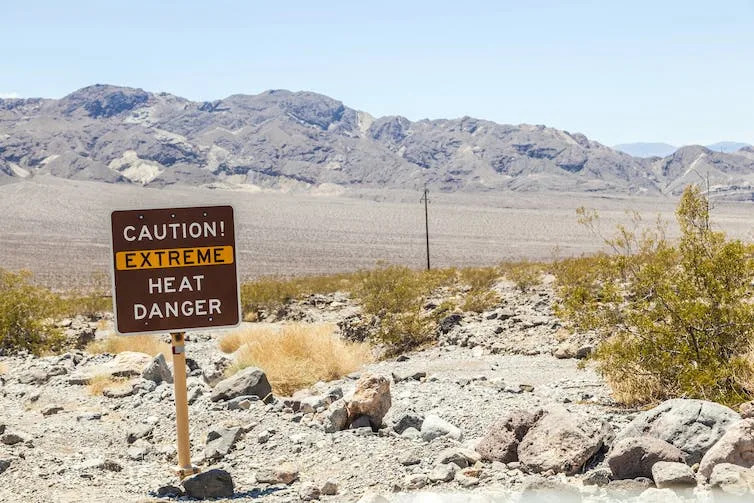

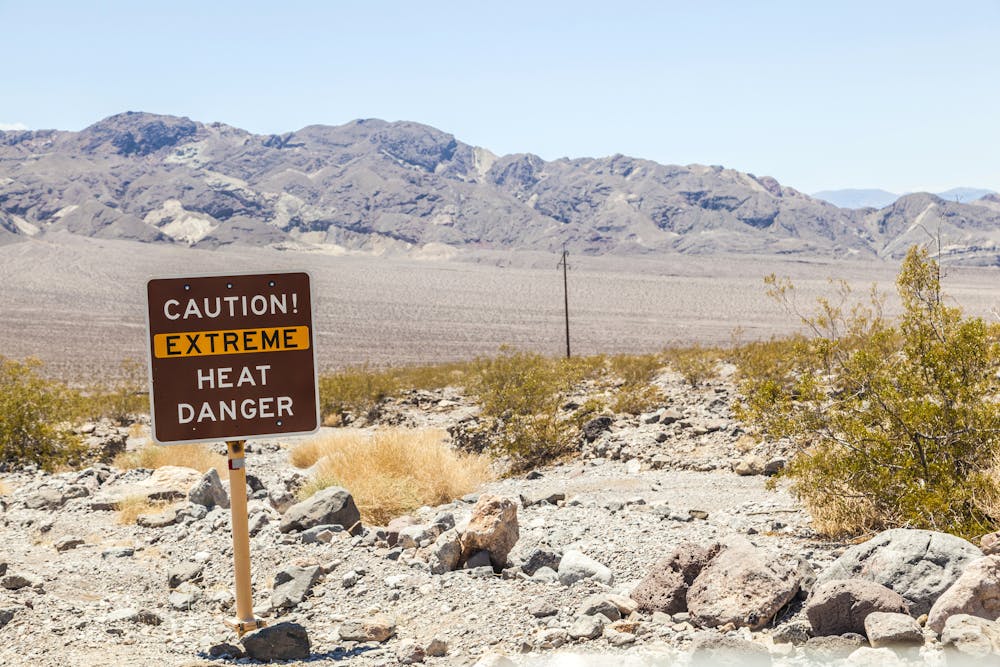
Heat danger sign, desert background

A little more than two decades on, the future has arrived. By 2022, global temperature had climbed another half a degree, the past nine years being the hottest since records began. And 2023 has seen climate records being not just broken, but smashed.

By September there had already been 38 days when global average temperatures exceeded pre-industrial ones by 1.5°C, the safe limit of warming set by the UN Convention on Climate Change (UNFCCC) in the Paris agreement. In previous years that was rare, and before 2000 this milestone had never been recorded.

With this leap in temperatures came record-breaking heatwaves, wildfires and floods, exacerbated by other local human actions. Climate has moved centre stage on an Anthropocene Earth.

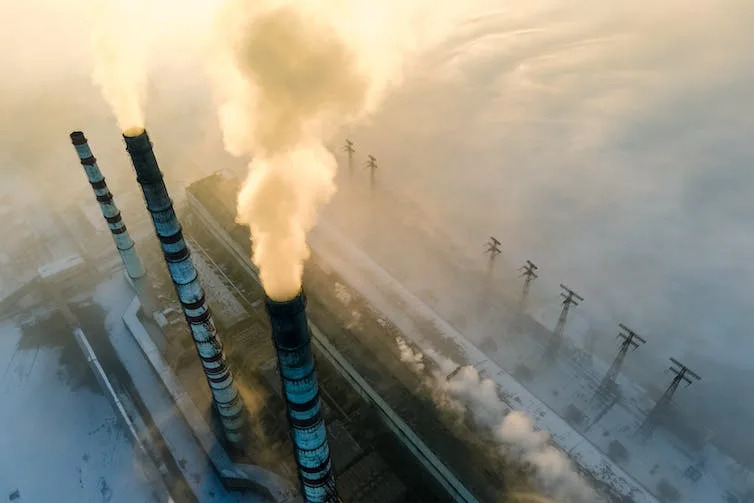
Why this surge in temperatures? In part, it’s been the inexorable rise in greenhouse gases, as fossil fuels continue to dominate human energy use. When Crutzen spoke in Mexico, atmospheric carbon dioxide levels were about 370 parts per million (ppm), already up from the pre-industrial 280 ppm. They’re now around 420 ppm, and climbing by some 2 ppm per year.

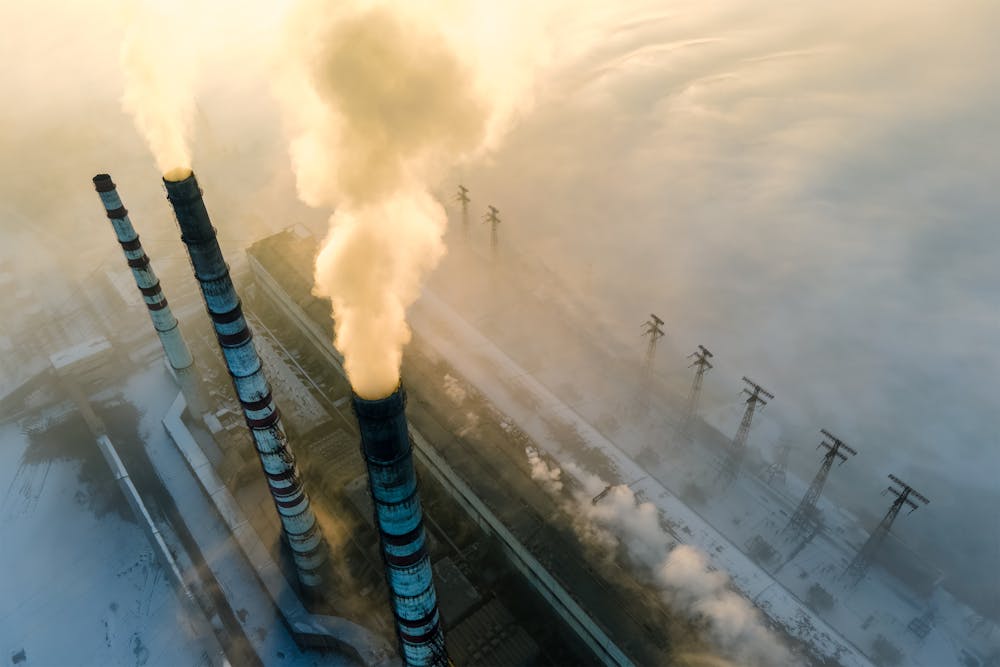
In part, the warming results from cleaner skies in the past few years, both on land and at sea, thanks to new regulations phasing out old power stations and dirty sulphur-rich fuels. As the industrial haze clears, more of the sun’s energy makes it through the atmosphere and onto land, and the full force of global warming kicks in.

In part, our planet’s heat-reflecting mirrors are shrinking, as sea ice melts away, initially in the Arctic, and in the last two years, precipitously, around Antarctica too. And climate feedbacks seem to be taking effect, too. A new, sharp rise in atmospheric methane – a far more potent greenhouse gas than carbon dioxide – since 2006 seems to be sourced from an increase in rotting vegetation in tropical wetlands in a warming world.

https://www.shutterstock.com/image-photo/aerial-view-coal-power-plant-high-2136951757

This latest warming step has already taken the Earth into levels of climate warmth not experienced for some 120,000 years, into those of the last interglacial phase, a little warmer than the current one. There is yet more warming in the pipeline over coming centuries, as various feedbacks take effect.

A recent study on the effects of this warming on Antarctica’s ice suggests that “policymakers should be prepared for several metres of sea-level rise over the coming centuries” as the pulse of warmth spreads through the oceans to undermine the great polar ice-sheets.

This remains the case even in the most optimistic scenario where carbon dioxide emissions are reduced quickly. But emissions continue to rise steeply, to deepen the climate impact.

Controls have been overridden

To see how this might play out on a geological timescale, we need to look through the lens of the Anthropocene. A delicately balanced planetary machinery of regular, multi-millennial variations in the Earth’s spin and orbit has tightly controlled patterns of warm and cold for millions of years.

Now, suddenly, this control machinery has been overridden by a trillion tons of carbon dioxide injected into the atmosphere in little more than a century.

Modelling the effects of this pulse through the Earth System shows that this new, suddenly disrupted, climate pattern is here for at least 50,000 years and probably far longer. It’s a large part of the way our planet has changed fundamentally and irreversibly, to become comparable to some of the great climate change events in deep Earth history.

So will this particular COP meeting, with fossil fuel interests so strongly represented, make a difference? The bottom line is that attaining, and stabilising carbon emissions at “net zero” is only a crucial first step.

To retrieve the kind of climate optimal for humanity, and for life as a whole to thrive, negative emissions are needed, to take carbon out of the atmosphere and ocean system and put it back underground. For future generations, there is much at stake.

This article is republished from The Conversation under a Creative Commons license. Read the original article.


Jens Zinke receives funding for his general research from the Royal Society, NERC and the German DFG.

Colin Waters, Jan Zalasiewicz, and Mark Williams do not work for, consult, own shares in or receive funding from any company or organisation that would benefit from this article, and have disclosed no relevant affiliations beyond their academic appointment.
Warfare ruins the environment – and not just on the front lines

Jonathan Bridge, Reader / Associate Professor in Environmental Geoscience, Sheffield Hallam University
Tue, 5 December 2023 
The Conversation

RoProy/Shutterstock

On the morning of December 6 1917, a French cargo ship called SS Mont-Blanc collided with a Norwegian vessel in the harbour of Halifax in Nova Scotia, Canada. The SS Mont-Blanc, which was laden with 3,000 tons of high explosives destined for the battlefields of the first world war, caught fire and exploded.

The resulting blast released an amount of energy equivalent to roughly 2.9 kilotons of TNT, destroying a large part of the city. Although it was far from the front lines, this explosion left a lasting imprint on Halifax in a way that many regions experience environmental change as a result of war.

The attention of the media is often drawn to the destructive explosions caused by bombs, drones or missiles. And the devastation we have witnessed in cities like Aleppo, Mosul, Mariupol and now Gaza certainly serve as stark reminders of the horrific impacts of military action.


However, research is increasingly uncovering broader and longer-term consequences of war that extend well beyond the battlefield. Armed conflicts leave a lasting trail of environmental damage, posing challenges for restoration after the hostilities have eased.

Research interest in the environmental impacts of war

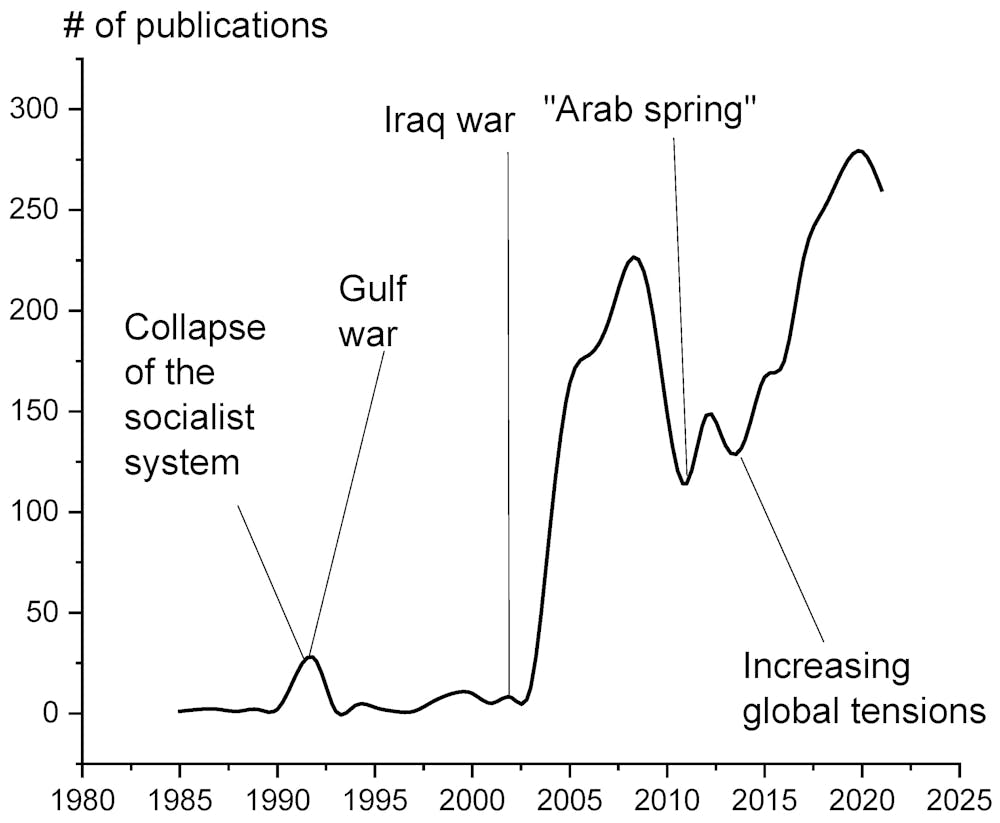
A figure showing the rising trend of publications on military-caused soil pollution since the 1990s.

Toxic legacies

Battles and even wars are over relatively quickly, at least compared to the timescales over which environments change. But soils and sediments record their effects over decades and centuries.

In 2022, a study of soil chemistry in northern France showed elevated levels of copper and lead (both toxic at concentrations above trace levels), and other changes in soil structure and composition, more than 100 years after the site was part of the Battle of the Somme.

Research on more recent conflicts has recorded the toxic legacy of intense fighting too. A study that was carried out in 2016, three decades after the Iran-Iraq war, found concentrations of toxic elements like chromium, lead and the semi-metal antimony in soils from the battlefields. These concentrations were more than ten times those found in soils behind the front lines.

The deliberate destruction of infrastructure during war can also have enduring consequences. One notable example is the first Gulf War in 1991 when Iraqi forces blew up more than 700 oil wells in Kuwait. Crude oil spewed into the surrounding environment, while fallout from dispersing smoke plumes created a thick deposit known as “tarcrete” over 1,000 sq km of Kuwait’s deserts.

The impact of the oil fires on the air, soil, water and habitats captured global attention. Now, in the 21st century, wars are closely scrutinised in near real-time for environmental harm, as well as the harm inflicted on humans.

Conflict is a systemic catastrophe

One outcome of this scrutiny is the realisation that conflict is a catastrophe that affects entire human and ecological systems. Destruction of social and economic infrastructure like water and sanitation, industrial systems, agricultural supply chains and data networks can lead to subtle but devastating indirect environmental impacts.

Since 2011, conflict has marred the north-western regions of Syria. As part of a research project that was led by my Syrian colleagues at Sham University, we conducted soil surveys in the affected areas.

Our findings revealed widespread diffuse soil pollution in agricultural land. This land feeds a population of around 3 million people already experiencing severe food insecurity.

The pollution probably stems from a combination of factors, all arising as a consequence of the regional economic collapse that was caused by the conflict. A lack of fuel to pump wells, combined with destruction of wastewater treatment infrastructure, has led to an increased reliance on streams contaminated by untreated wastewater for irrigating croplands.

Contamination could also stem from the use of low-grade fertilisers, unregulated industrial emissions and the proliferation of makeshift oil refineries.

More recently, the current conflict in Ukraine, which prompted international sanctions on Russian grain and fertiliser exports, has disrupted agricultural economies worldwide. This has affected countries including the Democratic Republic of Congo, Egypt, Nigeria and Iran particularly hard.

Many small farmers in these countries may have been forced into selling their livestock and abandoning their land as they struggle to buy the materials they need to feed their animals or grow crops. Land abandonment is an ecologically harmful practice as it can take decades for the vegetation densities and species richness typical of undisturbed ecosystems to recover.

Warfare can clearly become a complicated and entangled “nexus” problem, the impacts of which are felt far from the war-affected regions.


A field of rapeseed flowers in Ukraine.
Delpixel/Shutterstock


Conflict, cascades and climate

Recognising the complex, cascading environmental consequences of war is the first step towards addressing them. Following the first Gulf War, the UN set up a compensation commission and included the environment as one of six compensable harms inflicted on countries and their people.

Jordan was awarded more than US$160 million (£127 million) over a decade to restore the rangelands of its Badia desert. These rangelands had been ecologically ruined by a million refugees and their livestock from Kuwait and Iraq. The Badia is now a case study in sustainable watershed management in arid regions.

In the north-west region of Syria, work is underway to assess farmers’ understanding of soil contamination in areas that have been affected by conflict. This marks the first step in designing farming techniques aimed at minimising threats to human health and restoring the environment.

Armed conflict has also finally made it onto the climate agenda. The UN’s latest climate summit, COP28, includes the first themed day dedicated to “relief, recovery and peace”. The discussion will focus on countries and communities in which the ability to withstand climate change is being hindered by economic or political fragility and conflict.

And as COP28 got underway, the Conflict and Environment Observatory, a UK charity that monitors the environmental consequences of armed conflicts, called for research to account for carbon emissions in regions affected by conflict.

The carbon impact of war is still not counted in the global stocktake of carbon emissions – an essential reference for climate action. But far from the sound and fury of the explosions, warfare’s environmental impacts are persistent, pervasive and equally deadly.

This article is republished from The Conversation under a Creative Commons license. Read the original article.


Jon Bridge works voluntarily with the Council for At-Risk Academics (Cara) to support their Syria Programme, which funded some of the work described in this article.
THE GAME IS AFOOT WATSON
Has IBM cracked the code of quantum computing by solving data errors?


Pascale Davies
Tue, 5 December 2023 

Has IBM cracked the code of quantum computing by solving data errors?


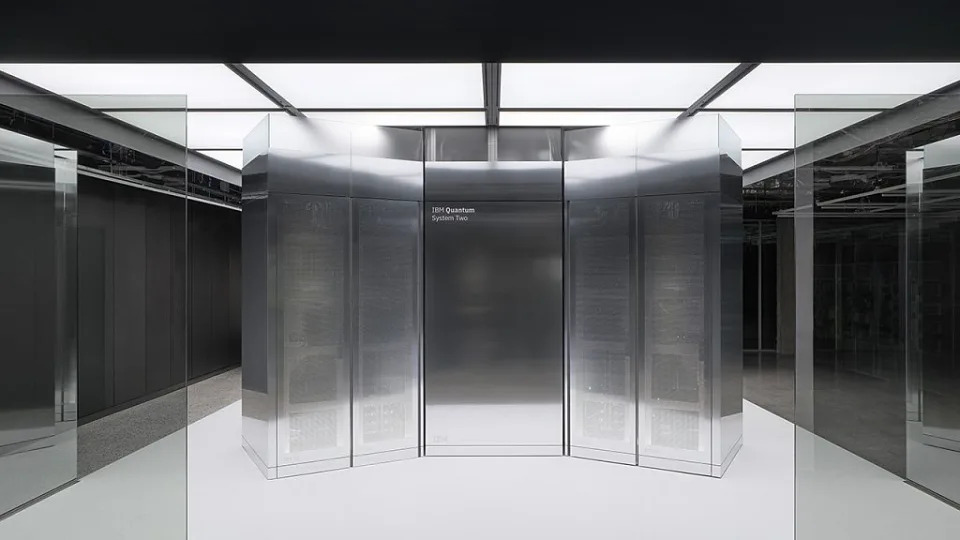
Technology giant IBM has reached a major milestone in its quantum ambitions and has unveiled a new chip and machine that it hopes can help solve problems beyond the scope of traditional computers.

The unveiling at an IBM event in New York on Monday comes as companies and countries race to develop quantum machines, which can carry out large numbers of calculations simultaneously and at incredible speeds.

The new chip has more than 1,000 qubits, which is the equivalent of the digital bits in an ordinary computer.

One of the main issues in developing the machines is they often struggle with data errors. However, IBM said it has a new method to connect chips inside machines which can then connect machines and with a new error-code connection could produce even more capable quantum machines in 10 years.

The first machine to use them is called Quantum System Two, which uses three so-called "Heron" chips.

"We are firmly within the era in which quantum computers are being used as a tool to explore new frontiers of science," said Dario Gil, IBM’s senior vice president and director of research.

"As we continue to advance how quantum systems can scale and deliver value through modular architectures, we will further increase the quality of a utility-scale quantum technology stack – and put it into the hands of our users and partners who will push the boundaries of more complex problems".

IBM did not predict when it could go commercial with quantum machines.
Life-changing discovery

At the annual IBM Quantum Summit, the company also unveiled 10 projects that showed off the potential power of quantum computing, such as for drug discovery.

The scale-up Algorithmiq, which is developing quantum algorithms to solve problems in life sciences, was one of them and successfully ran one of the largest scale error mitigation experiments to date on IBM’s hardware. It said the achievement positions them alongside IBM as front runners to reach quantum utility, referring to quantum computer's ability to perform reliable computations beyond the capabilities of regular computing methods, for real-world use cases.

“Today represents further validation that Algorithmiq’s core error mitigation techniques are powerful and will enable large-scale experiments on specific use cases leading us well into the quantum utility era for real commercial applications,” said Sabrina Maniscalco, co-founder and CEO of Algorithmiq.

“I’ve dedicated over 20 years of my life to the study of noisy quantum systems, as a professor, and I never thought this type of experiment would be possible so soon,” she said in comments to Euronews Next.
Quantum and AI

Additionally, IBM is pioneering the use of generative AI for quantum code programming IBM's enterprise AI platform watsonx.

"Generative AI and quantum computing are both reaching an inflection point, presenting us with the opportunity to use the trusted foundation model framework of watsonx to simplify how quantum algorithms can be built for utility-scale exploration," said Jay Gambetta, Vice President and IBM Fellow at IBM.

"This is a significant step towards broadening how quantum computing can be accessed and put in the hands of users as an instrument for scientific exploration".


Our Galaxy Appears to Be in a Huge Empty Void

APPERANCE IS ILLUSION 
SAID SOME BUDDHA

Victor Tangermann
FUTURISM
Tue, 5 December 2023 

In this article:
Pavel Kroupa
Australian astrophysicist


Enter the Void

For almost a century, astronomers have been using the Hubble-Lemaitre constant to explain the accelerating expansion of the universe, an intrinsic piece of the puzzle that supports the Big Bang theory.

In simple terms, the idea is that the speed at which galaxies move away from each other is directly proportional to how far apart they are.

But actual observations have revealed critical discrepancies, throwing scientists for a loop. This ensuing "Hubble tension" has inspired many researchers to come up with proposed solutions, but so far none has been particularly satisfying to the broad scientific community.


Now, researchers from the University of Bonn in Germany and St Andrews in Scotland say they've come up with a clever new solution.

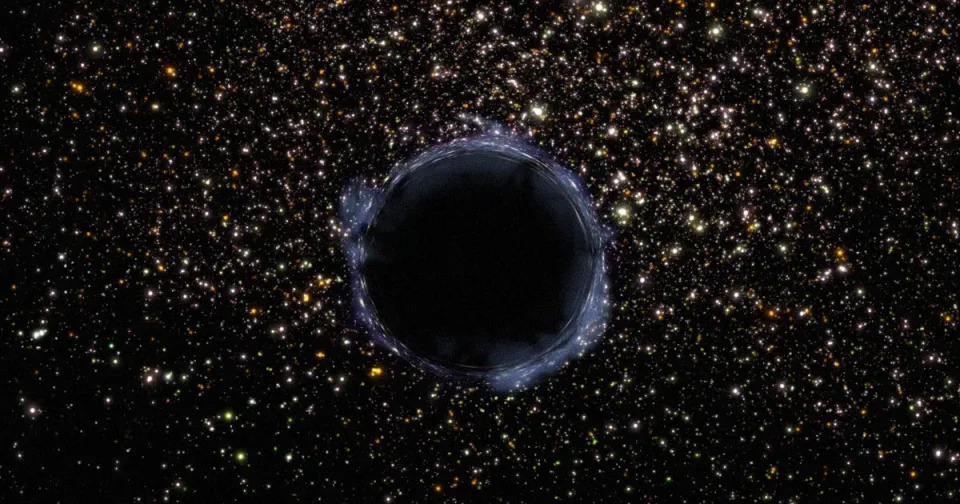
Their new theory is predicated on recent observations that suggest our solar system is located in a region where there's relatively little matter as compared to other corners of the known universe, akin to an "air bubble in a cake," according to a press release — basically a big void where stuff is much less dense than it is elsewhere in the universe.
Hubble Bubble

The researchers came to their conclusion by studying how fast relatively close supernovae move away from the Earth. By calculating their speed, the team arrived at an entirely different value for the Hubble-Lemaitre constant.

"The universe therefore appears to be expanding faster in our vicinity — that is, up to a distance of around three billion light years — than in its entirety," explained astrophysicist and University of Bonn professor Pavel Kroupa, coauthor of a new paper published in the journal Monthly Notices of the Royal Astronomical Society, in the statement.

The conclusion could help explain why astronomers recently observed that there was a local "under-density" in our region of space.

"That’s why they are moving away from us faster than would actually be expected," added University of St. Andrews research fellow and coauthor Indranil Banik.

Since the current standard model doesn't account for these "bubbles," the researchers suggest we should reexamine some fundamental laws that date back over 100 years.

"The standard model is based on a theory of the nature of gravity put forward by Albert Einstein," Kroupa said. "However, the gravitational forces may behave differently than Einstein expected."

As a result, the team has come out in support of "modified Newtonian dynamics," which were originally proposed by Israel physicist Mordehai Milgrom in 1982.

In theory, the idea could make the Hubble tension disappear altogether. But it'll need to withstand a storm of scientific scrutiny first.

More on the cosmological constant: Scientist Says Universe Expansion May Be an Illusion
NASA commemorates 25th anniversary of International Space Station: ‘Absolutely amazing’


Tara Suter
Wed, 6 December 2023 


NASA on Wednesday celebrated 25 years of the International Space Station’s (ISS) operations.

The first two modules of the ISS, named Zayra and Unity, were joined together 25 years ago on Dec. 6, 1998. NASA Associate Administrator Bob Cabana and ISS Program Manager Joel Montalbano spoke to the seven members of the Expedition 70 crew aboard the station Wednesday to mark the occasion.

“I cannot believe it was 25 years ago today that we grappled Zarya and joined it with the Unity node. Absolutely amazing,” Cabana said in the call with ISS crew members.

The space station itself commemorated the occasion on its account on X, the platform formerly known as Twitter.

“The station celebrates 25 years of operations today as the Exp 70 crew conducted aging, mental health, and cognition research while continuing ongoing cargo operations,” the station said in a Wednesday post.

Back in September, an international crew of astronauts known as “Crew-6” returned home after a mission to the ISS. The crew featured two NASA astronauts, Stephen Bowen and Woody Hoburg, United Arab Emirates astronaut Sultan Alneyadi and Roscosmos cosmonaut Andrey Fedyaev.

“After spending six months aboard the International Space Station, logging nearly 79 million miles during their mission, and completing hundreds of scientific experiments for the benefit of all humanity, NASA’s SpaceX Crew-6 has returned home to planet Earth,” NASA Administrator Bill Nelson said in a release.

The three-nation crew “demonstrated humanity’s shared ambition to reach new cosmic shores. The contributions of Crew-6 will help prepare NASA to return to the Moon under Artemis, continue onward to Mars, and improve life here on Earth,” Nelson continued.

Public can tune in as NASA live streams space station's 25th anniversary call to crew


Patrick Hilsman
Tue, 5 December 2023

NASA will mark the 25th anniversary of the International Space Station with a call between crew and NASA officials Wednesday. File Photo by NASA/UPI

Dec. 5 (UPI) -- NASA officials will mark the 25th anniversary of the International Space Station with a call to the crew Wednesday, and the public and tune in.

"During a space to Earth call at 12:25 EST Wednesday, Dec. 6, the Expedition 70 crew will speak with NASA Associate Administrator Bob Cabana and Joel Montalbano, space station program manager," NASA said in a press release Tuesday.

NASA will live stream the event on NASA TV, YouTube and via the NASA App.

The commemoration will mark 25 years since the Zarya and Unity modules were connected by the crew of shuttle Endevour on Dec. 6, 1998.

Current NASA Associate Administrator Bob Cabana was the commander of the STS-88 shuttle mission that assembled the two modules.

"More than 3,300 research and educational investigations have been conducted on station from 108 countries and areas," NASA said. "Many lay the groundwork for future commercial destinations in low-Earth orbit and exploration farther into the solar system."

According to NASA, the ISS has been continuously inhabited for 23 years and has hosted 273 occupants.

The ISS is a rare cooperative project between Russia and the United States at a time of elevated tension between the two global superpowers caused primarily by Moscow's invasion of Ukraine.

On Friday, a Russian Progress spacecraft took off from the Baikonur Cosmodrome in Kazakhstan with supplies for the ISS.

Ukrainian university developing Earth imaging nanosatellite


The New Voice of Ukraine
Tue, 5 December 2023 

Ukrainian scientists create a nanosatellite for Earth sensing

The Kyiv Polytechnic University has received UAH 5.2 million ($141,738)
CHEAP LIKE BORSCHT
 from the state budget to complete the PolyITAN-12U imaging nanosatellite project, Vitaliy Pasichnyk, Vice-Rector for Research at the university, told Liga.Tech outlet on Dec. 5.

The funds will also be used to modernize the ground communication station that receives data from the satellite. This upgrade will also reduce the overall development and launch costs.

Read also: Top ten most effective Ukraine-made weapons


PolyITAN-12U will be the first Ukrainian nanosatellite with an optical scanner for remote monitoring and imaging. The scanner's resolution is from 2 to 4 meters per pixel, which puts it on par with leading spacecraft of this class.

Read also: Majority of Ukrainian combat drones produced domestically — Minister Kamyshin

This opens opportunities for obtaining detailed satellite images of different parts of the Earth, Pasichnyk said.

This technology may be of interest to farmers and ranchers not only in Ukraine but also abroad. The information obtained from the satellite has the potential for commercial use, marking an important step in the development of the Ukrainian space sector.
Earth's core may be coated in a layer of crystals created by water leaking from the surface: study

Marianne Guenot
Tue, 5 December 2023 

An artist's impression of how water could seep into the Earth, creating a layer of crystals around the core.
Image courtesy Yonsei University

Water leaking into the Earth may be wrapping the core in crystals, a study has suggested.


The study may help explain a weird area in the outer core that has long puzzled scientists.


One expert said the theory needs more evidence to be widely accepted.

Water leaking from the surface of the Earth could be changing the outer rim of our planet's core and wrapping it in a layer of crystals, according to a study.

The experimental research could help crack the mystery of an elusive part of our planet known as the "E-prime layer," an area in the Earth's outer core that has long baffled scientists.

The research could also challenge the idea that the Earth's molten iron core is almost hermetically sealed, study author Dan Shim, a professor of Earth and Space exploration at Arizona State University, said in a press release.

"For years, it has been believed that material exchange between Earth's core and mantle is small. Yet, our recent high-pressure experiments reveal a different story," said Shim.

The finding "points to a far more dynamic core-mantle interaction, suggesting substantial material exchange," he said.

Another expert, however, said more evidence is needed to support this theory.
We still don't know everything about our planet's insides

The Earth's core is only about 1,800 miles under our feet, but it's more inaccessible than Mars.

Intense pressures and high temperatures mean we can't go down there to see what's going on for ourselves.

One way experts peer under our feet is by looking at how seismic waves are deflected by structures inside the Earth. And some of that data doesn't stack up with what we know about our planet.

One of these mysteries is a zone on the outer rim of our Earth's iron core where seismic waves unexpectedly slow down.

The zone, which measures between a few dozen to a few hundred miles in width, has tentatively been suggested to be a layer in its own right and was named E-prime.
Water-logged minerals could spawn crystals around the core's rim

Scientists haven't found a good explanation for that data yet, and that's important — understanding the Earth's core doesn't only help us decipher how our planet was formed and continues to evolve, but it could also shed clues on fluctuations in the Earth's magnetic field.

With their study, published in the peer-reviewed journal Nature Geosciences on November 13, Shim and his colleagues have put forward a new theory to explain the formation of the E-prime layer: that water leaking from the surface can reach the outside of the core and change its chemical composition.

This water wouldn't seep into the Earth as a liquid. Instead, it would be carried by minerals that contain a lot of hydrogen and oxygen inside their chemical structure — these are called "hydrous" minerals.

An artist's representation of crystals forming from water melding with elements found in the inner core.
Dan Shim/ASU

To support their hypothesis, the scientists simulated the high-pressure conditions of the outer core in the lab. They found that subjecting iron-silica alloys — which are thought to make up the core — to the hydrous mineral in these conditions generates hydrogen-rich and silica-poor elements, which would explain the bizarre seismic data around the E-prime layer.

Meanwhile, the scientists believe the reaction would also spark silicate crystals. These would migrate toward the mantle, creating a dense layer of silica wrapping the core, per the press release.

"We found that when water reaches the core-mantle boundary, it reacts with silicon in the core, forming silica," said Shim in the press release.

The idea is a tall order — scientists tend to think the core gets very little material from the mantle.

If proven to be true, it could also rewrite what we know about how water moves around the insides of the Earth, and would have "profound implications for the geochemical cycles that connect the surface-water cycle with the deep metallic core," the scientists said in the press release.

Jon Wade, Associate Professor of Planetary Materials at Oxford University, told Business Insider in an email the theory "requires further supporting evidence" to garner widespread approval, he said.

There is some evidence that hydrous minerals can be sucked into the Earth — a 2014 study even suggested that there could be a reservoir of water-rich minerals three times bigger than the surface oceans stored about 400 miles under the Earth's crust.

But it's not clear whether that process would bring water all the way to the core, and if it did, whether enough water would make it that far inside the Earth to trigger a reaction on a scale that could explain the E prime layer, said Wade.

"Even if there is a fair amount of water transported to the deep Earth, there are lots of places (3000km of mantle) to 'lose' water to before it makes it the core-mantle boundary," he said.

"So, could it happen? Yes, maybe. Does it? Don't know, probably a very minor amount at best," he added.

For him, a "more likely route" would be that hydrogen was encased in the core by a reaction with the core materials, but at the point of the Earth's formation, for instance.

"Other mechanisms may be at play that achieve the same result. It's all kind of speculative but interesting to think about!" he said.

Shim agreed that it's not clear how much water can reach the E-prime layer, but said even a small amount of water could trigger enough chemical reaction to create crystals.

He added that his calculations show that he can explain the E-prime layer "reasonably well" with a range of water transportation scenarios.