Thursday, December 07, 2023

Scots react to 'upsettingly accurate' clip from Simpsons episode set in Scotland

James Walker
Tue, 5 December 2023 

The episode AE Bonny Romance is the eighth in the 35th series of the Simpsons (Image: X/Twitter)

SCOTS have reacted with a mix of glee and amusement to a clip from a forthcoming episode of the Simpsons set in Scotland.

The episode AE Bonny Romance is the eighth in the 35th series of the Simpsons. It aired in the US on December 3 and is due to be shown in the UK in the new year, but clips have been leaked to social media as Scots react to how the country is being portrayed.

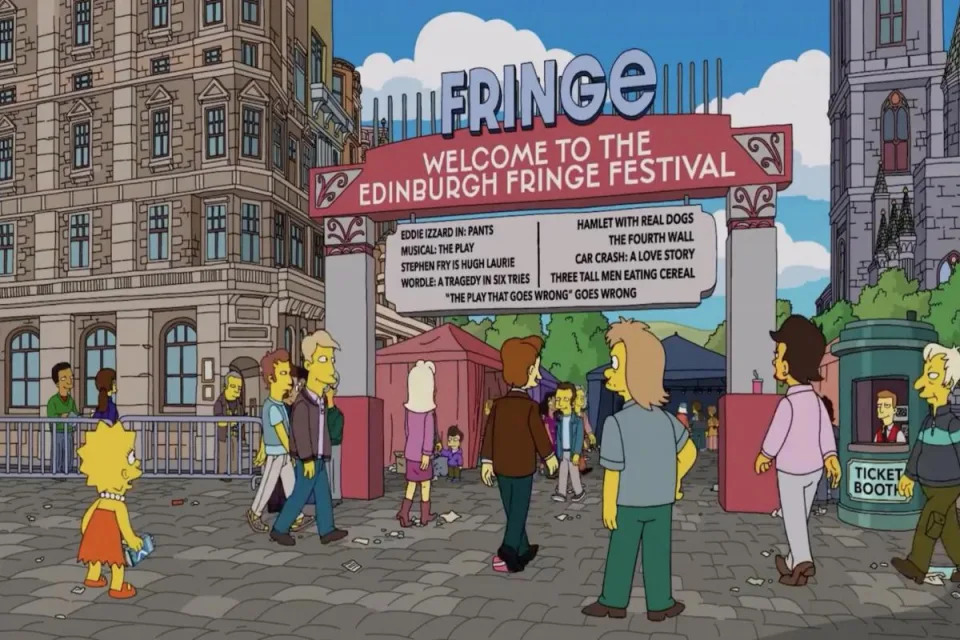
Writer Daniel Jackson shared a clip of Lisa on X/Twitter walking up the Royal Mile in Edinburgh as she visited the Fringe Festival. He called it “upsettingly accurate”, with Lisa calling the festival a “celebration of theatrical irony and self-awareness”, going on to call one of the acts “so clever without being good”.


Another social media user called the latter quote the “most accurate assessment of 90% of the Edinburgh Fringe I’ve ever heard”, while another added: “Absolutely skewered - love it.”

The upcoming episode from season 35 of the smash-hit American animated sitcom will see Homer, Marge, Bart, Lisa, and Maggie cross the Atlantic to visit Scotland.

It will feature a storyline with Groundskeeper Willie – the Scottish character who came out in support of independence in a 2014 video.

READ MORE: Scottish stars join The Simpsons cast for episode based in Scotland

The Simpson family follows Willie to Scotland amid concerns that he has been “kidnapped”, but finds that it was all a ruse to have them attend his wedding to a girl named Maisie.

Maisie is voiced by the first of the major Scottish stars in the show – the Inverness-born Karen Gillan.

The Avengers actress is joined by Dr Who star David Tennant and Paul Higgins, known for his appearances in hit shows including The Thick of It and Line of Duty.

And the Scottish band Belle and Sebastian have also been immortalised as Simpsons characters for the episode.
GB
XL bully owners race to send dogs to Scotland ahead of ban


Mark Macaskill
Wed, 6 December 2023 

Some XL bully dogs have already been sent to Scotland

American XL bully dogs are being rehomed in Scotland ahead of a ban on breeding and selling the animals in England and Wales.

Social media posts suggested that several of the dogs have been transported north of the border as owners seek to escape a new law that comes into force within weeks.

Campaigners fear that early reports of cross-border traffic involving XL bully dogs add weight to concerns that many breeders will relocate their entire operations to Scotland and Northern Ireland.


Images of the animals being transported in cages emerged on TikTok, the social media platform. One photograph was captioned: “We found safe homes for them all in Scotland.”

The dogs are being sent to Scotland in cages

On Facebook, Bedlay Gardens, a dog boarding company based in Chryston, Lanarkshire, shared a post on Monday revealing that the first pick-up of XL bully dogs had taken place with the “pups” set to be “behaviourally assessed” before meeting their new families.

It showed images of six dogs in the back of a van as they were transported from Manchester.

There are estimated to be at least 10,000 XL bullies in the UK and rescue centres have been inundated with requests to take in unwanted pets since Rishi Sunak, the Prime Minister, announced plans to clamp down on the breed.

From Dec 31 it will be illegal to breed, sell or rehome XL bully dogs in England and Wales while owning one without an exemption certificate will be outlawed from Feb 1.

The ban will not apply in Scotland after SNP ministers argued that the move was premature, despite a spate of dog attacks.

SNP ministers have been warned that Scotland could be a 'dumping ground for dangerous dogs'

Doug Smith, of the campaign group Bully Watch, warned that Holyrood’s failure to follow Westminster’s lead would result in an influx of the dogs north of the border, adding that there were “significant concerns about Scotland’s divergence on the ban”.

It follows a string of fatal attacks linked to XL bully dogs in recent years including the deaths of David Price, 52, in Staffordshire and Ian Langley, 54, in Sunderland.

In Scotland, Adam Watts, 55, was killed by an XL bully at his kennels business in Angus in Dec 2021.

A six-month-old XL bully savaged its teenage owner in Motherwell in October, leaving him needing surgery. The same month, a court heard how another XL bully mauled three children in Forfar.
‘Threat to public safety’

Michael Gove, the Levelling Up Secretary, had pleaded with SNP ministers to join the ban “in light of the threat to public safety”.

In a letter to Shona Robison, the Deputy First Minister, he argued that “it is vital we agree a shared solution which minimises the risk of creating a potential ‘dumping ground’ for dangerous dogs that are moved from England and Wales to Scotland”.

In November, Siobhan Brown, the SNP community safety minister, wrote to the UK Government formally rejecting the request. She said it would not be introduced in Scotland at the same time as “relevant evidence in this area” was still being assessed.

Ms Brown also sought assurances that English XL bully owners trying to get rid of their dogs would not be allowed to sell them in Scotland.

The Tories accused the SNP of “gambling with lives” by rejecting the invitation and claimed they were “yet again picking a constitutional fight with the UK Government”.
‘Dragging their heels’

The Tory MSP Jamie Greene told the Scottish Sun: “This is the inevitable and potentially dangerous consequence of the SNP dragging their heels over what action to take. They need to recognise the impact that dogs being [taken] north of the border to avoid restrictions might have on public safety.”

The Scottish Government said it was not given prior notice of the UK Government’s intention to implement the ban.

“We expect the UK Government to act responsibly and ensure there is no impact on Scotland of its decision,” it added.

“Any change to rules must be evidenced-based, and we are moving swiftly to carefully consider the evidence so we can make the right decision for Scotland.”
Opinion
The Guardian view on Tory ideology: Thatcherism isn’t working – it never did

Editorial
Wed, 6 December 2023 

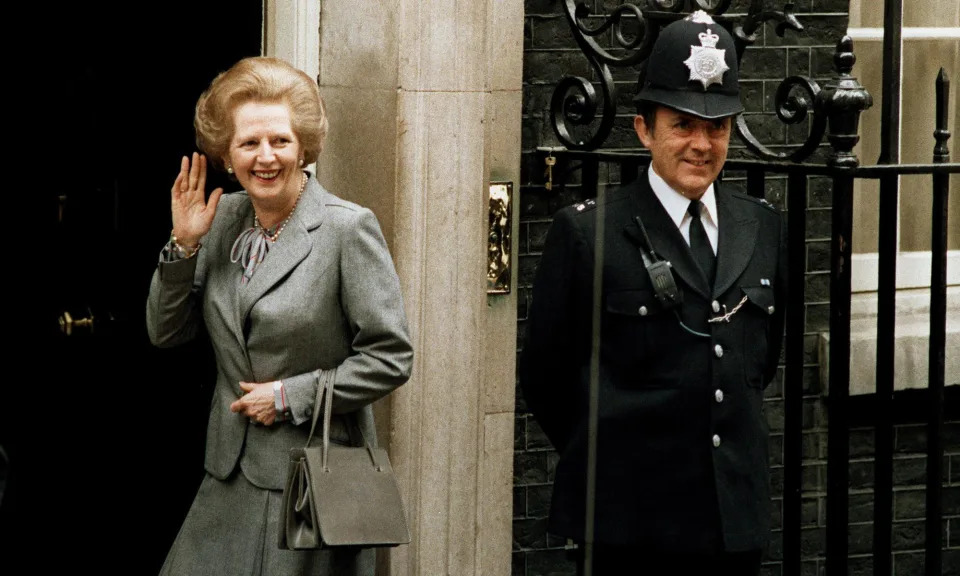
Photograph: John Redman/AP

A spectre is haunting British politics. Its outline is instantly recognisable to every Briton of a certain age: hair coiffed into a halo, shoulders firmed up with pads and, jutting out from the left wrist, the inevitable handbag.

More than three decades after she was driven out of No 10, and a decade after her death, Margaret Thatcher still casts a long shadow over the country she once ruled, and her party. Rishi Sunak sat in her old Rover (and tweeted about it, naturally) and Liz Truss copied her wardrobe. She influenced the Labour party under Tony Blair, though this admiration was first tempered by Labour under Ed Miliband and even more under Jeremy Corbyn. Sir Keir Starmer’s praise for Mrs Thatcher is perhaps more about internal Labour politics than about the Tories’ “leaderene”.

For some, however, she remained the country’s “saviour”. As the UK became the sick man of Europe, along came its first woman prime minister – closing down industries and cutting spending. Supporters acknowledge this hurt, but say it worked. History has not been kind about such judgments. Her emphasis on monetarism proved wrong. She bequeathed a dismal legacy of greed and inequality.

At its very outset in 1979, her government claimed public spending “lay at the heart of Britain’s economic difficulties”. Yet over her 11 years in power, while tax rates fell, especially for top earners, national insurance contributions and VAT rose. The result, as the economists Kevin Albertson and Paul Stepney observe, is that by her forced departure in 1990, central government took more of national income than it did in 1979. They also point out that in cash terms, the state spent more by the end of Thatcher’s time in Downing Street than it did at the start. Measured against GDP, the state did shrink in the late 1980s – but as soon as recession returned under her successor, John Major, it grew again.

Consider too her other big boasts. Property-owning democracy? More than 1.5m council homes were flogged off at a vast discount, and hardly any built to replace them. Today the state pays vast sums to landlords to house tenants. Popular share ownership? Even after all the “Tell Sid” campaigns, individual ownership of shares slumped in the 198os – and today is less than half what it was in 1981. The state sell-offs have not been successes: witness the mess at Thames Water.

There was no Thatcher miracle, only a myth manufactured by the Iron Lady herself. Politicians and their admirers enjoy the idea of a visionary leader engineering a sensational transformation, which is why Westminster thrills to the sound of a “northern powerhouse” or a “green new deal”. But, in a mature economy with an ageing population, it is both economically implausible and damaging to democracy. If Westminster keeps telling the people of Blyth or Blaenau Gwent that they are living through some golden age, despite all the evidence in their payslips and on their high streets, then the established tribes of SW1 will eventually be ignored altogether. And to a large degree this is the story of British electoral politics over the past few years. Myths can cost a country dear.
UK
Boris Johnson ‘trying to rewrite history’ before Covid inquiry appearance

Peter Walker, Pippa Crerar and Ben Quinn
Wed, 6 December 2023 

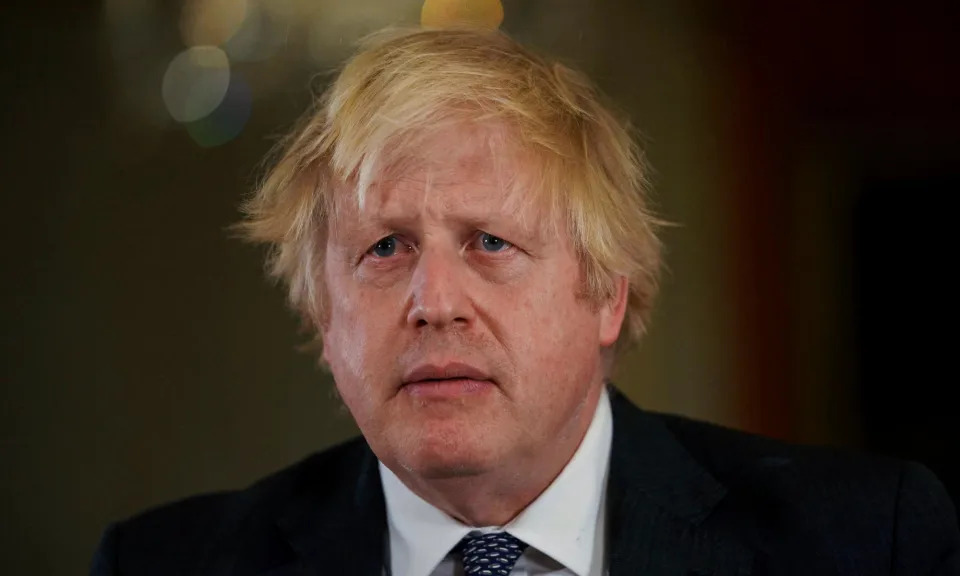
Photograph: Kirsty O’Connor/AP

Boris Johnson has been accused of trying to rewrite history in advance of his appearance at the Covid inquiry on Wednesday, as unions and relatives of those who died said his team had been briefing favourable stories to newspapers.

The TUC and Covid-19 Bereaved Families for Justice UK, both core participants for this module of the inquiry, said the briefings had been about trying to salvage his legacy and contained “the usual lies and bluster”.

Johnson’s team have apparently helped to provide newspapers with a string of favourable stories before his appearance.


While briefings are within the rules, this is not the case if they rely on any materials provided to the inquiry, including witness statements. Heather Hallett, the chair of the inquiry, explicitly warned against briefing out details of witness statements in October.

Allies of Johnson insist he has not done this and that apparent direct quotes from his witness statement appearing in one report must have been leaked from another source.

If Lady Hallett sees things a different way, an already uncomfortable 48 hours for Johnson being questioned by Hugo Keith KC, the inquiry counsel, could begin with a direct reprimand.

After the existence of “disgusting and misogynistic” WhatsApp messages involving Dominic Cummings, Johnson’s former chief aide, was revealed in advance by the former chancellor George Osborne on his podcast, Hallett urged all those with access to evidence “to respect the terms on which it has been shared with them”.

It comes amid reports that six months-worth of Johnson’s own WhatsApp messages covering the start of the pandemic and lockdown cannot be retrieved due to “technical issues”.

Nathan Oswin, who leads on the inquiry for the TUC, said: “This inquiry is about learning the lessons of what went wrong so that we can save lives in the future. It shouldn’t be abused by politicians looking to salvage their legacies and rewrite history. Boris Johnson and Rishi Sunak must play by the rules and put people above their own political fortunes.”

Matt Fowler, a spokesperson for Covid-19 Bereaved Families for Justice UK, said: “Boris Johnson’s team appear to have been leaking his witness statement left, right and centre ahead of his appearance tomorrow. Unsurprisingly, the claims he’s making are the usual lies and bluster.

“The inquiry has already entirely debunked the claim that ‘he got the big calls right’. In reality, when news of the pandemic first struck, Johnson treated it all like it was a joke, and as cases began to rise he delayed locking down, causing thousands of unnecessary deaths, such as my dad’s. Even worse, when the second wave came around he repeated all of the same mistakes, leading to even more people dying than in the first wave.”

A source close to Johnson insisted that the former PM’s team had not leaked any evidence in advance, adding: “We are as upset about this as they are.”

Bereaved relatives and others are expected to protest outside the inquiry venue in Paddington, west London, as Johnson arrives. He is the only witness this week for the current module, which examines decision-making and government structures during Covid.

Johnson is expected to admit that errors were made but try to argue that there were some successes, for example the speed of the initial vaccine rollout, and efforts to swiftly reopen the economy as the pandemic eased.

He has spent many hours been briefed by his own legal team but, like all witnesses, he will face Keith and barristers for core participants without any support or notes.

As well as a chronology of the decisions made, he is likely to also be asked about the structure and personalities of a Downing Street operation described by some previous witnesses as having a “culture of fear”, “poisonous” and “mad”.
WAIT, WHAT?!
UK
South East Water pays out £2.3m in dividends amid widened losses and Ofwat probe

Holly Williams, PA Business Editor
Thu, 7 December 2023 


South East Water has revealed it paid out £2.3 million in dividends to investors despite widened losses and a £3 million cost hit from summer heatwaves and supply interruptions.

Details of the payout came as the supplier – which is under investigation by regulator Ofwat over its service to customers and record in maintaining a water supply – reported pre-tax losses of £18.1 million for the six months to September 30, against losses of £12.7 million a year earlier.

It comes just days after troubled rival Thames Water announced a £37.5 million dividend to its parent company – with the payout being probed by Ofwat over concerns it may have broken rules designed to protect customers and the environment.

South East Water insisted its dividend was down on the £4.5 million paid out a year earlier and was “lower than Ofwat’s view of what is a reasonable nominal dividend yield”.

But it comes after a dire summer for South East Water, which is currently the worst performer for water supply interruptions in England and Wales, according to Ofwat.

It revealed in half-year results that costs surged over the half-year, pushed higher by a bill for a summer of water interruptions, with £3 million forked out – including £1.5 million in compensation and £700,000 for providing bottled water to households and customers.

South East Water imposed a hosepipe ban earlier this year, blaming exceptionally hot weather and more people working from home for ramping up demand and “testing” its infrastructure.

Ofwat launched a probe into the firm in November, saying that “too many customers have been failed too often” by the supplier.

South East Water serves about 2.2 million households and businesses in Surrey, Kent, Sussex, Hampshire and Berkshire.

The group’s bosses said on announcing its results: “Unprecedented extreme weather events were the cause of the majority of supply interruptions, but we appreciate that problems experienced by our customers will result in lower levels of customer satisfaction.

“We are deeply sorry to customers who have been affected by supply interruptions and continue to work tirelessly to recover.

“We have 52 teams actively repairing leaks, and 40 technicians proactively looking for them.”
New UK animal welfare minister backed seal and wild bird culls

Daisy Cooper MP, the Liberal Democrats’ deputy leader, said: “What an embarrassing mess. How is a gun going to save fish from drowning in sewage?


Helena Horton and Rowena Mason
Wed, 6 December 2023 

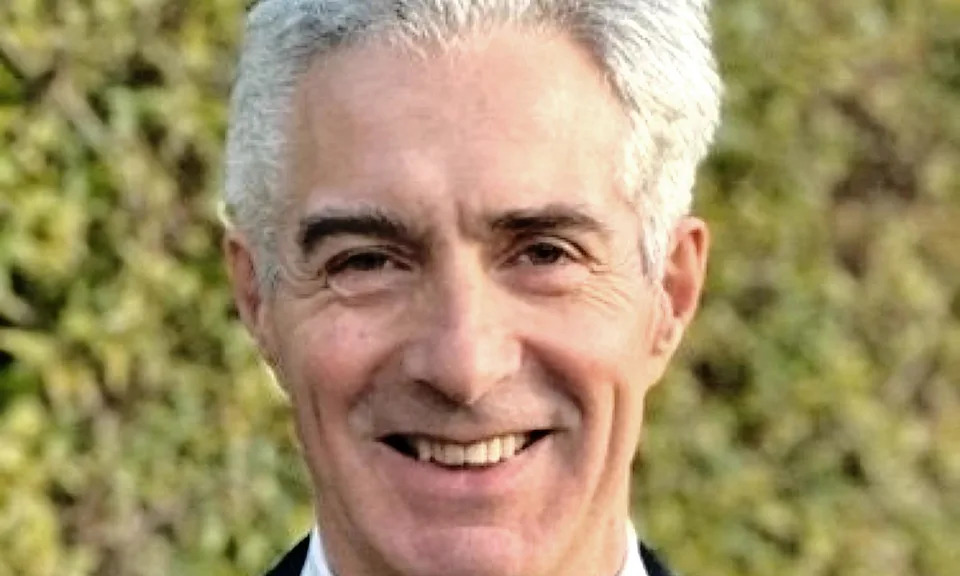
Photograph: linkedin

Downing Street is facing calls to explain why it has appointed a wealthy, unelected shooting enthusiast as its animal welfare minister after it emerged he has backed the culling of seals and wild birds.

Robbie Douglas-Miller, who was last week given a peerage to allow him to become minister in the Department for Environment, Food and Rural Affairs (Defra), owns a grouse moor in Scotland and has argued for the relaxation of rules on shooting wild birds that prey on salmon.

He is also on the board of a fishery which applied to obtain a licence to kill seals in 2021; last year he gained a licence to kill wild cormorants and sawbill ducks.

In 2016, Douglas-Miller complained about the impact of seals and birds on salmon stock. The peer said in a letter to supporters of the Atlantic Salmon Trust, which he chaired: “Difficulties do remain with a lack of understanding of the impact of predation by increasing numbers of fish-eating birds and a burgeoning seal population – all enjoying protection by law.”

Experts disagree that shooting seals protects salmon. Hugo Tagholm, executive director of Oceana UK, said overfishing, salmon farming and poor water quality are drivers of salmon decline, not seals which evolved alongside salmon: “It is these issues we should be focused on, not shooting our seals. The UK can be proud of the fact that it is home to internationally important populations of seals. But they need our protection: since they are slow to reproduce and vulnerable to the climate crisis and disease, any increase in adult mortality can quickly affect a population, destroying a keystone species of our rich marine wildlife.”

Douglas-Miller was made a baron on Friday in a surprise appointment as an environment minister and given the portfolio responsibility for animal welfare this week.

In September, he signed a letter with fellow grouse moor owners lobbying the Scottish government to water down new laws that bring in licences for grouse-shooting in an effort to address persecution of birds of prey.

Scotland is a stronghold for the grey seal and thousands of tourists travel to see them and their fuzzy, white young. With big eyes and long whiskers, they are one of the rarest species of seal and about 50% of the world’s population lives in British and Irish waters. Dr Ruth Tingay, a bird expert who runs the Raptor Persecution blog, said: “This appointment is both surprising and concerning in equal measures. I’m also deeply suspicious of the timing of it.

“We’ve already got one wealthy, unelected grouse moor-owning Defra minister in Lord Benyon, why do we need another one and why has this appointment been made now when the government is hurtling towards certain defeat in an imminent general election?”

Douglas-Miller owns over 4,000 acres in Scotland and is relatively unknown in the environment sector.

His family once ran the famous Jenners department store known as the Harrods of the North, which was frequented by the Queen and held a Royal Warrant.

The minister is also connected with King Charles. The monarch was a patron of the Atlantic Salmon Trust and Alister Jack, the Scotland secretary, sat on the board.

There now appears to be a trend of unelected, grousemoor owning Lords being given positions at Defra. Lord Benyon has for years been a Defra minister. He owns vast swathes of land and last year was subject to protests for restricting parts of his estate from ramblers. Douglas-Miller has also been criticised by ramblers for obstructing access to his estate.

Caroline Lucas, Green Party MP for Brighton Pavilion, said: “This appears to be a wholly inappropriate appointment, which is something we’ve come to expect from Rishi Sunak. An unelected wealthy landowner who has restricted public access to nature, and supported shooting at protected birds, is not someone I’d trust to prioritise animal protection, improve nature access and urgently restore our natural environment.

“There are many questions to be answered. What will his responsibilities within the department be, and why do we still not know a whole four days after his appointment? Did the government consider his potential conflicts of interest before giving him the job? And why, when Rishi Sunak has 349 other MPs to choose for the job, does he opt for an unelected landowner?”

Daisy Cooper MP, the Liberal Democrats’ deputy leader, said: “What an embarrassing mess. How is a gun going to save fish from drowning in sewage?

“This Conservative government cannot be trusted to keep animals safe. They have failed spectacularly on the environment and the public are fed up of it.”


A Defra spokesperson said: “The minister is fully committed to the government’s world-leading reforms on animal welfare, conservation and nature recovery.”
Jacob Rees-Mogg: Keir Starmer would be welcomed by the Tories with open arms

“He must be among the most ardent of Eurosceptics, a member of the ‘Go for Growth’ movement, a Thatcherite – a Trussite even – a capitalist, a sensible, free market Conservative.

“I’m of course talking about the leader of the Labour party – the socialist party – Sir Keir Starmer.”


Archie Mitchell
Wed, 6 December 2023 


Sir Keir Starmer would be welcomed into the Conservative Party with “open arms”, Sir Jacob Rees-Mogg has said.

The top Tory and arch-Brexiteer said the Labour leader’s recent article in the Telegraph, in which Sir Keir praised Margaret Thatcher, sounded like a Conservative minister launching a leadership bid.

Sir Keir’s article, under the headline “voters have been betrayed on Brexit and immigration”, read like something by “the most ardent of Eurosceptics” or a “Trussite”, Sir Jacob added.

He added: “As a Tory member, I would like to extend a welcome to the Leader of the Opposition with open arms.”

The Tory former minister was commenting after Rishi Sunak suggested Nigel Farage would be welcome to join the Conservatives – insisting his party was a “broad church”.

“The more pressing question is not whether Nigel Farage will join the Tory Party, but whether Keir Starmer is planning to defect and launch a Tory leadership bid,” he told GB News.

A Labour spokesman said: “What Jacob Rees-Mogg knows is that the travel is all in the opposite direction with former Tory voters backing Keir Starmer’s changed Labour Party to end thirteen years of Tory decline and give Britain its future back.”

The Labour leader sparked a backlash with his article, in which he said Mrs Thatcher had effected “meaningful change” and “set loose Britain’s natural entrepreneurialism”.

He also sought to outflank Mr Sunak by appealing to Tory voters on Brexit and migration.

In a shift from his staunch opposition to Britain leaving the EU, Sir Keir said the Tories have “failed to realise the possibilities of Brexit”.

He said he “profoundly disagrees” with the idea Labour should duck topics such as small boat crossings and immigration.

And he added: “This is a government that was elected on a promise that immigration would ‘come down’ and the British people would ‘always [be] in control’. For immigration to then triple is more than just yet another failure – it is a betrayal of their promises.”

Sir Jacob, who served as business secretary under Lizz Truss, said: “A man wrote an article for The Telegraph last week entitled ‘Voters have been betrayed on Brexit and Immigration.’

“This reads as if it were vintage Farage. The man in question went on to hail Margaret Thatcher, as the leader who dragged Britain out of its stupor by setting loose our natural entrepreneurialism.

“He then went on to criticise the wasted money, the high debt and the record-high tax burden. He sounds as if he could be a member of the ERG!”

Sir Jacob added: ““So, who is this man? This great Conservative-sounding figure? Is he a cabinet minister waiting in the wings for a Tory Party leadership bid? One setting out his stall – along with a number of other ministers who seem to be circling.

“He must be among the most ardent of Eurosceptics, a member of the ‘Go for Growth’ movement, a Thatcherite – a Trussite even – a capitalist, a sensible, free market Conservative.

“But – the man I’m referring to is not Nigel Farage, Boris Johnson, Liz Truss or even me, for that matter.

“I’m of course talking about the leader of the Labour party – the socialist party – Sir Keir Starmer.”
Ireland to hold referendums on removing outdated gendered language from constitution

Euronews
Wed, 6 December 2023 

Ireland to hold referendums on removing outdated gendered language from constitution


Ireland is set to hold two referendums next year proposing amendments to two articles of its Constitution that refer to women's traditional domestic role as the foundation of Irish society.

The twin votes are set to be held on 8 March, International Women's Day.


One proposes to delete Article 41.2 of the Constitution, which states that "the State recognises that by her life within the home, woman gives to the State a support without which the common good cannot be achieved", and that "mothers shall not be obliged by economic necessity to engage in labour to the neglect of their duties in the home."


The proposal would replace this wording with an amended version that contained gender-neutral language.

Deputy Prime Minister Micheál Martin said on Tuesday the wording of the "outdated" article "no longer reflects modern life", while Equalities Minister Roderic O'Gorman noted "archaic" and "sexist" references to housewives "have achieved nothing".

The other vote would amend a different article of the Constitution to ensure that protections are not limited to families with married parents.


This amendment would "recognise that families can also be based on other enduring relationships than marriage", said Prime Minister Leo Varadkar, citing the example of a single-parent family or those headed by grandparents or guardians.


The Irish Constitution was drafted in 1937, at a time when public and private life in the country was dominated by a highly conservative and puritanical brand of Catholicism.

It took decades from the foundation of the current republic before divorce, contraception and homosexuality were legalised.

But social politics have moved quickly in Ireland since the 1990s especially, with the role of conservative Christianity in society and state declining dramatically.

In the last decade, the country has voted overwhelmingly to relax abortion laws and allow gay marriage.

However, in parallel, Ireland's far-right has surged in recent years, encompassing religious fundamentalists, nationalists and anti-immigrant voices.


The final wording of next year's referendums is due to be approved by the government on Thursday.

The government has rejected a proposal to hold a third vote on new language for a different article of the constitution, 40.1, which reads: "All citizens shall, as human persons, be held equal before the law. This shall not be held to mean that the State shall not in its enactmen
ts have due regard to differences of capacity, physical and moral, and of social function."


It was suggested by a parliamentary committee and officially appointed citizens' assembly that the wording of the article be updated "to refer explicitly to gender equality and non-discrimination".

Yet, Prime Minister Varadkar said the government had declined to take up the proposal for fear that specifying "any particular category" of identity might "unwittingly downgrade" others.


UK
I've been an RMT trade unionist for 30 years. This is why the government has it wrong on HS2

‘Yahoo News - Insights’ is a new series in which we hear directly from people with an inside track of the big issues. Here, union leader Mick Lynch explains why he thinks scrapping HS2 is a disaster for the British economy
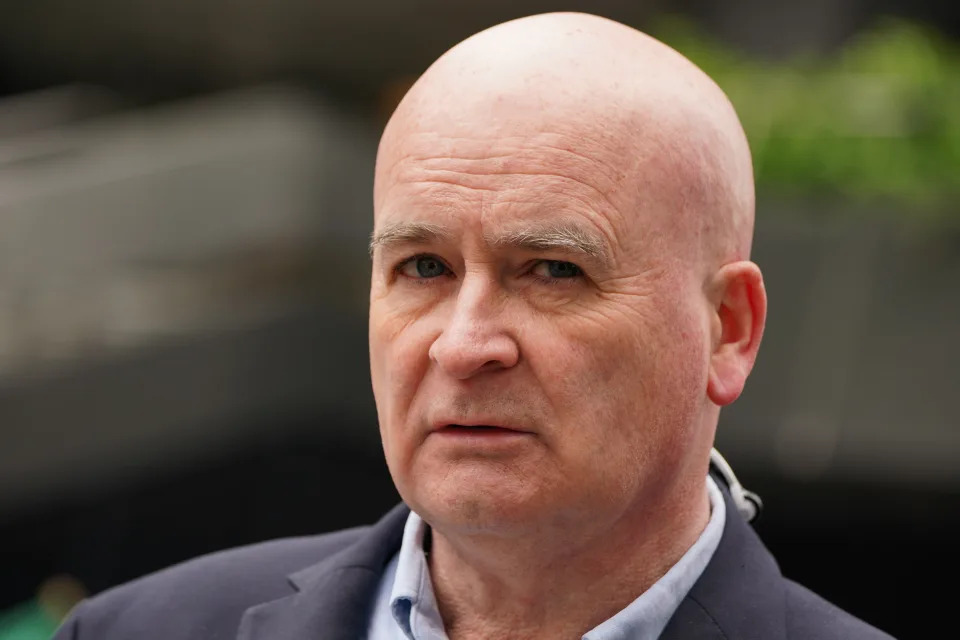

Mick Lynch: 'Money for key public transport infrastructure projects that would transform the country, could easily be afforded if the political will was there.'
 (Getty) (Lucy North - PA Images via Getty Images)

Mick Lynch has been general secretary of the Rail Maritime Transport Workers union for two years and a member since 1993. Lynch has since become a well-known public figure, leading calls for better wages and working conditions for railway workers as well as campaigning against compulsory redundancies in the sector.


Rishi Sunak announced he plans to scrap the Manchester leg of HS2. The announcement has largely been greeted with despair by political leaders in the North.

I grew up on a Paddington council estate, leaving school at 16 to become an electrician and worked in the construction industry.

After helping to form a new union in the sector, I was blacklisted for my trade union activity. This was confirmed when the conspiracy among major construction companies was finally brought to court. As a result of not being able to find work, I joined the railways in 1993 and worked at Eurostar, where I became an RMT activist. I never sought the post of general secretary but after being elected to the NEC and then assistant general secretary, I was encouraged to stand and I was elected in 2021.

Yesterday's announcement by Prime Minister Rishi Sunak that a northern leg of HS2 has been scrapped is a disaster for the British economy and a slap in the face to future generations.

Prime Minister Rishi Sunak (pictured) has delivered a "slap in the face" to future generations, says Mick Lynch. (Alamy) (Danny Lawson, PA Images)


Britain needs an integrated affordable and modern high-speed rail system that can connect every village town and city promoting increased economic activity. There has been much talk about the escalating budget of HS2. No doubt the use of private contractors, greedy consultants and advisers has not helped with the cost of this project. However, cost is not the reason why the Tories are scrapping a major part of HS2.

When the banks were bailed out in 2009, £750 billion was found. When we needed to implement furlough due to the unprecedented global pandemic, £139billion was found. And when energy companies pleaded poverty due to rising prices and people were struggling to pay their bills, the government found £40 billion.

Money for key public transport infrastructure projects that would transform the country, could easily be afforded if the political will was there. Instead, we have a millionaire prime minister who uses a helicopter to get around and is out of touch with what the country needs going forward.

Rishi Sunak tried to spin the line that he was creating a northern network with improved rail and bus travel whilst appealing to the motoring lobby with promises of improved motorways. Considering he has just scrapped a major infrastructure project, the public would be wise to be sceptical. And we know you can’t trust the Tories on transport when they are planning to de-staff our railway and close nearly every railway ticket office.
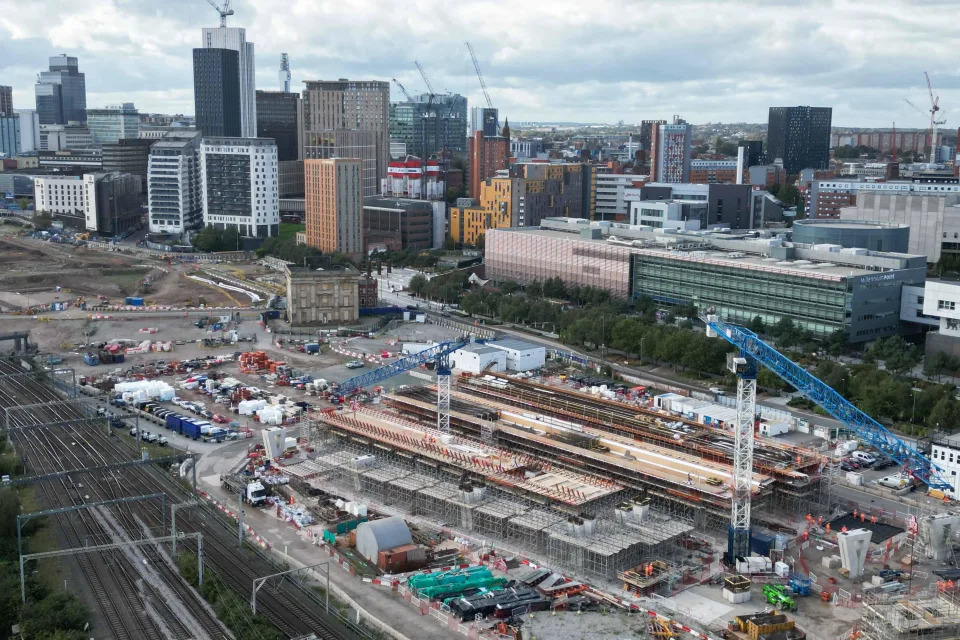
The construction site for the HS2 project at Curzon Street in Birmingham. Sunak has now axed plans for HS2 to run from Birmingham to Manchester. (Alamy) (Jacob King, PA Images)

But even if Sunak carries out his plan, including having HS2-branded trains travelling on normal non high-speed railway lines and increased bus services, it will not make up for the fact high-speed line from Birmingham to Manchester has been abandoned. Sunak presents investments in public transport infrastructure as an either-or equation, where we can have local transport networks but not interconnect the whole country.

Greater Manchester Mayor Andy Burnham has already criticised the prime minister’s ‘network north’ initiative saying that it doesn’t deal with the east-west travel problem that is in desperate need of being addressed. Mayor Burnham has correctly pointed out that the abandonment of HS2 to the north of England and full connectivity, will increase divisions in the country and hinder economic growth where it is most needed.

The full HS2 project including the abandoned London to Leeds, which was scrapped in 2021, would have represented the start, not the finish, of a high-speed revolution in Britain. Such an approach presents a different vision for the country; one that is about creating tens of thousands of jobs, being environmentally sustainable and a Britain that is in step with the rest of the world in high-speed rail technology.


Andy Burnham, the mayor of Greater Manchester, has argued in favour of retaining the Manchester leg of HS2. (Alamy) (Danny Lawson, PA Images)

This has been reflected somewhat embarrassingly by historic tweets both from former transport secretary Grant Shapps and current chancellor Jeremy Hunt. Shapps said on X (formerly Twitter) at the beginning of last year: “Imagine Manchester to London by rail in just 70 minutes?

"Today I’m laying a Bill in Parliament that will make this a reality - taking HS2 tracks from Crewe to Manchester – improving services, increasing connections, boosting local economies & creating 17,500 direct jobs."

And Hunt said in 2020: "No HS2 = no ambition for our country just when the whole world is looking at us. Now is a time to be AMBITIOUS." Now these ministers, along with this zombie government, are abandoning future generations both economically and environmentally in a desperate attempt to appeal to the most short term reactionary politics in order to hoodwink the public at a general election.

This attitude is mirrored in how they treat existing railway workers and refuse to give a mandate to train operating companies to do a deal with RMT.

As general secretary of RMT, I will not stop our industrial campaigning for our members jobs, decent working conditions and a pay rise until we have a fair settlement for our people that protects jobs, conditions, pay, and the service we work on. And we will continue to fight for the future of high speed rail as it is a key part of building a genuine brighter tomorrow.
UK
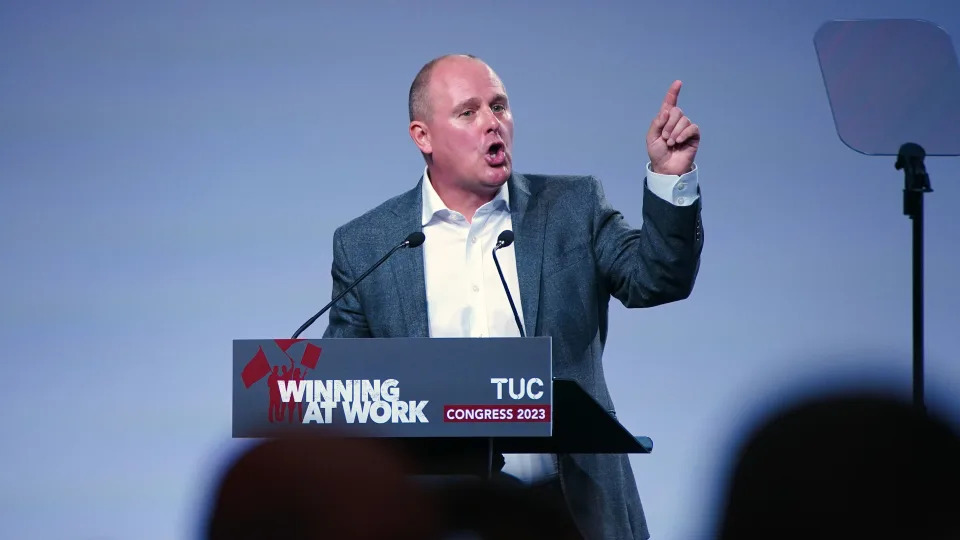
TUC accuses government of ignoring recommendations on new strikes law


Alan Jones, PA Industrial Correspondent
Wed, 6 December 2023 


The Government has denied claims it has “ignored” recommendations from the conciliation service Acas over its controversial new law on providing minimum levels of service during strikes.

The TUC said “serious concerns” had been raised about the new regulations, which have sparked anger from unions and opposition politicians.

TUC general secretary Paul Nowak has written to Business and Trade Secretary Kemi Badenoch saying ministers have “chosen to ignore” recommendations by Acas.

A Department for Business and Trade spokesperson said: “This is total nonsense from the TUC. We carefully considered all the responses we received during the consultation period, including from Acas.

“The purpose of this legislation is to protect the lives and livelihoods of the public and ensure they can continue to access vital public services.

“This Act does not remove the ability to strike but people expect the Government to act in circumstances where their rights and freedoms are being disproportionately impacted and that’s what we are doing.”

Mr Nowak said: “Acas raised serious concerns about the balance, clarity and practicality of its plans. Yet the government still shamelessly claims it has consulted with Acas to justify its actions.

“Acas is one of a long list – including politicians, employers and civil society groups – that have criticised the regulations.

“These anti-strike laws are a deliberate attempt to restrict the right to strike – a fundamental British liberty. They are undemocratic, unworkable and likely illegal.

“Crucially, they will poison industrial relations and exacerbate disputes rather than help resolve them.”

An Acas spokesperson said: “Acas is governed by an independent council that includes employer, trade union and independent members. The Acas Council’s full response to the Government’s consultation on its Minimum Service Levels: Code of Practice on reasonable steps is available on the Acas website and is the consensus position of our council members.

“Any changes to Government policy or new laws around the handling of industrial action are a matter for the Government and Parliament.”

The TUC is holding a special conference on Saturday to discuss how to respond to the new regulations.