Monday, May 26, 2025


Karl Kautsky

Ultra-imperialism

(September 1914)


First published: Karl Kautsky, "Der Imperialismus," Die Neue Zeit, 11 September 1914; 32 (1914), Vol. 2, pp. 908-922.
Copied with thanks from the Website endpage.com.
Marked up by Einde O’Callaghan for the Marxists’ Internet Archive.


The article below was complete several weeks before the outbreak of the War. It was intended for out number which was to have greeted the planned Congress of the International. Like so much else this Congress has been brought to nothing by the events of the last days. Yet although purely theoretical in nature, the article has not lost its relevance to the practice which it sought to help explain. We publish the article, with the omission of passages which related to the International Congress and the addition of some considerations on the war. – Editorial Note Die Neue Zeit, September 11th, 1914.
 

We have seen that the undisturbed advance of the process of production presupposes that the different branches of production all produce in the correct proportion. Yet it is also evident that within the capitalist mode of production there is a constant drive towards the violation of this proportion, because within a specific zone the capitalist mode of production tends to develop much more quickly in the industrial than in the agricultural sector. On the one hand, this is an important reason for the periodic crises which constantly grip the industrial sector, and which thereby restore the correct proportion between the different branches of production. On the other hand, the growing ability of capitalist industry to expand constantly increases the pressure to extend the agricultural zone that provides industry not only with foodstuffs and raw materials, but also with customers. Since the importance of the agrarian zones to industry is a dual one, the disproportion between industry and agriculture may also be expressed in two ways. Firstly, the outlets for industrial products in the agrarian zones may not grow so fast as industrial production; this appears as overproduction. Secondly, agriculture may not provide the quantities of foodstuffs and raw materials needed for the rapid growth of industrial production; this takes the form of dearth. These two phenomena may seem mutually exclusive, but in fact they are closely inter-related insofar as they derive from the disproportion between industrial and agricultural production, and not from other causes such as fluctuations in gold output or changes in the power situation of producers vis-à-vis consumers through cartels, commercial policies or fiscal policies.

One of the two phenomena, dearth or overproduction, may easily pass over into the other, because they both derive from the disproportion in question. An increase in prices always foreshadows the beginning of a crisis, although this emerges as over-production and brings with it a price collapse. On the other hand, the constant drive of the industrialized capitalist countries to extend the agricultural zones involved in trade relations with them, takes the most varied forms. Given that this drive is one of the very conditions of the existence of capitalism, it is still far from proven that any one of these forms is an indispensable necessity for the capitalist mode of production.
 

From Free Trade to Imperialism

One particular form of this tendency is imperialism. Another form preceded it: free trade. Half a century ago, free trade was seen as the last word of capitalism, just as imperialism is today. Free trade came to dominate because of the superiority of England’s capitalist industry. Great Britain’s aim was that she should become the workshop of the world, and hence that the world should become an agrarian zone which would buy England’s industrial products and provide her with foodstuffs and raw materials in exchange. Free trade was the most important means whereby this agricultural zone could be expanded continuously in accordance with the needs of English industry, and all sides were supposed to profit therefrom. In fact, the landowners of the countries which exported their products to England were as inveterate free-traders as England’s industrialists.

But this sweet dream of international harmony quickly came to an end. As a rule, industrial zones overmaster and dominate agrarian zones. This was true earlier of the city vis-à-vis the countryside, and it is now true of the industrial State vis-à-vis an agrarian State. A State which remains agrarian decays politically and usually economically, too, and loses its autonomy in both respects. Hence efforts to maintain or win national independence or autonomy necessarily generate within the overall cycle of international capitalist circulation the struggle for an autonomous heavy industry, which must under present conditions be a capitalist one. The development of outlets for foreign industrial products in the agrarian State itself creates a series of preconditions for this. It destroys the internal pre-capitalist industry, thereby releasing a large quantity of labour power which is at the disposal of capital as wage labour. These workers emigrate to other States with growing industry if they can find no employment in their home country, but would prefer to remain at home if the construction of a capitalist industry allowed them to. Foreign capital itself flows into the agrarian country, first to open it by building railways, and then in order to develop its raw-materials production, which includes not only agriculture, but also extractive industries – mining. The possibility of adding other capitalist enterprises to these grows. It then depends primarily on the political power of the State whether an autonomous capitalist industry develops. At first it was the areas of Western Europe and the Eastern USA which developed from agrarian States into industrial States, in opposition to English industry. They imposed protective tariffs against English free trade; and instead of the world division of labour between the English industrial workshop and the agricultural production of all other zones which was England’s aim, they proposed that the great industrial States divide those zones of the world that still remained free, as long as the latter could not resist them. England reacted to this. This was the beginning of imperialism.

Imperialism was particularly encouraged by the system of capital export to the agrarian zones which emerged at the same time. The growth of industry in the capitalist States today is so fast that a sufficient expansion of the market can no longer be achieved by the methods that had been employed up to the 1870’s. Till then, the primitive means of transport which existed in the agrarian zones sufficed, particularly the waterways which had hitherto been the only possible form of large-scale transport of foodstuffs and raw materials. For railways had been constructed almost exclusively in highly industrialized and heavily populated zones. Now, however, they became the way to open up thinly populated agrarian zones, making it possible to take their products to the market, but also to increase their population and production.

But these zones did not possess the means to plan railways themselves. The capital necessary for this and the directing labour force were provided by the industrial nations. They advanced the capital, thereby raising their exports of railway materials and increasing the ability of the newly opened areas to buy the industrial products of the capitalist nations with foodstuffs and raw materials. Thus the material interchange between agriculture and industry greatly increased. But if a railway in the wilderness is to be a profitable business, if it is even to be possible, if it is to obtain the labour power necessary for its construction and the security necessary for its operational demands, there must be a State authority strong and ruthless enough to defend the interests of the foreign capitalists and even to yield blindly to their interests.

Naturally, this is best supplied by the State power of these capitalists themselves. The same is true of bids for the possibility of mining richer ores or raising the production of commercial crops such as cotton by the construction of vast irrigation works – undertakings which are also made possible only by the export of capital from the capitalist countries. Hence as the drive for increasing capital export from the industrial States to the agrarian zones of the world grows, so too does the tendency to subjugate these zones under their State power.

There was another significant moment to this: the effects of capital exports on the agrarian zones to which they are directed may be very different. We have already pointed out how badly off the agrarian countries are in this respect, and how they must aspire to become industrial countries, in the interests of their own prosperity or even autonomy. In an agrarian State with the strength to protect its autonomy, the capital it imports will be used not only for the construction of railways, but also for the development of its own industries – as in the USA or Russia. In such circumstances capital exports from the old capitalist States only further the latter’s own industrial exports temporarily. Ultimately they cripple them, simply by fostering strong economic competition in the agrarian zone. The desire to hinder this is another motive for the capitalist states to subject the agrarian zones, directly – as colonies – or indirectly – as spheres of influence, in order to prevent them from developing their own industry and to force them to restrict themselves entirely to agricultural production.
 

The Colonial Danger and the Arms Burden

These are the principal roots of imperialism, which has replaced free trade. Does it represent the last possible phenomenal form of capitalist world policy, or is another still possible? In other words, does imperialism offer the only remaining possible form in which to expand the exchange between industry and agriculture within capitalism? This is the basic question.

There can be no doubt that the construction of railways, the exploitation of mines, the increased production of raw materials and foodstuffs in the agrarian countries has become a life-necessity for capitalism. The capitalist class is as little likely to commit suicide as to renounce it, and the same is true of all the bourgeois parties Rule over the agrarian zones and the reduction of their populations to slaves with no rights is too closely bound up with this tendency for any of the bourgeois parties to sincerely oppose these things. The subjugation of these zones will only come to an end when either their populations or the proletariat of the industrialized capitalist countries have grown strong enough to throw off the capitalist yoke. This side of imperialism can only be overcome by socialism.

But imperialism has another side. The tendency towards the occupation and subjugation of the agrarian zones has produced sharp contradictions between the industrialized capitalist States, with the result that the arms race which was previously only a race for land armaments has now also become naval arms race, and that the long prophesied World War has now become a fact. Is this side of imperialism, too, a necessity for the continued existence of capitalism, one that can only be overcome with capitalism itself?

There is no economic necessity for continuing the arms race after the World War, even from the standpoint of the capitalist class itself, with the exception of at most certain armaments interests. On the contrary, the capitalist economy is seriously threatened precisely by the contradictions between its States. Every far-sighted capitalist today must call on his fellows: capitalists of all countries, unite ! For, first of all, there is the growing opposition of the more developed of the agrarian zones, which threatens not just one or other of the imperialist States, but all of them together. This is true of the awakening of Eastern Asia and India as well as of the Pan-Islamic movement in the Near East and North Africa.

This upsurge is accompanied by the growing opposition of the proletariat of the industrial countries against every new increase of their tax burden. Even before the War, it was clear that since the Balkan War the arms race and the costs of colonial expansion had reached a level that threatened the rapid increases of capital accumulation and thereby capital export, i.e., the basis of imperialism itself. Industrial accumulation at home still advances continuously, thanks to technical progress. But capital no longer rushes into export. This is visible in the fact that even in peacetime the European States had difficulties in covering their own loans. The rates of interest they were forced to grant rose. This is revealed, for example, by the average market prices of:


3 % German
National Loans

(Reichsanleihe)

3 % French
Annuities

1905

89

99

1910

85

97

1912

80

92

Mid 1914

77

83

After the War, this trend will not get better, but worse, if the arms race and its demands on the capital market continue to grow.

Imperialism is thus digging its own grave. From a means to develop capitalism, it is becoming a hindrance to it. Nevertheless, capitalism need not yet be at the end of the line. From the purely economic standpoint, it can continue to develop so long as the growing industries of the capitalist countries can induce a corresponding expansion of agricultural production. This gets more and more difficult, of course, as the annual growth of world industry increases and still unopened agrarian zones become fewer and fewer. So long as this limit has not been reached, capitalism may be wrecked on the reef of the rising political opposition of the proletariat, but it need not come to an end in economic collapse.

On the other hand, just such an economic bankruptcy would occur prematurely as a result of continuing the present policy of imperialism. This policy of imperialism therefore cannot be continued much longer. Of course, if the present policy of imperialism were indispensable to the maintenance of the capitalist mode of production, then the factors I have referred to might make no lasting impression on the ruling class, and would not induce them to lend a different direction to their imperialist tendencies. But this change will be possible if imperialism, the striving of every great capitalist State to extend its own colonial empire in opposition to all the other empires of the same kind, represents only one among various modes of expansion of capitalism.
 

The Next Phase: Ultra-Imperialism

What Marx said of capitalism can also be applied to imperialism: monopoly creates competition and competition monopoly. The frantic competition of giant firms, giant banks and multi-millionaires obliged the great financial groups, who were absorbing the small ones, to think up the notion of the cartel. In the same way, the result of the World War between the great imperialist powers may be a federation of the strongest, who renounce their arms race.

Hence from the purely economic standpoint it is not impossible that capitalism may still Jive through another phase, the translation of cartellization into foreign policy: a phase of ultra-imperialism, which of course we must struggle against as energetically as we do against imperialism, but whose perils lie in another direction, not in that of the arms race and the threat to world peace.

The above exposition was completed before Austria surprised us with her ultimatum to Serbia. Austria’s conflict with Serbia did not arise purely from imperialist tendencies. In Eastern Europe, nationalism is still a revolutionary motive force, and the present conflict between Austria and Serbia has nationalist as well as imperialist roots. Austria tried to implement an imperialist policy by annexing Bosnia and threatening to include Albania in its sphere of influence. This aroused the nationalist opposition of Serbia, which feels threatened by Austria and is now a danger to the existence of Austria on its own account.

The World War did not come about because imperialism was a necessity for Austria, but because by its own structure it endangered itself with its own imperialism. Imperialism could only have powered an internally homogeneous State which attaches to itself agrarian zones far beneath it culturally. But here, a nationally divided, half-slavic State wished to pursue imperialism at the expense of a slavic neighbour whose culture is of the same origins as the culture of the neighbouring regions of its opponent. Of course, this policy could only have such unexpected and vast consequences because of the contradictions and discord which imperialism has created between the other great Powers. All the consequences ripening in the womb of the present World War have not yet seen the light. Its outcome may still be that the imperialist tendencies and the arms race accelerate at first – in which case, the subsequent peace will be no more than a short armistice.

From the purely economic standpoint, however, there is nothing further to prevent this violent explosion finally replacing imperialism by a holy alliance of the imperialists. The longer the War lasts, the more it exhausts all the participants and makes them recoil from an early repetition of armed conflict, the nearer we come to this last solution, however unlikely it may seem at the moment.


Jun 19, 2024 — Super imperialism : the origin and fundamentals of U.S. world dominance / Michael Hudson.–– 2nd ed. p. cm. Includes bibliographical ...
444 pages


Imperialism as a problem of world economy. 2. Intetnational division of ... Kautsky (who, like many others, has parted ways with Marxism, but in a ...


The Left Needs a New Globalization Vision to Counter the Far-Right Surge

The way out of neoliberal globalization is by developing a new globalization that is democratic and free from the destructive tendencies of capitalist accumulation.
May 25, 2025
Source: Common Dreams


The left is in shambles everywhere while hard-right and far-right parties are riding high in polls across the world. I contend that globalization is at the heart of these developments, and thus it is critical that the left comes to terms with what has gone wrong with its approach to neoliberal globalization and develops in turn an alternative vision of world order.

Globalization came to be a dominant force in our lives sometime around the 1980s. It coincided with the rise of neoliberalism, although globalization is not a 20th-century phenomenon. The 19th century contained a huge burst of globalization. In fact, between 1850 and 1913, the world economy was probably as open as it became in the late 20th century. Tariffs fell, free trade agreements proliferated, trade flows skyrocketed, information flows accelerated, and migrants flowed to all corners of the globe. Neither Europe nor the U.S. had any restrictions on migration. In the U.S., no visas or passports were even needed to enter the country.

That wave of globalization was interrupted because of World War I, and the next wave of globalization did not occur until the early 1980s. In many ways, the new wave of capitalist globalization was more intense than the one that had preceded it as it was characterized by massive financial deregulation and the acceleration of capital flows while trade integration became more rapid than ever. By the 1990s, the new wave of globalization had reached such heights that the world was increasingly becoming a global village. Let’s call it the neoliberal hyper-globalization wave.

However, there was one huge qualitative difference between the 19th-century and the late 20th-century waves of globalization. While capital movements exploded during the late 20th-century wave of globalization and multinationals moved across the world in search of cheaper labor, labor migration was severely restricted. In contrast, migration became truly globalized in the late 19th century. And the late 20th-century wave of globalization, which was supposed to produce unrivaled benefits for all, also had another dark side: While it was not openly imperialistic as the 19th-century wave of globalization, it was based nonetheless on highly exploitative structures that were not much different from those of colonialism. After all, capitalism has always nurtured dependence, inequality, and exploitation.

Under the neoliberal hyper-globalization wave, the Global North took advantage of the weakness of the Global South by trapping millions of its workers in a relentless cycle of exploitation while offshoring had dramatic impacts on the standard of living of average citizens back in the Global North as well-paid industrial jobs became few and far in between, wages stagnated, and the social safety net was torn apart, partly because of less government revenues due to neoliberal tax cuts for corporations and the rich and partly on account of simple ideological reasoning. Austerity for the masses but subsidies, tax breaks, and bailouts for industry and the financial sector is a central aspect of the ideological agenda of neoliberalism. And while some developing nations did benefit from the great connectivity in the global economy that has been unleashed since the early 1980s, it is primarily the elites in the Global South, as much as it is in the Global North, that gained the most from the neoliberal hyper-globalization wave.

Enter politics.

By the late 1990s, grievances over the direction of the capitalist world economy united people to demand change and an anti-globalization movement surfaced across the globe, protesting specifically against the neoliberal hyper-globalization wave. Protests and demonstrations against the World Trade Organization, the World Bank, and the International Monetary Fund became a common feature of the anti-globalization movement across a large number of countries from 1995 to 2018. The anti-globalization movement was inspired by left-wing ideologies and was impressively transnational. Latin America’s anti-globalization movement was especially successful, resulting in support and eventually electoral victory for left-wing parties in scores of countries in the region. Indeed, a database on political institutions reveals that in the early 1990s, 64% of Latin American presidents came from a right-wing party. But a decade later, that number had shrunk to half.

The anti-globalization and anti-capitalist movement was no less prominent in Europe. In the summer of 2001, more than 300,000 people from all over Europe gathered in Genoa, Italy to voice their opposition to the G8 Group, while the Italian police unleashed violence of a dimension unknown up to that point in postwar Western Europe. In the spring of 2002, more than half a million people in Barcelona mobilized against the European Union Heads of State and Government under the banner against Capital and War.

The anti-globalization movement had come of age. The prospects for radical change had never looked more promising than they did during the first decade of the new millennium. The winds of change were still in the air in the second decade of the new millennium as the rise to power of the Coalition of the Radical Left (Syriza) party in Greece brought hope to leftist movements worldwide, although it was abundantly clear to anyone willing to pay close attention to Greek politics at the time that the leadership of the party had made a decision to switch its ideological profile from radicalism to pragmatism in anticipation of its coming to power.

There is indeed one impressive thing about the rapid and sweeping changes brought about by the neoliberal hyper-globalization wave, and that is none other than the fact that the world now spins faster. Extraordinary social, political, and ideological changes can happen from one decade to the next. And, lo and behold, by the end of the second decade of the new millennium, not only did the radical left critique of globalization lose its appeal for the working class and huge chunks of youth, but anti-globalism emerged as a major ideological tenet of the extreme right.

However, the backlash against globalism by hard-right and far-right parties was not based on a scathing critique of neoliberal capitalism but was seen instead as a political project advanced by Marxism and the radical left with the double aim of destroying national culture and replacing the nation-state with institutions of global governance. This is of course an evasion of what capitalist globalization is all about, but it would be naïve to think that the backlash against globalism by the far-right does not have socioeconomic roots. The anti-globalist sentiment that brought President Donald Trump to power in the United States and scores of other authoritarian political figures across the world is driven by both cultural and socioeconomic factors and is nurtured by the “us versus them” mentality. The far-right of course is not anti-systemic and in fact enjoys the support of digital moguls like Elon Musk. As such, it is fooling voters on the economy with promises of a new order. The far-right’s anti-globalism stance begins and ends with the imposition of draconian measures against immigration and the creation of a culture of cruelty.

The anti-globalism of the far-right is perverse and irrational, and thus it may speak volumes of the need of a widely and publicly educated citizenry to sustain democracy, but it also calls attention to the gross political failures of the reformist left parties that came to power during the height of the anti-globalization period. Indeed, while the contradictions of neoliberal globalization led to electoral victories of left parties in scores of countries across the world during the last couple of decades, the shift to global neoliberalism was not countered by the parties of the reformist left that came to power. They may have criticized neoliberal hyper-globalization while they were in opposition, but they did very little once they came to power to combat its destructive effects. At the very best, they increased spending on social programs but did not try to diminish the spread of globalization on their economies and societies. Subsequently, by failing to tame, let alone shrink, capitalist globalization, they quickly saw their political fortunes decline and found citizens changing sides. This is the principal factor that has activated a turn to the far-right across the globe, including the United States, although Trumpism also needs to be considered in light of the peculiar social, cultural, and ideological features of the country.

The problem with the reformist left vis-à-vis neoliberal globalization remains. That is, it advances a critique of the consequences of capitalist globalization but seems to accept the phenomenon as inevitable and unalterable. In doing so, it leaves the field open for far-right populists to make inroads with disgruntled voters by appealing to their worst instincts as in the case of immigration.

We also know that pressure “from below” to tame or even reverse neoliberal globalization, a view that was held by the main body of the anti-globalization movement of the 1990s and 2000s, is a flawed strategy. The way out of neoliberal globalization is by developing a new globalization that is free from the destructive tendencies of capitalist accumulation and operates through political processes in which democracy and globalization are in a symbiotic relationship and thus support and reinforce each other.

The left is historically obligated to advance an alternative vision of a world order beyond capitalism. A world order where the rights of labor are at the pinnacle of human society and thus the means of production are collectively owned by workers while the exploitation of nature is seen as injustice.

In sum, systemic change for ending neoliberal hyper-globalization is a prerequisite but such a project mandates anti-systemic consciousness and a comprehensive political program for a new world order. If the left fails to develop the courage to engage itself economically, politically, ideologically, and culturally in the making of an alternative world order, capitalist globalization will continue to reign supreme, and the far-right will be its main political beneficiary.


C.J. Polychroniou is a political scientist/political economist, author, and journalist who has taught and worked in numerous universities and research centers in Europe and the United States. Currently, his main research interests are in U.S. politics and the political economy of the United States, European economic integration, globalization, climate change and environmental economics, and the deconstruction of neoliberalism’s politico-economic project. He has published scores of books and over one thousand articles which have appeared in a variety of journals, magazines, newspapers and popular news websites. His latest books are Optimism Over Despair: Noam Chomsky On Capitalism, Empire, and Social Change (2017); Climate Crisis and the Global Green New Deal: The Political Economy of Saving the Planet (with Noam Chomsky and Robert Pollin as primary authors, 2020); The Precipice: Neoliberalism, the Pandemic, and the Urgent Need for Radical Change (an anthology of interviews with Noam Chomsky, 2021); and Economics and the Left: Interviews with Progressive Economists (2021).
Israel’s New Aid Delivery System for Gaza Is Sparking Outrage. Why Is It So Problematic?

May 26, 2025
Source: The Conversation


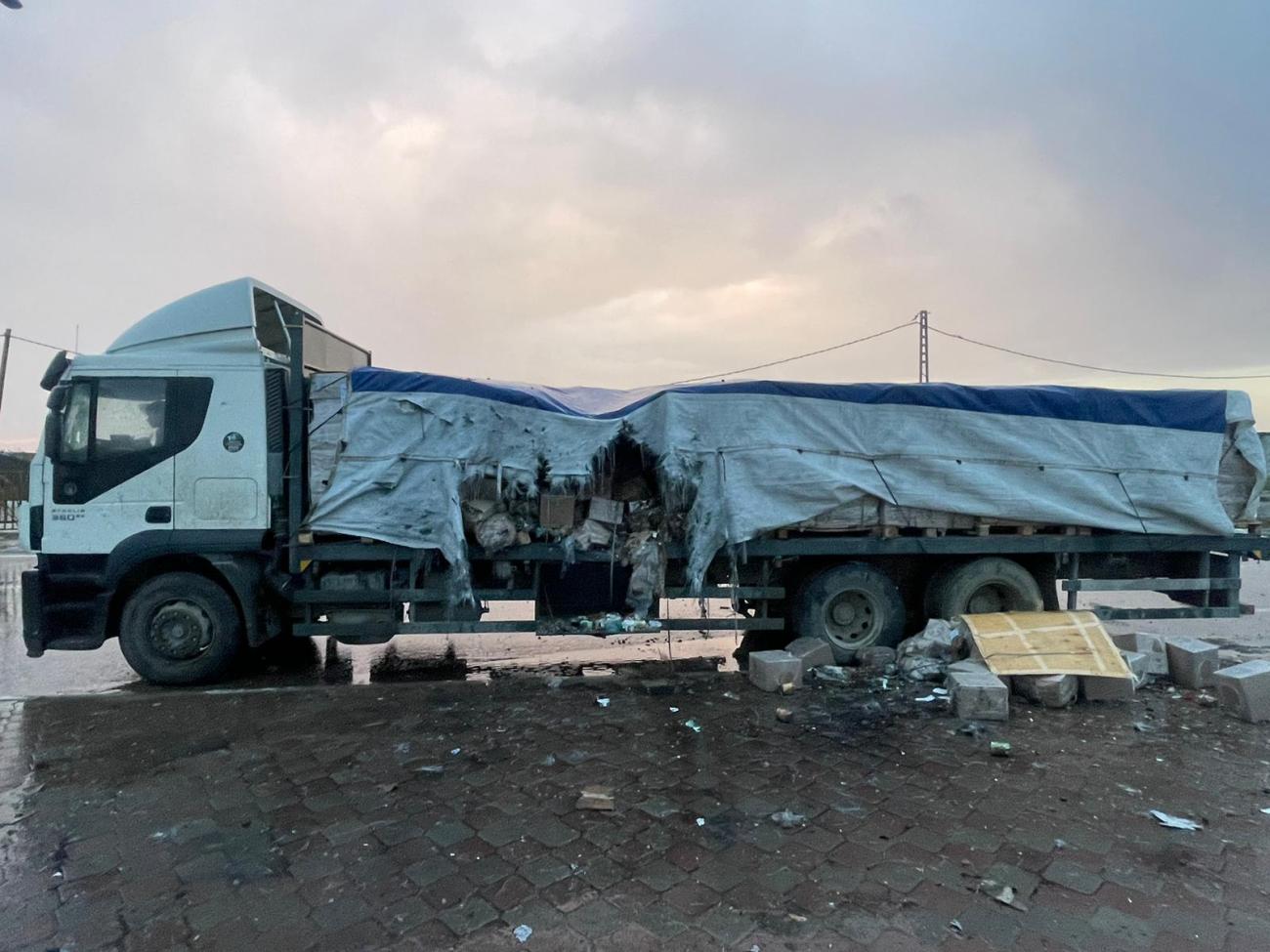
Image by UNRWA

Some 2.1 million Gazans are facing critical hunger levels, with many at risk of famine following Israel’s 11-week blockade on aid intended to pressure Hamas.

According to the United Nations, 57 children have already died from malnutrition since the aid blockade began on March 2. A further 14,000 children under 5 years old are at risk of severe cases of malnutrition over the next year.

Last week, Israeli Prime Minister Benjamin Netanyahu permitted a limited number of aid trucks into Gaza amid increasing pressure from allies who have drawn a line at images of starving children.

However, Israel is controversially planning to transfer responsibility for distributing aid in Gaza through a new system that would sideline the UN and other aid agencies that have been working there for decades.

UN Secretary-General Antonio Guterres swiftly rejected Israel’s new aid distribution system in Gaza, saying it breaches international law and humanitarian principles.

In a joint statement, two dozen countries, including the UK, many European Union member states, Australia, Canada and Japan, have supported the UN’s position on the new model. The signatories said it won’t deliver aid effectively at the scale required, and would link aid to political and military objectives.

The UK, Canada and France have further threatened to take “concrete actions” to pressure Israel to cease its military offence and lift restrictions on aid.

And in another blow to the credibility of the new system, the head of the newly established Gaza Humanitarian Foundation, which will oversee the distribution of aid, resigned on Monday. He cited concerns over a lack of adherence to “humanitarian principles”.

So, how will would this new aid delivery system work, and why is it so problematic?
A military-led system with deep flaws

Israel has relied on unsubstantiated claims of large-scale aid diversion by Hamas to justify taking control over aid delivery in Gaza. The UN and its humanitarian partners continue to refute such claims, publicly sharing details of their end-to-end monitoring systems.

Yet, the new aid delivery initiative is vague on important details.

Several reports have revealed the plan would establish four secure distribution sites for aid under Israeli military control in southern and central Gaza.

Security would be provided by private military contractors, such as Safe Reach Solutions, run by a former CIA officer, while the Gaza Humanitarian Foundation would oversee the distribution of food.

There is little clarity beyond this on who is behind the new system and who is funding it.

The initiative has provoked strong reactions from the UN and the wider humanitarian aid system.

Senior aid officials have underlined the fact the international aid system cannot support a military-led initiative that would breach international law and be incompatible with humanitarian principles of neutrality, impartiality and independence.

There are also concerns the four distribution hubs would require individuals to travel long distances to collect and carry heavy packages. This could leave female-headed households, people with disabilities, those who are ill and the elderly at greater risk of exclusion and exploitation.

In addition, a leaked UN memo reportedly expressed concern over UN involvement in the initiative, saying the organisation could be “implicated in delivering a system that falls short of Israel’s legal responsibilities as an occupying power”.

There are further concerns the UN could be implicated in atrocity crimes, including a risk of genocide through its participation in the system, setting a dangerous precedent for future crises.

Tom Fletcher, the UN relief chief, has called the plan “a deliberate distraction” and “a fig leaf for further violence and displacement”.

Other rights groups have condemned the mandatory collection of biometric data, including facial recognition scans, at the distribution sites. This would make aid conditional on compliance with surveillance. It would also expand Israel’s controversial use of facial recognition technology to track and monitor Palestinians throughout Gaza.

And famine expert Alex de Waal claims Israel has “taken a page from the colonial war handbooks” in weaponising food aid in pursuit of military victory.

He argues the planned quantities of food aid will be insufficient and lack the specialised feeding necessary for malnourished children, in addition to clean water and electricity.

What has not been stated but can be implied from the strong resistance to the new system lacking humanitarian expertise: the lack of good faith on Israel’s part. The Israeli government continues to pursue an elusive military victory at the expense of the rules and norms intended to preserve humanity in war.
Wider pattern of behaviour

The UN’s rebuke of the plan should be interpreted through a wider pattern of Israeli government behaviour undermining the international aid system and its role in upholding respect for humanitarian principles.

These fundamental principles include respect for humanity, neutrality, impartiality and operational independence. As the joint statement by 24 nations on aid to Gaza this month said:


Humanitarian principles matter for every conflict around the world and should be applied consistently in every war zone.

International humanitarian law requires member states to respect – and ensure respect – for the rules of war. This includes taking all feasible measures to influence the parties engaged in a conflict to respect humanitarian law.

Likewise, the Genocide Convention requires member states to take measures to prevent and punish genocide beyond their jurisdictions.

As Fletcher, the UN relief chief, reminded the UN Security Council earlier this month, this hasn’t been done in past cases of large-scale violations of international human rights, such as in Srebrenica (in the former Yugoslavia) and Rwanda.

He said reviews of the UN’s conduct in cases like these


[…] pointed to our collective failure to speak to the scale of violations while they were committed.

While humanitarians are best placed to deliver aid, greater collective political action is what’s needed. Pressure now falls on all UN member states use their levers of influence to protect civilians and prevent the further weaponisation of aid at this critical time.

Amra Lee  is a PhD candidate in Protection of Civilians, Australian National University.
Spain Convenes Int’l Conference to Call for Arms Embargo on Israel

May 26, 2025
Source: Informed Comment


Image by Sicherheitskonferenz, Creative Commons 4.0

The Spanish wire service EFE reports that delegations from 20 countries met Sunday in Madrid in a push to pressure Israel to halt its total war on Gaza and to establish a Palestinian state. Convened by Foreign Minister José Manuel Albares, the conference sought to move to concrete actions.

Israel had blocked all humanitarian aid for two months beginning in March, provoking a crisis of malnutrition in Gaza, almost all of whose people have been made internal refugees several times over by the Israeli military. Israel began letting a small amount of aid in last week, apparently under the pressure of the Trump administration, but United Nations officials decried it as “a drop in the ocean” compared to the urgent needs of 2.2 million Palestinians.

Addressing the attendees at the conference on Sunday, Madrid’s foreign minister said, “The sole interest that all of us gathered here today have is to stop this unjust, cruel, and inhumane Israeli war in Gaza, break the blockade of humanitarian aid, and move definitively toward a two-state solution.”

Of this last point, according to the Anadolu Agency, he asked, “What’s the alternative? Kill all the Palestinians? Send them, I don’t know where -— to the moon?”

Albares said, “Gaza is a gaping wound in humanity… There are no words to describe what is happening in Gaza—but just because there are no words doesn’t mean we will remain silent.”

He said that the proposed measures were not intended to be anti-Israel and that Spain recognized Israel’s legitimate security needs. “But,” he observed, “exactly the same right to peace and security that the Israeli people possess is also possessed by the Palestinian people.” He added,”the Palestinian people cannot be condemned eternally to the estate of a people of refugees.”

Albares called for three tangible steps, including the suspension of the EU-Israel trade agreement. As for the second, he insisted, “We all need to implement an arms embargo; there can be no arms sales to Israel.” Third, he called for a review of the list of individual sanctions maintained by each country and the EU. He noted that Spain had for some time put sanctions on individual Israelis who were “making the two-state solution impossible” and urged the other countries in attendance to do the same.

The foreign minister said that Spain would introduce a Security Council resolution with the State of Palestine (which Spain recognizes) demanding the immediate entry of massivecivilian aid for Gaza without hindrance.

Speaking of the gathering, he observed optimistically, “There is a lot of diplomatic muscle in Madrid.” He urged the breaking of the “vicious circle” of Israeli-Palestinian violence.

The Madrid Plus group of nations met once before with 10 attendees, including Western European nations that had recognized the State of Palestine (Ireland, Spain and Norway), along with the Middle Eastern countries of Egypt, Jordan, Qatar, Saudi Arabia and Turkiye. The membership has doubled for this meeting. Germany, Italy, France, and Portugal joined this time, having been absent at the first gathering. Brazil was also there.


Juan Cole
Juan R. I. Cole is Richard P. Mitchell Collegiate Professor of History at the University of Michigan. For three and a half decades, he has sought to put the relationship of the West and the Muslim world in historical context, and he has written widely about Egypt, Iran, Iraq, and South Asia. His books include Muhammad: Prophet of Peace Amid the Clash of Empires; The New Arabs: How the Millennial Generation is Changing the Middle East; Engaging the Muslim World; and Napoleon’s Egypt: Invading the Middle East.
SHAPE (Saving Humanity and Planet Earth): Statement on Gaza Ordeal

May 26, 2025
Source: Global Justice in the 21st Century


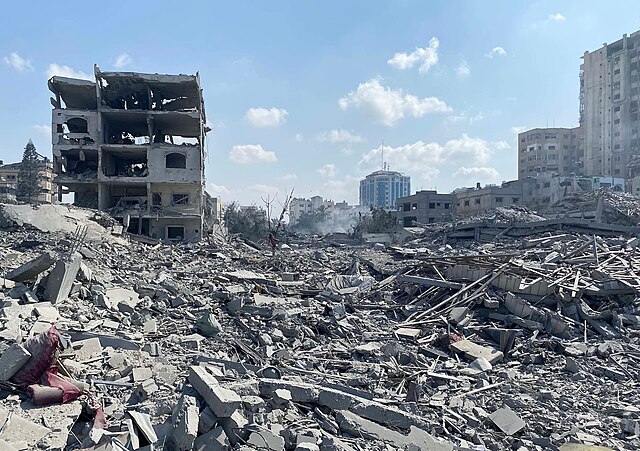
Image in public domain

[Prefatory Note: SHAPE is an international network of persons sensitive to the imperatives of human unity and the guardianship of the natural habitat in accordance ecological wisdom that illuminates paths of resilience and adaptation. In this era of predatory capitalism, imperial geopolitics, and surging fascism we as a leaspecies need to think, feel, and act differently to avoid catastrophe, and do so in a spirit of urgency. Please distribute this statement and contact us if you wish to endorse and join our efforts.]

In the name of humanity, the barbarism in Gaza must stop

Over the last eighteen months the world has witnessed undiluted militarised cruelty targeting the entire population and the supportive natural habitat of Gaza – with not so much as an ounce of mercy or compassion, let alone justice, or sensitivity to issues of ecological viability.

No one has been spared in this onslaught: not civilians, not children, women or the elderly, not humanitarian workers or UN personnel overseeing the distribution of aid, not homes, schools, places of worship, or hospitals.

No logic can begin to explain or justify this genocidal policy of indiscriminate maiming and killing, or the calculated and systematic starvation of the already traumatized Palestinian population. These and other unspeakable atrocities leave us with just two words to describe the conduct of the cabal presently ruling the State of Israel: pure evil

Faced with such vicious behaviour, humanity has but one option: to call out the evil and take appropriate action to put an end to such outrageous conduct.

In the name of humanity we therefore call on all peoples and governments to:Terminate all transactions with the State of Israel that relate to military capabilities until a just and lasting peace settlement has been reached, which gives effect to the inalienable right of Palestinian self-determination. This embargo should include:
A ban on the export of all weapons and dual-use equipment as well as ammunition, whether supplied directly or through a third party
A ban on the import of all Israeli weapons and military technology
A cessation of all other forms of military cooperation, including joint operations/exercises/logistics and communications initiatives, intelligence cooperation and sharing, and expert exchanges and visits
A ban on all financing arrangements designed to facilitate the above activities.
Break diplomatic relations with the State of Israel until a complete and durable ceasefire has been established across all the Occupied Palestinian Territories.
Seek the exclusion of Israeli participation in international cultural and sporting events and call for national boycotts of foreign and domestic cultural and sporting happenings until a complete and durable ceasefire has been established across all the Occupied Palestinian Territories.
Apply maximum pressure on those governments that have been Israel’s primary backers, notably the United States, Britain and Germany, to cease forthwith any support of Israel’s inhuman conduct in Gaza and Palestine as a whole.
Support and financially contribute to the Arab plan for Gaza’s reconstruction formally adopted by the Organization of Islamic Cooperation in March 2025, and to this end call for an immediate UN-sponsored international summit, open to all supportive governments, relevant regional organisations and sympathetically disposed civil society, philanthropic and business organisations. The reconstruction process in Gaza and the proposed international summit should be mindful of Palestinian rights, especially the right of self-determination as applicable to all developments pertaining to Israeli Occupied Palestine.
Encourage nonviolent solidarity initiatives by civil society, both individual and collective action of the sort that proved helpful in the struggle against apartheid in South Africa. A mobilized people can change history, and bring political evil to an abrupt end, especially where, as is the case in Gaza, a severe humanitarian emergency exists.

Such measures on the part of states need to be complemented and reinforced by resolute, collective action at the UN General Assembly. A special session of the General Assembly should be urgently called to denounce the heinous crimes being committed in Gaza and the West Bank and the constant threats to cleanse Palestine of its people by measures of forced displacement.

The General Assembly should consider and adopt a series of resolutions which demand:An immediate ceasefire in all parts of Palestine, Lebanon, Iraq, Syria and adjacent areas
The establishment of a UN peacekeeping contingent of sufficient strength to monitor and supervise the ceasefire and deter in timely fashion actions that would lead to a renewal of violence
The unimpeded flow of water, food, fuel and medicines to Gaza
Strong measures designed to protect humanitarian aid workers, health and medical personnel, and agencies and institutions engaged in the running of hospitals, clinics, kitchens and other essential services
Decisive measures to enable journalists and media personnel to carry out their duties in safe and secure environments.

We also request the world’s religious organisations to issue a call addressing from a spiritual and ethical perspective the evil of genocide as it continues to unfold in Gaza. They are uniquely placed to set forth the ethical criteria that should govern an agreement on the cessation of all military hostilities in the Occupied Territories and the creation of just and durable peace in Palestine.

Since October 2023, millions have exposed and protested against Israel’s conduct in Gaza. They have succeeded in raising the level of global public awareness even though their cries for humanity and justice have thus far gone unheeded. The complicity of the rich and the powerful have stood in the way.

People of good will everywhere must now redouble their efforts in solidarity with the Palestinian people. They must peacefully and resolutely unite their voices and work closely together for as long as it takes.

A powerful global dialogue for a just peace in Palestine that brings together people of diverse social, cultural and religious background is a primary ethical imperative of our time. So is accountability, which means punitive action against leaders of the State of Israel and the complicit enabler governments, including imposing obligations to pay reparations to the victimised population of Gaza and contributions to the funding of reconstruction.

Issued on behalf of SHAPE and its Coordinating Committee by Professor Emeritus Richard Falk, Dr Chandra Muzaffar and Professor Emeritus Joseph Camilleri, SHAPE Co-Conveners, 22 May 2025.

Email: savinghumanityandplanetearth@gmail.com

Website www.theshapeproject.com/


SHAPE: Saving Humanity and Planet Earth

SHAPE is an international network of persons sensitive to the imperatives of human unity and the guardianship of the natural habitat in accordance ecological wisdom that illuminates paths of resilience and adaptation. In this era of predatory capitalism, imperial geopolitics, and surging fascism we as a species need to think, feel, and act differently to avoid catastrophe, and do so in a spirit of urgency.

Netanyahu’s Endgame: Isolation and the Shattered Illusion of Power

There was a time when Benjamin Netanyahu appeared to have all the cards. The Palestinian Authority was largely passive, the occupied West Bank was relatively calm, Israel’s diplomatic reach was expanding, and the United States seemed ready to bend international law to accommodate Israel’s desire for complete control over Palestine.

The Israeli prime minister had also, at least in his own estimation, succeeded in subduing Gaza, the persistently defiant enclave that had for years struggled unsuccessfully to break the suffocating Israeli blockade.

Within Israel, Netanyahu had been celebrated as the nation’s longest-serving prime minister, a figure who promised not only longevity but also unprecedented prosperity. To mark this milestone, Netanyahu employed a visual prop: a map of the Middle East, or, in his own words, “the New Middle East.”

This envisioned new Middle East, according to Netanyahu, was a unified green bloc, representing a future of ‘great blessings’ under Israeli leadership.

Conspicuously absent from this map was Palestine in its entirety – both historic Palestine, now Israel, and the occupied Palestinian territories.

Netanyahu’s latest unveiling occurred at the United Nations General Assembly on September 22, 2023. His supposedly triumphant address was sparsely attended, and among those present, enthusiasm was notably absent. This, however, seemed of little consequence to Netanyahu, his coalition of extremists, or the broader Israeli public.

Historically, Israel has placed its reliance on the support of a select few nations considered, in their own calculus, to be of primary importance: Washington and a handful of European capitals.

Then came the October 7 assault. Initially, Israel leveraged the Palestinian attack to garner Western and international support, both validating its existing policies and justifying its intended response. However, this sympathy rapidly dissipated as it became apparent that Israel’s response entailed a campaign of genocide, the extermination of the Palestinian people in Gaza, and the ethnic cleansing of Gaza’s population and West Bank communities.

As images and footage of the devastating carnage in Gaza surfaced, anti-Israeli sentiment surged. Even Israel’s allies struggled to justify the deliberate killing of tens of thousands of innocent civilians, predominantly women and children.

Nations like Britain imposed partial arms embargoes on Israel, while France attempted a balancing act, calling for a ceasefire while suppressing domestic activists advocating for the same. The pro-Israel Western narrative has become increasingly incoherent, yet remains deeply problematic.

Washington, under President Biden, initially maintained unwavering support, implicitly endorsing Israel’s objective – genocide and ethnic cleansing.

However, as Israel failed to achieve its perceived objectives, Biden’s public stance began to shift. He called for a ceasefire, though without demonstrating any tangible willingness to pressure Israel. Biden’s staunch support for Israel has been cited by many as a contributing factor to the Democratic Party’s losses in the 2024 elections.

Then, Trump arrived. Netanyahu and his supporters, both in Israel and Washington, anticipated that Israel’s actions in Palestine and the wider region – Lebanon, Syria, etc. – would align with a broader strategic plan.

They believed Trump’s administration would be willing to escalate further. This escalation, they envisioned, would include military action against Iran, the displacement of Palestinians from Gaza, the fragmentation of Syria, the weakening of Yemen’s Ansarallah, and more, without significant concessions.

Initially, Trump signaled a willingness to pursue this agenda: deploying heavier bombs, issuing direct threats against Iran, intensifying operations against Ansarallah, and expressing interest in controlling Gaza and displacing its population.

However, Netanyahu’s expectations yielded only unfulfilled promises. This raises the question: was Trump deliberately misleading Netanyahu, or did evolving circumstances necessitate a reassessment of his initial plans?

The latter explanation appears more plausible. Efforts to intimidate Iran proved ineffective, leading to a series of diplomatic engagements between Tehran and Washington, first in Oman, then in Rome.

Ansarallah demonstrated resilience, prompting the US on May 6 to curtail its military campaigns in Yemen, specifically the Operation ‘Rough Rider’. On May 16, a US official announced that the USS Harry S. Truman would withdraw from the region.

Notably, on May 12, Hamas and Washington announced a separate agreement, independent of Israel, for the release of US-Israeli captive Edan Alexander.

The culmination occurred on May 14, when Trump delivered a speech at a US-Saudi investment forum in Riyadh, advocating for regional peace and prosperity, lifting sanctions on Syria, and emphasizing a diplomatic resolution with Iran.

Conspicuously absent from these regional shifts was Benjamin Netanyahu and his strategic ‘vision’.

Netanyahu responded to these developments by intensifying military operations against Palestinian hospitals in Gaza, targeting patients within the Nasser and European Hospitals. This action, targeting the most vulnerable, was interpreted as a message to Washington and Arab states that his objectives remained unchanged, regardless of the consequences.

The intensified Israeli military operations in Gaza are an attempt by Netanyahu to project strength amidst perceived political vulnerability. This escalation has resulted in a sharp increase in Palestinian casualties and exacerbated food shortages, if not outright famine, for over two million people.

It remains uncertain how long Netanyahu will remain in power, but his political standing has significantly deteriorated. He faces widespread domestic opposition and international condemnation. Even his primary ally, the United States, has signaled a shift in its approach. This period may mark the beginning of the end for Benjamin Netanyahu’s political career and, potentially, for the policies associated with his horrifically violent government.

Dr. Ramzy Baroud is a journalist, author and the Editor of The Palestine Chronicle. He is the author of six books. His latest book, co-edited with Ilan Pappé, is Our Vision for Liberation: Engaged Palestinian Leaders and Intellectuals Speak Out. His other books include My Father was a Freedom Fighter and The Last Earth. Baroud is a Non-resident Senior Research Fellow at the Center for Islam and Global Affairs (CIGA). His website is www.ramzybaroud.net

ANTIWAR.COM