Friday, May 08, 2026

Criminalizing Childhood: When The Justice System Fails America’s Youth – Analysis


May 9, 2026
By Colin Greer and Reynard Loki


From child labor to incarceration, U.S. laws often treat youth as disposable rather than nurturing their potential.

Does your community care about children? This deceptively simple question carries profound moral, social, and civic weight. Across the United States, children are too often treated not as developing citizens deserving care and opportunity, but as problems to be managed. Systems meant to safeguard youth—juvenile justice, labor laws, immigration enforcement, and foster care—can instead respond with punishment, neglect, or harm. Children bear the consequences of policies and practices they did not create, producing predictable cycles of disadvantage.

Poverty is the underlying condition shaping these outcomes. It is more than a statistic or isolated hardship—it is the framework under which children experience multiple forms of structural deprivation. Children growing up in economically marginalized neighborhoods face limited access to healthcare, gaps in educational opportunities, hazardous work conditions, and heightened interaction with punitive systems. Extreme poverty, in particular, dictates the parameters of possibility from the earliest years. While Black, Brown, and Indigenous children are disproportionately affected, poverty touches children of all races, showing that structural inequity—not race alone—drives risk.

Communities frequently fail children across five sectors of their lived experience: ages of criminal responsibility, juvenile detention, child labor, immigration enforcement, and foster care. Policies in each area combine with economic and social conditions to limit opportunity and perpetuate harm. Examining these systems side by side reveals a pattern: children most at risk are those whose families, schools, and communities cannot buffer against structural deprivation. International comparisons demonstrate that the U.S. approach is a policy choice, not an inevitability. Countries like Norway and Sweden prioritize education, family, and social services rather than criminalization, showing that alternative paths are possible, practical, and effective.

Caring for children requires coordinated action. Families, institutions, and communities must recognize that attention, guidance, and structured opportunity are among the most effective forms of protection. Adults—whether educators, mentors, neighbors, or civic leaders—can prevent childhood from being criminalized, exploited, or neglected.

Criminalization and Detention of Youth

Across much of the U.S., children are criminalized at shockingly young ages. In North Carolina, children as young as sixcan technically be held responsible for criminal behavior. In Rutherford County, Tennessee, elementary‑aged children—some as young as seven—were taken into custody after watching or being near a minor scuffle, with authorities charging them under a ‘criminal responsibility’ theory that did not reflect an actual crime, underscoring how early criminalization can reach children based on proximity rather than conduct. Arrests of young children signal a community that views youth not as developing citizens but as problems to control.

Racial and disability disparities exacerbate these effects. In 2017–18, Native Hawaiian/Pacific Islander, Black, and American Indian/Alaska Native students were arrested at rates two to three times higher than white students. In 2020, law enforcement agencies made an estimated 424,300 arrests of persons under 18. Children from impoverished neighborhoods are disproportionately caught in these systems, where families and schools often lack resources to intervene effectively.


By contrast, Finland sets the minimum age of criminal responsibility at 15, with younger children handled through social welfare. These international comparisons make clear that early criminalization is a policy choice rather than an inevitability. Communities that respond with punitive measures risk creating cycles of trauma and neglect.

When children make mistakes, communities can choose to provide guidance or impose confinement. U.S. juvenile detention leans toward punishment: children may be placed in secure facilities for minor offenses such as truancy, shoplifting, or skipping school. Solitary confinement, still legal in some states, inflicts lasting psychological harm. About 70 percent of youth in detention have mental health diagnoses, including trauma, anxiety, and depression.

The school-to-prison pipeline illustrates how disciplinary actions often funnel children into the criminal justice system. Once in the juvenile system, they may face detention and adult incarceration, compounding disadvantage—especially for youth from impoverished communities. Children with disabilitiesand Black, Indigenous, and Latinx youth are disproportionately represented.

Many youths arrested for minor offenses like truancy experience long hours of isolation, minimal educational programming, and insufficient counseling, which research links to anxiety, trauma responses, and reluctance to return to school. Research shows that extended juvenile detention disrupts education, limits access to meaningful schooling, and is associated with higher rates of anxiety, depression, and other mental health challenges. After release, many youths are more likely to disengage from school and struggle with psychological harms that can make returning feel daunting and traumatic.

Evidence-based interventions can improve outcomes dramatically. Programs such as Multisystemic Therapy and Functional Family Therapy provide family-centered approaches to reduce recidivism. Youth Advocate Programs and credible messenger mentoring pair at-risk youth with adult mentors, fostering guidance, trust, and accountability. Restorative justice interventions focus on repairing harm rather than imposing punishment and have been shown to reduce repeat offenses. Wraparound services provide individualized plans for education, mental health, and employment.


International examples show alternatives. Norway, the Netherlands, and Finland prioritize rehabilitation: secure facilities are rare, stays are short, and youth have access to robust social, educational, and psychological services. Children are treated as developing individuals, not criminals. Communities also intervene informally. Adults who mentor or provide structured work opportunities—restoring the legendary neighborhood “stoop”—offer protective oversight, preventing trajectories toward confinement. Early engagement, attention, and investment reduce reliance on punitive systems.
Exploitation and Neglect Across Work, Migration, and Foster Care

Despite federal laws, child labor persists in the U.S. In fiscal year 2024, the U.S. Department of Labor documented 736 cases of child labor violations, involving thousands of minors in hazardous work ranging from agriculture and meatpacking to domestic labor and industrial settings. In 2024, for example, the Department of Labor reported on federal investigations that found minors—including teens as young as 13—working overnight shifts cleaning meatpacking machinery, such as brisket saws and head splitters, exposing them to hazardous conditions and chemicals while compromising schooling and safety. These situations illustrate the tangible risks behind child labor violations uncovered by the Department of Labor.

Migrant children, often from economically marginalized households, are especially vulnerable. Families facing extreme poverty may rely on child earnings, perpetuating cycles where labor substitutes for education. Unsafe conditions, intimidation, and limited legal protections exacerbate risk.

International comparisons show alternatives. Germany and the Netherlands strictly regulate youth work: setting minimum ages, limiting tasks, establishing hours, and requiring supervision. These frameworks protect health, education, and development, demonstrating labor exploitation is a policy choice rather than an inevitability.

Communities can intervene through structured, education-compatible work programs offering safe employment, mentorship, and skill-building. These programs provide income, purpose, and guidance without exposure to hazards, thus fostering civic engagement and resilience.

Federal immigration enforcement often treats youth as security risks rather than children in need of protection. Border Patrol detention, harsh asylum procedures, and family separations expose minors to trauma.

In 2018, a joint ACLU–University of Chicago report found approximately 25 percent of unaccompanied children in Customs and Border Protection custody experienced physical abuse, including sexual assault, stress positions, and beatings. Thousands more were separated from parents, with minimal oversight or access to legal and emotional support.

Many migrant children come from economically marginalized communities, where families lack resources to buffer migration stress. Poverty, legal precarity, and institutional neglect increase exposure to exploitation, including trafficking.

Internationally, New Zealand and Canada prioritize family reunification and community-based support, providing supervised housing, education, and social integration. Local communities can provide legal aid, mentorship, and trauma-informed education, offering stability and opportunity even when federal systems fail.

Foster care often fails to provide stability. Youth average three to four placements, undermining attachment and emotional development. Trafficking within foster care illustrates systemic failure: about 40 percent of youth with trafficking experiences reported incidents before the age of 18, and nearly 80 percent occurred while in foster care.

Vulnerable children—including Black, Native American, and Latinx youth, children with disabilities, and low-income youth—are disproportionately affected. Many who age out at 18 or 21 face homelessness, unemployment, and limited resources.

Internationally, Sweden and Denmark maintain robust foster care systems with stable placements, trained caregivers, and wraparound services, reducing risk and promoting stability. Communities can supplement formal systems through mentorship, nonprofits, and structured guidance, reinforcing protections and improving youth outcomes.
From Punishment to Justice: Patterns and Solutions

Across juvenile justice, child labor, immigration enforcement, and foster care, children’s vulnerabilities are too often met with punishment rather than support. Austerity, underfunded schools, racial disparities, privatization, and political neglect converge to normalize punitive approaches. International models show that early intervention, family support, and rehabilitation prevent harm, underscoring that criminalization is a choice.

Community attention—the “stoop”—is critical. Volunteer programs, mentorship, civic engagement, and safe work opportunities provide oversight, guidance, and resilience where formal systems fail. For example, credible messenger and mentoring programs connect justice‑involved youth with adult mentors and career pathways—including structured employment, apprenticeships, and reentry support. These programs have been shown to improve engagement, reduce recidivism, and help young people build skills and confidence as they reintegrate into their communities.

State-supported youth employment programs, like New York’s Summer Youth Employment Program, place thousands of teens from low‑income families in paid, supervised jobs. Participants gain workplace skills and income without exposure to hazardous conditions, helping build confidence, job readiness, and connections to future opportunities.

Justice for children should mean support, opportunity, and rehabilitation. Evidence-based interventions—including restorative conferencing, family therapy, and mentorship programs—reduce recidivism and improve outcomes. In Alameda County, California, youth in restorative conferencing programs were 19.6 percent less likely to be adjudicated delinquent within 18 months—a 47 percent relative reduction. Oakland, California, schools using restorative practices saw African American suspensions drop approximately 40 percent, while New York City schools reported a 43 percent decline in suspensions alongside stronger student-staff relationships.

Community-based foster care programs, mentorship, and structured work opportunities provide continuity, guidance, and stability. Civic structures like local commissions can monitor policies, advocate, and provide systemic oversight, reinforcing protections and reducing systemic neglect. International lessons show that early, coordinated intervention, paired with social support, nurtures children rather than punishing them.
A Moral Test for Every Community

The question “Does your community care about children?” is neither rhetorical nor abstract. Across the United States, children face overlapping crises: they are criminalized at alarmingly young ages, exploited through labor, left vulnerable in foster care, and exposed to trauma in immigration enforcement. Poverty, systemic neglect, and under-resourced institutions create these outcomes, but communities are not powerless.

Active engagement—through mentorship, safe employment, trauma-informed services, and civic oversight—signals that children are valued, protected, and supported. Programs that pair youth with mentors, offer structured work, and implement restorative practices in schools show that guidance and support can replace punishment and neglect. Communities that invest in these strategies help prevent cycles of trauma and build pathways to education, employment, and civic participation.

Caring communities take responsibility not only for immediate safety but also for the long-term well-being of children. By acting collectively through volunteer initiatives, policy advocacy, and inclusive oversight, communities can ensure that every child has a chance to thrive. The question of whether children matter is a moral test for every neighborhood, city, and state; the answer lies in whether communities are willing to act, to protect, and to nurture their young and to protect them.


About the authors:
Dr. Colin Greer has served as president of the New World Foundation since 1985. A former Brooklyn College professor, he directed studies on U.S. immigration and urban schooling at Columbia University and CUNY. He has advised national leaders, including First Lady Hillary Clinton and Senator Paul Wellstone. His books include A Call to Character and Choosing Equality, winner of the ALA’s Eli M. Oboler Award. A poet and playwright, his work has appeared in Transfer, Hanging Loose, Tikkun, and Kosmos. His plays, including Imagining Heschel and Spinoza’s Solitude, are collected in Religious Differences Between Artichokes, with a preface by Cornel West. His long poem, “Treaty Between Self and Earth,” was performed at Rattlestick Theatre in 2022.

Reynard Loki is a co-founder of the Observatory. He is a writing fellow and the editor and chief correspondent for Earth | Food | Life at the Independent Media Institute. His work has appeared in Salon, Truthout, EcoWatch, BillMoyers.com, and Yes! Magazine. A former environmental editor at AlterNet, he writes on the intersections of justice, ecology, and human rights. He serves on the board of the Stuyvesant Park Neighborhood Association, where he supports education programming for local children and families. He regularly speaks with high school students about environmental awareness and community advocacy.


Credit Line: This is the second article in the four-part series “Does Your Community Care About Children?” It was produced by the Independent Media Institute for the Observatory. It is licensed under the Creative Commons Attribution-NonCommercial-ShareAlike 4.0 International License (CC BY-NC-SA 4.0)

SPACE/COSMOS


A New Explanation For ‘Snowball Earth

By 

A new study by Earth scientists in the Harvard John A. Paulson School of Engineering and Applied Sciences (SEAS) offers an explanation for one of Earth’s great climate puzzles: how the Sturtian glaciation, an ancient ice age when the planet was nearly entirely frozen, could have lasted 56 million years – far longer than standard climate models have predicted. This lengthy freeze took place during Earth’s Cryogenian period, roughly 717 to 660 million years ago, predating dinosaurs and complex plant life. The research is published in Proceedings of the National Academy of Sciences and led by graduate student Charlotte Minsky, who is advised by co-author Robin Wordsworth, the Gordon McKay Professor of Environmental Science and Engineering and Professor of Earth and Planetary Sciences. Co-authors are David T. Johnston and Andrew H. Knoll. 

Using a coupled model of the ancient climate and the global carbon cycle, the researchers make the case that Earth may not have been locked in a single, unbroken “Snowball Earth” state, or period when the entire planet was frozen. Instead, they find that the planet likely oscillated between fully ice-covered “snowball” conditions and ice-free “hothouse” intervals throughout the Sturtian period.

The team’s simulations suggest that intense weathering of basalt in the Franklin Large Igneous Province, a vast volcanic region located in northern Canada and believed to have erupted just before the onset of the Sturtian glaciation, drew down atmospheric carbon dioxide enough to trigger multiple global glaciations. 

As volcanoes and other processes slowly rebuilt atmospheric carbon dioxide, the climate warmed, the ice retreated, and large areas of fresh basalt were again exposed to the atmosphere. Renewed breakdown from weathering then pulled carbon dioxide back down, pushing the climate into another Snowball phase. This repeating cycle of carbon dioxide-driven freezing and thawing, the authors argue, could naturally sustain glacial–interglacial swings over tens of millions of years.

The mechanisms revealed by the Harvard study resolve several longstanding paradoxes, most notably the previously inexplicable length of the Sturtian when compared with physical climate models. The study also matches observed sedimentary patterns from that time period and explains how atmospheric oxygen levels could have remained stable despite extreme climate upheavals.

Repeated returns to warmer, ice-free conditions may have helped prevent a complete collapse of atmospheric oxygen, the study further suggests. “This could help explain how aerobic life persisted through such an extreme interval,” Minsky said. 


VELIKOVSKY WAS RIGHT

New Research Proposes Dante’s Inferno Modelled A Planetary Impact 500 Years Before Modern Science

Artist's depiction of a collision between two planetary bodies, similar to the hypothesized collision between Theia and the proto-Earth. Source: https://en.wikipedia.org/wiki/Theia_(hypothetical_planet)

By 

New research reveals that Dante Alighieri’s Inferno wasn’t just a masterpiece of literature: it was a gedankenexperiment in impact physics. From multi-ring craters to shockwaves that reshaped the globe, discover how a 14th-century poet modelled a planetary impact 500 years before the birth of modern meteoritics

For seven centuries, the descent of Dante Alighieri’s Satan has been read as a spiritual tragedy: a silent, heavy fall from grace. However, groundbreaking new research from Timothy Burbery of Marshall University suggests that the Divine Comedy contains a far more explosive secret. By reappraising the 14th-century masterpiece through the lens of modern meteoritics, Burbery proposes that Dante envisioned Satan as a high-velocity impactor hitting the Southern Hemisphere and tunnelling to the Earth’s centre. This impact forces the Northern Hemisphere to retreat, which, consequently, forms the core of Hell as a bottom-up crater, while the earth displaced behind Satan creates the mountain of Purgatory as a central peak.

The scale of this event parallels the Chicxulub (K-Pg) impact that ended the reign of the dinosaurs. Burbery suggests treating the Prince of Darkness as an oblong, asteroid-sized body, reminiscent of the interstellar object Oumuamua, whose arrival followed the harrowing logic of a global extinction event. Much like the K-Pg asteroid, this collision triggered a planetary chain reaction: it tunnelled to the core and generated the central peak of Mount Purgatory. Like the Hoba meteorite, which remains a 60-ton intact mass, Dante’s Satan is modelled as a physical, un-vaporized impactor that permanently restructured the Earth’s architecture. 

In this light, the nine circles of Hell are no longer merely symbolic tiers of sin, but rather a remarkably accurate description of the concentric, terraced morphology found in multi-ring impact basins across the solar system, from the Moon to Venus. Anticipating the non-Euclidean geometry later found in the Paradiso, Dante intuitively mapped the physics of terminal velocity and crustal breach required for a massive object to reach maximum compression at the Earth’s core.

This research offers a significant tool for planetary defence, as it demonstrates how literary geomythology can raise awareness of physical threats long before their scientific formalization. Burbery argues that Dante effectively discovered the geological reality of meteors, and this challenges the Aristotelian dogmas that viewed the heavens as perfect and unchanging. 

When depicting Satan’s fall as a tangible, high-velocity impact with devastating physical effects rather than a mere optical illusion or spiritual allegory, Dante helped shift the Western paradigm toward recognising celestial bodies as physical agents of change. This interdisciplinary bridge fosters a sense of Kuhnian humility and reminds us that ancient narratives may encode planetary truths that modern science is only beginning to model.

The Divine Comedy is a fascinating literary, and now, a geophysical gedankenexperiment, one that deepens our own understanding of meteoritics, both in terms of its anticipations of the modern science, and in terms of how it diverges from it.

How U.S. Southwest Is Responding To Severe Drought Crisis In Colorado River Basin – Analysis

HOOVER DAM

May 8, 2026
Congressional Research Service (CRS).
By Charles V. Stern

The Colorado River Basin covers more than 246,000 square miles in seven U.S. states and Mexico. Basin waters are governed by multiple documents, known collectively as the Law of the River. The Colorado River Compact of 1922 established the framework to apportion water supplies between the river’s Upper and Lower Basins, with each basin allocated 7.5 million acre-feet (MAF) annually; a subsequent agreement also provided for releases to Mexico (Figure 1). The Bureau of Reclamation (Reclamation) plays a prominent role in basin water management due to the many congressionally authorized projects in the basin.


Figure 1. Colorado River Basin Allocations (allocations in MAF). Source: CRS, using data from U.S. Geological Survey Esri Data & Maps, 2017, Central Arizona Project, and Esri World Shaded Relief Map. Notes: Due to uncertainty about how much water would remain after meeting obligations to the Lower Basin and Mexico, most Upper Basin compact apportionments are in terms of percentages.

When federal and state governments approved the Colorado River Compact of 1922, it was assumed that river flows would average 16.4 MAF per year. Actual annual flows from 1906 to 2024 were approximately 14.6 MAF and have averaged significantly less (12.4 MAF) since 2000. Demand has exceeded these amounts in most years, and studies project lower flows in the future.

The imbalance between water supplies and demand has depleted storage in the basin’s two largest reservoirs—Lake Powell in the Upper Basin and Lake Mead in the Lower Basin—and threatens water supplies for millions in the Southwest. Storage at both reservoirs is near the lowest levels on record. Reclamation makes operational decisions for basin reservoirs based on 24-month studies, which project conditions for upcoming years (Figure 2, Figure 3). Due to poor hydrology in 2026, storage in Lake Powell has the potential to reach critically low levels.


Figure 2. Lake Powell Storage Elevations and Projections (April 2026 inflow scenarios). Source: Bureau of Reclamation, “24-Month Study Projections.” Notes: maf = million acre-feet; WY = water year.


Figure 3. Lake Mead Storage Elevations and Projections (April 2026 inflow scenarios). Source: Bureau of Reclamation, “24-Month Study Projections.” Notes: maf = million acre-feet; WY = water year.


Mitigating Drought in the Colorado River Basin

Previous efforts to improve the basin’s water supply outlook resulted in agreements in 2003, 2007, 2019, and 2024 that generally built on one another and reduced water deliveries. These agreements tied Lower Basin delivery reductions to decreasing Lake Mead levels and implemented a framework to coordinate Upper Basin operations so as to protect Lake Powell from reaching critically low levels.

Since 2020, Reclamation has curtailed water deliveries to Arizona and Nevada based on Lake Mead levels. It also made operational changes in the Upper Basin to move water from upstream reservoirs into Lake Powell in 2021 and 2022, and it is implementing these operations again in 2026.

In 2026, Lower Basin states are expected to conserve a total of 1.3 MAF: 533,000 AF in uncompensated reductions/savings under prior agreements and 770,000 AF under the 2024 plan (including federally compensated water delivery reductions that were approved by Congress in P.L. 117-169, commonly referred to as the Inflation Reduction Act [IRA]). Despite these reductions, experts agree that more cutbacks are still needed. Some studies estimate that 2.4-3.2 MAF/year in reductions are needed to stabilize the system in the long term.

Post-2026 Operations

Most existing water conservation agreements expire at the end of 2026, thus Reclamation is analyzing post-2026 operational alternatives for the system. In 2024, the Upper and Lower Basin states submitted competing “long-term” operational plans to Reclamation; each plan proposed different methods and allocations for Colorado River reductions.

Absent a consensus among Upper and Lower Basin states, in January 2026 Reclamation released a draft EIS with five alternatives (Table 1). Most alternatives would impose new Lower Basin delivery reductions in excess of recent levels and alter the basis and range of Lake Powell releases to the Lower Basin, among other things. The alternatives differ significantly in their operational triggers and the magnitude/distribution of reductions, and several of them would require congressional approval to be implemented. Reclamation has noted its preference for a consensus approach among basin states but reiterated its willingness to act unilaterally to make changes.

Table 1. Bureau of Reclamation Post-2026 Colorado River Operational Alternatives (alternatives in January 2026 draft EIS)

AlternativeRange and Basis for Total Lower Basin Delivery ReductionsRange and Basis for Lake Powell Releases
No ActionUp to 600,000 AF/year
Based on Lake Mead elevation, distributed based on water rights priority
8.23 MAF/year
Target under most circumstances
Basic CoordinationUp to 1.5 MAF/year
Based on Lake Mead elevation, distributed based on water rights priority
7.0-9.5 MAF/year
Range based on Lake Powell elevation
Enhanced CoordinationUp to 3.0 MAF/year
Based on Lake Mead/Lake Powell combined storage, distributed pro rata
4.7-10.8 MAF/year
Range based on combination of Lake Mead/Powell elevations and 10-year basin hydrology
Maximum Operational FlexibilityUp to 4.0 MAF/year
Based on system storage and distributed based on water rights priority and state shares of up to 1.5 MAF
5.0-10.0 MAF/year
Range based on total system storage and recent (three-year) hydrology
Supply DrivenUp to 2.1 MAF/year
Based on Lake Mead elevation and distributed as state-based shares up to 1.5 MAF based on either (1) water rights priority or (2) pro rata shares
5.0-10.0 MAF/year
Range based on 65% of three-year average natural flows from Upper to Lower Basin at Lees Ferry, AZ
Source: Bureau of Reclamation, Post-2026 Operational Guidelines and Strategies for Lake Powell and Lake Mead, Draft Environmental Impact Statement, January 2026. Notes: MAF/year = million acre-feet per year.


On May 1, 2026, the Lower Basin states announced a new 2026-2028 operations proposal. Under the proposal, they would collectively contribute reductions of 1.25 MAF/year and Mexico would contribute 250,000 AF/year (i.e., similar to amounts initially proposed under comparable conditions in the 2024 Lower Basin post-2026 proposal, but less than the draft EIS options) in 2027 and 2028. This would be coupled with a new 700,000 AF (total through 2028) Lower Basin conservation program that would be funded by a federal/state cost-share, resulting in total savings of 3.2 MAF through 2028.

The proposal contains other operational assumptions and does not specify how much new federal funding would be needed to implement the conservation program. For its part, the Upper Basin has opposed efforts that do not reflect a basin-wide consensus and has reiterated its prior calls for mediation.

About the author: Charles V. Stern, Specialist in Natural Resources Policy

Source: This article was published by the Congressional Research Service (CRS).


Super El Niño threat could add to Iran war inflation shock

Super El Niño threat could add to Iran war inflation shock
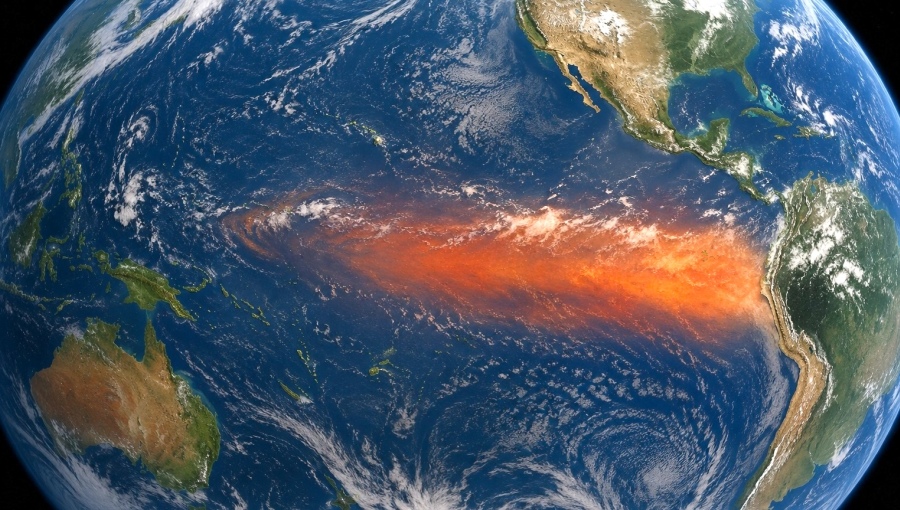
A super El Niño is expected in the second half of this year that could disrupt agriculture, energy and logistics that will only add to an expected inflation shock caused by the Gulf War. / bne IntelliNews
By Ben Aris in Berlin May 7, 2026

A growing risk of a “Super El Niño” weather event later this year is fuelling concerns among economists and commodity traders that it will only add to the inflation shock already on the way as a result of spiking energy prices due to the Iran war.

An extreme El Niño year has three channels of disruption: food price inflation, energy output falls due to droughts and logistics disruptions thanks to more extreme weather events.

The US National Oceanic and Atmospheric Administration estimates there is a 61% probability that El Niño conditions — a warming of waters in the eastern Pacific Ocean — will emerge between May and July and persist through the end of the year. It also estimates a one-in-four chance of a “very strong” El Niño, comparable to the 2015-16 episode that disrupted agricultural production and weather patterns across several continents.

William Jackson, chief emerging markets economist at Capital Economics, said the risks were being amplified by geopolitical tensions already pushing up commodity prices.

“An El Niño in the second half of the year — as seems increasingly likely — would add to the upside pressures on food and energy prices stemming from the Iran war,” Jackson wrote in a note on May 6. “The macroeconomic effects would be largest in emerging markets, particularly those most sensitive to higher food prices, including India and parts of Africa, as well as those where power generation might be curtailed such as Colombia.”

Economists say the inflationary effects are likely to spread through three principal channels, beginning with agricultural commodities.

“The first, and most important channel, is higher commodity prices — particularly agricultural prices — and inflation,” Jackson said.

Previous El Niño episodes have frequently coincided with volatility in soft commodities including cocoa, coffee, sugar and palm oil. During the 2023-24 El Niño cycle, coffee and cocoa prices surged sharply as adverse weather damaged harvests in major producing countries including Vietnam, Ghana and Ivory Coast. However, a super El Niño will not necessarily send inflation up.

While staple crops such as wheat and corn are grown across multiple geographies, limiting global shortages, analysts warn that more concentrated commodity markets remain vulnerable. Heavy rainfall in Chile and Peru could also disrupt copper mining operations, potentially tightening supplies of a metal critical to electrification and renewable energy infrastructure.

Capital Economics noted that the inflationary effects would be disproportionately severe in lower-income economies where food accounts for a much larger share of household spending.

“Food can account for as much as 30% (or more) of the CPI basket and over a quarter of GDP” in parts of South Asia and Sub-Saharan Africa, Jackson wrote.

The second transmission channel is energy. Drought conditions associated with El Niño can sharply reduce hydropower generation, particularly in economies heavily reliant on dams and reservoirs.

“The second channel is that drought conditions could affect power generation,” Jackson said. “Within EMs, Ethiopia and Colombia look most vulnerable.” Norway is also exposed following a relatively dry winter, while Brazil and Paraguay could benefit from wetter conditions that improve hydroelectric output.

Analysts warn that reduced hydropower generation could force utilities to increase reliance on fossil fuels, adding to already elevated global gas demand. Europe’s gas market remains sensitive to supply disruptions following the region’s break with Russian pipeline imports after the invasion of Ukraine.

The third risk lies in transport and logistics networks already strained by geopolitical instability and climate-related disruptions. As IntelliNews has reported, the world is going into its fourth disaster season where extreme weather has already caused an estimated $28 trillion dollars of damage according to one report and these events are tending to get more extreme each season.

“The third channel through which El Niño could have an impact on the global economy is via disruptions to logistics,” Jackson wrote.

During the previous El Niño event, low water levels forced the Panama Canal Authority to reduce vessel transits by almost half, triggering congestion and higher shipping costs. A renewed drought could again restrict traffic through one of the world’s most important maritime trade routes, forcing vessels to reroute around Cape Horn and extending delivery times.

Extreme weather could also disrupt inland transport systems, including railways, roads and river shipping routes such as the Rhine, a critical artery for European industrial supply chains.

“Ultimately, the macro impact of El Niño will depend on the severity,” Jackson wrote. “But it adds to the upside risks to energy and food prices, particularly if the Strait of Hormuz remains blocked going into the second half of this year.”

EU monitor says sea temperatures near all-time highs as El Nino looms

Paris (AFP) – The European Union's climate monitor said Friday that ocean temperatures are edging toward record highs as conditions shift toward a potentially powerful El Nino weather pattern.


Issued on: 08/05/2026 - RFI

Oceans absorb around 90 percent of the excess heat generated by human activity. © Valery HACHE / AFP

Samantha Burgess from the European Centre for Medium-Range Weather Forecasts (ECMWF) said sea surface temperatures in recent days were just shy of the all-time highs of 2024 – and May looked set to break its own record.

"It's a matter of days before we are back in record-breaking ocean SSTs (sea surface temperatures) again," Burgess, strategic lead for climate at ECMWF, told AFP.

The Copernicus Climate Change Service said daily sea surface temperatures in April "gradually inched" toward near-record highs, reflecting the transition to El Nino expected in coming months.

Copernicus, which is overseen by the ECMWF, said sea surface temperatures in April were the second-highest measured, with marine heatwaves breaking records in the ocean between the tropical Pacific and United States.

Last month, the World Meteorological Organization said El Nino conditions could develop as soon as May to July.

Extreme weather

One phase of a natural climate cycle in Pacific Ocean temperatures and trade winds, El Nino influences global weather and increases the likelihood of drought, heavy rainfall and other climate extremes.

It also adds heat to a planet already warmed from burning fossil fuels. The last El Nino helped make 2023 and 2024 the second- and first-hottest years on record, respectively.

Some weather agencies forecast the coming event will be even stronger -- possibly rivalling a "super" El Nino three decades ago.

Zeke Hausfather, a scientist at Berkeley Earth, an independent climate research organisation, wrote last week that a strong El Nino could significantly raise the chances of 2027 becoming the hottest year ever recorded.

Burgess said it was still too early to predict the event's intensity with confidence as forecasts made during the Northern Hemisphere spring could be unreliable.

But she said regardless of its strength, this El Nino would not go unnoticed.

"We're likely to see 2027 exceed 2024 for the warmest year on record," she said. El Nino's impact on global temperatures typically comes the year after its peak, she added.


Long-term warming


Copernicus said the upturn in ocean temperatures over March and April indicated the transition from neutral conditions to El Nino was underway.

Scientists stress that El Nino alone is not driving the extraordinary ocean warmth or its knock-on effects, such as coral bleaching and marine heatwaves.

The phenomenon is unfolding against a backdrop of long-term global warming caused primarily by greenhouse gas emissions, with oceans absorbing around 90 percent of the excess heat generated by human activity.

In its monthly bulletin, Copernicus said April was the third-hottest globally and 1.43C above the 1850-1900 pre-industrial benchmark.

Arctic sea ice remained near record lows in April while Europe endured varied conditions that set the stage for a hotter and drier summer at risk of drought of wildfires, it said.

"We just keep seeing extremes. Every month we have more data that the climate change impact is creating these extreme events," said Burgess.


Antarctica Sea Ice Collapse Driven By Triple Whammy Of Climate Chaos


By 

Antarctica is being ravaged by a triple-whammy of climate chaos that has melted sea ice to record lows, a new study has revealed.

For decades, the frozen wilderness at the bottom of the world defied global warming trends, with ice levels actually growing – until 2015 when it suddenly reversed.

Now scientists say they have discovered why.

The study led by the University of Southampton shows that a series of compounding events flipped the Southern Ocean – which surrounds Antarctica – out of balance, dragging unusually warm, salty water from the deep up to the surface.

It was so extreme, said lead author Dr Aditya Narayanan, that it wiped out vast areas of ice equivalent to the size of Greenland, leading to record-breaking lows in 2023.

Dr Narayanan, an oceanographer from the University Southampton, added: “Antarctic sea ice in the Southern Ocean helps drive the planet’s ocean overturning circulation.

“However, since 2015, the region has undergone a huge transformation, with extreme ice loss around the continent.

“What started as a slow build-up of deep-sea heat under the Antarctic sea ice was followed by a violent mixing of water, ending in a vicious cycle where it’s too warm to let ice recover.

“It’s concerning because massive loss of sea ice destabilises the world’s ocean current systems, warming our planet far quicker than expected.”

The study, published in Science Advances, was undertaken by the Southampton experts working with scientists worldwide.

Using a sophisticated ice-measuring programme, the team found the sea ice decline happened in three stages, driven by shifting winds and warming oceans.

  1. Around 2013 – strengthening winds began pulling warm, salty water from the deep ocean, known as Circumpolar Deep Water, closer to the surface
  2. In 2015 – intense wind mixed the deeper heat directly into the surface layer, rapidly melting sea ice, particularly in East Antarctica
  3. Since 2018 – the ice-ocean system has become trapped in a cycle where, with less ice to melt, the surface remains salty and warm, inhibiting new ice from forming

The study also found a striking asymmetry in how the ice is retreating across the continent, with East Antarctic loss almost entirely ocean-driven, fuelled by an upward surge of warmer deep water.

However, in West Antarctica, heat was trapped in the ocean by intense cloud cover, which was funnelled by warm air from the subtropics down to the pole, melting the sea ice during the summers of 2016 and 2019.

Paper co-author Dr Alessandro Silvano, also from the University of Southampton, said: “This isn’t just a regional problem, Antarctic sea ice acts as Earth’s mirror, reflecting solar radiation back into space.

“Its loss could destabilise the currents that store heat and carbon in the ocean, accelerating global warming, and also destabilise ice shelves that prevent glaciers from sliding into the sea, raising global sea levels.”

The Southampton-led research team also warned human-driven climate change is fuelling stronger winds, exposing the Southern Ocean’s surface and pushing deep-sea heat to the surface.

If this continues, the Southern Ocean could be pushed into a “prolonged low sea-ice state,” said Professor in Physical Oceanography Alberto Naveira Garabato from the University of Southampton.

He added: “If the low sea-ice coverage prevails into 2030 and beyond, the ocean may transition from a stabiliser of the world’s climate to a powerful new driver of global warming.”